



Quick Answer
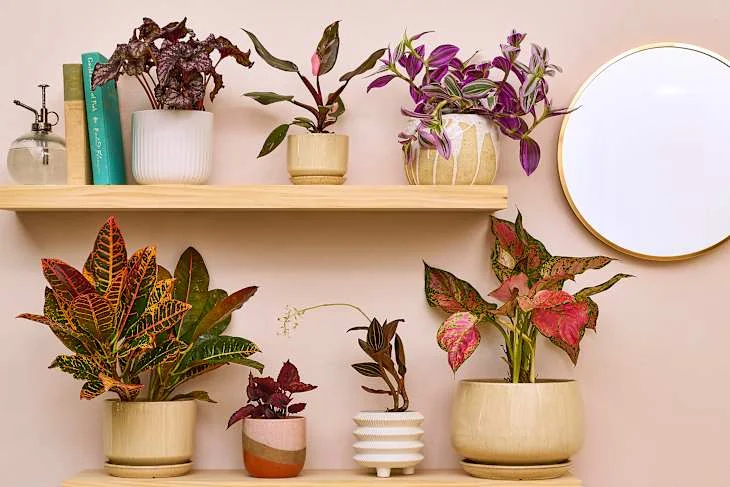
For pink or red foliage, start with red Aglaonema, rex begonia or Fittonia. Choose Tradescantia or purple shamrock for purple tones, and aluminum plant for silver. Match the plant to the light and space you have, then choose a pot that lets the leaf color stand out.
Colorful indoor plants can repeat a room's accent colors, soften a plain corner or become the main feature on a table. The most useful choice combines a leaf color you enjoy with a growth habit and care routine that fit your home.
This selection focuses on foliage. Flowers may be a bonus, but they do not need to carry the whole display. Some plants keep their strongest color with suitable light; others change as leaves mature, the season shifts or the plant rests. Choose the actual nursery specimen rather than expecting every new leaf to match a photograph.
Find the Right Color and Growth Habit
Use color to narrow your choices, then check light and mature shape. A low earth star and a climbing Pink Princess may share a pink accent but need very different amounts of room. For broader room choices, start with our guide to indoor plants. If leaf size, growing habit, or humidity matters more to your room, compare our indoor tropical plants.
Colorful indoor plants compared by foliage, light and growth habit
Scroll sideways to compare all columns.
| Plant | Foliage effect | Light | Shape |
|---|---|---|---|
| Red Chinese evergreen | Pink or red margins and splashes | Bright indirect | Tabletop clump |
| Rex begonia | Silver, burgundy, pink and patterned leaves | Bright filtered | Low, spreading clump |
| Pink Princess philodendron | Pink sectors against dark green | Bright indirect | Climber that needs support |
| Pink-striped Tradescantia | Pink, cream and green stripes | Bright indirect; gentle sun if acclimated | Trailing stems |
| Croton | Yellow, orange, red and green | Very bright light; suitable sun | Upright shrub |
| Polka dot plant | Pink, red or white speckles | Bright filtered | Small plant maintained by pinching |
| Nerve plant | Fine pink, red or white veins | Medium to bright indirect | Low, spreading growth |
| Purple velvet plant | Purple hairs over green leaves | Bright filtered | Upright stems that can trail |
| Red prayer plant | Red veins over patterned green | Medium to bright indirect | Low clump with outward growth |
| Purple shamrock | Deep purple triangular leaflets | Bright light; gentle sun if suitable | Airy mound |
| Aluminum plant | Silver patches on green leaves | Bright indirect | Bushy tabletop plant |
| Purple waffle plant | Purple undersides and textured leaves | Bright indirect | Low, spreading stems |
| Earth star | Pink or red stripes in a star-shaped rosette | Bright filtered | Low, spreading rosette |
| Hawaiian ti plant | Pink, burgundy and green broad leaves | Bright indirect | Upright plant that can become large |
| Variegated rubber plant | Cream, green and pink-tinged foliage | Bright indirect | Upright woody plant |
| Caladium | Pink, red and white patterned leaves | Bright filtered light | Seasonal mound from a tuber |
| Coleus | Lime, burgundy, pink and patterned edges | Bright indoor light | Bushy growth maintained by pinching |
| Persian shield | Iridescent purple and silver | Bright filtered light | Vigorous plant that needs space |
18 Colorful Indoor Plants to Consider
1. Red Chinese evergreen
Aglaonema cultivars
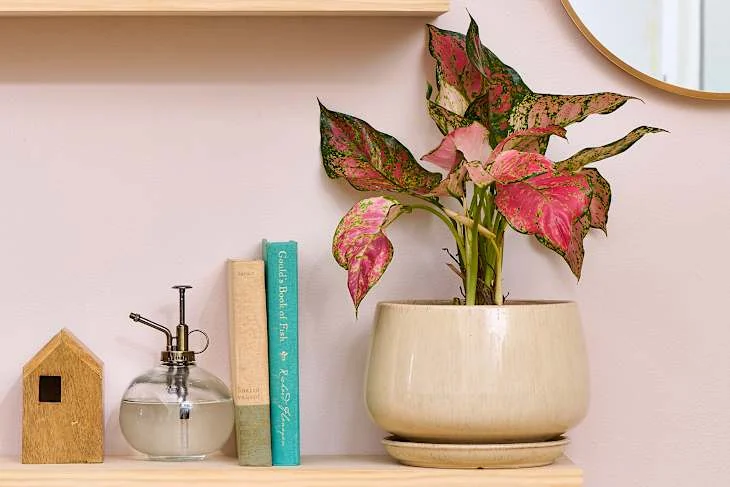
Color and placement: Pink or red margins and splashes. Bright indirect. Tabletop clump.
A red-edged Chinese evergreen gives a room a warm accent without relying on a flowering season. Choose the actual plant in front of you, since the amount of pink or red varies between cultivars and leaves. A plain cream or muted terracotta pot keeps the pattern easy to see.
Let the upper mix begin drying, drain after watering and protect it from cold drafts. Bright indirect light is a better target for colored foliage than a dim corner. Keep it away from pets that chew plants; the foliage contains irritating calcium oxalates.
2. Rex begonia
Begonia Rex Cultorum Group
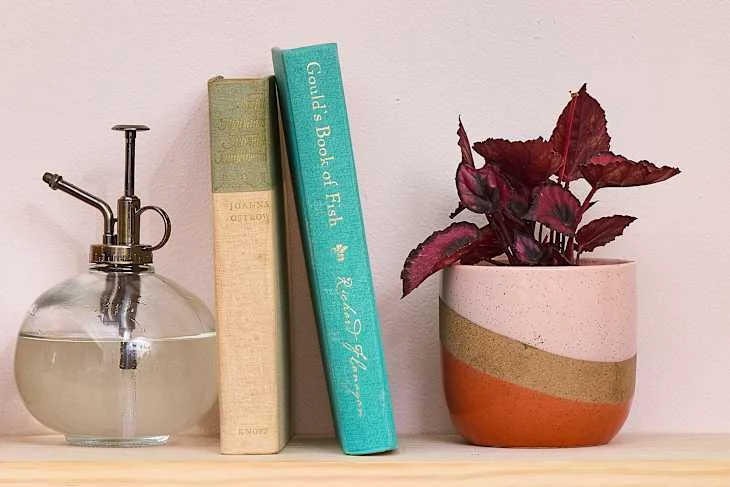
Color and placement: Silver, burgundy, pink and patterned leaves. Bright filtered. Low, spreading clump.
Rex begonias offer some of the richest leaf patterns for a side table. Pick one leaf color to repeat elsewhere in the room, such as burgundy in a cushion or silver in a lamp base. Give the plant enough open space for the leaves to overlap naturally.
Provide a freely draining mix, moderate moisture and protection from hot direct sun. Avoid repeatedly wetting the foliage or leaving the pot standing in water. This is a foliage display, so remove damaged leaves carefully instead of hiding the plant behind other pots. Begonias are unsuitable for pets that chew plants.
3. Pink Princess philodendron
Philodendron erubescens 'Pink Princess'
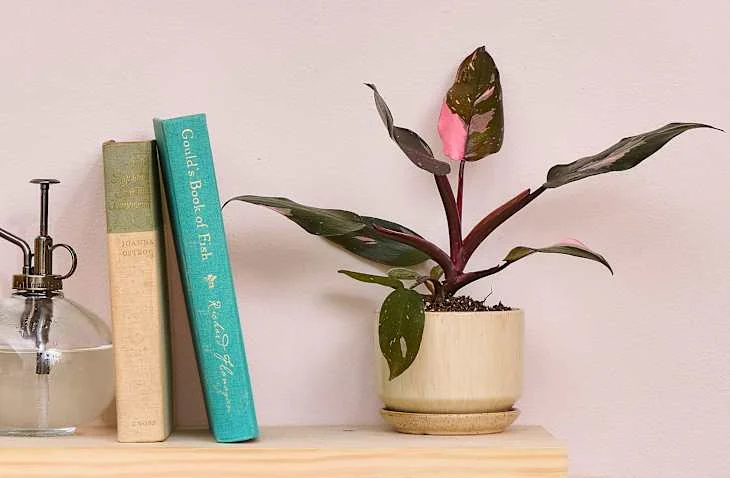
Color and placement: Pink sectors against dark green. Bright indirect. Climber that needs support.
Pink Princess works best as one deliberate focal plant. The pink areas are uneven by nature; a photograph of one leaf does not promise the same pattern on future growth. Check several leaves before buying, and plan space for a climbing stem rather than treating it as a permanently small tabletop plant.
Provide support as it grows and water when the upper mix has dried. Stronger suitable light can support growth, but harsh sun can scorch pale tissue. An almost entirely pink leaf has little green tissue for photosynthesis. Keep this philodendron out of chewing reach.
4. Pink-striped Tradescantia
Tradescantia 'Nanouk' types
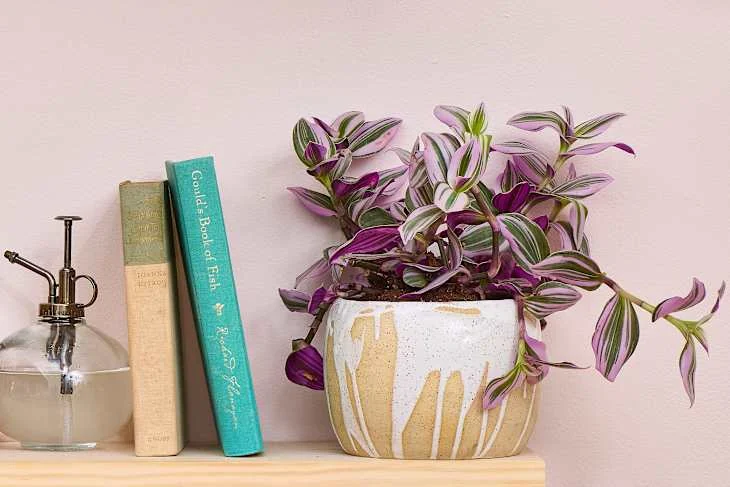
Color and placement: Pink, cream and green stripes. Bright indirect; gentle sun if acclimated. Trailing stems.
Pink, cream and green striped leaves with purple undersides give a shelf movement as well as color. Place the pot near the edge of a bright ledge so some stems can hang freely, while keeping them clear of handles and walkways. A dark green plant beside it can make the purple feel more deliberate.
Pinch and renew stems when the base becomes bare. Keep the mix from staying waterlogged, and avoid a deep, dark shelf where growth stretches. For basket choice, watering access and trailing length, see our hanging indoor plants guide. Sap can irritate skin, so handle cut stems thoughtfully.
5. Croton
Codiaeum variegatum
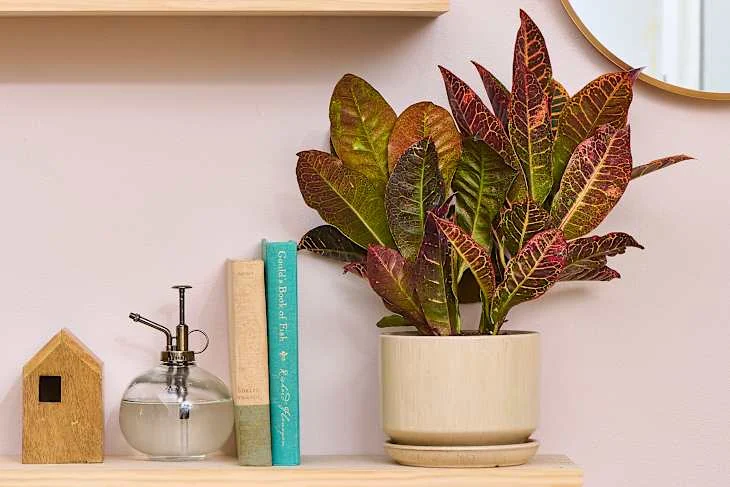
Color and placement: Yellow, orange, red and green. Very bright light; suitable sun. Upright shrub.
Croton brings the warm palette of a patterned rug into the foliage itself. It suits a bright living room where a bushier plant has room to grow. Choose a location for its light before choosing a planter to match the room; it is a poor candidate for a decorative dark corner.
NC State notes that crotons need bright light for their best leaf color. Acclimate gradually to sun, protect from cold drafts and let the surface start drying between waterings. Check leaf undersides for pests. The sap can irritate skin, and the plant should stay out of chewing reach.
6. Polka dot plant
Hypoestes phyllostachya
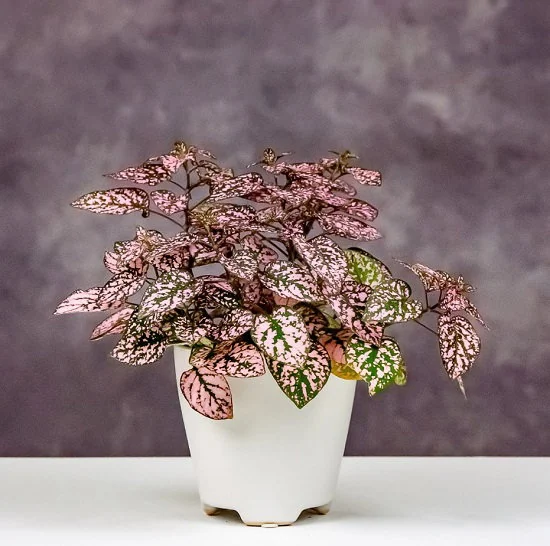
Color and placement: Pink, red or white speckles. Bright filtered. Small plant maintained by pinching.
This is a cheerful choice when you want a small patch of color on a table rather than a large statement plant. Pink forms work with warm neutrals, while white-speckled forms sit easily beside pale ceramics and dark wood. Use the pattern as an accent rather than repeating several busy pots.
Pinch suitable stem tips to maintain a full outline and check the mix before it dries completely. Low light encourages weak stems and faded markings; repeated heavy pruning cannot fix that. Treat it as a plant that needs active shaping, especially after a period of fast growth.
7. Nerve plant
Fittonia albivenis
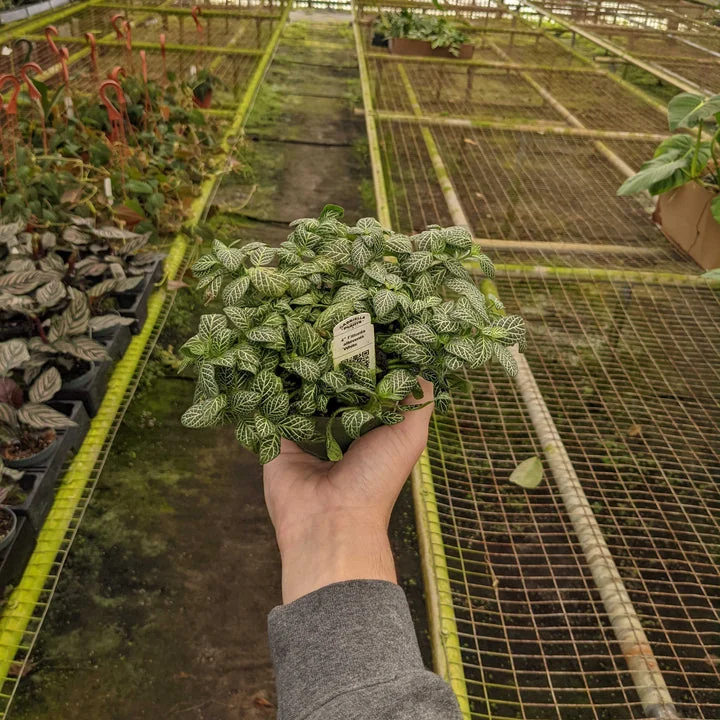
Color and placement: Fine pink, red or white veins. Medium to bright indirect. Low, spreading growth.
Nerve plant gives a close-up display an intricate pattern. The veining reads best on a small table, broad sill or lit bathroom shelf where you can see the leaves from above. Choose one vein color to echo in a nearby object rather than trying to match every shade.
Protect it from dry drafts and hot sun, and keep the mix moist without leaving the roots saturated. It is a better choice for regular attention than for long absences. The ASPCA lists nerve plant as non-toxic to cats and dogs, although chewing any houseplant should still be discouraged.
8. Purple velvet plant
Gynura aurantiaca
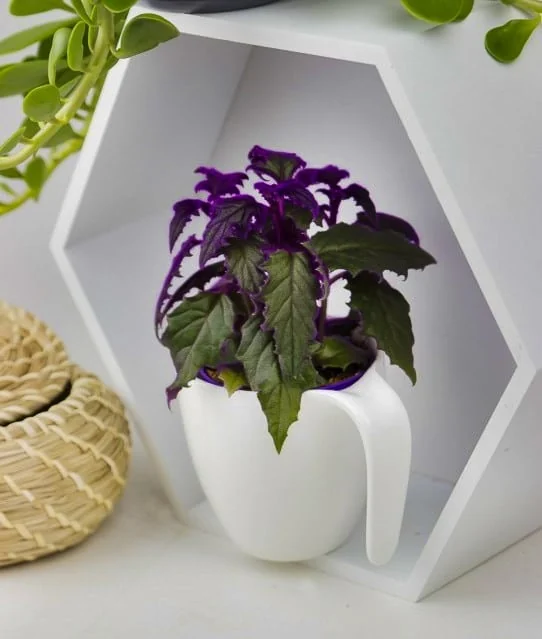
Color and placement: Purple hairs over green leaves. Bright filtered. Upright stems that can trail.
The color comes from fine purple hairs, so its effect changes with viewing angle and light. Place it where daylight catches the foliage from the side. A matte pot works well with this soft-looking texture, especially near smoother green leaves or a simple stack of books.
Keep the mix draining freely and avoid repeatedly wetting the fuzzy foliage. Pinch stems to encourage a fuller plant, and renew tired growth when necessary. Do not expect a shaded back shelf to produce the same vivid effect as a bright position. Check the exact label rather than buying by an edited social photo.
9. Red prayer plant
Maranta leuconeura cultivars
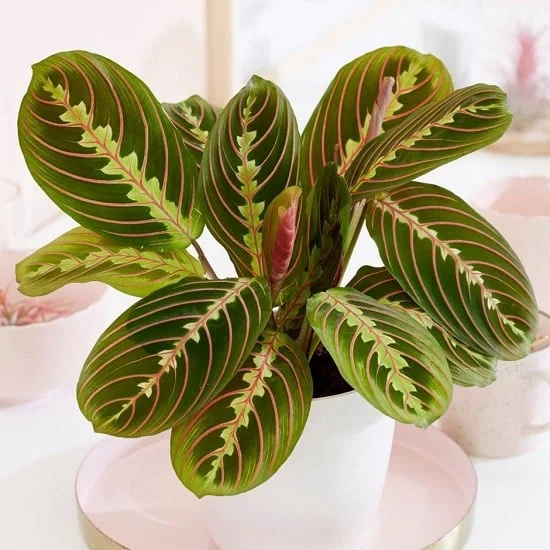
Color and placement: Red veins over patterned green. Medium to bright indirect. Low clump with outward growth.
Red veins introduce a warm detail without making the entire leaf red. Prayer plant is useful beside neutral upholstery or wood because the pattern stays visually grounded in green. Leave space around the plant to appreciate the leaves as they change position through the day.
Provide steady moisture, drainage and protection from drying airflow. Harsh direct sun is a poor match for the patterned leaves. Brown edges can have several causes, so check moisture, water quality and airflow before changing everything at once. A tray beneath the pot protects furniture but should not hold the roots in standing water.
10. Purple shamrock
Oxalis triangularis
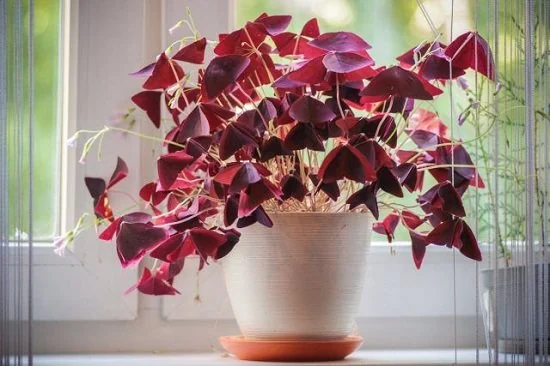
Color and placement: Deep purple triangular leaflets. Bright light; gentle sun if suitable. Airy mound.
Purple shamrock gives a windowsill a light, fluttering silhouette. Its dark leaves stand out against a pale wall or light-colored pot, while the open stems prevent the display from feeling solid and heavy. The leaves naturally fold, so its appearance will change between daytime and evening.
NC State notes that purple shamrock can enter dormancy, including in response to heat or dryness. A rest period is different from proof that the plant needs more water. Reduce watering when growth stops and check for new growth before resuming normal care. Keep it away from chewing pets.
11. Aluminum plant
Pilea cadierei
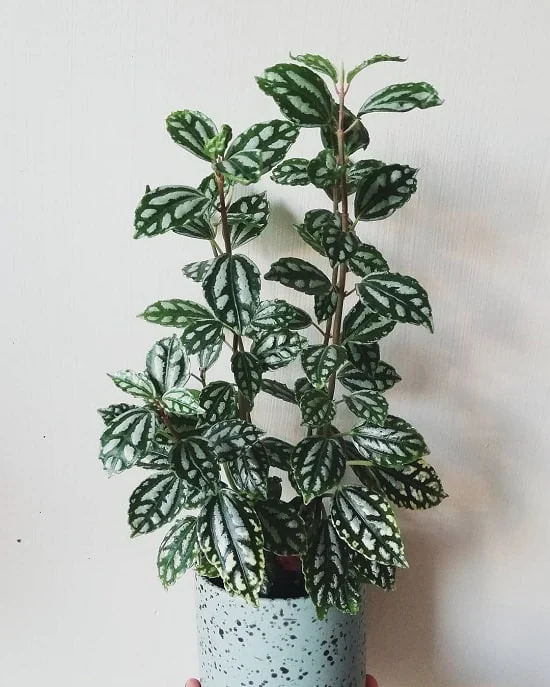
Color and placement: Silver patches on green leaves. Bright indirect. Bushy tabletop plant.
Silver foliage is a useful bridge between colorful plants and a quieter room. Aluminum plant introduces a cool pattern that pairs easily with stone, pale wood and simple white ceramics. It can sit beside a pink plant without making the whole grouping feel saturated.
Pinch growing tips to encourage a compact outline and keep the mix moist but draining. Older stems can become less attractive, so plan to renew the plant when needed. Its common name comes from the leaf markings; it is not the same species as watermelon peperomia. For limited shelf space, compare the options in our small indoor plants guide.
12. Purple waffle plant
Strobilanthes alternata, often sold as Hemigraphis alternata
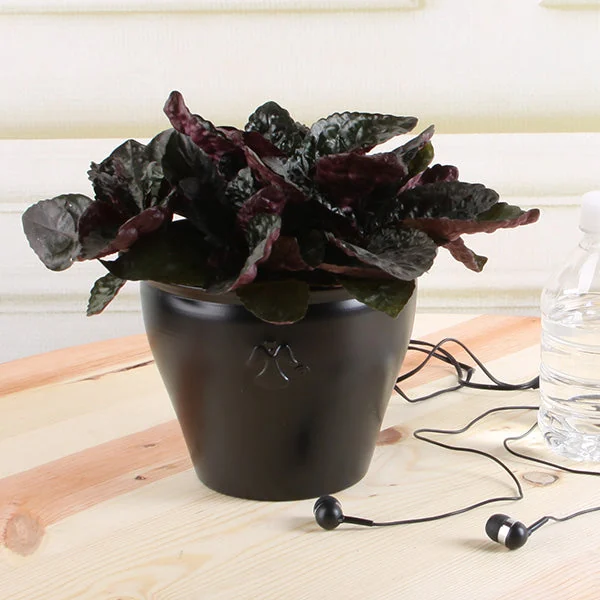
Color and placement: Purple undersides and textured leaves. Bright indirect. Low, spreading stems.
Purple waffle plant has a crinkled surface that adds texture even when the strongest color sits beneath the leaves. Put it slightly above seated eye level so the purple undersides become part of the view. It suits a small shelf grouping with open space below the foliage.
Provide warmth, steady moisture and a draining mix. A dry, drafty room can make it a demanding choice, so consider your normal indoor conditions before buying. Pinch long stems if you want a fuller shape. Do not leave a soft-stemmed plant in a wet decorative cover just because the leaves look thirsty.
13. Earth star
Cryptanthus bivittatus
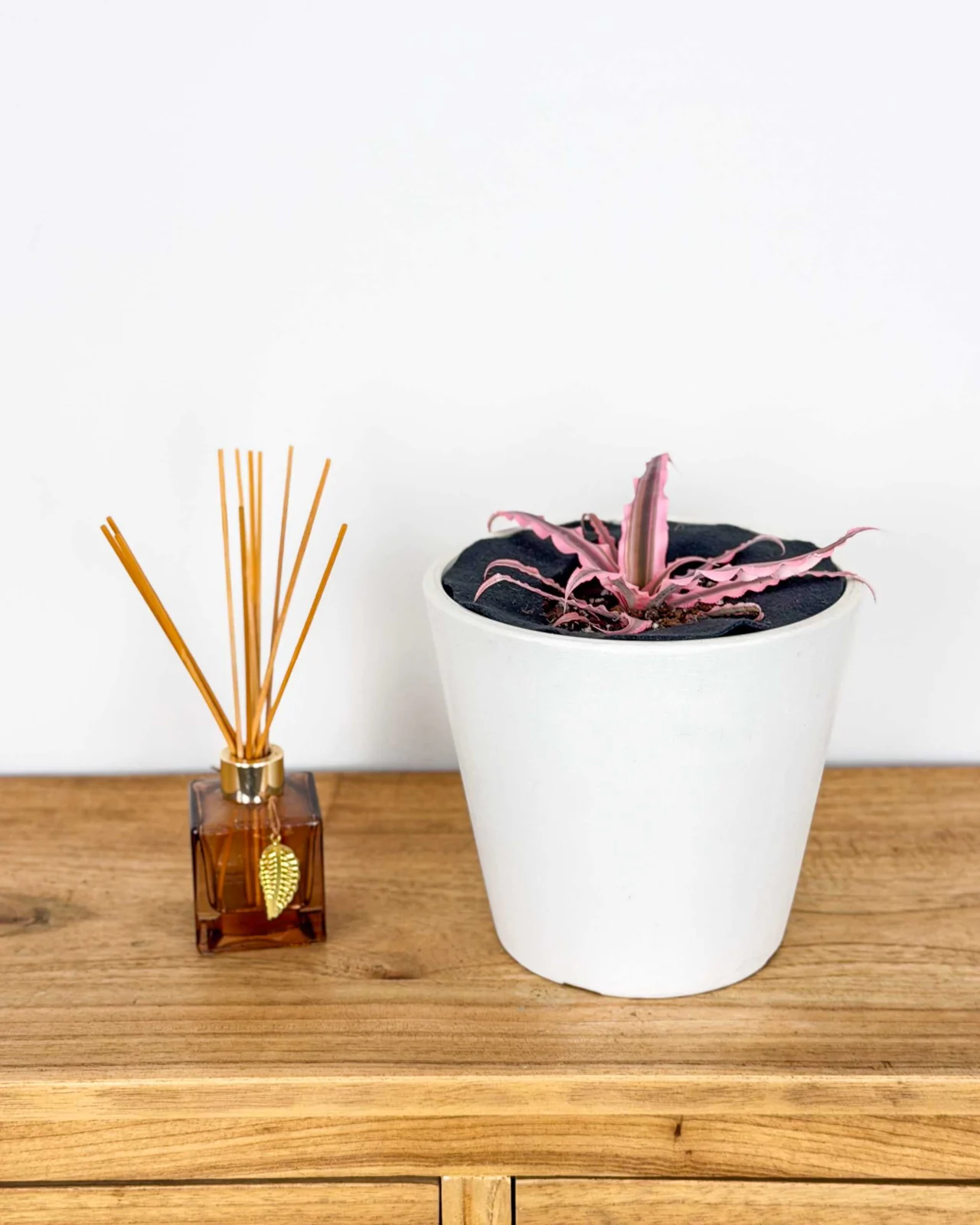
Color and placement: Pink or red stripes in a star-shaped rosette. Bright filtered. Low, spreading rosette.
An earth star looks especially good from above, making it useful for a low table or a broad ledge. Striped cultivars can provide a clear pink accent without the climbing habit of a philodendron. Use a plain surrounding surface so the radiating leaf pattern remains the focus.
Water the growing medium, since this terrestrial bromeliad is not a soil-free air plant. Avoid both prolonged deep shade and scorching sun. Leave space for the leaf span and future offsets. A pot chosen only for its diameter can still be too narrow for the mature foliage.
14. Hawaiian ti plant
Cordyline fruticosa cultivars
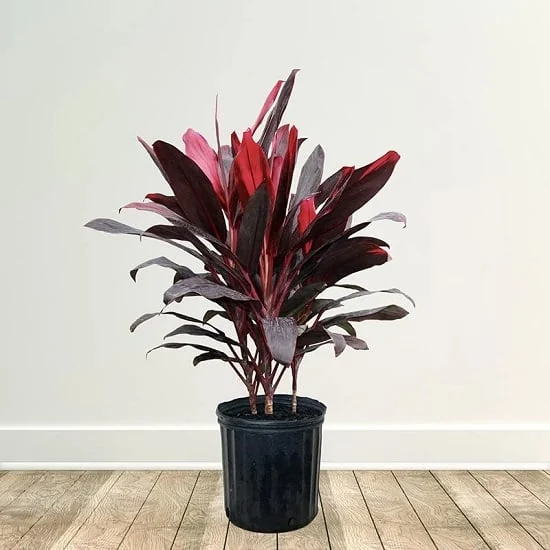
Color and placement: Pink, burgundy and green broad leaves. Bright indirect. Upright plant that can become large.
A ti plant gives a bright room a taller sweep of color. It can bridge the height between a low console and artwork, but the mature plant deserves room of its own. Keep it away from narrow passages where the broad leaves will be repeatedly brushed.
NC State recommends bright indirect light to maintain the colored foliage. Protect it from cold drafts, provide a draining mix and check moisture regularly. It can be demanding in dry interiors. Compare the available floor space with our large indoor plants guide before buying a tall specimen.
15. Variegated rubber plant
Ficus elastica cultivars
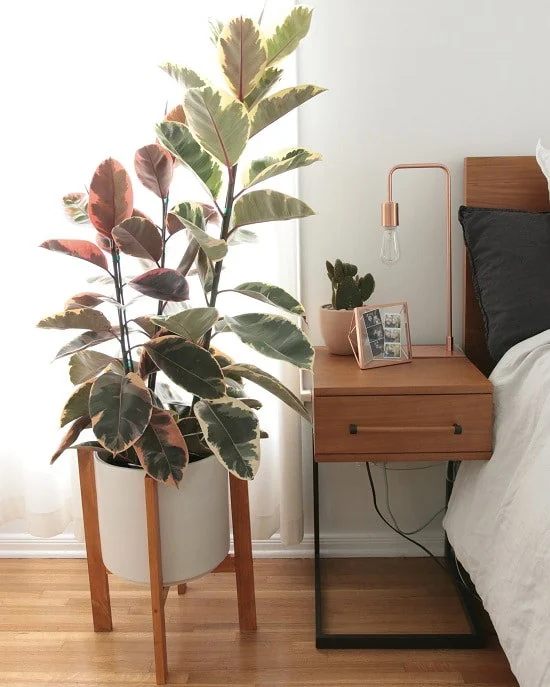
Color and placement: Cream, green and pink-tinged foliage. Bright indirect. Upright woody plant.
Variegated rubber plant offers broad leaves with a softer palette than croton. Cream and blush tones work well with pale walls and warm wood. Cultivars vary, so inspect the actual plant and do not assume that every variegated rubber plant is the pinkest Ruby form.
Plan for a larger plant over time, wipe dust gently from the leaves and allow the upper mix to dry before watering. Pale leaf areas need protection from sudden harsh sun. The milky sap can irritate skin; keep the plant away from pets that chew leaves and handle pruning with care.
16. Caladium
Caladium hybrids
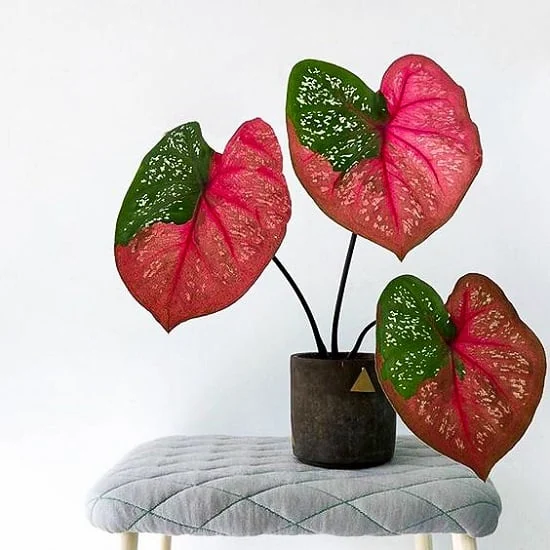
Color and placement: Pink, red and white patterned leaves. Bright filtered light. Seasonal mound from a tuber.
Caladium gives a room broad, translucent-looking leaves with a strong pattern. It suits a bright seasonal display rather than a promise of unchanged foliage all year. Place it where the thin leaves can spread without being pushed against curtains or a hot window.
Keep it warm and provide moisture while actively growing, with drainage beneath the roots. Caladiums can die back into dormancy; do not keep soaking an inactive tuber to force a full leafy appearance. Check cultivar-specific light needs and avoid sudden exposure to strong sun. Keep the plant out of chewing reach.
17. Coleus
Coleus scutellarioides cultivars
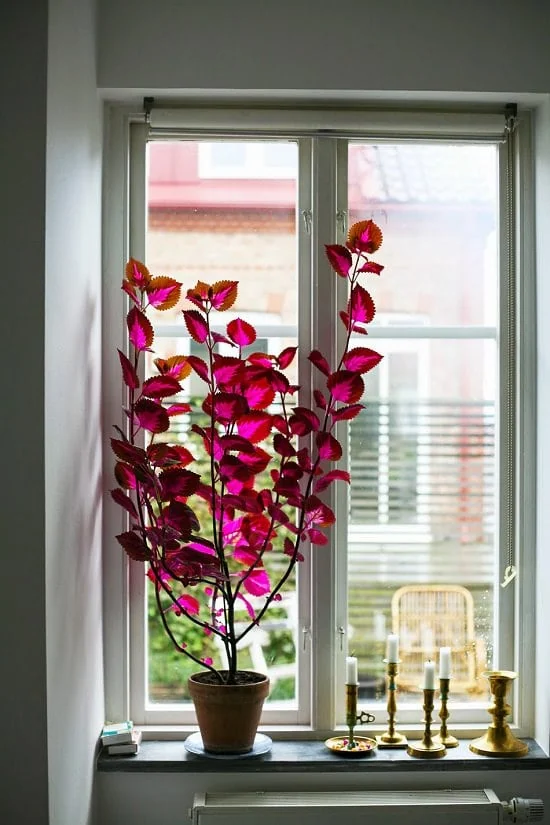
Color and placement: Lime, burgundy, pink and patterned edges. Bright indoor light. Bushy growth maintained by pinching.
Coleus is a good option when you enjoy changing a display and shaping plants. The leaves can echo several room colors at once, so select a simple pot and avoid adding too many competing accessories. A small nursery plant can grow quickly and needs room beyond its starting pot.
NC State notes that coleus grown as a houseplant requires bright light. Pinch growing tips for a bushier shape, keep the mix draining and inspect for pests. A variety grown successfully outdoors in shade is not automatically suited to the dim interior of a room.
18. Persian shield
Strobilanthes auriculata var. dyeriana
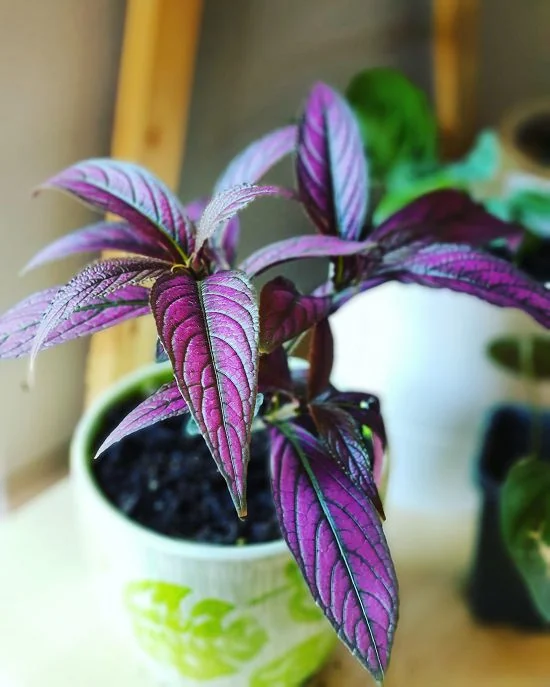
Color and placement: Iridescent purple and silver. Bright filtered light. Vigorous plant that needs space.
Persian shield has a metallic purple sheen that changes as you move around it. It makes more sense as a focal plant beside a bright window than as another tiny pot on an already crowded shelf. Pair it with one quieter green plant so the leaf surface remains the main attraction.
NC State describes reduced color in cool or poorly lit conditions. Keep it warm, provide drainage and pinch for a bushier form. Older growth can lose its strongest effect, so renewal may be part of maintaining the display rather than evidence of a failed decorating choice.
Make the Colors Work in Your Room
Start with one color family
Choose a main direction before buying several plants: pink and cream for a softer display, purple and silver for a cooler one, or red and green for a stronger contrast. You do not need to match every leaf to a cushion. Repeating one accent in a nearby object is usually enough to make the arrangement feel connected.
For a simple starting point, pair a red Aglaonema with a plain cream pot and one dark green plant. In a cooler room, try a silver-patterned Pilea beside warm wood. These are styling choices, so choose the combination you enjoy rather than assigning a guaranteed outcome to a leaf color.
Give patterned leaves a quiet background
Place the strongest pattern against a plain wall or a clear section of shelf. A speckled leaf, a patterned pot, wallpaper and several small ornaments can compete at close range. Keep at least one of those surfaces simple.
Vary silhouette as well as color. A low earth star, an upright Aglaonema and a trailing Tradescantia produce a more readable grouping than several similarly sized bushy plants. Keep each in a separate draining pot so watering can follow its own needs. A visually coordinated group does not need to share one root zone.
Keep suitable light ahead of the styling plan
A beautiful pot does not make a dark position suitable. Observe the actual window, nearby buildings, curtains and seasonal sun before choosing the plant. The University of Minnesota Extension light guide explains that tolerating lower light is different from producing dense foliage or flowers.
Avoid a fixed rule such as every pink plant needing direct sun. Fittonia and rex begonia can scorch where a sun-acclimated croton might work. Move plants into stronger light gradually and watch new growth. If a windowless room is your only option, plan suitable artificial lighting using our windowless-room guide.
Keep Foliage Healthy and Colorful
Check what changed before trying a fix
Compare recent growth with older leaves. Is the plant stretching, losing a lower leaf, producing a different pattern, or developing a dry bleached patch? Those observations point to different checks. Some variation is normal; not every change is a shortage of light or fertilizer.
Color changes and the first condition to check
Scroll sideways to compare all columns.
| What you notice | Check first | What to avoid |
|---|---|---|
| Long gaps between leaves and weaker new growth | Usable light at the leaves | Heavy feeding to compensate for a dark shelf |
| Pale, dry patches after a move | Sudden sun or heat exposure | Moving straight into even stronger sun |
| Yellowing with mix that stays wet | Drainage and water in the outer cover | Adding water just because a leaf looks tired |
| Leaf dieback on caladium or purple shamrock | Season, temperature and possible dormancy | Keeping an inactive plant continuously wet |
| Different pink or cream markings on new leaves | Cultivar, leaf age and growth conditions | Expecting every leaf to reproduce an edited photo |
Water, clean and feed for growth
Check the mix in each pot before watering and empty excess water from covers and saucers. Keep foliage away from a direct blast of heating or air-conditioning. Wipe smooth leaves gently when dusty; use a suitable gentler approach for fuzzy or delicate leaves. Avoid cosmetic leaf-shine products and dyes.
Feed during active growth according to a suitable fertilizer's label. Do not treat fertilizer as a way to force more pink into a genetically variegated leaf or to repair waterlogged roots. The University of Maryland fertilizer guide explains the risk of excess salts. Check whether the potting mix already contains feed before adding more.
Buy the plant you can inspect
Ask for the botanical name and cultivar, then inspect several leaves, stems and the mix. Social photos can be edited, filtered or photographed under unusual light. Neon colors on a cactus may also be applied rather than natural. Look for ordinary new growth, pest-free leaf undersides and a pot that drains.
Check pet access before settling the display. The ASPCA plant database lets you compare the exact name; Fittonia and Pilea cadierei are listed as non-toxic to cats and dogs, while many other plants in this guide need separation from chewing pets. Our office plants guide covers additional placement decisions when the display sits in a workspace.
If you want color from blooms, choose from indoor flowering plants by flower season and the care needed to bloom again.