



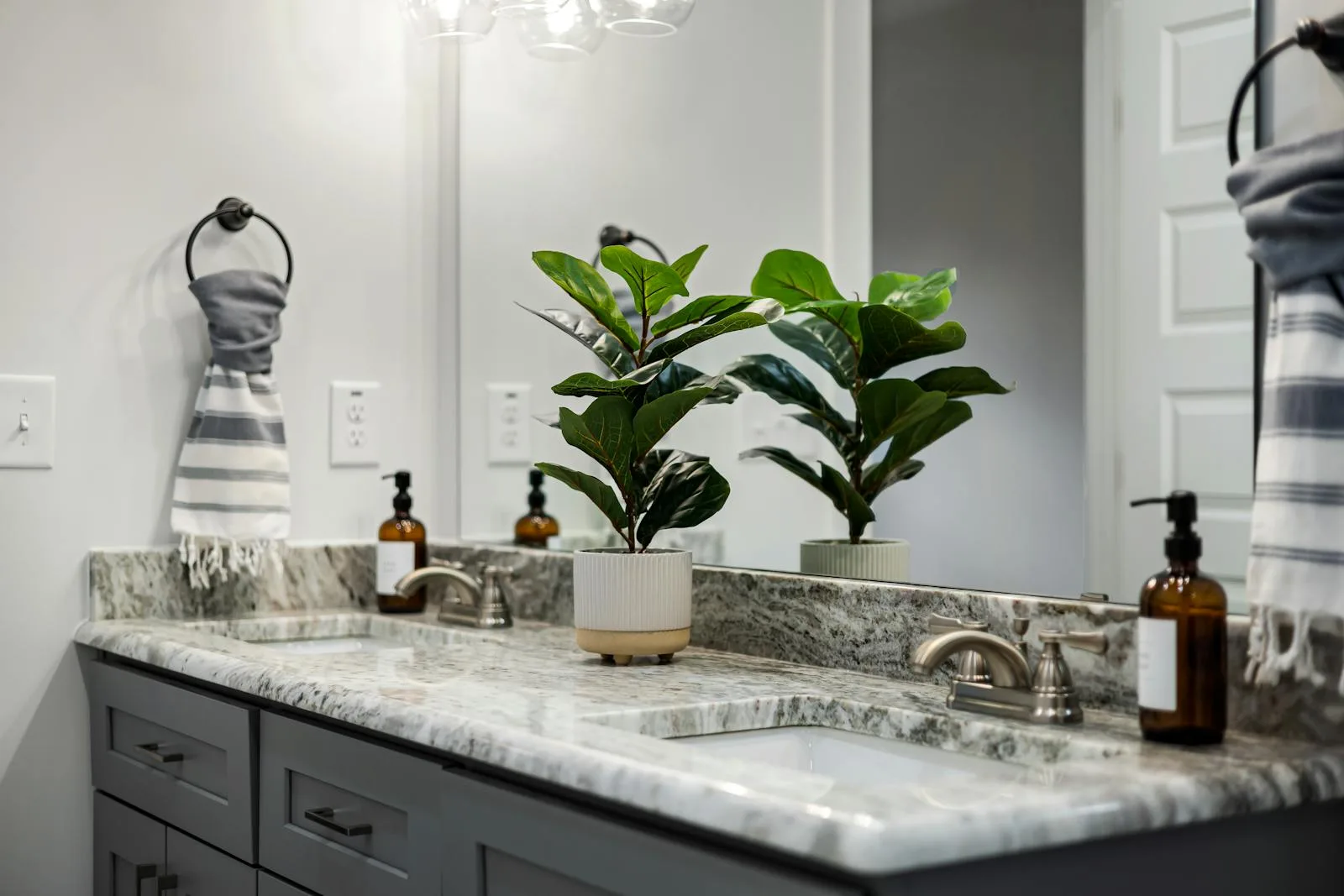
Quick Answer
The best bathroom plants for feng shui are the ones that tolerate humidity, stay healthy in the available light, and soften the room without cluttering every ledge. Pothos, fern, peace lily, and one or two smaller leafy plants work better than trying to cram greenery into every corner.
Disclosure: This article includes affiliate links. If you buy through them, we may earn a small commission at no extra cost to you.
Bathroom plants help most when the room feels a little cold, too hard, or visually empty.
In feng shui, the bathroom often benefits from anything that makes it feel cleaner, softer, and more alive without creating new mess. Plants can do that beautifully, but only when they still look believable in the space. One healthy trailing plant on a shelf is more effective than five tiny pots around the sink. If you want the broader plant version of this topic, feng shui indoor plants goes wider across the whole home.
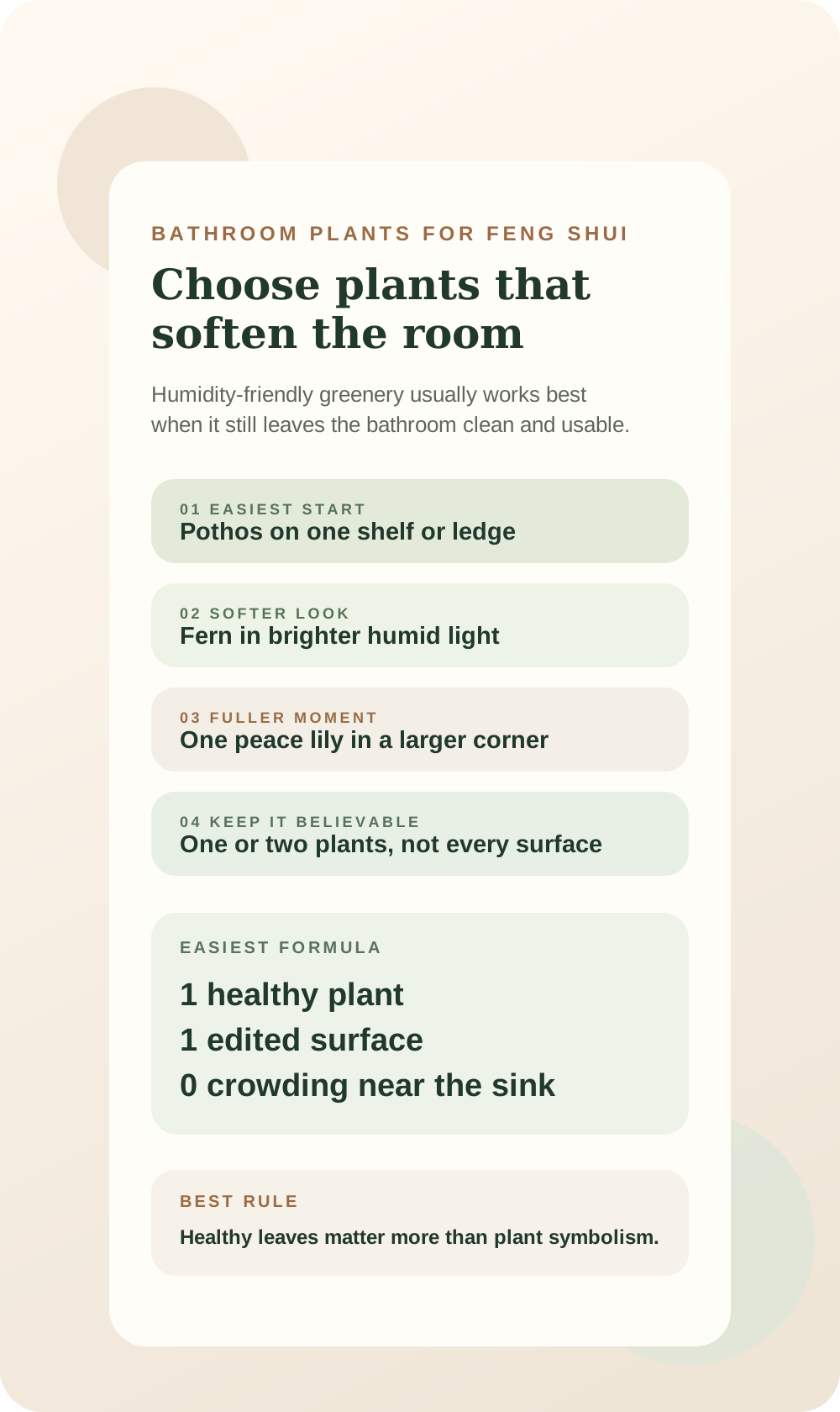
The Best Bathroom Plants Like Humidity and Simpler Placement
Bathrooms are full of tile, mirror, chrome, grout, and sharper reflected light. Plants work well here because they interrupt some of that hardness. The most convincing choices are the ones that match the room conditions first: steam, splashes, indirect light, and limited surfaces.
| Plant | Best bathroom match | Why it works | Shop |
|---|---|---|---|
| Pothos | Open shelf or high ledge | It softens hard lines and trails naturally without needing a large footprint. | Shop |
| Fern | Brighter humid bathroom | Its softer shape relaxes the room and suits steam better than many rigid plants. | Shop |
| Peace lily | Larger counter or floor corner | It adds one fuller green moment when the room feels a little bare. | Shop |
| Trailing philodendron | Windowsill or upper shelf | It helps a bathroom feel less clinical without making the vanity crowded. | Shop |
| One compact leafy plant | Edited vanity corner | It brings life to the room when you want greenery without a jungle effect. | Shop |
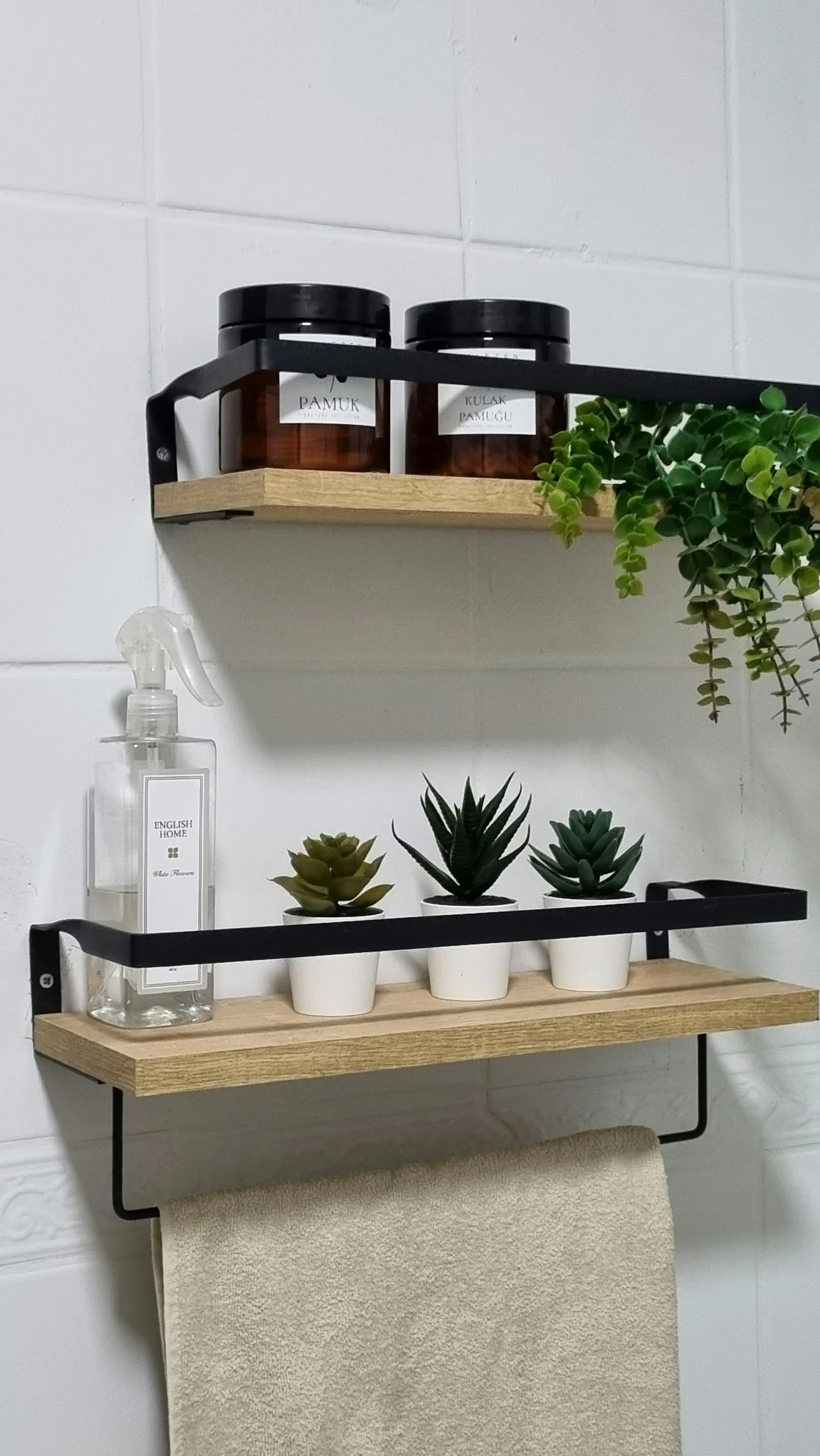
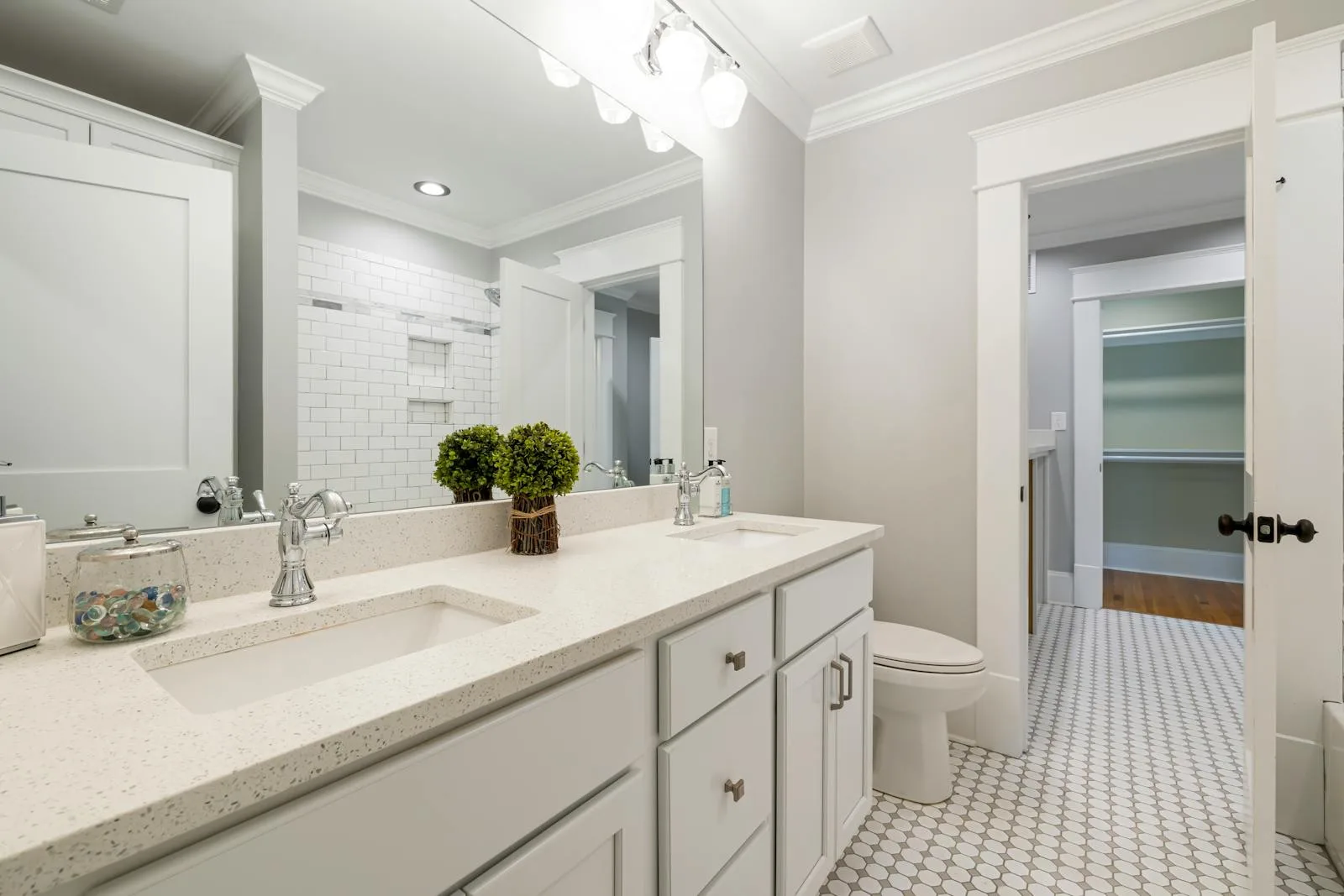
Pothos is often the easiest place to begin because it looks natural on a shelf and does not ask for much visual attention. Ferns are excellent when the room feels too sharp or echoey, especially if the bathroom gets decent indirect light. If your palette feels cold, feng shui colors for bathroom pairs well with this because softer color and one good plant often do more together than either does alone.
Light, Humidity, and Placement Matter Most
A bathroom plant only helps when the room can keep it healthy. Humidity is useful for some plants, but humidity alone does not replace light, drainage, or air movement. If the room has no window and the plant always looks tired, the calmer choice may be one realistic faux plant or no plant at all. This matches guidance from Penn State Extension, which notes that bathrooms often lack suitable plant light, and the University of Minnesota Extension, which explains how insufficient light produces weak, stretched growth.
Check plant safety before buying
Pothos, peace lily, and philodendron contain insoluble calcium oxalates that can irritate a pet's mouth and digestive tract if chewed, according to the ASPCA Animal Poison Control Center. Peace lily can also irritate the mouth and throat of children, as explained by Poison Control. Keep these plants genuinely out of reach, or choose a verified non-toxic alternative such as a true Boston fern when children or plant-chewing pets use the room. If exposure occurs, contact the appropriate poison-control service or a veterinarian rather than relying on a home remedy.
| Bathroom condition | Best plant direction | What to avoid |
|---|---|---|
| Bright, humid bathroom | Fern, peace lily, pothos, or trailing philodendron | Letting the plant sit in standing water after showers. |
| Small bathroom with one shelf | One trailing plant or one compact leafy plant | Using every ledge as a plant display. |
| Dim bathroom | Try one low-light plant near the brightest spot, then simplify if it struggles. | Keeping yellowing plants because greenery feels symbolically important. |
| Large bathroom corner | One fuller floor plant in a stable pot | A cluster of small pots that makes cleaning harder. |
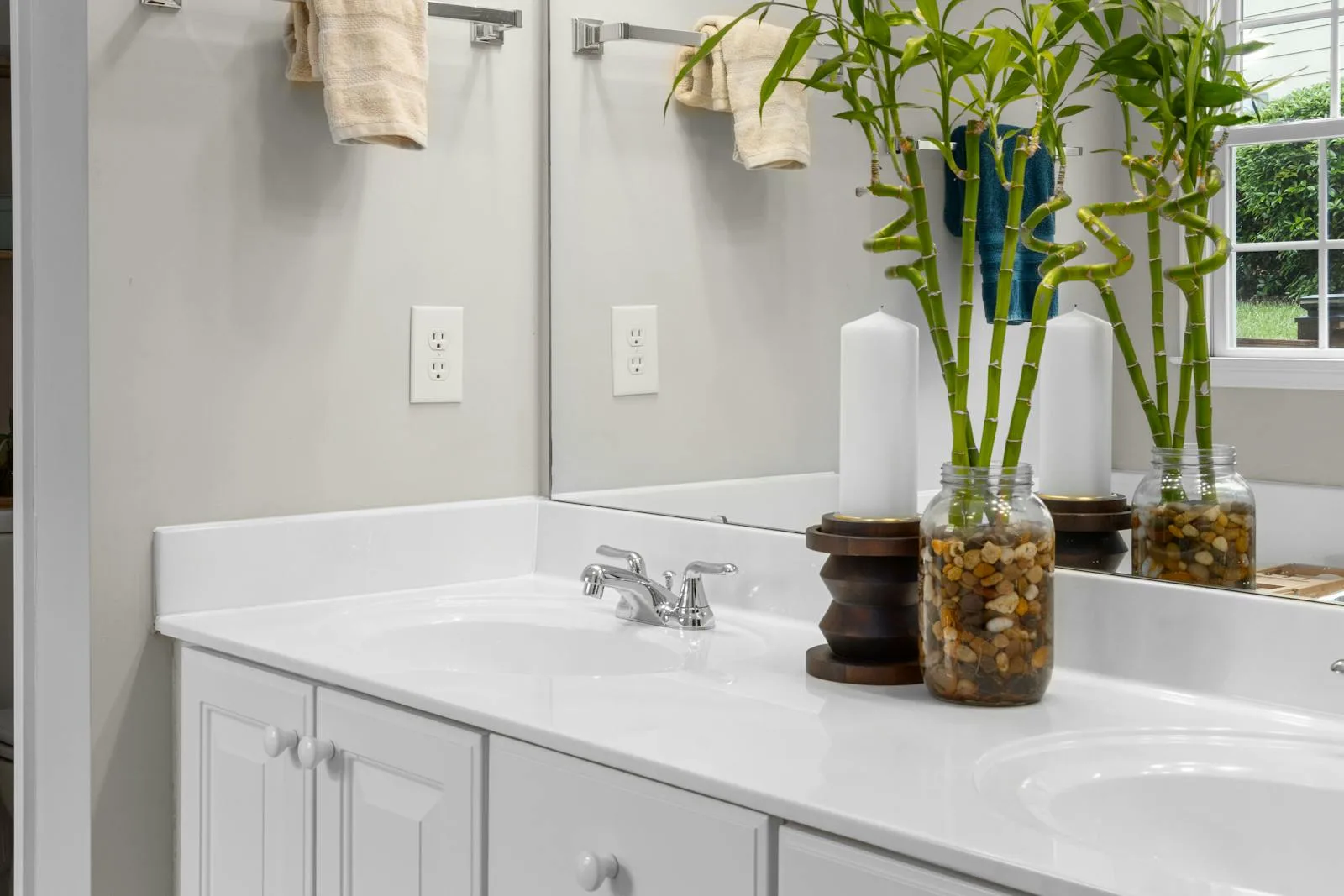
This is also why bathroom plants tend to work better than random decorative filler. A plant brings real life, softness, and a sense of maintenance to a room that can otherwise feel all tile and no warmth. That matters most in bathrooms that look clean but slightly impersonal. The plant should make the room feel more cared for, not more decorated for decoration's sake.
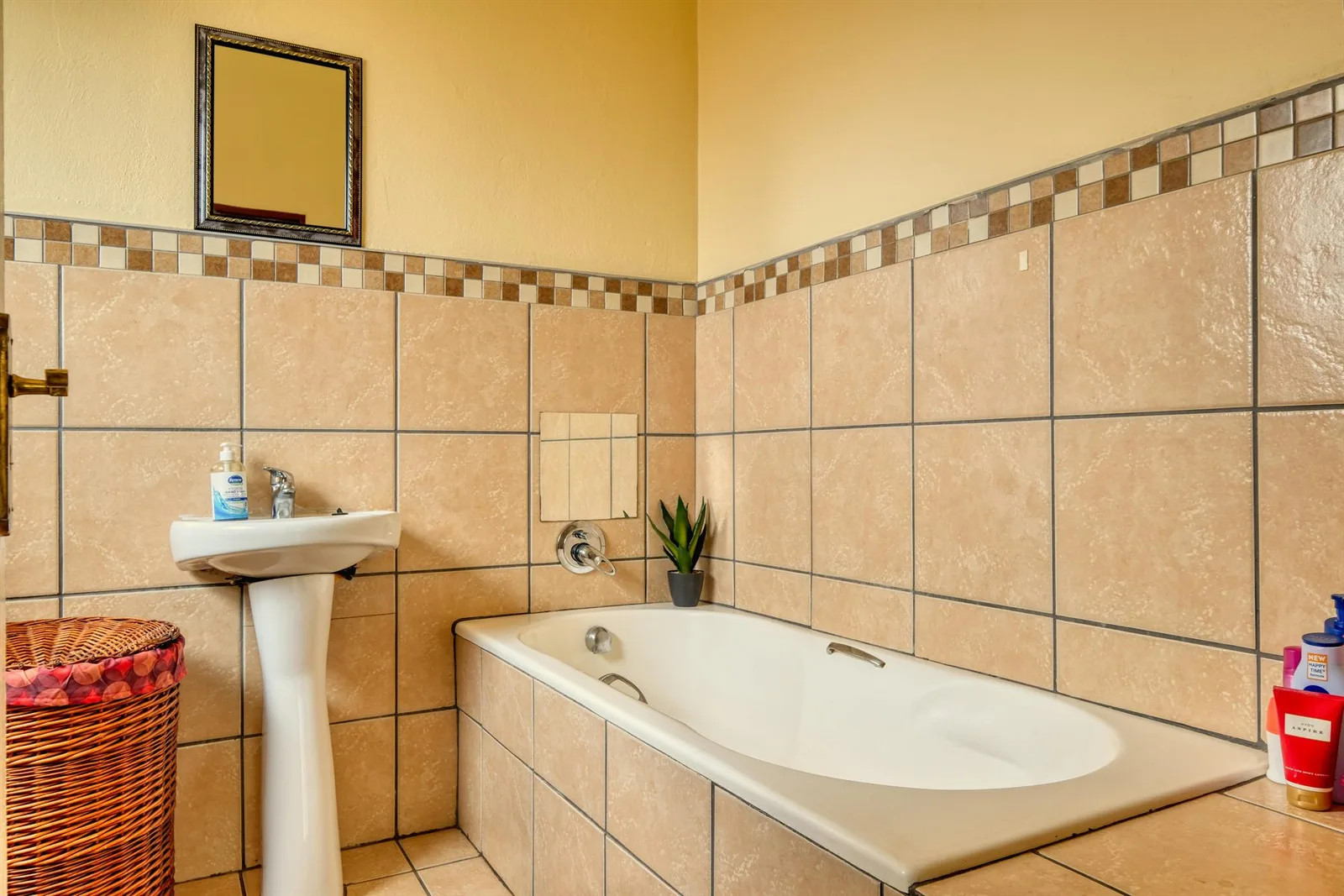
Where Bathroom Plants Work Best
These are the spots where plants tend to improve the room fastest.
One shelf that feels too bare
A larger vanity corner
A brighter windowsill
A floor corner in a larger bathroom
Near softer storage instead of the sink edge
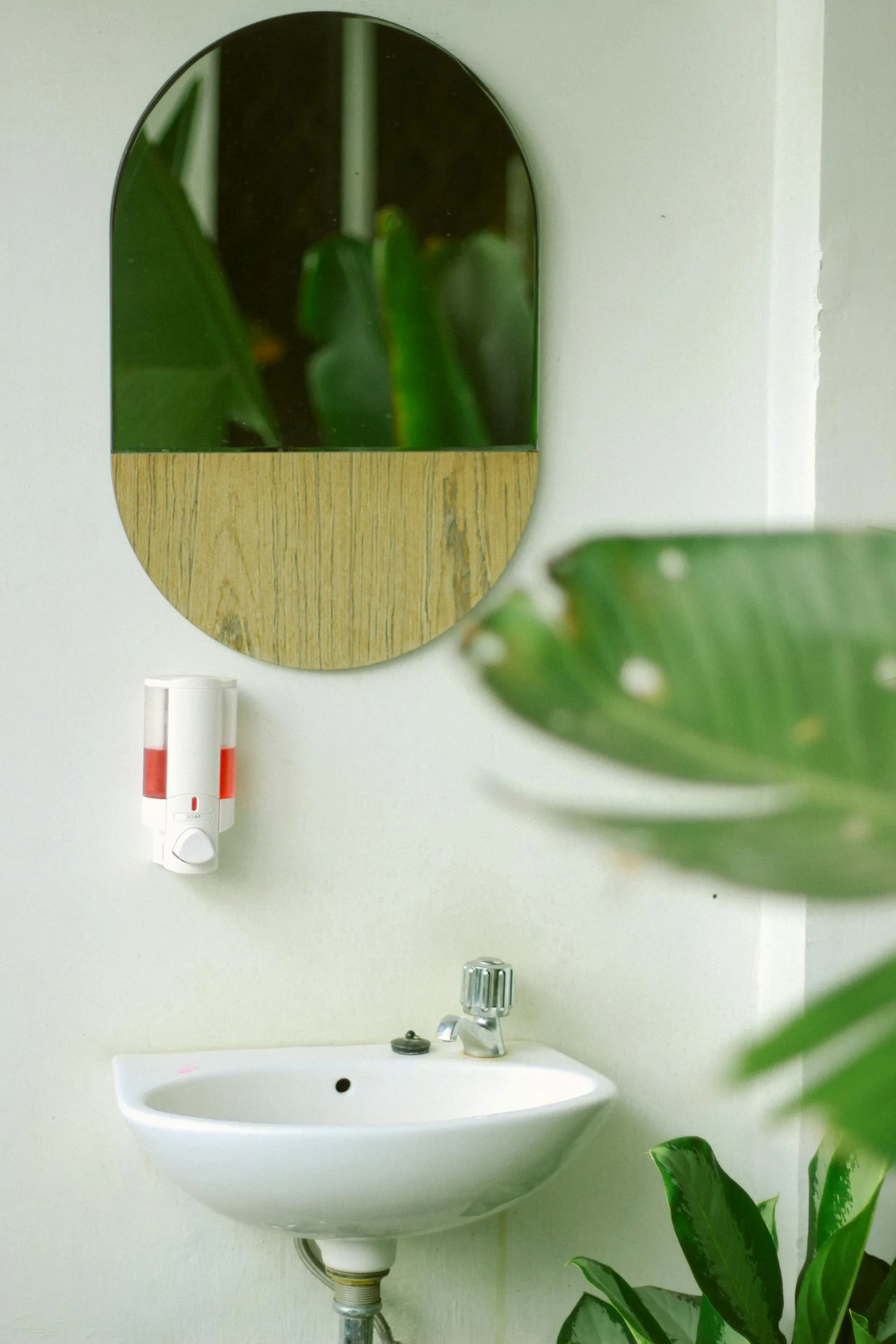
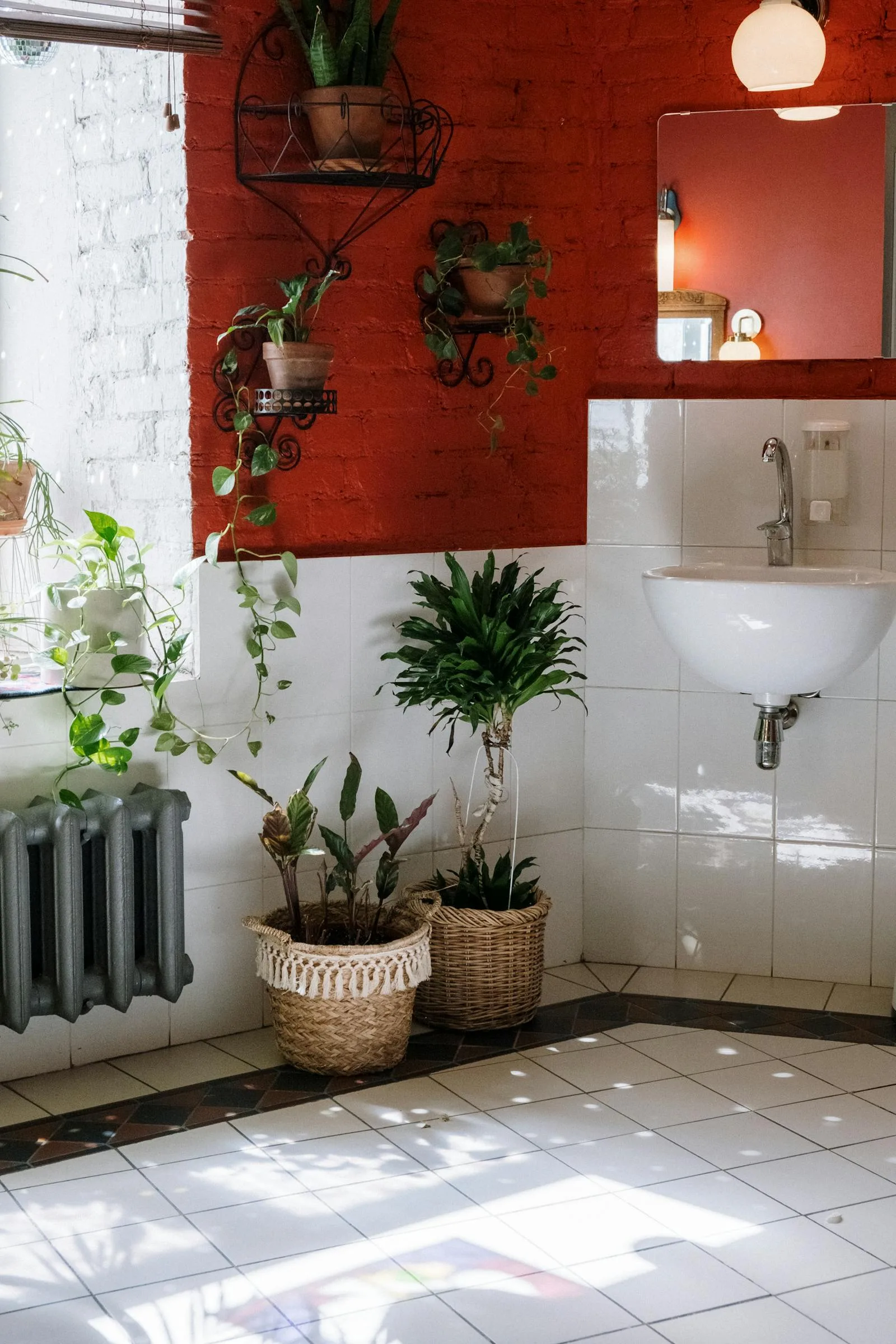
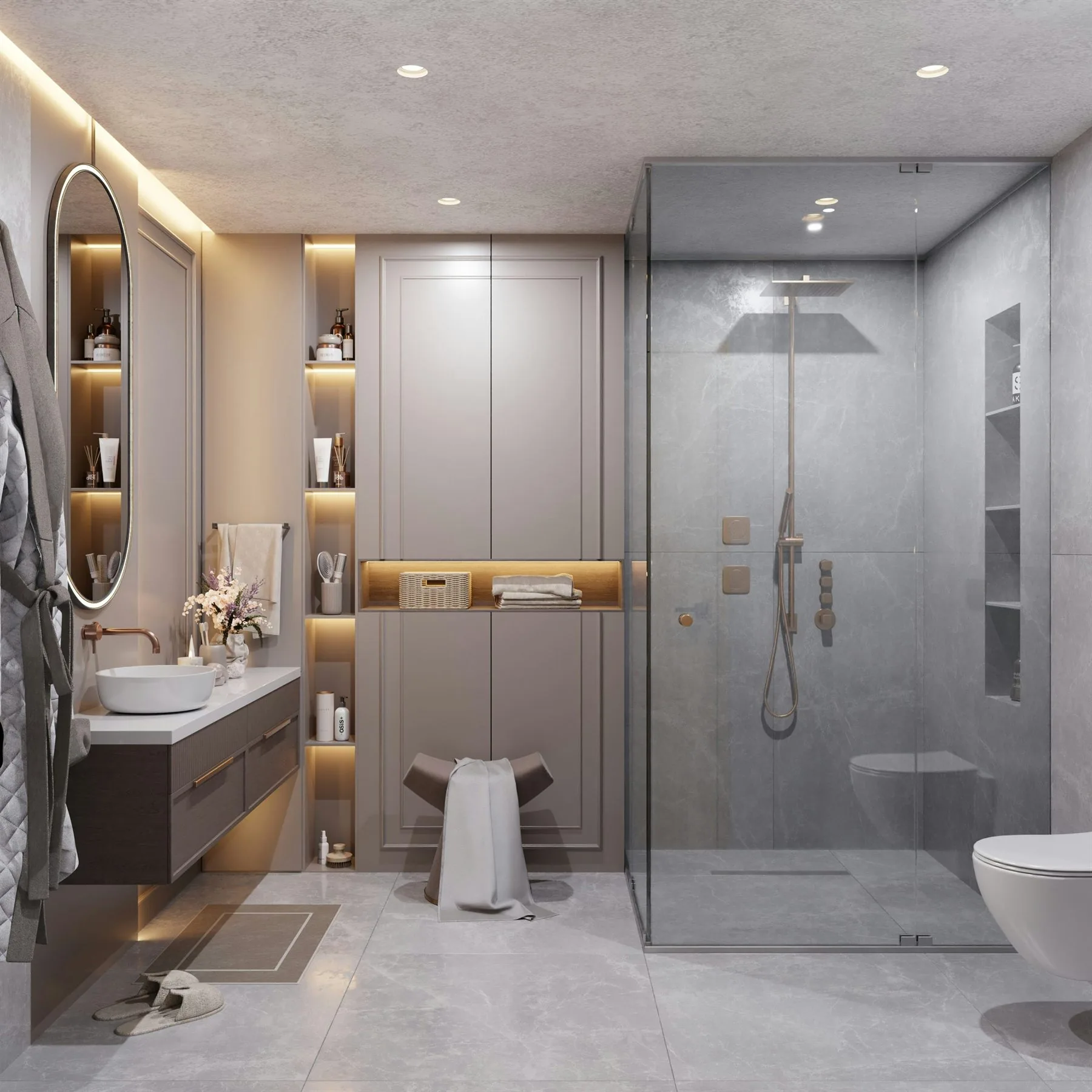
The best bathroom plant styling still leaves the bathroom easy to clean. If the sink feels harder to wipe, the mirror feels visually blocked, or the room starts looking damp and overfilled, the plants are no longer helping. The same editing instinct shows up in feng shui colors to avoid, where too much of one thing can quickly make a small room feel heavier.
Light still decides most of the success here. If the bathroom is very dim and the plant always looks tired, that tiredness becomes part of the room mood. In those cases, one better-lit ledge, one simpler plant, or even no plant at all is the stronger feng shui choice. The point is support, not forcing greenery where the room will not carry it well.
Amazon directions that fit bathroom plant styling
These are buying directions rather than one exact product list. The point is to choose bathroom plant pieces that still look believable in a clean, calm room.
Easiest plant
Pothos live plant
The easiest starting plant if you want one shelf or ledge to feel softer without using much counter space.
View on AmazonSofter look
Boston fern live plant
A good direction for brighter bathrooms that need a softer, less rigid texture than upright plants tend to give.
View on AmazonBest styling fix
Small ceramic plant pot
Helpful when the plant is fine but the nursery pot makes the bathroom look more random than restful.
View on AmazonPlacement support
Bathroom wall shelf
Useful when the room needs one better plant spot and the vanity is already too full to carry another object.
View on AmazonWhat Weakens Bathroom Plant Feng Shui
What helps
- +Use one or two healthy plants that suit the room light and humidity.
- +Keep vanity space open enough for daily use and cleaning.
- +Choose pots that match the bathroom palette instead of fighting it.
- +Trim leaves, wipe surfaces, and remove anything struggling quickly.
What weakens the room
- -Turning every shelf, sill, and counter into a plant display.
- -Using plants that always look wilted because the room is too dark.
- -Crowding the sink, mirror, or faucet with greenery.
- -Treating bathroom plants like symbolism only and ignoring maintenance.
What to watch for
If a bathroom plant always looks soggy, dusty, yellowing, or neglected, remove it fast. A weak plant tends to make the room feel less cared for than using no plant there at all.
The easiest bathroom plant rule
Start with one healthy plant on the best available shelf or ledge. If that single plant makes the bathroom feel softer and more cared for, stop there before adding more.
Frequently Asked Questions
What are the best bathroom plants for feng shui?
Are plants good feng shui in a bathroom?
Where should bathroom plants go in feng shui?
Can I keep plants in a bathroom with no window?
What weakens bathroom plant feng shui?
The Bottom Line
The best bathroom plants for feng shui make the room feel fresher, softer, and easier to live with. That comes from one or two humidity-friendly plants placed where they look natural and stay healthy.
If the bathroom still feels clean, clear, and believable after the plant arrives, it is probably helping. If it starts feeling damp, crowded, or annoying to maintain, simplify.