



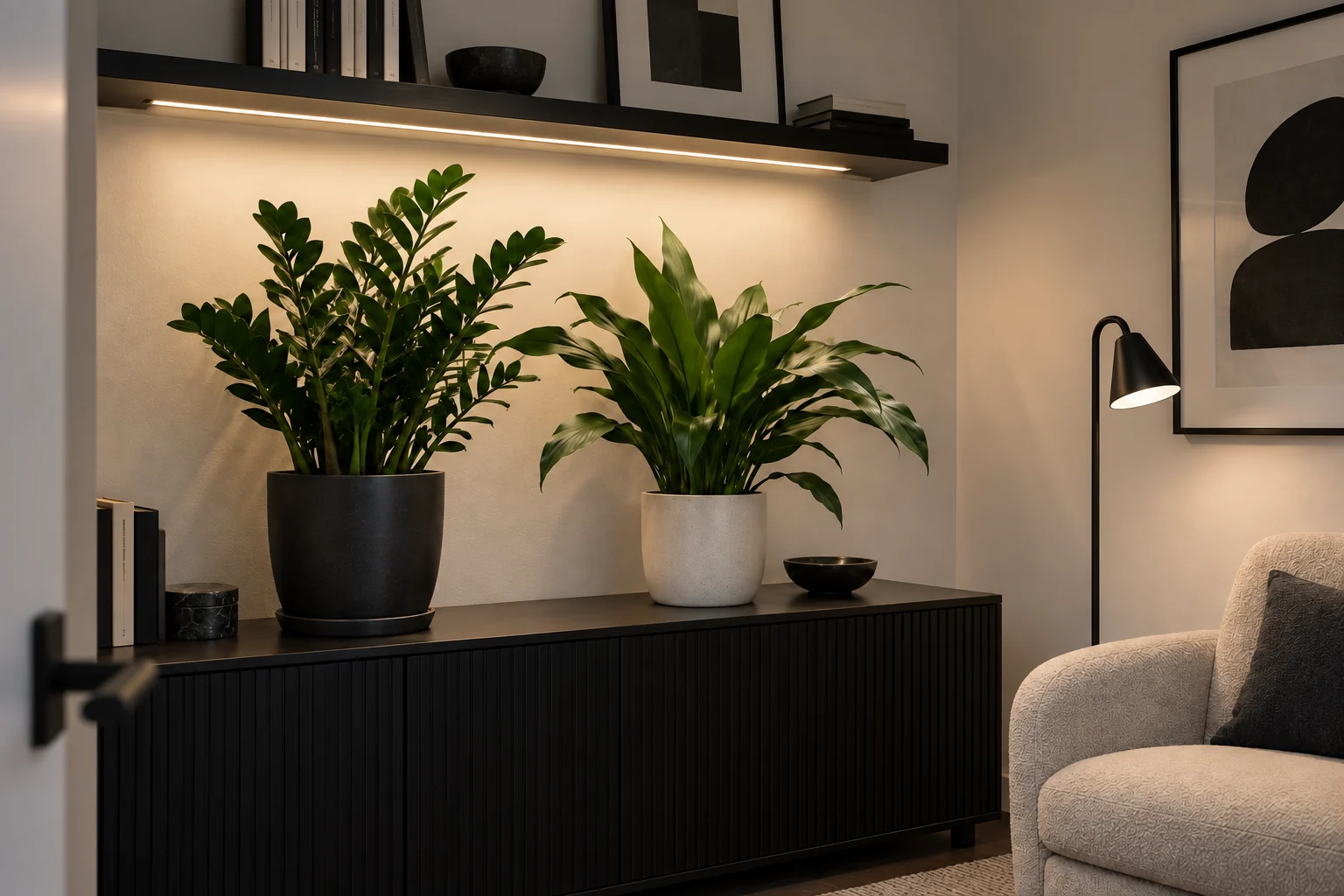
Quick Answer
No plant is naturally suited to total darkness. For a room with no windows, choose a shade-tolerant plant—ZZ plant, cast iron plant, snake plant, pothos, Chinese evergreen or parlor palm—and give it a suitable full-spectrum grow light. Put the light on a timer, reduce watering compared with a sunny room, and choose a pet-safer species when animals can reach the leaves.
“Low light” and “no light” are different conditions. A north-facing room or a dim corner still receives daylight. A windowless bathroom, hallway or office does not. Plants use light to make energy, so even the toughest low-light plant needs artificial light when there is no natural source.
This guide is specifically about that zero-window decision. Our feng shui indoor plants guide covers the wider home, while best office plants for feng shui compares desks, shelves and floor plants across different office conditions. Here, every live-plant recommendation assumes you are willing to add a grow light.
Can Plants Really Live in a Windowless Room?
Yes—but not on darkness alone. Ordinary ceiling lights are designed for people, not necessarily to deliver useful light to leaves. A dedicated grow light placed close enough to the plant is the most dependable setup. The University of Minnesota Extension notes that low-light foliage plants still need light and suggests roughly 12 to 14 hours of artificial light for foliage houseplants.
A timer keeps the schedule consistent and preserves a dark period. Follow the fixture maker's distance guidance rather than assuming one universal height: a weak strip several feet away may do little, while a powerful lamp positioned too close can bleach or heat the leaves.
The honest rule
If you cannot install a safe grow light, rotate the plant regularly to a brighter room or choose a high-quality faux plant. Moving a declining plant into a dark corner and calling it “low light” is not a sustainable setup.
Quick Comparison: Plants for Rooms With No Windows
| Plant | Best use | Care level | Pet note |
|---|---|---|---|
| ZZ plant | Office cabinet or floor corner | Very low | Toxic if eaten |
| Cast iron plant | Hallway or larger floor pot | Low | ASPCA-listed non-toxic |
| Snake plant | Narrow floor zone | Very low | Toxic if eaten |
| Jade pothos | Shelf or hanging position | Low | Toxic if eaten |
| Chinese evergreen | Credenza or tabletop | Low | Toxic if eaten |
| Parlor palm | Bedroom or reading corner | Moderate | ASPCA-listed non-toxic |
These plants tolerate dim conditions better than many common houseplants; that does not make them light-free. The grow light, drainage and watering routine decide whether the room can support them.
The Best Plants for Windowless Rooms
1. ZZ plant: the easiest overall choice
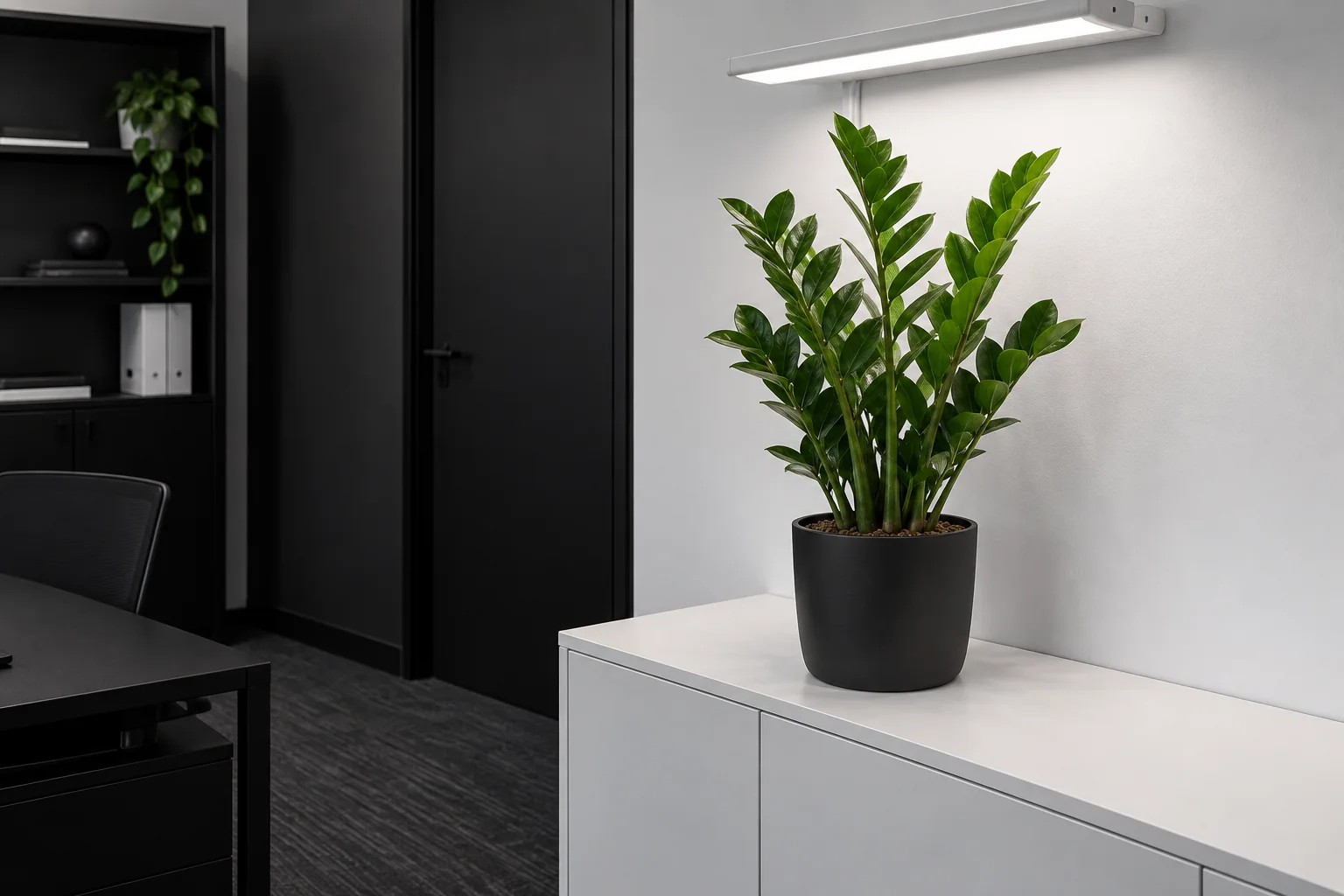
ZZ plant is the strongest first choice for many windowless offices and hallways. Its thick rhizomes store water, the upright stems keep a clean architectural shape, and slow growth means it does not quickly overwhelm a small room. NC State Extension notes that ZZ plants can grow under very low light and even fluorescent lighting, although they do best with bright indirect light.
Put the plant beneath a compact grow-light bar rather than across the room from it. Let the potting mix dry before watering; the larger risk in a dim room is usually excess water, not drought. Choose ZZ for an adult office or inaccessible shelf, not a floor-level position where a pet may chew it.
2. Cast iron plant: the best pet-safer floor plant
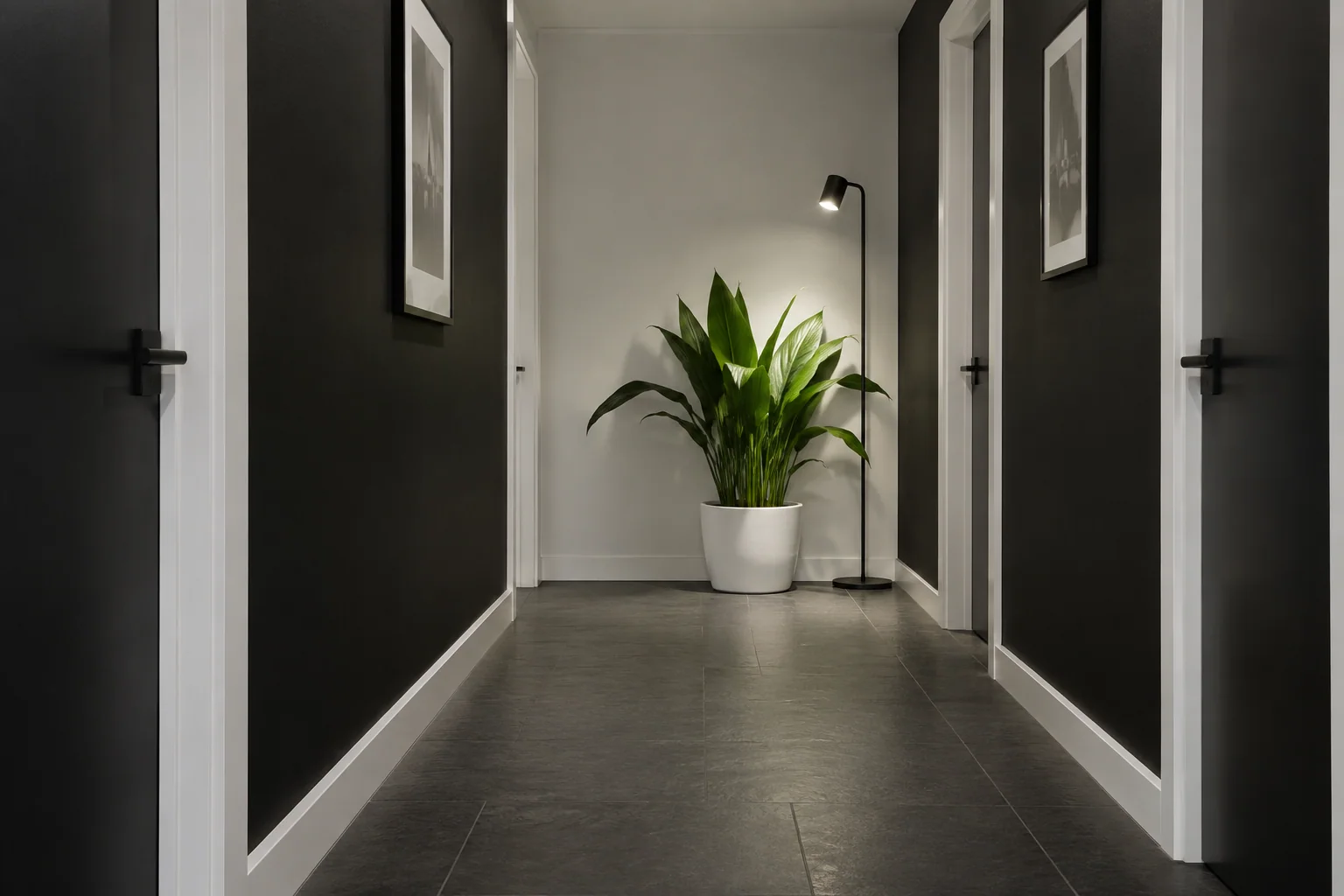
Cast iron plant has long, dark leaves and a restrained silhouette that works well in hallways, interior bedrooms and larger bathrooms. It tolerates shade and slower growth without looking like a temporary desk plant. NC State Extension describes it as suitable for low-light indoor locations, while the ASPCA lists cast iron plant as non-toxic to cats and dogs.
It is still not a darkness plant. Aim a grow lamp at the leaf canopy and keep the path around the pot open. Its broad leaves collect dust, so wipe them periodically; a clean leaf surface makes the plant look intentional and allows the available light to reach the leaf.
3. Snake plant: the best narrow upright option
Snake plant is useful when the room has floor space but little width. Its vertical leaves can sit beside a cabinet, outside a door swing or at the edge of an office without trailing into the path. It also stores water, so it suits people who tend to forget watering better than people who water on a rigid weekly schedule.
Use a stable pot because tall leaves can make a light container easy to tip. Give it a grow light, let the potting mix dry well between waterings, and keep it away from pets: the ASPCA lists snake plant as toxic to cats and dogs.
4. Jade pothos: the best trailing shelf plant
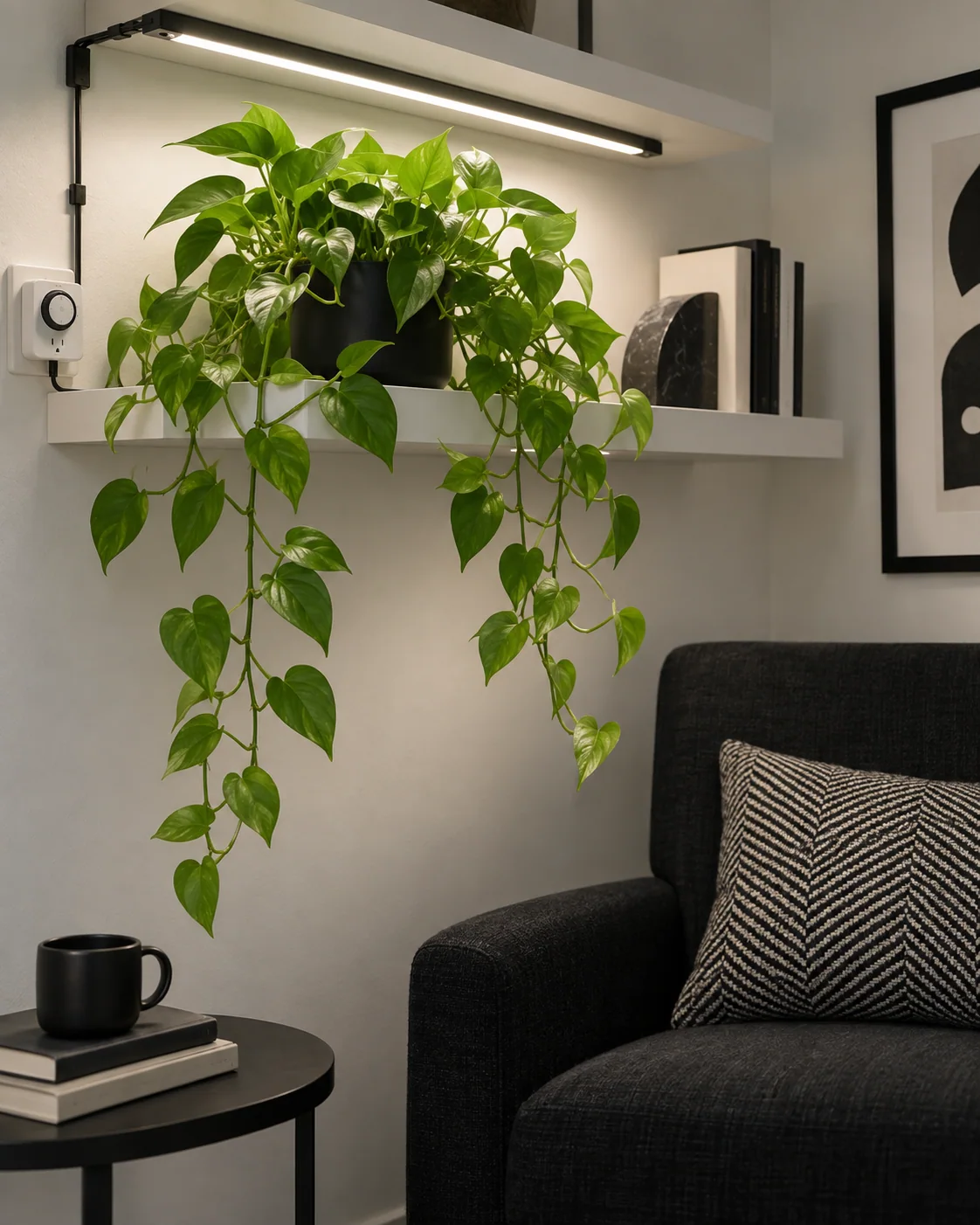
Pothos softens wall shelves, cabinets and the hard edges common in windowless offices. Choose a mostly green cultivar such as jade pothos; highly variegated leaves often lose contrast when light is limited. NC State Extension says pothos prefers bright indirect light but can survive for long periods in low light.
An under-shelf grow strip is easier to integrate than a separate floor lamp. Keep vines clear of switches, doors and computer cables, and prune before the plant turns a small shelf into a tangled canopy. Pothos is toxic if chewed, so a high shelf is only suitable if your cat cannot reach it.
5. Chinese evergreen: the best compact patterned plant
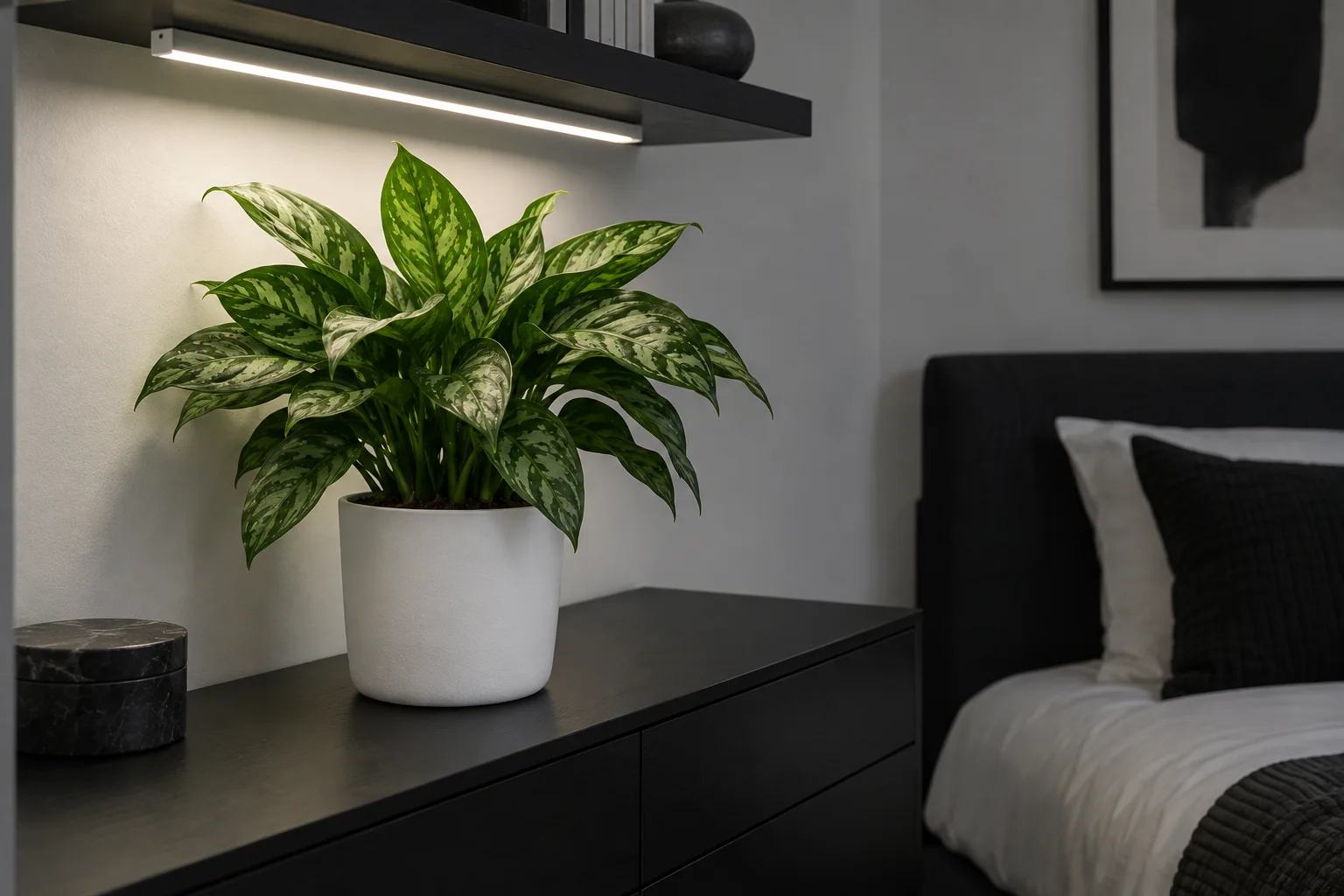
Chinese evergreen gives a dark room more leaf pattern than ZZ plant or cast iron plant while still tolerating lower light. It works on a credenza, wide shelf or bathroom counter with enough space around the pot. Green and silver cultivars are the more sensible choice here; red, pink or highly variegated forms usually need stronger light to keep their color.
NC State Extension calls Chinese evergreen an excellent plant for low-light indoor locations, but also warns that overwatering can cause root rot. Let the upper potting mix begin to dry and keep cold water and drafts away from the foliage. Chinese evergreen is toxic if eaten, so avoid accessible nursery, playroom or pet areas.
6. Parlor palm: the best pet-safer soft shape
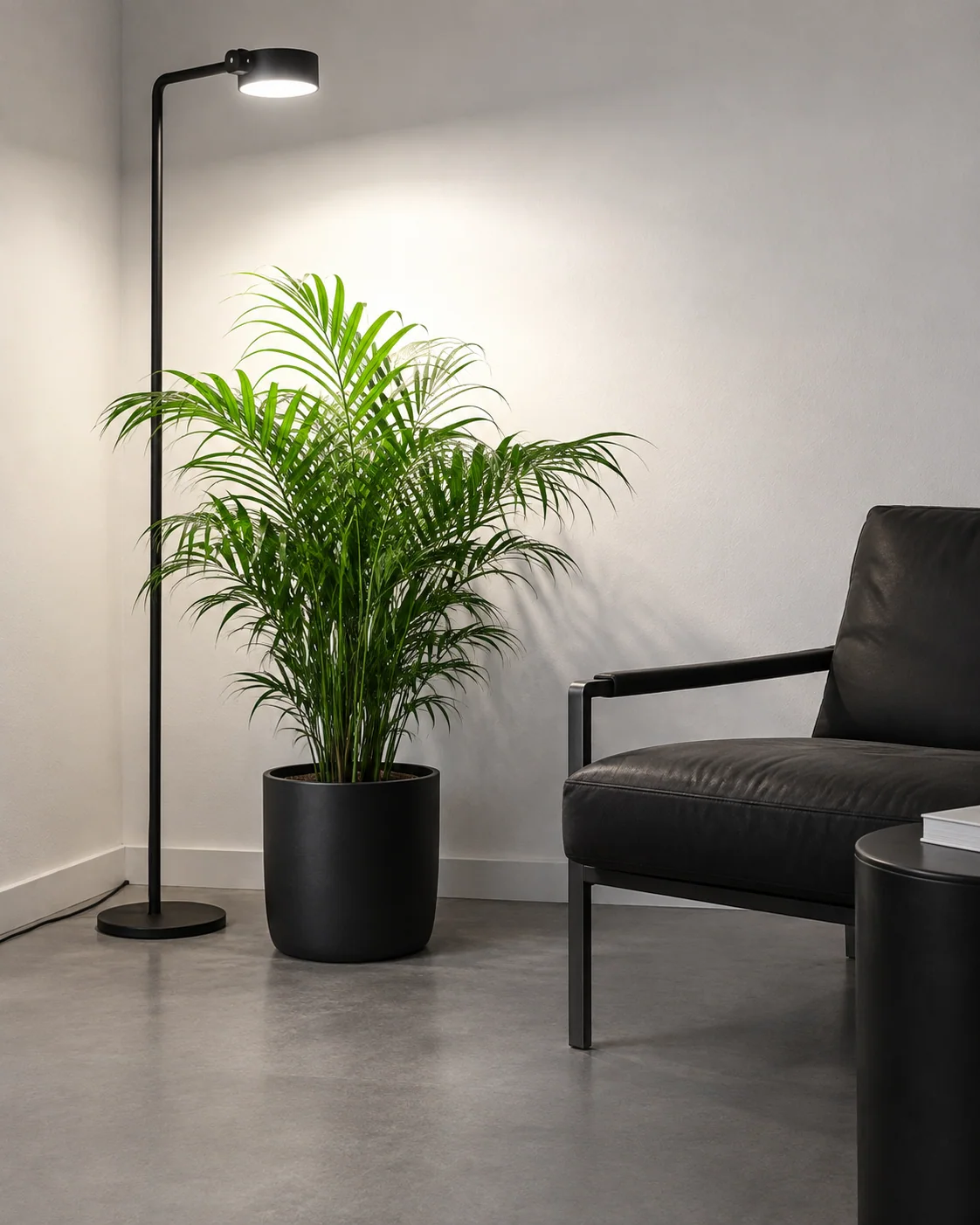
Parlor palm is the softer alternative when upright ZZ and snake plants feel too rigid. Fine fronds can relax a bedroom, reading corner or consultation room. It tolerates low light, but it is less forgiving of neglect than ZZ plant and benefits from a consistent grow-light schedule and more attentive watering.
NC State Extension notes that parlor palm tolerates low-light interior conditions, and the ASPCA lists it as non-toxic to cats and dogs. Keep the pot out of a cramped path because the fronds spread wider than the container.
How to Set Up the Grow Light
A simple setup that is easier to maintain
Choose a full-spectrum fixture
Place it over the leaf canopy
Use a timer
Watch the plant, not only the clock
Keep electricity appropriate to the room
Which Plant Works Best in Each Windowless Room?
For a windowless office, start with ZZ plant or snake plant if you want the least maintenance. Use pothos when a shelf needs a softer edge. Put the light on the same timer as the workday, but do not assume overhead fluorescent lighting reaches the leaves with enough intensity.
For a windowless bathroom, cast iron plant, pothos or Chinese evergreen can work with a proper grow light. Humidity does not replace light, and consistently wet soil is still a root-rot risk. Keep electrical equipment away from splashes and choose a fixture suitable for the location. For bathroom-specific care, see feng shui bathroom plants.
For a hallway or interior entry, use a cast iron plant or narrow snake plant where the pot will not reduce walking clearance. A wall-mounted or standing grow light should illuminate the plant without creating glare at eye level.
For a windowless bedroom, a cast iron plant or parlor palm is a calmer choice, especially around pets. Schedule the light during daytime hours so the room becomes dark for sleep. If the room is tiny, one plant is enough.
Water Less, but Check More Carefully
Plants use water more slowly under lower light. The University of Minnesota Extension specifically warns that low-light plants grow more slowly and should be checked to avoid overwatering. Test the potting mix rather than watering every plant on the same weekday.
Do this
- +Use pots with drainage and empty the saucer after watering.
- +Check the soil before watering instead of following a rigid calendar.
- +Wipe dust from leaves so the available light can reach them.
- +Rotate pots when growth begins leaning toward one side of the light.
- +Inspect monthly for pests, soft stems and root-rot odors.
Avoid this
- -Call a pitch-dark room low light and hope the plant adapts.
- -Add extra water because the room feels dry or enclosed.
- -Place a weak lamp several feet away and assume it is enough.
- -Leave the grow light on continuously without a dark period.
- -Keep a declining plant only because its species is described as tolerant.
Pet Safety Changes the Shortlist
ZZ plant, snake plant, pothos and Chinese evergreen are not appropriate where a cat or dog can chew them. The ASPCA's current houseplant safety guidance includes ZZ plant, pothos and Chinese evergreen among common plants that can cause irritation and digestive symptoms. Snake plant is also listed as toxic.
Cast iron plant and parlor palm are the better options in pet-accessible rooms because the ASPCA lists both as non-toxic to cats and dogs. Non-toxic does not mean edible; chewing can still damage the plant or cause stomach upset. Use a stable container and contact a veterinarian if an animal becomes unwell after eating any plant material.
When an Artificial Plant Is the Better Choice
Use a faux plant when the room cannot safely hold a grow light, the fixture would stay switched off, the plant would be inaccessible for watering, or pets make every live option impractical. That is not a failure. A convincing artificial plant that stays clean and properly scaled is better than a declining live plant kept for symbolism.
Choose a species that could plausibly tolerate shade, avoid shiny identical leaves, and place it where a real plant would make visual sense. Our best artificial plants for feng shui guide explains realism, scale and placement in more detail.
Frequently Asked Questions
Can plants survive in a room with no windows?
What is the best plant for a windowless office?
What plants are best for a windowless bathroom?
How long should a grow light stay on for houseplants?
Which windowless-room plants are safer around cats and dogs?
Should I use a real or artificial plant in a dark room?
The Bottom Line
ZZ plant is the easiest all-round choice for a windowless room, cast iron plant is the strongest pet-safer floor option, and pothos is the best trailing shelf plant. Snake plant, Chinese evergreen and parlor palm also work when their scale and safety fit the room.
None of them is a no-light plant. Pair the plant with a properly positioned grow light, a timer, drainage and a slower watering routine. If that setup is not realistic, choose one convincing faux plant instead of maintaining a declining live one.