



Quick Answer
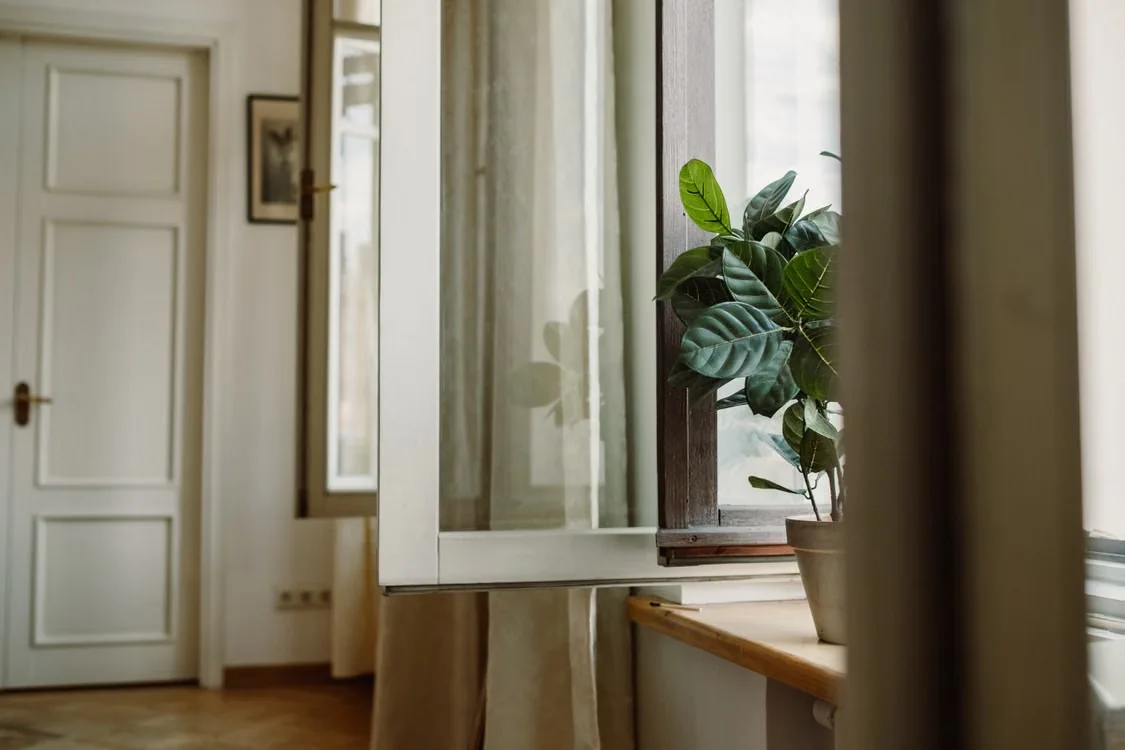
For a room with soft daylight, start with a cast iron plant, ZZ plant or green Chinese evergreen. A parlor palm gives you a softer shape, and heartleaf philodendron suits a trailing pot. Check the light where the leaves will sit before buying, especially on a deep shelf or across the room from a window.
Check the light where the plant will sit
Stand where the pot will go and look toward the window at leaf height. A tree, overhang, curtain or shelf above the plant can block much of the daylight you see from the middle of the room. Check again later in the day and during winter. The University of Minnesota Extension light guide uses roughly 50 to 250 foot-candles as a low-light range. Use readings at different times to compare two spots. A single midday reading tells you little about how long the light lasts.
If the spot stays dark without the ceiling lights on, use the windowless-room plant guide to plan suitable lighting before you buy. A plant can use artificial light when it receives enough at the leaves.
Match the plant to the daylight at its leaves
Scroll sideways to compare all columns.
| What you see at the spot | Try this | What to expect |
|---|---|---|
| Soft daylight for several hours | Cast iron plant, green Chinese evergreen or ZZ plant | Slow growth. Check soil before watering. |
| An open shelf with a view of the window | Heartleaf philodendron or golden pothos | Watch the spacing between new leaves. |
| Gentle daylight near an unobstructed window | Parlor palm or peace lily | Choose for foliage. Peace lilies bloom more readily in better light. |
| A dim room with a cat | Cast iron plant or parlor palm | Match the botanical name to a non-toxic listing. |
| A dark shelf or a room with no usable daylight | Choose a brighter location or add a grow light | Check the light before shopping for a living plant. |
Start here for the dimmest usable spots
1. Cast iron plant
Aspidistra elatior
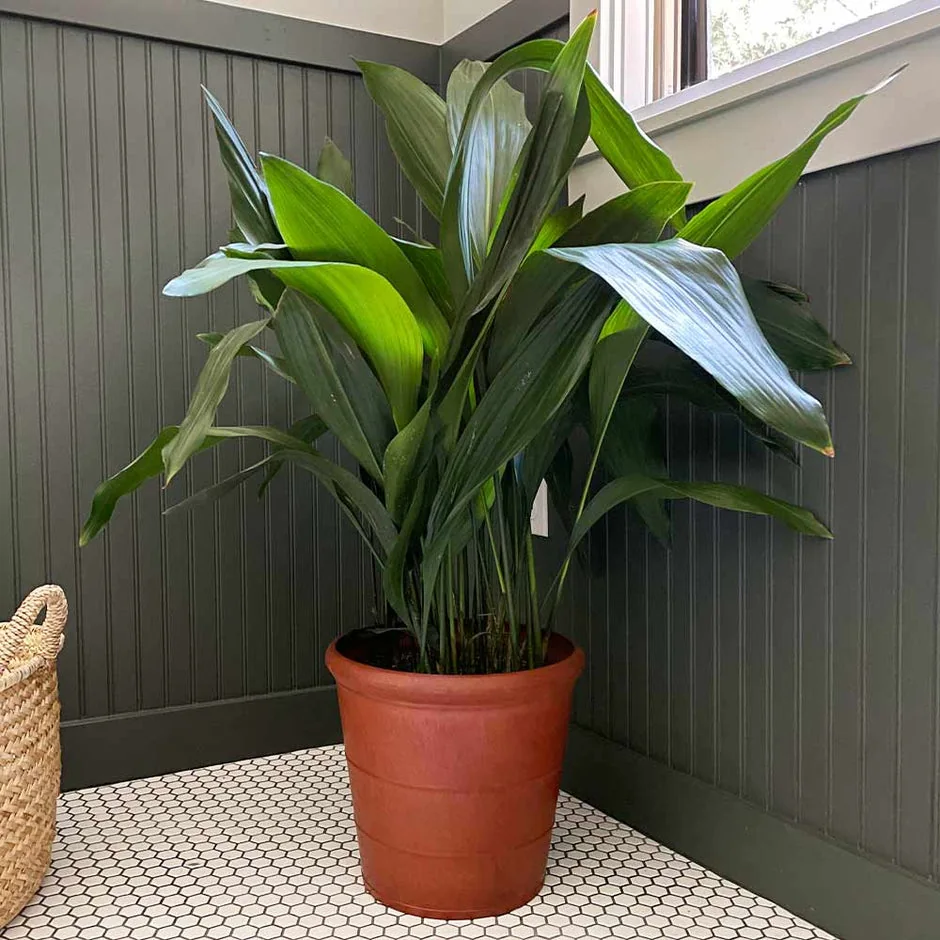
Try a plain green cast iron plant beside a low cabinet where daylight reaches the leaves. It grows slowly and adds an upright fan of broad leaves. Leave room around the pot so new shoots can fill out, and wait for the top of the mix to dry before watering.
2. ZZ plant
Zamioculcas zamiifolia
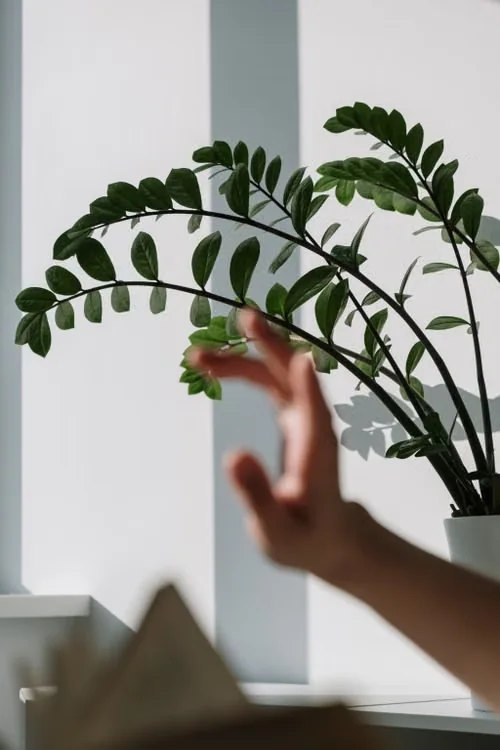
The glossy upright stems work well where you want a narrow silhouette. In low light it may make few new stems, and its pot will dry slowly. Let the mix dry through between waterings. See the ZZ plant placement guide if you need to judge its mature width.
3. Snake plant
Dracaena trifasciata
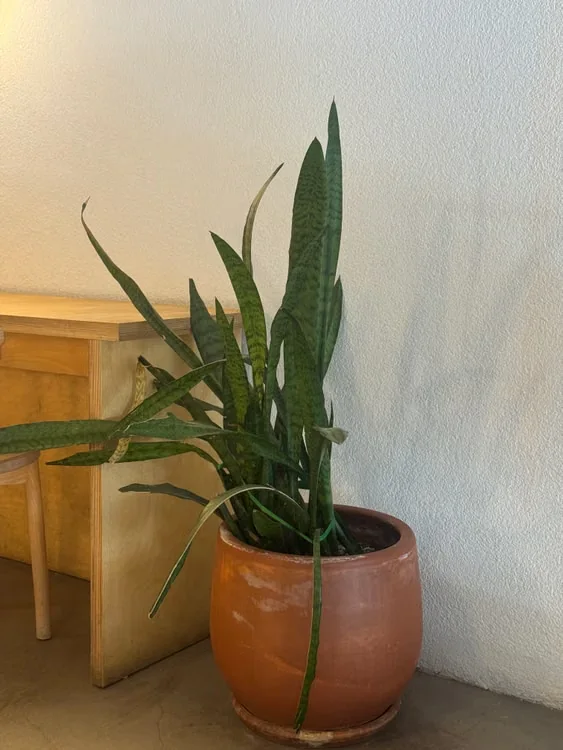
A green snake plant adds height in a narrow spot with indirect daylight. Give it a brighter position if you want faster growth. In a dim room, let the mix dry through before watering, especially when the plant is in a large container.
4. Chinese evergreen
Aglaonema commutatum
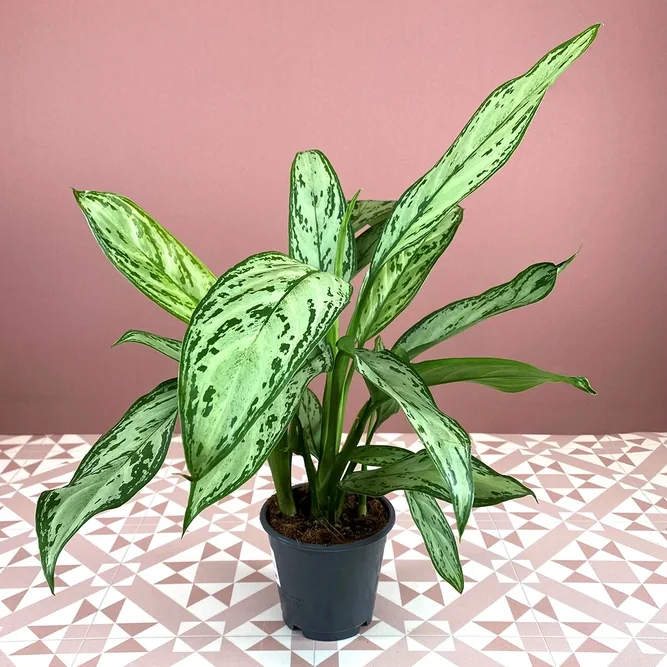
Choose a mostly green cultivar for the dimmer end of the range. Move a strongly patterned or pink cultivar closer to the light to help it keep its color. Keep the plant out of cold drafts, and let the top of the mix dry before watering.
5. Parlor palm
Chamaedorea elegans
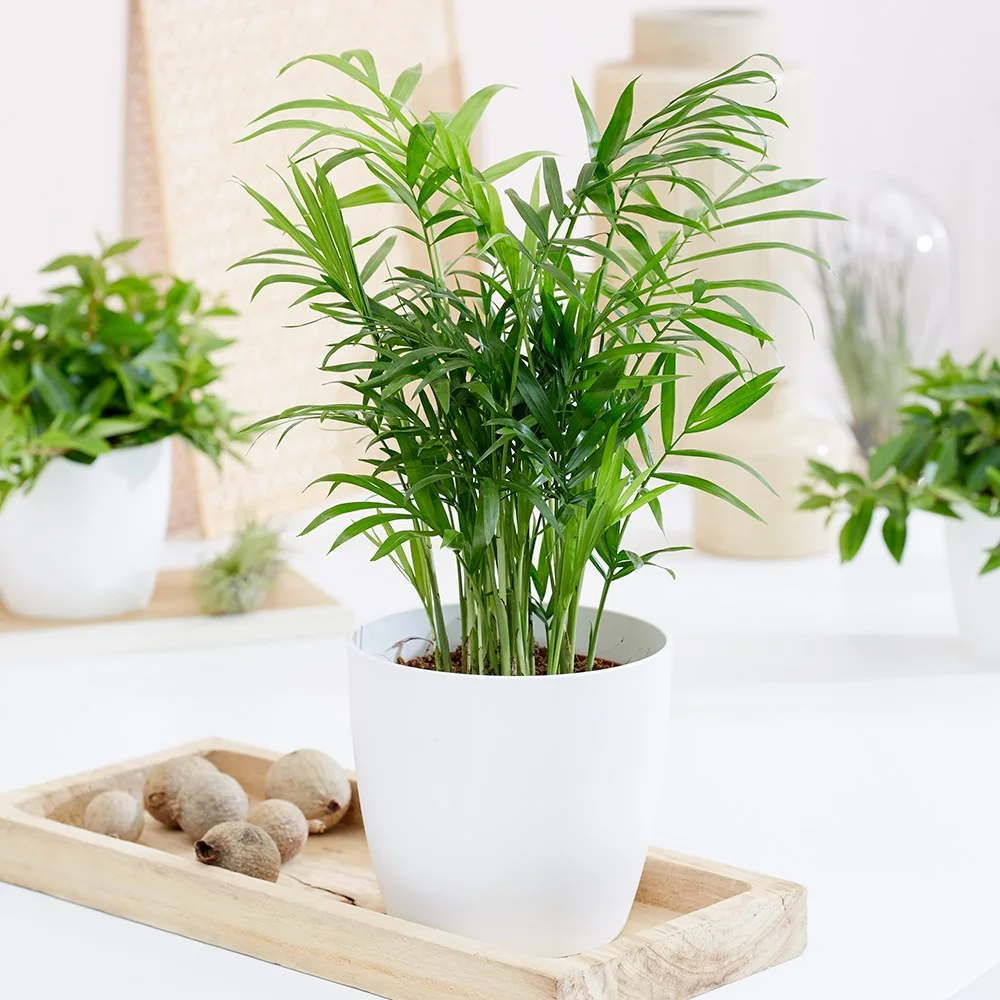
Put it where a broad frond can catch the light from the window without hitting a wall or curtain. It can grow slowly in soft light. Let the upper mix dry slightly, and look for the same botanical name if you are shopping for a cat-safe houseplant.
Trailing plants for open shelves
6. Heartleaf philodendron
Philodendron hederaceum
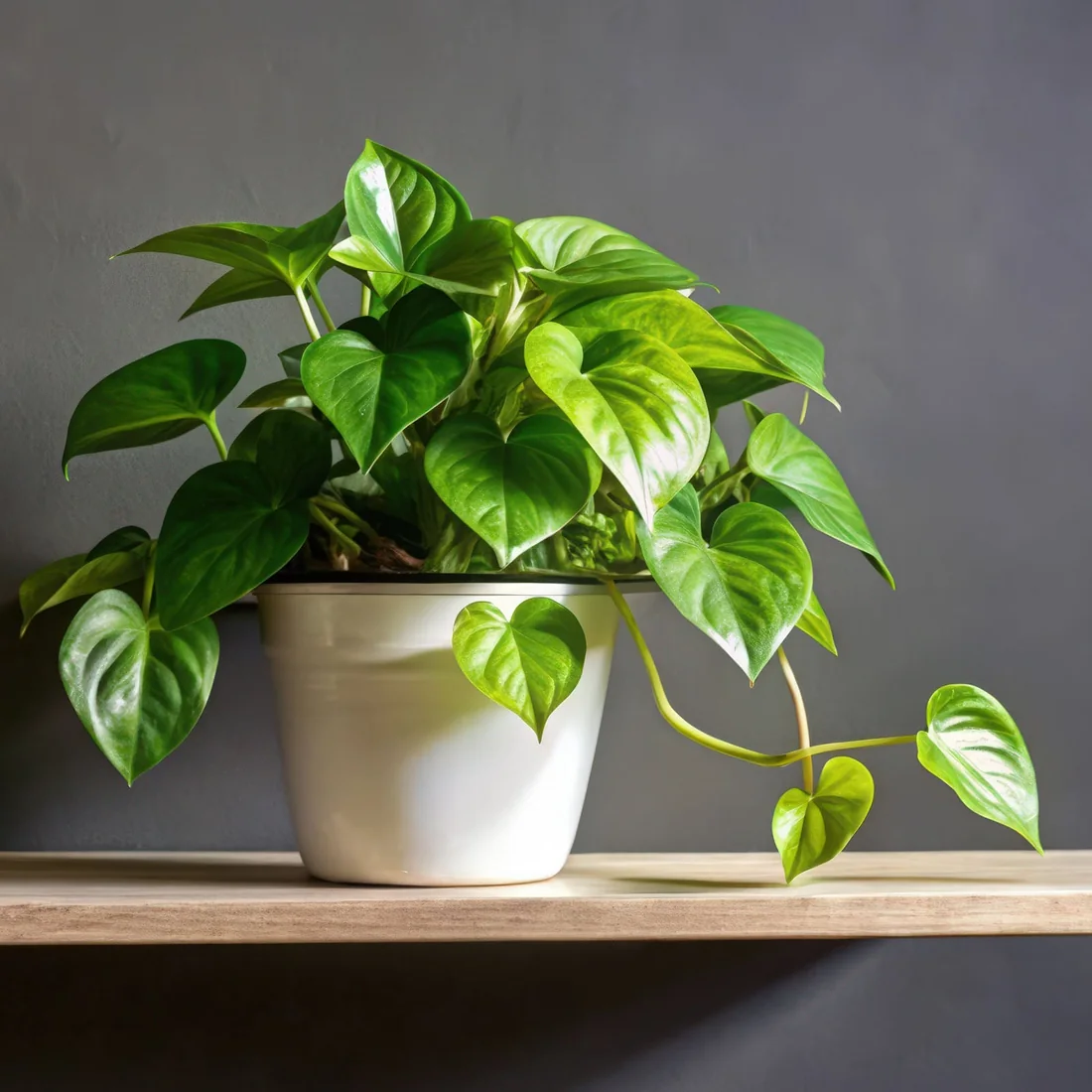
Start with the green form and give the top of the pot an open view of the window. New growth often tells you more than the old leaves. If the new vines are bare between leaves, shift the pot closer to the window. Keep reachable vines out of homes with cats that chew plants.
7. Golden pothos
Epipremnum aureum
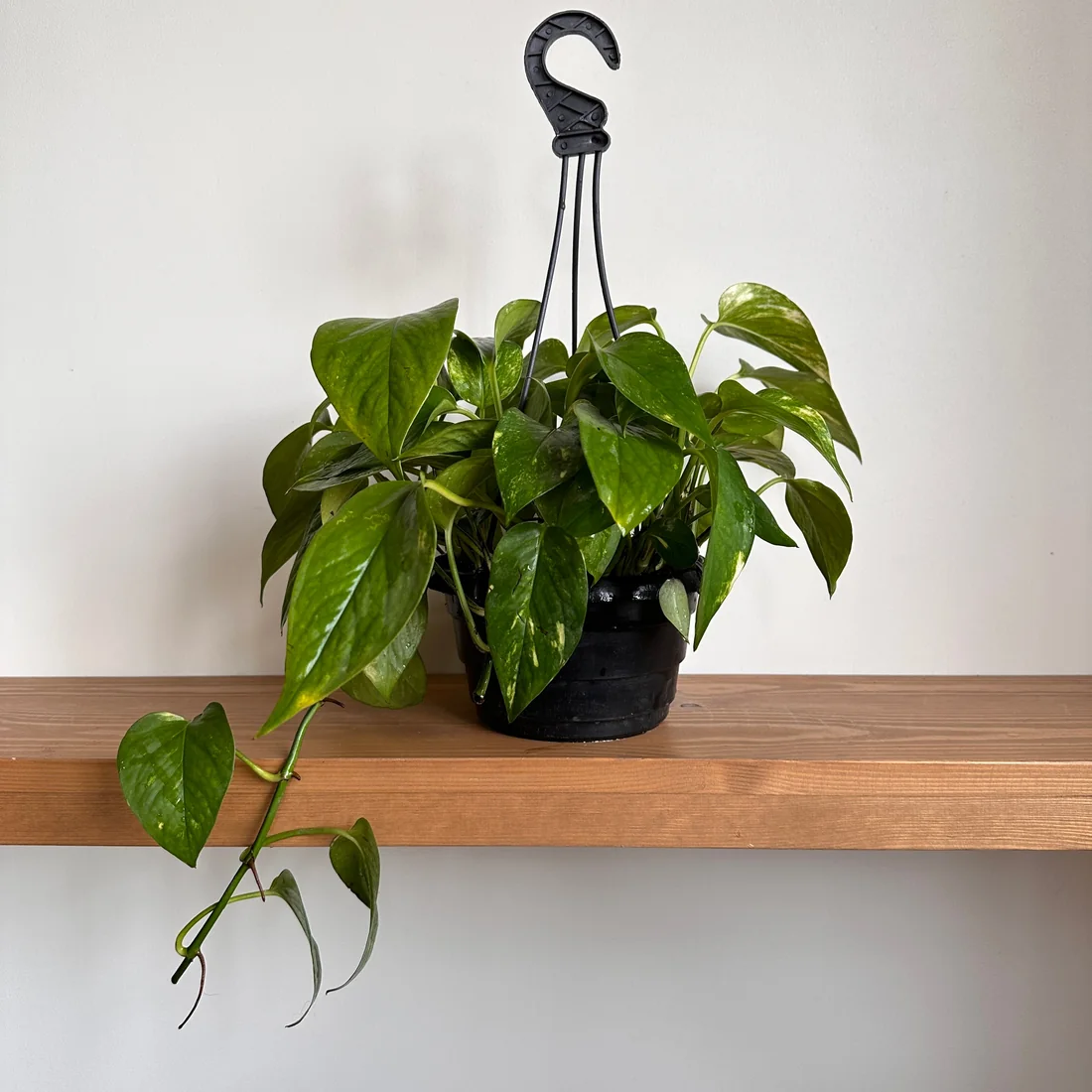
Golden pothos tolerates lower light, but its newest leaves may be greener and smaller there. Place it near the front of an open shelf so the crown receives daylight. Wait for the upper mix to dry and check more often after you move the pot into a brighter spot.
Give these plants a brighter spot
8. Peace lily
Spathiphyllum wallisii
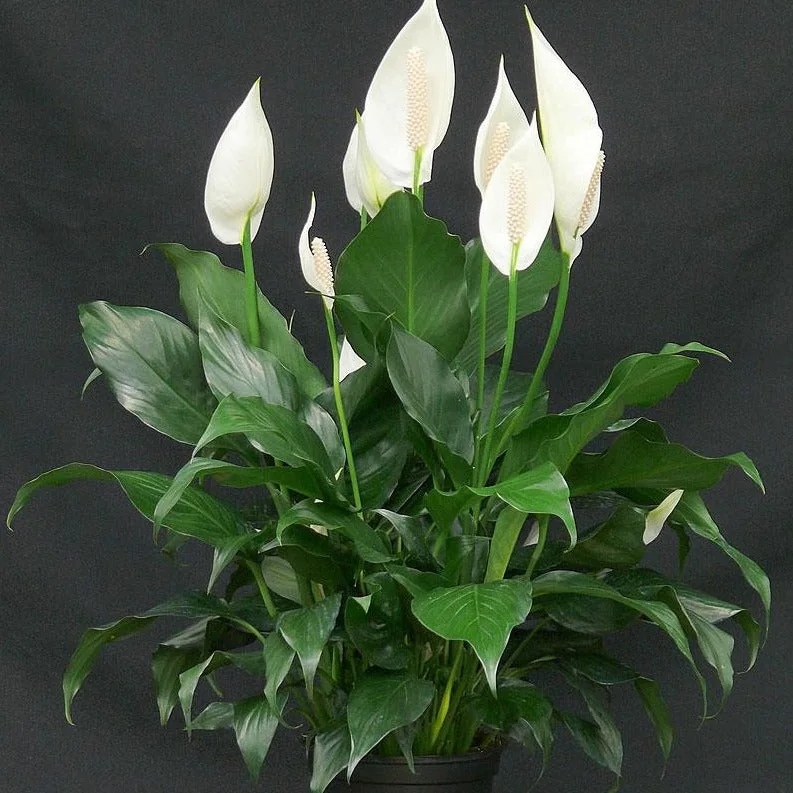
Try it close to a gently lit window for its foliage. If you want flowers, give it brighter indirect light. Check the mix before it dries through and pour away runoff. Choose a verified alternative for a cat-accessible spot, since peace lily can irritate the mouth when chewed.
9. Corn plant
Dracaena fragrans
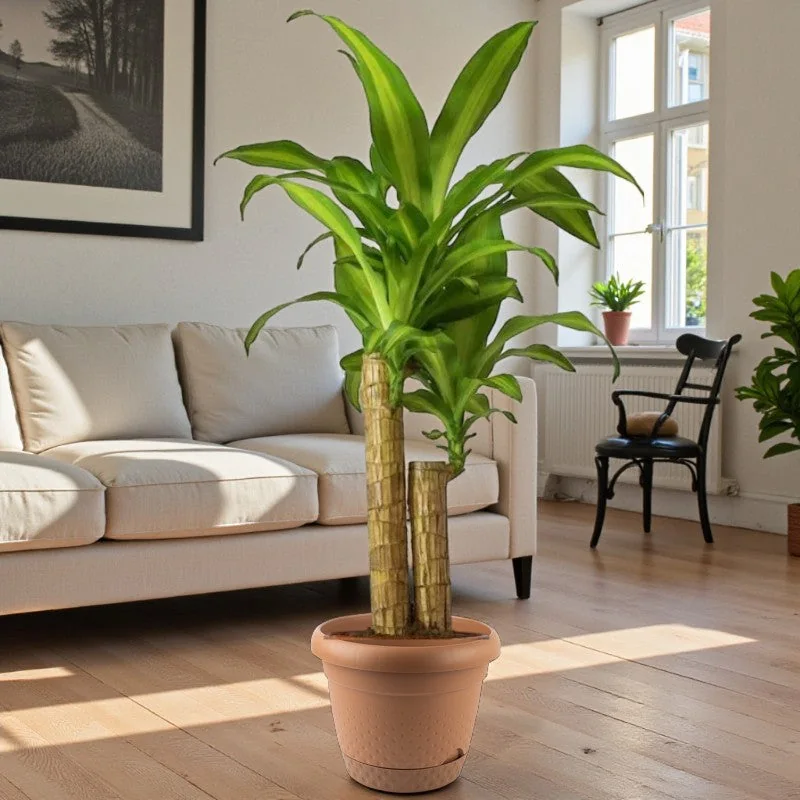
This is a useful floor plant if the leafy crown reaches the window’s light. Choose a greener form and leave room for the leaves to arc. A deep floor pot may dry very slowly. Check beneath the surface and postpone watering when the mix is still damp.
10. Spider plant
Chlorophytum comosum
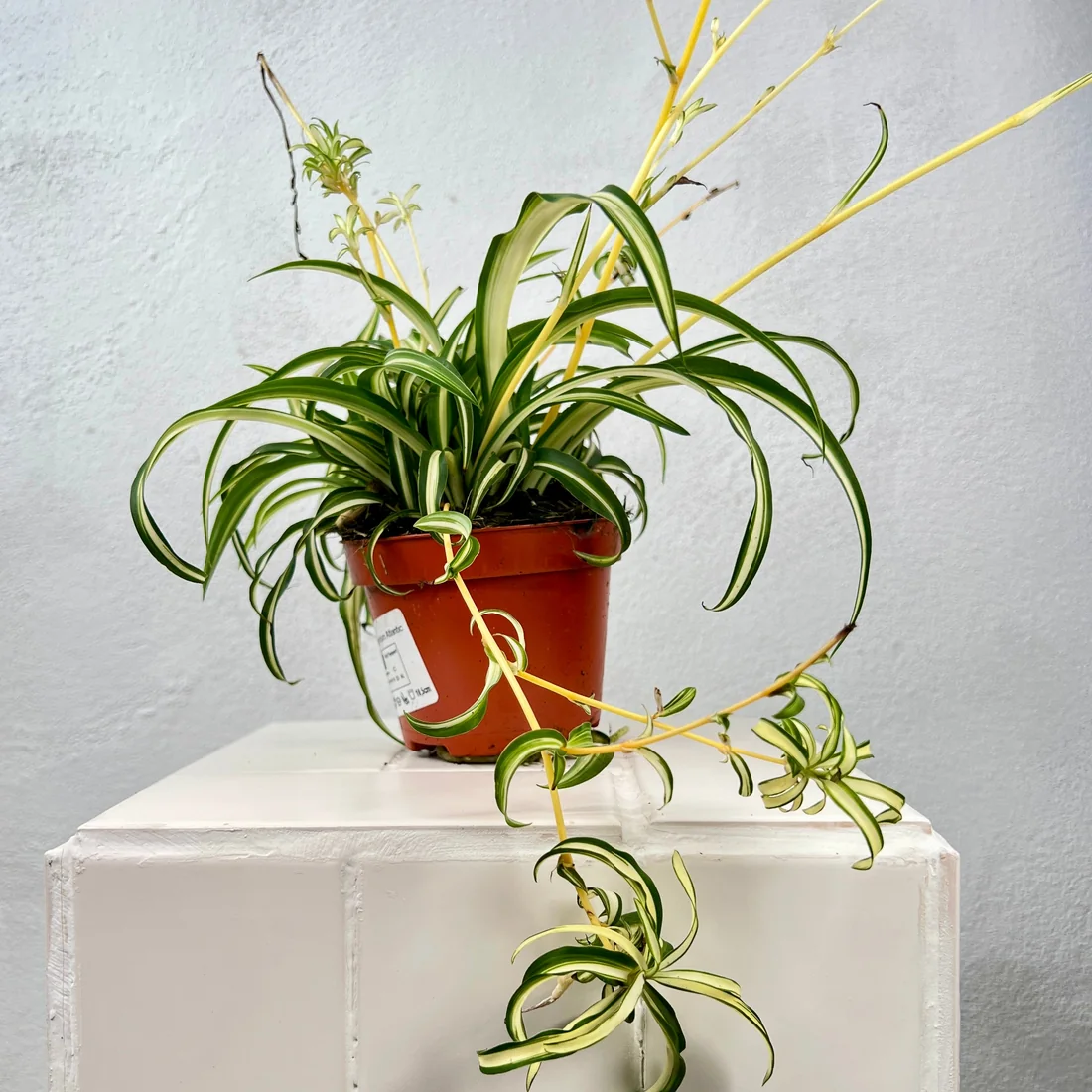
Use this one where soft light stays fairly steady, such as near an unobstructed window. It generally does better in moderate indirect light and makes fewer plantlets in a dim spot. If you want a full hanging plant with runners, give it the brighter position.
11. Satin pothos
Scindapsus pictus
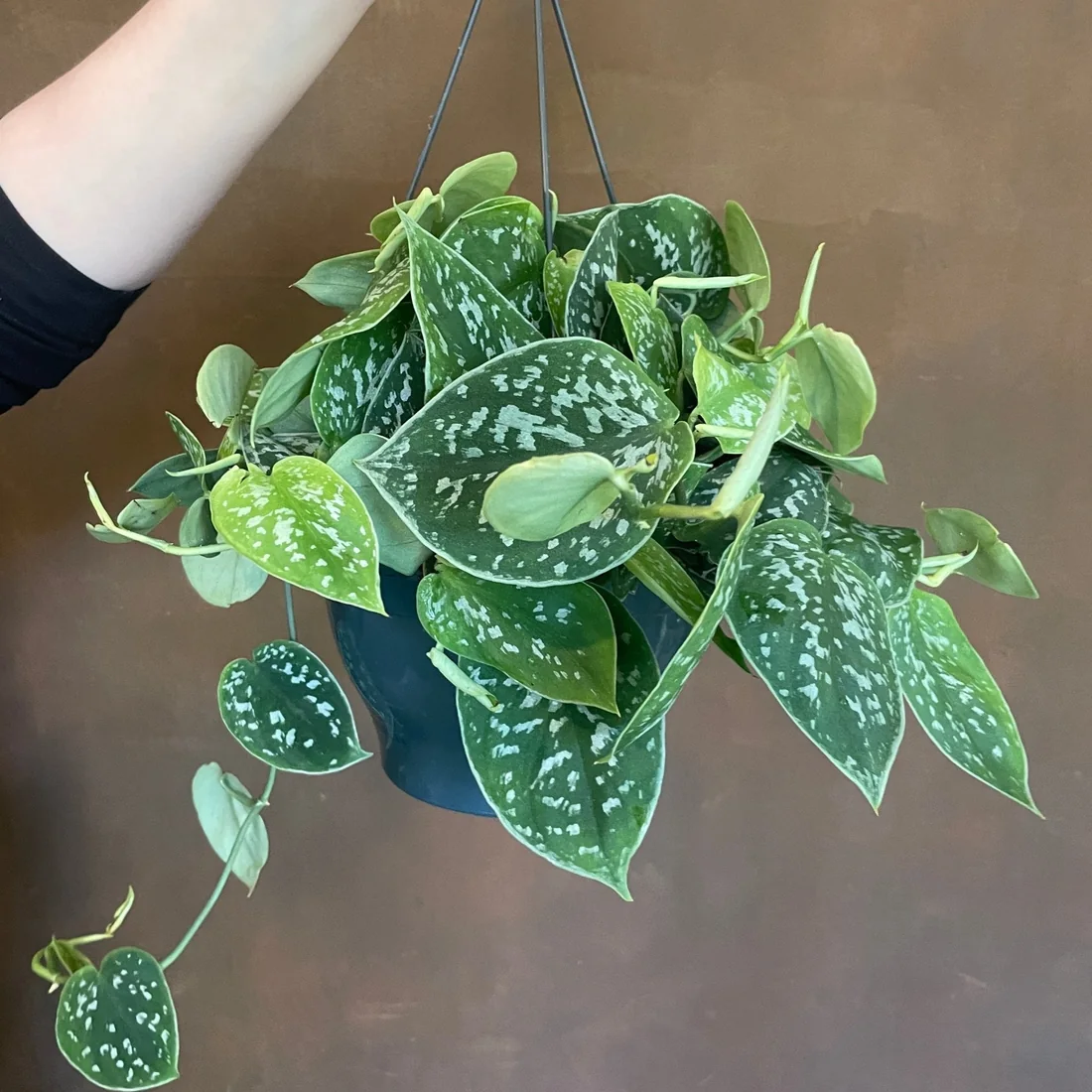
Its silver markings look best where there is a clear source of filtered light. Give it a brighter position than the plants in the first group and watch whether new leaves are close together and well sized. For a deeper shelf, start with a green heartleaf philodendron.
12. Red prayer plant
Maranta leuconeura
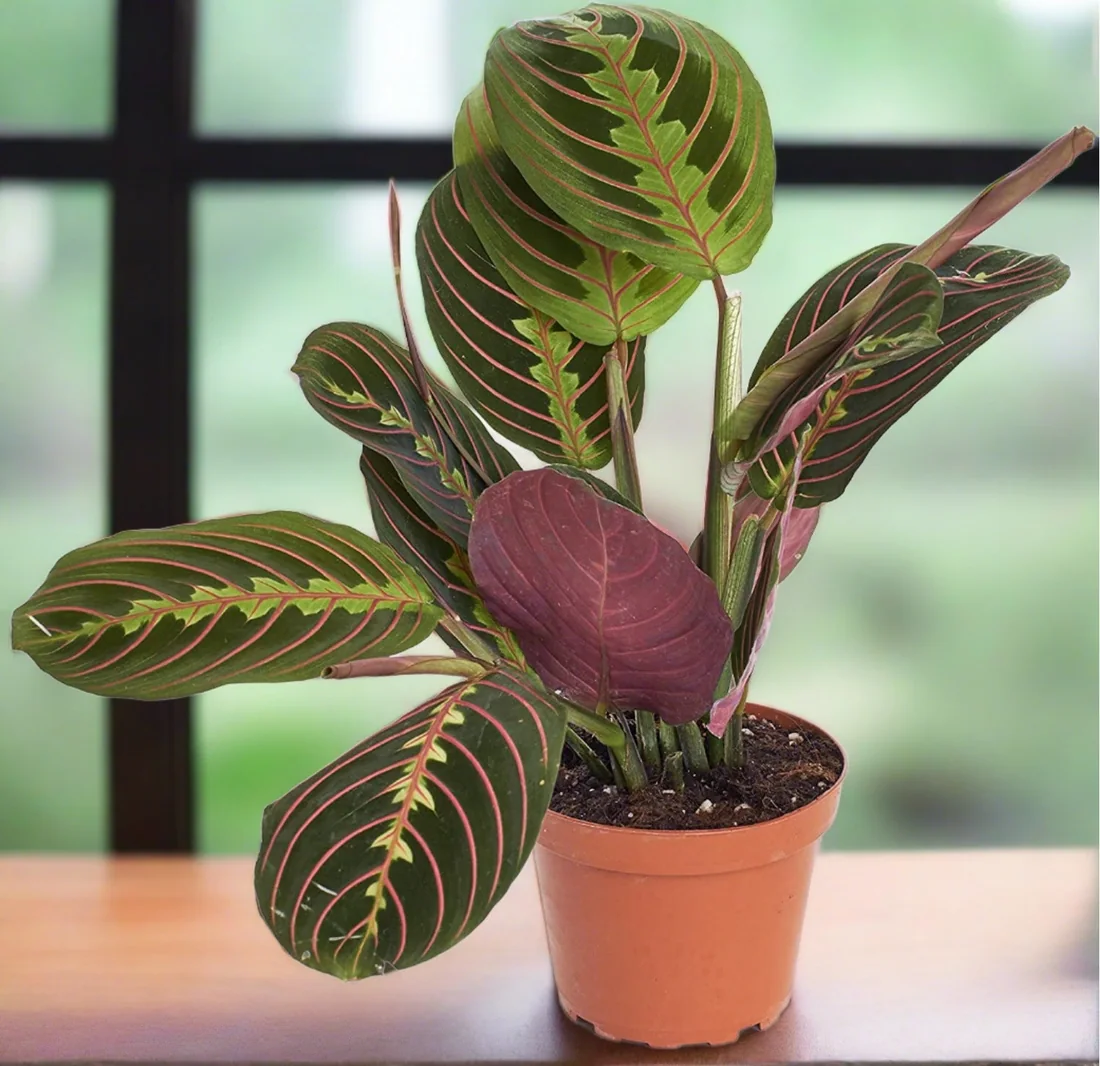
Give it bright, indirect light near a window and keep the mix lightly moist. If the corner is so dim that the pot stays wet for a long time, shift it toward the window. It takes more attention to moisture than a cast iron plant.
Help a plant settle into a dimmer room
13. Keep the window in view
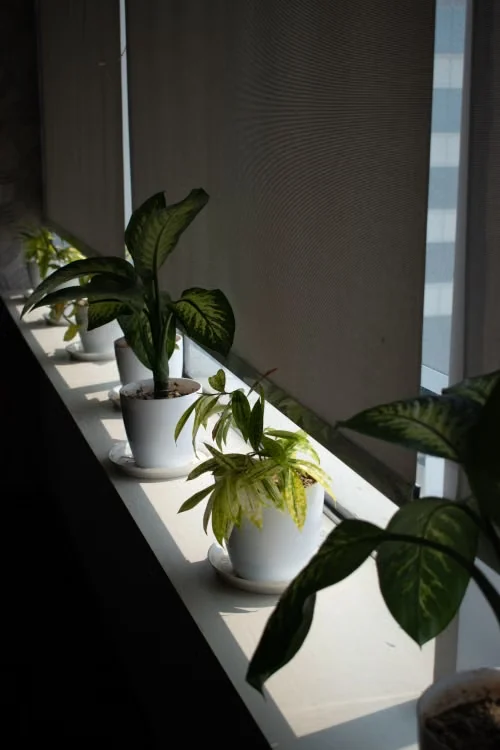
Pick the end of a shelf that faces the window. Keep taller pots and furniture from shading the smaller plant, and look at the spot with blinds in their usual position. Two pots at the same distance from the window can receive quite different amounts of daylight.
14. Check again when the season changes
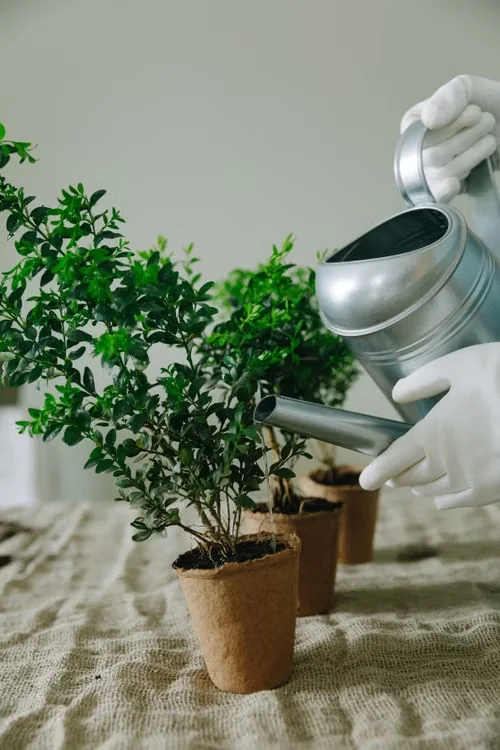
Use a finger or wooden skewer to check moisture below the surface. As daylight changes, the time between waterings can change too. If a pot stays damp much longer than usual, look at light, temperature and drainage before adding more water.
15. Watch the next few leaves
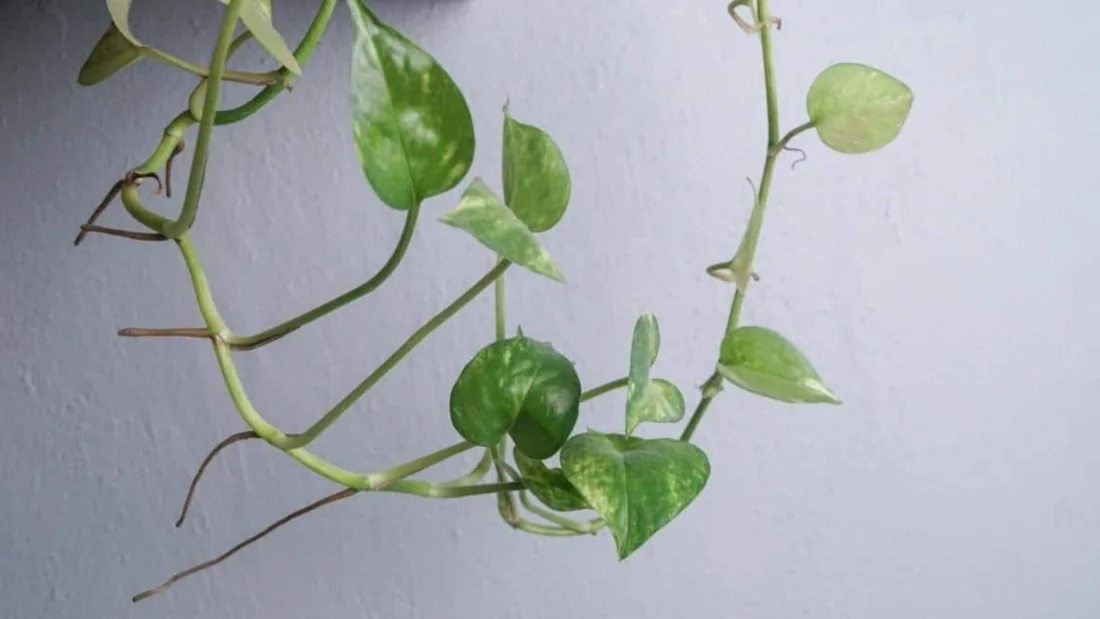
Long gaps between leaves, smaller new leaves or a strong lean toward the window are reasons to reassess the spot. Compare a few leaves on the same stem. Move the pot closer to filtered daylight in steps and track the next flush of growth. If the room is bright enough and watering is the hard part, try the low-maintenance indoor plants guide.
16. Find a brighter spot for plants you want to flower
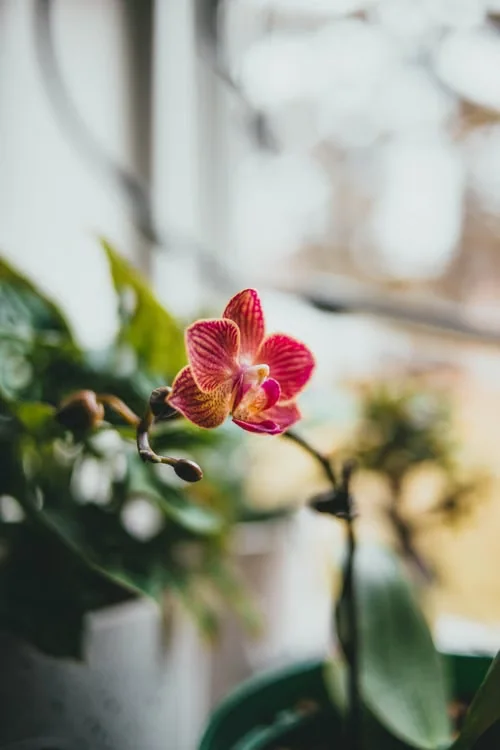
If the plant stays green but rarely blooms, look for a brighter shelf with filtered daylight. Flowering and dense foliage often need more light than simply maintaining existing leaves. Leave the dimmer corner for a plant you chose for its leaf shape.