



Quick Answer
Start with a cast iron plant or parlor palm for a dimmer spot with daylight, baby rubber plant for a tabletop, or spider plant for a hanging basket. Each is listed as non-toxic to cats by ASPCA. Take the botanical name shopping so you can check the label even when two plants share a common name.
Pick a plant for the spot your cat can reach
If your cat likes to chew leaves, start with the ASPCA cat plant list and match the botanical name. A “rubber plant,” “palm” or “fern” label is too broad to make that call. Even a plant listed as non-toxic can cause stomach upset if eaten, so discourage chewing and keep fertilizer, potting mix and runoff out of reach. For a dim room, compare the low-light indoor plant guide and check the light at leaf height.
Non-toxic houseplants by light and placement
Scroll sideways to compare all columns.
| Where it will go | Try this | What to look for on the tag |
|---|---|---|
| Floor or low stand with soft daylight | Cast iron plant or parlor palm | Aspidistra elatior or Chamaedorea elegans |
| Bright floor spot | Ponytail palm | Beaucarnea recurvata |
| Bright shelf or table | Baby rubber plant or African violet | Peperomia obtusifolia or Streptocarpus ionanthus |
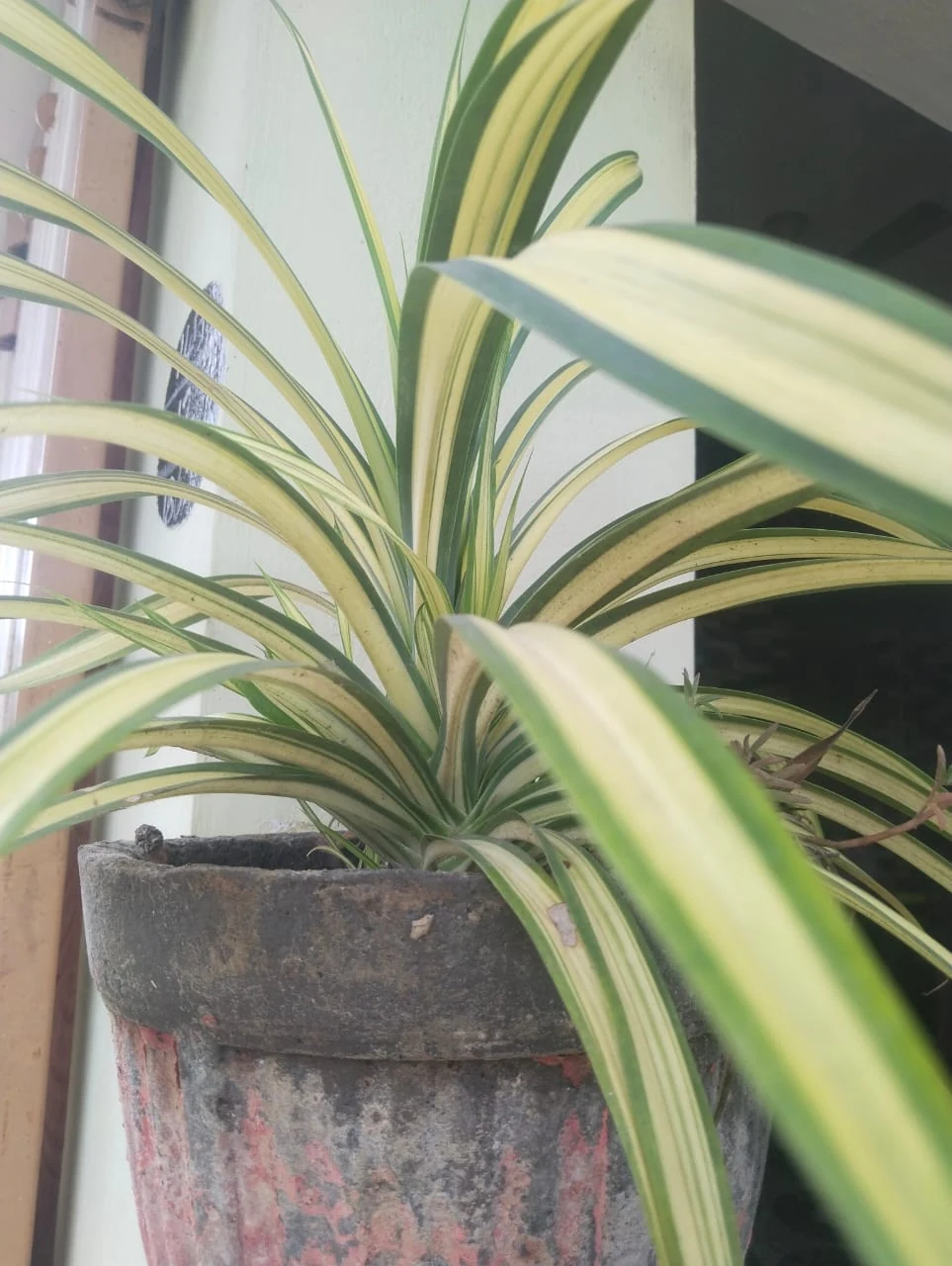
| Hanging basket with indirect light | Spider plant | Chlorophytum comosum |
| Humid spot with indirect light | Boston fern or nerve plant | Nephrolepis exaltata ‘Bostoniensis’ or Fittonia albivenis |
Floor plants and leafy stands
1. Cast iron plant
Aspidistra elatior
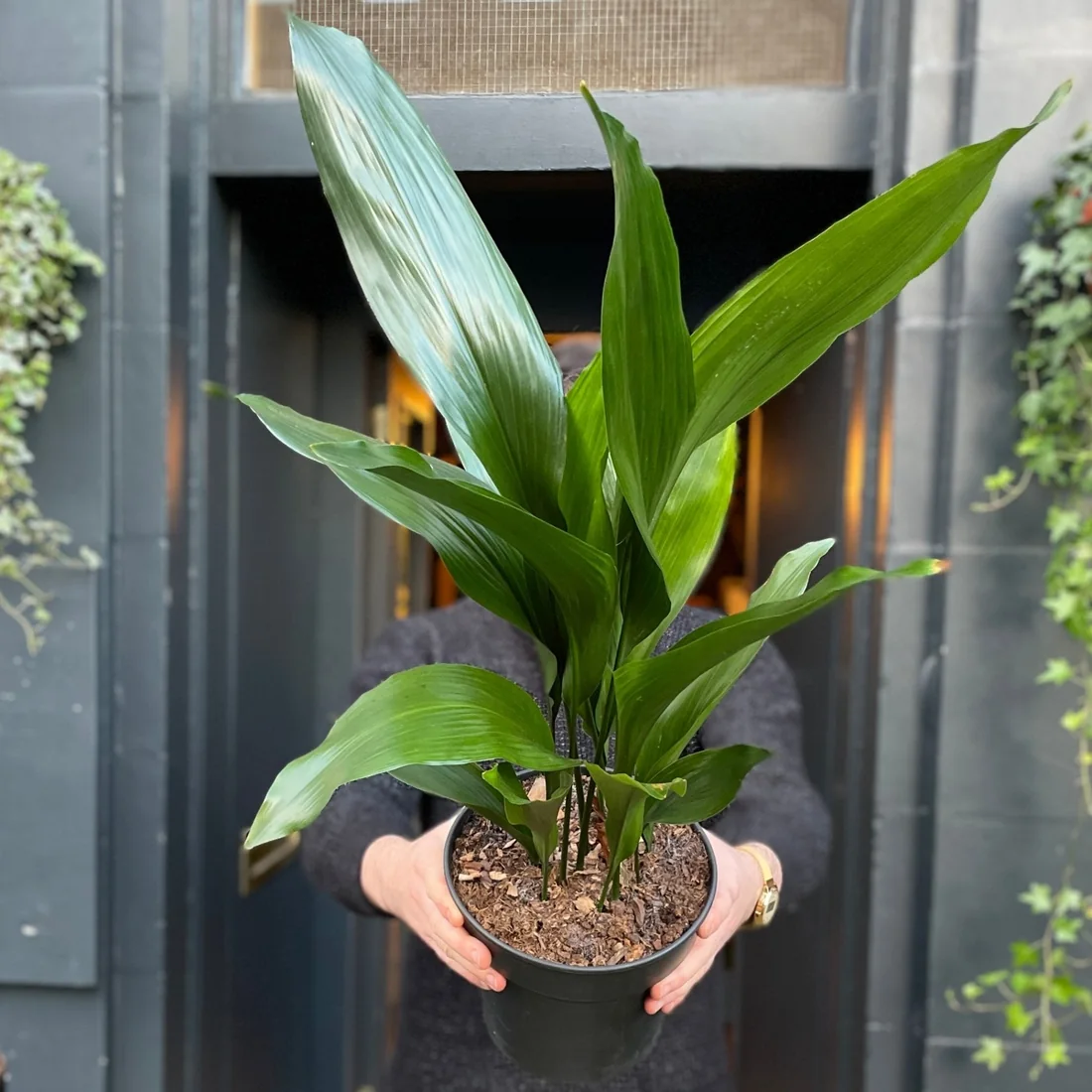
Pick it for a low stand or a floor pot where soft daylight reaches the leaves. It grows slowly and tolerates some drying at the surface between waterings. Give its upright leaves room to spread without brushing the path your cat takes through the room.
2. Parlor palm
Chamaedorea elegans
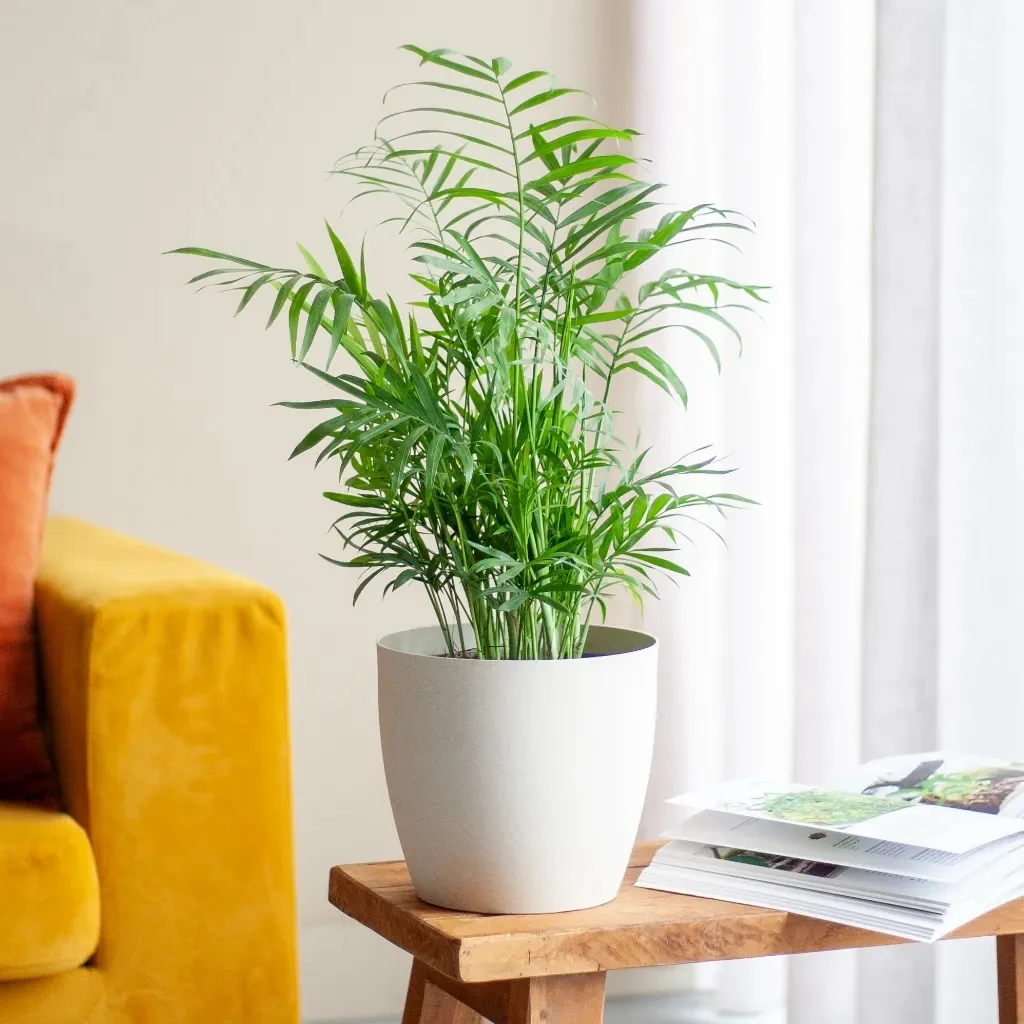
Choose a stable pot for a low stand with indirect light. Check the upper mix before watering and keep the fronds out of a hot draft. The exact species matters when a shop labels several kinds simply as indoor palms.
3. Money tree
Pachira aquatica
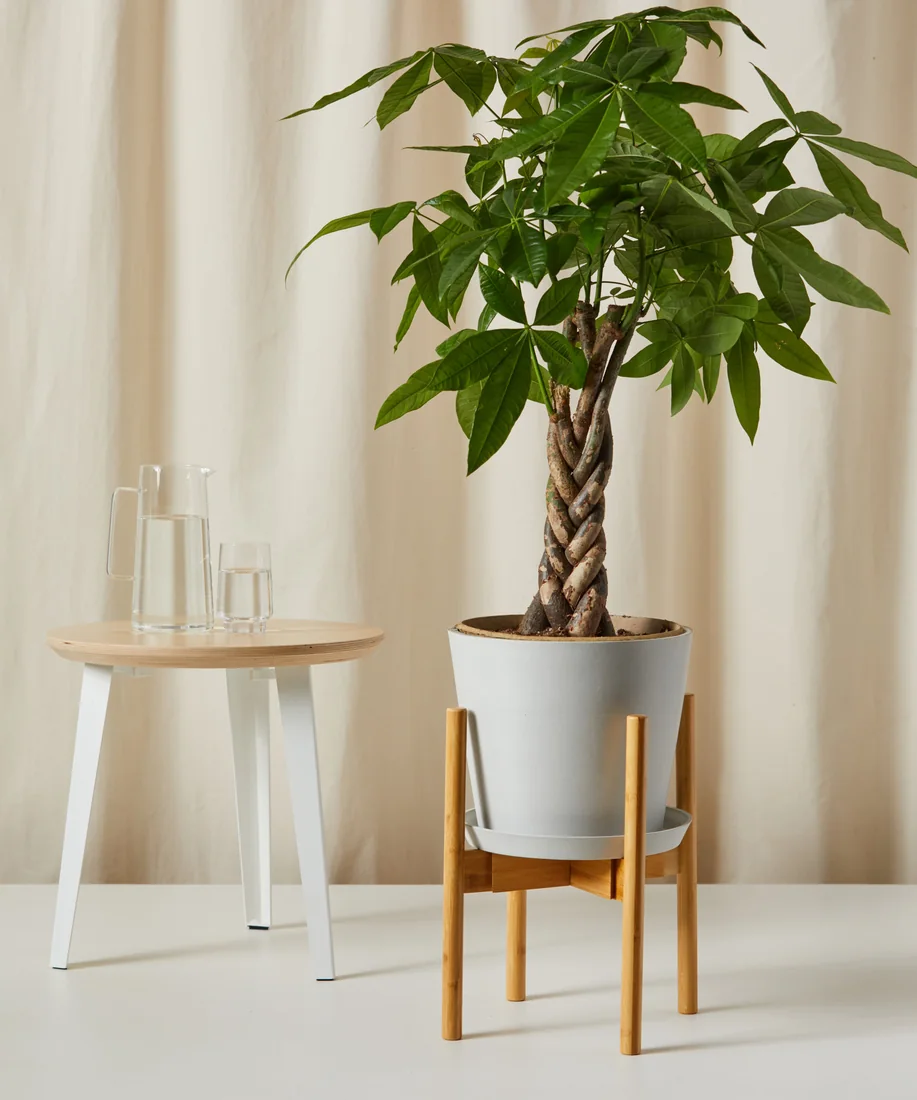
Give the leafy crown bright indirect light and keep the pot out of a busy path. Let the upper mix dry before watering. Check for Pachira aquatica on the tag. A trailing pothos sold as “money plant” is a different species and is toxic to cats.
4. Ponytail palm
Beaucarnea recurvata
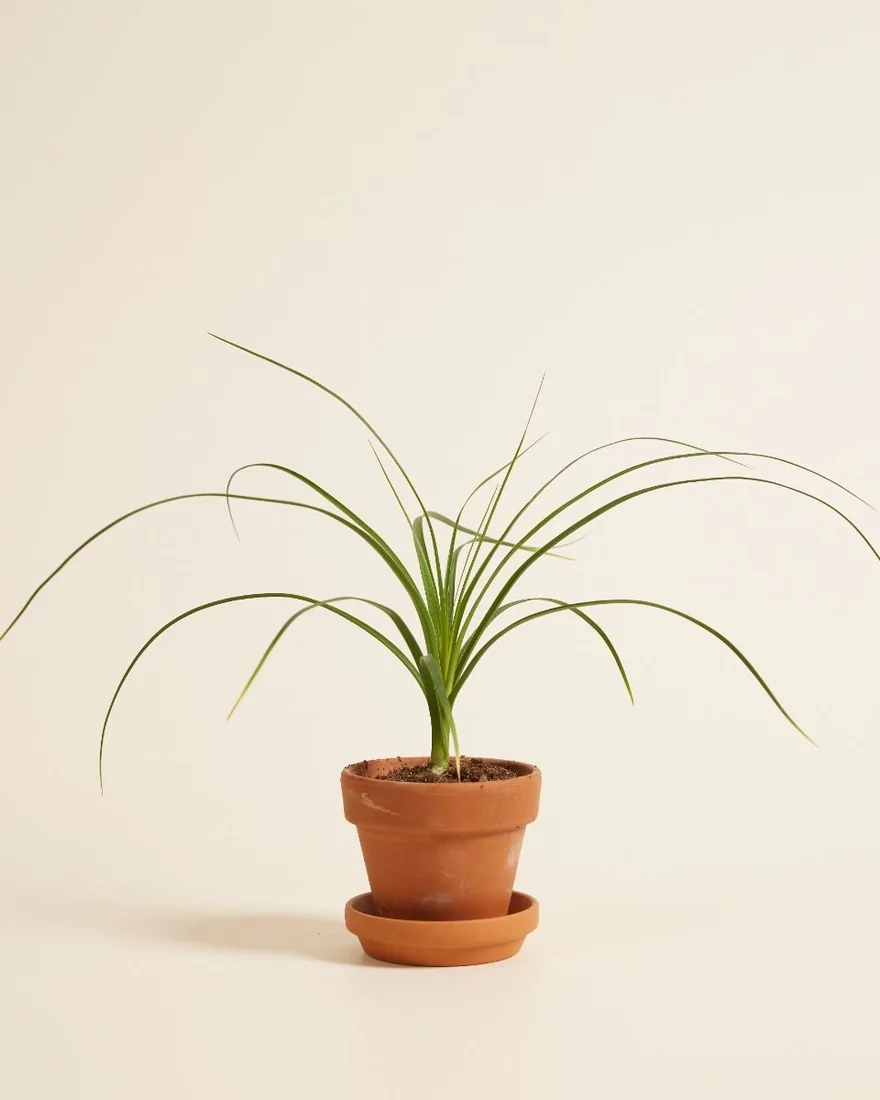
The bulbous base stores water, so this plant fits a bright spot where you water less often. Let the mix dry through. Its long leaves can become a tempting toy. Leave space around the pot and use a stable planter.
5. Areca palm
Dypsis lutescens
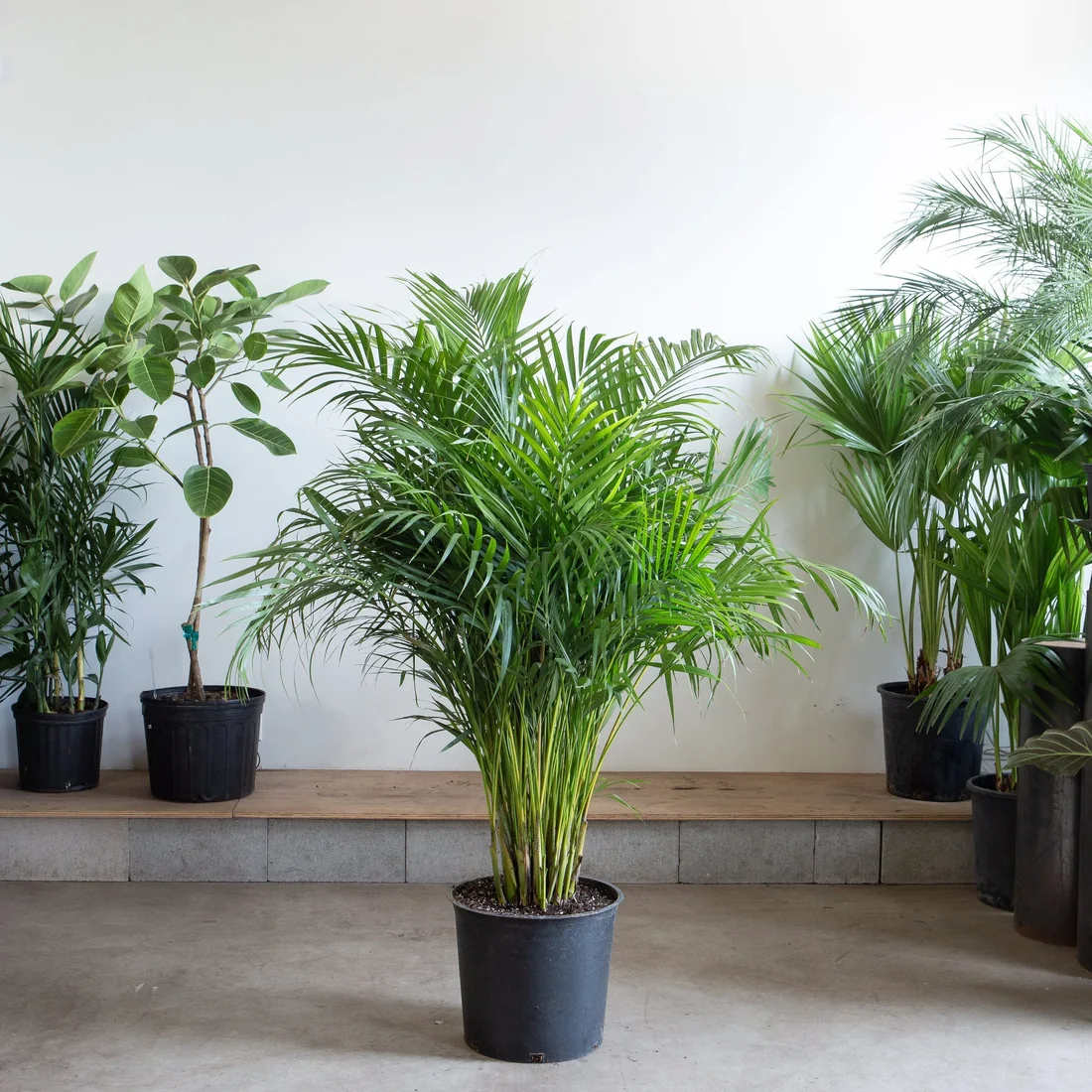
Try it in a bright room with space for arching fronds. You may also see it sold as Chrysalidocarpus lutescens. Give it bright filtered light and water when the upper mix starts to dry. The broad clump needs more floor space than a young parlor palm.
Plants for a hanging basket
6. Spider plant
Chlorophytum comosum
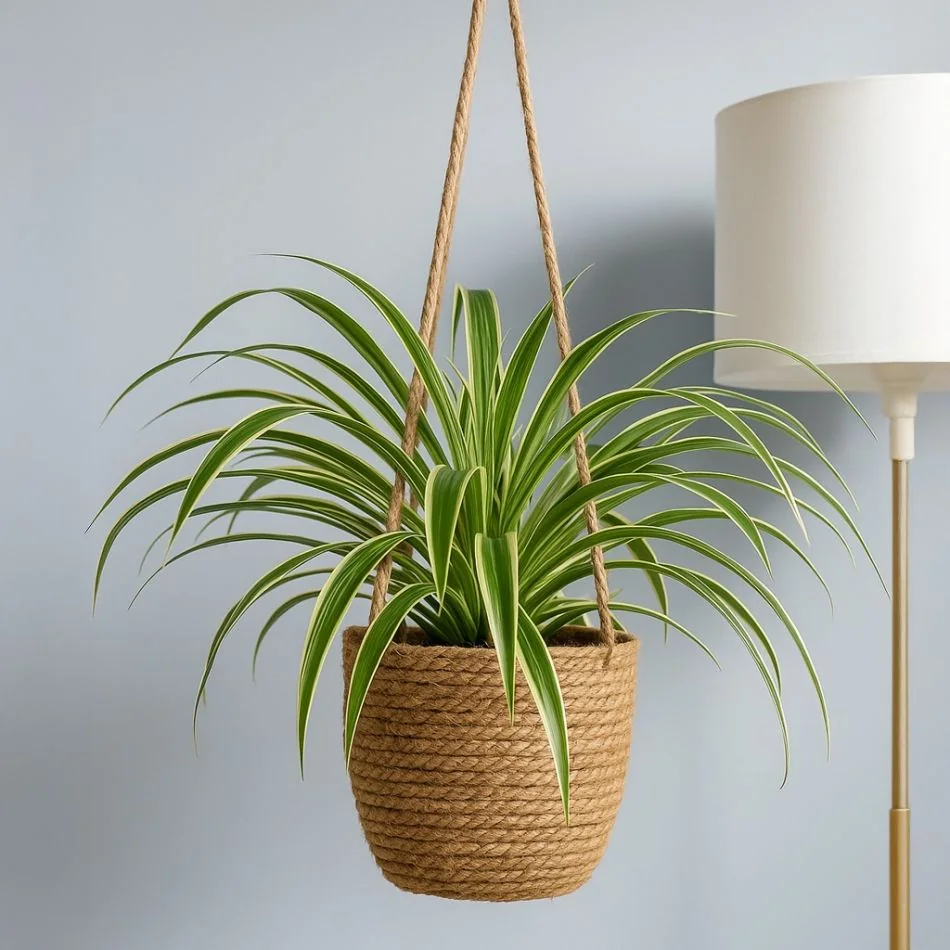
Use bright indirect light to grow a fuller basket. Check the upper mix and water over the sink when it dries. If your cat grabs the dangling runners, trim them or move the basket to a spot away from a perch.
7. Boston fern
Nephrolepis exaltata ‘Bostoniensis’
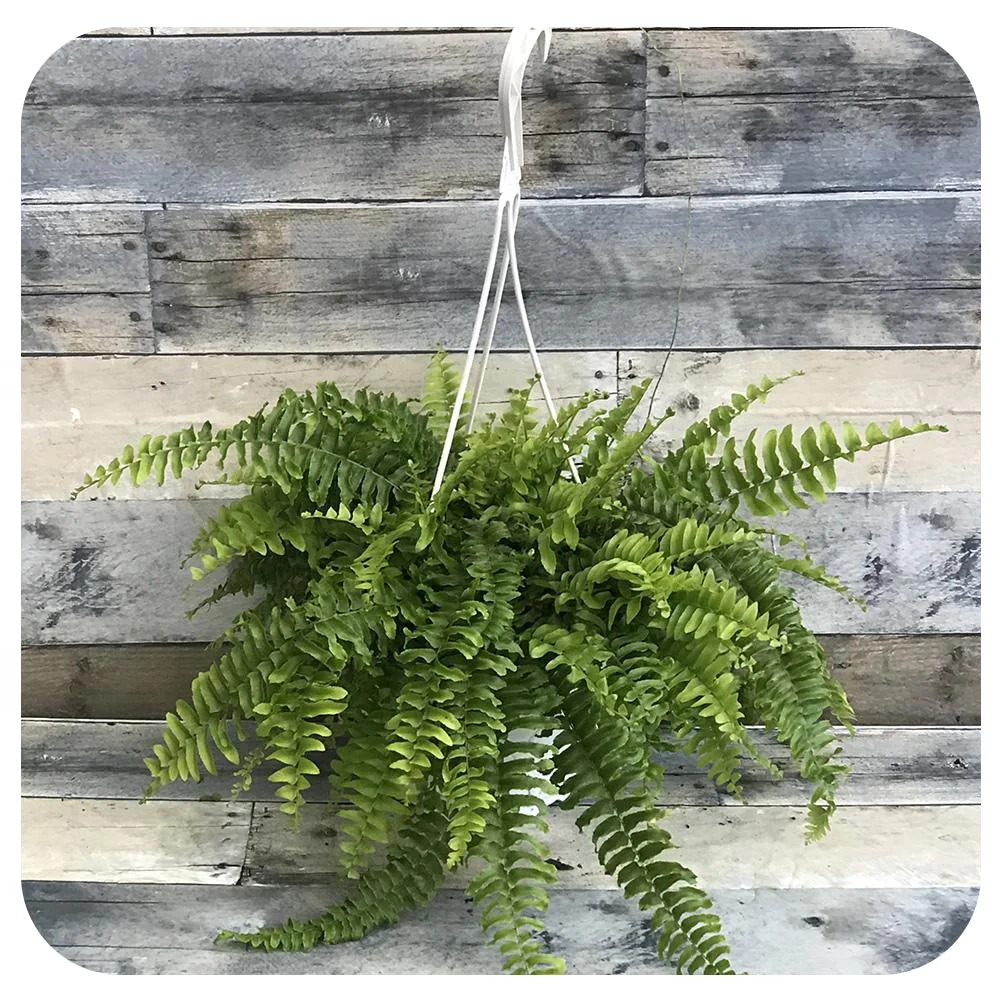
Choose it for a humid place with filtered daylight where you can lift the basket down to water. Keep the mix lightly moist and away from a heater. The ASPCA listing uses a variant spelling for this Boston fern. Check the label carefully, especially if the shop displays it near asparagus fern.
Small plants for a table or shelf
8. Baby rubber plant
Peperomia obtusifolia
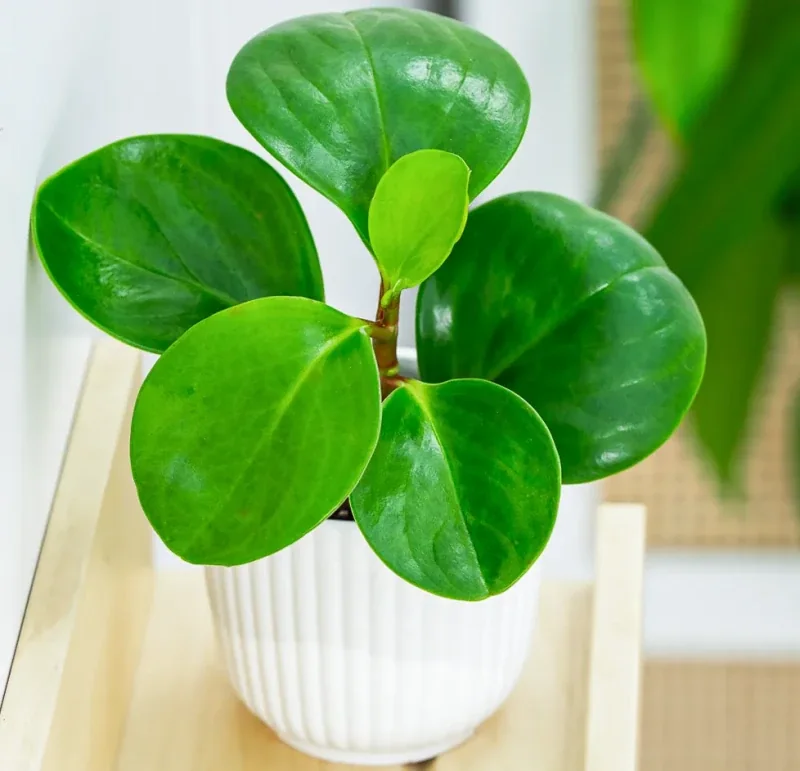
The thick, rounded leaves suit a bright tabletop. Let the upper mix dry before watering. Look for Peperomia obtusifolia because Ficus elastica, commonly called rubber plant, has a different safety profile.
9. Watermelon peperomia
Peperomia argyreia
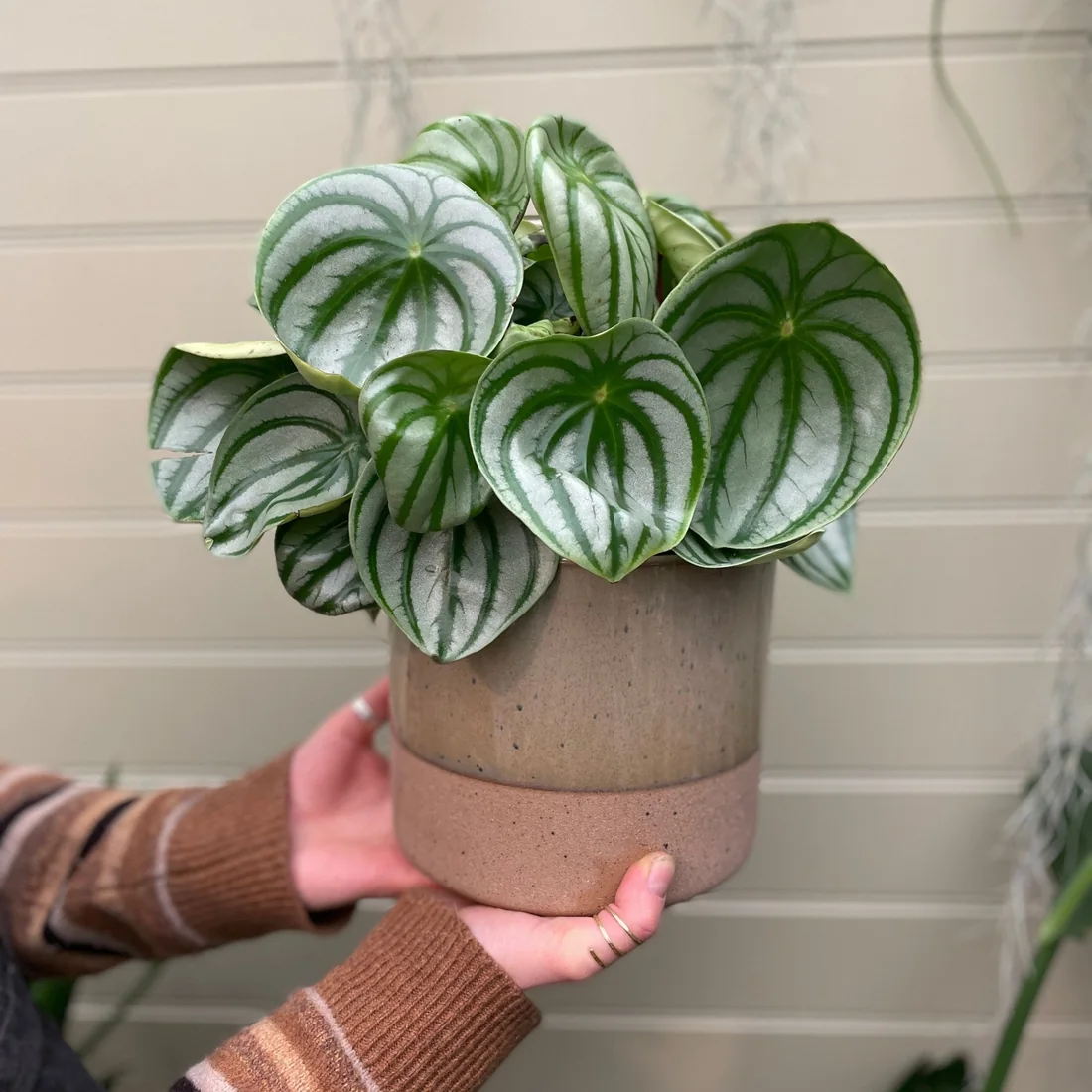
The silver-striped leaves give you a pattern without needing a large pot. Use bright indirect light and check the upper mix before watering. Give the rounded leaf canopy a little space from the edge of the shelf.
10. African violet
Streptocarpus ionanthus
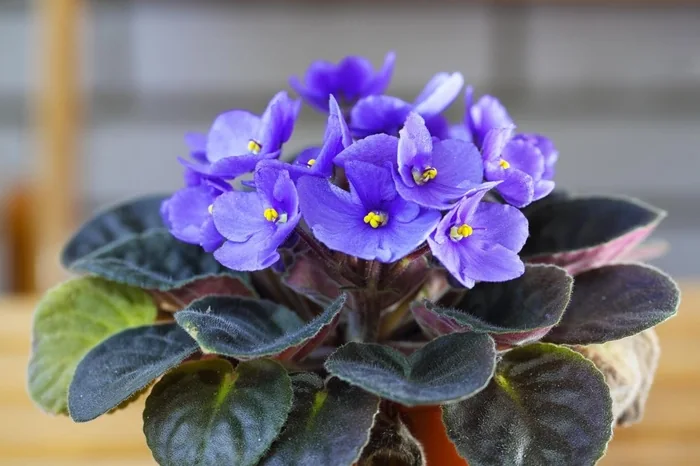
Use bright indirect light if you want regular blooms. Water the mix when the surface starts to dry and let the pot drain. Labels may use the older name Saintpaulia ionantha. ASPCA lists African violets under Saintpaulia.
11. Nerve plant
Fittonia albivenis
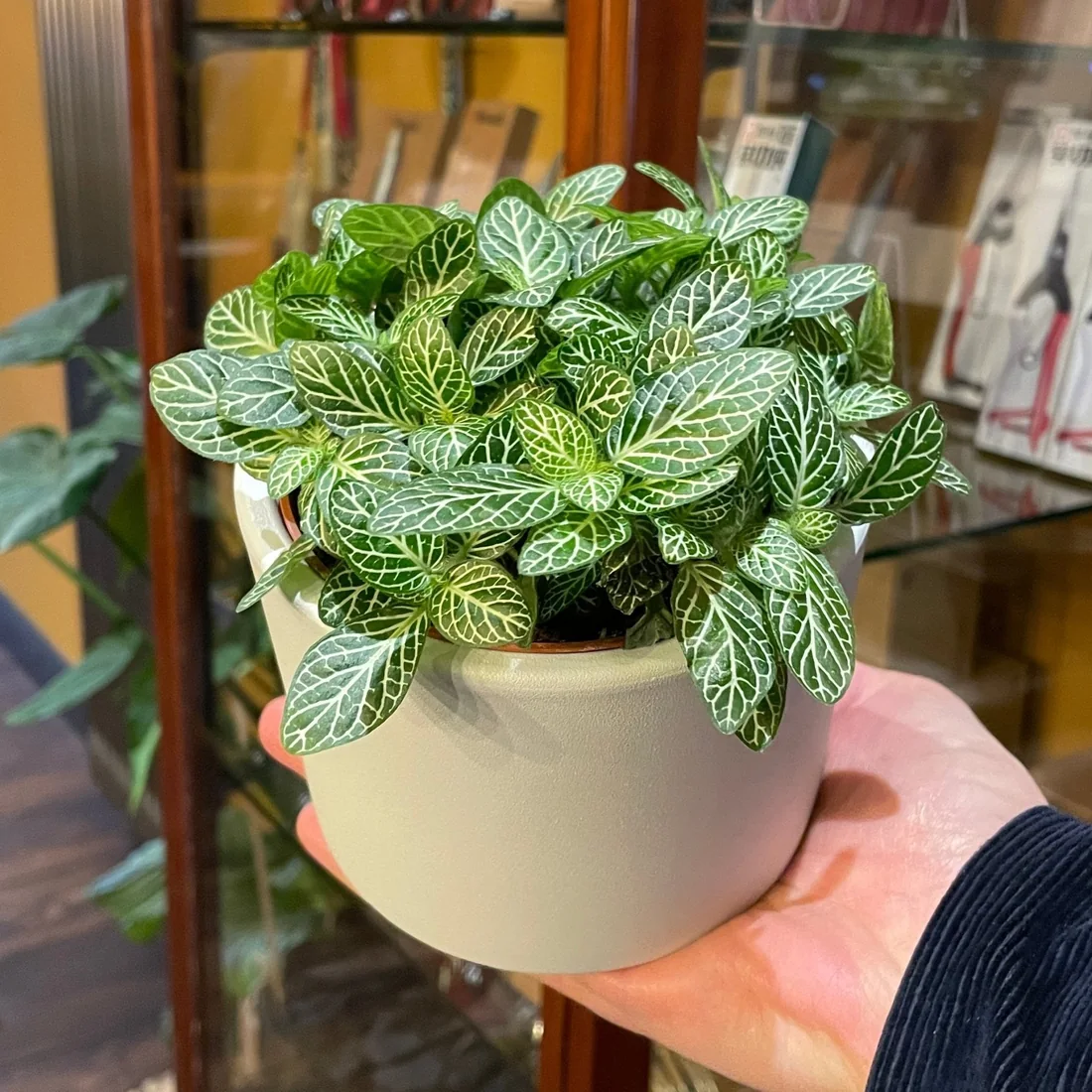
Choose it for a shelf you can check often. The thin-leaved plant wilts readily when the mix dries out, so aim for lightly moist soil that drains. ASPCA lists it under the older name Fittonia verschaffeltii.
12. Polka dot plant
Hypoestes phyllostachya
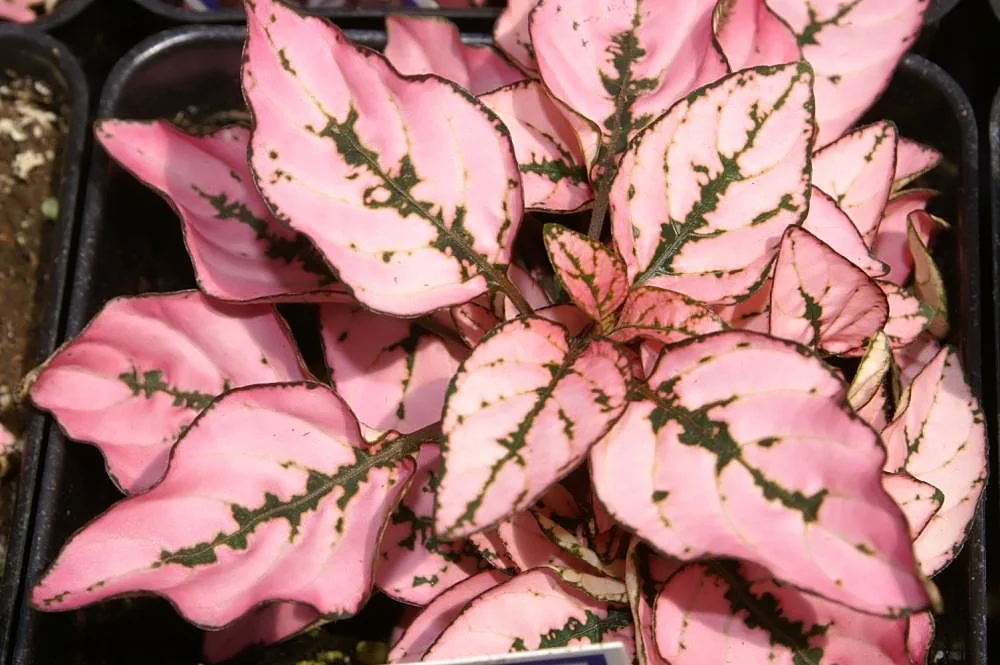
Give it bright indirect light to show off the speckles and pinch the growing tips if the stems get lanky. Check the mix often enough to keep it from drying out completely. It fits a small shelf best if you are happy to trim it.
13. Aluminum plant
Pilea cadierei
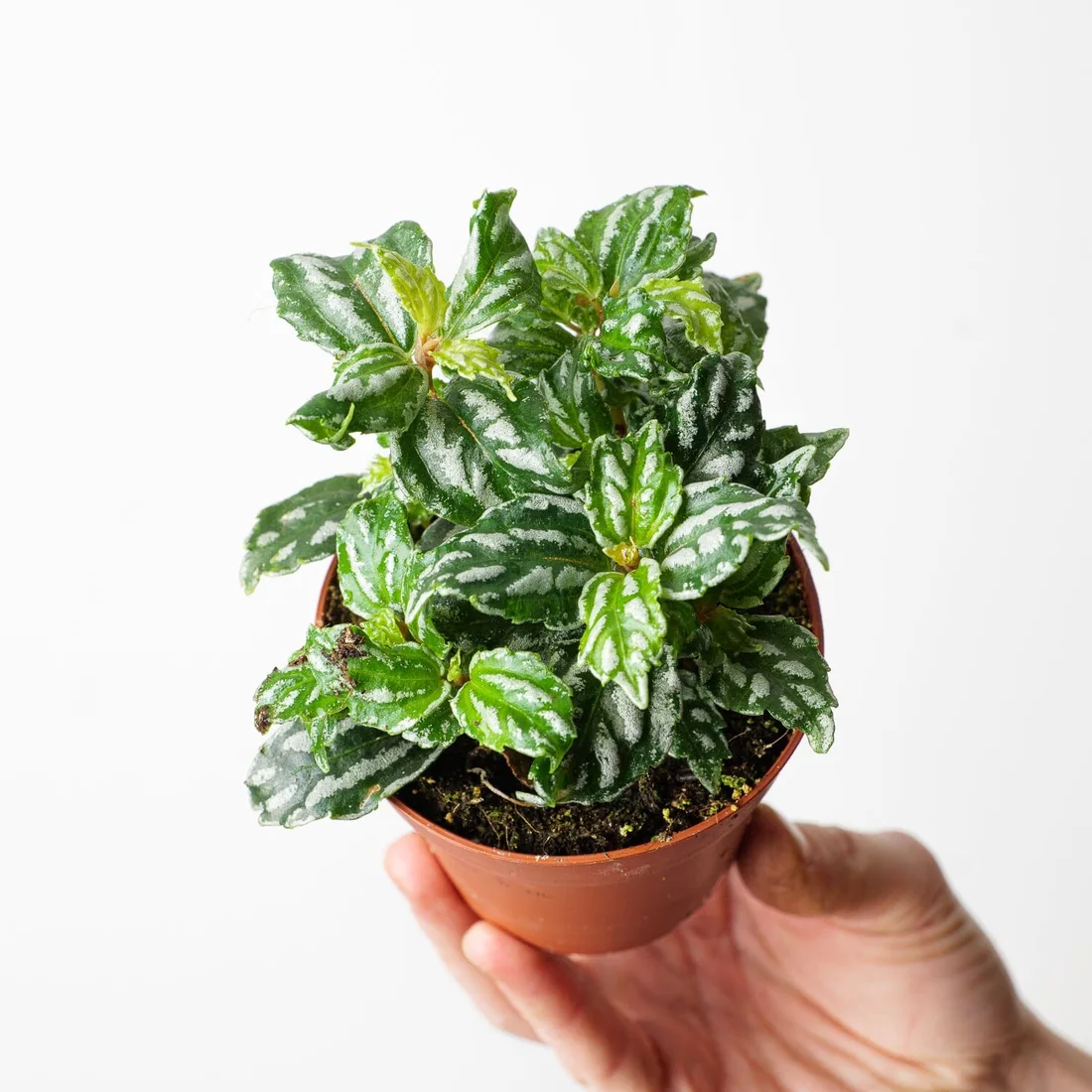
The silver patches brighten a tabletop with filtered light. Check the upper mix before watering and pinch stems to keep it bushy. The ASPCA listing spells the species name Pilea cadieri.
14. Purple velvet plant
Gynura aurantiaca
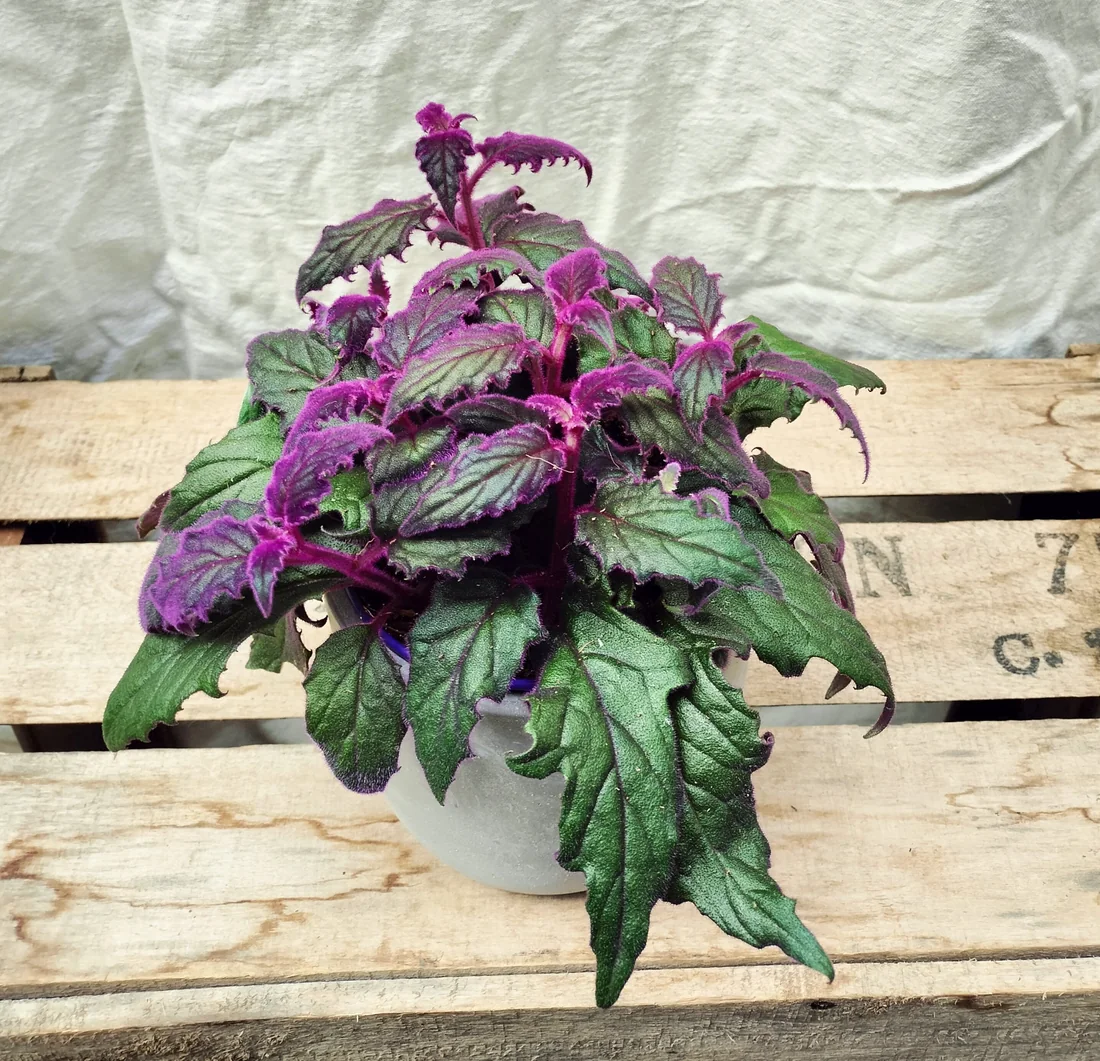
Give the purple hairs bright indirect light and let the top of the mix begin to dry before watering at soil level. The ASPCA’s velvet plant listing uses the spelling Gynura aurantica. For more options in a particular color, browse our colorful indoor plants guide and cross-check the species before buying.
Make room for the plant and the cat
15. Read the tag before you buy
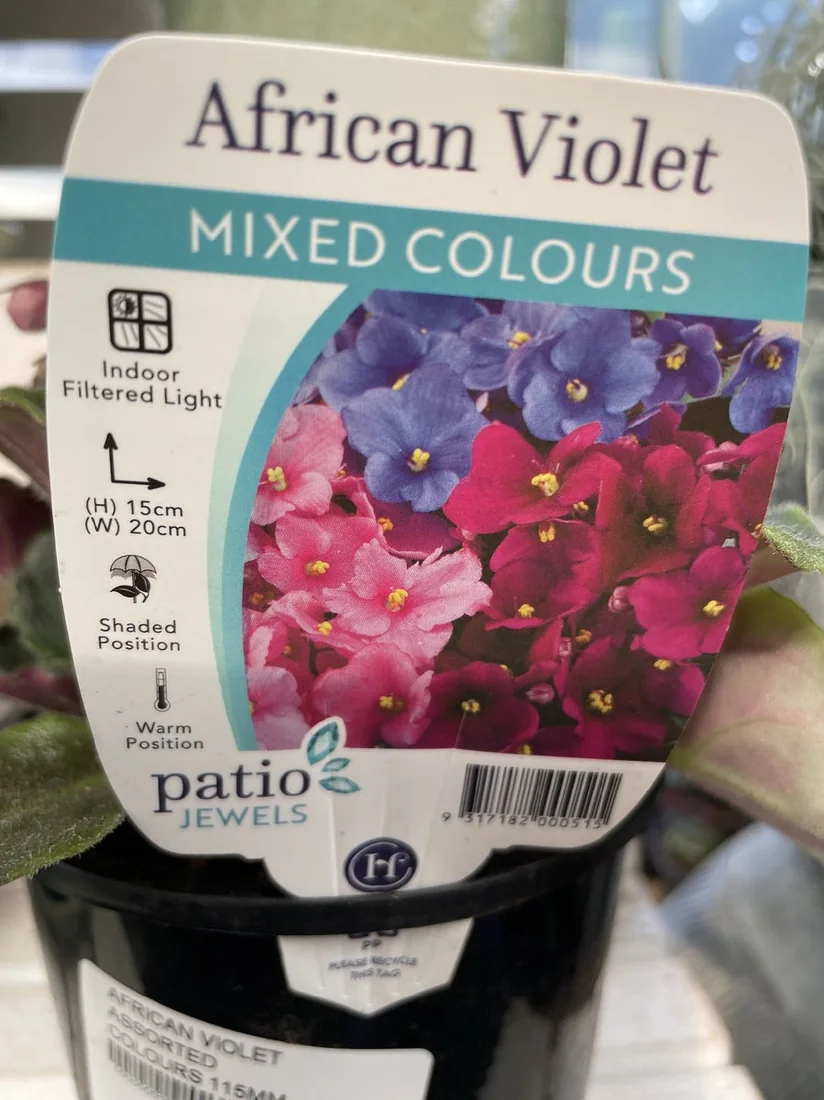
Photograph the botanical name, including the variety if the tag gives one. If the seller can only identify the plant as a mixed fern or assorted palm, ask for the name or choose a clearly labeled plant. For a small pot you can check quickly, start with baby rubber plant from the low-maintenance indoor plants guide.
16. Set up pots for a climber
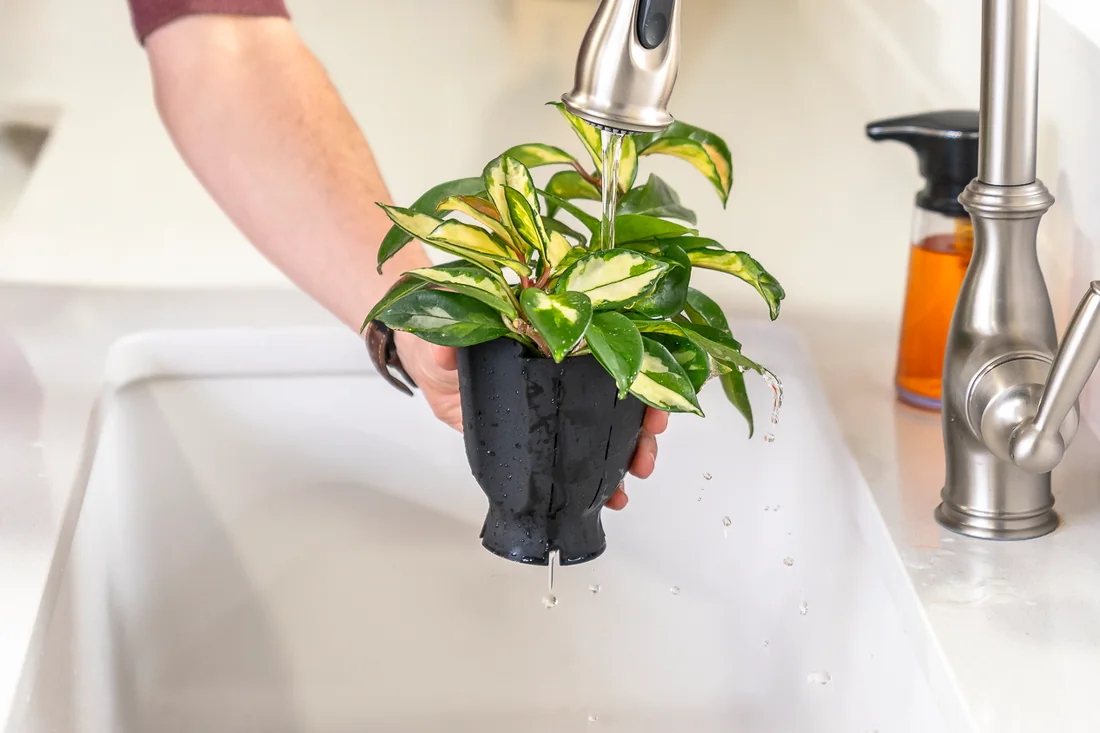


Choose a heavy, steady outer planter for floor plants. Keep baskets away from shelves or furniture your cat uses as a launch point. Water over a sink, let the pot drain and empty saucers so there is no runoff to drink. Keep fertilizer and plant sprays in a closed cupboard.
Plants to keep out of your cat’s reach
Check bouquets as carefully as pots. The FDA’s lily guidance advises keeping true lilies (Lilium) and daylilies (Hemerocallis) out of homes with cats. Exposure to a leaf, pollen or vase water can be an emergency. A peace lily is a different plant that can cause painful mouth irritation if chewed. Check the ASPCA database for pothos, sago palm and any other plant you already own.
If you suspect your cat encountered a true lily or another toxic plant, contact a veterinarian or animal poison-control service right away. Keep a photo or the plant tag handy so they can identify it.