



Quick Answer
For a narrow spot, compare the width of the open fronds on the plants at the nursery. In a wide, bright corner, a fuller clump can work. For a tabletop, start with a parlor palm or metallic palm and leave room for the leaves to spread.
Pick a palm by frond shape, light, and room
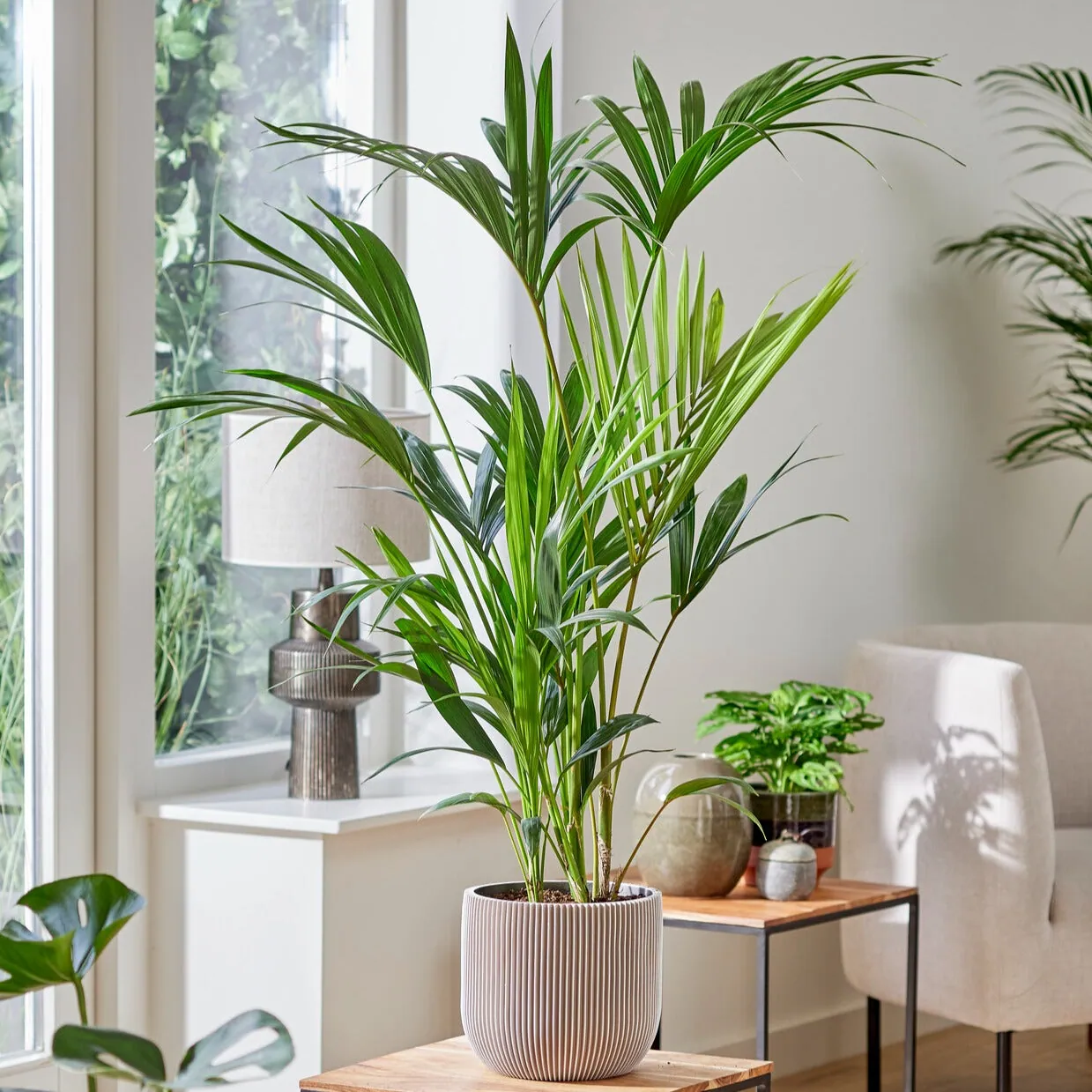
Start with the shape and spread of the fronds. Feather palms like Kentia arch out in long curves. Fan palms such as lady palm carry a flatter, segmented leaf. Look at the specimen from the side and measure from tip to tip. A younger palm may suit a shelf now and need floor space later. For broader leaf shapes, browse our tropical foliage plants. The New York Botanical Garden's indoor palm guide compares indoor species by habit and tolerance for lower light.
Indoor palms by room and growing conditions
Scroll sideways to compare all columns.
| What you want | Start with | Check before buying |
|---|---|---|
| A palm for a shelf or low table | Parlor palm or metallic palm | Leave enough room for fronds to grow beyond the rim. |
| A floor palm for softer daylight | Kentia or bamboo palm | Measure the spread where the fronds arch. |
| A full screen near a bright window | Areca palm or cat palm | Leave space for a multi-stem clump to widen. |
| A fan-shaped leaf for a corner | Lady palm or Chinese fan palm | Check mature spread and the light at the actual spot. |
| A palm for a particularly sunny window | European fan palm or pygmy date palm | Allow clearance from walkways and check for sharp spines. |
Palms for rooms with softer daylight
1. Parlor palm
Chamaedorea elegans
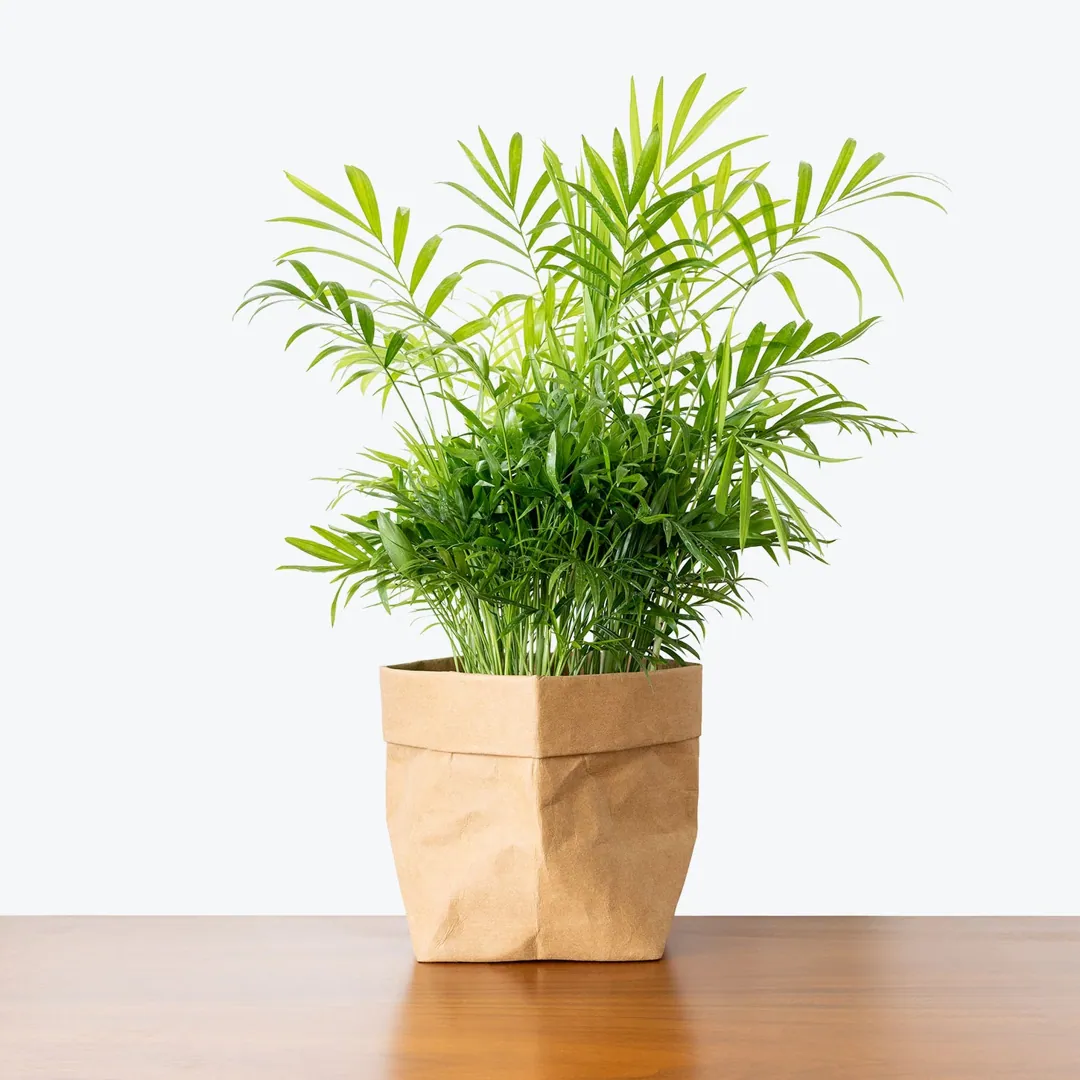
Start here if you want fine, arching foliage without a large floor pot. Several seedlings are often sold together, so compare how full the plant looks from the side. Give it filtered daylight and let the surface of the mix begin to dry before watering. A low table works well while the plant is small.
2. Kentia palm
Howea forsteriana
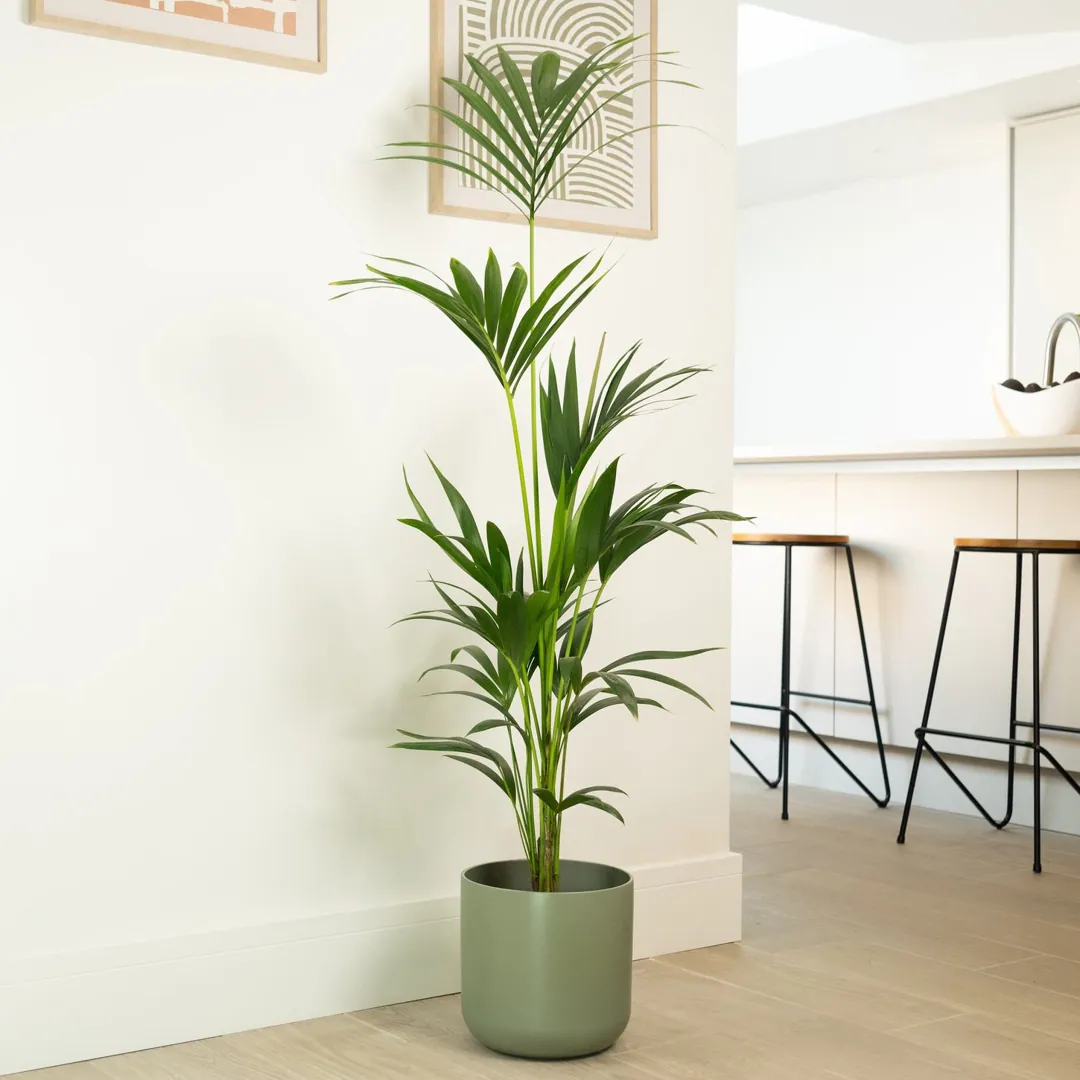
A Kentia gives a corner long, graceful fronds and a comparatively open outline. It tolerates softer daylight, but give it a position near a window if you can. Choose by the spread of the longest frond, especially beside a chair. Water once the upper mix has dried somewhat, and avoid unnecessary repotting.
3. Bamboo palm
Chamaedorea seifrizii
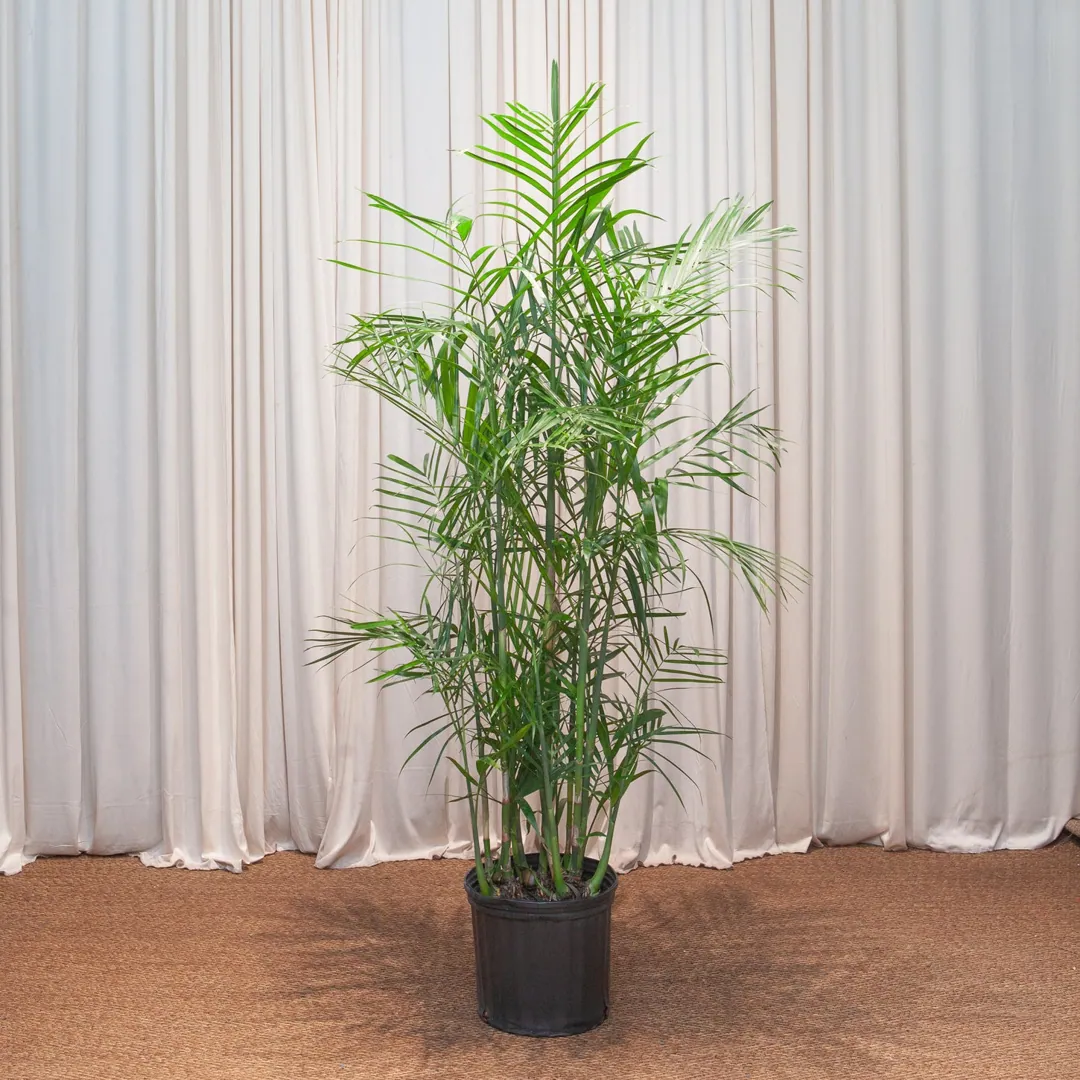
The upright canes give this clumping palm a more vertical shape than a broad fan palm. Put it near a window with filtered daylight and allow space for stems to fill out from the base. Check the botanical name because the common name bamboo palm is used for several related species.
4. Lady palm
Rhapis excelsa
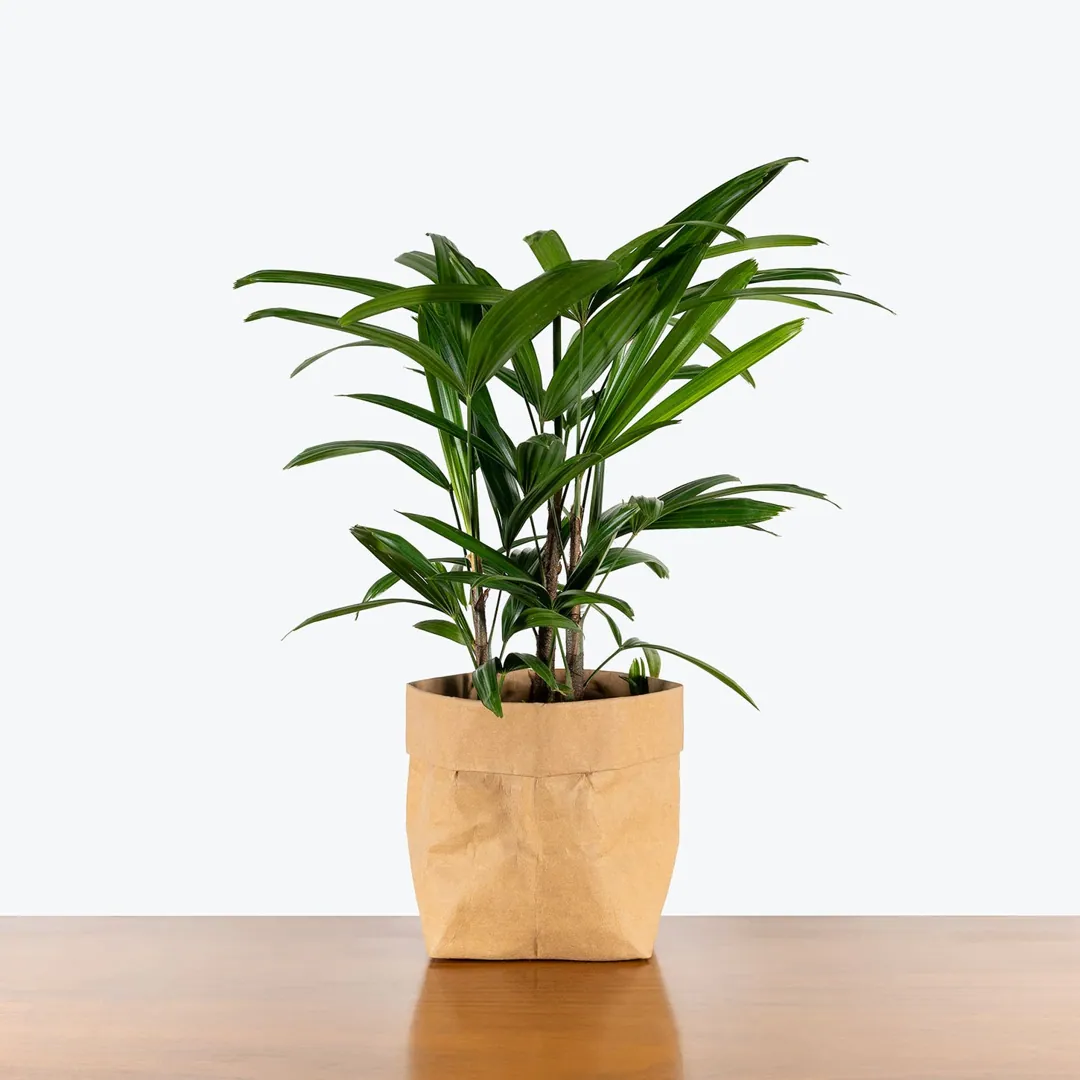
The blunt-tipped fans sit on slender clustered stems. This makes a good choice for a bright hall or beside a chair where you want a clear fan silhouette. It tolerates moderate light. Rotate the pot occasionally if growth draws toward the window, and measure the width of the clump at its tallest leaves.
5. Metallic palm
Chamaedorea metallica
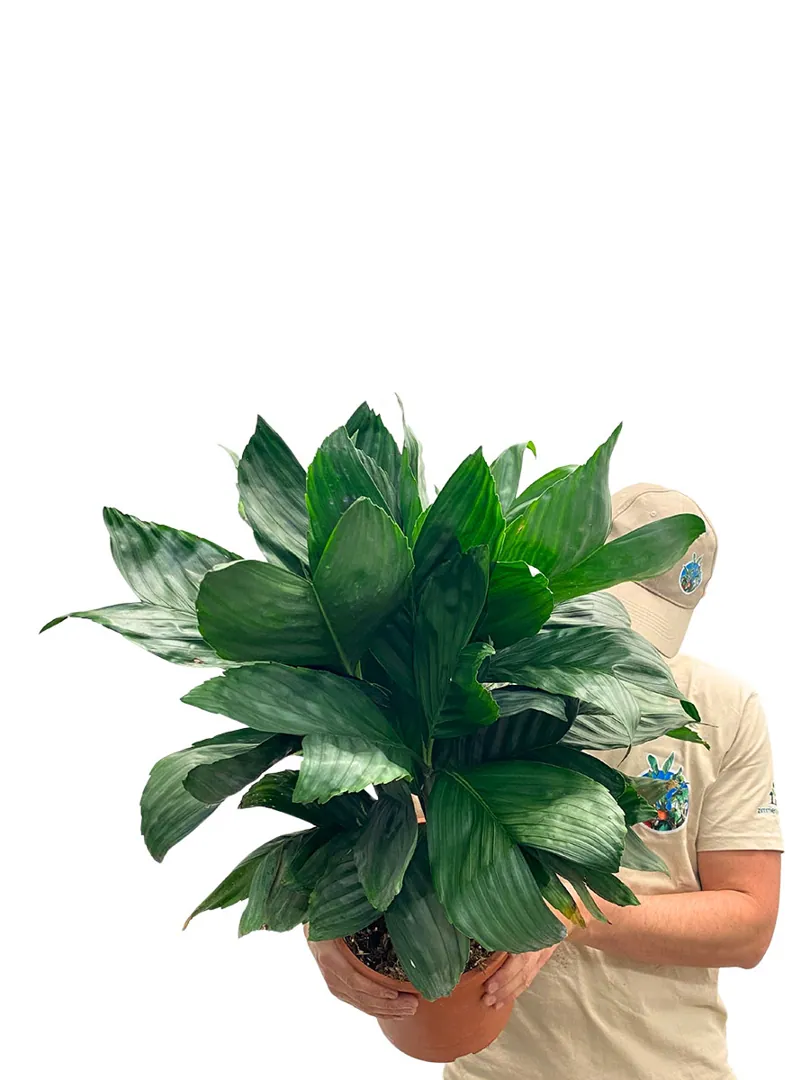
Choose this smaller palm for a low shelf where its deep green, often split leaves can be seen close up. It stays visually simpler than a feathery clump and appreciates filtered light. Look for an established specimen with healthy new growth, and let the surface of the mix begin to dry before watering.
Fuller palms for bright rooms
6. Areca palm
Dypsis lutescens
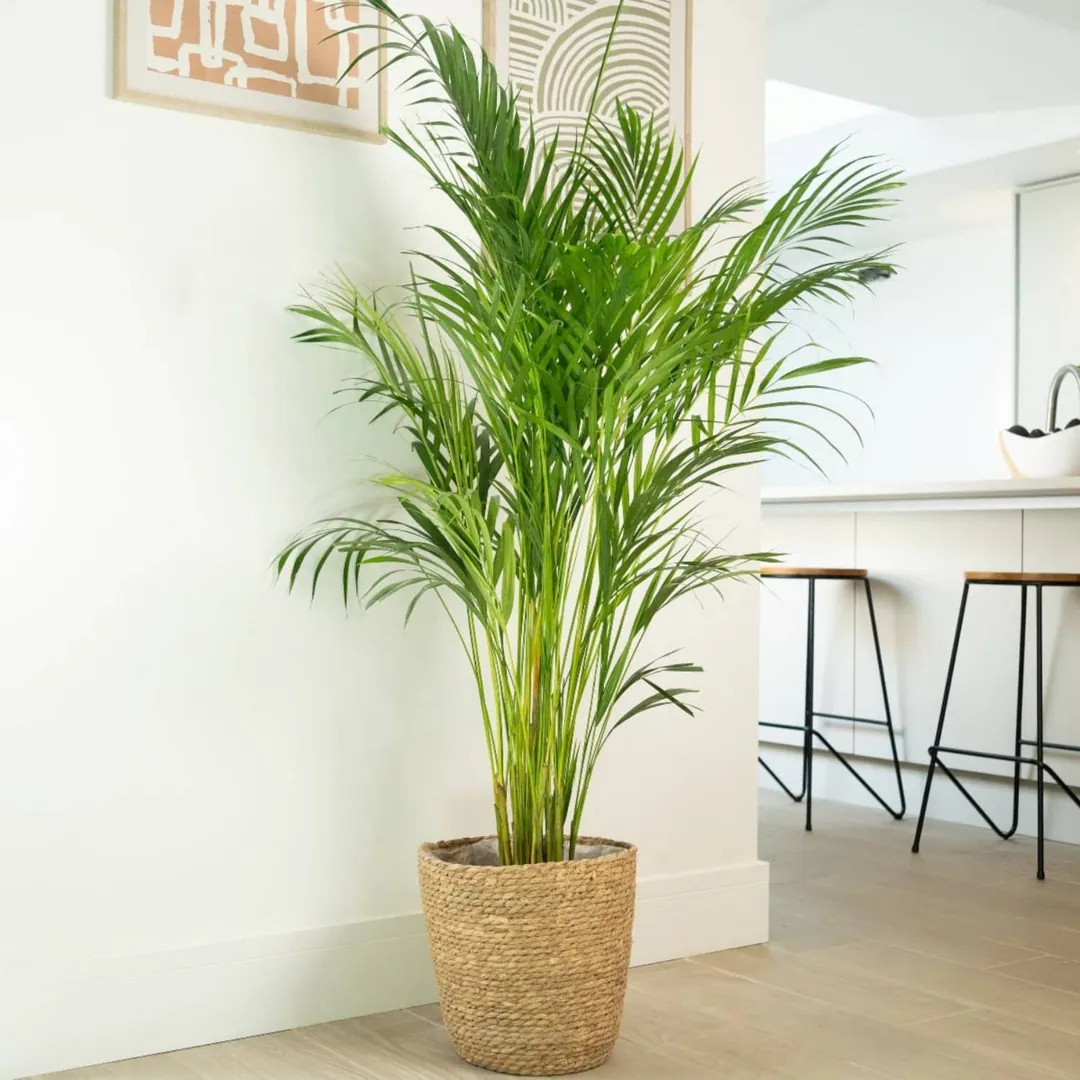
Choose an areca for a fuller shape with several upright canes. A bright room with room for the fronds to spread is a better fit than a dark gap behind a sofa. Water as the upper mix dries and let excess water drain. It may also be sold under the name Chrysalidocarpus lutescens.
7. Cat palm
Chamaedorea cataractarum
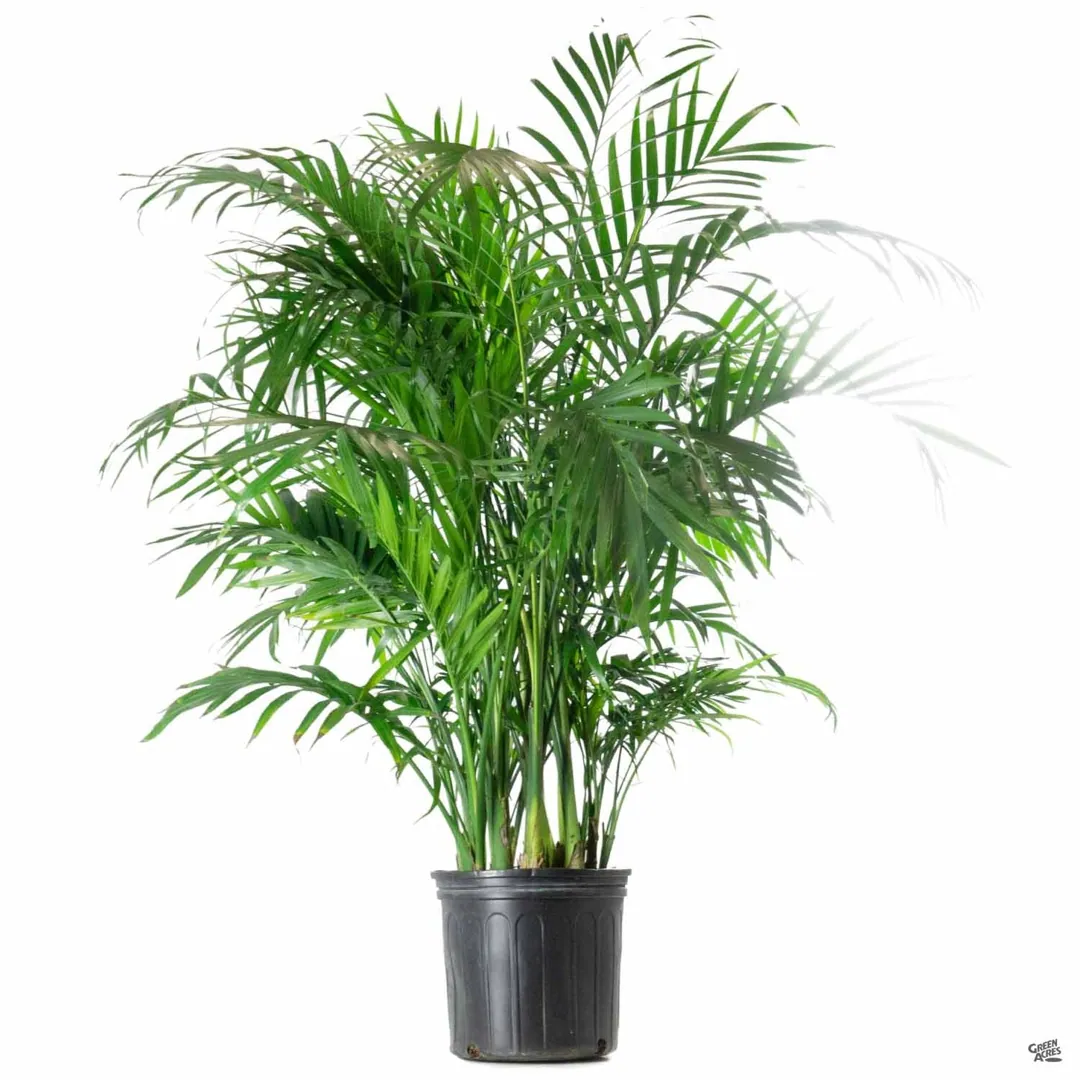
This trunkless palm grows outward in a dense clump, so measure low as well as high. Choose bright filtered daylight and keep the mix lightly moist while it is growing, with good drainage. It suits a window corner that you can reach easily for watering.
8. Majesty palm
Ravenea rivularis
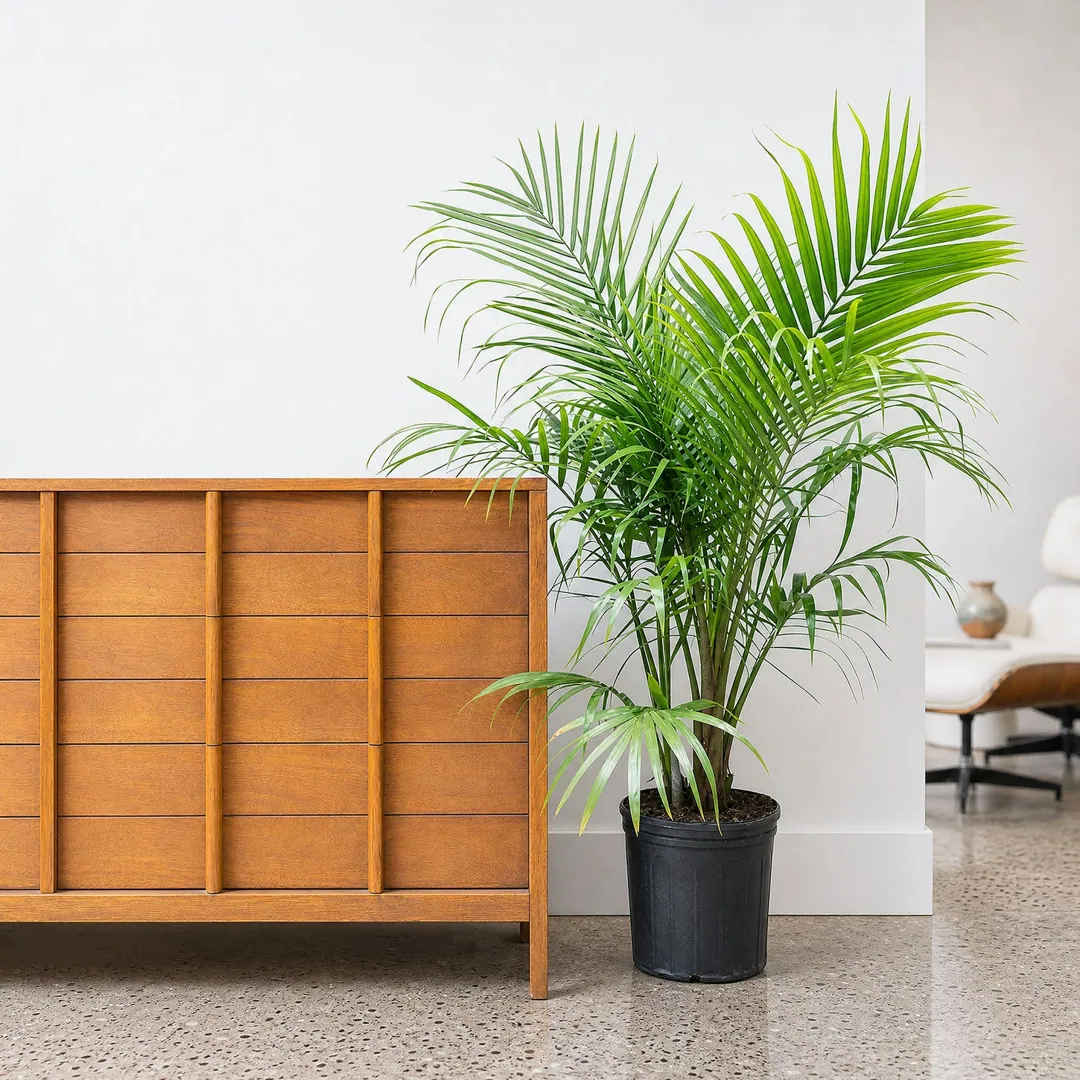
This is a choice for a roomy, very bright position and a household that checks the pot regularly. Give its long fronds clearance from walls and vents. Keep the mix evenly moist with drainage. If your room is dim or you prefer to water less often, a Kentia is usually the better starting point.
9. Fishtail palm
Caryota mitis
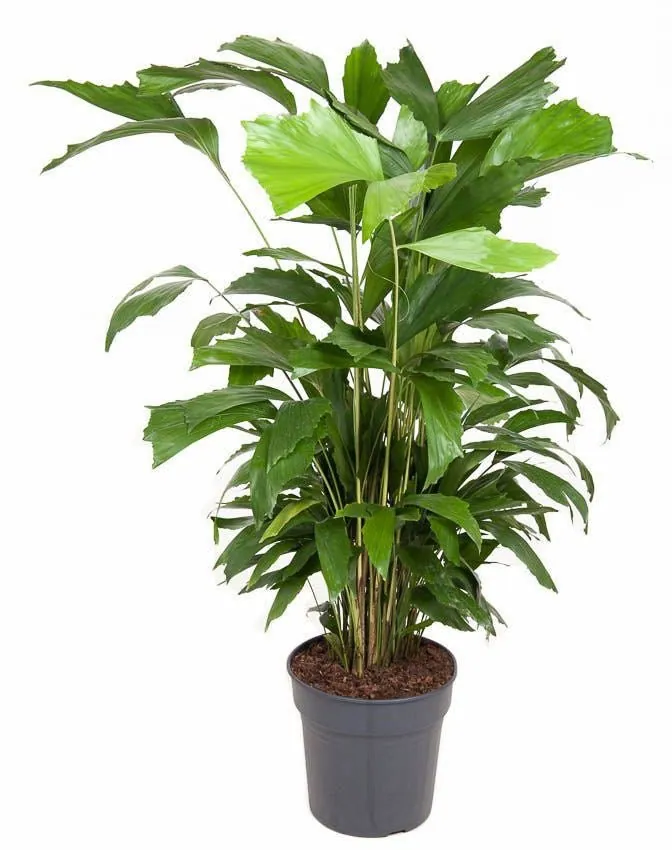
The wedge-shaped leaflets have ragged tips that give the fronds a distinct texture. Choose it only for a bright room with generous headroom, since it can outgrow a low ceiling. Keep young growth clear of a busy route and consider the size of the specimen before carrying it home.
Fan shapes and sunny-window choices
10. Chinese fan palm
Livistona chinensis
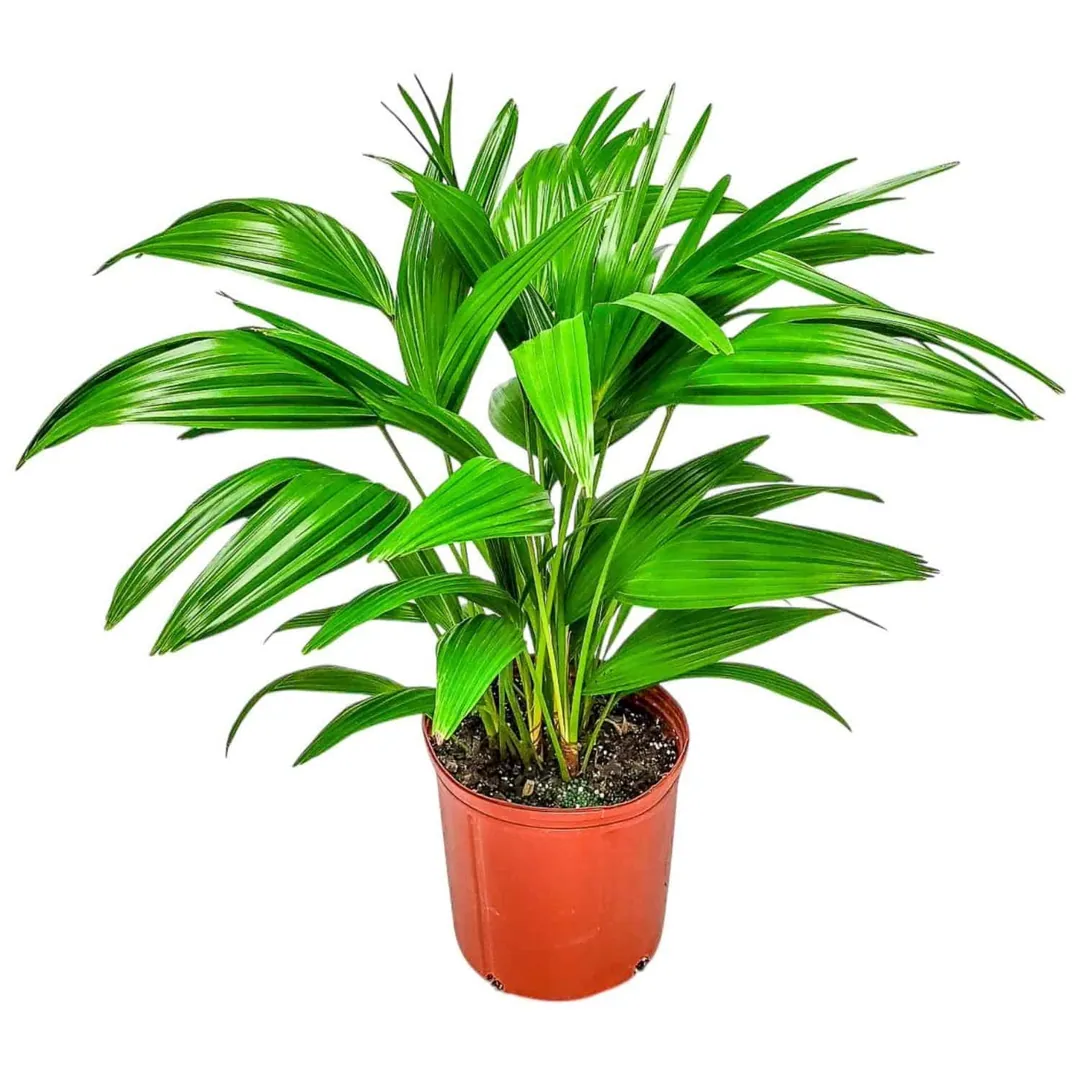
The segmented fans droop at the tips, so this palm reads much wider than its pot. A young specimen can work near a bright window if it has clear space on both sides. Check for sharp edges or spines on the leaf stalks before placing it near a seat.
11. European fan palm
Chamaerops humilis
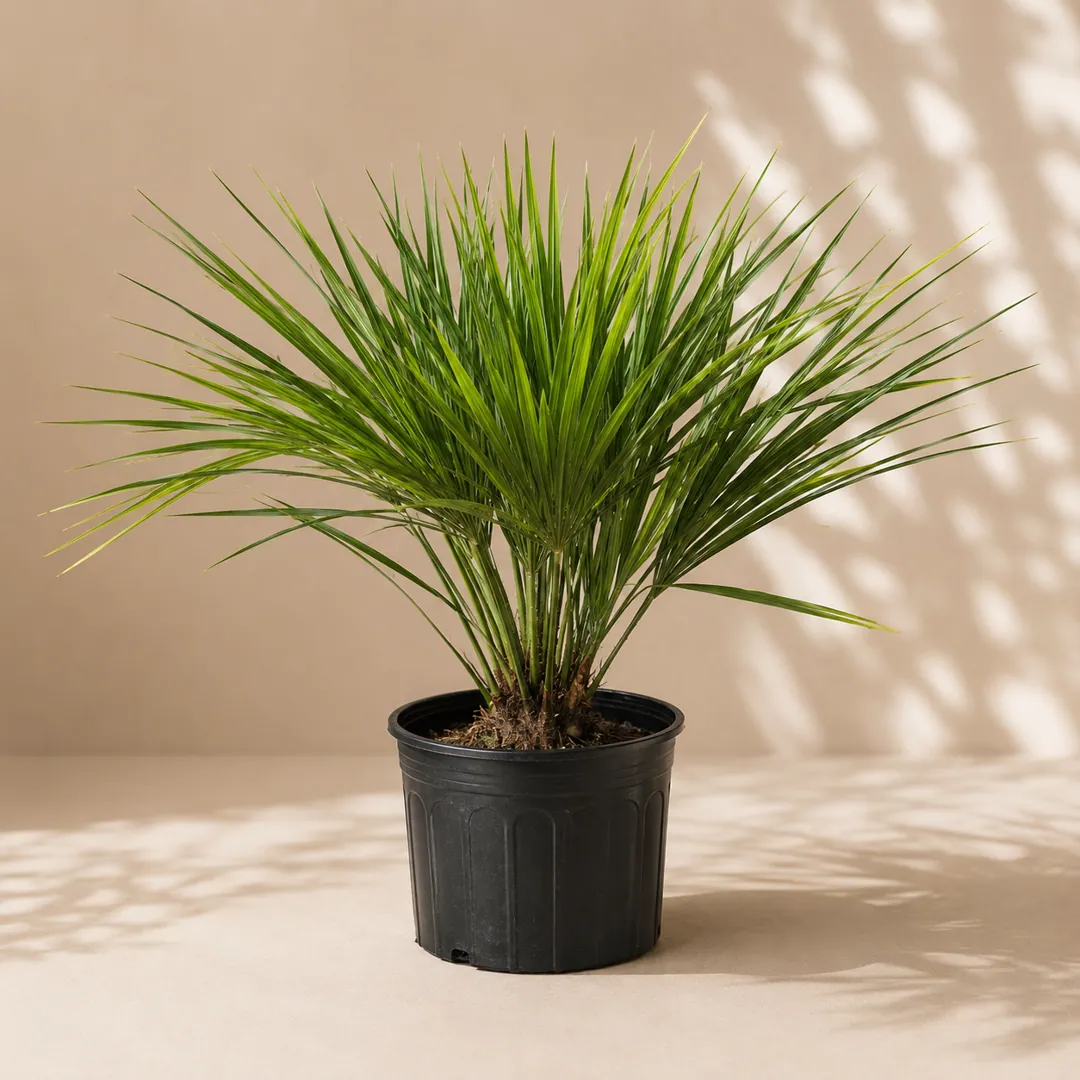
Choose this palm for a particularly bright or sunny position. Its stiff, divided fans and spreading base give it a sculptural outline. The leaf stalks can be spiny, so place it where people will not brush past. The Texas A&M horticulture guide recommends a spot with three to four hours of direct sun.
12. Ruffled fan palm
Licuala grandis
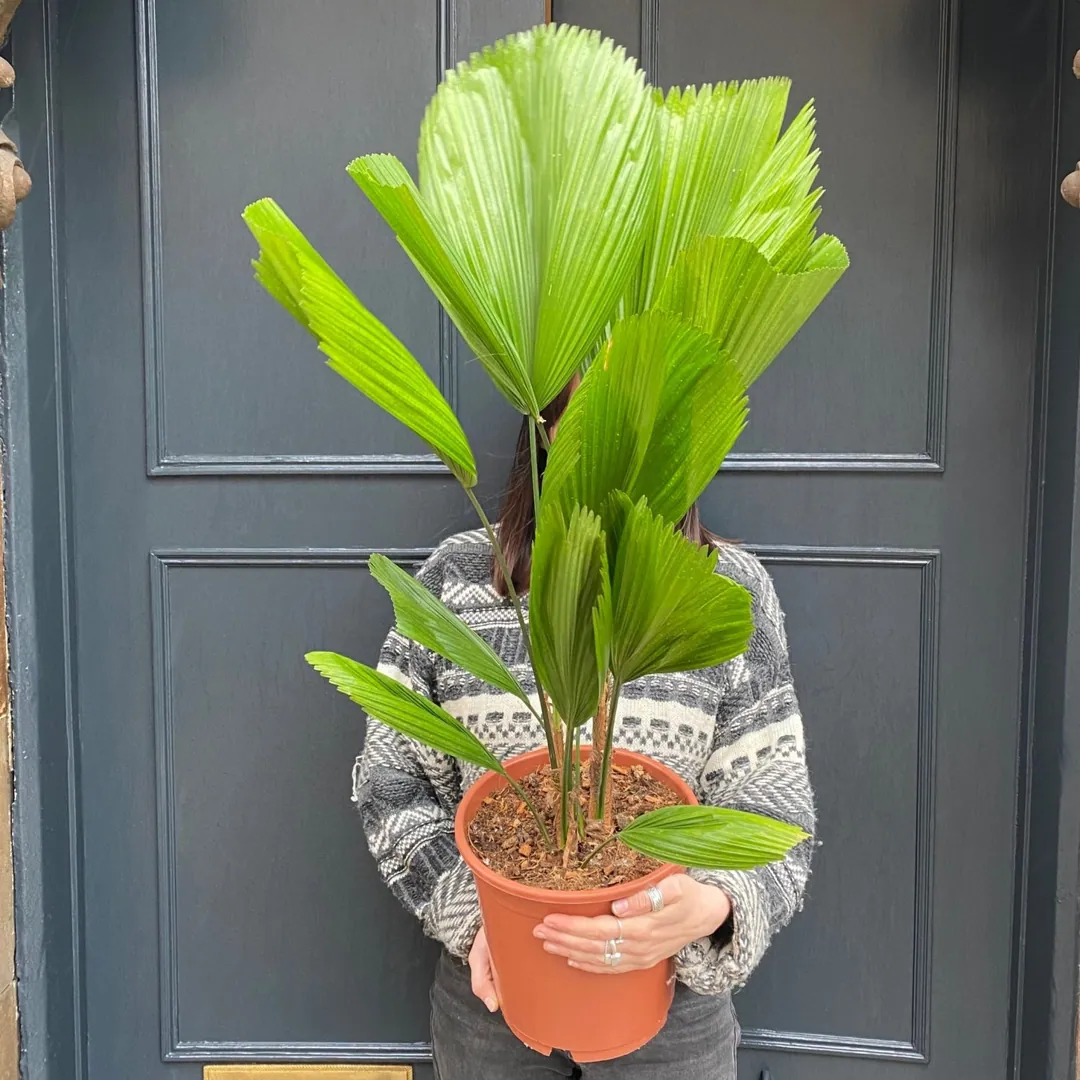
Look for a sheltered position with bright filtered light, stable warmth, and decent humidity. The pleated round fans show damage easily when they rub on a wall. This is a more demanding choice than a lady palm, so try it when you already have a room where humidity-sensitive plants grow well.
13. Pygmy date palm
Phoenix roebelenii
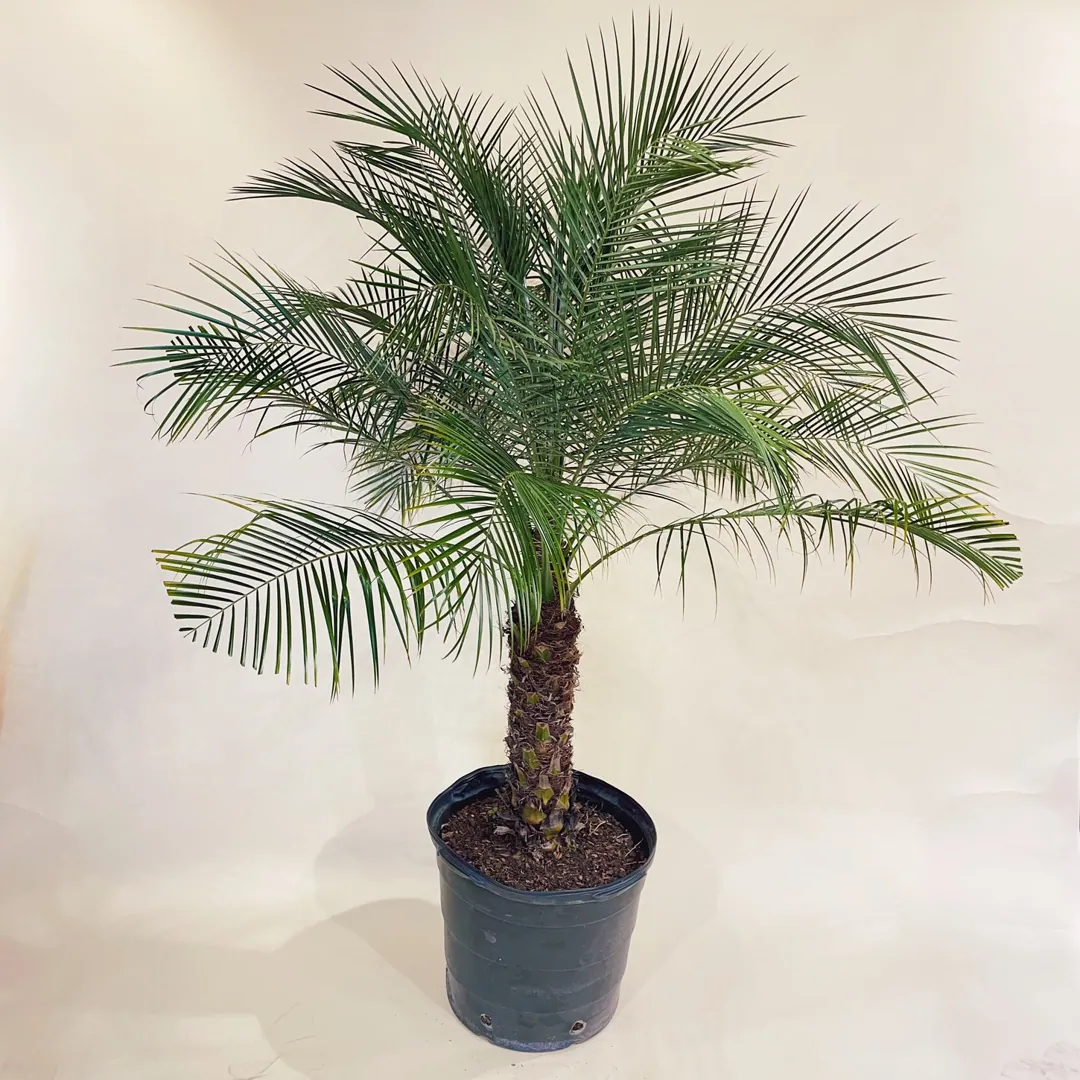
Give this palm a bright position and room around the trunk. Its fine fronds create a soft look from a distance, while the lower leaflets can form sharp spines. Choose a spot away from children, pets, and frequent foot traffic. Compare the actual crown rather than assuming a plant labeled pygmy will fit on a shelf.
Keep the fronds healthy as the palm grows
Measure the palm with the fronds relaxed
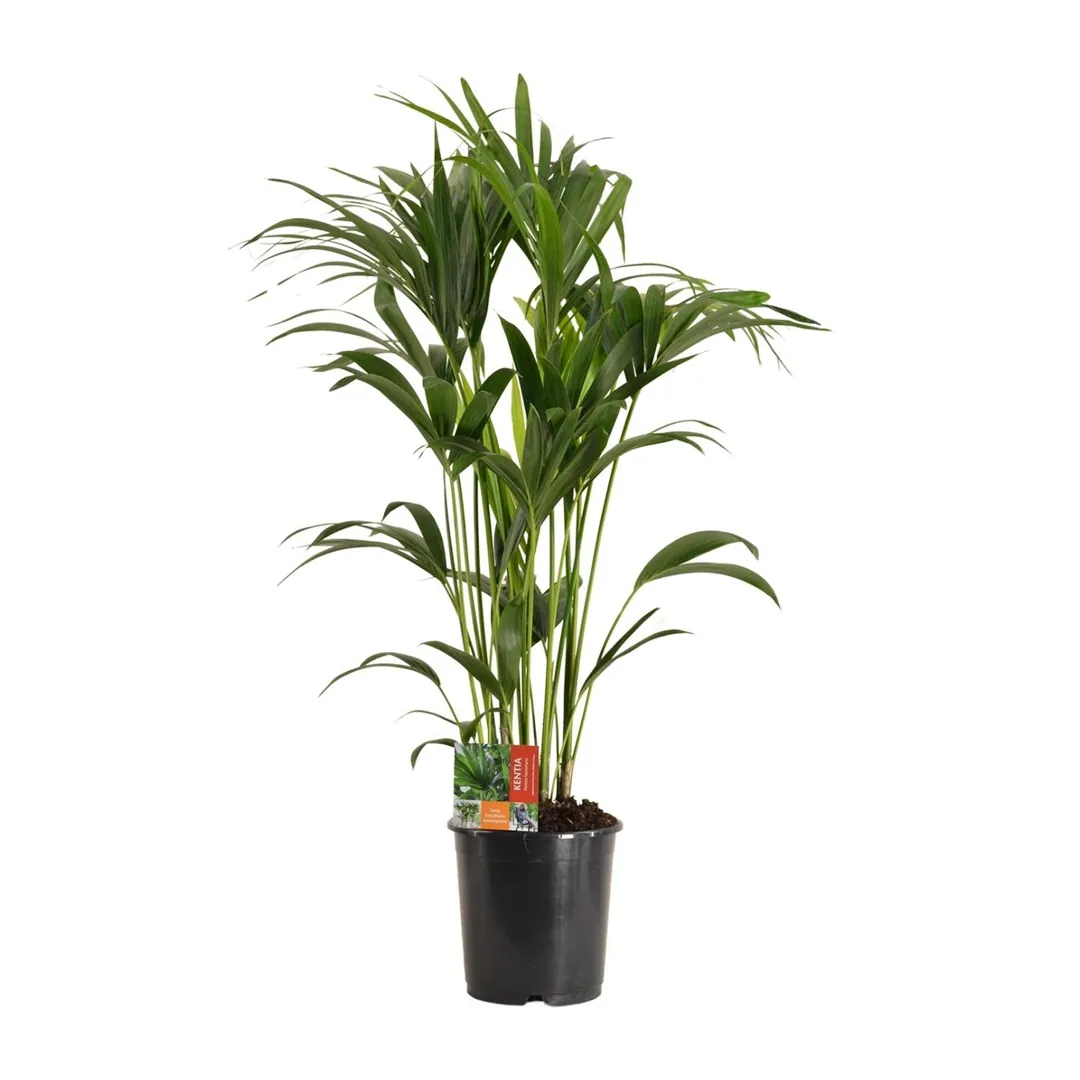
A sleeve can hold fronds tight at the shop. Ask to see the specimen with the sleeve off, then measure across the longest pair of fronds. Allow extra width for a plant that makes new stems from the base. If you prefer a distinct trunk and a raised crown, compare the options in our indoor tree guide.
Water the roots and let the pot drain
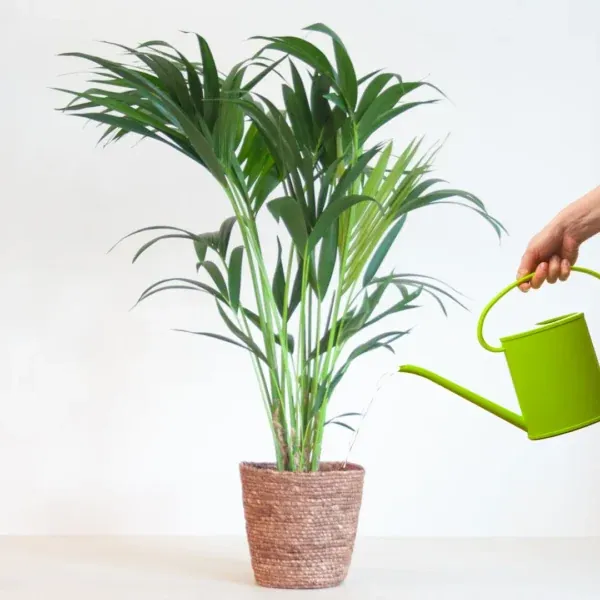
Check the mix at the depth appropriate to your palm. A cat palm or majesty palm generally needs a steadier supply of moisture than a Kentia. Water thoroughly when the plant needs it, then drain the cover pot. If tips brown, look for dry soil, standing water, or a nearby vent before changing several things at once.
Leave the growing tip intact
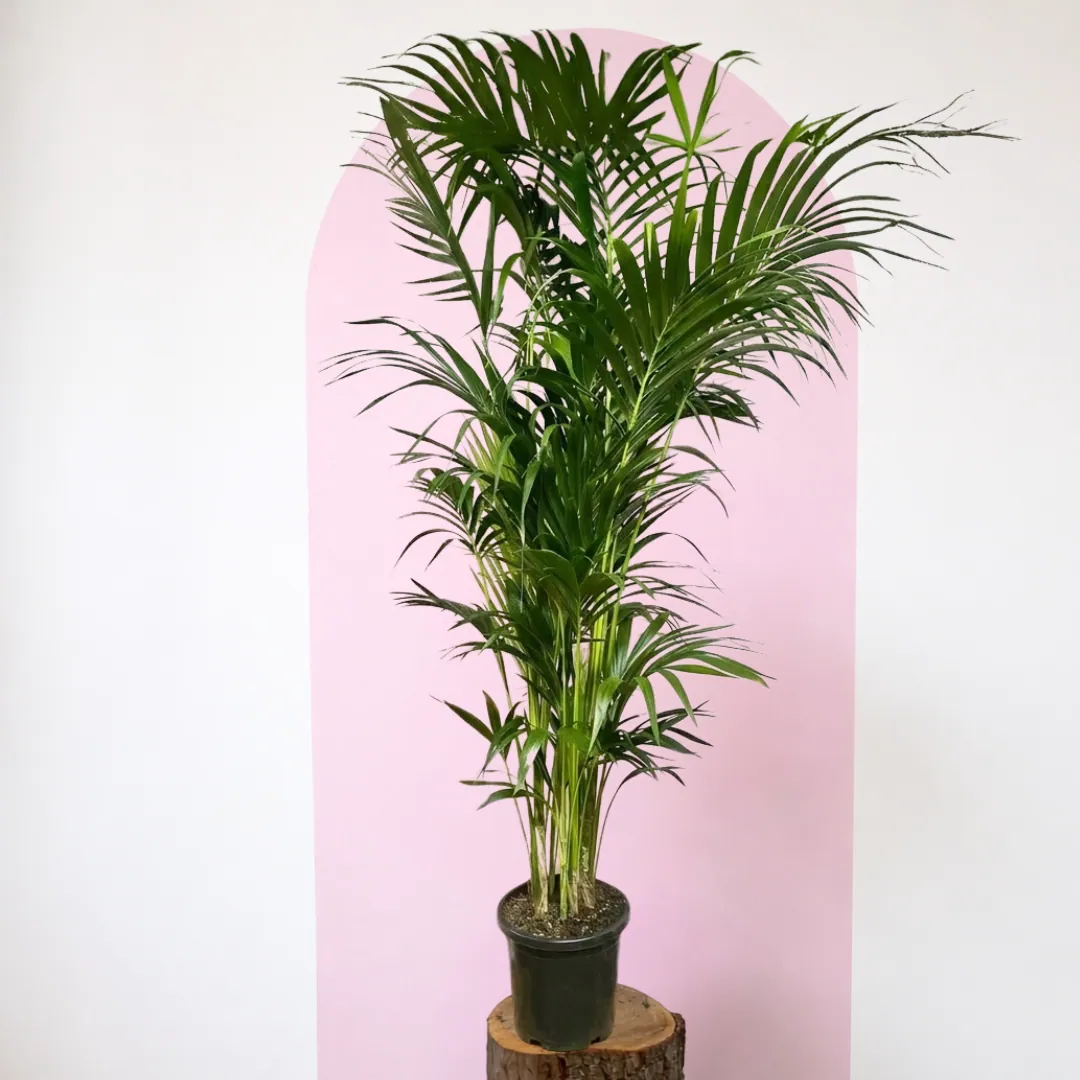
Cut fully brown fronds near the base when you can reach them without nicking the stem. Keep the green fronds and the emerging spear. A palm cannot be shortened by cutting the top the way you might prune a branching tree. For different floor-plant shapes, see our indoor plant guide.