



Quick Answer
Start with Ficus Audrey if you have bright filtered light and room for a broad crown. Choose an Alii fig for narrower foliage, a Madagascar dragon tree for a slim silhouette, or a dwarf Meyer lemon if you have several hours of direct sun. Measure the room at branch height before you decide.
Choose by the shape and the light
An indoor tree earns its space with its trunk and canopy. Stand where the pot would go and picture the branches at eye level. Will they brush the curtains or hang over the seat beside it? Measure the pot, the clear width around the crown, and the doorway the tree has to fit through. If your main goal is to fill an empty floor corner, compare the broader range of silhouettes in our large indoor plants guide. For an upright plant with fan or feather-shaped fronds, compare indoor palms by spread and light.
Indoor trees by canopy and window light
Scroll sideways to compare all columns.
| What you want | Start with | Check before buying |
|---|---|---|
| A broad canopy beside a sofa | Ficus Audrey or fiddle-leaf fig | Measure the open width at leaf height. |
| A slimmer silhouette | Alii fig or Madagascar dragon tree | Check the width of the actual specimen. Multi-stem plants spread wider. |
| A layered evergreen shape | Norfolk Island pine | Give the branches room on all sides and leave its leader intact. |
| A small tree that can fruit | Dwarf Meyer lemon or calamondin | Choose a window with several hours of direct sun. |
| A sunny spot and a clipped shape | Bay laurel | Buy a trained standard if you want a clear stem and rounded crown. |
Broad-leaved trees for bright filtered light
1. Ficus Audrey
Ficus benghalensis

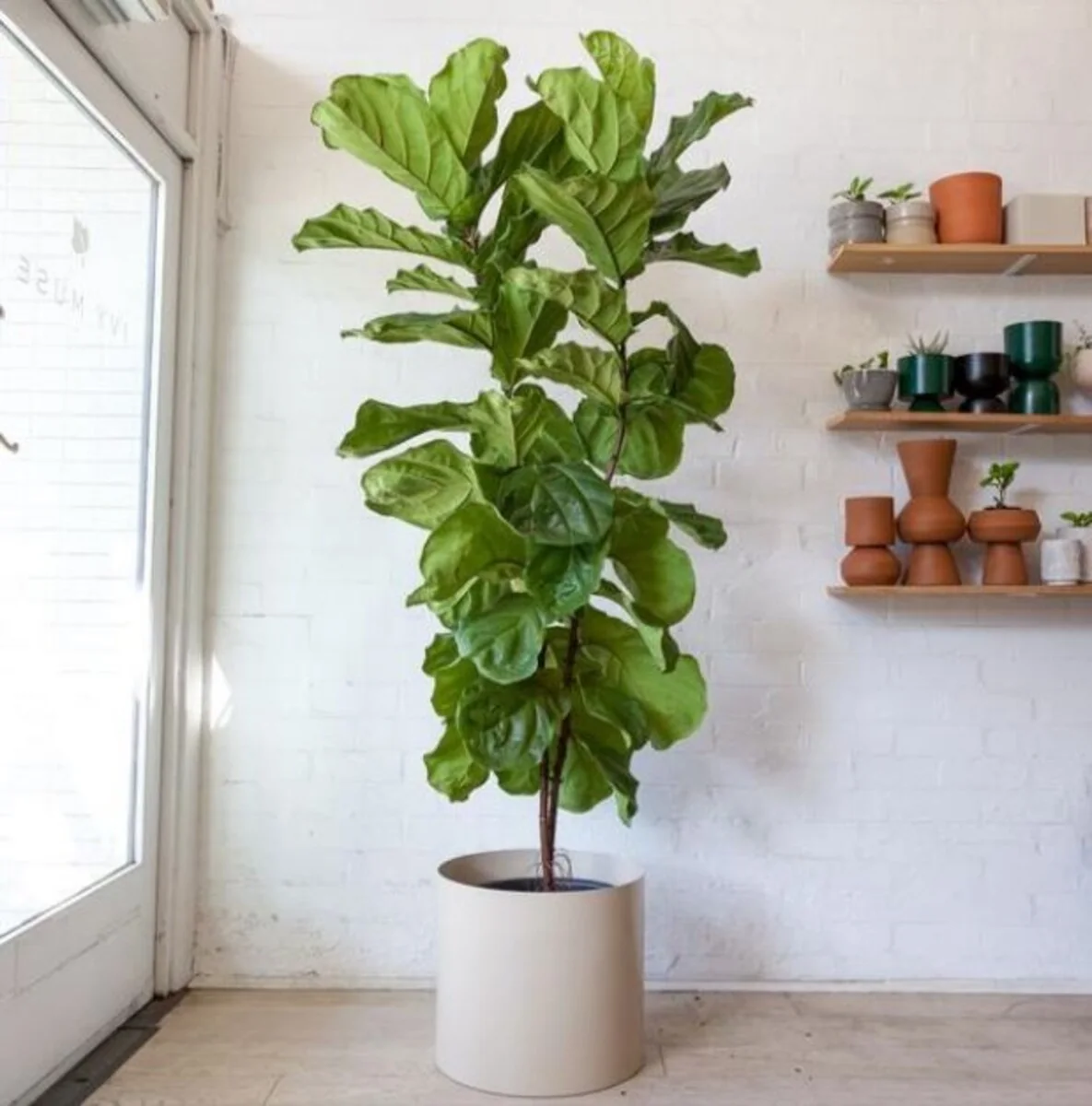
Choose Audrey for a branching crown with matte leaves. Put it near a bright window with room for the canopy to spread above a chair or sideboard. Check the mix below the surface before watering, then let the pot drain. Buy a specimen with several well-placed branches if you want an open crown from day one.
2. Fiddle-leaf fig
Ficus lyrata
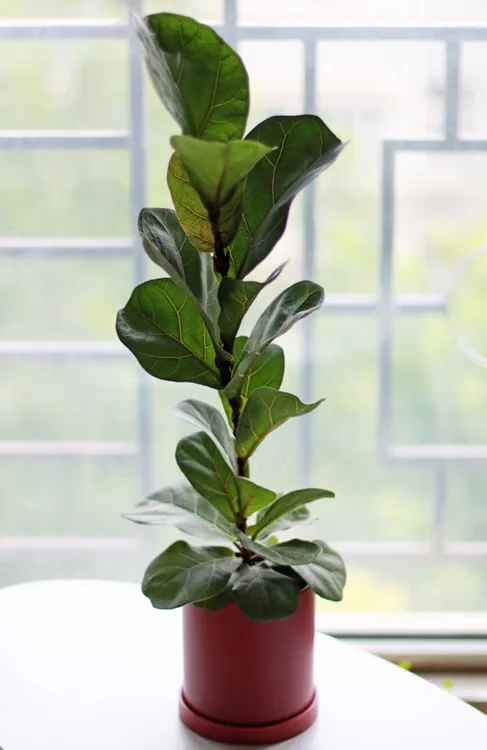
The large leaves make this tree look full even with just a few branches. Give it bright light and choose a spot you can keep consistent. Measure across the widest leaves when placing it beside a walkway. A single upright stem takes up less room at first, while a branched specimen gives you a wider crown immediately.
3. Rubber tree
Ficus elastica
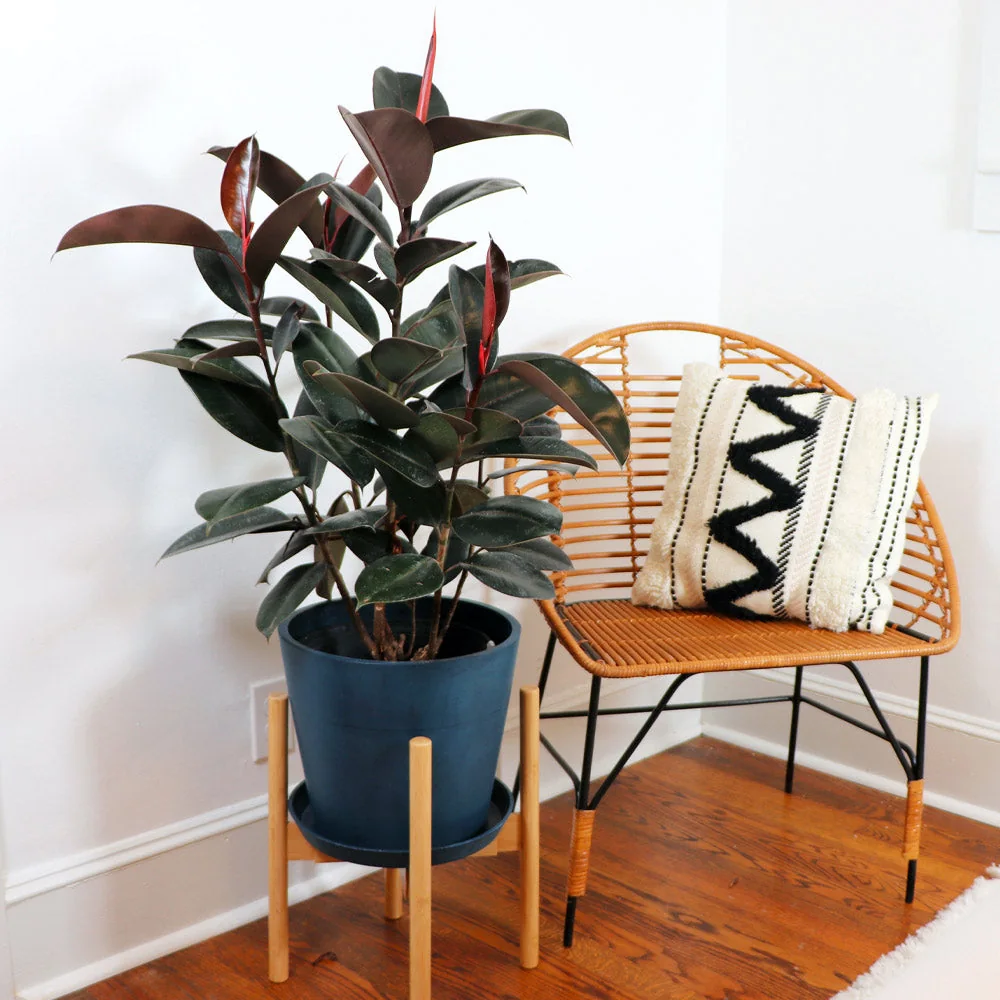
An upright specimen gives you dark, glossy foliage without as much spread as a branching fiddle-leaf fig. Give it good indirect light and water when the upper mix dries. A tree trained to a single stem stays visually narrower than a multi-stem pot. The NC State Extension rubber plant profile covers its growth habit and light needs.
4. Weeping fig
Ficus benjamina
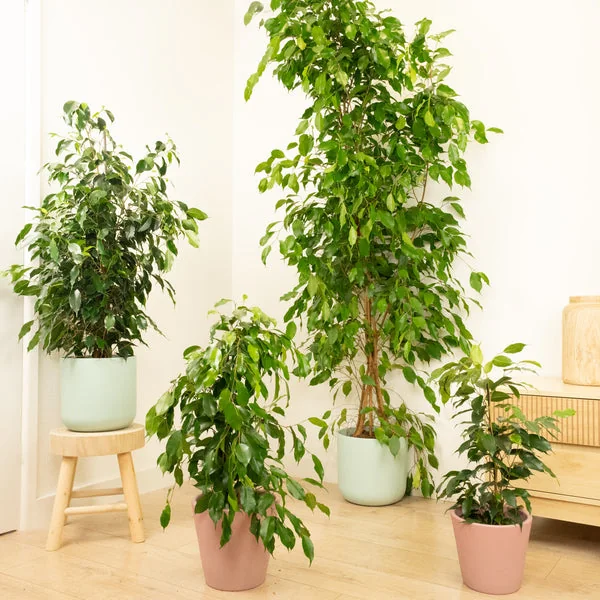
The small leaves and arching branches give it a softer outline. Choose a bright location away from cold drafts and leave it there while it settles. A move can trigger leaf drop. Check the light and soil before changing the watering routine, and give the tree time to adjust.
5. Alii fig
Ficus maclellandii ‘Alii’
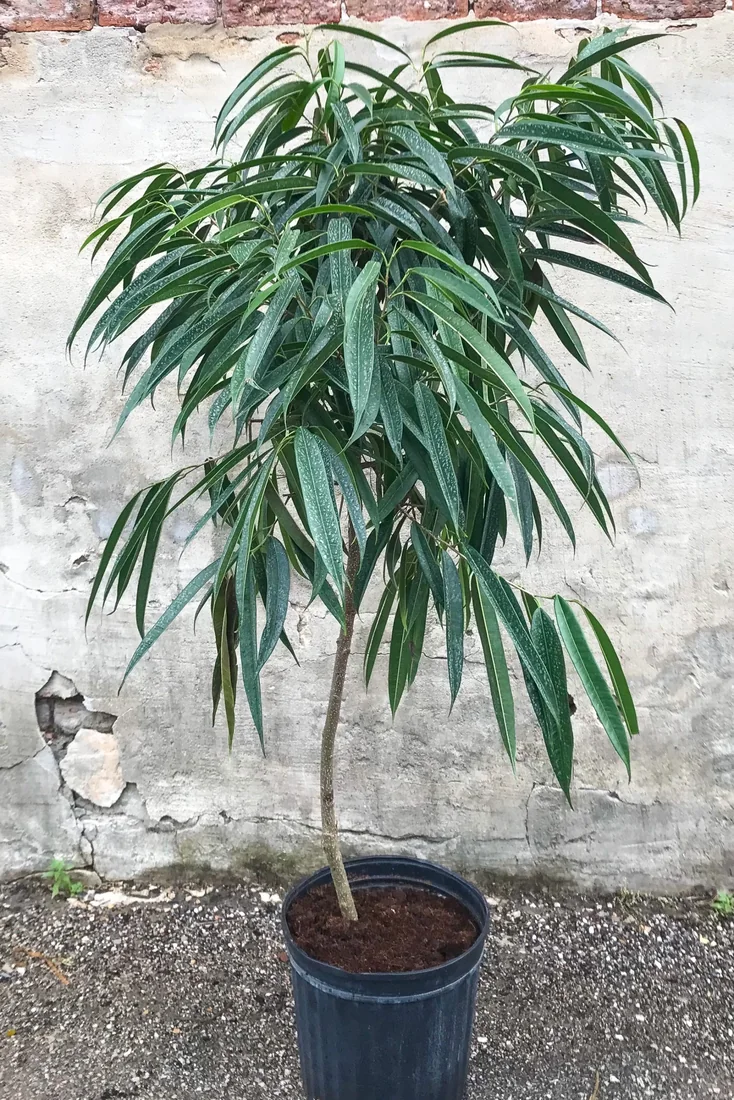
The long, narrow leaves work where a broad-leaf tree would feel heavy. A single-trunk specimen lets the crown sit above a low cabinet. Place it in bright indirect light and keep the foliage clear of curtains. Ask the nursery for the canopy width since plants sold at the same height can have very different shapes.
Trees with a distinctive outline
6. Money tree
Pachira aquatica
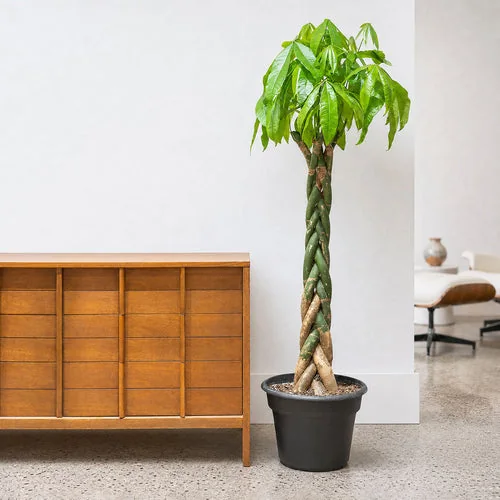
A braided trunk gives this tree a recognizable shape, even in a smaller pot. Place the crown in bright indirect light and let the upper mix dry before watering. Look around the base for ties that could constrict the stems as they thicken. For a household with a cat, check the botanical name in our cat-safe houseplants guide.
7. Dwarf umbrella tree
Heptapleurum arboricola
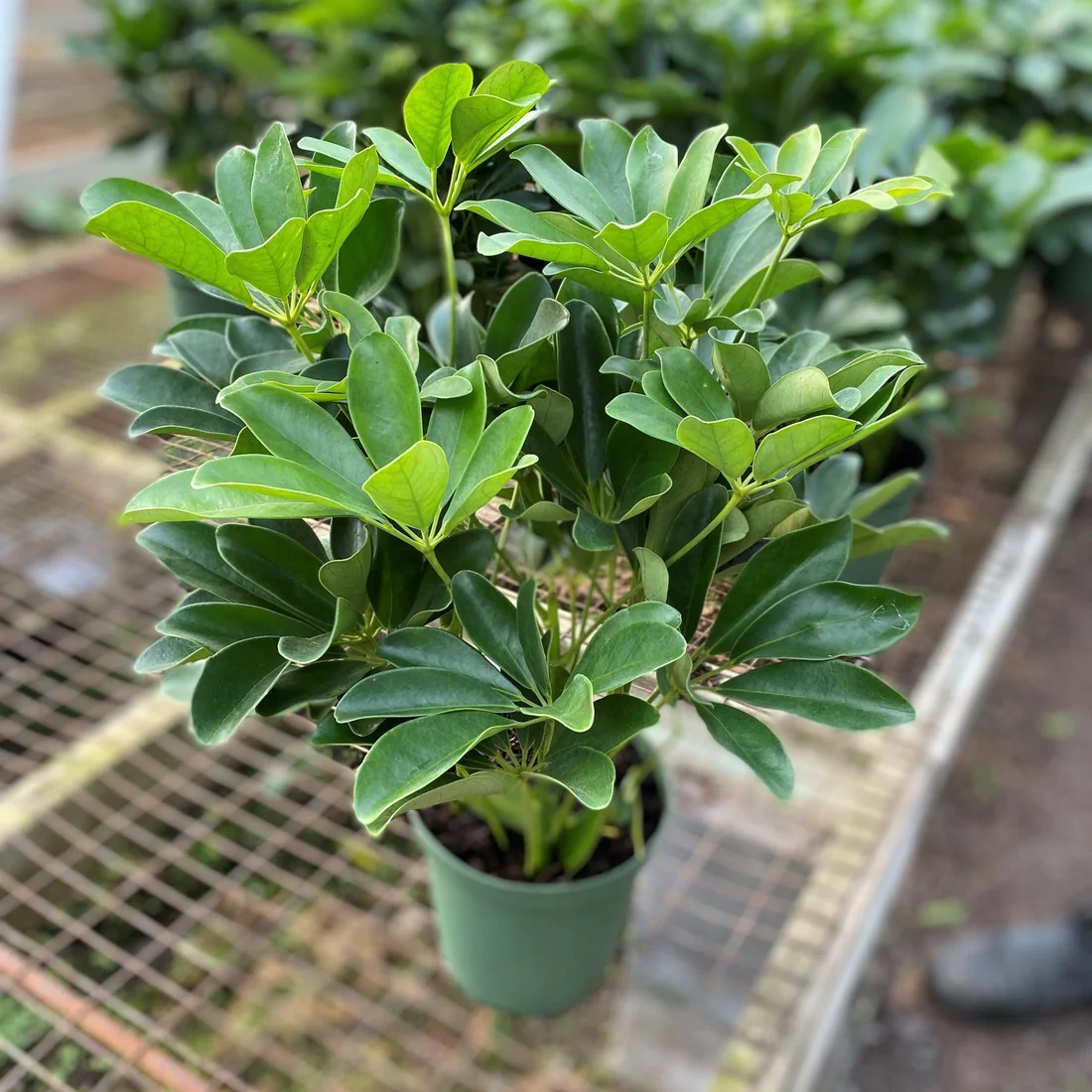
Look for a specimen trained as a standard if you want a single stem with foliage above it. Many nursery pots hold a bushier form that fills out from the base. Give it bright filtered light. Tip-prune a healthy growing plant if you want denser branching, and leave room for new growth around the crown.
8. Norfolk Island pine
Araucaria heterophylla
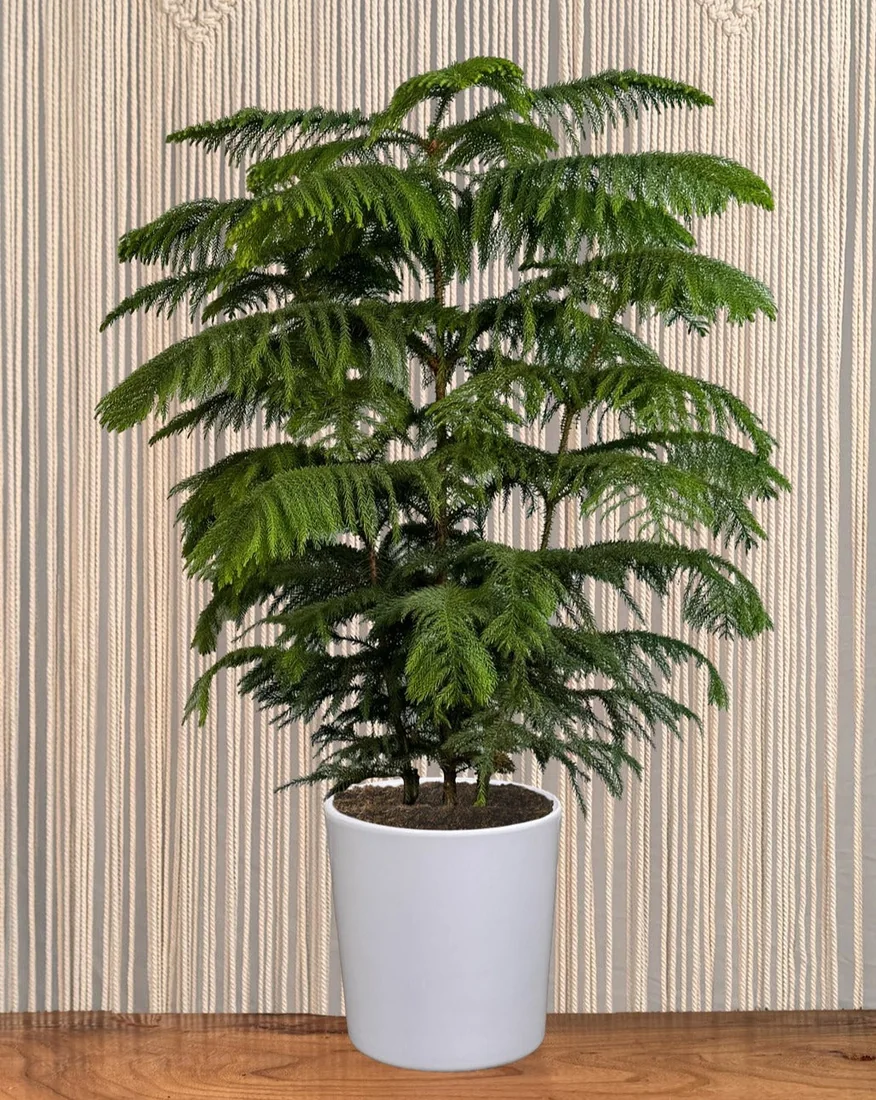
Choose this tree for tiered branches and an airy evergreen outline. Give it bright light and enough clearance to see the branches on all sides. Keep it away from a hot vent and avoid cutting its upright leader. If the room is already too short for the tree, start with a smaller one.
9. Madagascar dragon tree
Dracaena reflexa var. angustifolia
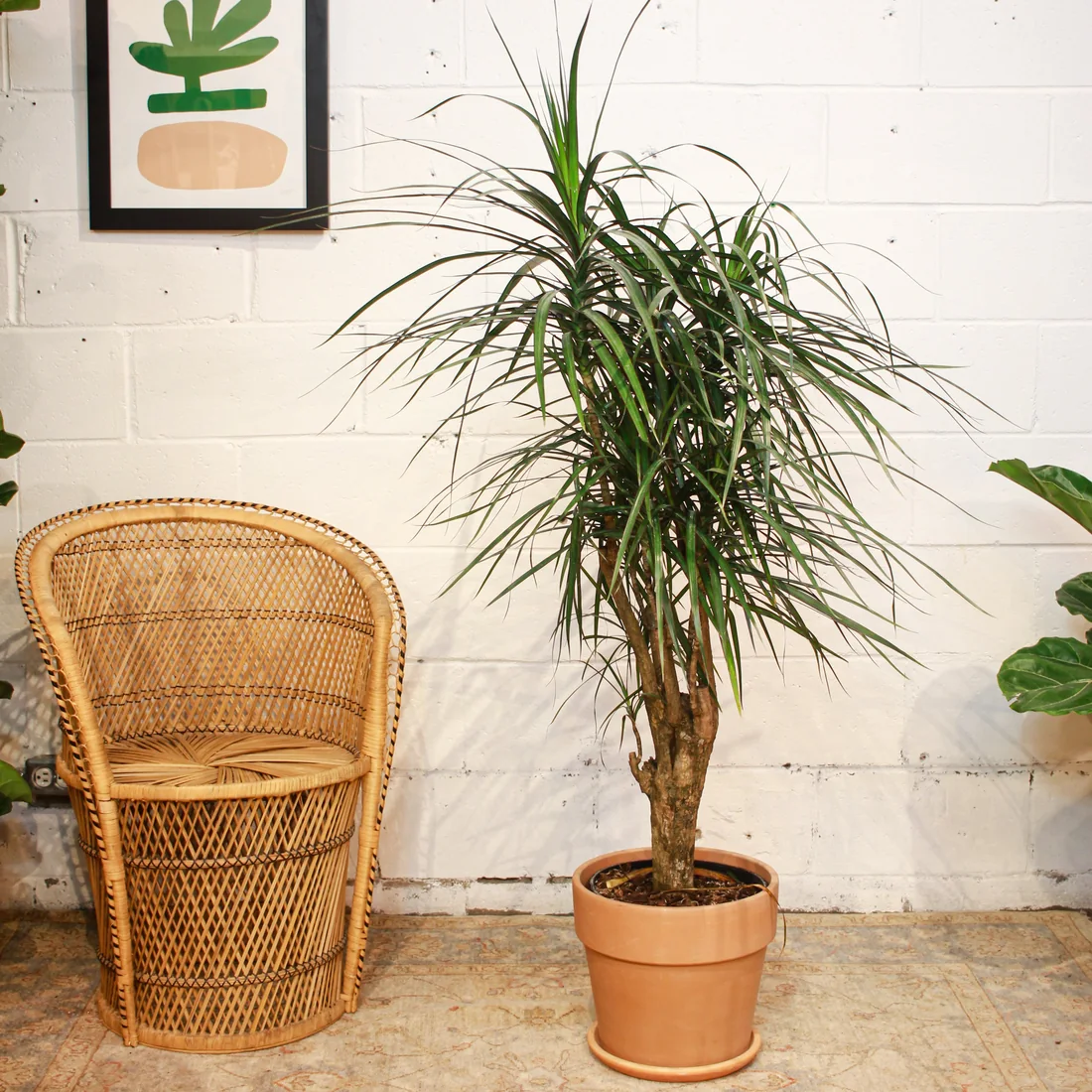
Often sold as Dracaena marginata, it puts narrow tufts of foliage on slender canes. A single cane fits a tighter space, while a multi-cane pot gives more height variation. Place it in filtered daylight and let the upper mix dry before watering. Our low-light plant guide covers spots that get softer daylight.
Trees for your sunniest window
10. Dwarf Meyer lemon
Citrus × meyeri
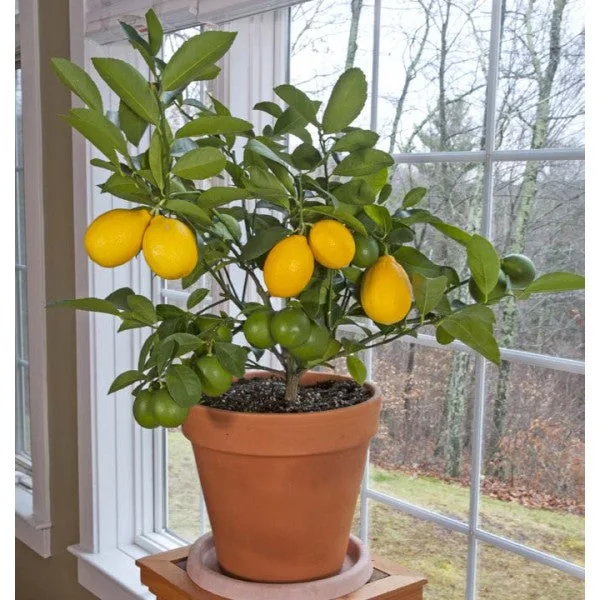
Choose a grafted dwarf tree if fruit is part of the appeal. Put it at your sunniest unobstructed window and check whether winter light reaches the whole crown. Move it gradually into stronger sun if it spent time indoors or in shade. Iowa State Extension’s indoor citrus guide covers light, watering and pollination.
11. Calamondin
Citrus × microcarpa
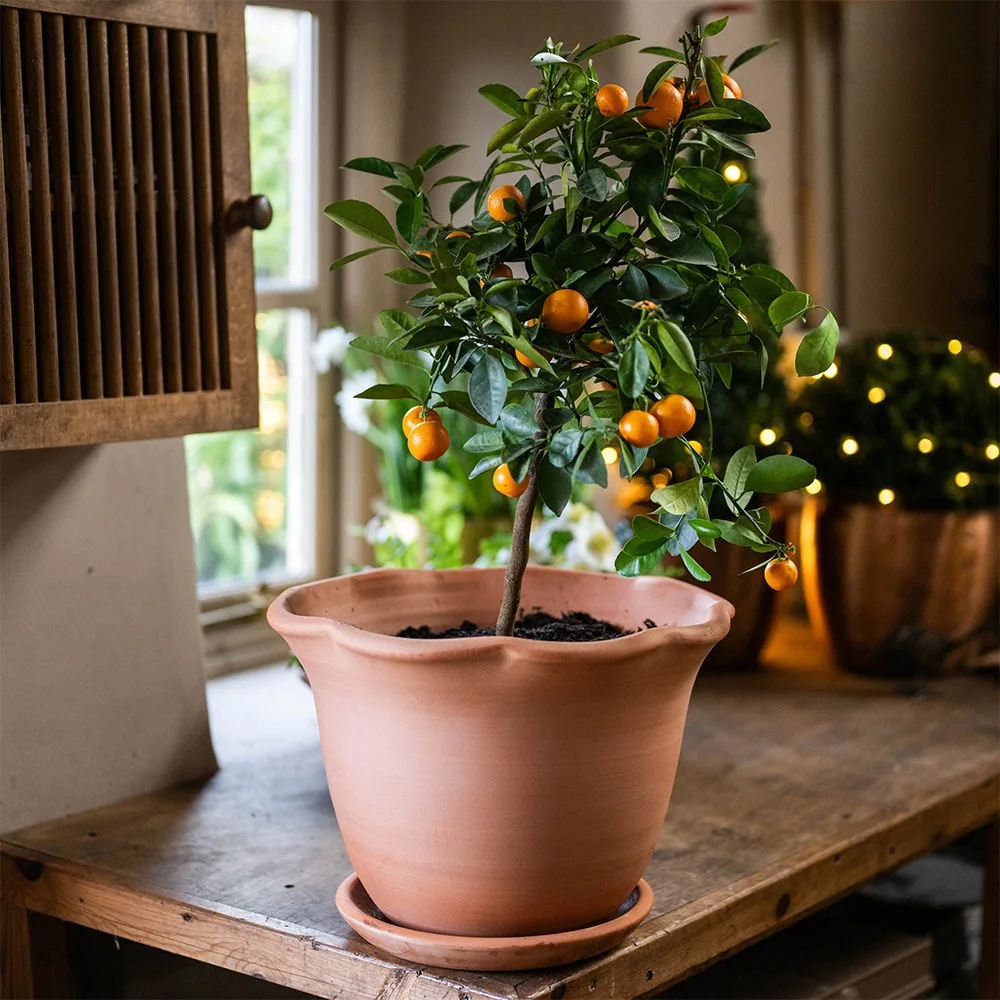
The small orange fruit gives a compact crown a bright accent. Give it direct sun and a pot that drains, and check moisture more often while it is actively growing. Choose it if you like the look of small fruit on the branch. A dim room makes flowering and fruiting less dependable.
12. Olive tree
Olea europaea
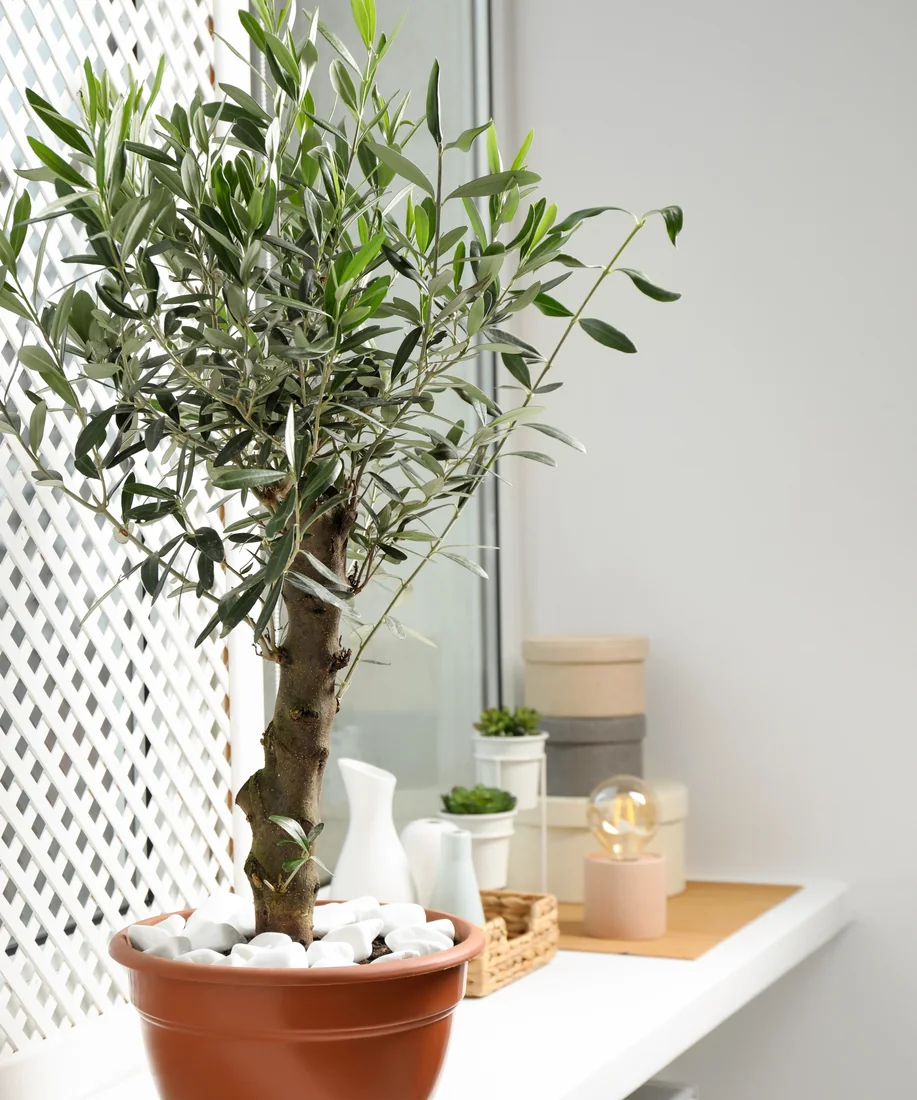
Its silvery leaves suit an open, sunny window with room for the branches. Choose it only if you can provide strong direct sun or move the pot outdoors during suitable weather. A spot several feet back from the glass is a poor fit. Grow it for the foliage and shape, since indoor fruiting is uncertain.
13. Bay laurel
Laurus nobilis
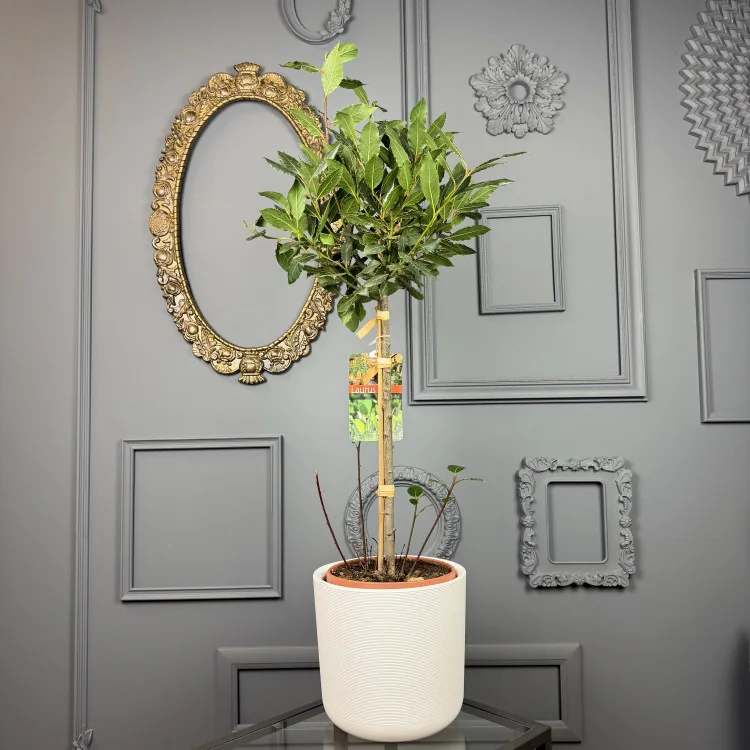
Buy a standard with a clear trunk and a clipped crown if you want a small, formal tree. Put it near a sunny window and keep the drainage holes clear. Let the upper mix dry before watering and trim stray shoots during active growth. Check for Laurus nobilis on the tag, since shops use the name laurel for other plants.
Buy and place a tree you can live with
14. Check the light at the crown

Watch where the sun reaches in the morning and afternoon. A tree’s upper branches may get more light than its lower ones, especially beside a tall window. Leave room to move the pot a little closer if growth starts leaning. If light and easy watering matter more to you than a trunk, see our low-maintenance plant guide.
15. Plan for the pot and its weight

Measure the nursery pot before choosing a cover pot. A wide, stable planter helps when the crown is top-heavy, and a saucer catches runoff. Repot only when the tree needs more root space, using a container just a little wider than the root ball. A very large pot can leave the mix wet for longer.
16. Inspect the tree before you bring it home

Look under the leaves and where branches meet the trunk. Check for sticky residue, webbing, or bumps that could signal pests. If you want a clean single stem, buy that form at the nursery. If you want an open crown, choose a tree with branches already spaced around the trunk. For the rest of the room, see our guide to indoor plants.
Prune for the shape you want while the tree is healthy and growing. Tip-pruning can encourage branching on an umbrella tree. With a Norfolk Island pine, keep the top growing point intact. For citrus, start by removing dead or damaged twigs and shoots below the graft. If a tree is already too wide, choose a smaller form instead of relying on heavy pruning every season.