



Quick Answer
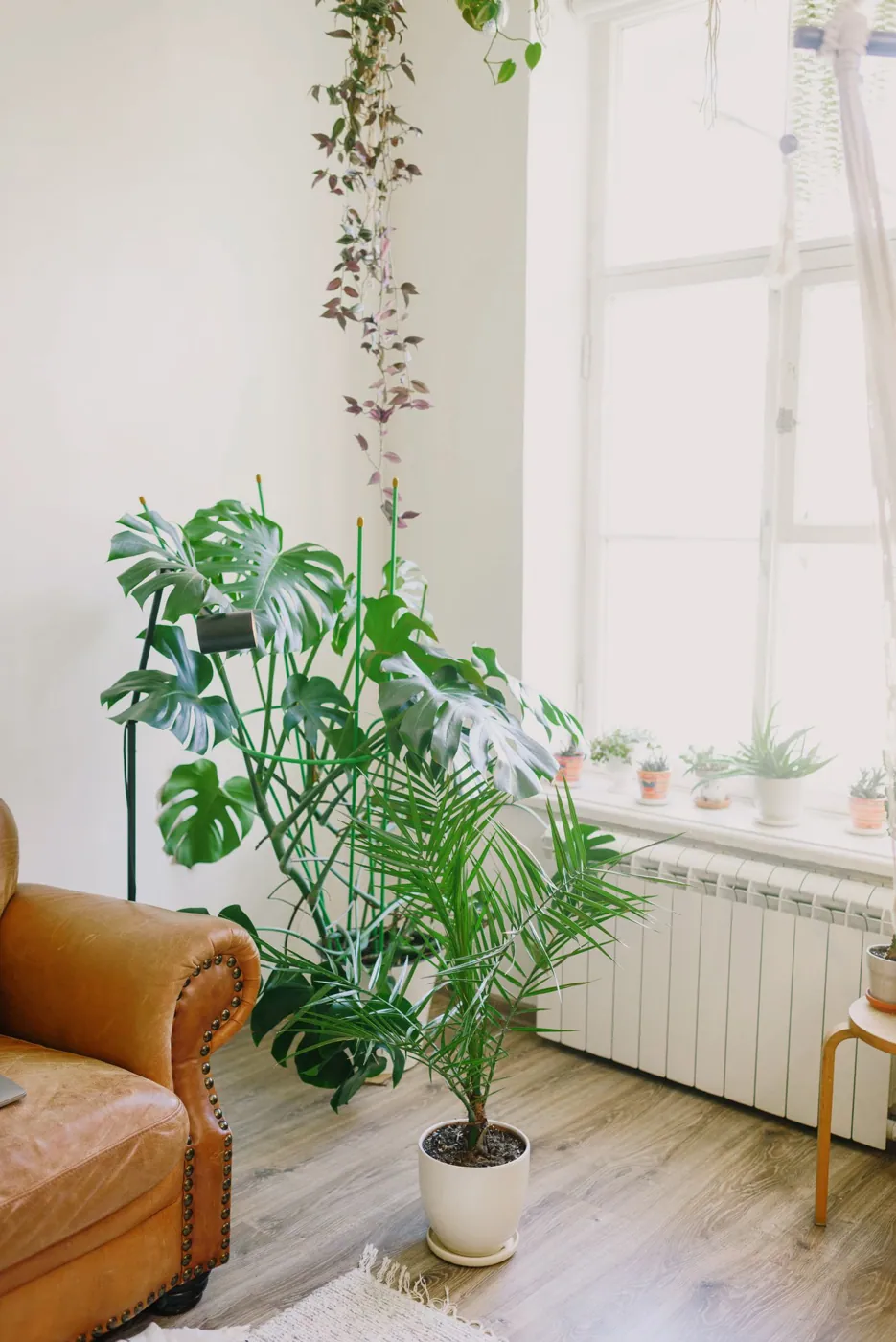
A tight shelf calls for a compact plant, such as an aglaonema or a young Birkin. If you have vertical room, a monstera can grow up a support. Save a wide, bright floor spot for a white bird of paradise.
Choose tropical foliage for the room you have
Look at the brightest place you can actually spare. A broad leaf can extend beyond the light on a narrow shelf, and a climber needs room above the pot as well as beside it. Check how often the room heats up, cools down, or dries out. If you prefer a frond silhouette, compare the options in our indoor palms guide. The New York Botanical Garden's tropical houseplant guide explains why light, moisture, and warmth have to work together.
Tropical houseplants by shape and room conditions
Scroll sideways to compare all columns.
| What you want | Start with | What it needs |
|---|---|---|
| A large leaf beside a bright window | Monstera or white bird of paradise | Plan for height and the width of an unfurled leaf. |
| An upright plant for softer daylight | Silver Bay aglaonema | Pick a spot where the whole plant receives daylight. |
| Patterned leaves at eye level | Rattlesnake plant, stromanthe, or rex begonia | Choose a place with steady conditions and space around the leaves. |
| Foliage that can grow upward | Monstera or arrowhead vine | Add a support before the longest stems lean over. |
| Color in strong filtered light | Croton or Birkin philodendron | Give the new growth a bright position and avoid cold drafts. |
Tropical plants with broad, sculptural leaves
1. Monstera
Monstera deliciosa
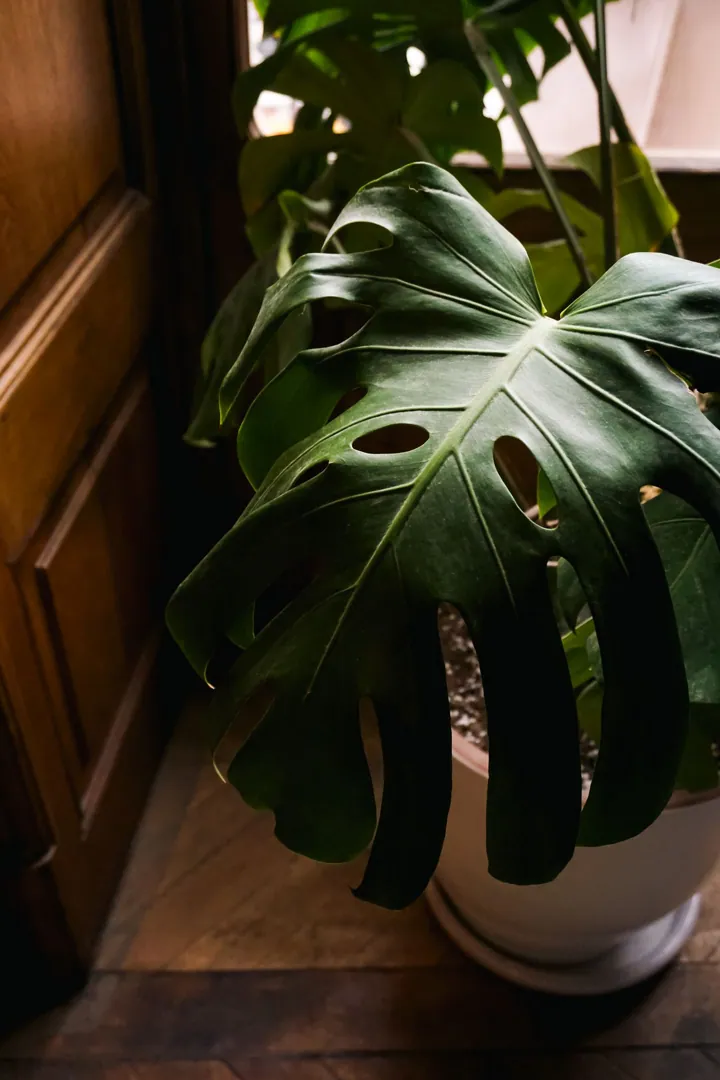
Give this climber a support and room to open its largest leaves. In a bright room, position it so the leaves face the window and you can reach the stems to tie them in. Allow the upper mix to dry before watering. Young leaves can be solid, with splits appearing as the plant matures under suitable conditions. Our large indoor plants guide has more options for a floor corner.
2. White bird of paradise
Strelitzia nicolai
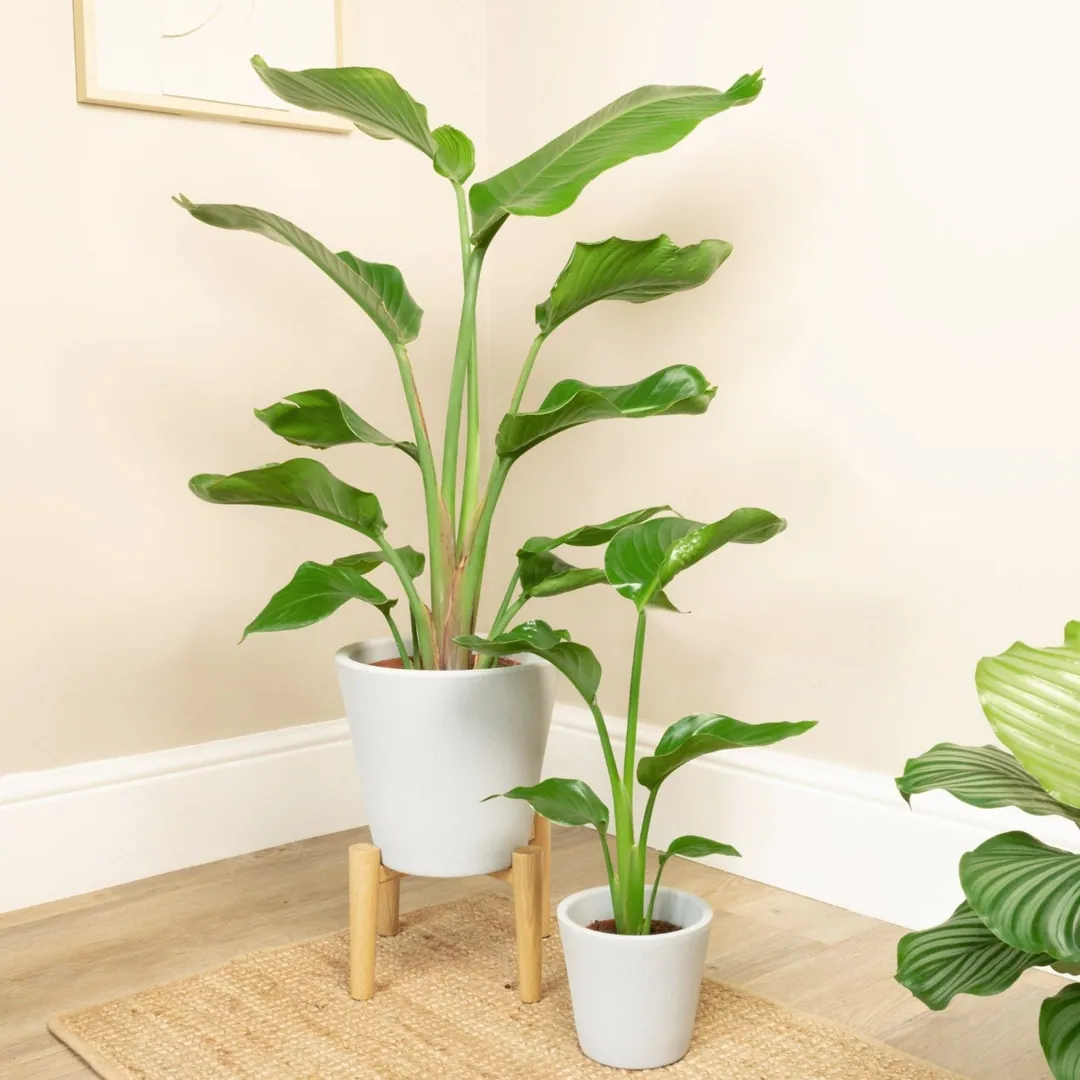
Choose this plant for a tall fan of paddle-shaped leaves beside a very bright window. If the plant came from filtered light, introduce direct sun gradually. Measure the available height and the clearance across the newest leaves. Start with a smaller pot if you cannot move a large specimen indoors easily. Give it stronger light than you would a patterned understory plant.
3. Xanadu
Thaumatophyllum xanadu
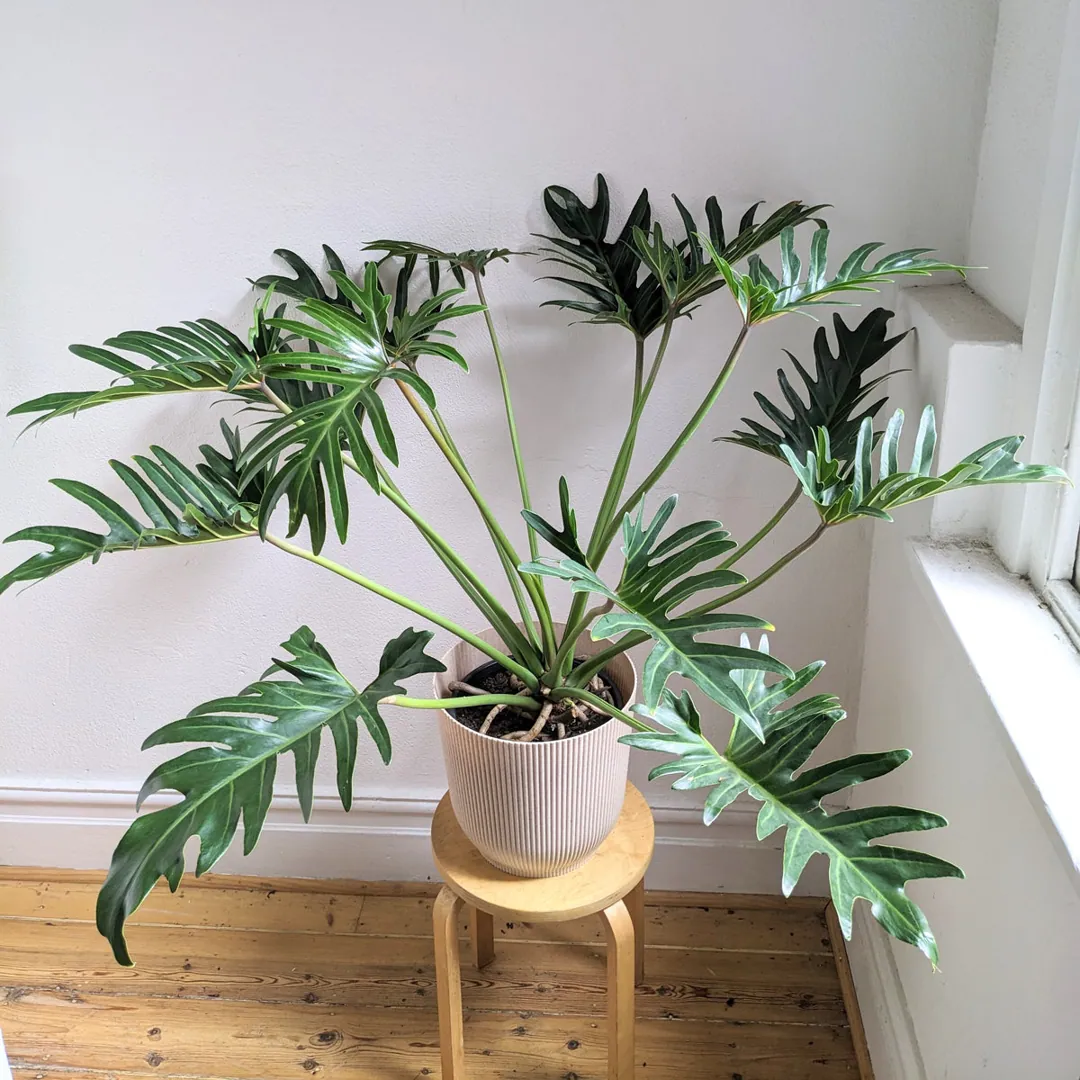
The deeply cut leaves spread from the center, so choose it for a wide floor spot where it can fill out. It is often sold under the older name Philodendron Xanadu. Give the whole crown bright filtered light and let the upper mix dry a little between waterings. Set it where the lowest leaves clear the walkway.
4. African mask plant
Alocasia × amazonica 'Polly'
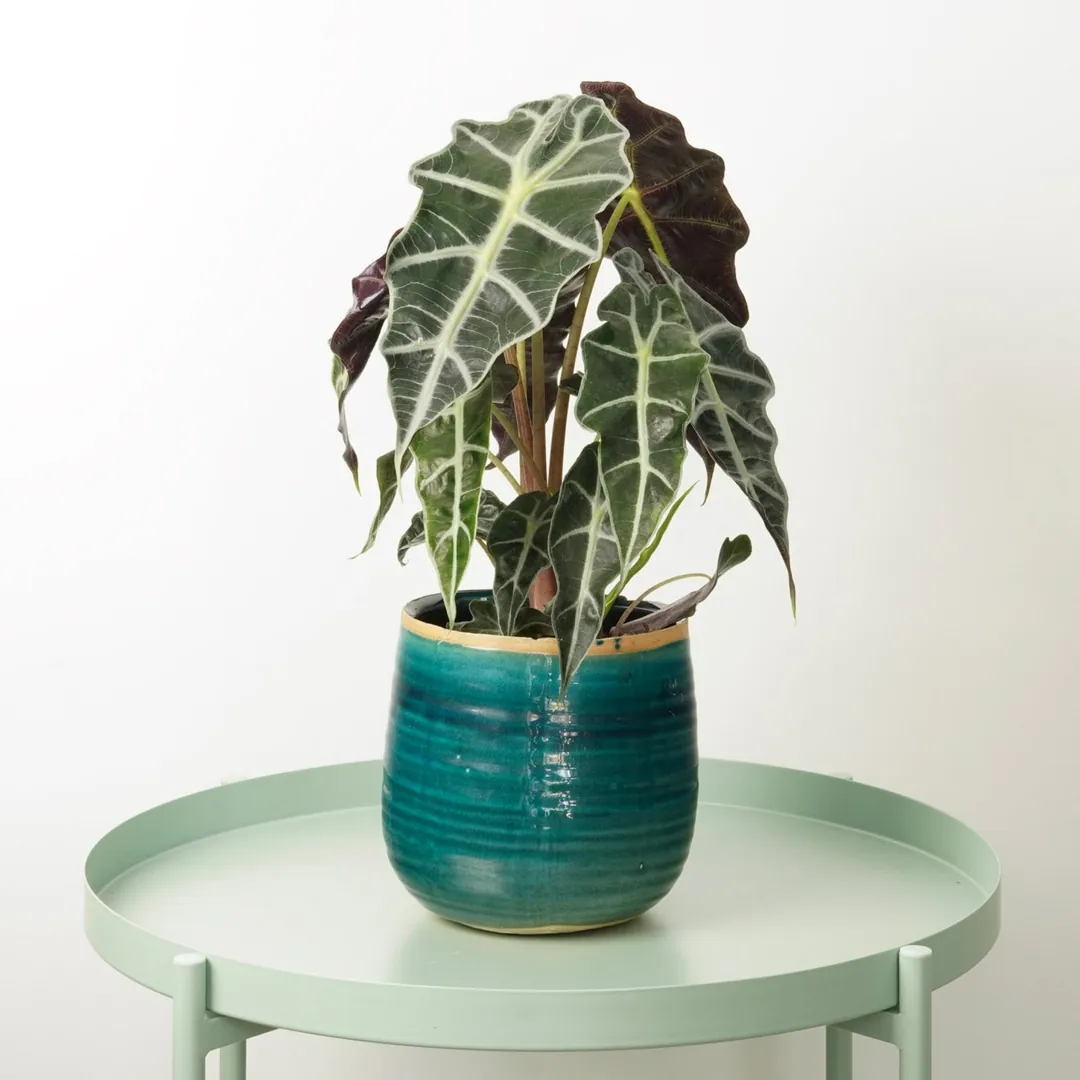
Use this plant where its dark arrow-shaped leaves and pale veins can be seen up close. Give it bright filtered light, warmth, and an airy mix. Avoid a cold sill and check moisture before watering, particularly if growth slows in winter. It makes a stronger visual accent in a pot with space around it.
Patterned plants for sheltered shelves
5. Rattlesnake plant
Goeppertia insignis
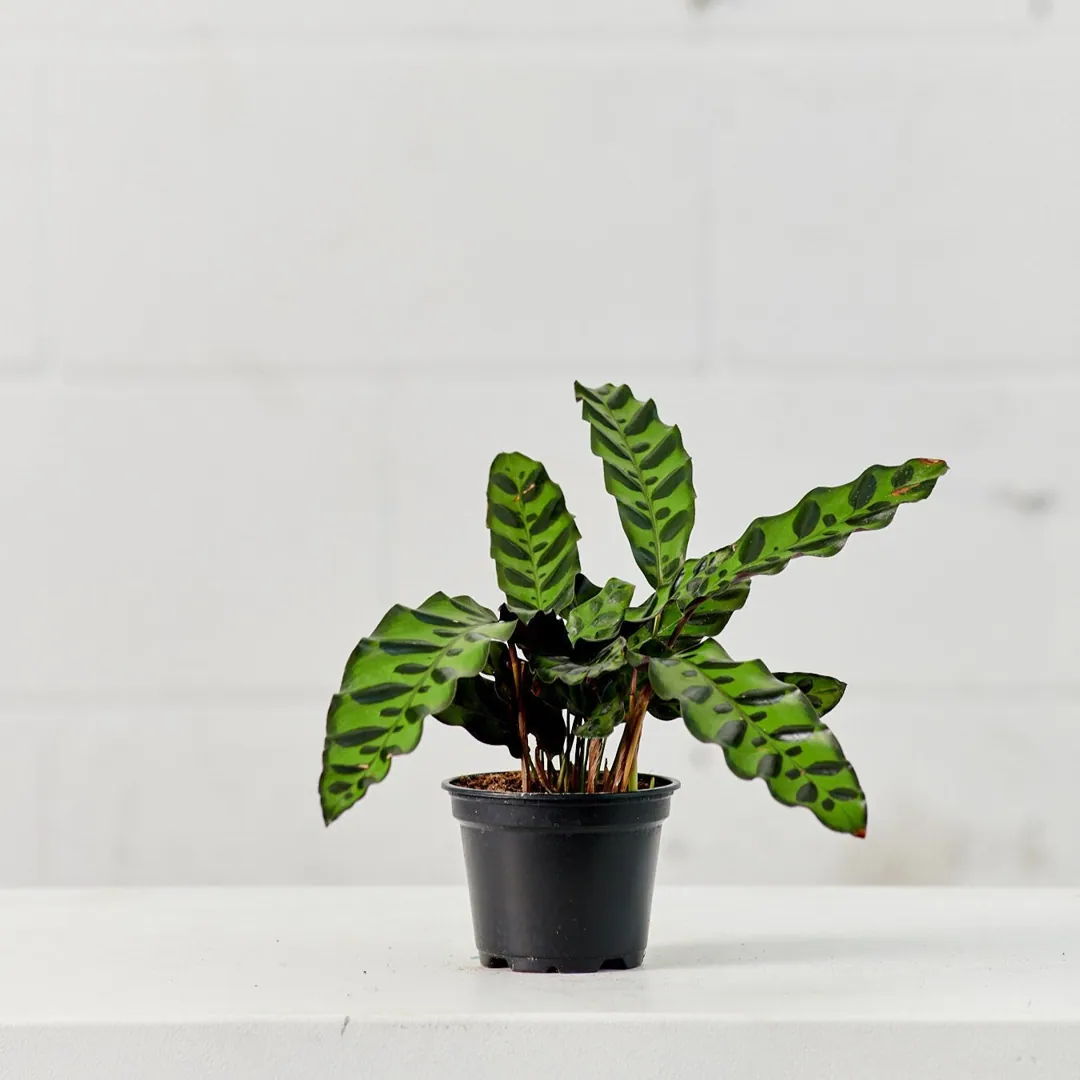
The long wavy leaves have alternating dark markings and a reddish underside. Set the plant in filtered light where temperature and humidity stay fairly steady. Keep the mix lightly moist during active growth and let excess water drain. Look for the older name Calathea lancifolia on nursery tags.
6. Triostar stromanthe
Stromanthe thalia 'Triostar'
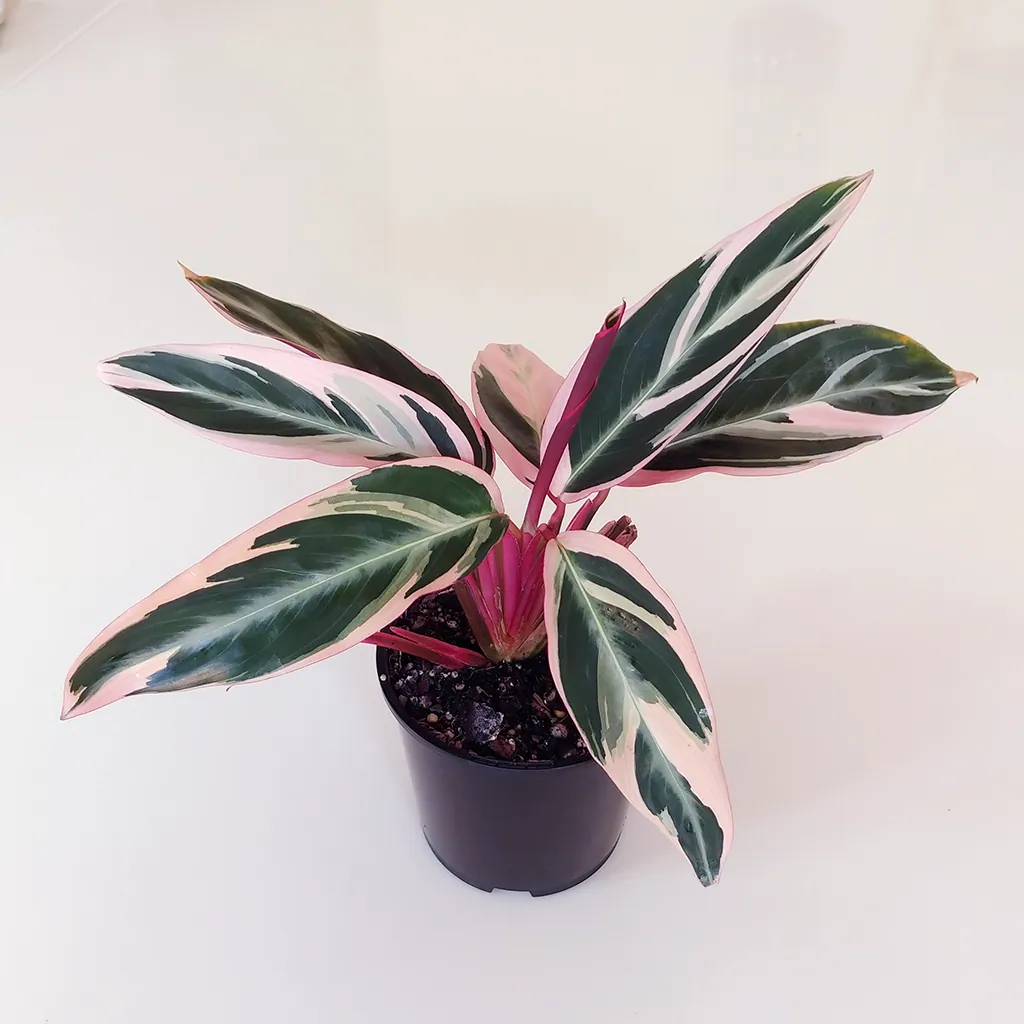
The green and cream leaf faces contrast with pink to burgundy undersides. Put it in bright filtered light where you can see the leaves from both sides. Keep it away from a heater or cold draft and check the mix regularly. For more foliage palettes, see our colorful indoor plants guide.
7. Rex begonia
Begonia Rex Cultorum Group
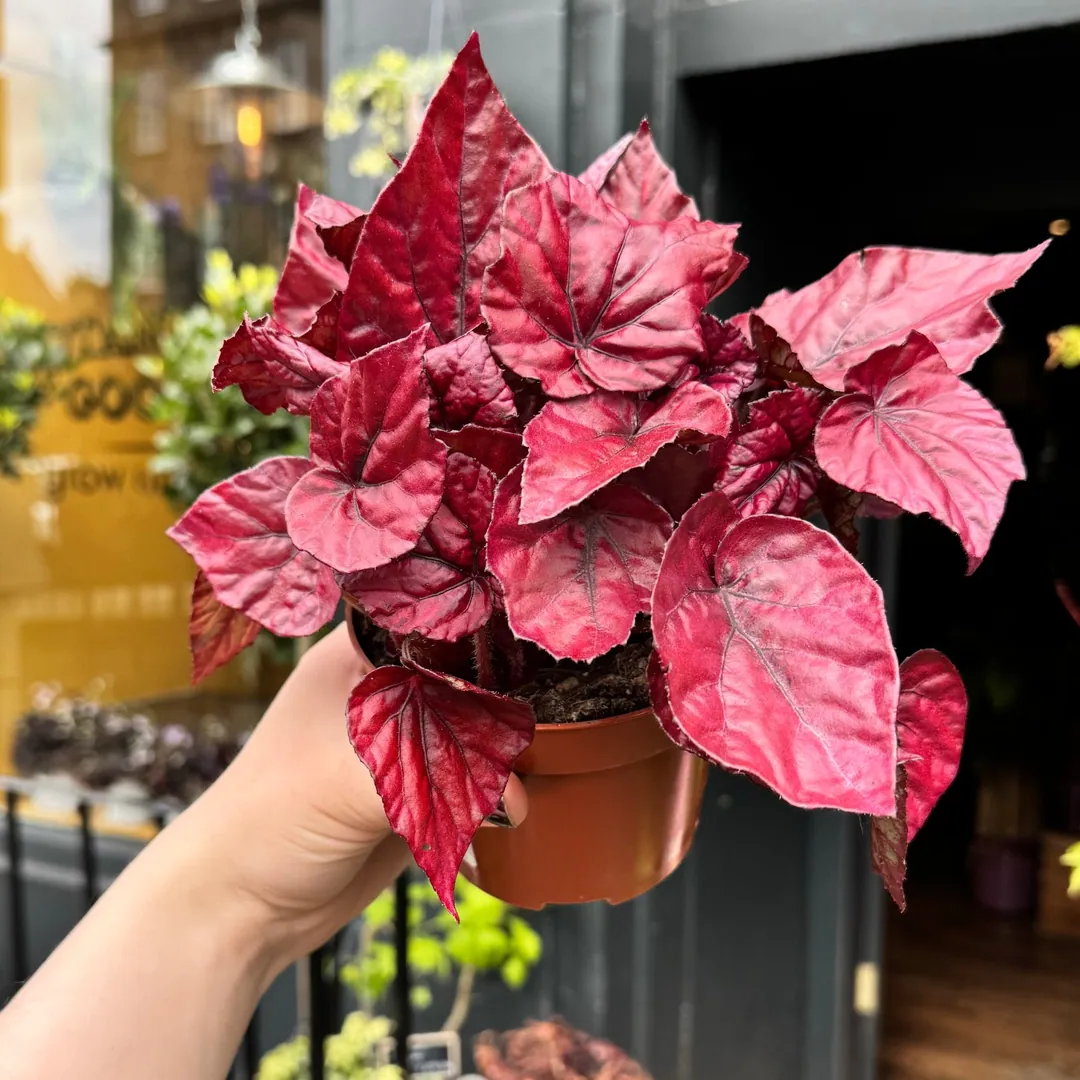
Pick one for its textured, often spiraled leaves. Give it a bright position with soft light and space for air to move around the foliage. Water the mix directly when the surface starts to dry. A spot outside direct shower or sink spray keeps the leaves easier to inspect and clean.
8. Zebra plant
Aphelandra squarrosa
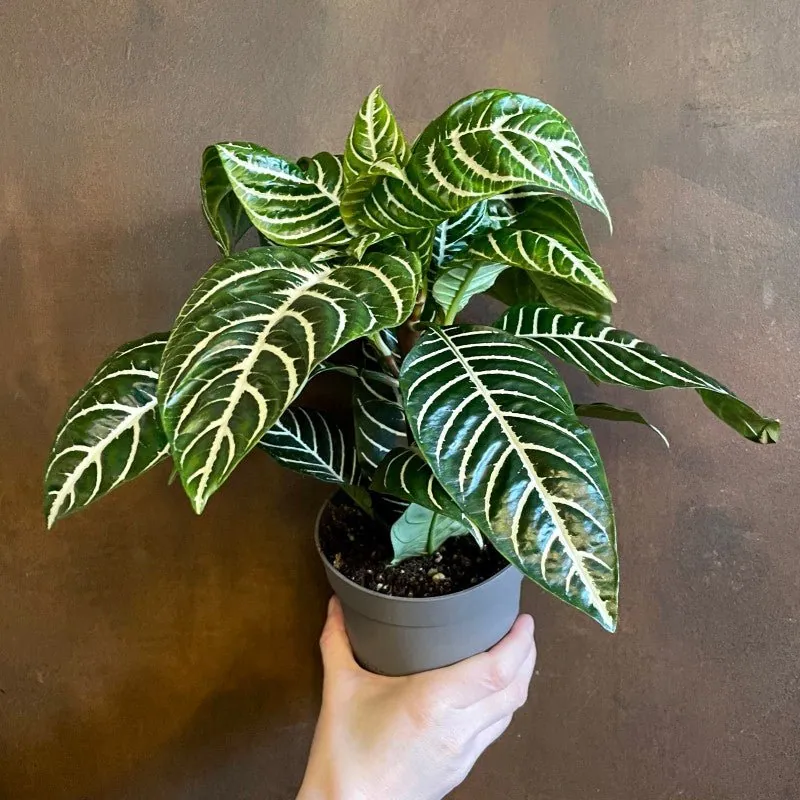
Use this upright plant where the pale veins will show against a plain wall. A bright, warm shelf with stable humidity gives it a better chance of keeping its lower leaves. Check the soil regularly and keep it lightly moist, with no standing water in the pot. This is a higher-attention choice for readers who already check plants often.
Tropical foliage for shelves and medium-size pots
9. Silver Bay Chinese evergreen
Aglaonema 'Silver Bay'
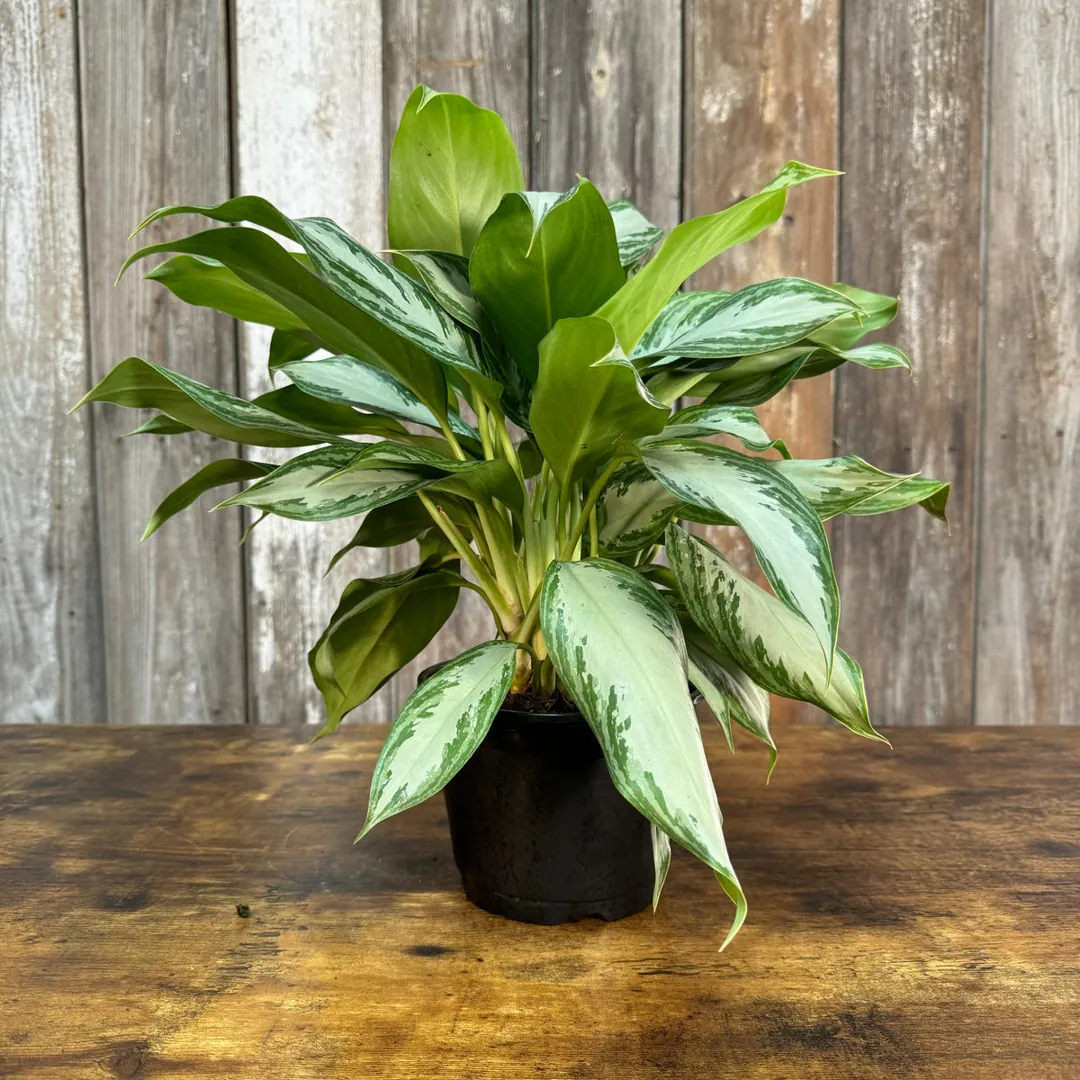
The broad silver centers brighten a spot with filtered daylight. Silver Bay can handle softer light than several of the brightly patterned plants here, although growth may slow. Give the arching leaves room beyond the rim and let the upper mix begin to dry before watering.
10. Birkin philodendron
Philodendron 'Birkin'
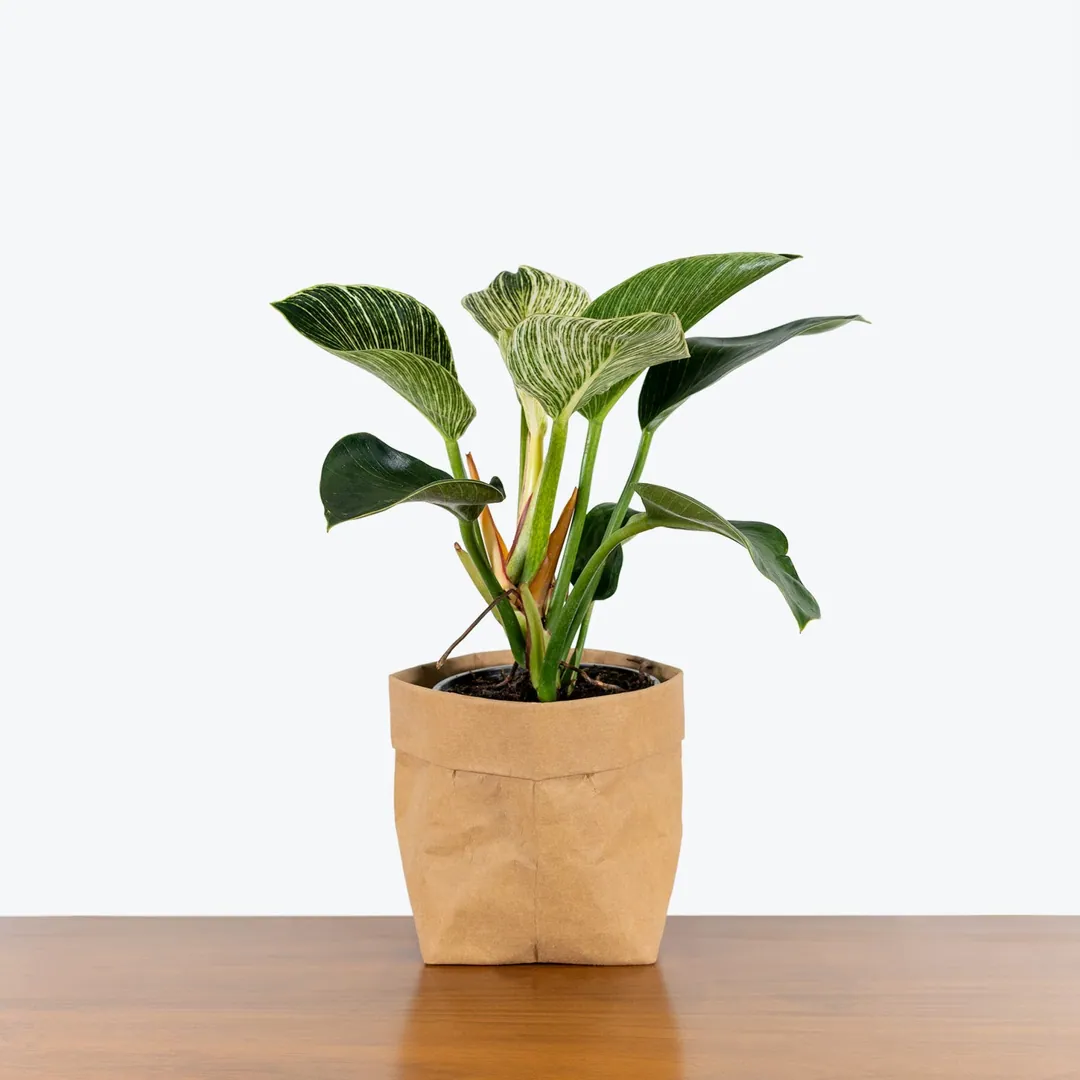
Choose it for upright foliage with fine cream stripes. Put it near a window with filtered light and turn the pot occasionally if the leaves lean toward the glass. New leaves can vary in their markings, so choose a plant whose current form you like. Let the surface of the mix dry slightly before watering.
11. White Butterfly arrowhead vine
Syngonium podophyllum 'White Butterfly'
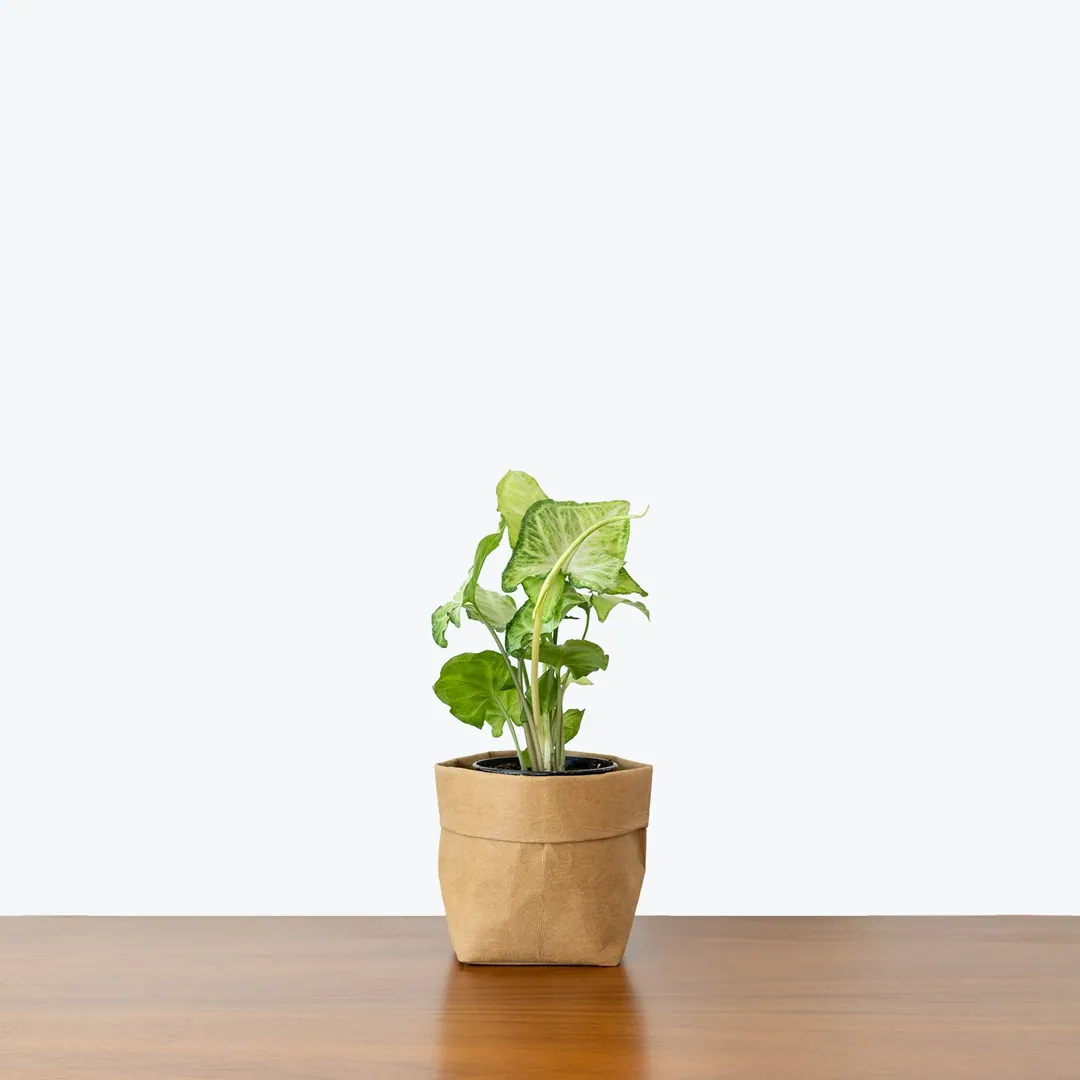
Start it on a shelf while the plant is young and compact. As the stems lengthen, give them a support or trim them to keep the plant bushier. Bright filtered light helps the pale pattern show. Leave room to water without pulling the stems off their support.
12. Camouflage dieffenbachia
Dieffenbachia 'Camouflage'
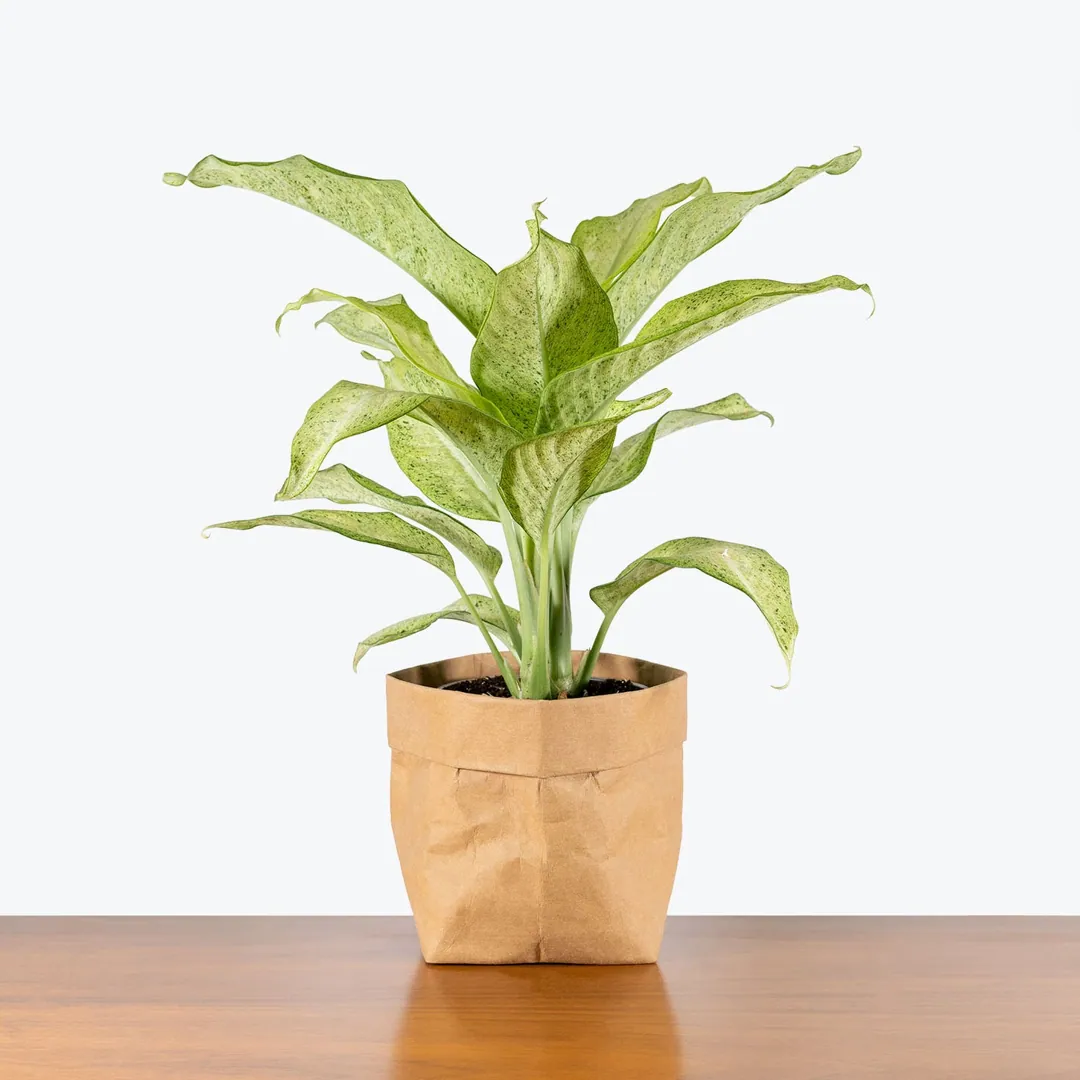
The mottled leaves work well beside a plain wall with good filtered daylight. Keep the pot clear of a cold window and allow for the stems to rise as the plant matures. Water once the upper mix starts to dry. If pets can reach the foliage, choose an option from the cat-safe houseplants guide.
13. Petra croton
Codiaeum variegatum 'Petra'
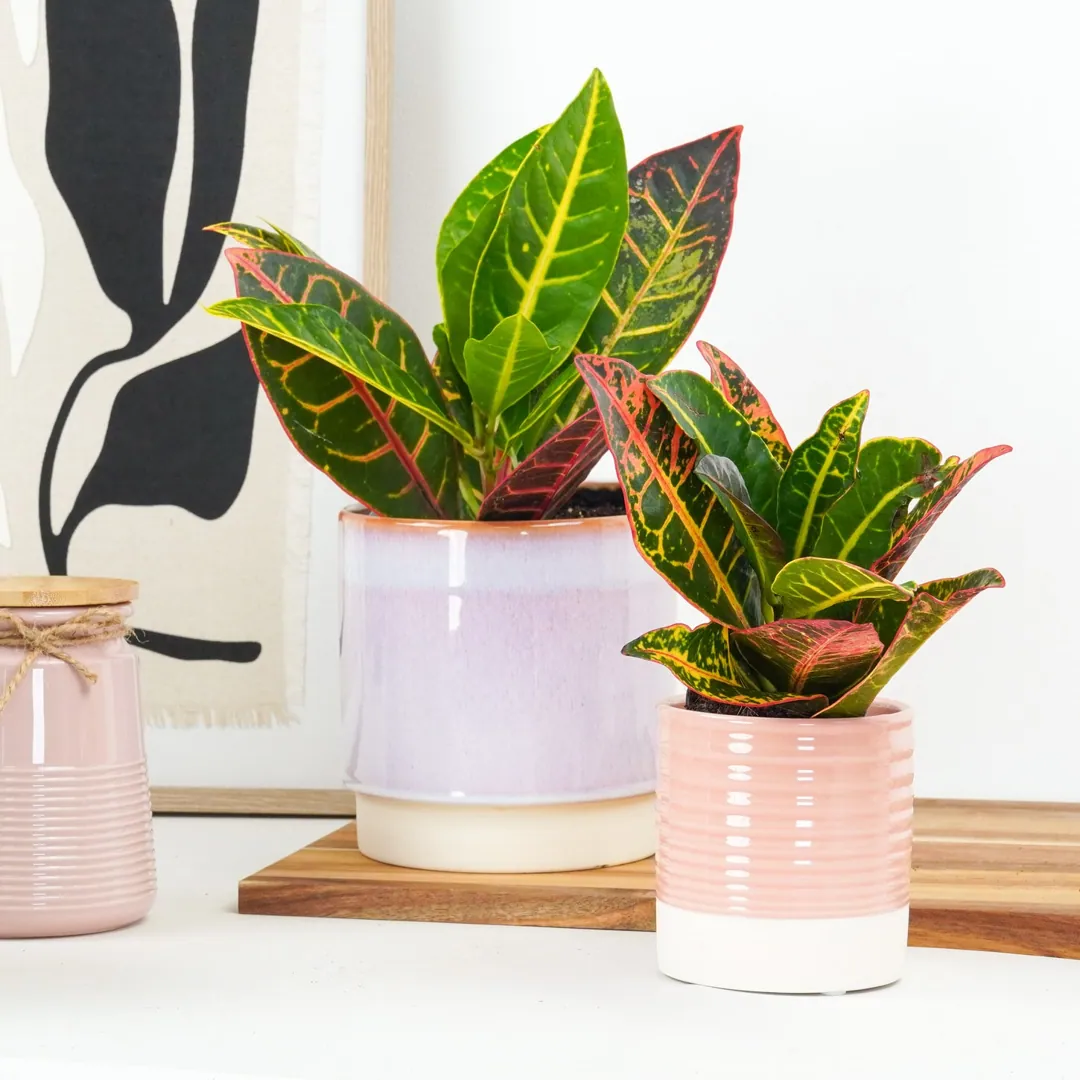
Pick it for leathery green leaves marked with red, yellow, or orange. A bright, stable spot supports stronger color. Move it gradually if you are increasing direct light and watch for leaf drop after a change in room conditions. Give the pot space away from cold air coming through a door.
Help tropical foliage settle into your home
Check light across the whole plant
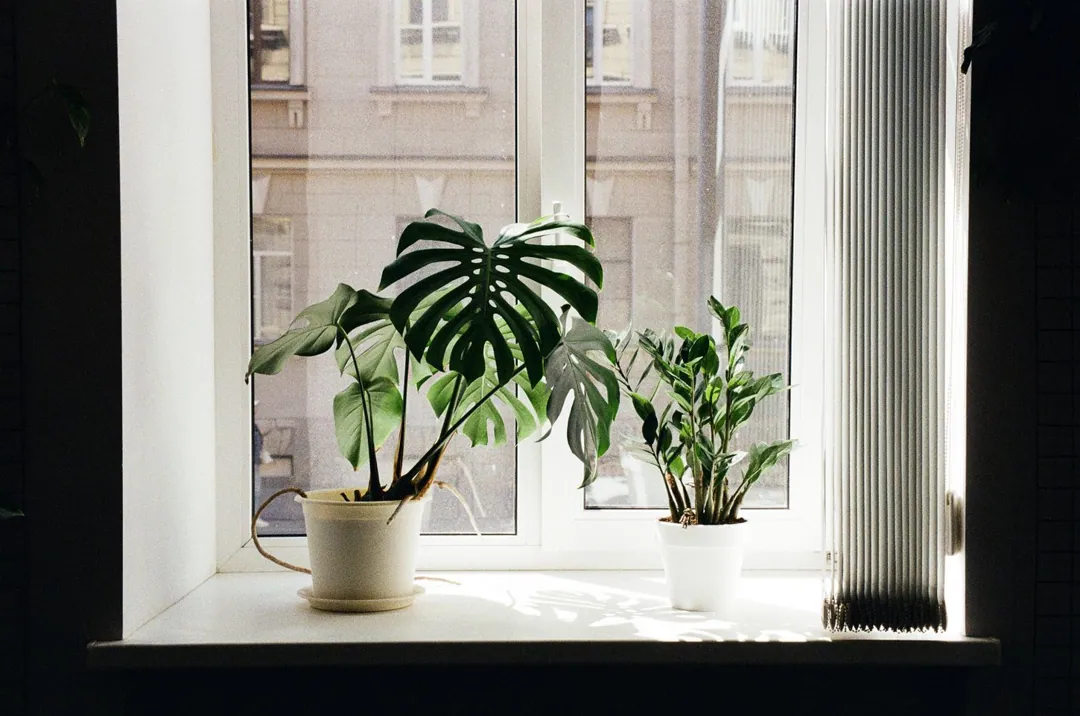
Hold your hand over the planned leaf position in the daytime and look for differences as you move farther from the glass. Check the lower leaves as well as the top. If growth leans hard toward the window or new leaves are much smaller, reassess light and support. A low-light plant may fit the spot better.
Check the air and soil around new growth
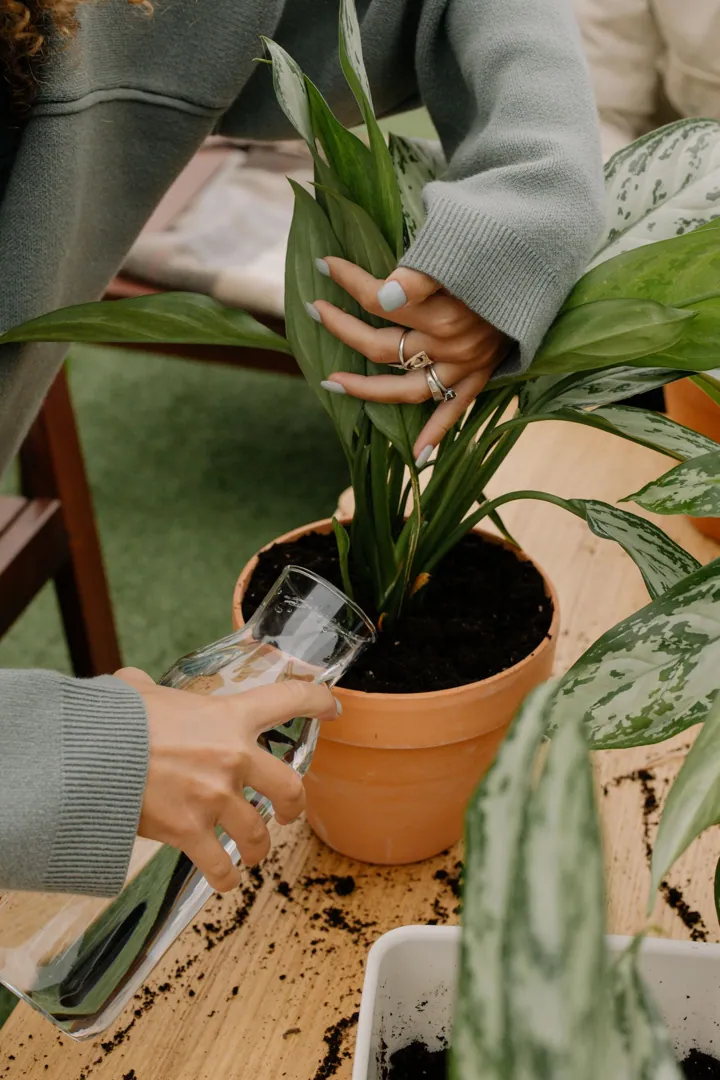
A shelf above a heater can dry out faster than the rest of the room. Move sensitive foliage away from strong air currents and use a small hygrometer if you need to compare spots. New leaves and leaf edges can react to several causes, including dry roots or excess water, so check the mix before blaming humidity.
Give climbing stems something to hold
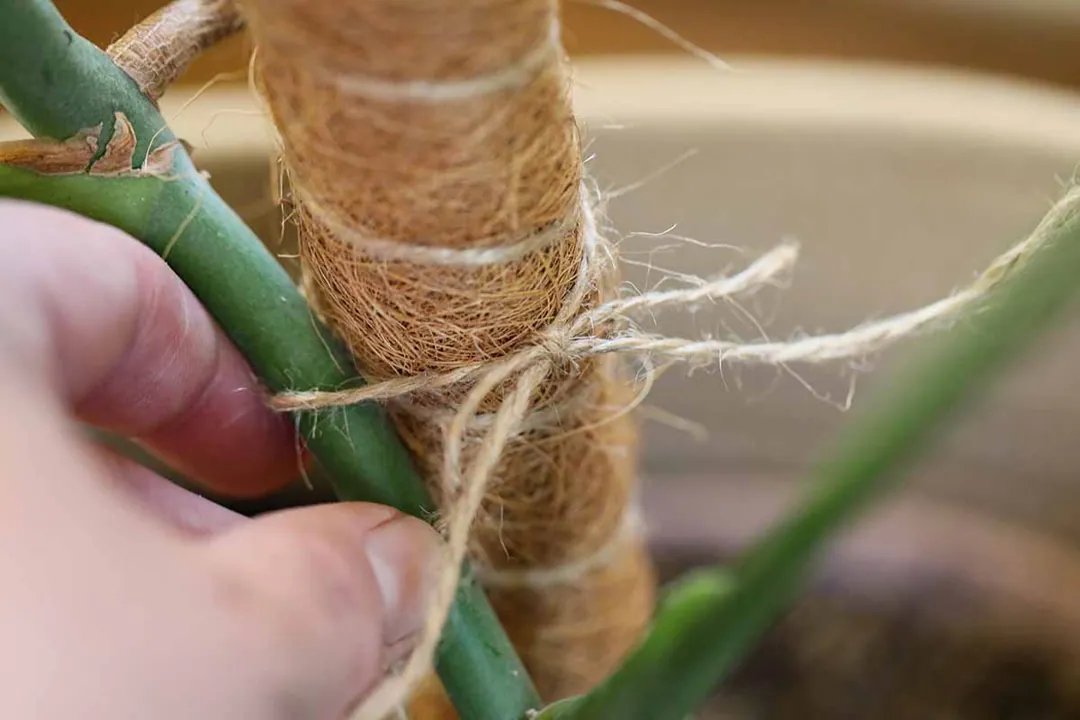
Set a stake or trellis close to the growing stem while the plant is still manageable. Use loose ties around the stem and leave the leaf stalks free to turn toward the light. Choose a broader support as a monstera gets heavier. For more shapes to work into a room, browse our guide to indoor plants.