



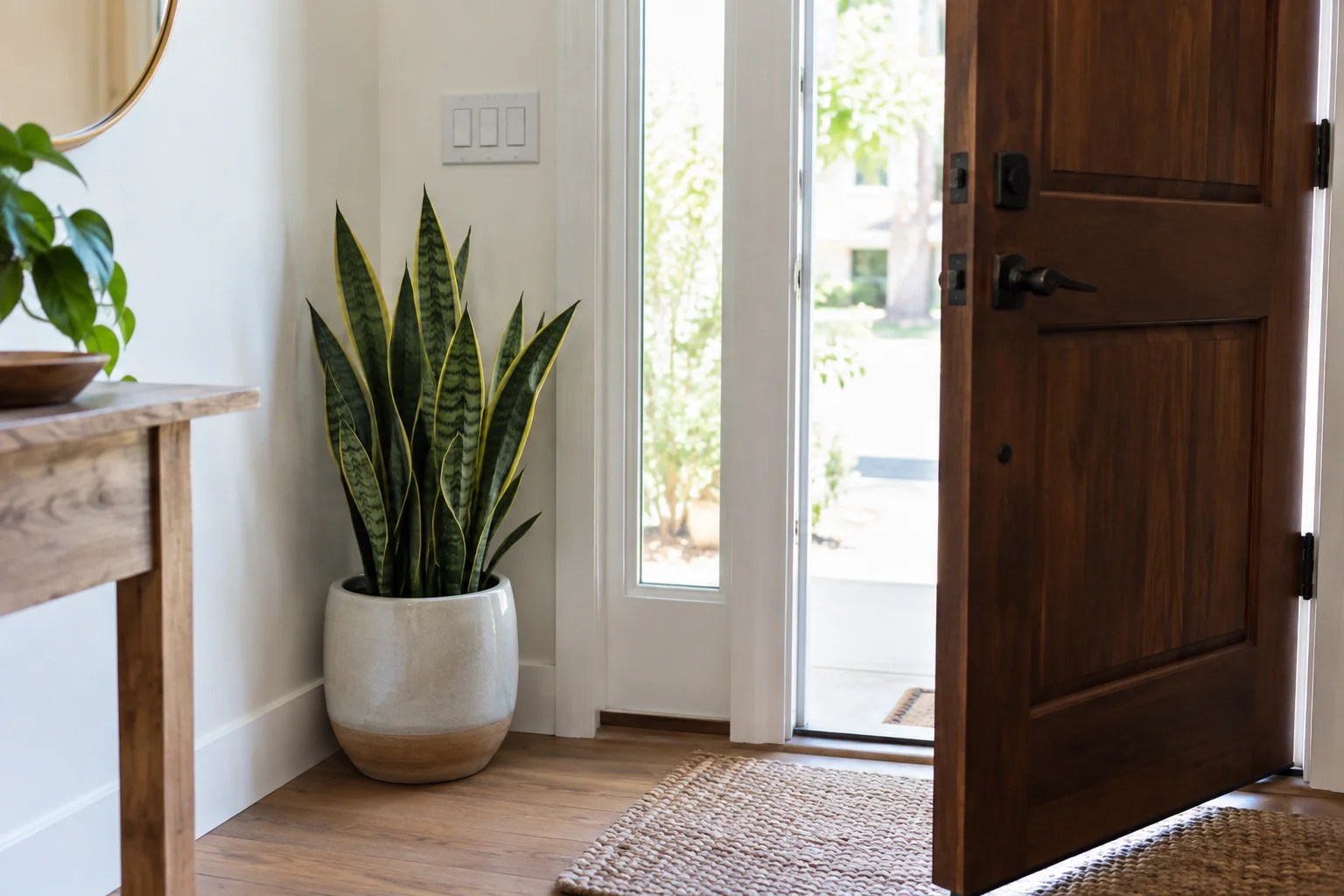
Quick Answer
Put a snake plant where it receives usable light, sits securely and does not obstruct a door or walking route. A bright entry side, living-room edge or office cabinet can work. Its upright, pointed leaves have different symbolic readings in feng shui; no placement guarantees protection or money. If cats or dogs can chew it, choose another plant because snake plant is toxic to them.
This is a placement guide for the living snake plant commonly labeled Dracaena trifasciata or its older name Sansevieria trifasciata. It is not a generic list of lucky plants. Start with the plant's light, footprint and safety needs, then decide whether you like its shape in that room. For a wider plant-selection table, use our feng shui indoor plants hub.
What Does a Snake Plant Mean in Feng Shui?
Its upright leaves can read as strong, structured and protective. Some modern feng shui advice welcomes that shape near an entry, while other advice finds pointed foliage too visually active beside a bed. These are interpretations, not measurable effects. You do not need to put a plant in a wealth corner or in a particular compass direction if that corner is dark, cramped or unsafe.
Look at what the plant actually changes. A compact pot can add a clean vertical line to an otherwise bare side of a room. A large clump can crowd a narrow hall or make a bedside feel busy. The useful choice depends on scale and the view from where you spend time, not the leaf shape alone.
Choose the Spot by Light, Width and Daily Use
Compare common snake plant locations before moving the pot
Scroll sideways to compare all columns.
| Place | What makes it work | When to choose elsewhere |
|---|---|---|
| Entry side | Daylight reaches the leaves and the full door swing stays clear. | The plant is behind the door, in a dark foyer or within pet reach. |
| Living-room edge | A stable pot fits beside seating without narrowing circulation. | Leaves brush people or the plant sits far from every window. |
| Office cabinet | The plant receives filtered light while the desk remains usable. | Watering threatens electronics or the cabinet is unstable. |
| Bedroom | The plant feels restful to you and has enough light away from the bed. | Its height or leaf tips feel intrusive near the pillow, or pets sleep there. |
| Windowless bathroom | Suitable plant lighting and safe electrical arrangements are available. | Humidity is the only thing the room offers; there is no usable light. |
Before setting the pot down, open nearby doors, walk the route carrying a bag and imagine the plant at its mature height. A heavy decorative cachepot can help a tall specimen stand securely, but the growing pot still needs drainage. Do not place a large plant on a narrow shelf where it can tip.
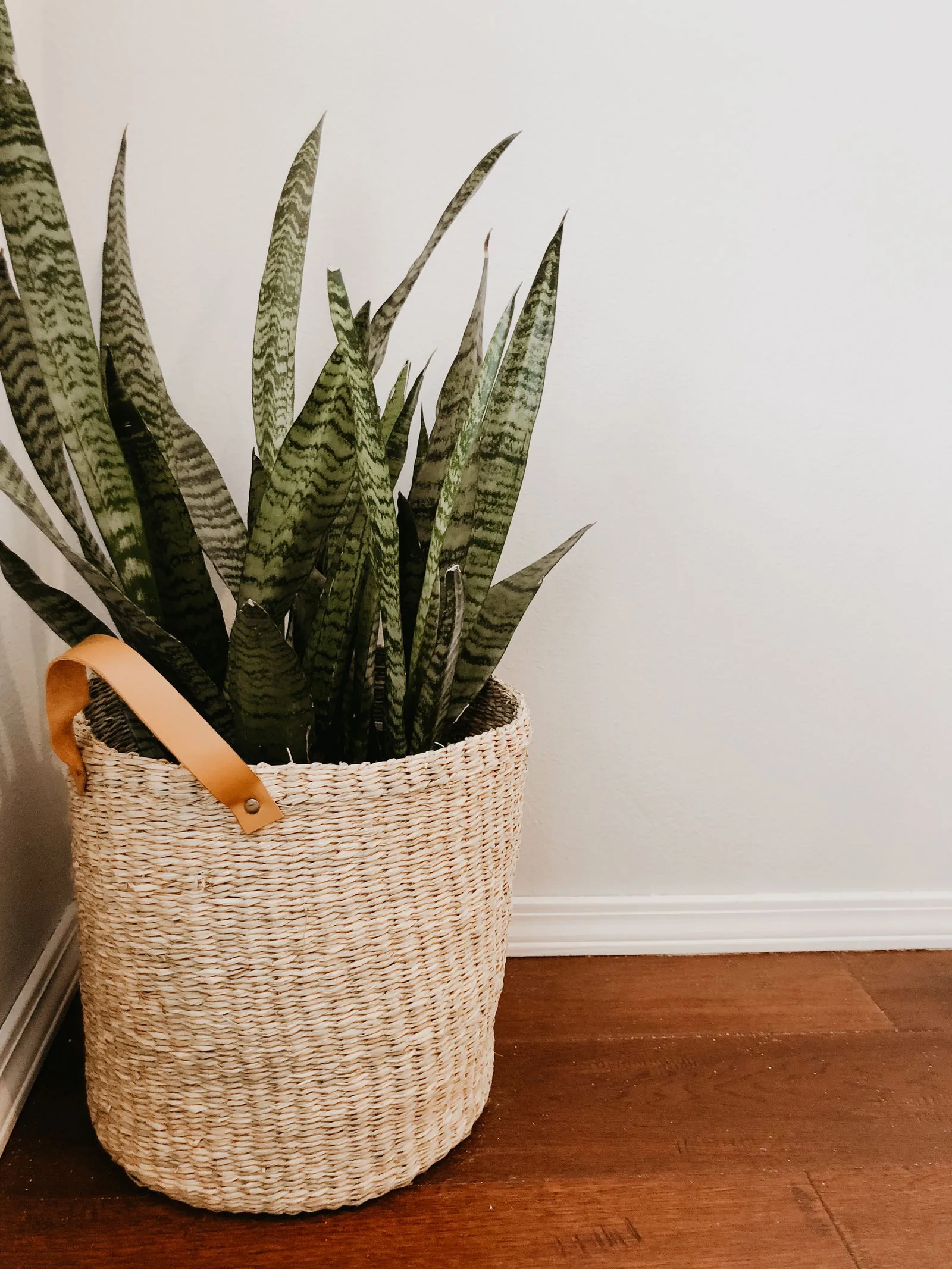
The woven-basket photograph shows the plant itself rather than a guaranteed arrangement. If you use a decorative outer basket, remove any standing water after watering so the inner pot does not remain wet.
At the Front Door, Use a Bright Side Position
An entry is a sensible visual location only when the plant does not compete with coats, shoes, door movement or a clear arrival route. Check the light at leaf height throughout an ordinary day. An indoor sidelight can offer useful filtered light; a covered outdoor step is a different growing environment and may be too cold or wet for this tropical plant.
For an entrance with an outdoor doorstep, our front-door plant guide compares exposure and climate. Do not copy an indoor photo onto an unprotected porch. If the entry is too dim, improve the entry without a living plant or pick a better-lit room.
Living Room and Office: Give the Leaves Their Own Space
Near a living-room window, a snake plant can add structure beside a low sofa or bookcase. Keep it far enough from seating that leaves are not repeatedly bent. Near a desk, use a side cabinet or floor position that does not cut into legroom or place water above electronics. Our office layout guide covers the desk and room first; a plant is a finishing choice.
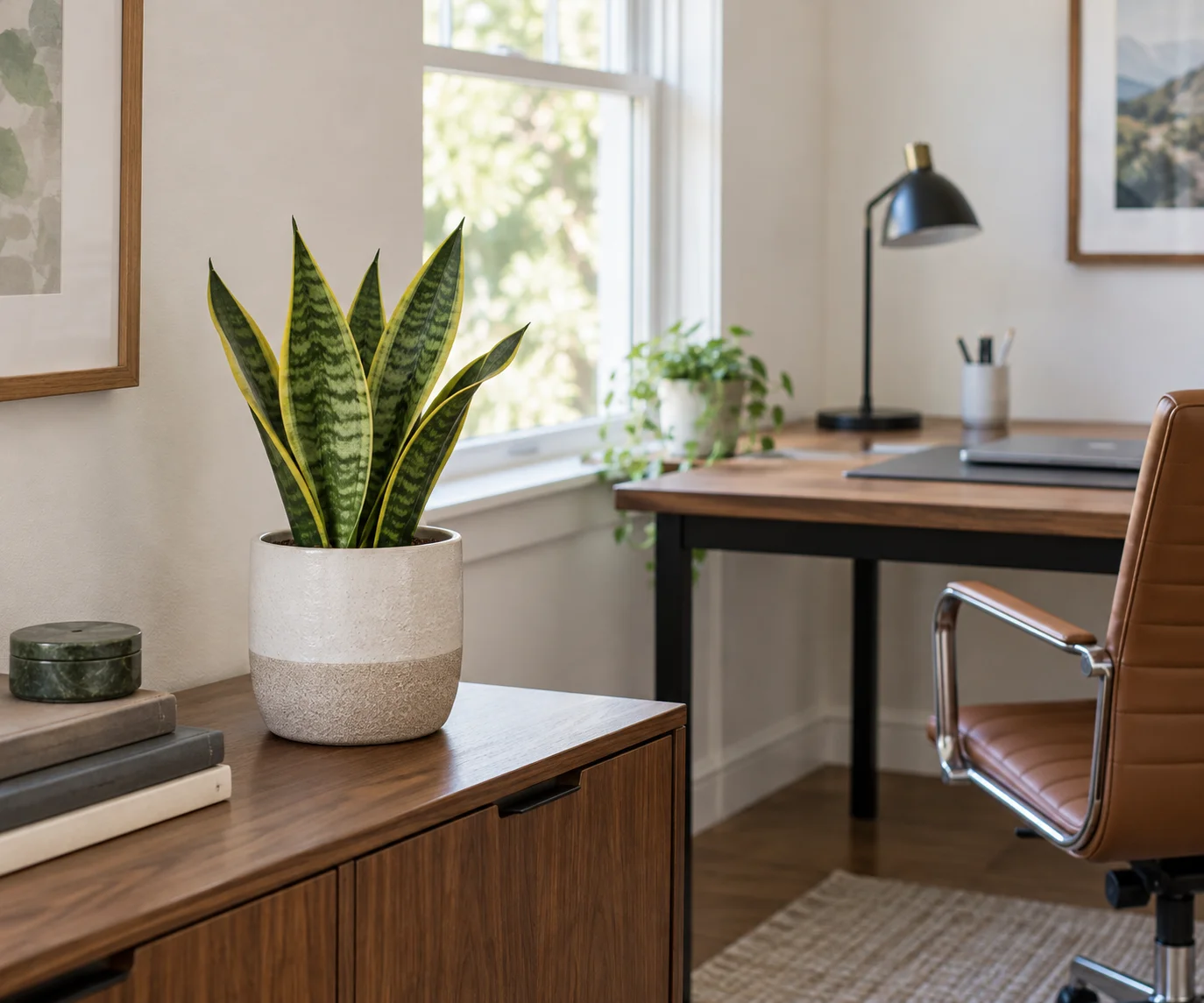
The same plant can look calm in one setting and oversized in another. A compact cultivar fits a cabinet, while a taller specimen often belongs on the floor. Check the nursery label and actual pot size rather than assuming every snake plant stays small. A healthy plant at a sensible scale does more for the room than a crowded collection bought for symbolic reasons.
Is a Snake Plant Suitable for a Bedroom?
It can be, if you like the form, have usable light and keep it out of the path to the bed. There is no evidence that its pointed leaves harm sleep, but you may find a tall, rigid silhouette distracting close to the pillow. Try a lower position across the room rather than a large pot immediately beside your head. If the bedroom is dark or used by a pet that chews leaves, do not force the placement.
Our bedroom plants guide compares other species and room conditions. If your real task is choosing a tall, low-maintenance floor plant, the tall indoor plants guide compares snake plant with different forms. Keep this page focused on one species and where it belongs.
Low Light Is Not No Light, and Easy Care Is Not No Care
The North Carolina Extension plant profile describes snake plant as tolerant of low light but needing well-drained soil and careful watering. Penn State Extension favors bright indirect light, warns against overwatering and recommends drainage holes. Light tolerance does not mean a plant can live indefinitely in darkness. A windowless room needs suitable plant lighting or another solution, as explained in our windowless-room plant guide.
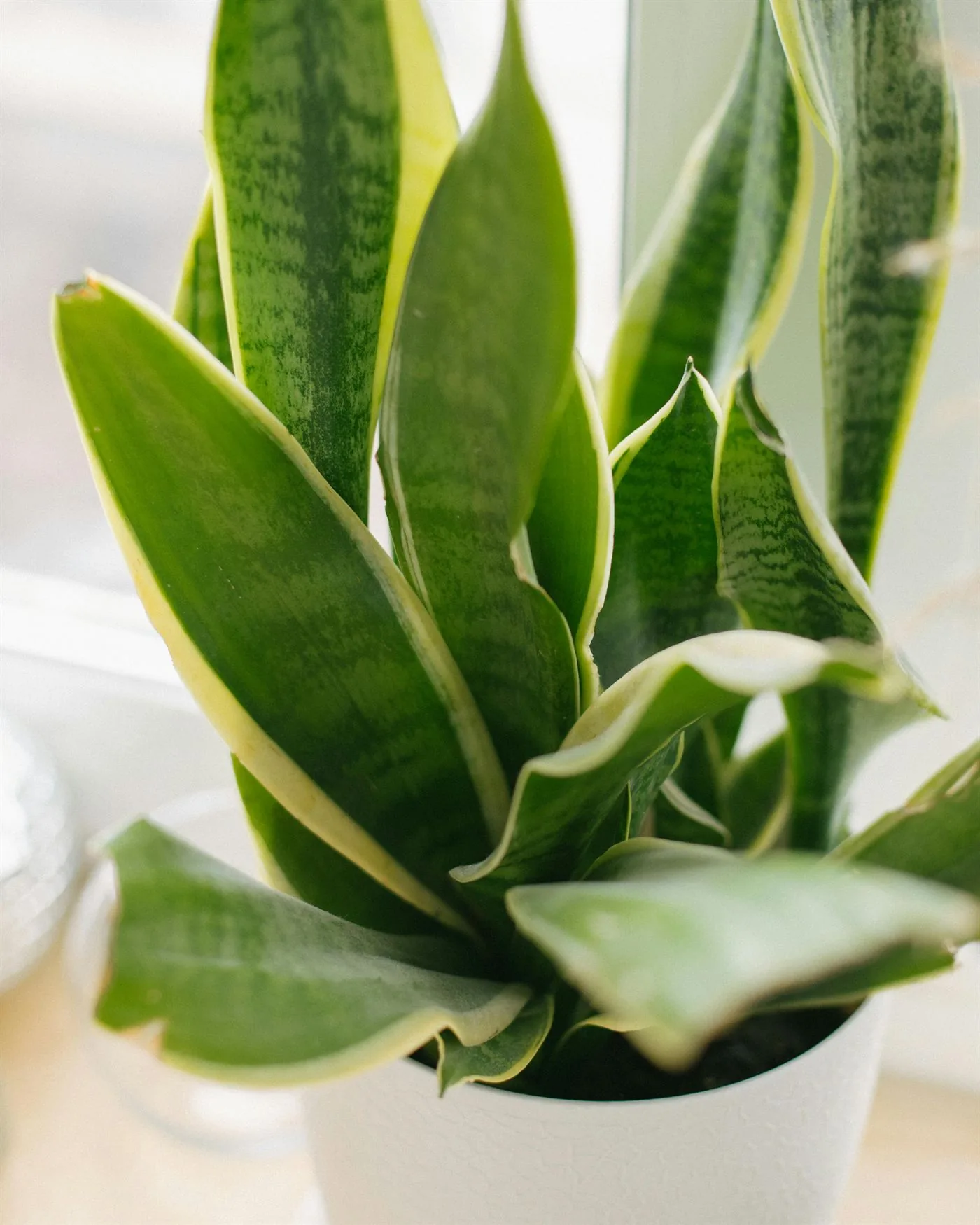
Water only after checking the soil rather than following a fixed weekly schedule. Let water drain fully, empty the outer container, and adjust for slower drying in a dim or cool room. Soft or collapsing leaves, persistently wet soil and a sour smell call for a root and drainage check. Dust leaves gently so you can see their condition. This is ordinary plant care, not a feng shui test.
Keep It Away From Pets That Chew Plants
The ASPCA lists snake plant as toxic to cats and dogs, with possible nausea, vomiting and diarrhea after ingestion. A plant on a low floor stand is not out of reach for a curious animal. If you cannot keep it genuinely inaccessible, choose a suitable pet-safe species instead. Contact a veterinarian or poison-control service if you suspect ingestion.
Also consider young children who put things in their mouths. Avoid a top-heavy pot that can fall, and do not assume the phrase "good luck plant" implies safety. A secure, low-maintenance home matters more than keeping a symbolic object in a predetermined corner.
A Worked Example: A Bright but Narrow Entry
Imagine a front door with a sidelight on one side and a narrow landing strip for shoes on the other. Set a modest snake plant beside the sidelight only if the door opens fully, people can pass with bags, the leaves receive usable daylight and a pet cannot reach them. Keep the shoe landing area available. After a week, check whether the leaves get brushed and whether the soil dries normally.
If the plant crowds the route, move it to a brighter living-room edge. If the only suitable spot is pet-accessible, choose a nonliving accent or another plant. That is a successful placement decision, even if an online diagram marks the entry as a desirable symbolic area.