



Quick Answer
For the least effort, choose a snake plant if you need a narrow upright shape, a corn plant for a taller cane-like plant in moderate indirect light, or a ponytail palm beside a sunny window. A rubber plant gives a fuller tree-like look in bright indirect light. A Kentia palm is a softer option for homes with pets, but it is less drought-forgiving than the others. Buy a plant close to the height you want: many easy houseplants grow slowly indoors.
A tall plant can fill an empty corner without filling it with objects. The mistake is buying by appearance alone. A sunny-window plant will struggle in a dim hallway, while a broad rubber tree can crowd the very circulation space you hoped to soften. Start with light, width, and the height of the plant today—not the height a nursery tag says it might eventually reach.
This is a guide to live, floor-standing plants that are relatively manageable indoors. If the room has no natural light, use our windowless-room plant guide for grow-light choices. If you want a tall silhouette without live-plant care, see our artificial plant guide. Our broader feng shui indoor plants guide covers placement and symbolism beyond this practical shortlist.
Choose by the Room You Actually Have
Narrow floor space? Start with snake plant. Moderate filtered light and room for a cane? Look at corn plant. Bright indirect light and space for broad leaves? Choose rubber plant. Direct sun and an occasional missed watering? Consider ponytail palm. A softer, arching shape in a pet-accessible room? Kentia palm is worth the extra attention.
These are relative care levels, not promises that a plant can be ignored. No live houseplant is suited to a completely dark corner, and every floor pot needs a drainage plan.
Tall Indoor Plants at a Glance
| Plant | Light to aim for | Shape and space | Care trade-off | Pet note |
|---|---|---|---|---|
| Snake plant | Indirect light; tolerates dimmer rooms | Narrow, upright; usually a few feet tall indoors | Let the mix dry; avoid wet soil | Toxic if eaten |
| Corn plant | Moderate, filtered light | Cane-like; commonly sold at floor-plant height | Watch drainage and leaf-tip browning | Toxic if eaten |
| Rubber plant | Bright indirect light | Broad, tree-like; allow side clearance | Consistent light and careful watering | Sap and leaves are a pet concern |
| Ponytail palm | Sunny window | Bulbous trunk, fountain-like leaves | Drought tolerant, very slow to size up | ASPCA-listed non-toxic |
| Kentia palm | Moderate to bright indirect light | Airy, arching fronds; needs width | Keep from prolonged drying or soggy roots | ASPCA-listed non-toxic |
“Tall” is relative to the specimen on sale. A mature rubber plant or corn plant may be much taller than a newly propagated one. Ask for the current height including the pot and look at the plant in person where possible; a picture of a mature specimen is not a reliable size promise.
The Five Best Choices, With Their Limits
1. Snake plant: easiest for a narrow corner
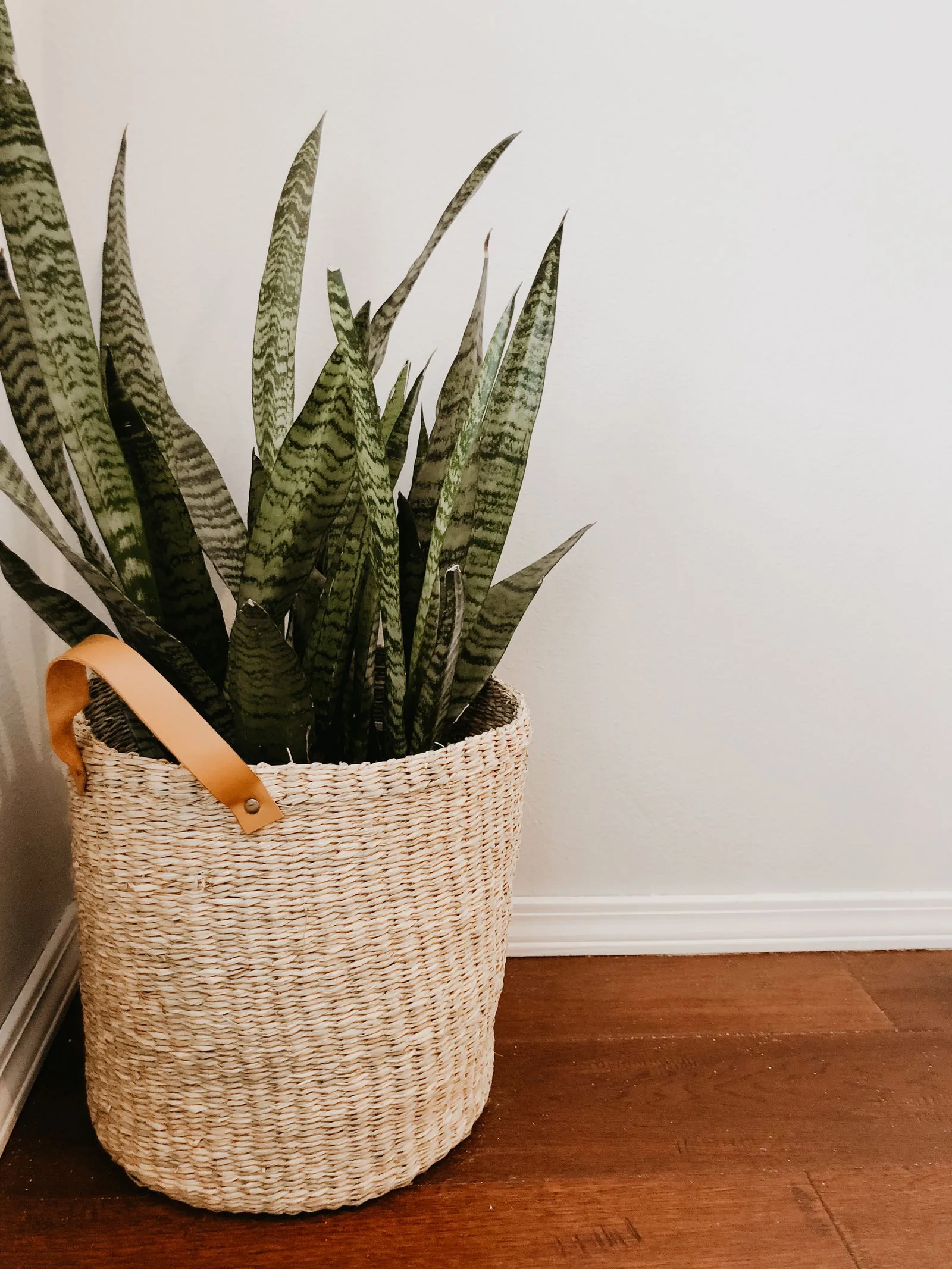
Snake plant's upright leaves give height without a canopy that leans over the sofa or blocks a doorway. It is the easiest fit beside a cabinet, in a bedroom corner or near an entry—provided the pot does not narrow the walking route. NC State Extension describes it as tolerant of lower light and dry conditions, but recommends well-drained soil and avoiding overwatering. In dim light, expect little growth rather than a dramatic floor-to-ceiling plant.
2. Corn plant: an easy tree-like shape for filtered light
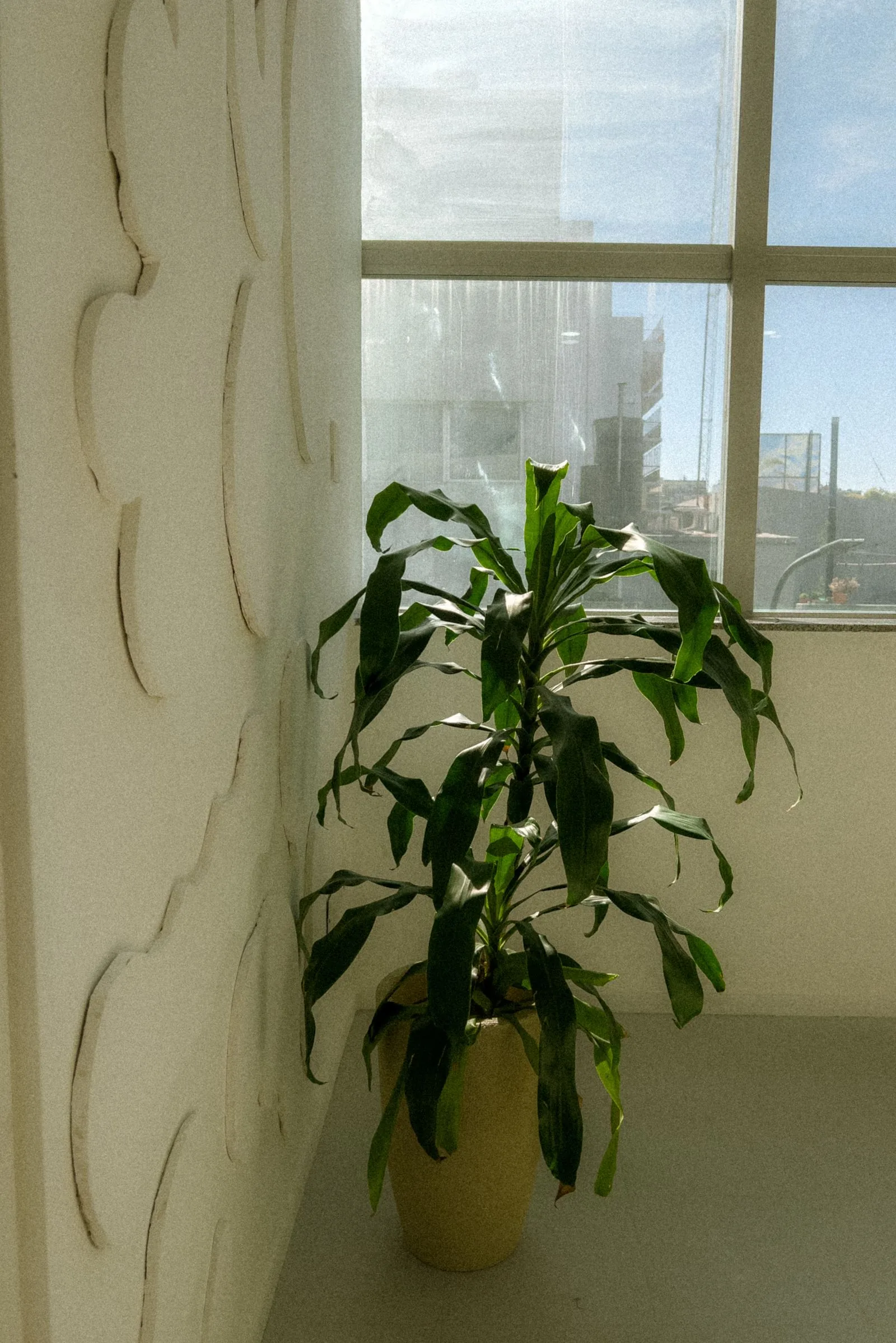
Corn plant (Dracaena fragrans) has woody canes and broad, arching leaves. It gives more of a small-tree effect than snake plant but still reads as one tidy vertical form. Choose it for a living-room or office corner with moderate filtered daylight, not a windowless passage. NC State Extension notes its adaptability to indoor light and warns that overwatering and water quality can contribute to leaf problems. Brown tips are a reason to check conditions, not immediately add more water.
3. Rubber plant: the fullest statement plant
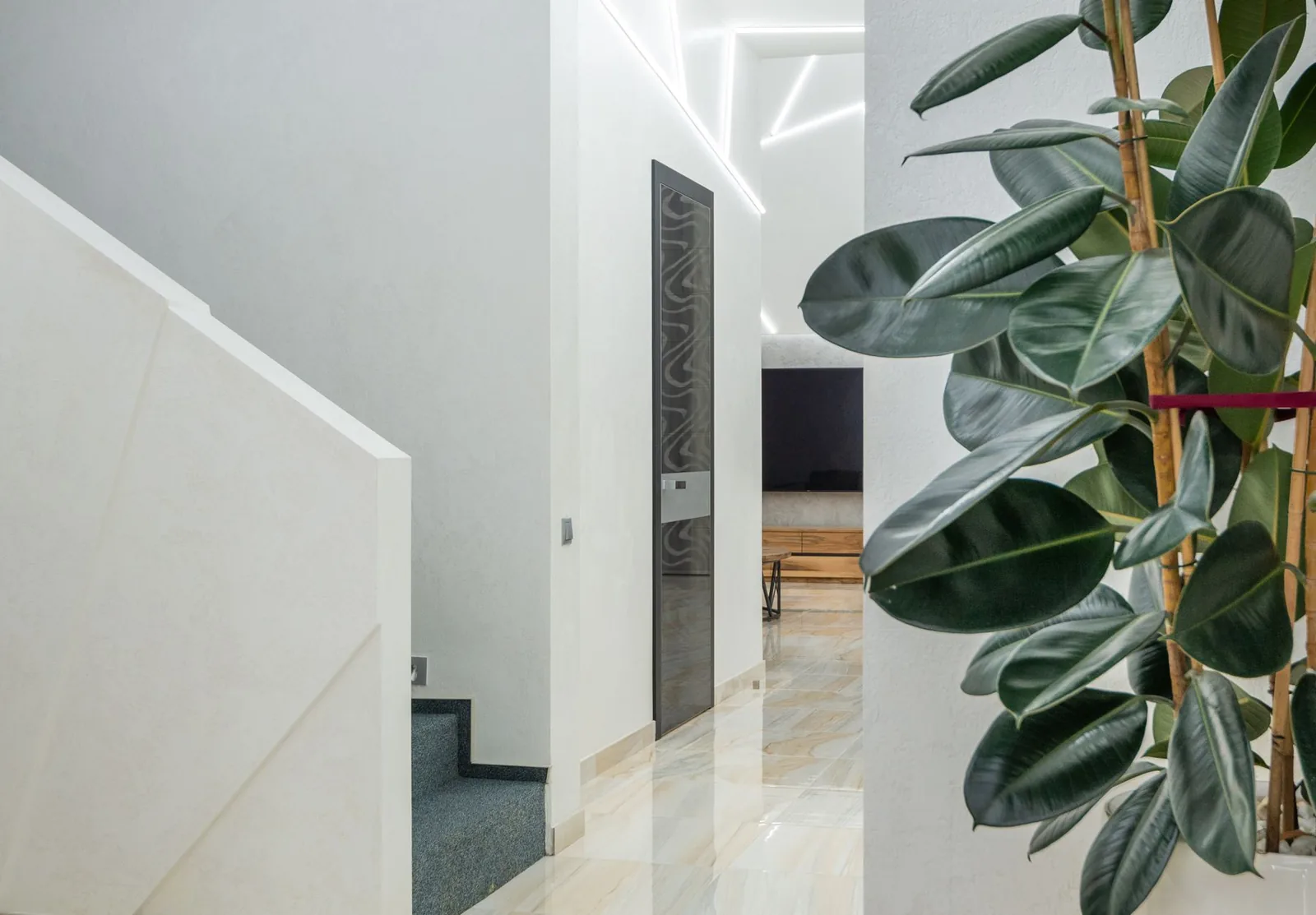
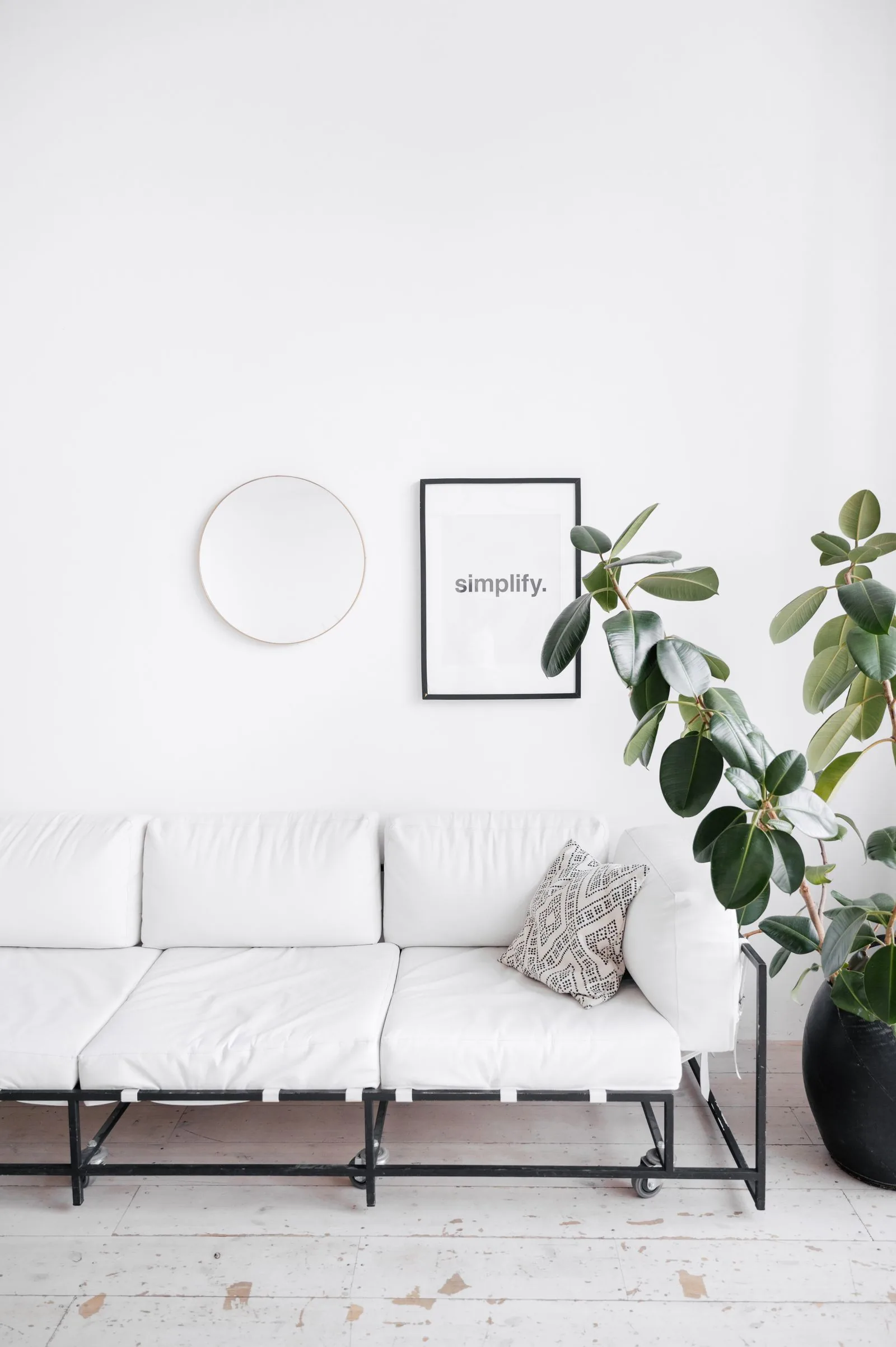
Rubber plant (Ficus elastica) earns its space with large, glossy leaves and a clear trunk. It is a strong choice near a bright window where a wider silhouette is welcome. It is not my first pick for a dark room or a tight path: leaves need room, and abrupt changes in light or watering can show up quickly. NC State Extension recommends bright indirect light or partial shade and warns against overwatering. The milky sap can irritate skin, so wear gloves when pruning.
If the broad-leaf look is what you want, buy a well-branched specimen near the desired size. A small rubber plant may eventually become substantial, but the room needs to work while it grows. The hero photograph shows its broad leaves; allow more side clearance than you would for a snake plant.
4. Ponytail palm: sunny and drought-forgiving
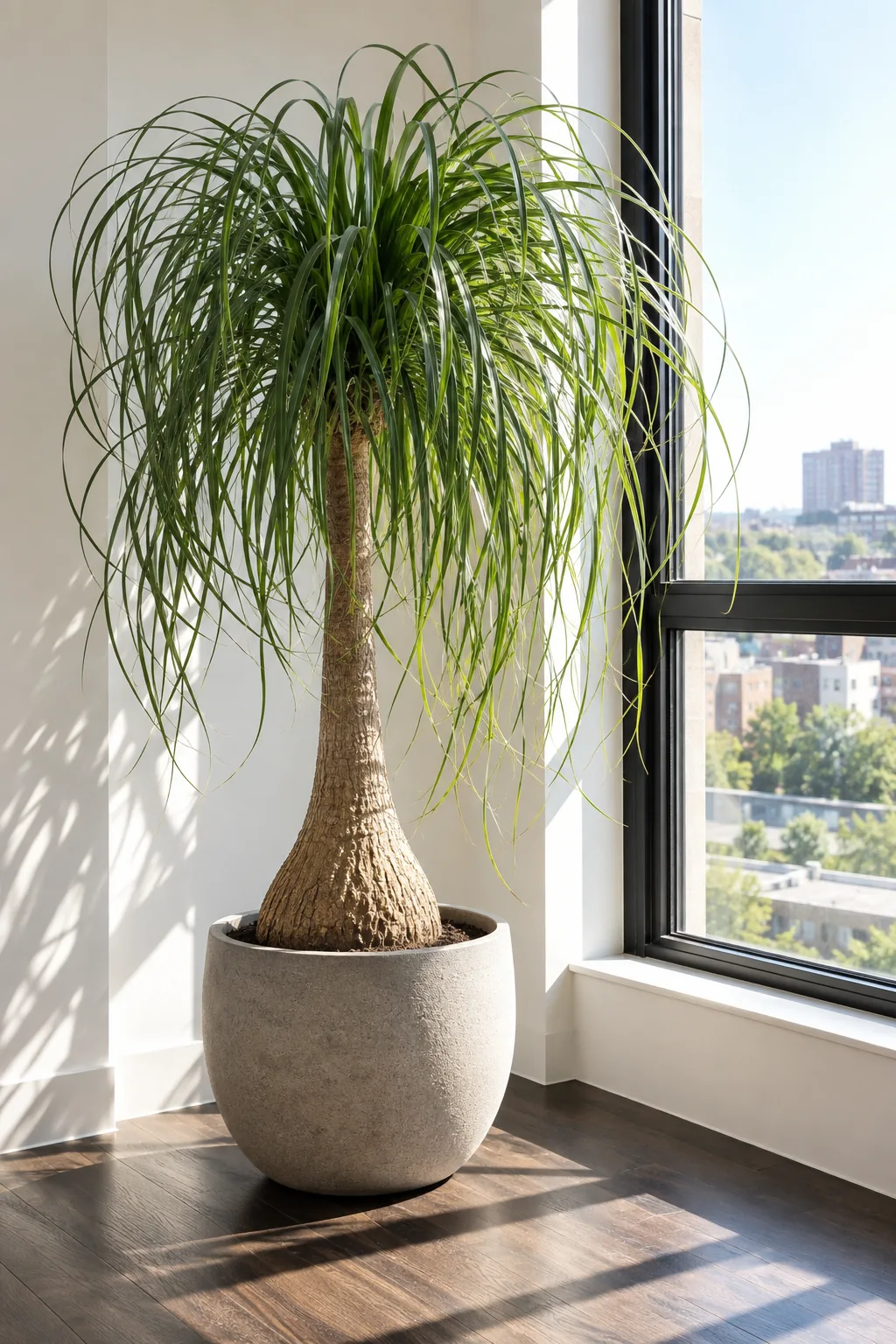
Ponytail palm is not a true palm. Its swollen base stores water, which makes it forgiving of an occasional missed watering. It does, however, need a bright, sunny position; do not buy it as a low-light plant. NC State Extension describes it as slow-growing and well suited to a sunny indoor spot. That slow growth makes a larger nursery specimen the sensible purchase if you need height now.
5. Kentia palm: pet-safer, with a softer outline
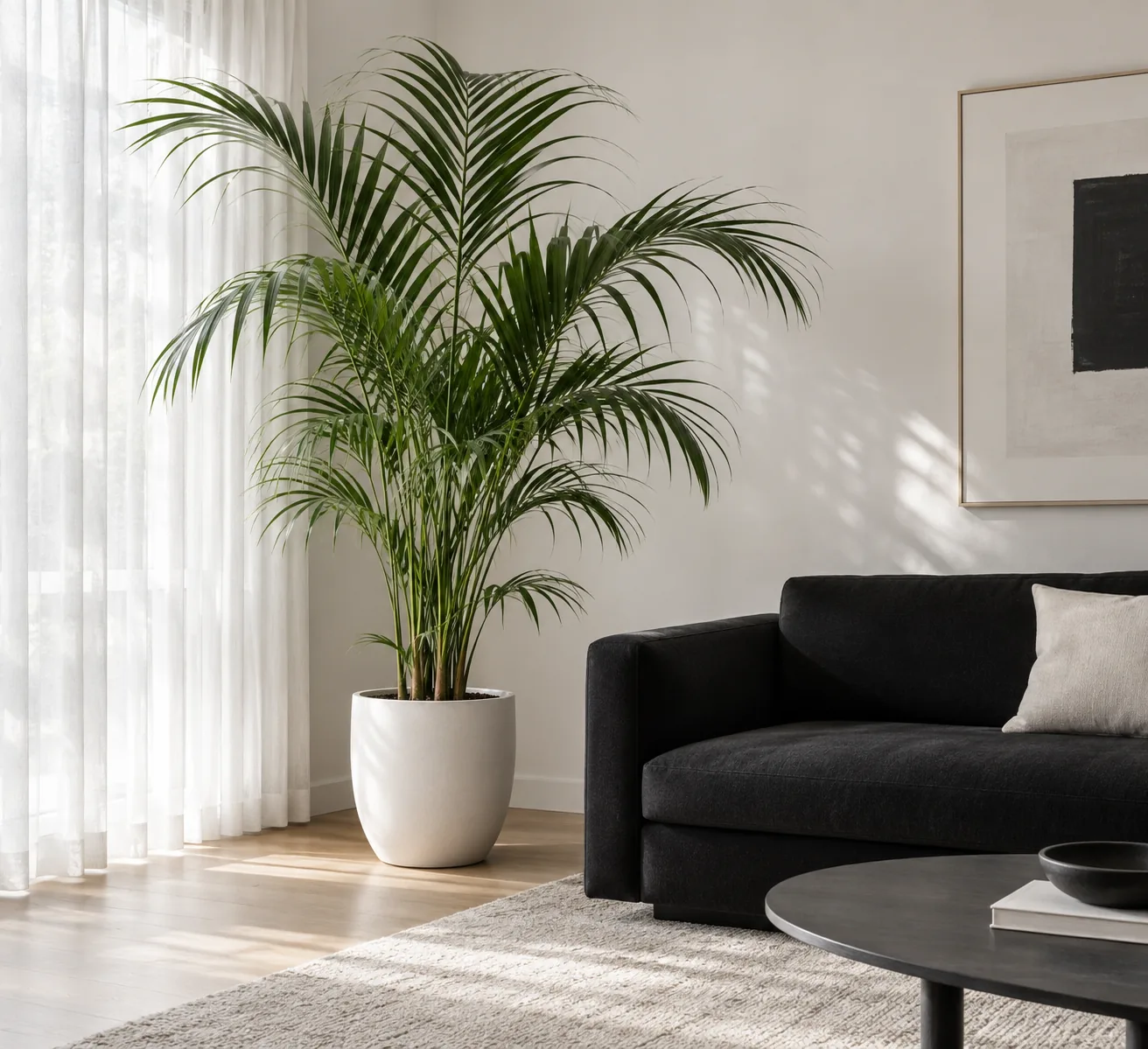
Kentia palm has long fronds that soften an angular living room without the dense look of a rubber plant. It is a useful option when a pet-accessible floor plant is needed: the ASPCA lists Kentia palm as non-toxic to cats and dogs. The care is a little more involved. NC State Extension recommends moderate indoor light and a well-drained mix that is not allowed to stay completely dry. Give the fronds side clearance and check the soil rather than following a fixed calendar.
Buy the Height You Need, Not a Future Promise
Before buying, measure floor-to-ceiling height, pot diameter and the space from the pot to the nearest door, sofa or vent. Leave room to reach the plant for watering and to rotate it if growth leans toward a window. A tall but sparse plant is not automatically better than a shorter, full one; look for healthy new growth, firm stems, sound roots and no visible pests.
Check the label for the botanical name and cultivar. “Palm” or “dracaena” alone is too vague for light and pet-safety decisions. A store photo often shows an older specimen. If you need an immediate floor plant, buy the current height you want instead of assuming a starter plant will gain several feet in a year.
Make the Plant Easy to Live With
Place the pot outside the door swing and main walking line. Use a heavy, stable container, a drainage hole and a protective saucer. Keep leaves off cold glass, radiators and forceful HVAC airflow. Rotate the plant occasionally for more even growth, wipe dusty leaves, and check soil moisture below the surface before watering. Slower growth in winter usually means slower water use too.
If the plant leans, yellows or drops leaves, reassess light and drainage before adding fertilizer. The point of a low-maintenance plant is a manageable routine, not a rigid weekly watering rule. Avoid fiddle-leaf fig or weeping fig as your first “easy” floor plant if you cannot offer stable bright light; NC State describes weeping fig as high-maintenance and notes leaf drop after environmental changes.
What Changes When Pets or Children Can Reach It?
Do not assume that “natural” means safe. Snake plant and corn plant are toxic if eaten; rubber plant's sap and leaves also deserve caution. The ASPCA's pet-safe houseplant guidance identifies common problem plants and recommends checking names before bringing one home. Ponytail palm is ASPCA-listed as non-toxic to cats and dogs, as is Kentia palm. “Non-toxic” is not permission to let a pet chew it: any plant material can cause stomach upset or a choking concern, and large pots can tip. Keep fertilizer and soil additives inaccessible; ask a veterinarian or poison service if a pet eats an unknown plant.
Frequently Asked Questions
Frequently Asked Questions
What is the easiest tall indoor plant to care for?
Which tall indoor plant tolerates low light?
Which tall indoor plants are safer for cats and dogs?
How do I keep a tall plant from outgrowing my room?
Can a tall plant live in a windowless corner?
The Bottom Line
Snake plant is the narrowest low-effort choice; corn plant gives a taller cane-like shape in moderate light; rubber plant needs brighter light and more width; ponytail palm wants sun; and Kentia palm trades a softer, pet-safer look for a little more care.
Measure the room, buy a healthy plant near the size you want, and match its light needs before choosing its pot. That is more useful than chasing a plant that is supposedly easy everywhere.