



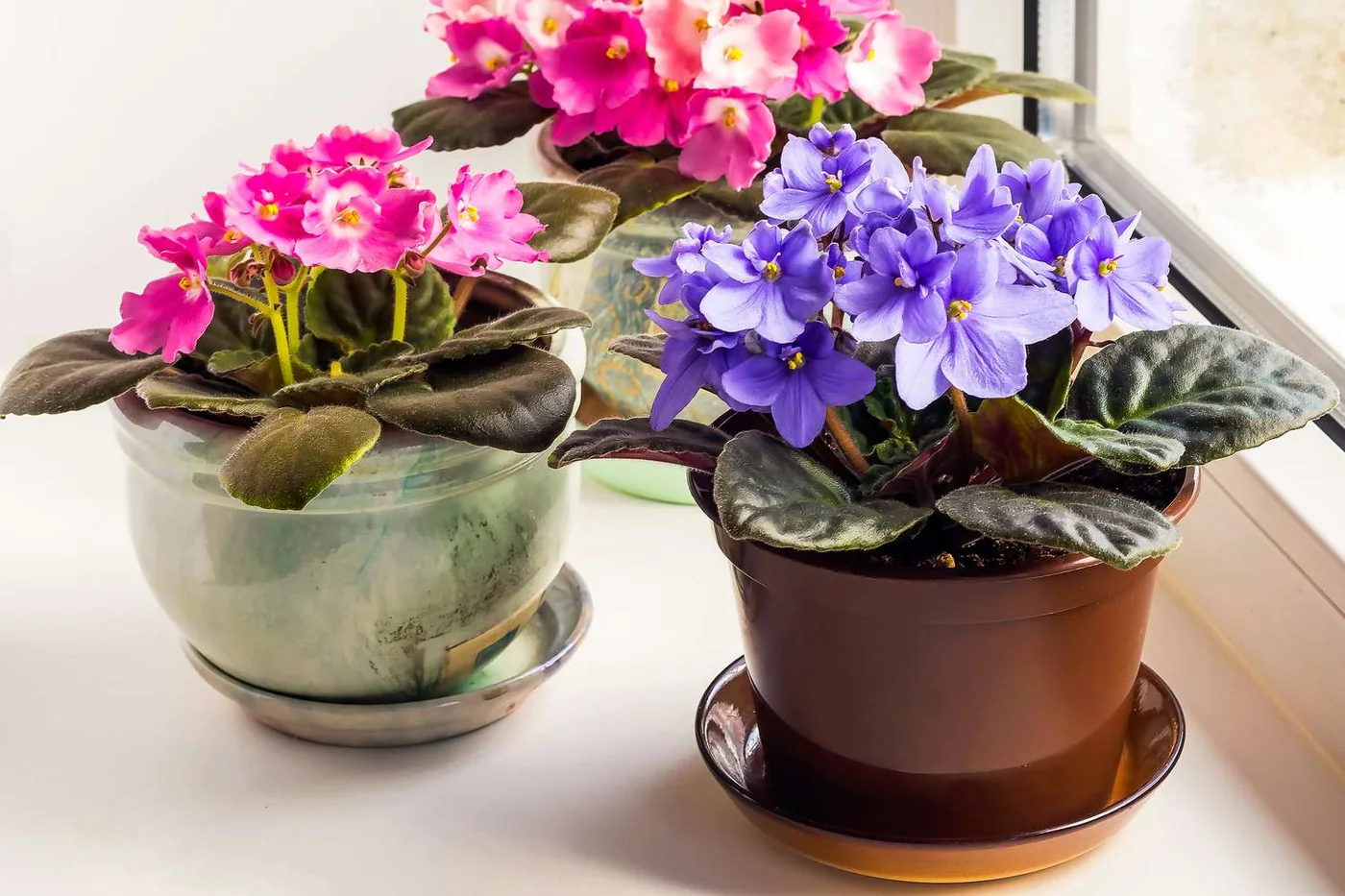
Quick Answer
Try an African violet for a small bright shelf, a moth orchid for a long flower display, or a Thanksgiving cactus for seasonal color. Before buying, decide if you want a plant that flowers in rounds with regular care or one that needs a specific light or temperature cue to bloom again.
Choose a plant by how it blooms
Look at the spot you can offer before you look at flower color. A plant may arrive in bloom from a greenhouse and grow only leaves on a dim shelf at home. Watch how light reaches the foliage across the day and keep the pot close enough to the window. For a room with softer daylight, start with our low-light indoor plants guide. If you want color through the gaps between flower displays, choose a plant with interesting leaves from the colorful indoor plants guide.
Flowering houseplants by display and effort to bloom again
Scroll sideways to compare all columns.
| What you want | Start with | What helps after the flowers fade |
|---|---|---|
| Repeat flowers on a small shelf | African violet or Cape primrose | Keep the light steady and remove spent flower stalks. |
| A long display from one flower spike | Moth orchid | Keep the roots healthy between flower spikes. |
| A hanging pot with flowers | Wax plant, lipstick plant, or goldfish plant | Give the top of the pot bright indirect light. |
| Flowers around the cooler months | Thanksgiving cactus or florist cyclamen | Match the plant’s seasonal cue. Cyclamen also needs a cool room. |
| A colorful centerpiece for one cycle | Guzmania bromeliad | Grow the offsets after the flowering rosette declines. |
Plants that can bloom again with steady care
1. Moth orchid
Phalaenopsis hybrids
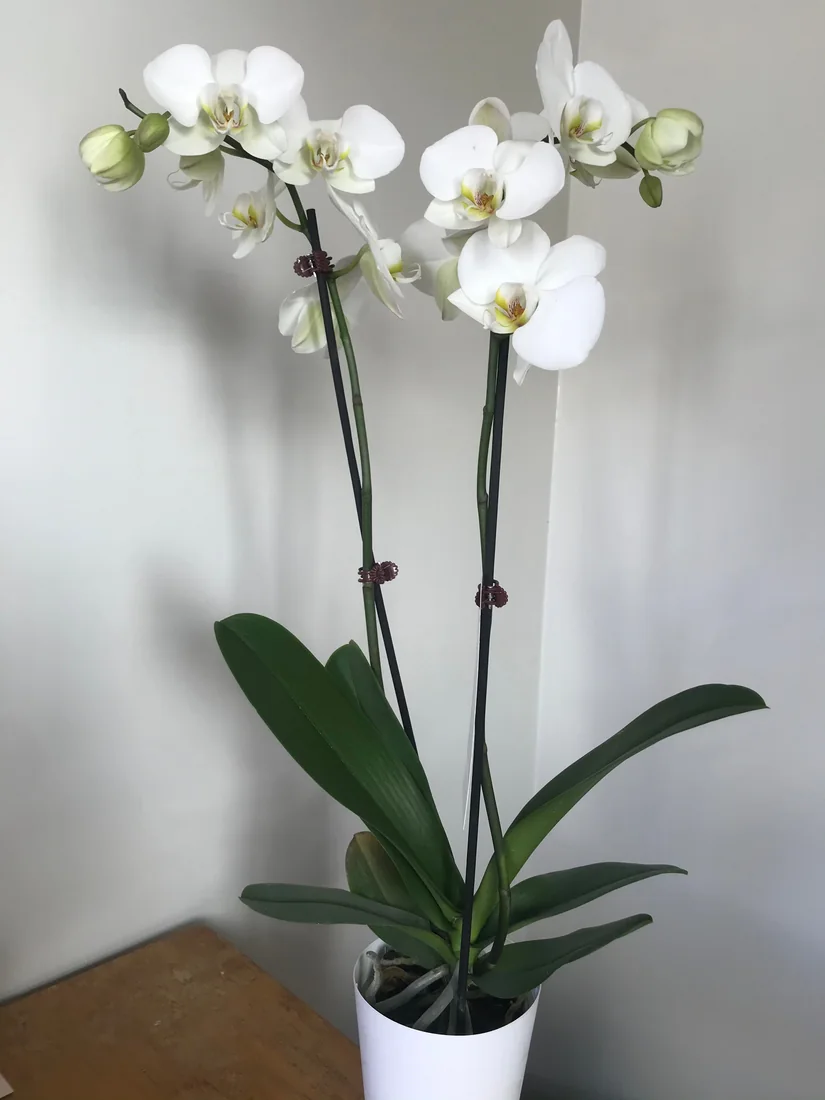
Choose a plant with firm leaves and a mix of open flowers and unopened buds. Give it bright filtered light and water when the bark mix is nearly dry, then let the pot drain. Once the spike finishes, focus on the leaves and roots. A healthy plant can take time to send up its next spike.
2. African violet
Streptocarpus ionanthus
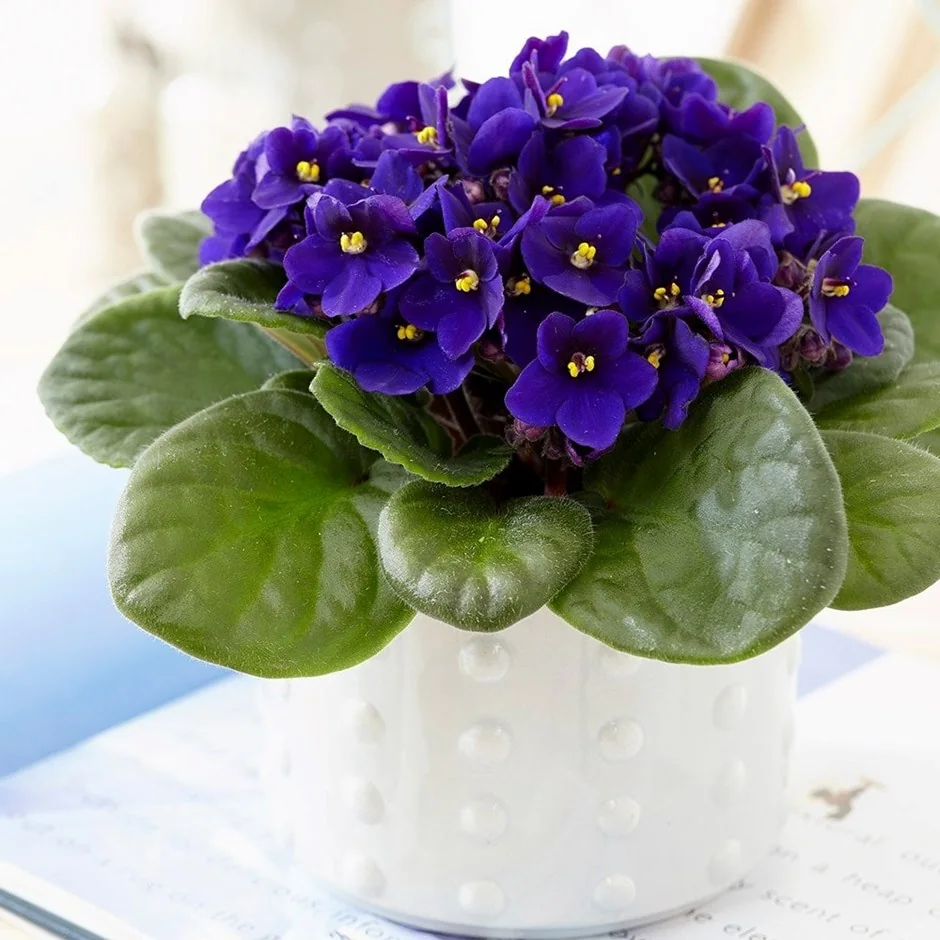
This compact rosette suits a narrow shelf where the leaves receive steady filtered light. Water the mix when the surface starts to dry and let it drain. Remove spent flower stalks close to the base. Shops may still use the older name Saintpaulia, and our small indoor plants guide covers other compact choices.
3. Cape primrose
Streptocarpus hybrids
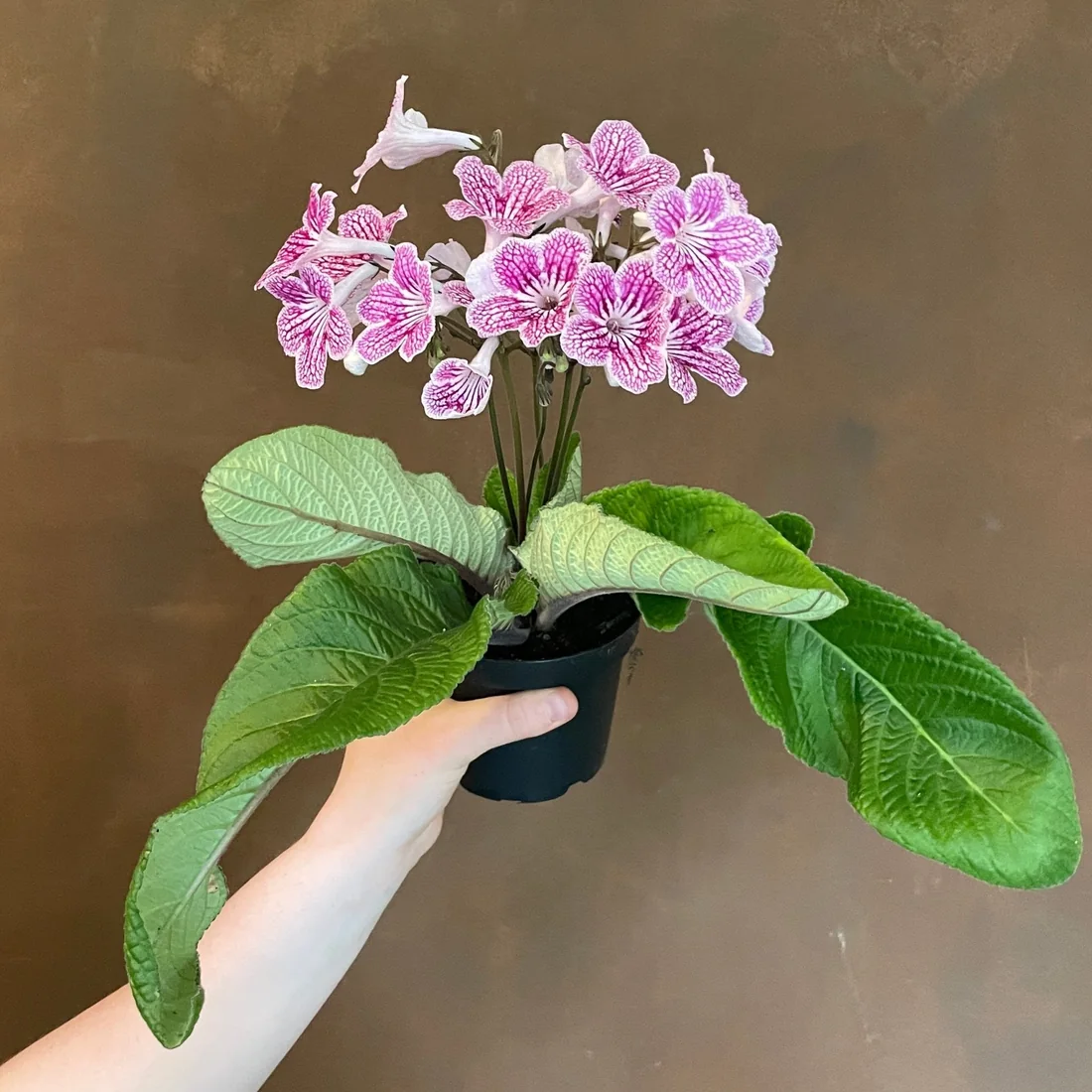
The flowers rise on thin stems above broad leaves, so give the plant more side clearance than an African violet. Use bright filtered light, check the mix before watering, and remove finished stalks. If the leaves scorch at the edge of the window, move it behind a sheer curtain.
4. Wax plant
Hoya carnosa
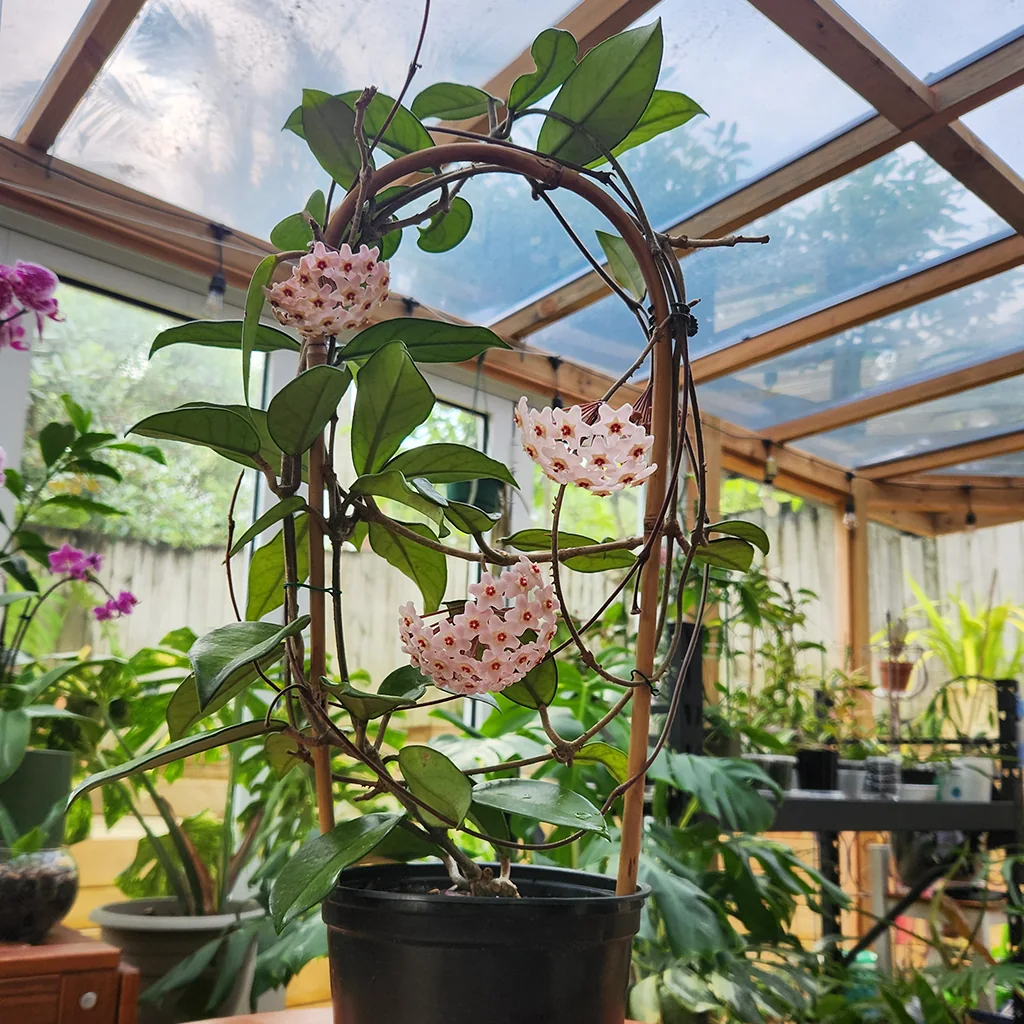
Use a small trellis or hoop so the vines catch the light and the clusters are visible. Let the mix partly dry between waterings. Leave the old flower spurs on the plant because new flowers can form from them. If you want blooms, choose a mature plant and give it strong filtered light.
5. Lipstick plant
Aeschynanthus radicans
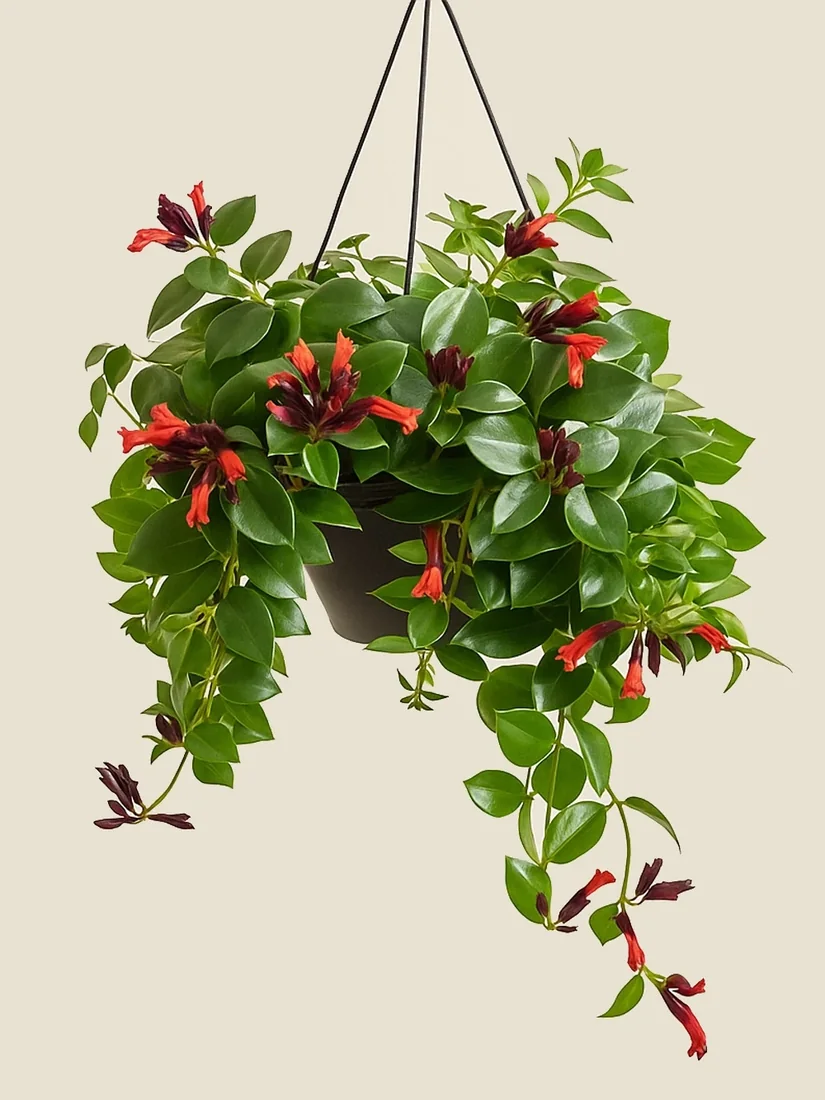
Hang it where light reaches the crown as well as the trailing stems. The red flowers sit near the ends of the vines, so let a few healthy stems grow beyond the rim. Check the mix regularly and let it drain after watering. Trim for shape after a flush of flowers.
6. Goldfish plant
Nematanthus gregarius
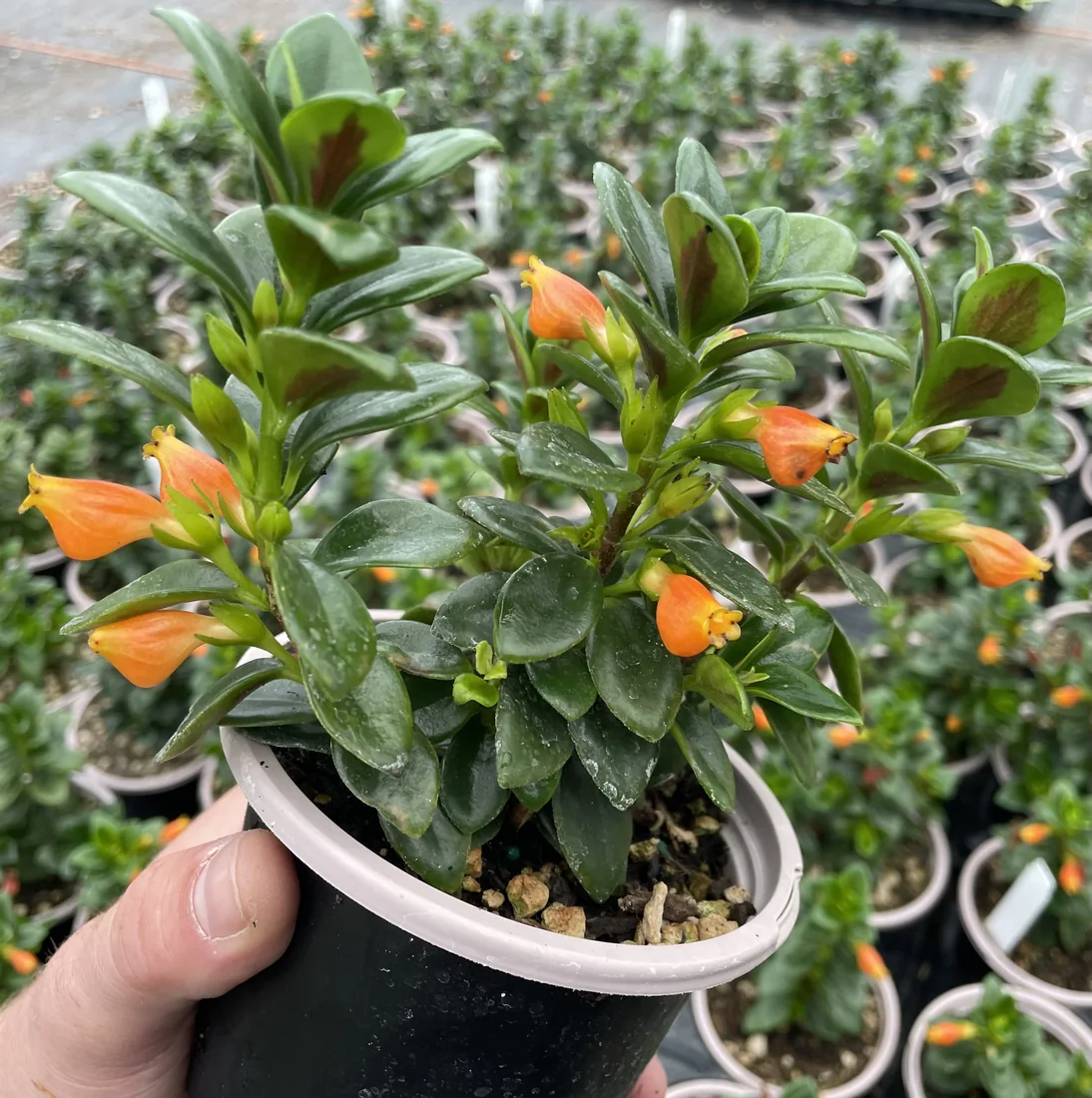
Choose this trailing plant for small orange flowers among glossy leaves. It suits a bright shelf with room for the tips to hang. Water when the upper mix begins to dry, and leave room for air around the canopy. NC State Extension’s goldfish plant profile gives its light and growing conditions.
Plants with long-lasting color
7. Flamingo flower
Anthurium andraeanum hybrids
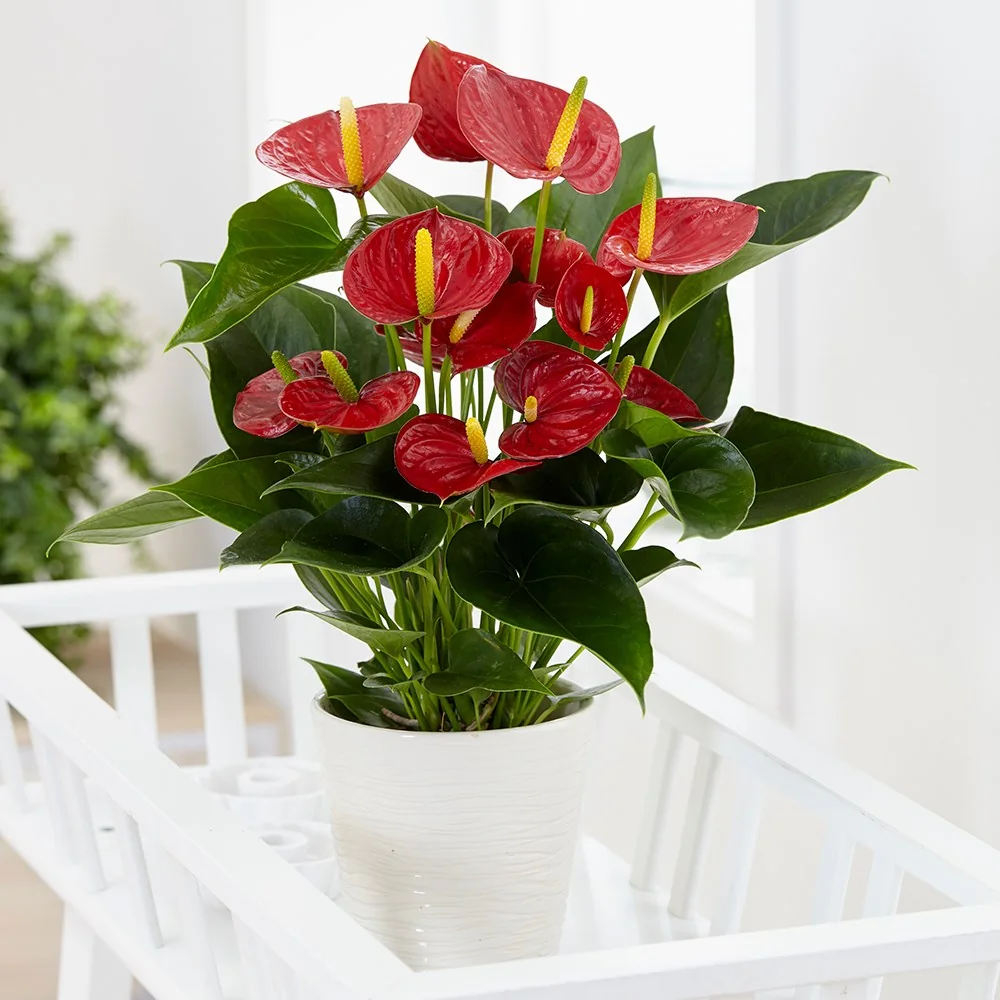
The glossy colored spathe surrounds a spike of tiny flowers. Give the plant bright indirect light and an airy mix, and let the top begin to dry between drinks. Cut old flower stems at the base as the spathes fade. For a home with a curious cat, check the exact plant against our cat-safe houseplants guide.
8. Peace lily
Spathiphyllum hybrids
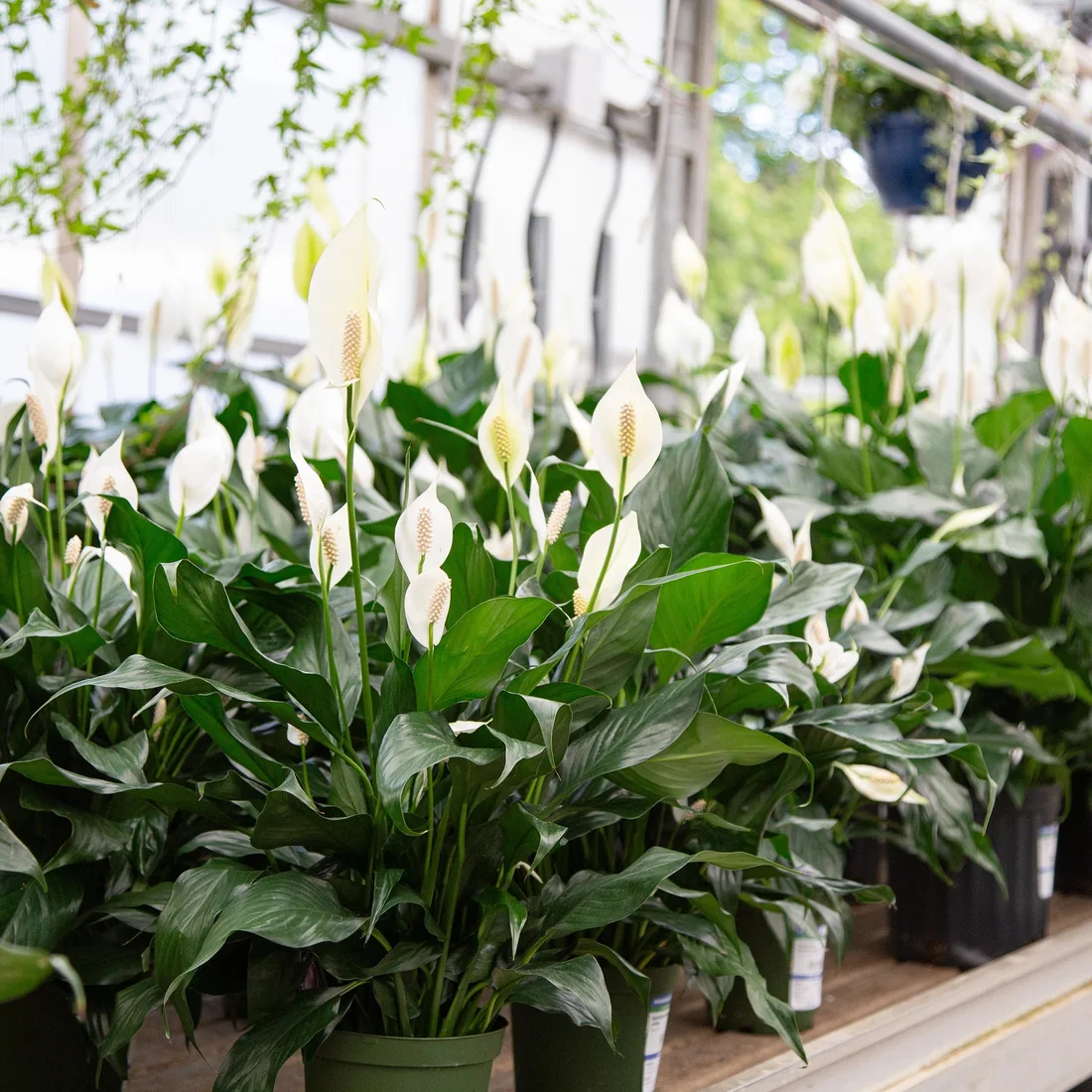
The white spathe stands out above deep green leaves. For flowering, place it in brighter filtered light than you would choose for foliage alone. Water when the upper mix begins to dry and empty the saucer. If the leaves look healthy and flowers are scarce, check the light before changing your fertilizer.
9. Guzmania bromeliad
Guzmania hybrids
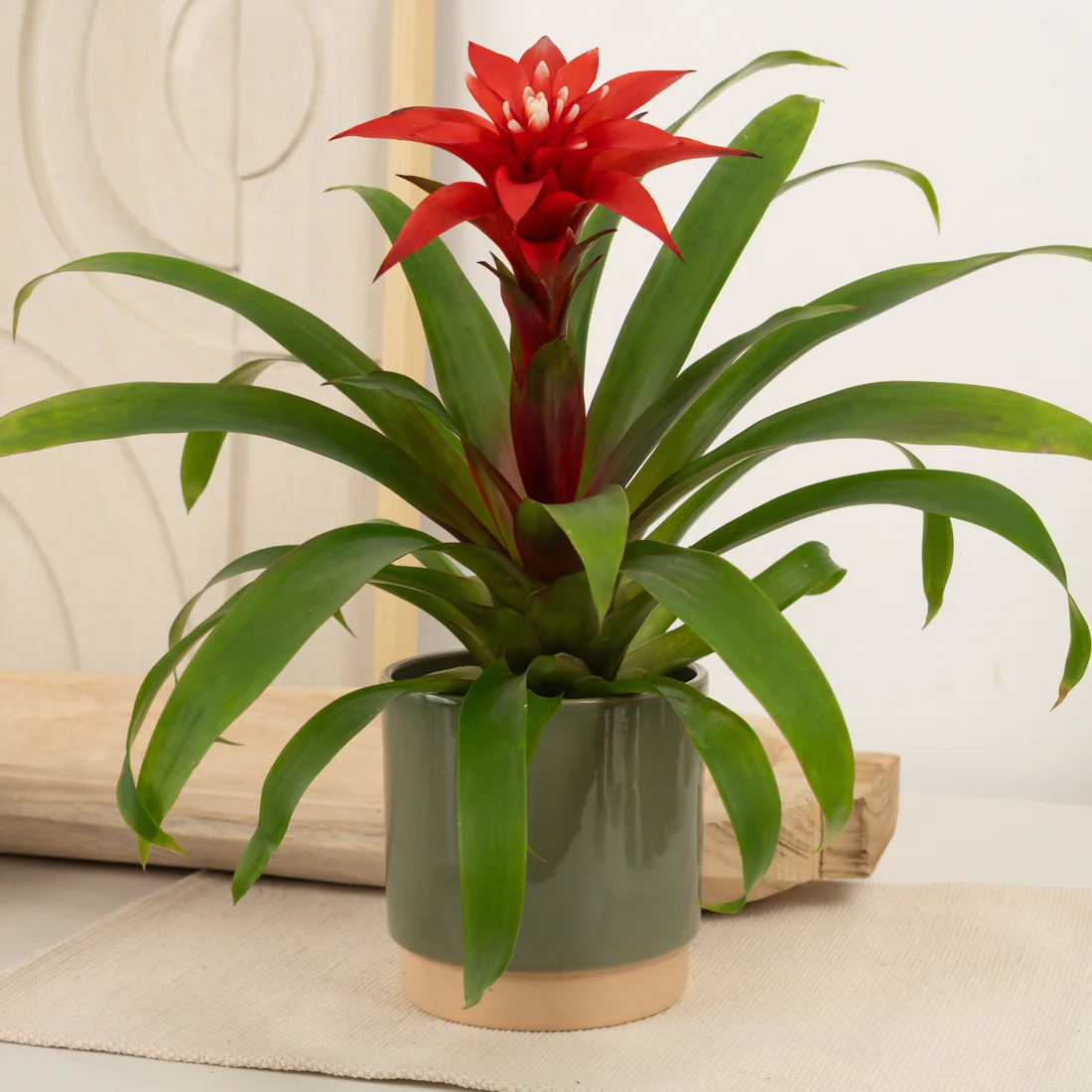
The red or orange color comes from bracts around the small flowers. Each rosette flowers once, and offsets can grow around its base as it declines. Give the plant filtered light and keep the potting mix airy. Buy one with a fresh central display if you want immediate color, then grow the offsets for a future display.
Seasonal bloomers and gift plants
10. Thanksgiving cactus
Schlumbergera truncata
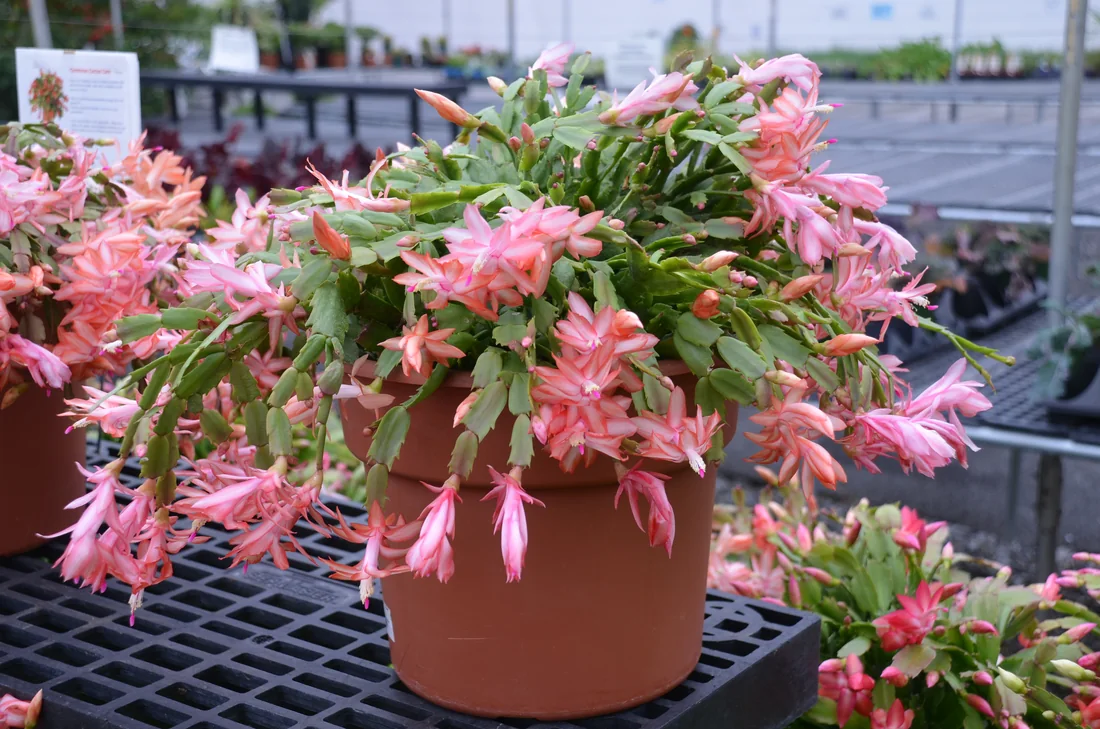
Its pointed stem segments distinguish it from many plants sold as Christmas cactus. Give it filtered light and avoid letting the mix stay dry for long while it is growing. Cool nights and long, uninterrupted darkness help set buds. The University of Minnesota Extension holiday cactus guide explains the timing.
11. Florist cyclamen
Cyclamen persicum
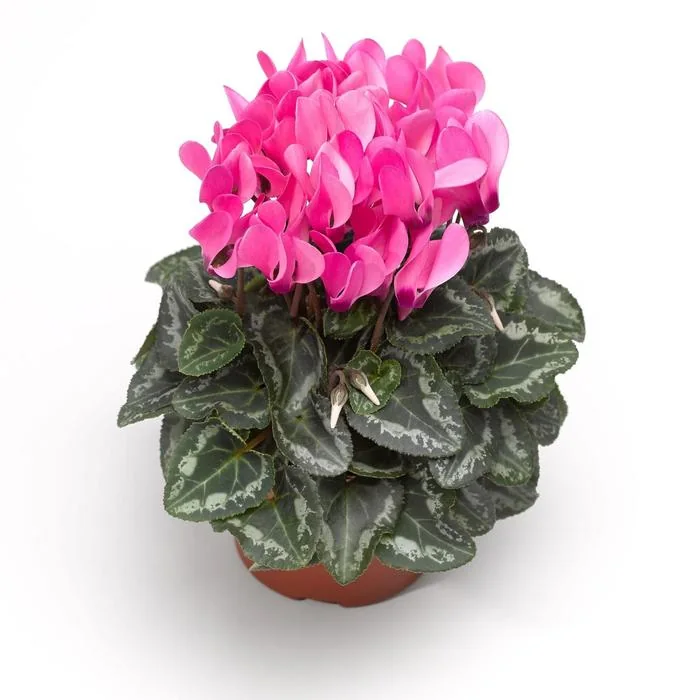
Choose it for cool-season flowers above a compact canopy. Put it in a cool, bright room away from heaters. Water around the edge of the pot and let it drain. If the foliage dies back after flowering, reduce watering as it goes dormant and watch for new growth before resuming regular care.
12. Florist kalanchoe
Kalanchoe blossfeldiana
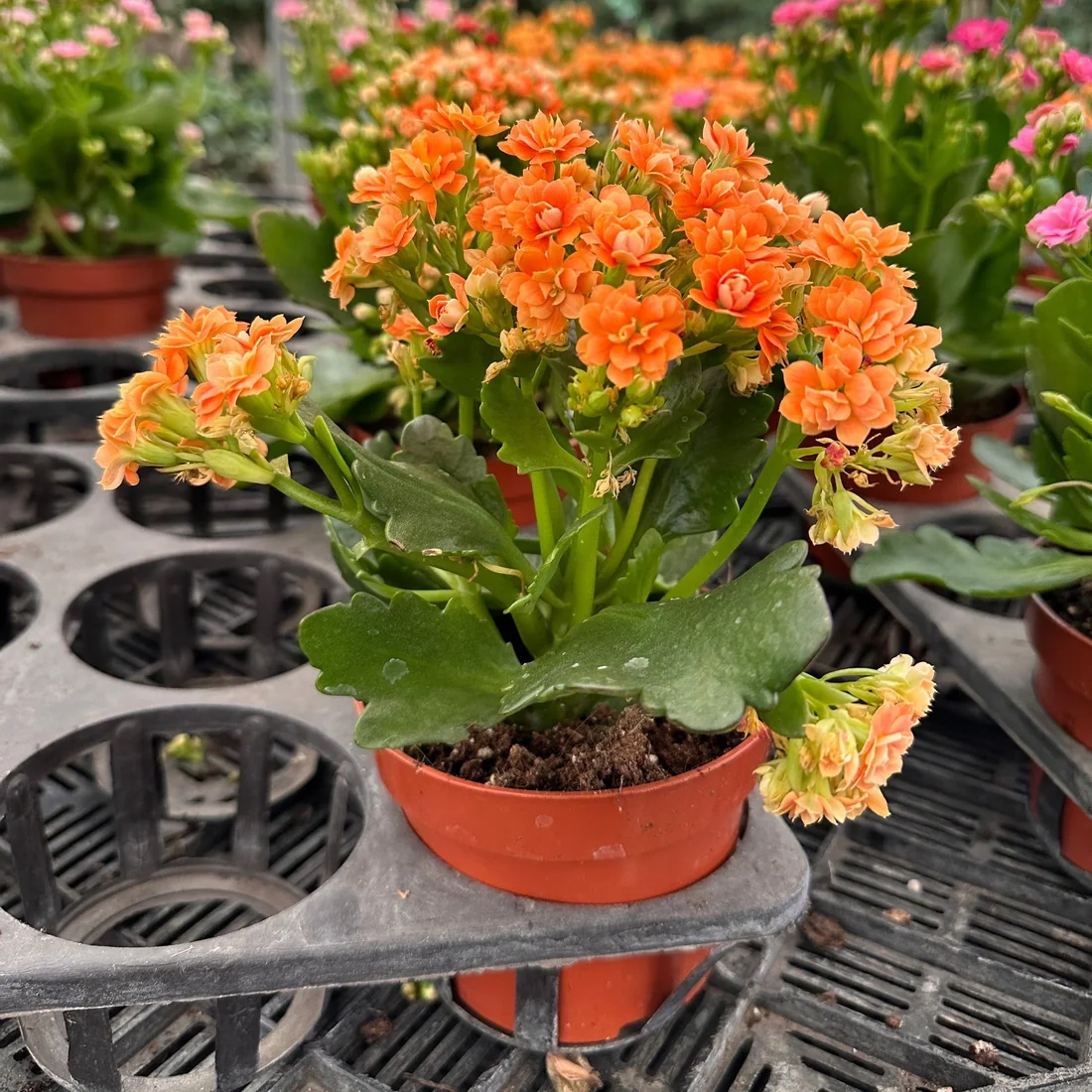
The dense flower clusters sit above fleshy leaves, and the plant can wait for the mix to dry between drinks. Give it a bright window. To bloom again it needs a period of long, uninterrupted nights, which can be difficult in a room with lights on after dark.
13. Rieger begonia
Begonia × hiemalis
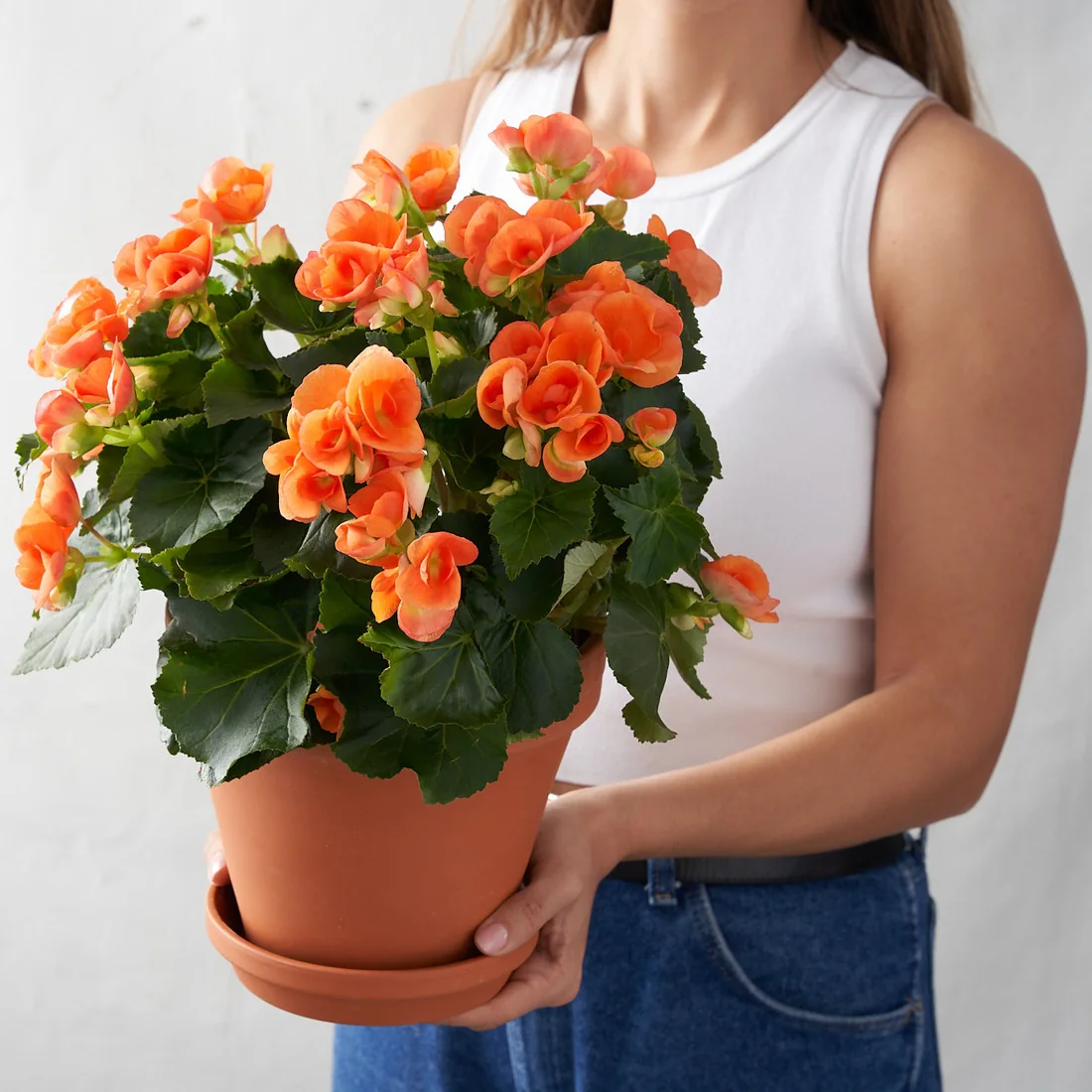
Choose a plant with several unopened buds for a longer display at home. Give it bright filtered light and check the soil regularly so it never sits wet. Treat it as a seasonal display if you want predictable color. The University of Georgia Extension gift-plant guide explains why care and reblooming needs differ among gift plants.
Help the next round of flowers along
14. Give the leaves enough light
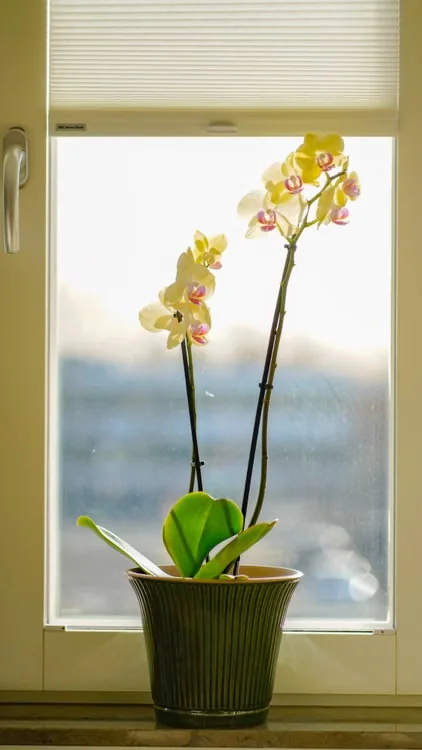
Put your plant where light reaches most of the leaves. A curtain can soften direct sun, and an open shelf beside a window usually receives more daylight than the back of a deep bookcase. Move the pot gradually if the plant was previously in shade. Watch the next growth before deciding whether the change helped.
15. Water for the plant and its mix
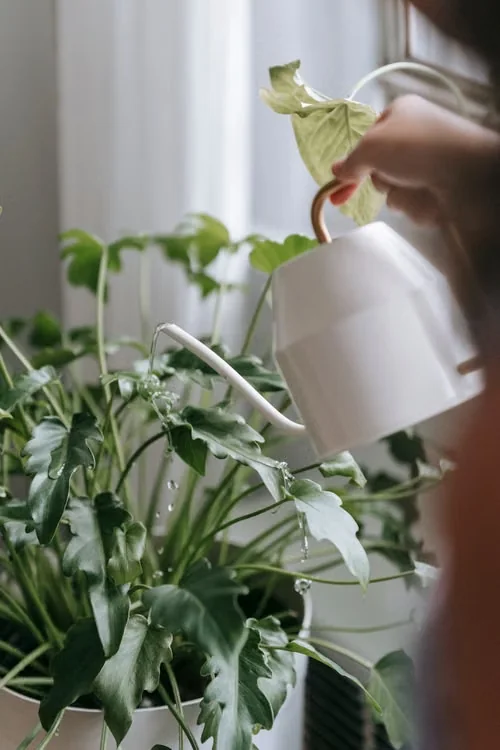
Bark around an orchid dries differently from the fine mix around an African violet. Check the container you have, then water when the mix reaches the level of dryness that plant needs. Let water drain before returning the pot to its cover. That small habit is also useful for the low-maintenance indoor plants guide picks.
16. Keep the leaves and roots after flowering
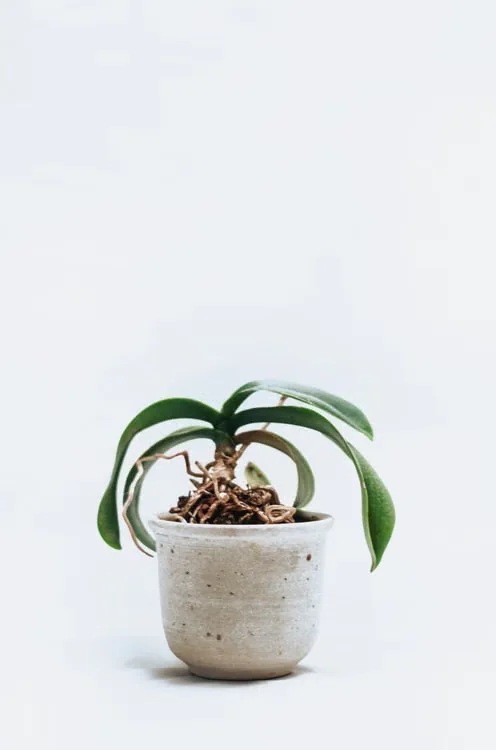
Once a display ends, check the plant before removing stems. Keep healthy foliage, and leave Hoya flower spurs in place. A moth orchid can grow leaves and roots between displays. A holiday cactus needs a seasonal cue. Give the plant time to do the next part of its growth cycle.
If the flower display has ended and a corner stays dim for most of the day, move the plant before adding more fertilizer. For more ways to use greenery around the home, see our guide to indoor plants.