



Quick Answer
For a small shelf or windowsill, start with ripple peperomia, a compact haworthia or a miniature African violet. Choose Chinese money plant when you have room for its round leaf canopy. Check mature spread and light before buying: a tiny nursery pot does not mean the plant will stay tiny.
A good small indoor plant fits the space after it grows, leaves room to water it, and receives enough light in that exact spot. Measure the clear width and depth of your shelf before choosing a pot. A bookcase opening can be tall enough for a plant while still being too shallow for its leaves.
The choices below include naturally compact plants and a few that stay tidy with pinching or division. That distinction matters if you want a display that takes little work. For choosing plants elsewhere in the home, our guide to indoor plants starts with room conditions and placement.
Choose a Plant That Fits Your Space
The habit column tells you what will need space over time. Light descriptions are starting points, not a substitute for checking the position through a normal day. The University of Minnesota Extension light guide explains why plants in lower light grow and use water differently.
Small indoor plants compared by growth habit and light
Scroll sideways to compare all columns.
| Plant | Growth to plan for | Suitable light |
|---|---|---|
| Baby rubber plant | Compact cultivar; broader with age | Medium to bright indirect light |
| Ripple peperomia | Low rosette; offsets add width | Medium to bright indirect light |
| Watermelon peperomia | Low clump with outward leaf stalks | Bright indirect light |
| Chinese money plant | About 8–12 in tall and wide | Bright indirect light |
| Cooper's haworthia | Small succulent rosette | Bright filtered light |
| Echeveria | Low rosette; clumps as offsets grow | Very bright light with suitable sun |
| Bird's nest snake plant | Dwarf rosette rather than tall blades | Medium to bright indirect light |
| African violet | Choose a miniature or semi-miniature cultivar | Bright filtered light |
| Nerve plant | Low-growing, with spreading stems | Medium to bright indirect light |
| Polka dot plant | Compact with regular pinching | Bright filtered light |
| Earth star | Flat, spreading rosette | Bright filtered light |
| Norfolk friendship plant | Low clump; pinch to retain shape | Bright indirect light |
| Small air plant | Small rosette; offsets form clusters | Bright filtered light with airflow |
| Baby's tears | Low mat; trim or divide to limit spread | Bright indirect light |
| Aluminum plant | Compact with tip pruning | Bright indirect light |
15 Small Indoor Plants for Shelves and Windowsills
1. Baby rubber plant
Peperomia obtusifolia
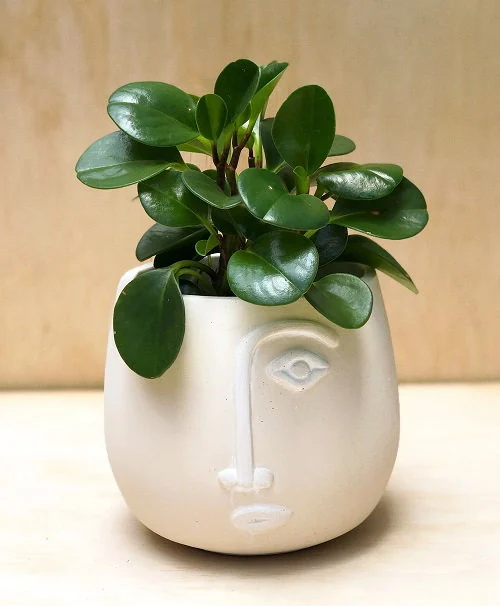
Light and size: Medium to bright indirect light. Compact cultivar; broader with age.
Thick, rounded leaves give this plant enough presence to sit alone beside a stack of books. Choose a compact cultivar and ask about its mature spread; a small nursery specimen of the ordinary species can eventually become a much wider plant.
Let the upper mix dry before watering, then drain the pot fully. An oversized cover pot can hide water around the roots, so lift the nursery pot out to check it. Give the leaves room beyond the shelf edge rather than pressing them against a wall.
Put it on a bright side table where the rounded silhouette is visible from your chair. Do not confuse it with the much larger Ficus elastica, also sold as a rubber plant.
2. Ripple peperomia
Peperomia caperata
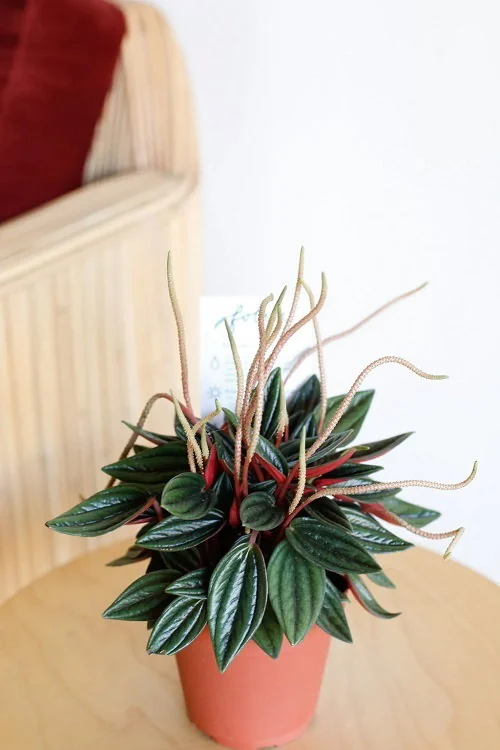
Light and size: Medium to bright indirect light. Low rosette; offsets add width.
Deeply folded leaves bring texture to a narrow shelf without a tall canopy. Green, silver and red-toned cultivars offer different effects; the pictured Rosso type has pointed leaves and red undersides. This is a useful alternative when a tiny succulent would look lost among larger objects.
Keep the crown above wet mix and use a pot that drains. Allow some drying at the surface, but avoid letting the whole root ball become bone dry for prolonged periods. NC State describes ripple peperomia as a low-growing plant suited to filtered indoor light.
A low dish-shaped outer cover works visually, provided the inner pot has enough root depth and drainage. Leave space around the leaves so you can inspect the mix.
3. Watermelon peperomia
Peperomia argyraea
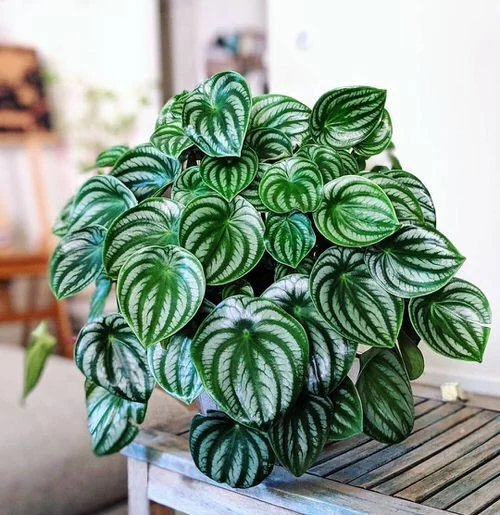
Light and size: Bright indirect light. Low clump with outward leaf stalks.
Silver stripes make each leaf a small focal point. Its height is modest, but the long leaf stalks spread sideways, so measure the whole canopy rather than just the container. It suits a console or broad windowsill better than a shelf crowded with tightly packed books.
Water after the surface begins to dry and avoid a permanently wet root ball. Rotate the pot as needed for even growth. NC State lists it as a compact desktop plant and notes its sensitivity to both wet soil and excessive drying.
Pair the patterned foliage with a plain planter. A heavily patterned pot competes with the leaves and makes a small arrangement feel busier.
4. Chinese money plant
Pilea peperomioides
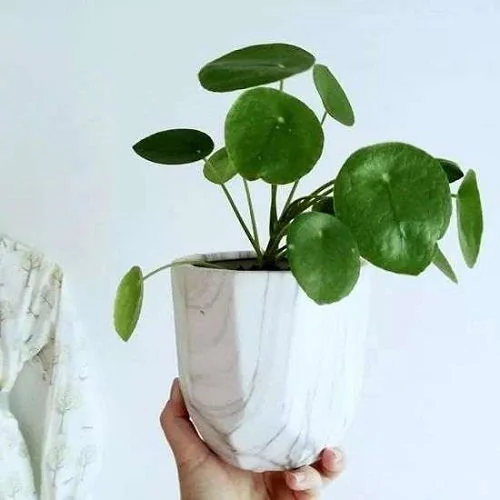
Light and size: Bright indirect light. About 8–12 in tall and wide.
Round leaves held on slender stalks create an open shape that works well on a small table. The mature plant needs breathing room on all sides. NC State gives a typical height and spread of 8–12 inches, so allow roughly a foot of clear canopy space.
Keep the mix well drained and check moisture before watering. Offsets can fill the container over time; separate them when suitable if you want to preserve one clear silhouette. Weak, stretched stems are a reason to reassess light, not to add fertilizer.
Use one plant as the center of a small vignette with a lower object beside it. It is different from pothos and money tree, despite their overlapping common names.
5. Cooper's haworthia
Haworthia cooperi
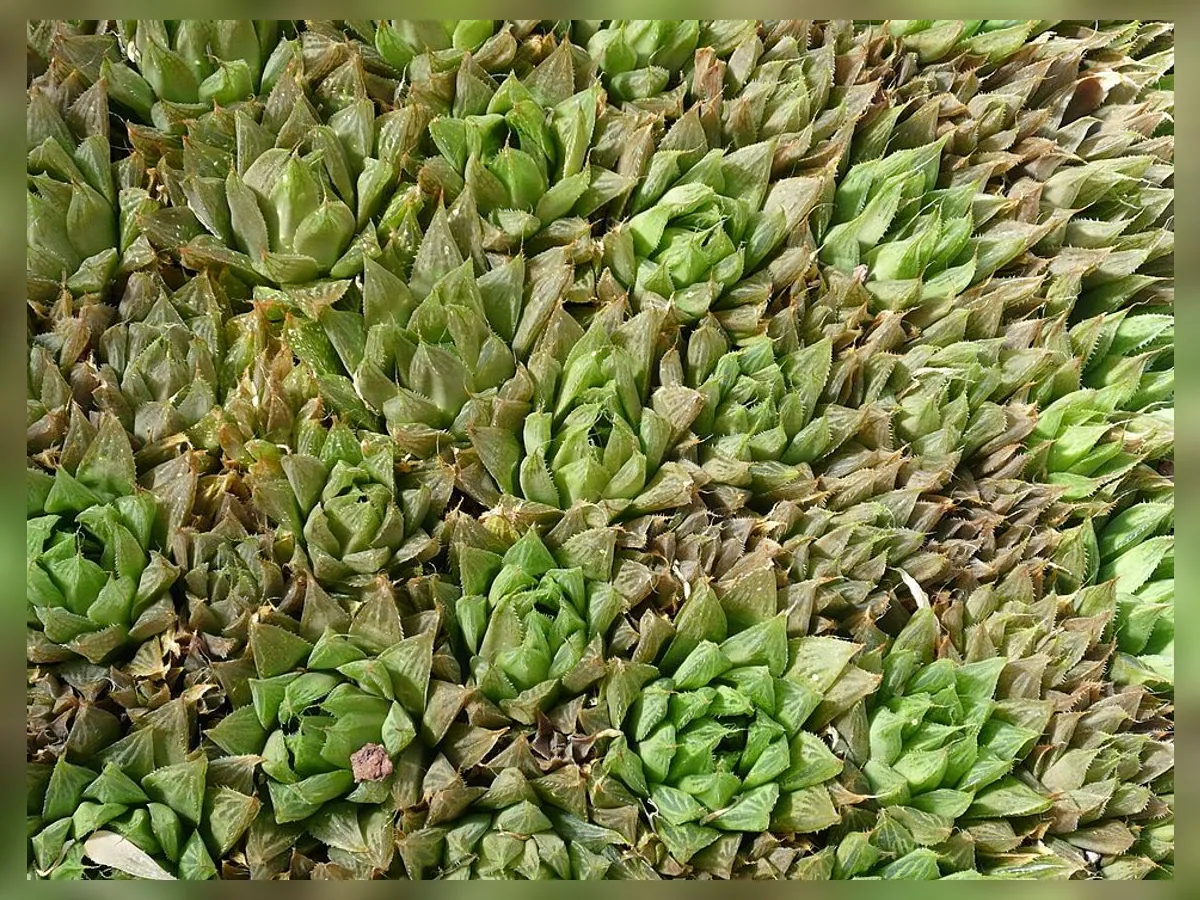
Light and size: Bright filtered light. Small succulent rosette.
The rounded, translucent leaf tips reward a close look, making this a good plant for a windowsill or a small table you pass often. It stays lower than an upright snake plant, and offsets gradually form a cluster rather than a large leafy canopy.
Use a freely draining succulent mix and let it dry before watering again. Protect it from a sudden move into fierce afternoon sun. A bright spot is still important; placing a succulent on a dark bookcase because it is small is a common mismatch.
Choose a simple pot with a drainage hole and keep the rosette above the rim. Never use a sealed decorative jar as its permanent growing container.
6. Echeveria
Echeveria species and compact cultivars
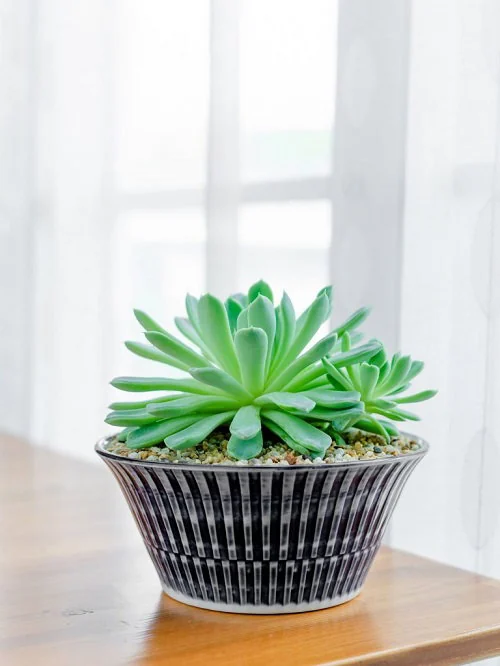
Light and size: Very bright light with suitable sun. Low rosette; clumps as offsets grow.
A pale rosette gives a sunny sill a sculptural focal point. Echeveria is compact when its growing conditions suit it, but weak light can stretch the stem and open the tight leaf arrangement. It is a windowsill choice rather than an all-purpose plant for the middle of a room.
Use a gritty, draining mix, let it dry between waterings and protect the leaf coating from repeated handling. Acclimate gradually to stronger light. Water the mix rather than leaving droplets collected in the center of the rosette.
Repeat two small pots along a bright ledge if both receive suitable light. Do not bury the lower leaves in gravel simply to make the arrangement look finished.
7. Bird's nest snake plant
Dracaena trifasciata 'Hahnii'
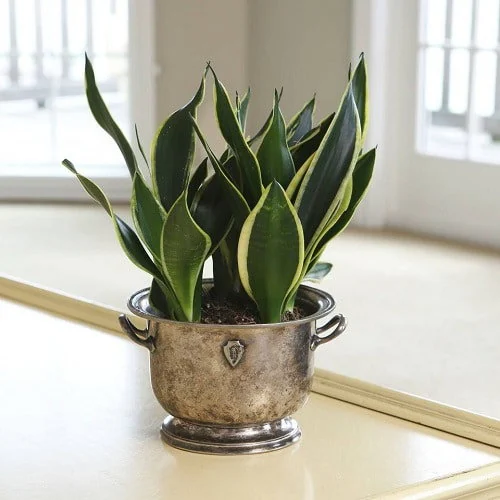
Light and size: Medium to bright indirect light. Dwarf rosette rather than tall blades.
Choose the named Hahnii type when you want the structure of snake plant without tall leaves. A juvenile plant of a tall variety is not an equivalent substitute. Its short, layered rosette fits a side table, although offsets can eventually fill a wider pot.
Let the mix dry well between waterings, especially in cooler or dimmer conditions. Keep water out of the leaf cup and use a draining container. Lower-light tolerance does not mean it can live indefinitely in darkness.
Place it beyond the reach of pets that chew foliage. Our snake plant placement guide explains positioning and the difference between a useful location and an obstructive one.
8. African violet
Streptocarpus ionanthus hybrids
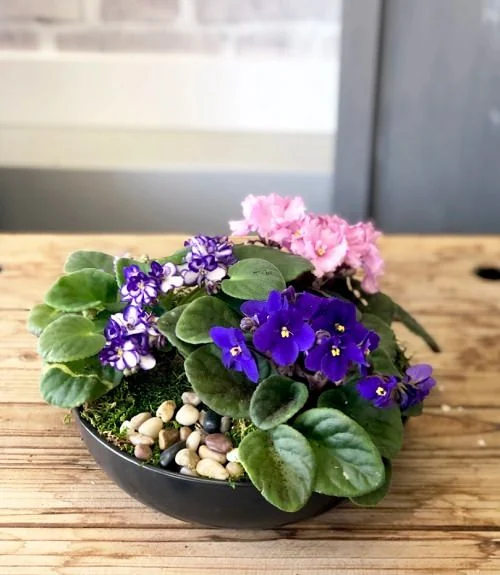
Light and size: Bright filtered light. Choose a miniature or semi-miniature cultivar.
An African violet adds flowers without needing the floor space of a flowering shrub. Cultivar choice matters: NC State distinguishes miniature, semi-miniature, standard and larger sizes. A miniature selection is the better starting point for a genuinely small display.
Keep the crown clear, provide drainage and avoid leaving the roots standing in water. Use room-temperature water and a method that does not repeatedly wet the fuzzy leaves. Flowering depends on suitable light and care, so do not buy it for a windowless shelf.
A low planter makes the rosette easy to see from above. Leave the flowers clear of curtains and avoid wedging the plant against cold glass.
9. Nerve plant
Fittonia albivenis
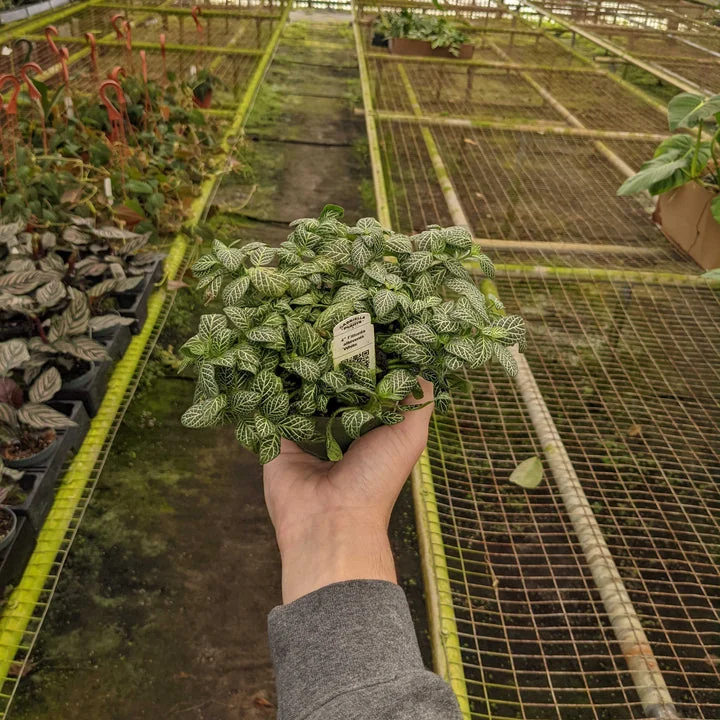
Light and size: Medium to bright indirect light. Low-growing, with spreading stems.
Fine white, pink or red veins create detail at close range. A low rosette-like appearance makes nerve plant useful on a bathroom shelf or in a suitable terrarium, but only where there is usable light. Its spreading habit needs more attention than the pot size suggests.
Keep the mix evenly moist without leaving it waterlogged, and protect it from direct hot sun and drying drafts. Pinch back suitable stems to keep the outline full. This is a better choice for someone who checks plants regularly than someone who frequently travels.
Choose one plant in a quiet-colored pot so the veining stays visible. Avoid putting it next to a radiator or an air-conditioning vent.
10. Polka dot plant
Hypoestes phyllostachya
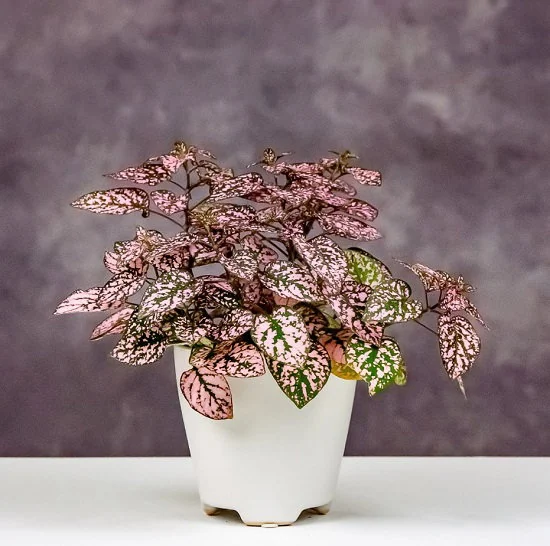
Light and size: Bright filtered light. Compact with regular pinching.
Pink or white speckled foliage gives a tiny arrangement the effect of a patterned cushion. This plant belongs in the maintained-small group: it can become leggy and needs pinching to retain a tidy shape. It is a good short-term tabletop accent when you enjoy tending new growth.
Provide bright filtered light and check moisture before the mix dries completely. NC State notes that insufficient light can fade the leaves and stretch the stems. Pinching helps the shape, but cannot compensate for an unsuitable position.
Use it to repeat an accent color already in the room. For a wider range of pink, silver and purple foliage, compare our colorful indoor plants.
11. Earth star
Cryptanthus bivittatus
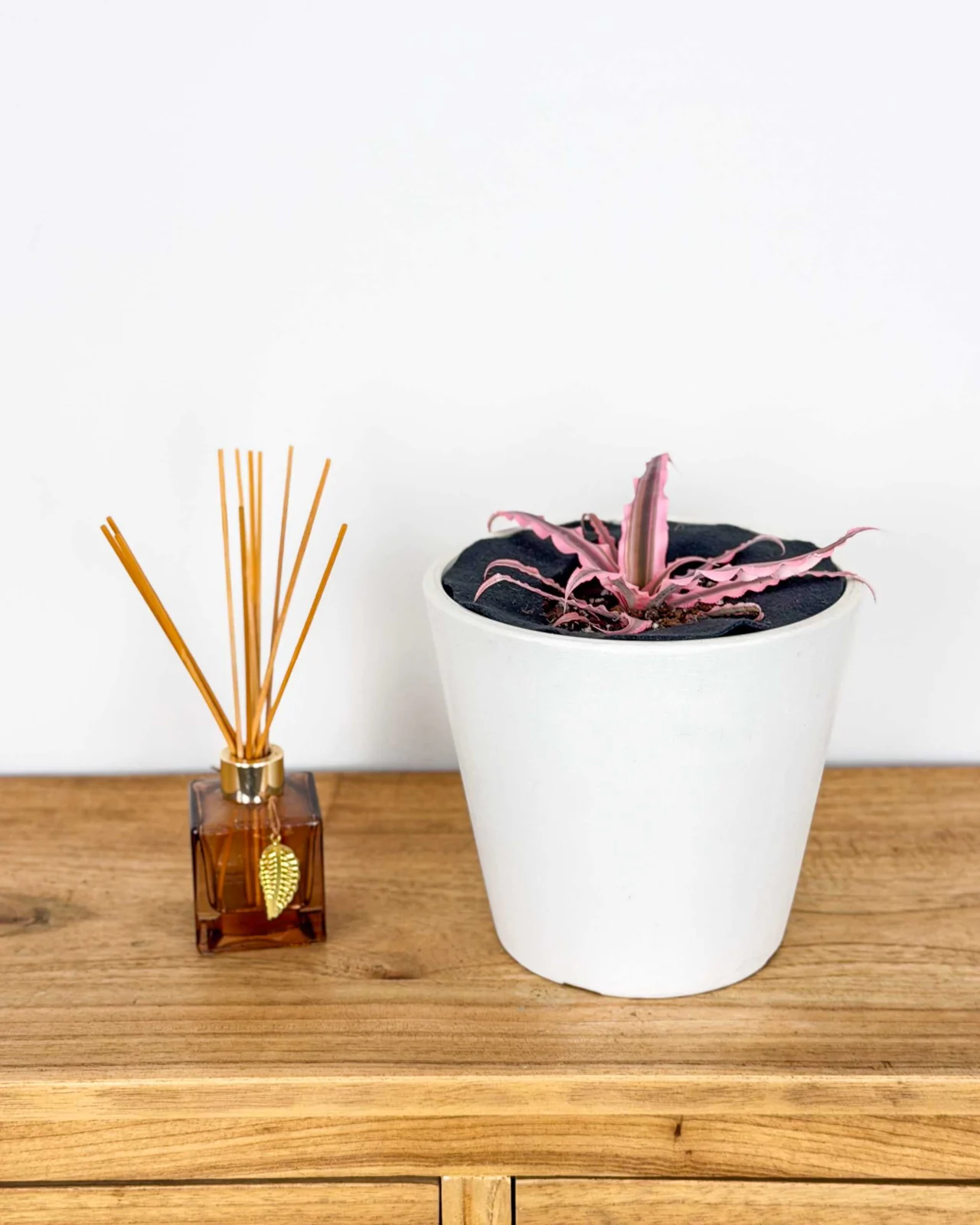
Light and size: Bright filtered light. Flat, spreading rosette.
A star-shaped rosette gives a low table or broad ledge a different silhouette from upright leafy plants. Pink and striped forms can look striking from above. Measure the leaf span and choose a position where the tips will not be knocked whenever you open the curtains.
Earth stars grow in a potting medium; they are not air plants. Water the root zone and let the surface begin drying before watering again. NC State explains that both excessive shade and strong sun can spoil the foliage color.
Keep it in its own pot so offsets can be managed separately. A glass vessel with no drainage makes moisture much harder to control.
12. Norfolk friendship plant
Pilea spruceana 'Norfolk'
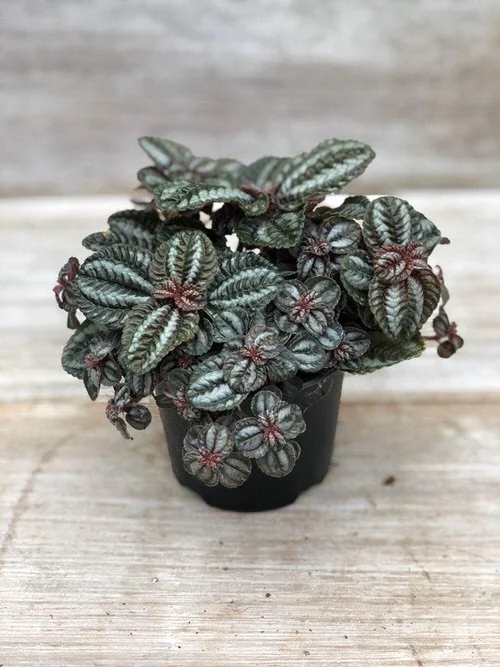
Light and size: Bright indirect light. Low clump; pinch to retain shape.
Textured bronze-green and silver foliage makes this a useful choice for a small display that needs depth rather than height. Look for the exact nursery label: friendship plant is a common name applied to more than one Pilea, with different leaf patterns and growth habits.
Give it warmth, a draining mix and protection from dry drafts. Pinch suitable growing tips if it begins to lose its compact shape. Inspect the center of a dense plant when checking moisture rather than assuming the pot is dry because the outer leaves look fine.
Place it where the leaf texture catches side light. A plain ceramic pot lets the foliage do the decorative work.
13. Small air plant
Tillandsia ionantha types
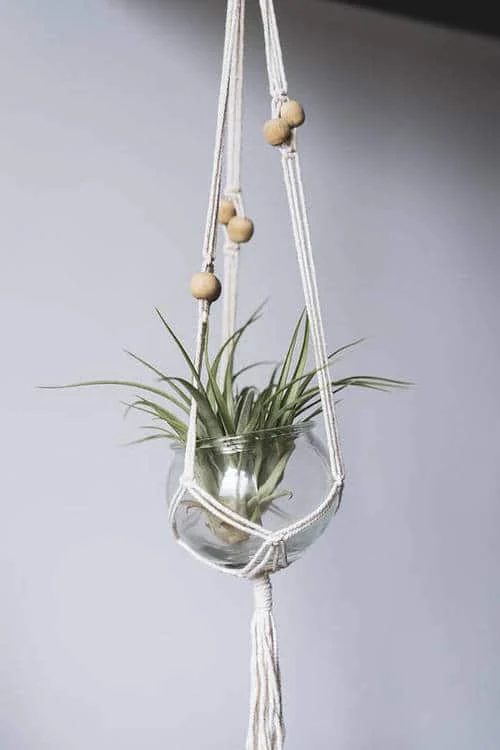
Light and size: Bright filtered light with airflow. Small rosette; offsets form clusters.
A small air plant can sit in an open holder without a conventional soil-filled pot. Choose a named compact type rather than assuming every Tillandsia stays tiny. Its sculptural leaves work well on a bright shelf where you can lift the plant out for watering.
Air plants still need water. Follow the species-specific soaking or thorough wetting routine recommended by the grower, then let the plant drain and dry with good airflow. Do not leave the base sitting in water inside a shell or closed glass ornament.
An open wire or ceramic holder is easier to maintain than a glued arrangement. Leave access for removal without snapping the leaves.
14. Baby's tears
Soleirolia soleirolii
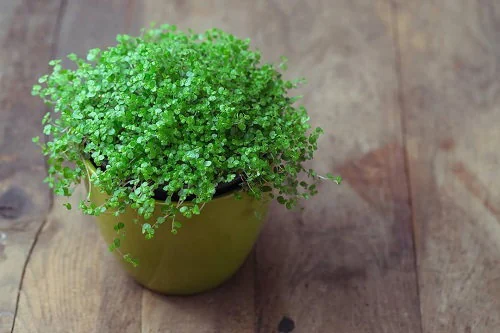
Light and size: Bright indirect light. Low mat; trim or divide to limit spread.
Tiny leaves form a soft cushion that can spill over a small pot. This is not a plant that remains permanently confined on its own. NC State describes its spreading habit and the need for pruning in containers. Choose it when you want a soft edge and accept regular tidying.
Provide steady moisture, drainage and protection from scorching sun. A small pot can dry rapidly, so check it more often than a succulent. In a terrarium, monitor its spread so it does not crowd neighboring plants.
Keep it on a washable tray or ledge with room to trim trailing growth. It is less suited to an inaccessible high shelf.
15. Aluminum plant
Pilea cadierei
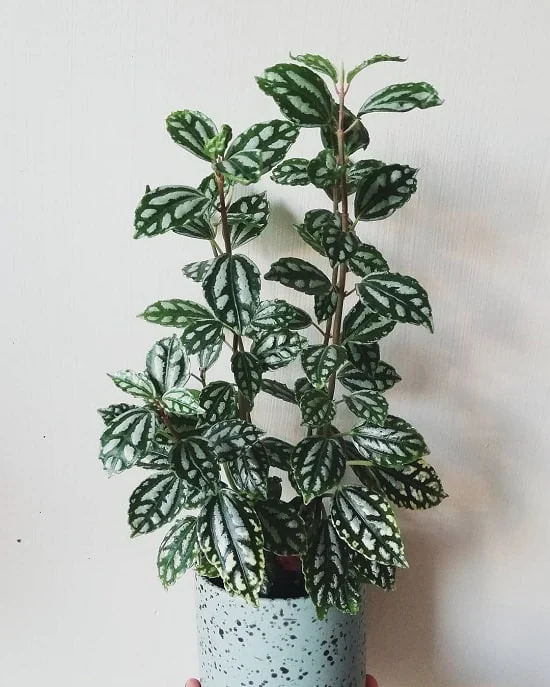
Light and size: Bright indirect light. Compact with tip pruning.
Silver patches brighten the leaves without relying on flowers. This upright, bushy plant is useful when you want a little more height than a succulent but still need a tabletop scale. A dwarf cultivar is worth seeking for a narrow display.
Pinch growing tips to keep the plant bushy and provide a moist but freely draining mix. NC State recommends bright indirect light and pinching for a compact shape. Older, bare stems may be better renewed through cuttings than hidden behind a larger pot.
Set it against a plain wall so the silver pattern is easy to read. Keep the foliage clear of nearby books to allow inspection and air movement.
Make a Small Plant Display Easy to Live With
Measure the leaves, pot and watering space
Measure the usable shelf depth with books, lamps and other objects in place. Include the saucer, the leaf span and enough clearance to lift the plant out. A six-inch pot can hold a plant whose leaves extend much farther. Keep foliage away from hinges, curtain tracks and the edge of a busy work surface.
For example, on a shallow shelf, a compact rosette may be easier to manage than Chinese money plant with outward-facing leaf stalks. If the shelf is only just deep enough for the saucer, choose another location. Do not make a precarious display appear to fit by letting the pot overhang.
Choose the position before the planter
A bright windowsill and a bookcase across the room are different growing environments. Check the light at leaf level with curtains and blinds in their normal position. Move a light-hungry succulent to a suitable brighter place if its new growth stretches; keeping it dry will not replace missing light.
For a shelf with no useful daylight, plan an appropriate grow light and timer before buying. Our windowless-room plant guide covers that setup. If the plant will sit beside your keyboard, the office plant guide also covers spills, ventilation and weekend care.
Use drainage and water each pot separately
Keep a draining inner pot inside a decorative cover, or use a planter with a drainage hole and a protective saucer. Empty collected water after watering. A layer of stones in a sealed pot does not provide an exit for excess water.
Small containers can dry quickly, but a low-light plant may still stay wet for a long time. Check the mix and the weight of the pot instead of watering every plant on the same day. A nerve plant and haworthia should not share one watering routine simply because their pots are equally small. The University of Maryland watering guide explains why need matters more than the calendar.
Keep plants compact without starving their roots
Start with a suitable species or cultivar. Rotate as needed for balanced growth, pinch plants that respond well to it and separate offsets when appropriate. Do not use chronic thirst or a badly undersized pot as the main way to control size.
Repot when root growth and drying behavior show a need, choosing an appropriate next size rather than a much larger container. The University of Maryland repotting guide covers container and mix choices. A single-leaf Hoya kerrii sold as a heart may remain a leaf if it lacks suitable stem tissue; it is not a reliable substitute for a permanently compact mature vine.
Group pots by care needs, then edit the display
Two or three separate pots are easier to care for than a mixed planter containing incompatible plants. Keep a moisture-loving nerve plant separate from a dry-growing succulent even if they share a tray. Use one repeating pot color, then vary leaf shape and height.
Leave enough bare surface that each plant has a visible outline. If trailing stems are the main feature you want, our hanging plant guide offers choices that have room to cascade. For a small room, one compact plant beside a lamp can be more practical than filling every available ledge.
Check the label when pets can reach the display
Common names can hide important differences. The ASPCA lists baby rubber plant, African violet and nerve plant as non-toxic to cats and dogs. A bird's nest snake plant is not in that group. Check the exact scientific name, discourage chewing and keep fertilizers and loose decorative stones out of reach.
For a shelf or table your cat can reach, use the cat-safe houseplants guide to compare non-toxic options by light and check the exact name on the tag.