



Quick Answer
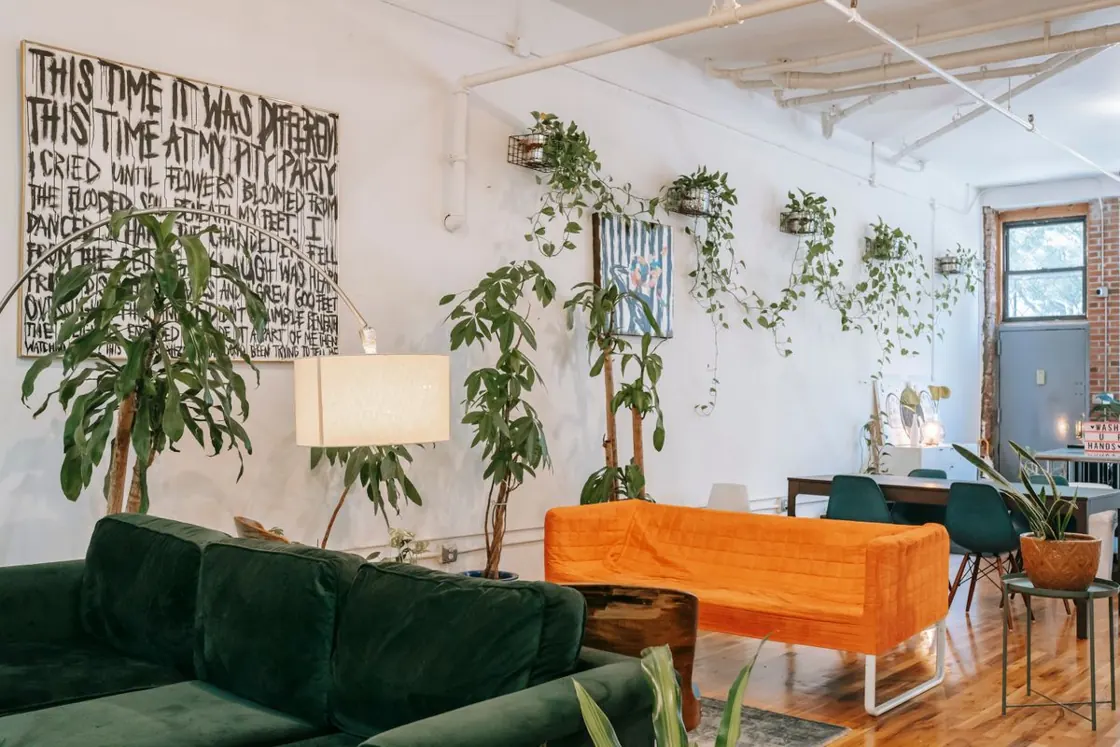
Start with one focal plant or one small grouping. Look at it from the doorway and from the seat you use most. If the foliage blocks a route, a lamp or someone’s view, move the plant before adding another one.
Pick a composition for the room
Pick a composition for the room
Scroll sideways to compare all columns.
| Placement | What works here | What to check first |
|---|---|---|
| Sofa end | One taller plant can soften the edge of the seating area | Leave room for the curtain and the walk past the sofa |
| Reading corner | A plant beside the chair can frame the seat | Keep the lamp and side table usable |
| Console or table | A compact arrangement leaves space for everyday objects | Test the view across the table and access to the surface |
| Bathroom vanity | A small plant brings foliage to a hard surface | Check daylight and keep the pot clear of splashes |
| Hanging basket | A plant by the window without using a table | The curtain, the walking route and watering access |
| Desk or dresser | One compact plant at the brighter end | Monitor or drawer clearance |
1. Anchor one end of a sofa with a floor plant
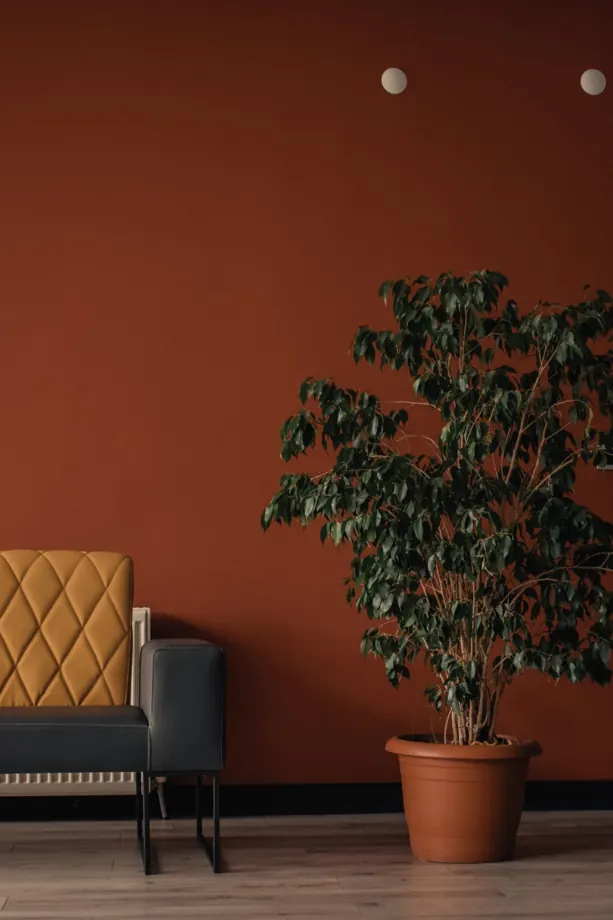
Look at the sofa from the doorway and choose the end with good light and spare floor area. Set a tall plant just outside the arm. An upright silhouette keeps the greenery visible from across the room and leaves more usable space than a specimen whose leaves fan into the seat.
Check the leaf tips rather than the base of the planter. Draw the curtain and walk past the sofa from both directions. If the leaves catch, move the plant back toward the wall or choose a slimmer shape. Our large indoor plants guide compares floor plants by room fit.
Credit: Beyzanur Gazioğlu Balcı.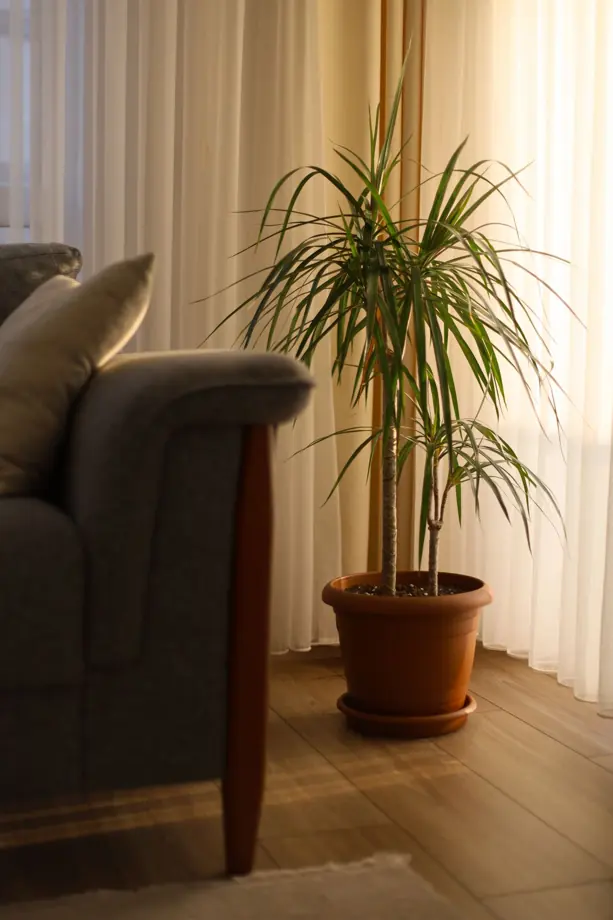
2. Use plants to frame a reading chair
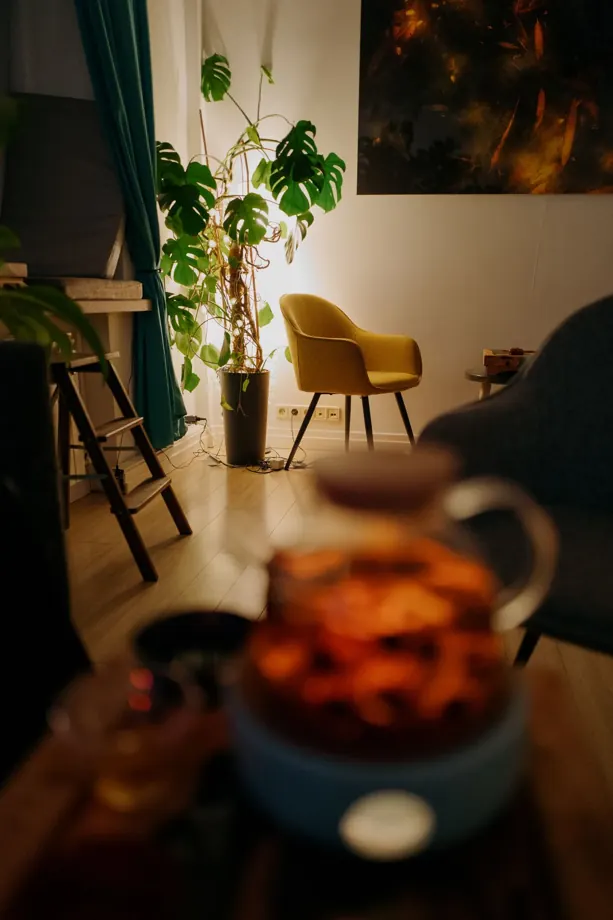
Put the taller plant behind or beside the chair, and keep a shorter plant near the front only if the floor stays clear. Sit down and check that the leaves stay out of the lamp’s beam and leave a clear reach to the table.
This works well when the chair and plant share a bright spot. If the chair belongs against a darker wall, let the plant sit nearer the window and use its silhouette to frame the corner from a distance. Look at the low-light plant guide before choosing a plant for a dimmer spot.
Credit: Ksenia Chernaya.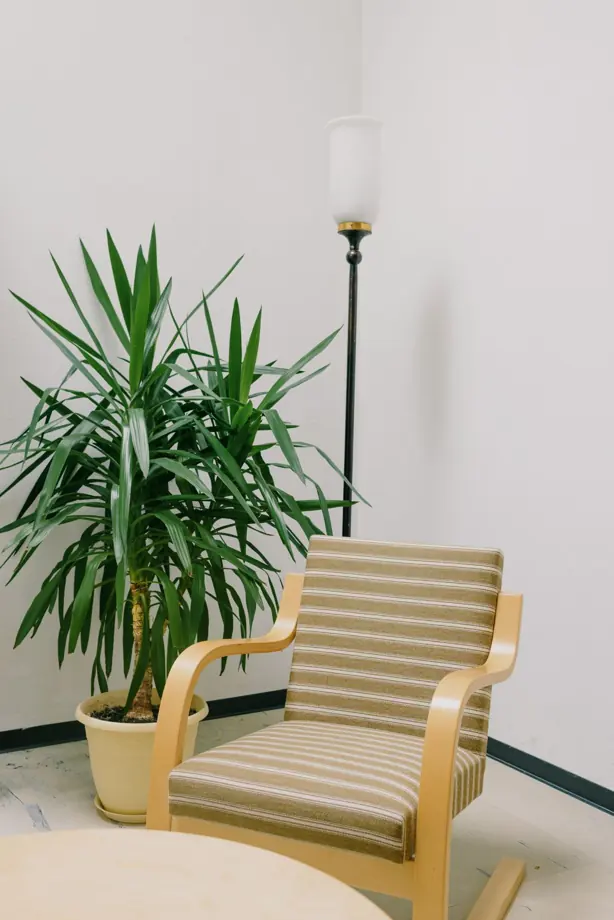
3. Use a compact plant to balance a side table
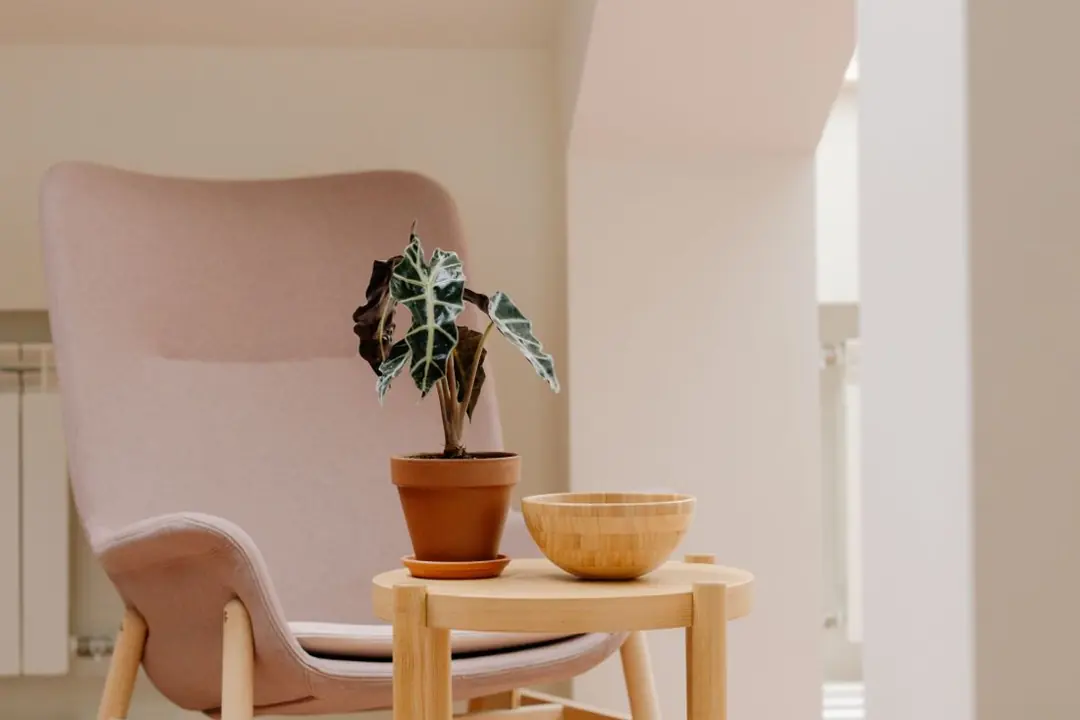
Put the pot to one side of a sofa table or side table. Keep the main part of the surface open for a glass, book or remote. If you already have a large lamp, choose a lower plant whose leaves stay below the shade.
Match the scale to the tabletop. A narrow table can feel crowded by a spreading plant even when the pot is small. If the surface is in frequent use, choose a stable container with a waterproof base and leave a gap around it so a hand can reach past.
Credit: Hanna Pad.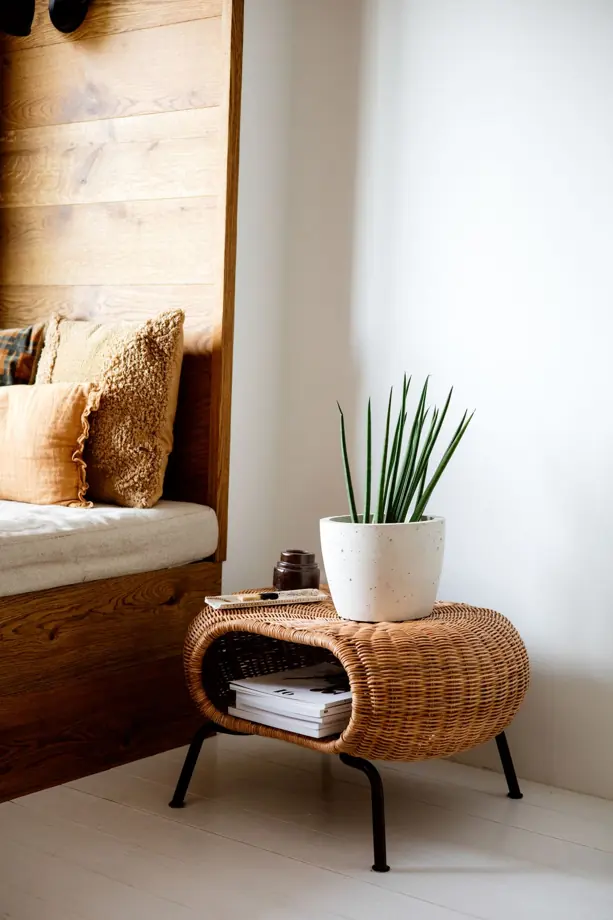
4. Put one plant beside a bathroom mirror
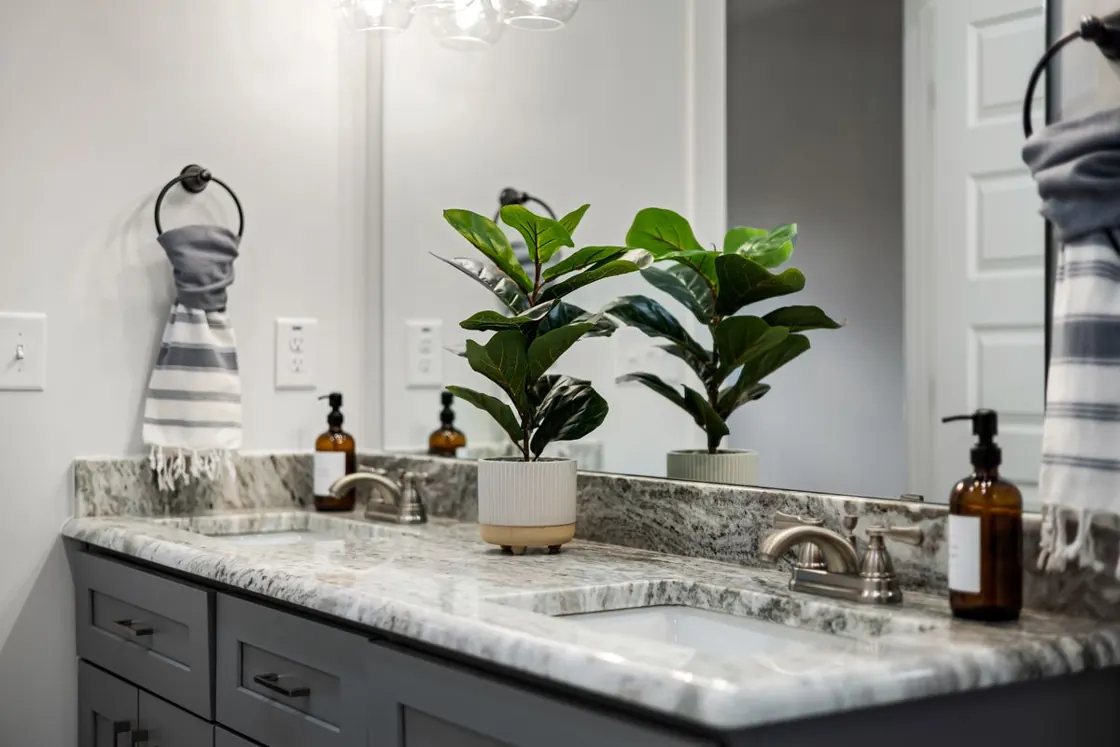
Place a compact plant near the outer end of a vanity with usable daylight. The mirror can repeat the foliage in the composition, so a single plant may be enough. Move it away from the tap if wet hands or soap routinely splash that spot.
Check how much light reaches the actual plant, even if the mirror makes the room look bright. The bathroom plants guide matches species to light and humidity. If the bathroom has no daylight, see our guide to plants in windowless rooms before assigning that spot to a live plant.
Credit: Chris L.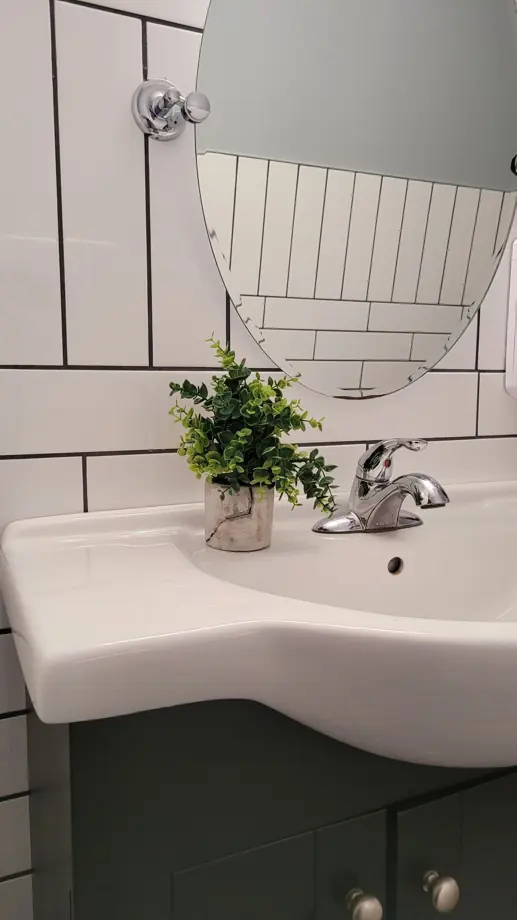
5. Leave a landing spot on an entry console
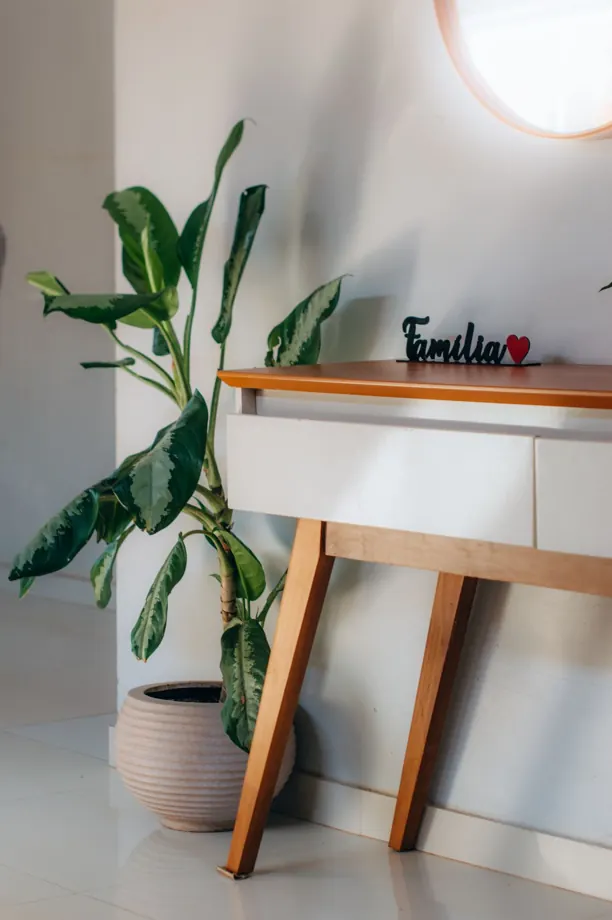
Choose a low or narrow plant for one end of the console and leave a place for keys and bags. If the wall already has art or a mirror, give the plant a loose visual relationship to its edge. Start with one pot and see whether anything feels missing.
Check the door swing and walk past carrying a bag. Shift the pot toward the wall if you brush the leaves. If the console receives little daylight, a smaller plant that can move to a brighter spot may work better than a large permanent arrangement.
Credit: Alex Tyson.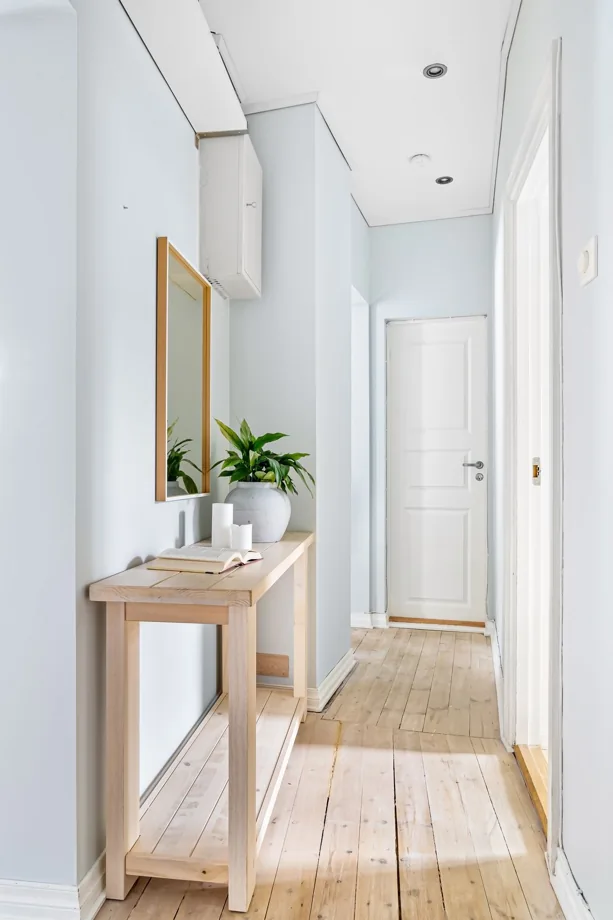
6. Keep a small room open with one plant silhouette
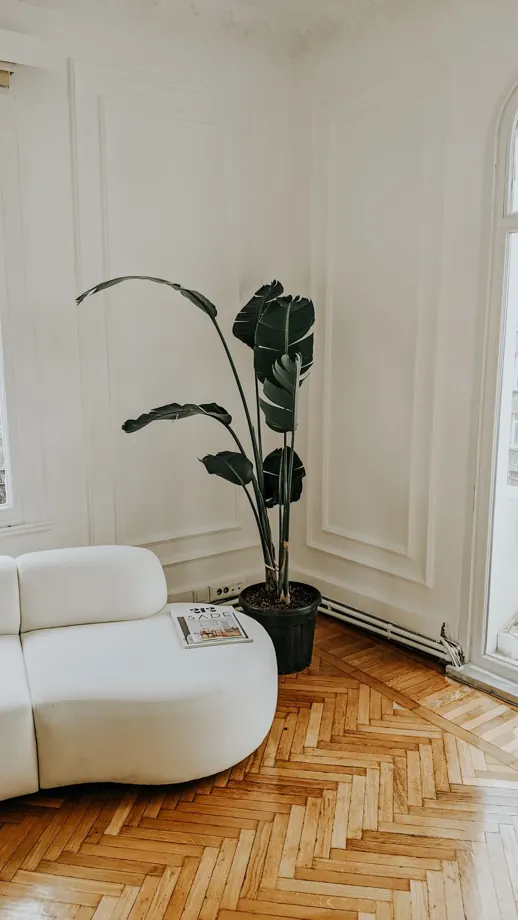
Find the corner that takes light without interrupting the main route. Set one plant there and leave the next surface clear. A patterned leaf or a strong outline gives the eye something to land on in a room already filled with furniture.
Test the placement with the empty outer planter before bringing the plant over. Sit on the sofa and check the view to the window, then walk the route from the door to the seat. If you want bold foliage in a limited footprint, compare big-leaf indoor plants by spread as well as height.
7. Make a low table grouping people can see over
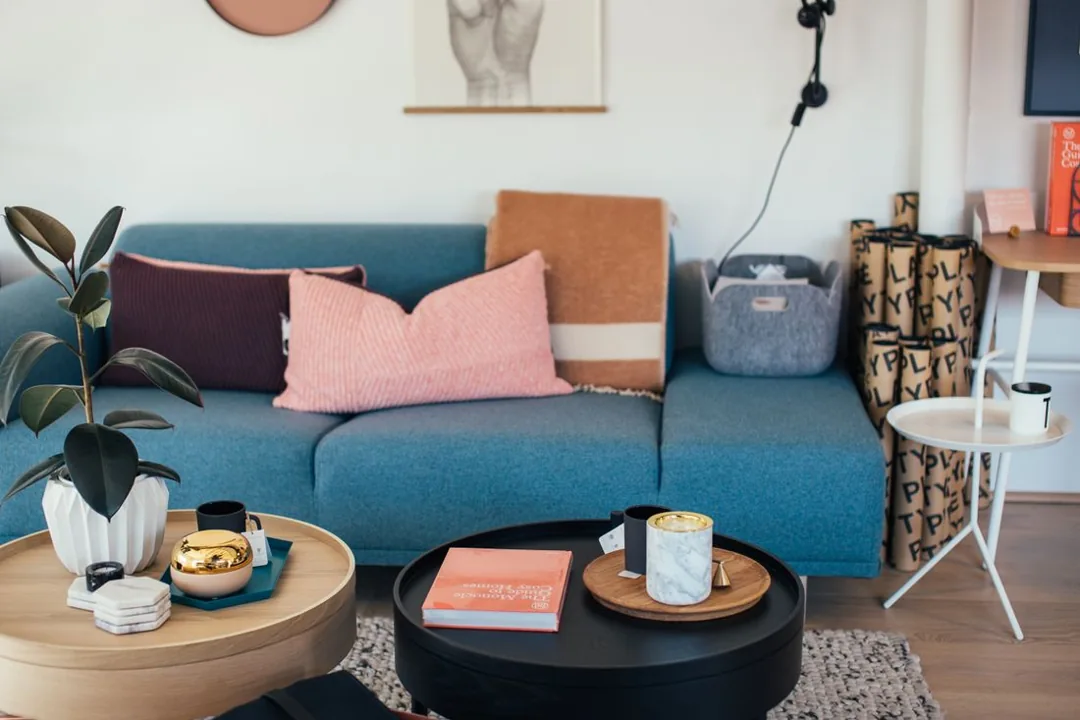
Group a small plant with a shallow dish or another useful object. Keep the taller leaves toward one side so the center of the table stays available. On a dining table, check the view from both seats. On a coffee table, leave a clear reach from the sofa.
Choose a plant you can easily lift when the surface is needed for a meal or a game. Keep a waterproof tray underneath on wood or other moisture-sensitive finishes. For a kitchen arrangement you can harvest, use the indoor herb garden ideas guide.
Credit: Fadime Demirtaş.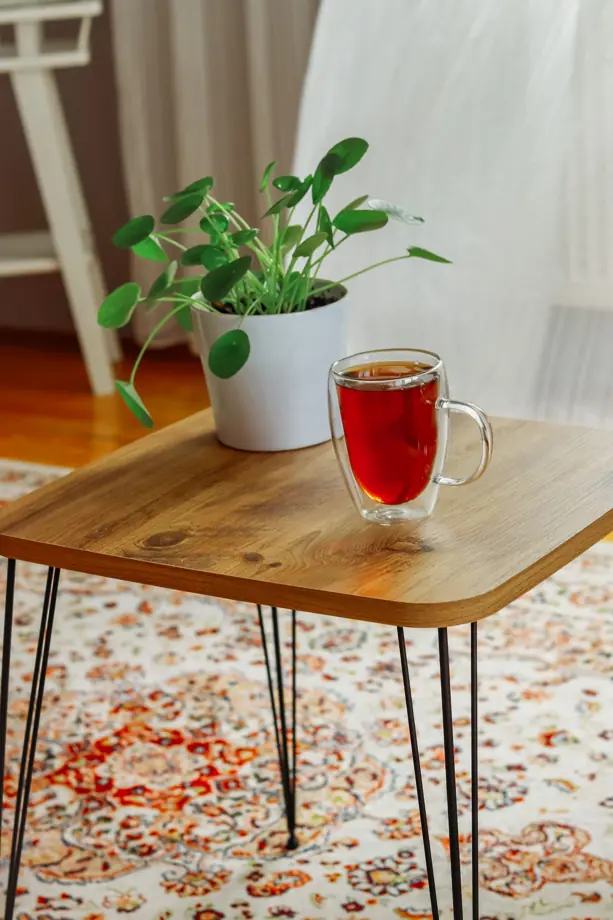
8. Hang a plant beside a window to free up a surface
Credit: Charlotte May.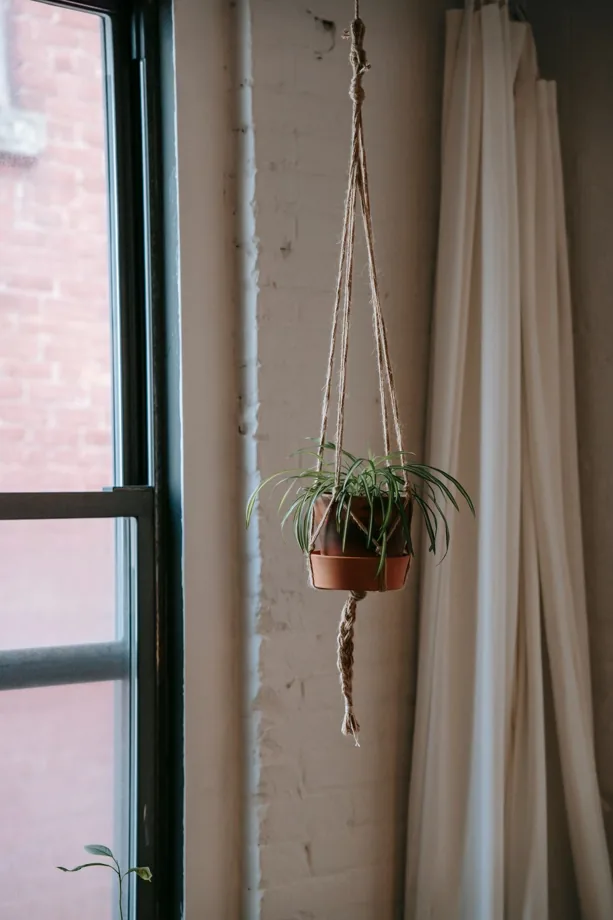
Hang a basket just to the side of a bright window where you can see the foliage from the room. Watch how the curtain moves and leave space for it to open without catching on a stem. Keep the basket clear of the route people walk through most.
Use a hanger and fixing rated for the weight of the watered pot. Position it where you can take the pot down for watering, or use a removable inner pot. Our hanging indoor plants guide compares shapes that work well in baskets.
9. Raise one small plant on a slim stand
Credit: Vandana Vankhede.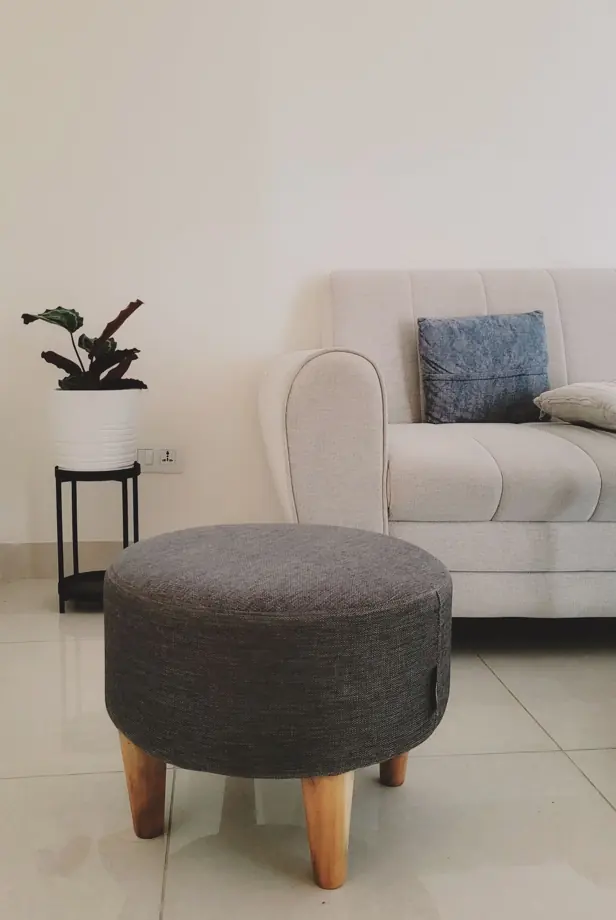
A narrow stand gives a short plant more presence beside a low sofa without taking up space on the side table. Check the result while seated. The leaves should clear the sofa arm without leaning into the seat.
Choose a stable stand with a top wide enough for the entire saucer. If the pot overhangs or the stand sits along a busy route, a lower, wider stand tucked closer to the wall is a better fit.
10. Put a compact plant on the window side of a desk
Credit: The KRM.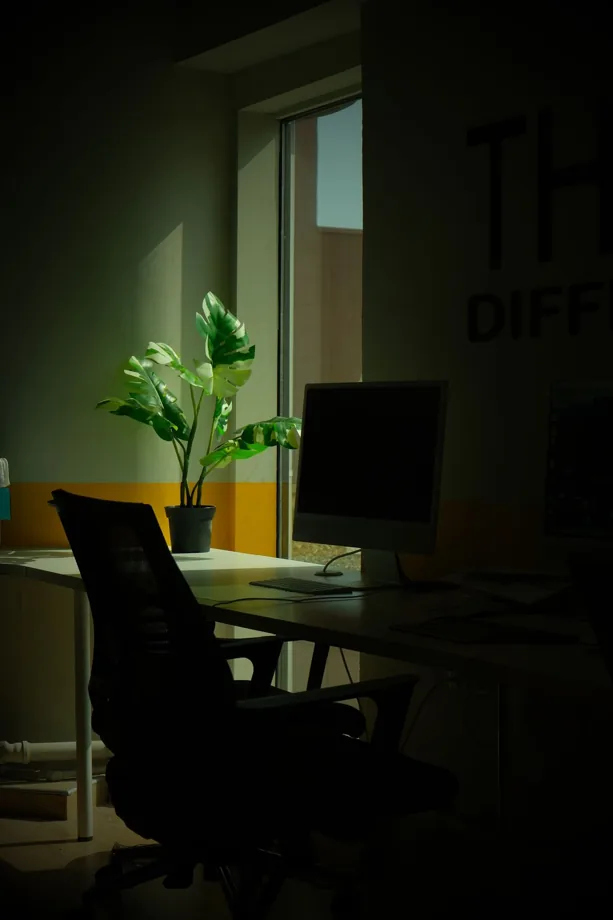
Use the back corner nearest the window and keep the area in front of the monitor free for your hands and notebook. A small pot with upright foliage works particularly well on a shallow desk.
Before you settle on the spot, swivel the screen and swing the desk lamp through its full range. Make sure the plant clears both. Take the pot to the sink to water it and let it drain before returning it beside electronics.
11. Give a bedroom dresser one leafy accent
Credit: Charlotte May.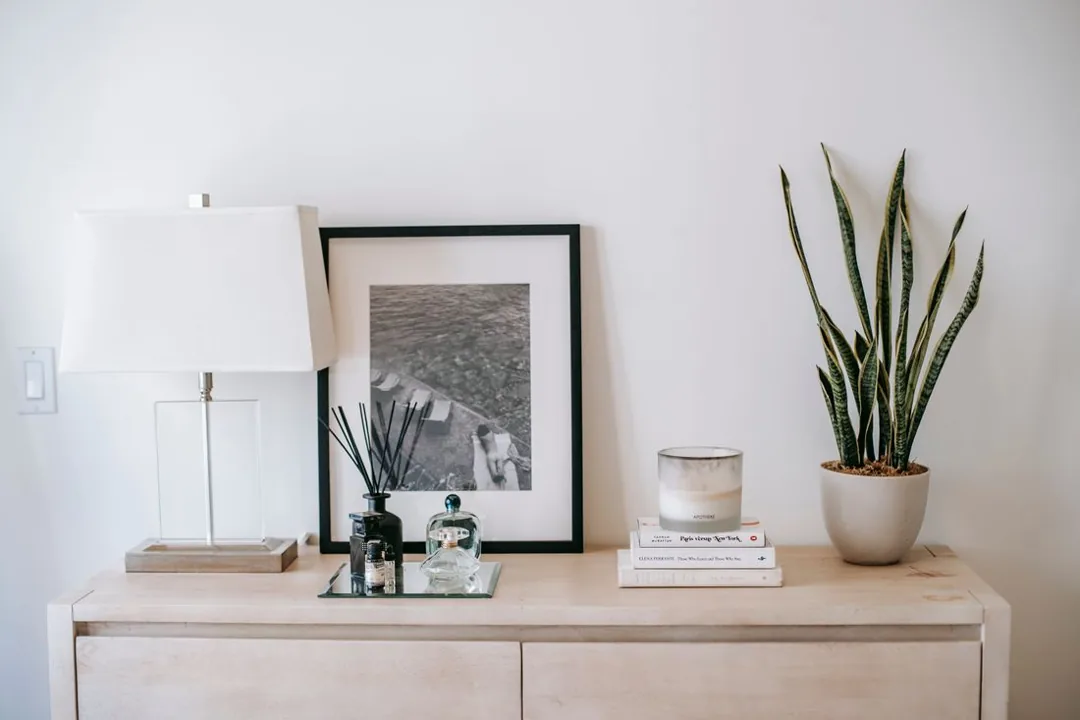
Put a compact plant at the end of the dresser closest to usable daylight. Leave the middle clear for a tray or a mirror you use every day. If the leaves hide the things you reach for, turn the pot or use a smaller plant.
Pull out the top drawer and check the foliage from the side. A plant can look tidy head-on and still drag over the drawer when you open it. Use a saucer or waterproof outer pot to protect the dresser finish.
Bonus idea for matching planters
Credit: cottonbro studio.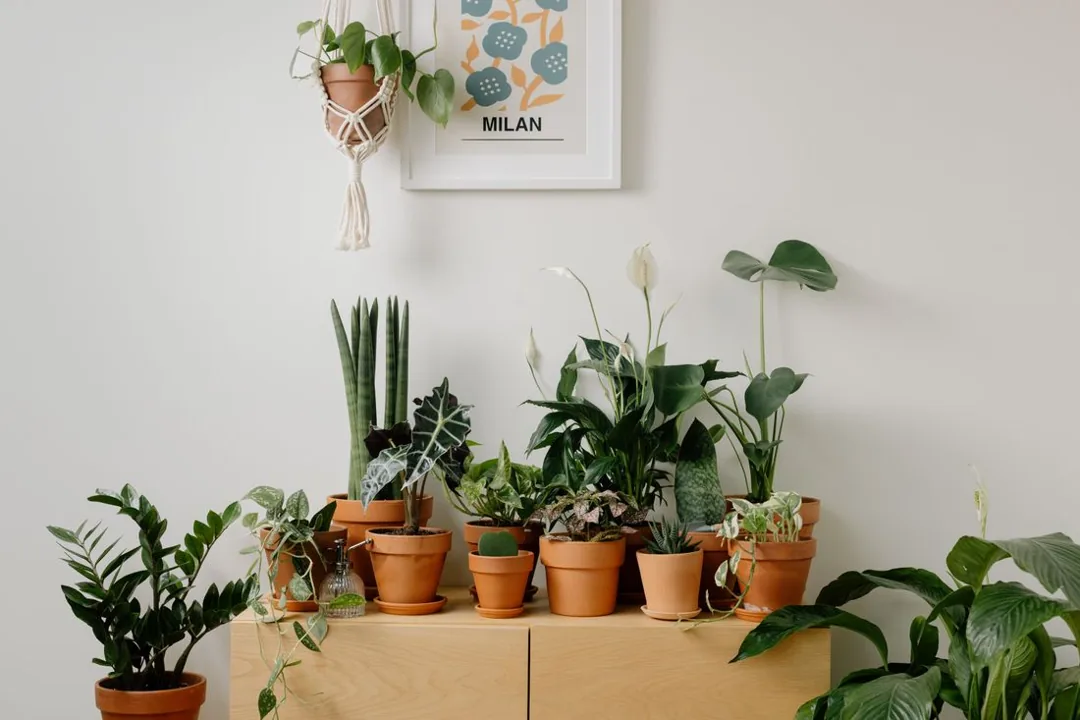
Choose two or three planters with the same finish and vary the plant heights. Repeating warm terracotta or matte cream ties the group together, while the different leaf shapes keep each plant visible. Leave a hand-width or more between pots where you need room to lift them.
If you want the same look in two corners, repeat the planter finish and choose each plant for the light in its own spot. The pots can match even when the plants need different care.
Check the room from three places
Stand at the doorway, sit in the seat you use most, and walk the route between them. The doorway shows what catches the eye first, the seat shows what blocks your view, and the walk shows what you might bump. Adjust the plant heights and leaf spread before buying another pot.
Check how the light reaches each plant over the day. A side table farther from the window may need a different plant from the window corner. The University of Minnesota Extension lighting guide explains how distance from the light source affects intensity. Use the guide to indoor plants to choose by room conditions. For a display on one surface, see our indoor plant shelf ideas.