



Quick Answer
For a tighter floor spot, compare an upright rubber plant with a supported monstera and measure how far their leaf tips would project. For a wider corner, look at a bird’s nest fern or a broad elephant ear matched to the light.
Match broad foliage to the space around it
Match broad foliage to the space around it
Scroll sideways to compare all columns.
| Plant | Growth habit | Light to look for | Measure first |
|---|---|---|---|
| Rubber plant | Upright, sometimes branching | Bright, filtered | Gap between stem and furniture |
| Monstera | Climber with leaves on long stalks | Bright, indirect | Support to front leaf tip |
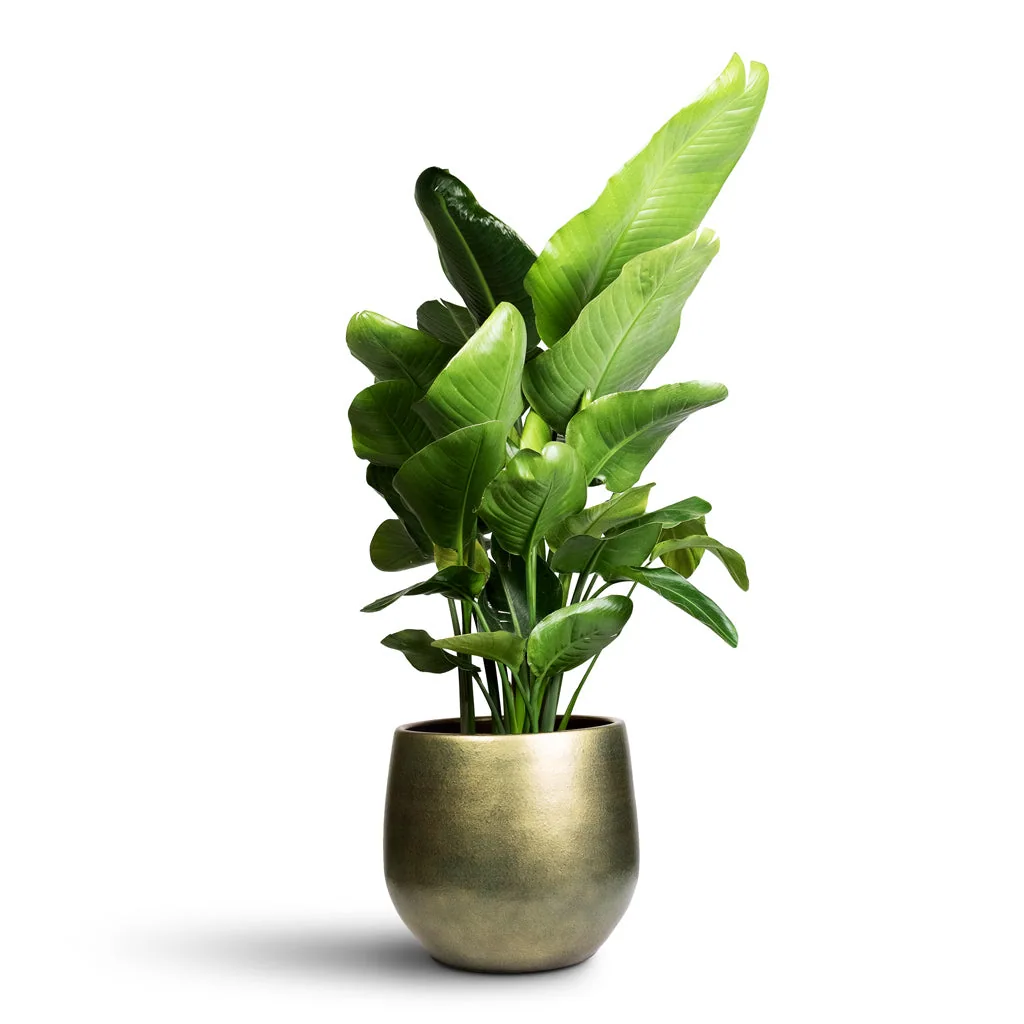
| White bird of paradise | Tall fan of paddles | Very bright window | Width at shoulder height |
| Bird’s nest fern | Low arching rosette | Filtered, away from harsh sun | Width at frond height |
| Upright elephant ear | Shield leaves on tall stalks | Bright, filtered | Space around the widest leaves |
| Cast iron plant | Low, spreading clump | Lower indirect light | Width of the clump |
| Fiddle-leaf fig | Upright tree with a broad crown | Bright, indirect | Width of the crown near furniture |
Measure the canopy before you shop
Measure the space between nearby furniture at the height the leaves will occupy. At the shop, measure from the pot’s center to the furthest leaf tip. Compare that with the space you can spare at home and leave extra room for future leaves. A plant in a small nursery pot can still spread into a doorway.
Choose the leaf shape you want
Use the photos to compare the direction each plant grows. The dimensions of a specimen depend on its age and growing conditions, so judge the actual plant and ask what its newer leaves are likely to do.
1. Rubber plant
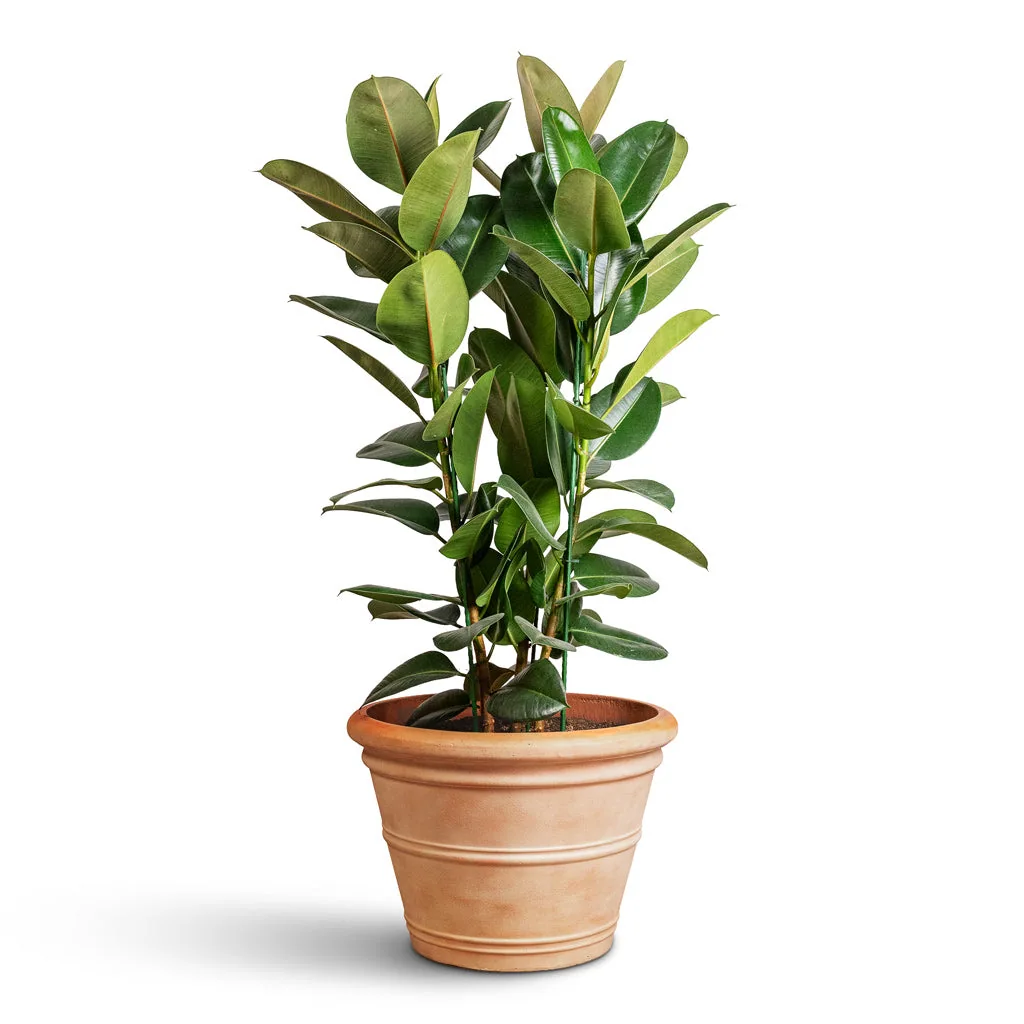
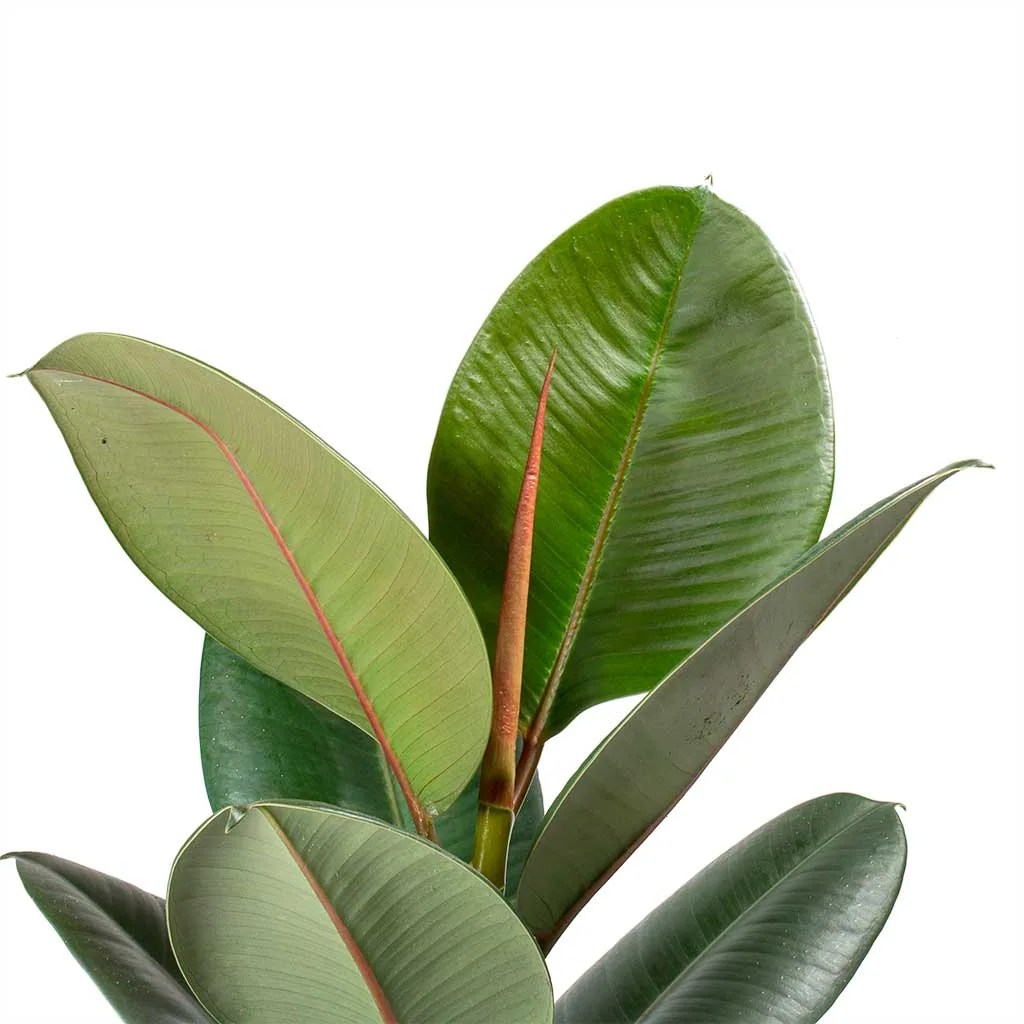
Ficus elastica stacks thick, glossy blades along an upright stem. Compare a single-stem plant for a narrow space and a branched specimen for a wider corner. Give it bright filtered light and keep the outer foliage clear of curtains. NC State Extension’s rubber plant profile puts leaf length at up to 17 inches. Use that as a sense of scale and measure the actual leaves before buying.
2. Swiss cheese plant
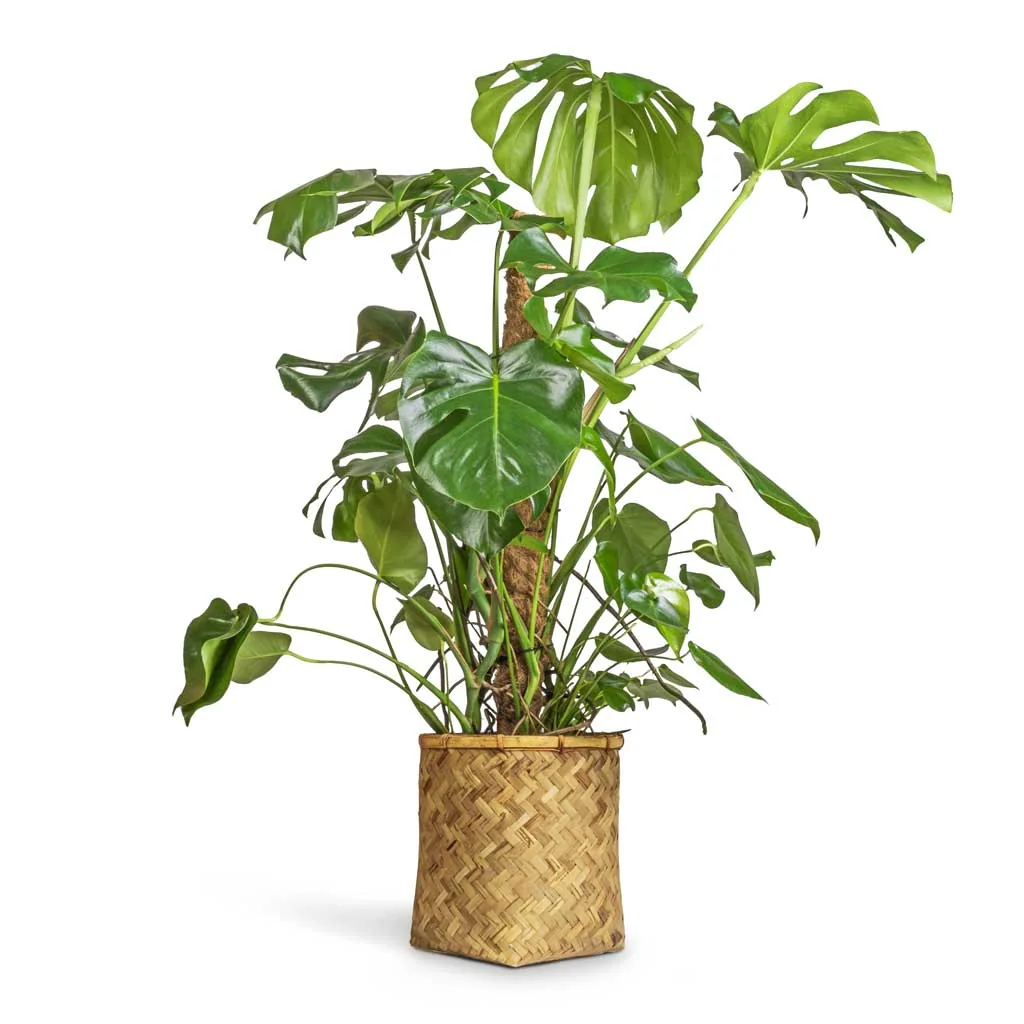
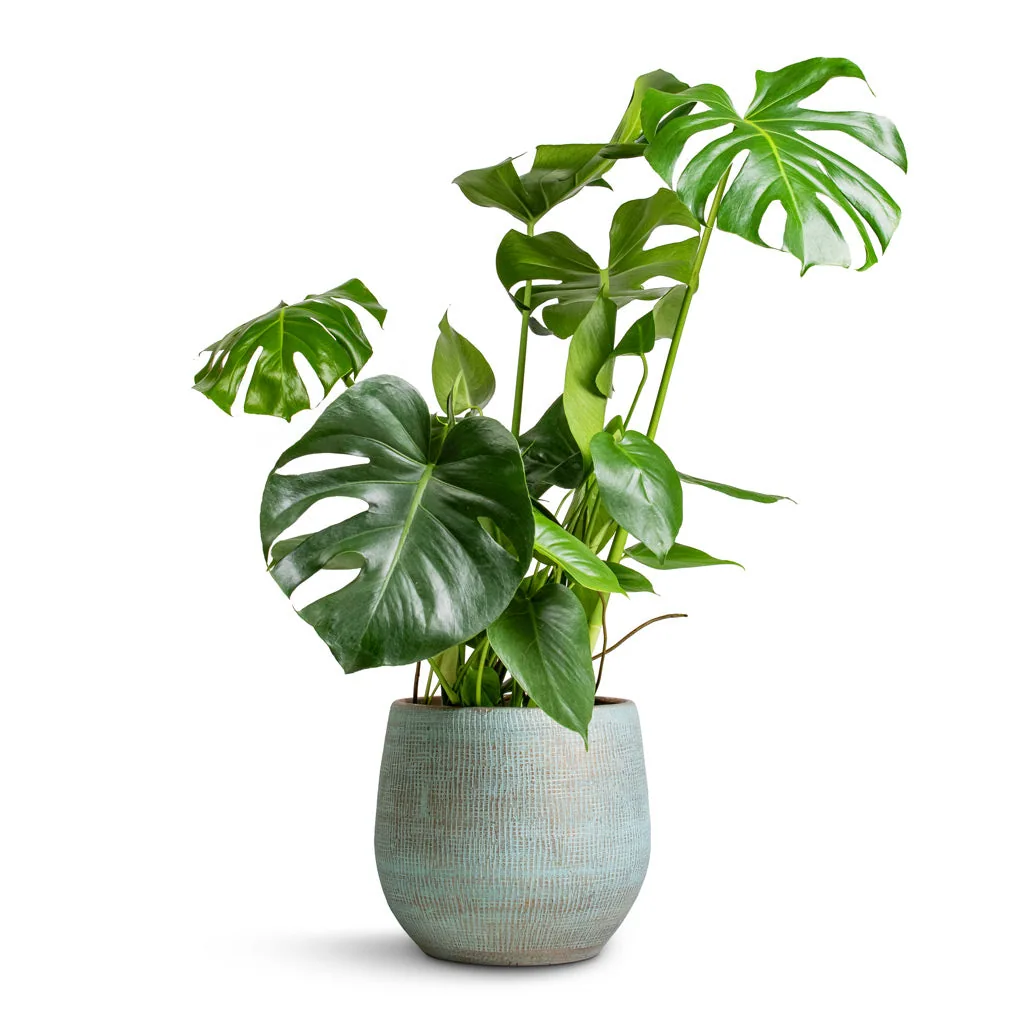
Monstera deliciosa develops broad blades on long stalks, and mature leaves can split or form holes. Put the climbing support on the wall side and leave room in front for the leaf stalks to project. Train the stem toward the support without bending the leaf stalks. If two plants have a similar height, compare the angle of their outermost leaves. The one fanning forward into the room will need more usable depth even when both pots sit directly against the wall.
3. White bird of paradise
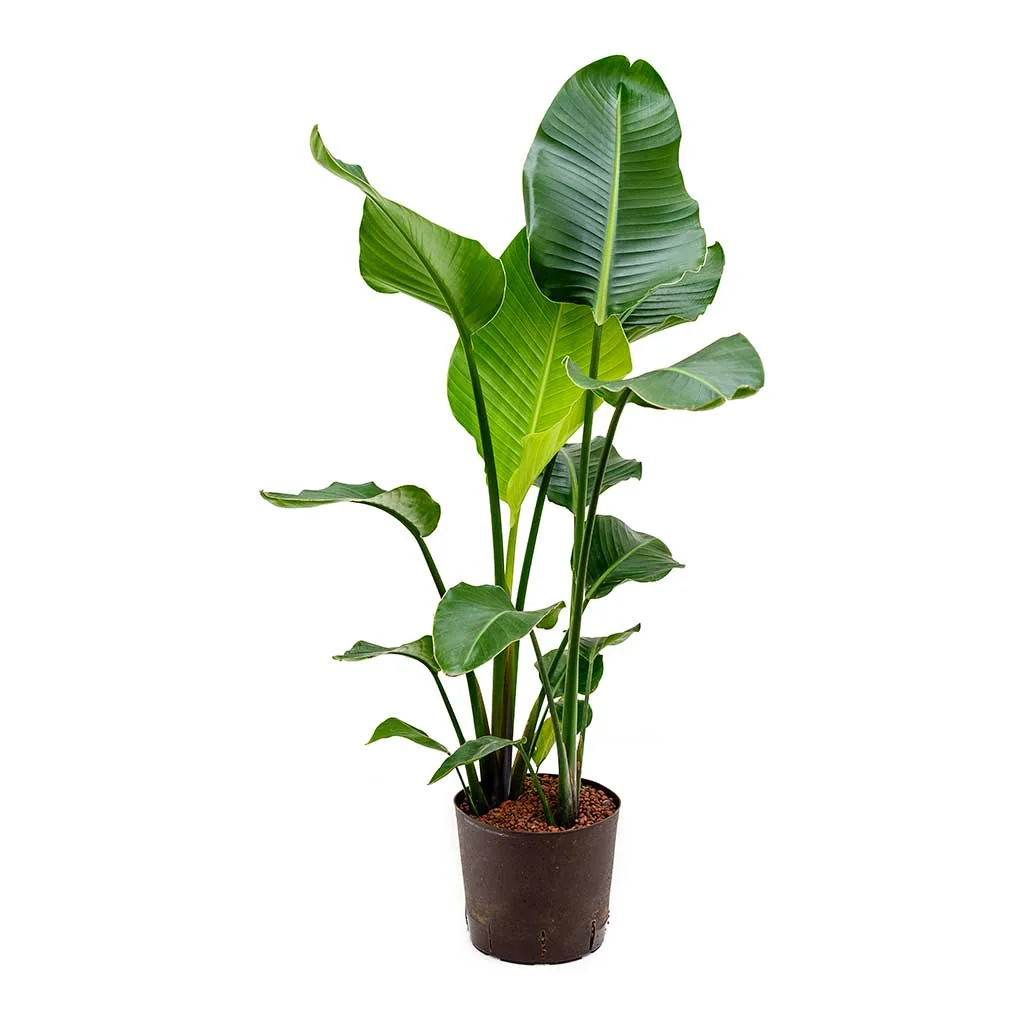
Strelitzia nicolai grows with long leaf stalks and upright paddle-shaped foliage. It can extend well beyond the pot at shoulder height. Choose a bright corner with room beside the canopy and check ceiling clearance on a mature specimen.
4. Bird’s nest fern
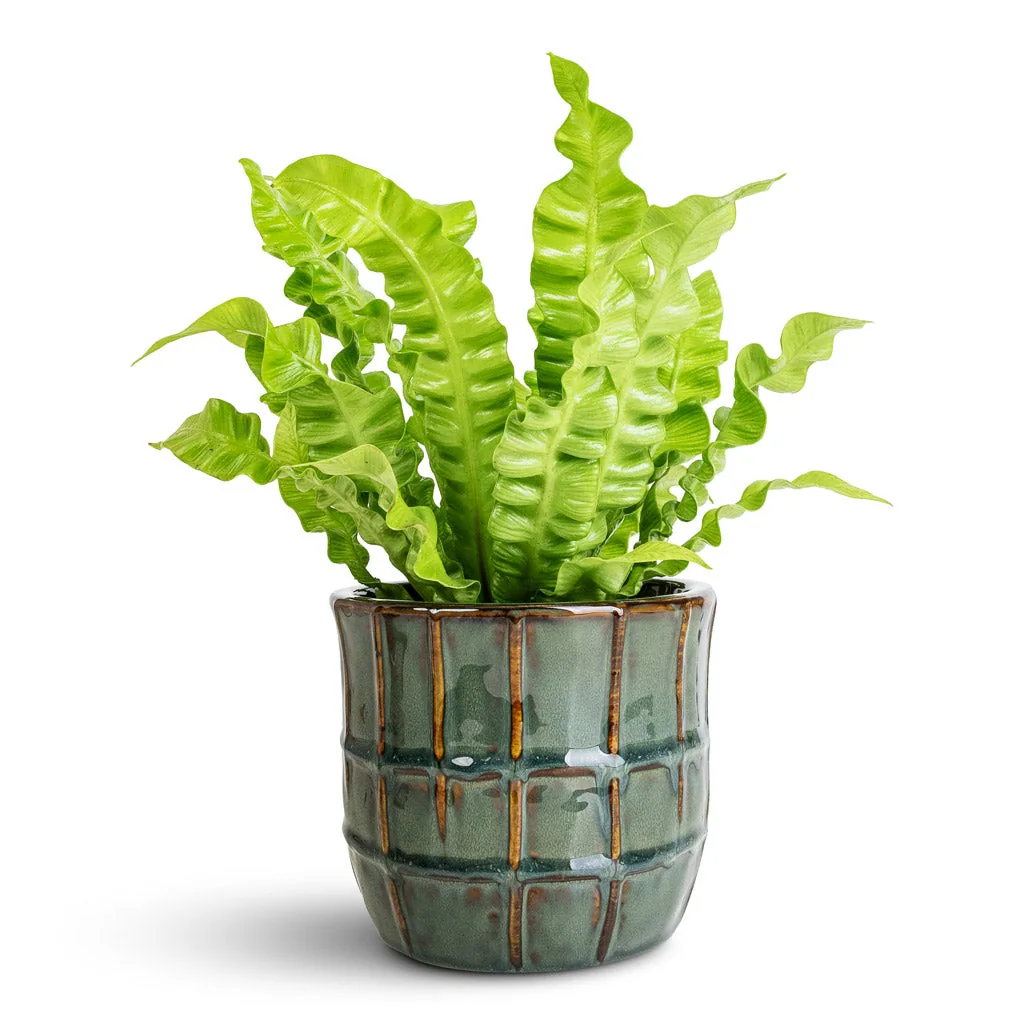
A bird’s nest fern spreads undivided fronds from a central rosette. Give it an open surface where the fronds can arch freely. Check the label for the exact Asplenium species or cultivar, since scale varies.
5. Upright elephant ear
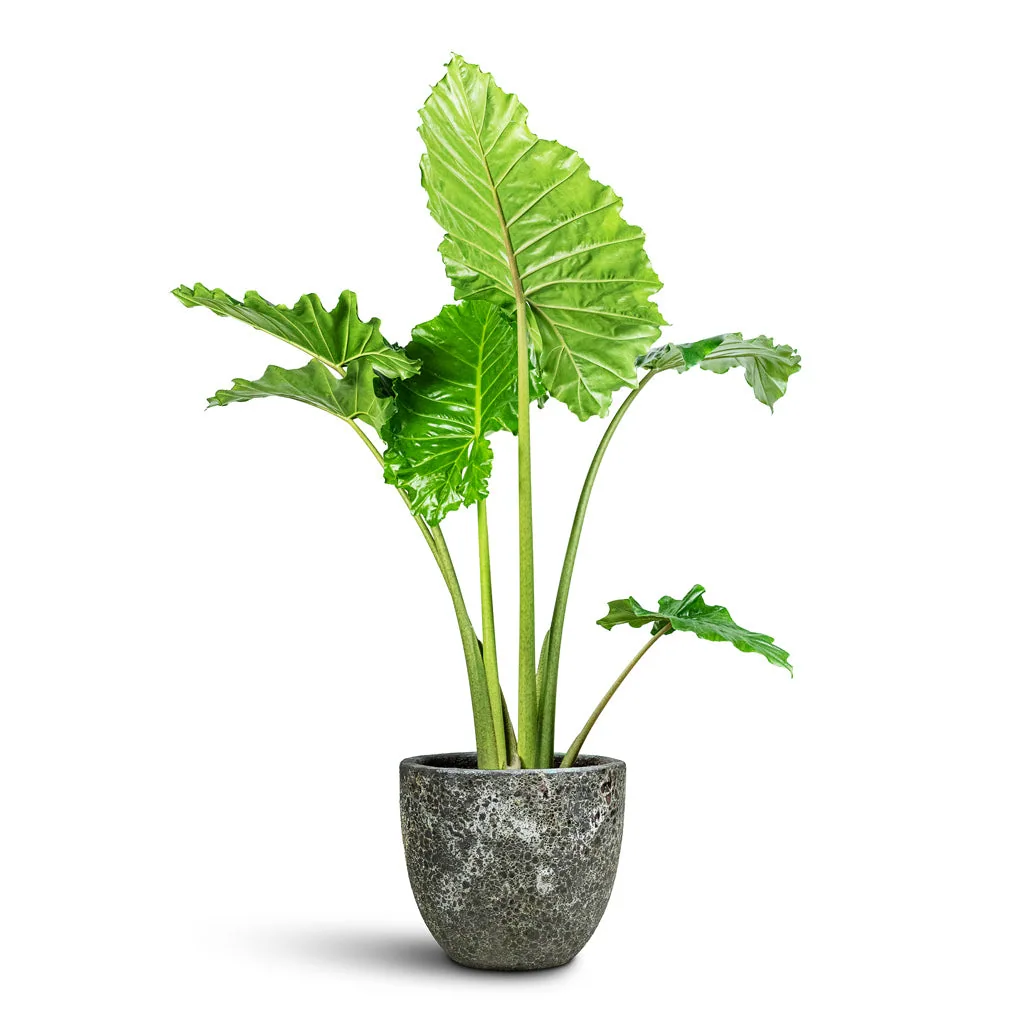
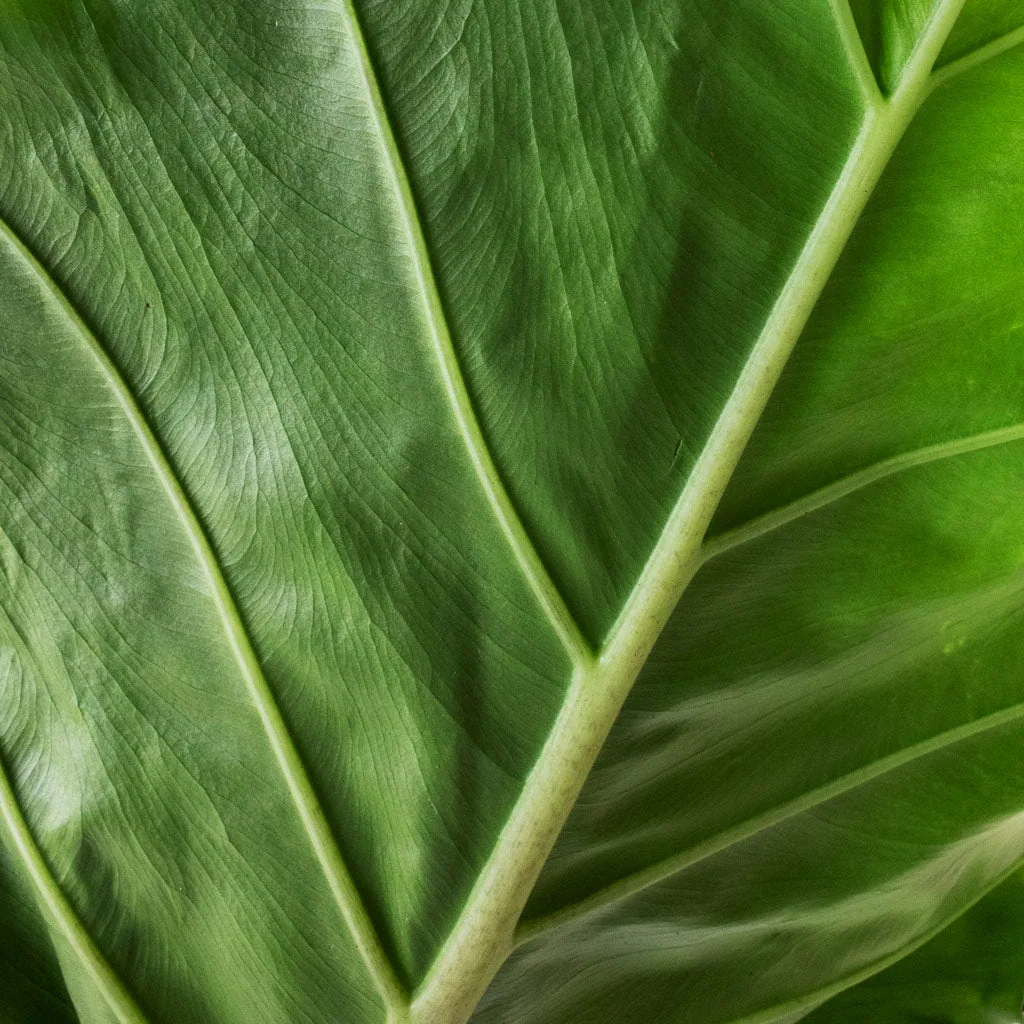
Look for Alocasia with shield-shaped foliage and long stalks. Compare the spread of the actual specimen and use a bright, sheltered position that suits its care requirements. A small pot can hide a surprisingly wide leaf display.
6. Cast iron plant
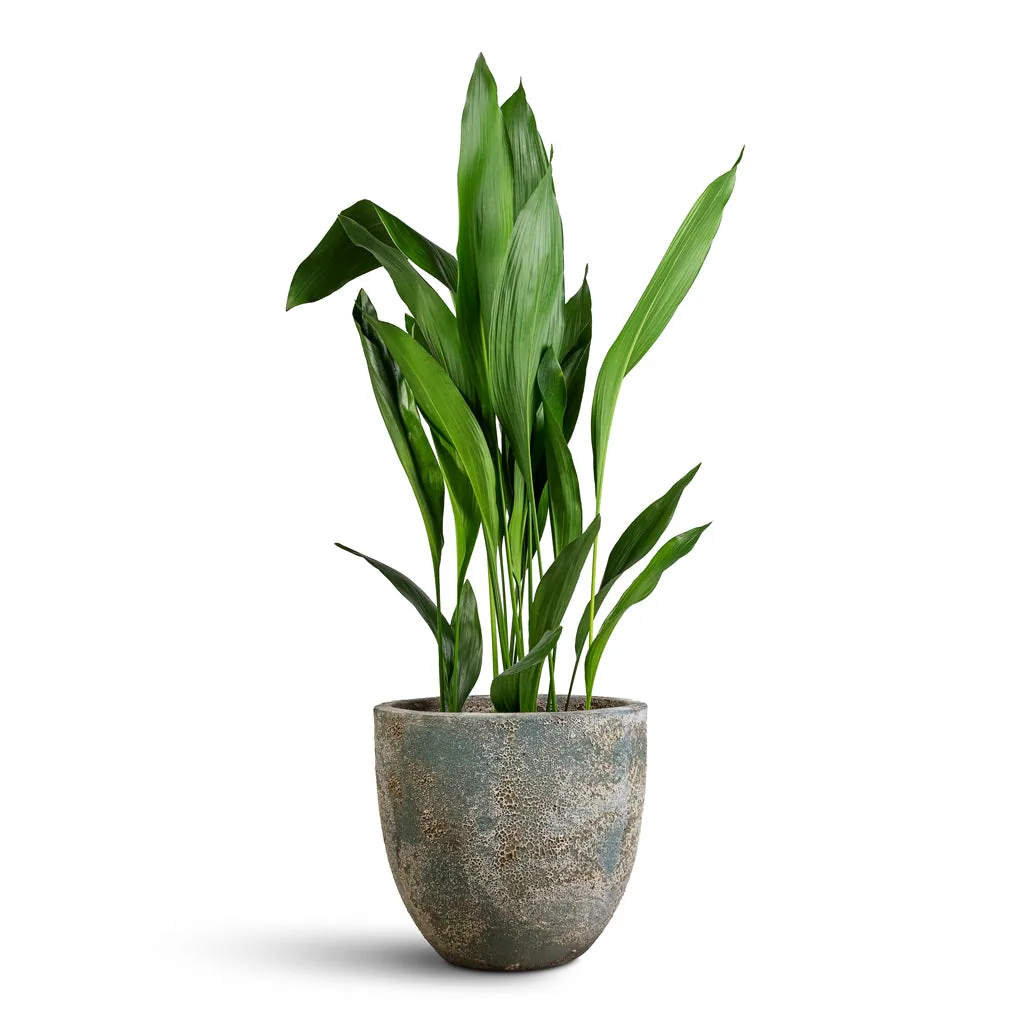
Aspidistra elatior grows elongated blades from the base. It suits a spot where you want a low clump with a strong leaf outline. Leave space for the clump to expand and check the light at its outer edges.
7. Fiddle-leaf fig
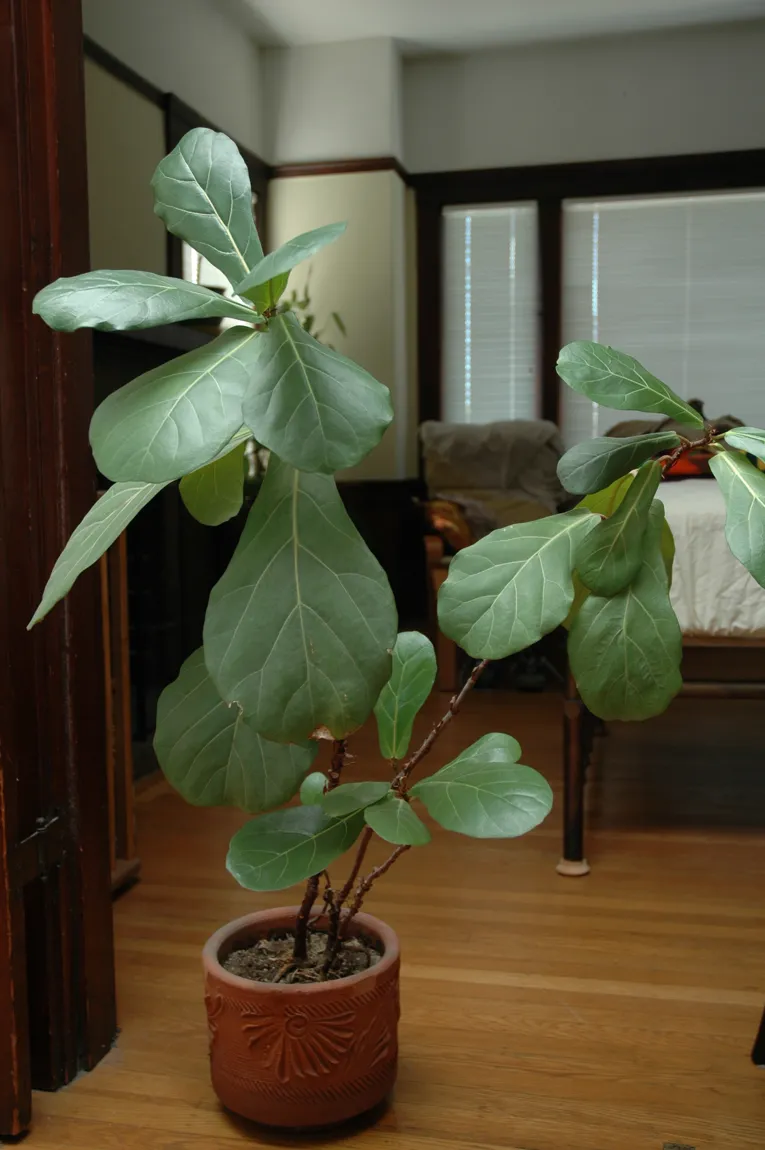

Ficus lyrata grows violin-shaped leaves up to 18 inches long, according to NC State Extension. A single-trunk specimen can leave floor space underneath while still projecting over a chair or sideboard. Measure across the broadest part of the crown and check that the upper leaves get bright, indirect light.
Allow for a different shape as it grows
A young monstera can have modest, solid leaves before it develops the wider split and perforated blades shown in many photos. University of Minnesota Extension’s Monstera profile shows how those leaves change. Ask to see a mature example, especially when buying a plant for a tight corner. If your main goal is floor-to-ceiling height, compare our large indoor plants guide.
Position the leaves before you style the pot
Check light at the upper and outer leaves, particularly where a plant sits beside a tall cabinet. Keep wide leaves clear of a route people use repeatedly, and leave enough space to see the leaf undersides and wipe dust from glossy foliage. For leaf pattern and humidity needs across more species, see our tropical houseplant guide. Our indoor plant types guide helps when two species look similar at the shop.