



Quick Answer
Trace one entire leaf or frond before comparing its shape. Check whether it joins a climbing stem, grows from a central crown, or follows a woody trunk. Then compare the features on several leaves.
Start with the feature you can see
Start with the feature you can see
Scroll sideways to compare all columns.
| Visible clue | Check next | Likely group |
|---|---|---|
| Short roots on a long stem | Look for nodes between the leaves | Climbing aroid |
| Divided leaflets on one arching structure | Follow it to its crown | Fern or palm |
| Fleshy leaves radiate from a short center | Look for overlapping layers | Rosette succulent |
| Flat segments with tiny growth points | Look along the edge and tips | Forest cactus |
Plants with running stems or upright canes
Find a growing tip and follow the stem backward. If the stem keeps extending and produces leaves at intervals, look at climbers and trailers. A thick cane or woody stem points toward a different growth habit.
1. Climbing aroids
Examples: Pothos, philodendrons, and monsteras
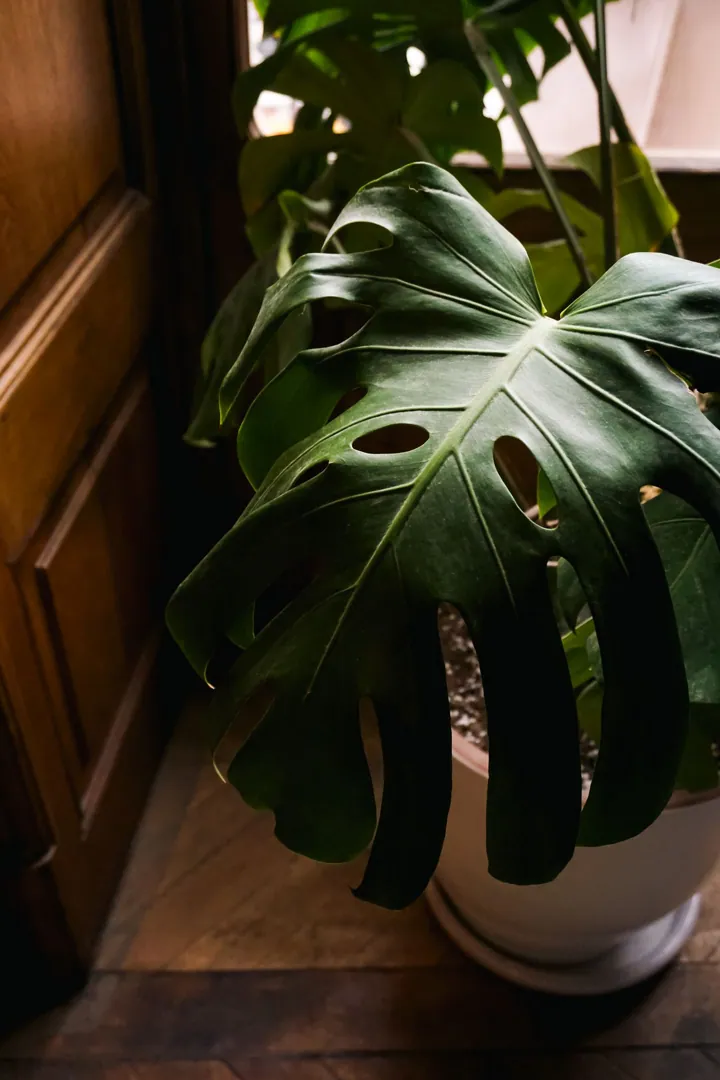
Find the nodes and look for short roots emerging near them. A young monstera can have solid leaves. Check the plant’s whole growth habit before relying on holes. See indoor vines for more climbing shapes.
2. Trailing or twining vines
Examples: Wax plants and string of hearts
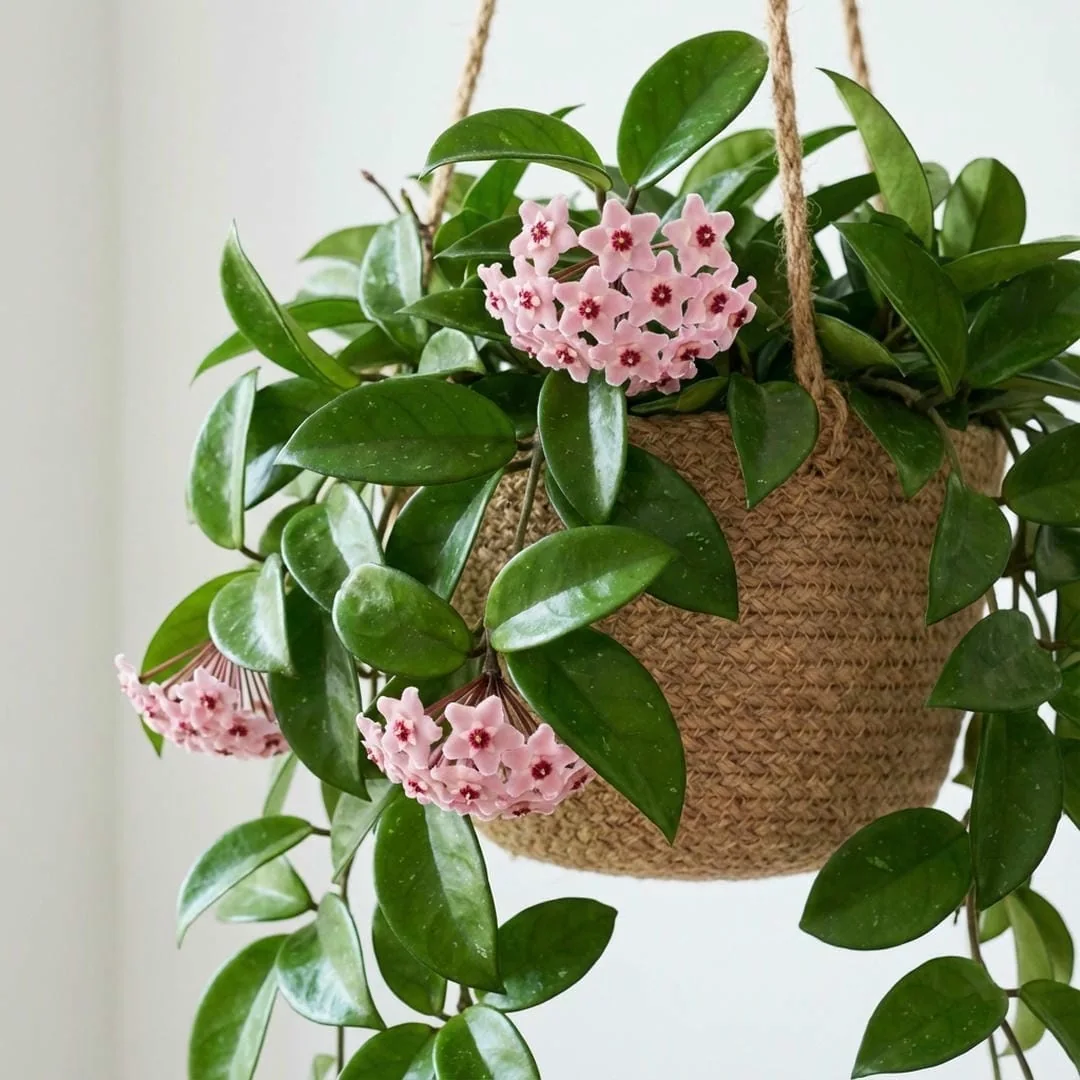
Pair up the leaves along the length of a stem. Wax plant leaves look thick and glossy. String of hearts has a fine stem and small patterned hearts.
3. Woody foliage plants
Examples: Rubber plant and other indoor figs
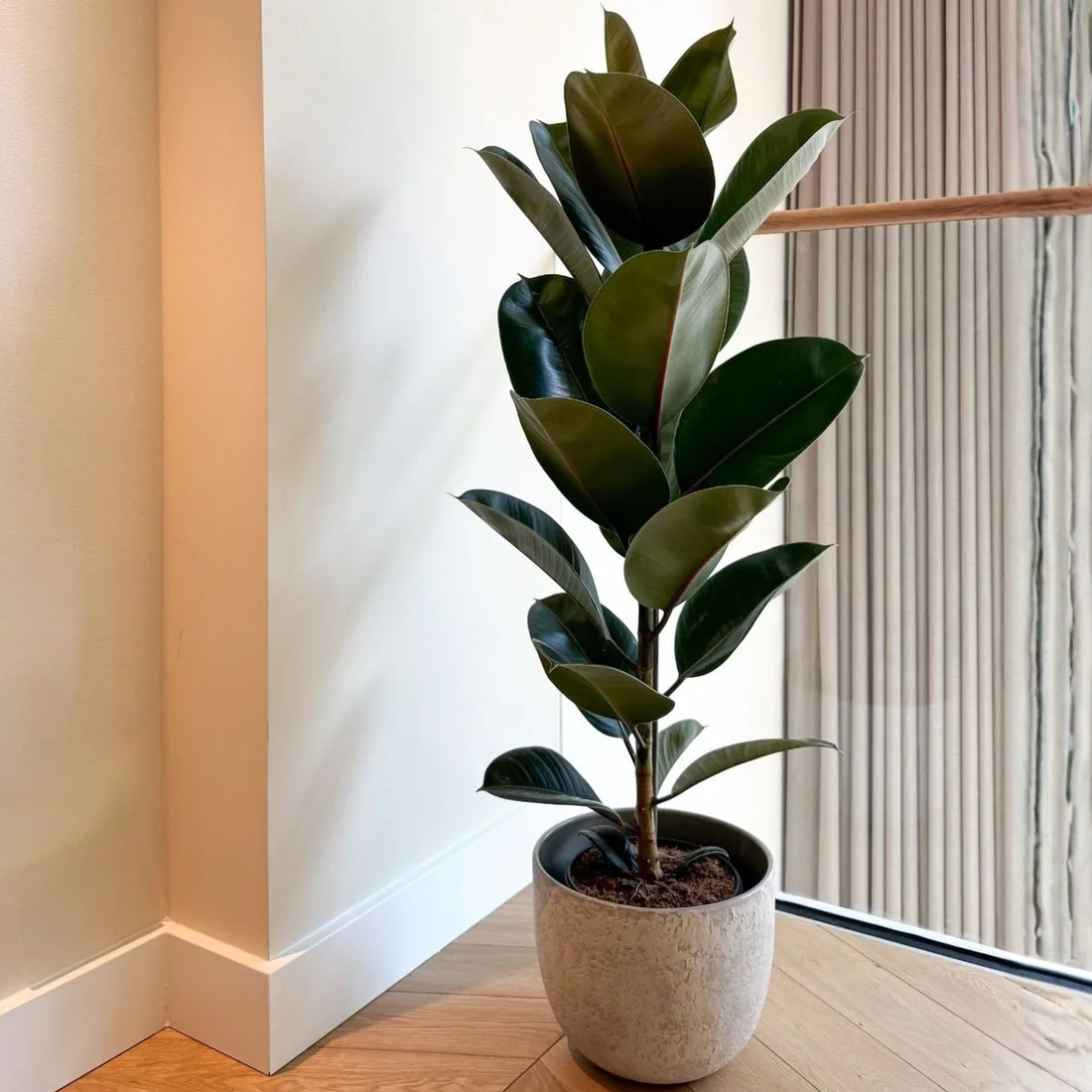
Look for broad leaves attached separately to a sturdy stem. Rubber plant has thick, broad blades. Compare other trunk-forming plants in our indoor trees guide.
4. Cane plants
Examples: Corn plant and related dracaenas
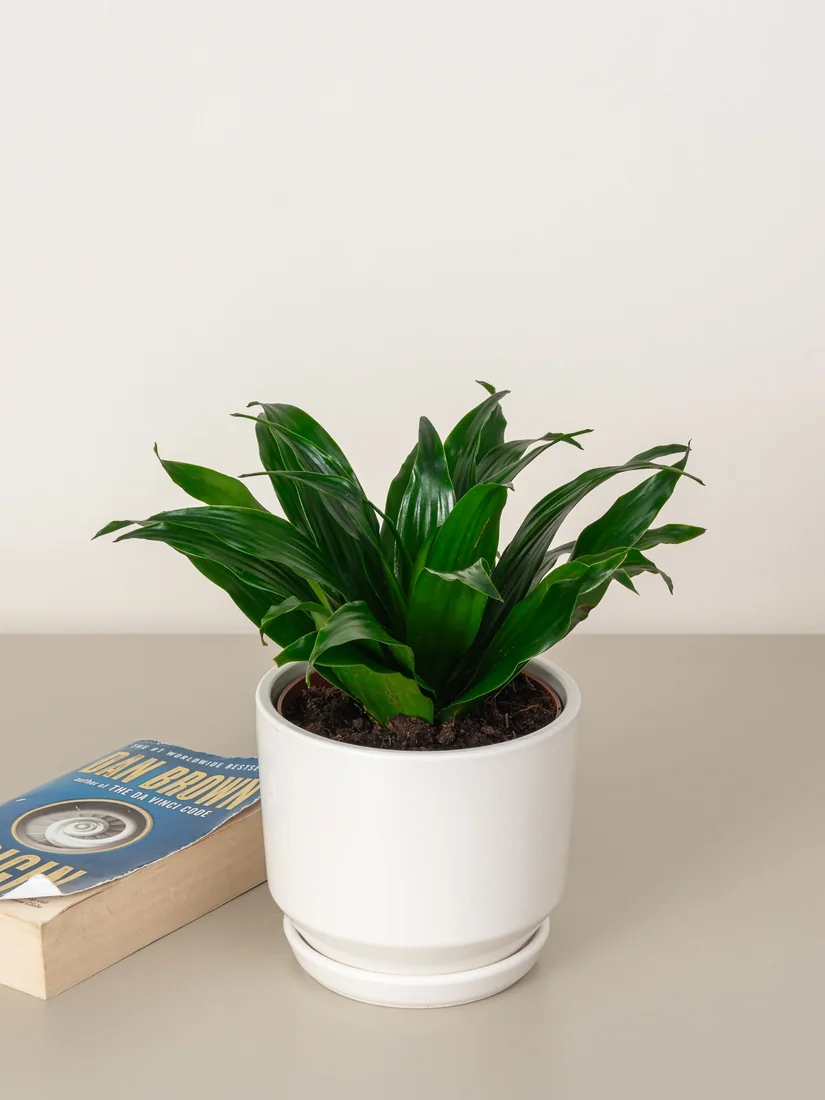
Long, straplike leaves cluster near the top of a cane. Look below the cluster for an exposed upright stem.
5. Leafy plants with a clumping habit
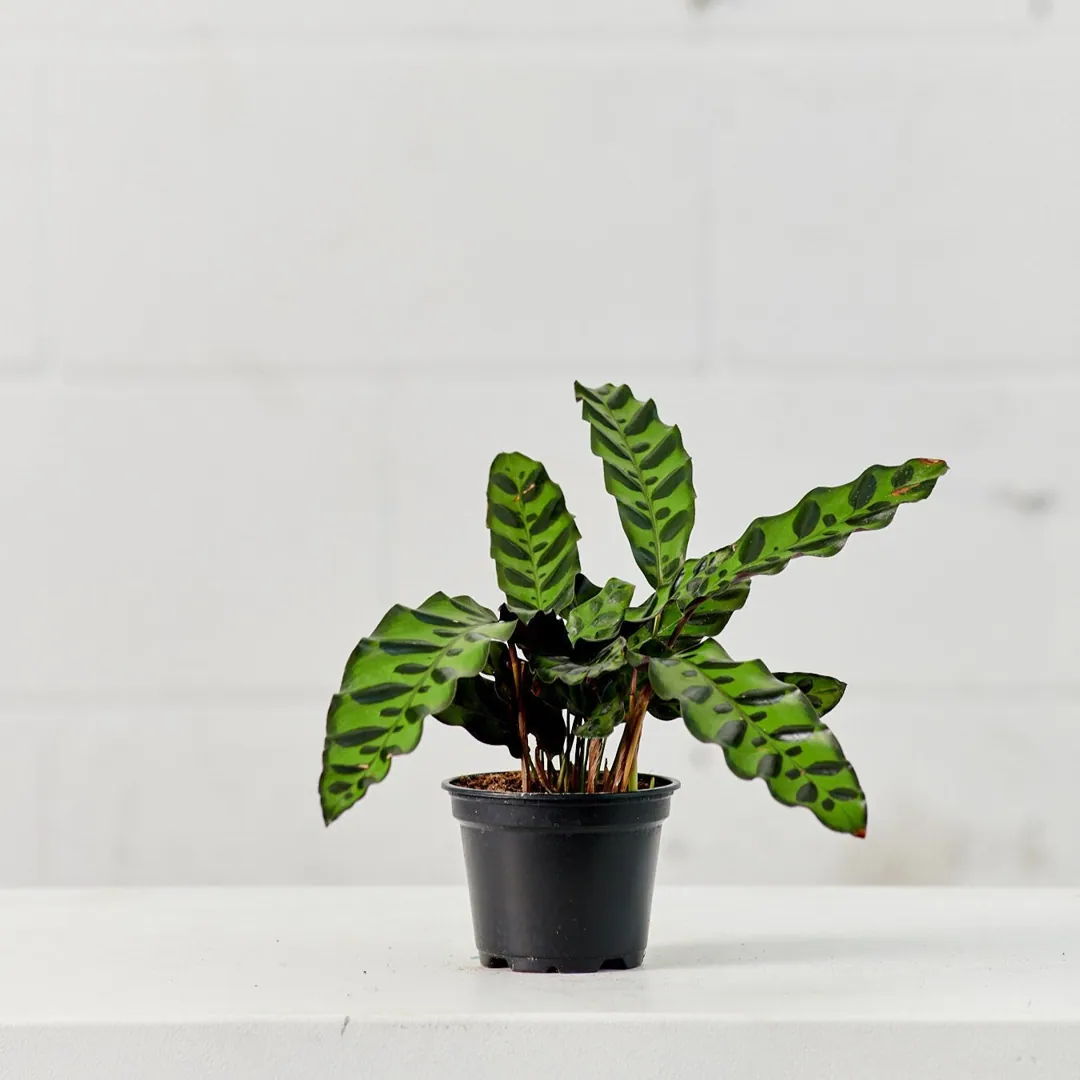
Examples: Chinese evergreen and prayer plant
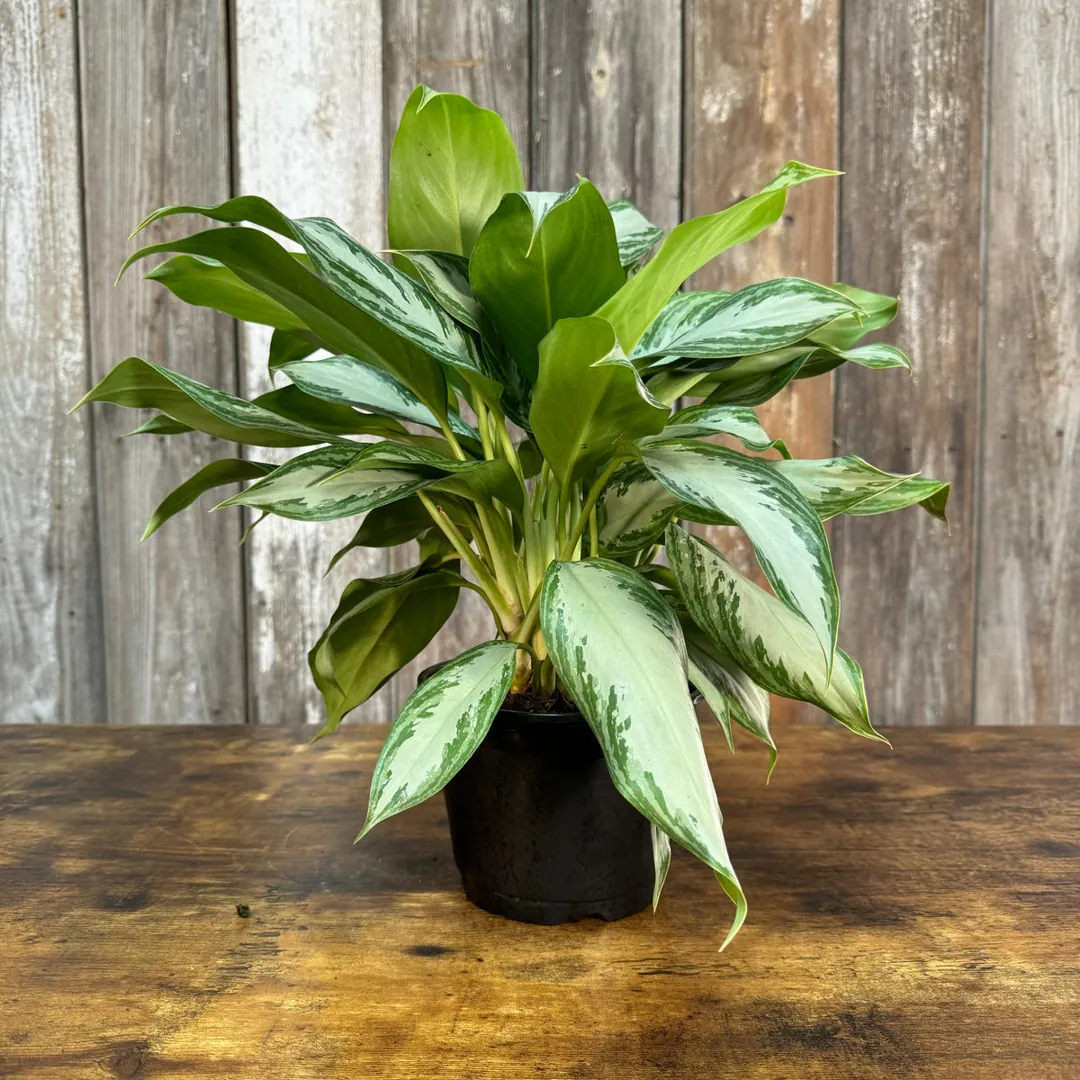
Follow the leaf stalks toward the soil. A cluster of separate stalks can make a low mound, while a vine’s leaves are spread out along a running stem.
Plants with fronds, rosettes, or fleshy leaves
A finely divided leaf can look like a cluster of small leaves. Trace the whole structure to its base to distinguish a fern frond from a palm leaf.
6. Ferns
Examples: Boston and bird’s nest ferns
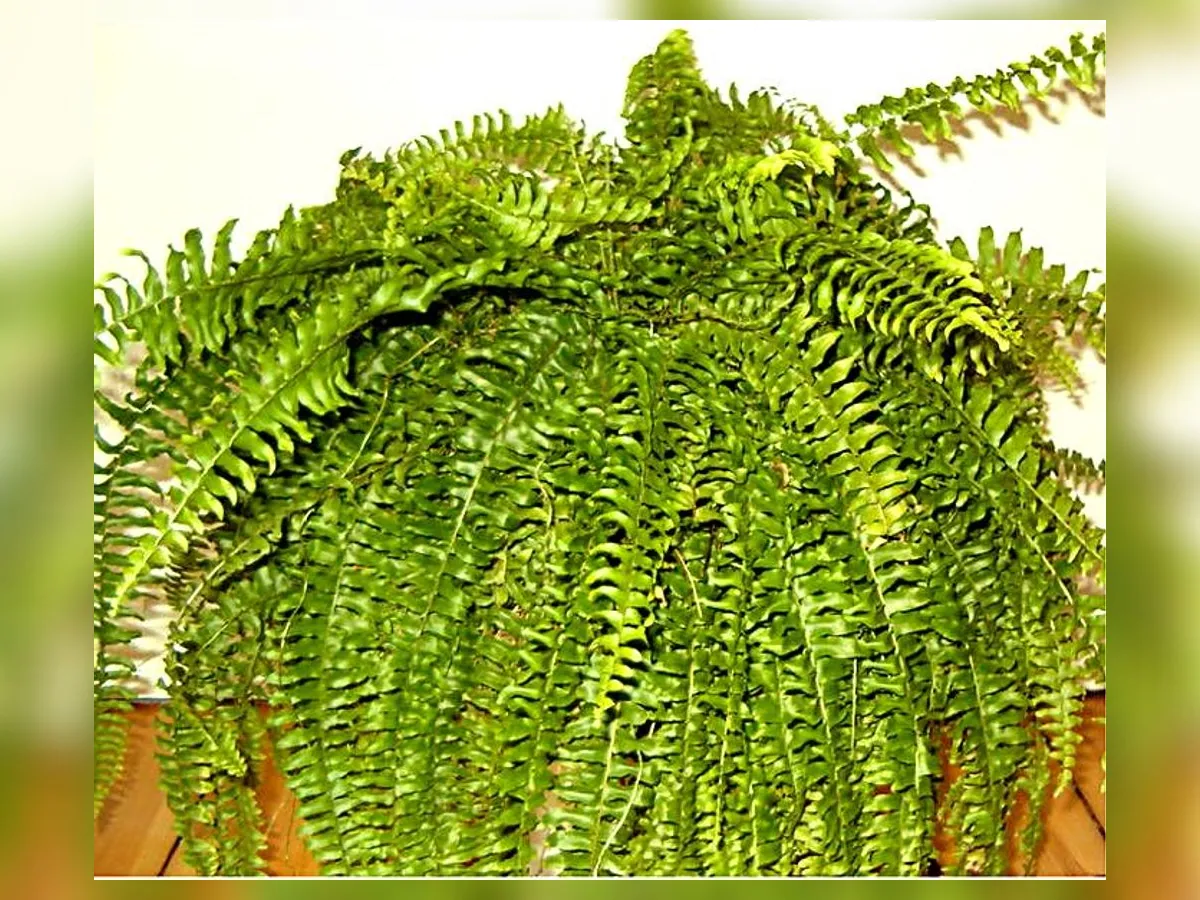
Compare Boston fern’s finely divided arching fronds with the broad, undivided fronds of bird’s nest fern. The whole set grows from the crown.
7. Palms
Examples: Parlor, areca, and fan palms
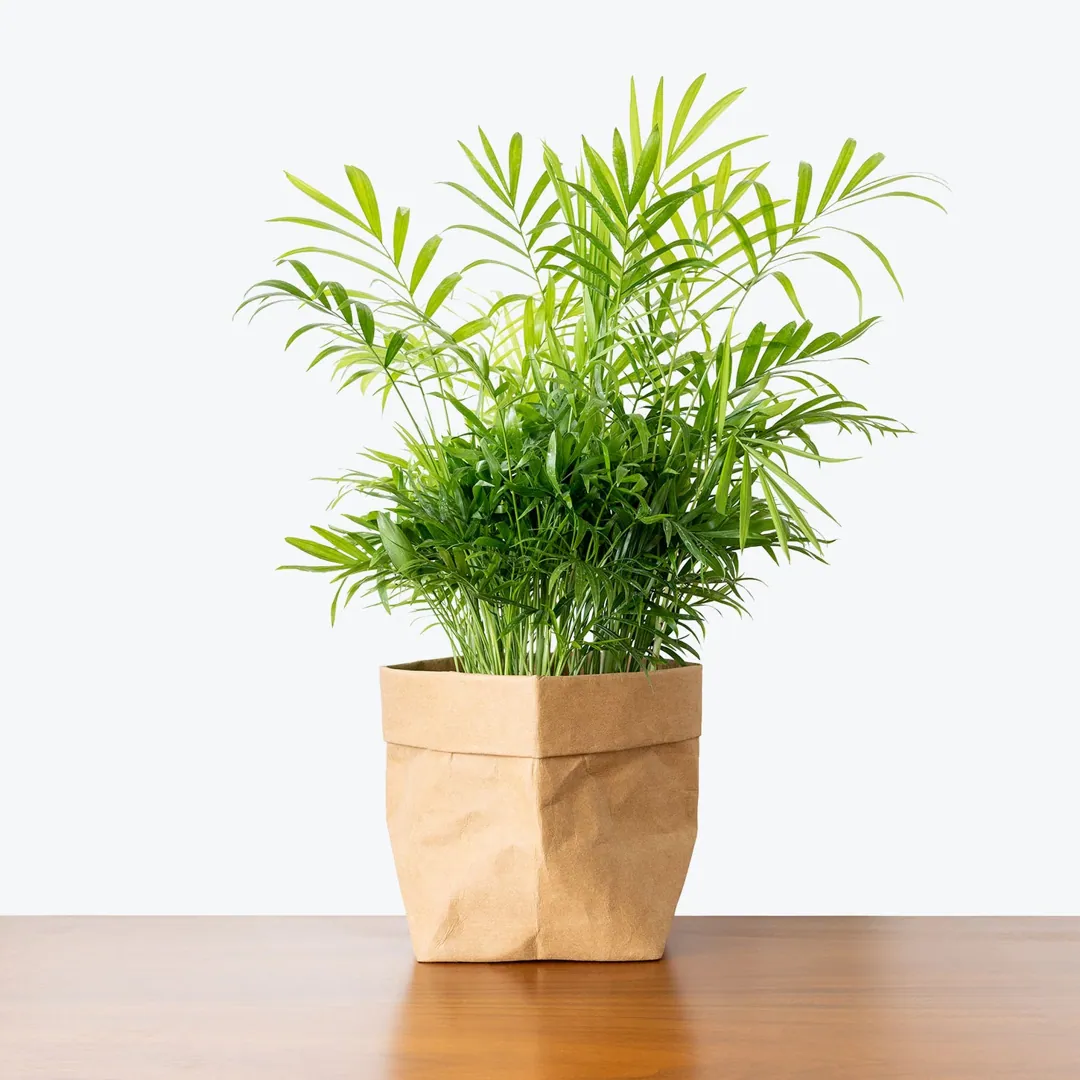
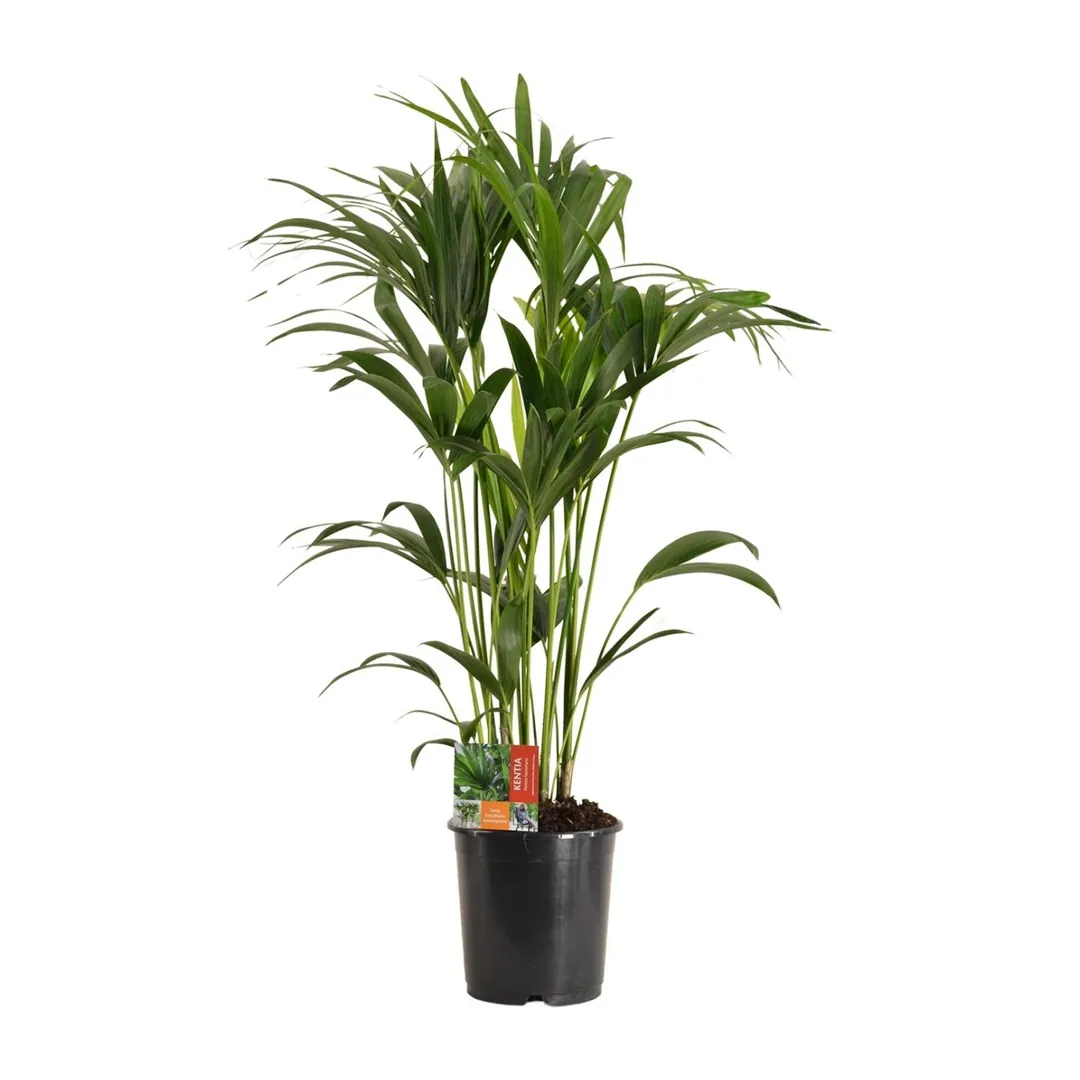
Look for feather-shaped or fan-shaped leaves. Follow a frond to the crown to distinguish palm leaflets from individual leaves on a branching stem. Our indoor palms guide shows both forms.
8. Rosette succulents
Examples: Echeveria and haworthias
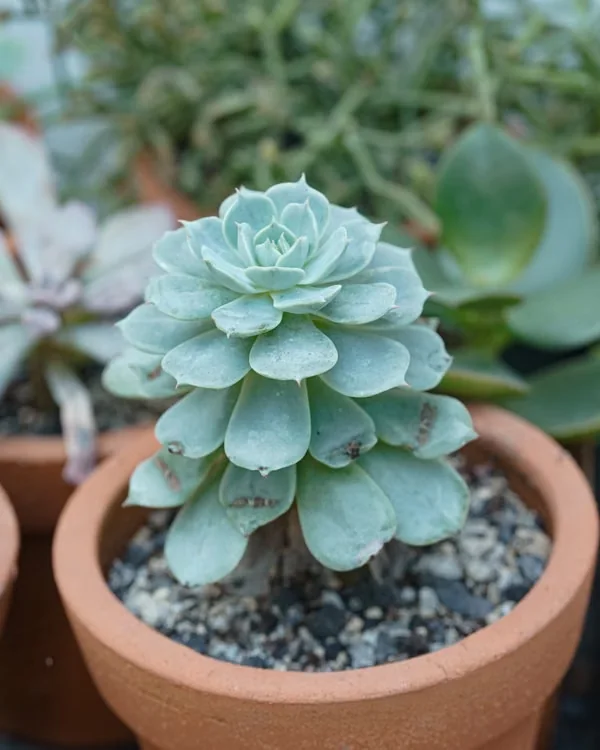
Thick leaves spiral from a compact center. An echeveria often has a layered shape like an open flower. Some haworthias have translucent tips or pale markings.
9. Bromeliads
Examples: Guzmania and related plants
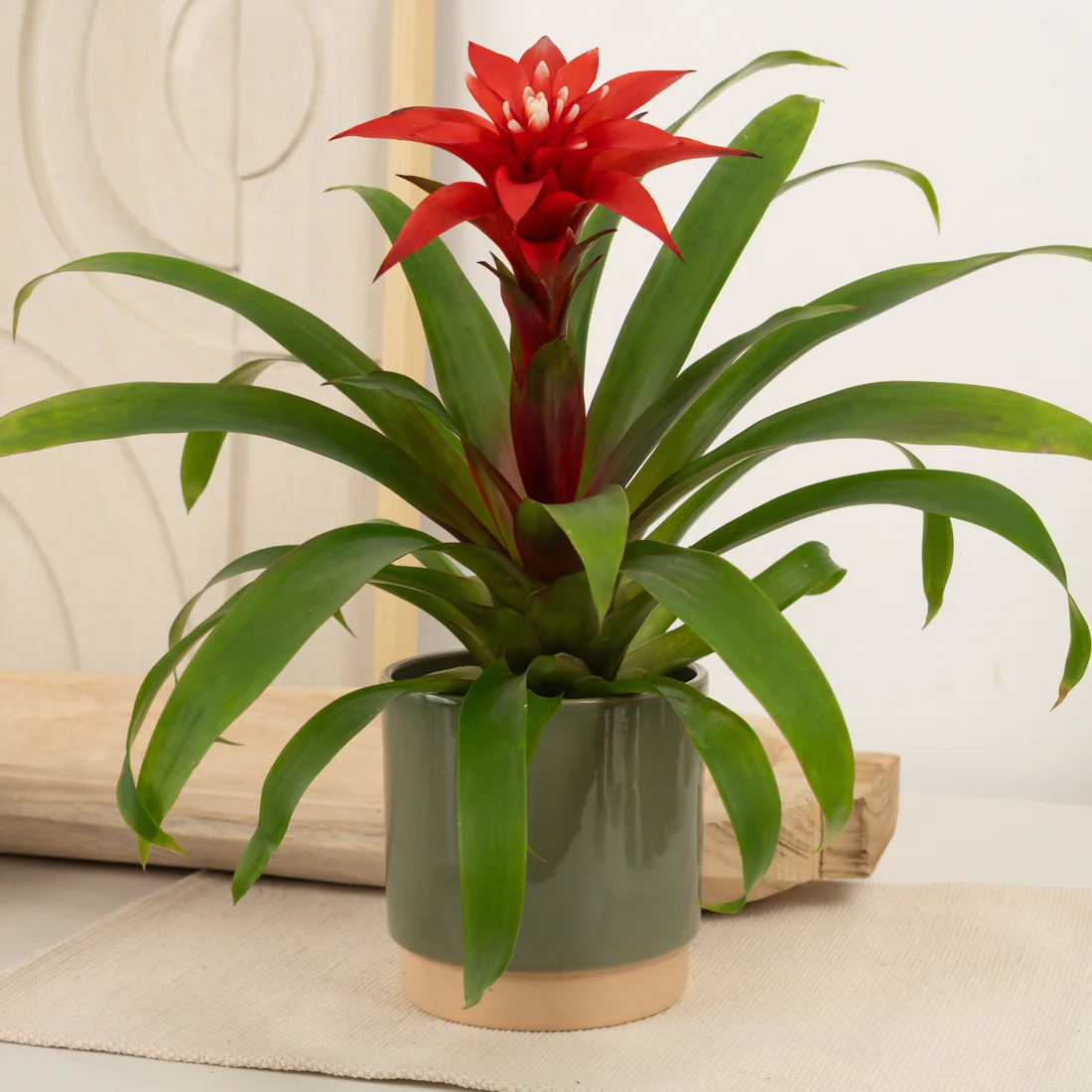
Strap leaves overlap to form a cup on many common houseplant bromeliads. Guzmania often has colorful central bracts. Compare it with a fleshy rosette before choosing a watering routine.
10. Orchids
Examples: Moth orchids and other indoor orchids
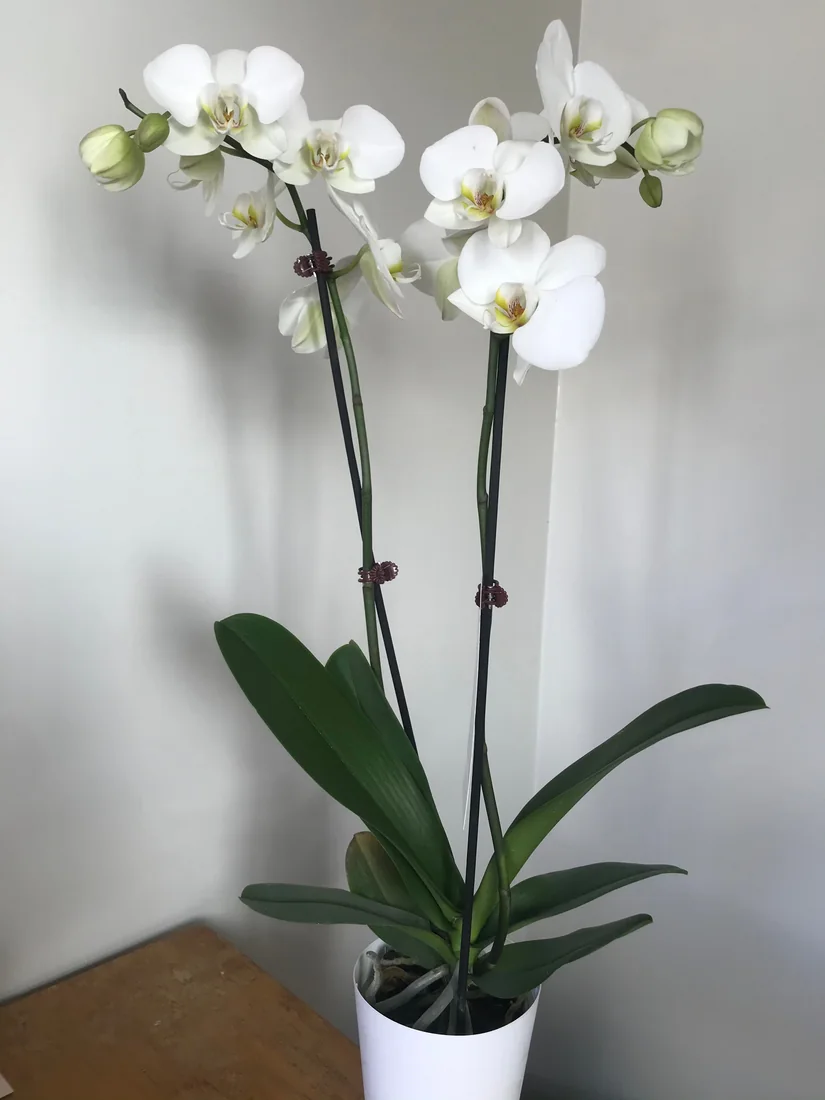
A moth orchid often has thick aerial roots and broad leaves in two ranks. Flower spikes emerge from between the leaves. See indoor flowering plants for other shapes in bloom.
11. Cacti
Examples: Desert and forest cacti
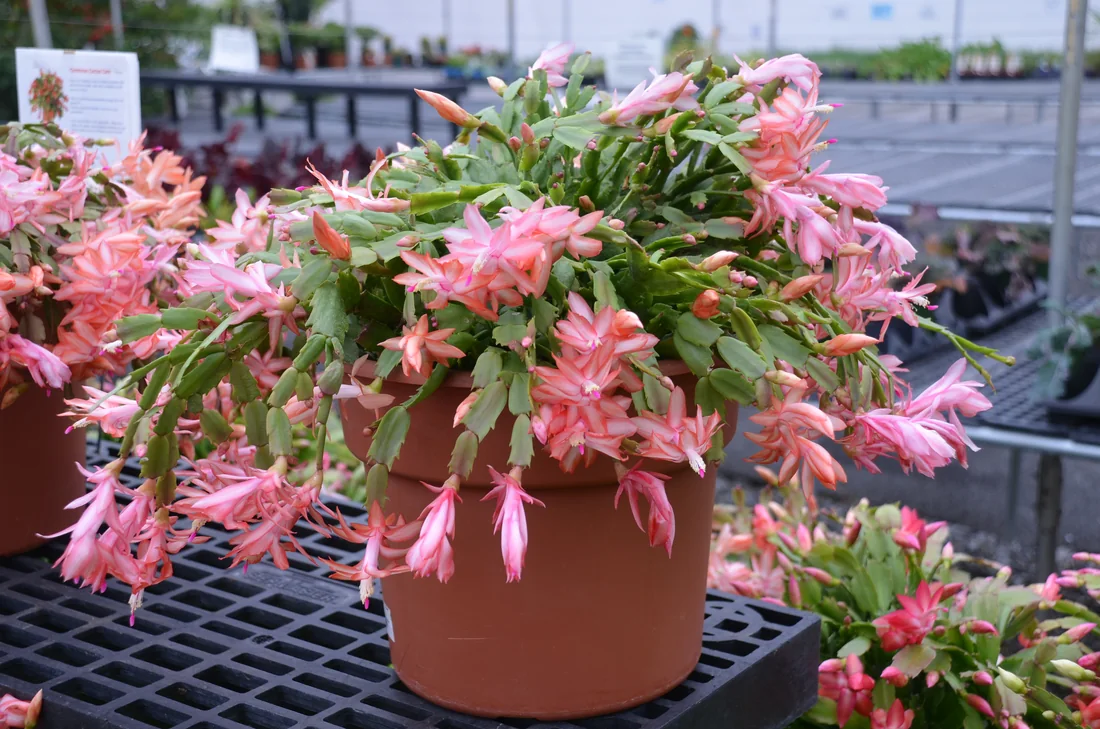
Look for small growth points called areoles. On many cacti they carry spines, while some forest cactus areoles sit along the edges or tips of flattened stems. See indoor cacti for examples.
Compare the leaf structure from the side as well as from above. The plant’s silhouette becomes easier to recognize when you can see where the leaves attach.
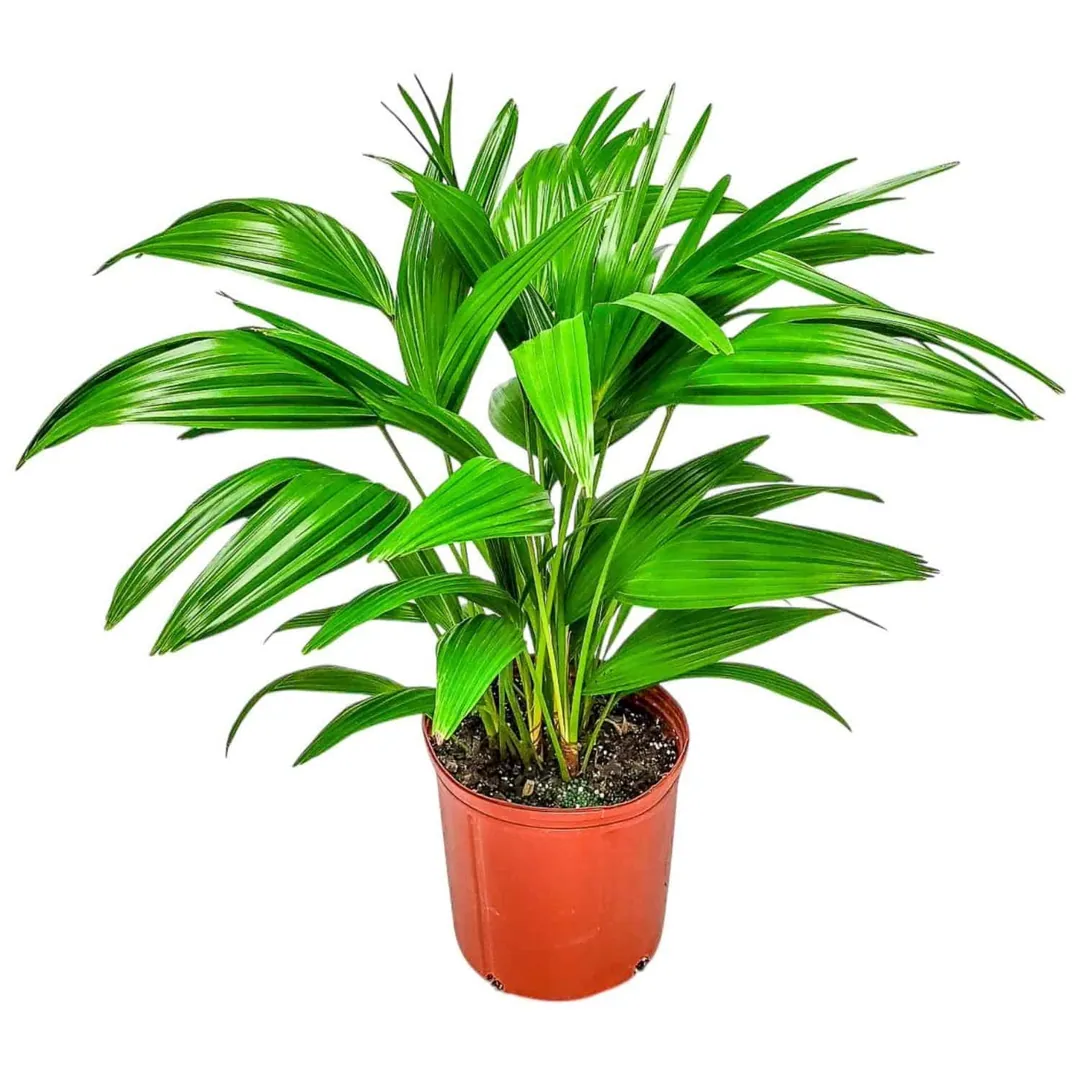
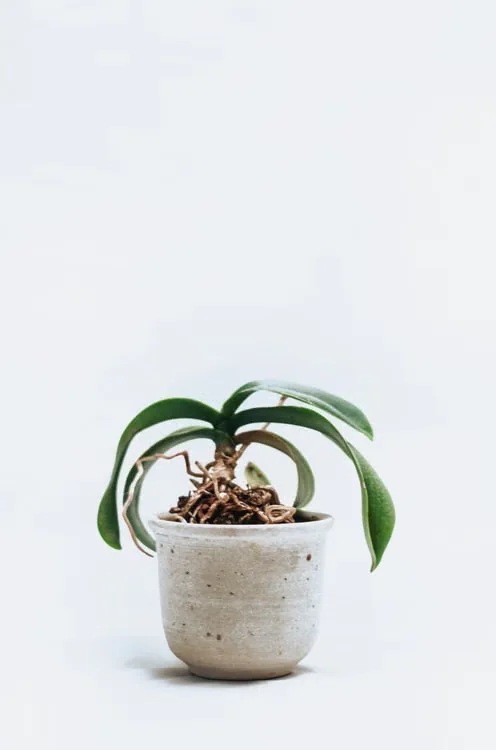
Take three photos before trying to name a plant
Photograph the full plant, one mature leaf or stem segment, and the spot where it joins the stalk or crown. Include a flower or new growth if present. Once you have a shortlist of names, use the University of Minnesota Extension light guide to compare placement, or see our indoor plant room guide.
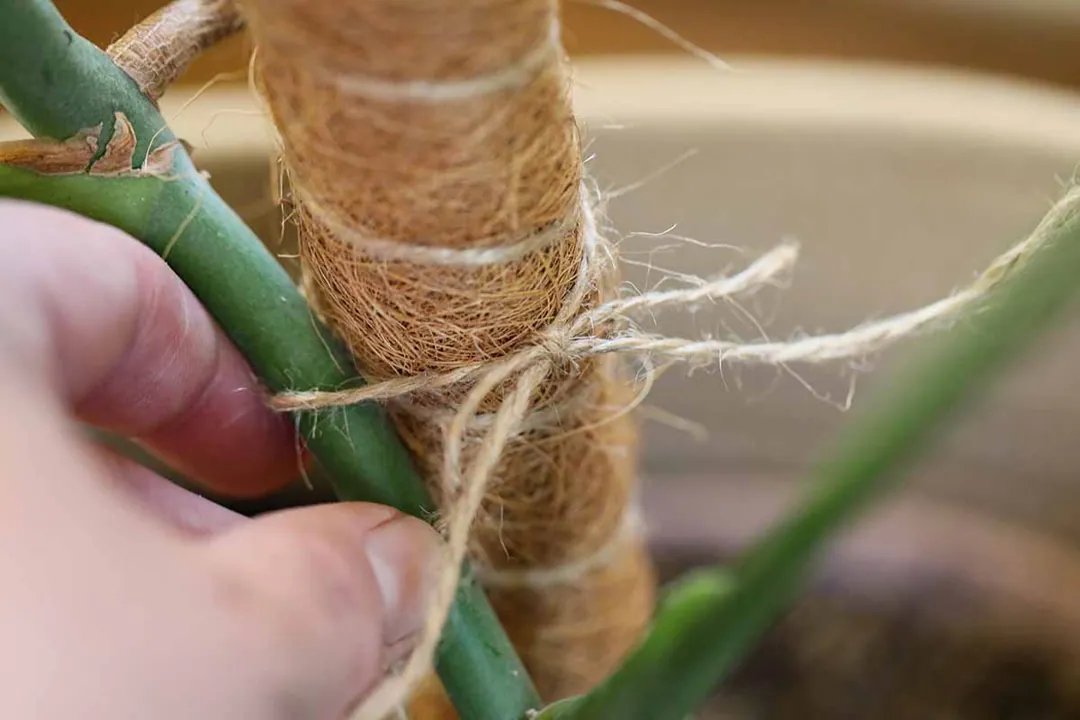
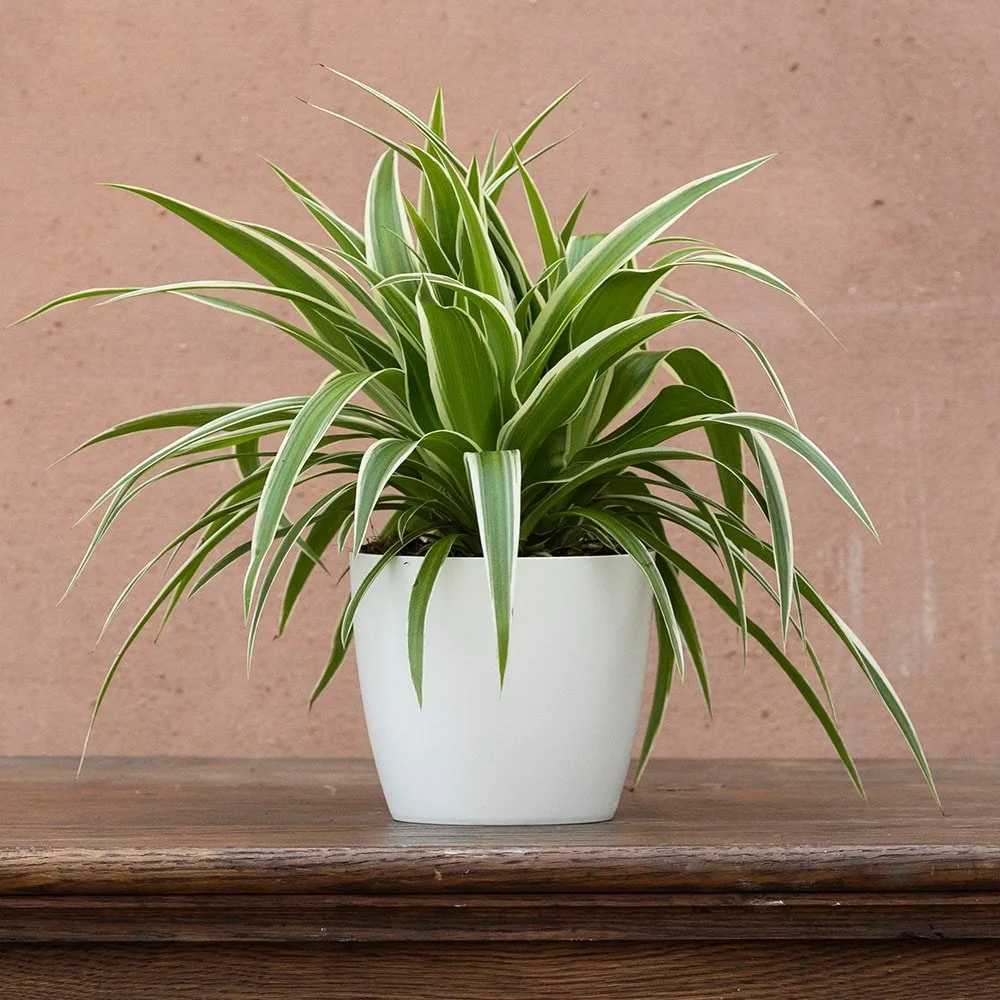

If two names still look plausible, use the attachment as a tie-breaker. Young pothos and heartleaf philodendron can both have heart-shaped leaves. Compare several stems and look for the papery sheath that can remain near new growth on a heartleaf philodendron. For ferns and palms, check the undersides of mature fronds. Rows of spore clusters point to a fern. For a cactus look-alike, check the stem for areoles before guessing from the spines alone.
Compare a few common look-alikes
Parlor palm or ponytail palm? In a parlor palm, several narrow leaflets attach along a single feather-shaped frond. A ponytail palm has solid ribbons that spill from a tuft above a swollen base. Trace an individual blade before using the name on the tag to choose a watering routine.
Bird’s nest fern or a broad-leaved tropical plant? Look straight into the middle of the pot. The fern’s strap-shaped fronds radiate from a single crown and may have dark spore lines on the undersides of mature fronds. A rubber plant puts out separate thick leaves along a woody stem, and a peace lily has individual stalks rising from the base.
Echeveria or a bromeliad? Both can look like a rosette from above. Echeveria has thick, water-storing leaves layered tightly around its center. A Guzmania has longer, overlapping straps that form a cup and can develop colorful central bracts. Look at mature leaves from the side to see the difference.
If the plant was pruned heavily or is putting out its first leaves, take another photo once it produces mature growth. Use two or three features together. A heart-shaped leaf or a striped pattern can narrow the possibilities, and the way the leaf attaches often makes the stronger distinction.