



Quick Answer
A vine with aerial roots can grow against a textured support. A twining vine wraps around a narrow frame. Plants with fine trailing stems are easiest to display when you let them fall over the edge of a shelf.
Match the vine to the surface
Match the vine to the surface
Scroll sideways to compare all columns.
| Growth habit | Support | Example |
|---|---|---|
| Climbs with aerial roots | Textured pole or board | Monstera |
| Twines around a frame | Hoop or narrow trellis | Wax plant |
| Grips with tendrils | Thin grid | Grape ivy |
| Cascades over an edge | Shelf with clearance | String of hearts |
Match the vine to its support
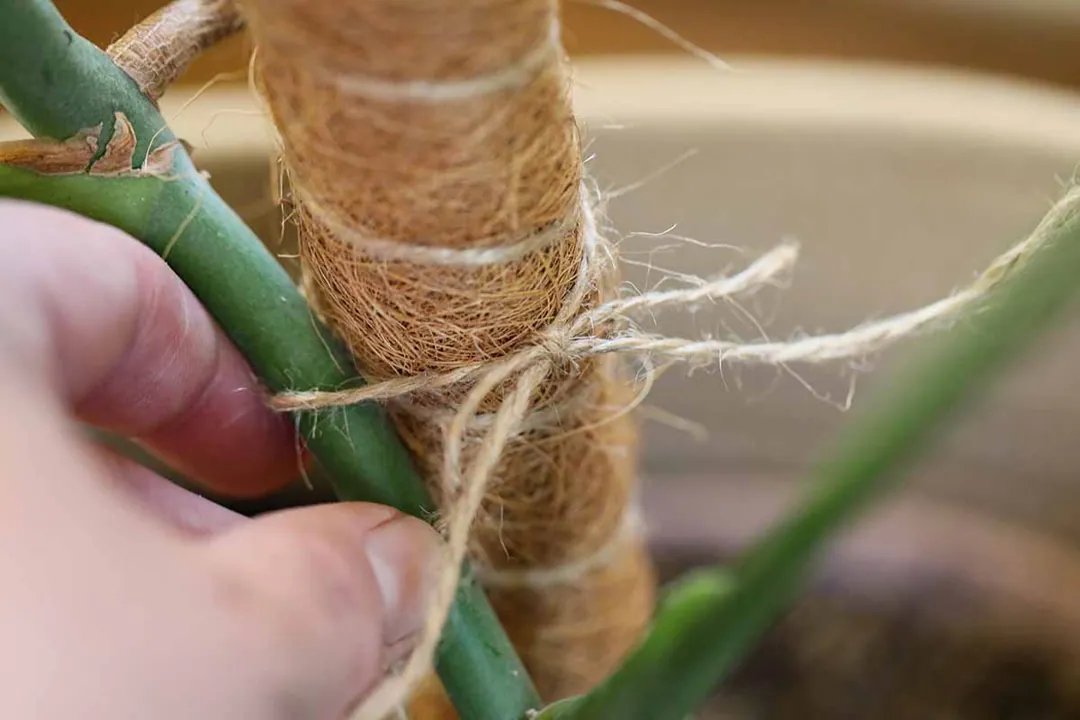
Look at the growing tip and the points where leaves meet the stem. Short roots at those points can grip a rough support. A flexible stem that winds around itself can go on a hoop. Keep stems loose enough to thicken and put the support where the new growth gets daylight. For ceiling hooks and basket placement, see our hanging indoor plants guide.
1. Golden pothos
Epipremnum aureum
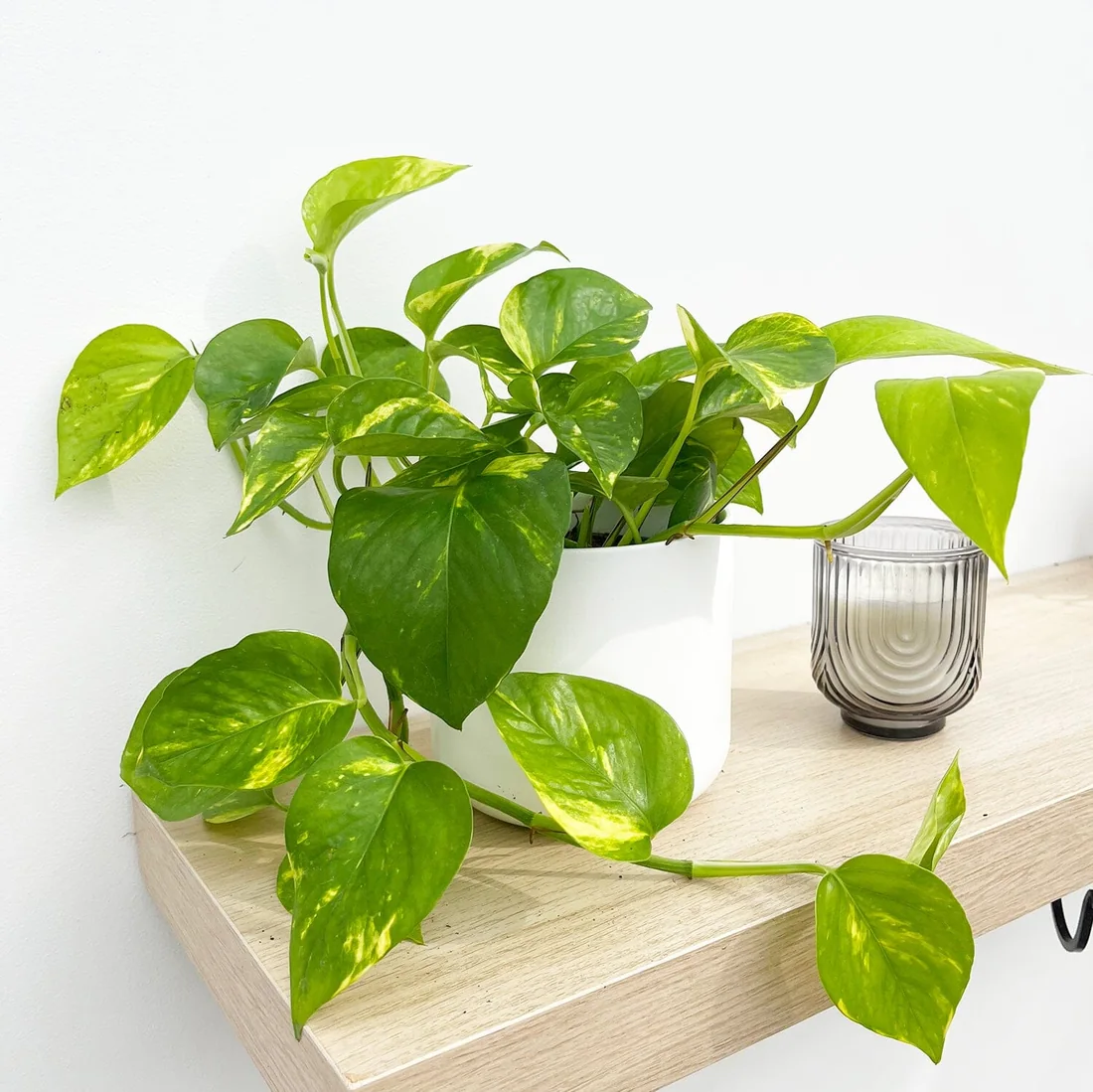
Golden splashes vary from leaf to leaf. Train the stem against a textured board or let it trail. Place a loose tie between nodes so the new roots can reach the support.
2. Heartleaf philodendron
Philodendron hederaceum
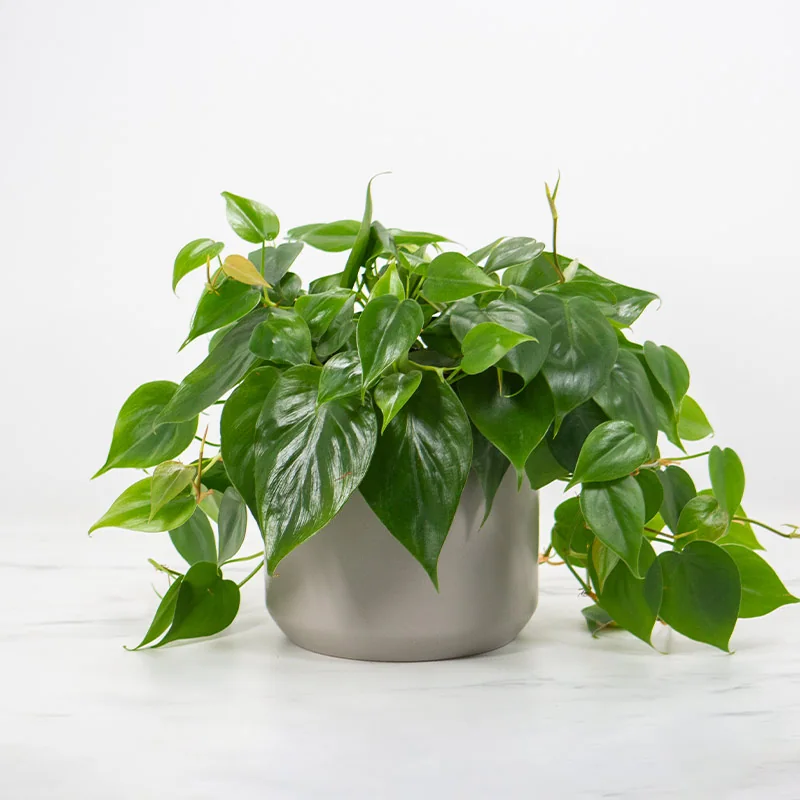
The thin, heart-shaped leaves typically have a smooth green surface. Use a slim pole on a shelf where the shoot tip can keep reaching toward the light.
3. Satin pothos
Scindapsus pictus
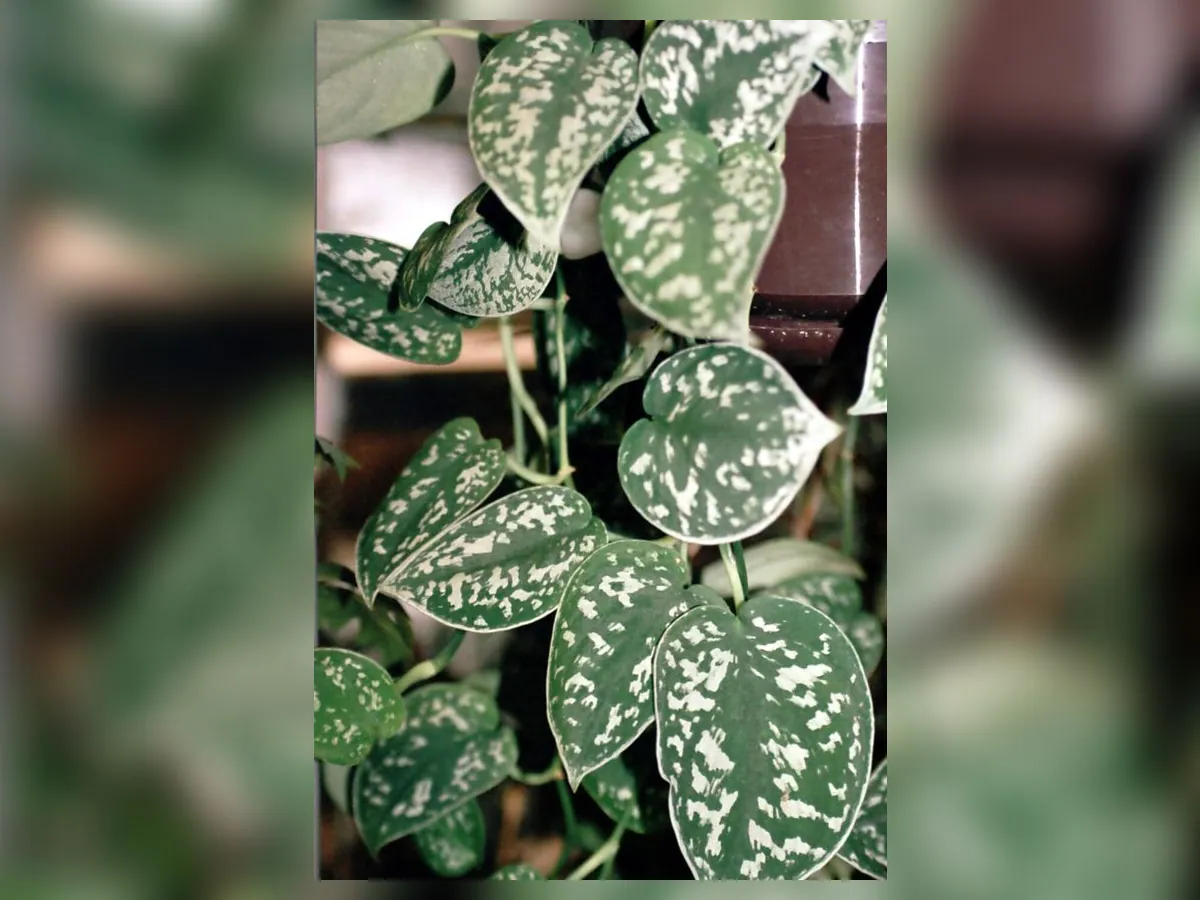
Silver markings interrupt the matte green leaf. Try a textured board for an upright display, or trim and replant rooted cuttings to fill a sparse pot.
4. Swiss cheese vine
Monstera adansonii
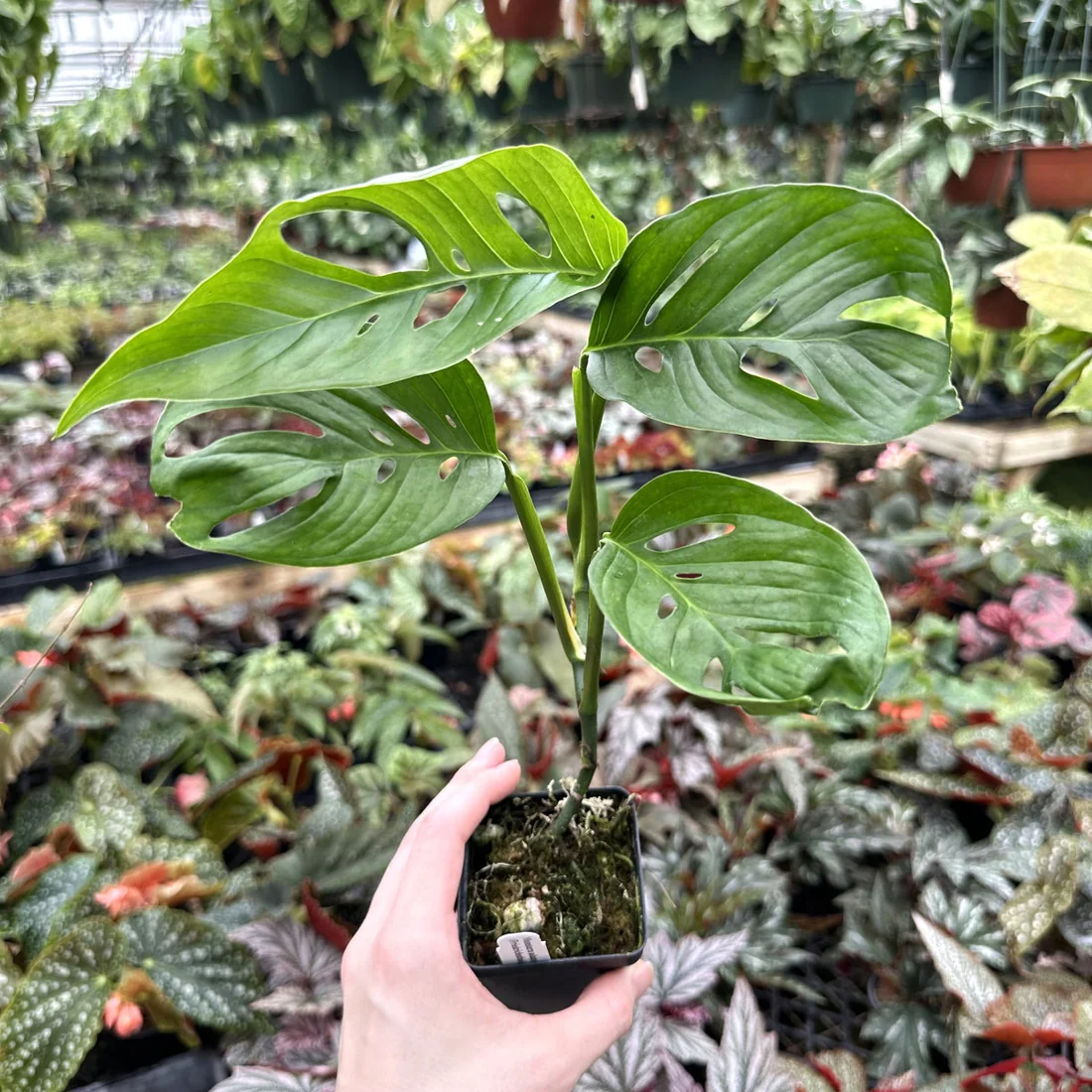
Many leaves develop holes inside the blade. Keep the stems close to a pole with loose ties. Set the pot where you can reach behind it to add ties as the vine grows.
5. Monstera
Monstera deliciosa
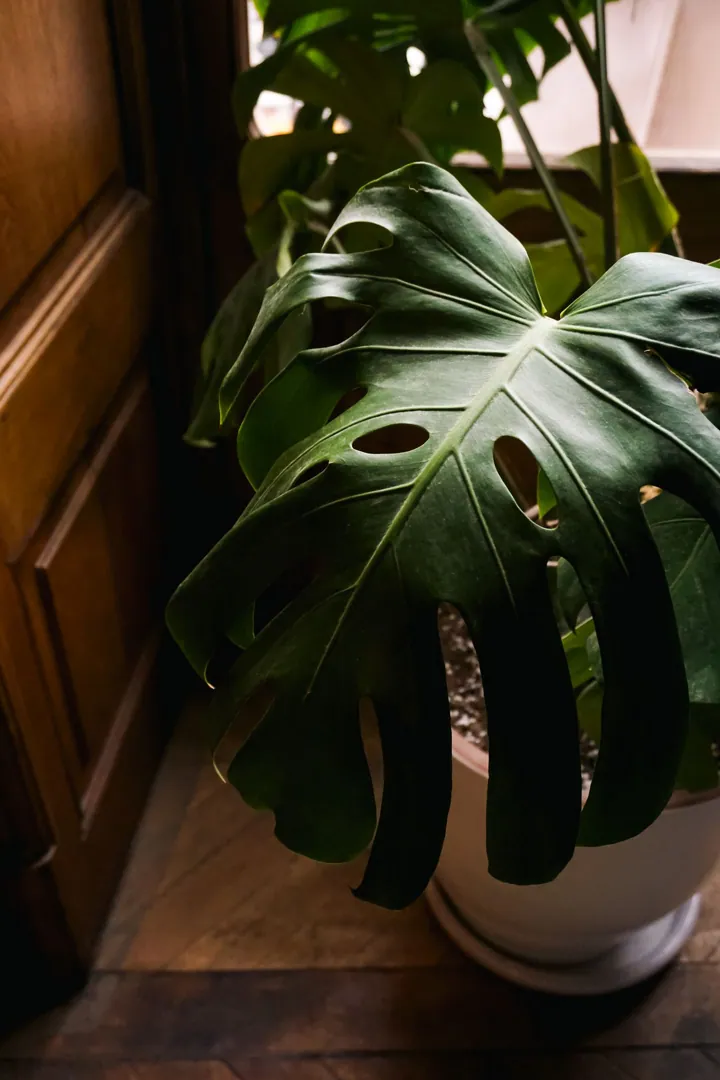
A mature leaf can have both slits at the edges and holes inside the blade. Use a sturdy support anchored in the pot and leave room for the leaves to fan outward.
6. Arrowhead vine
Syngonium podophyllum
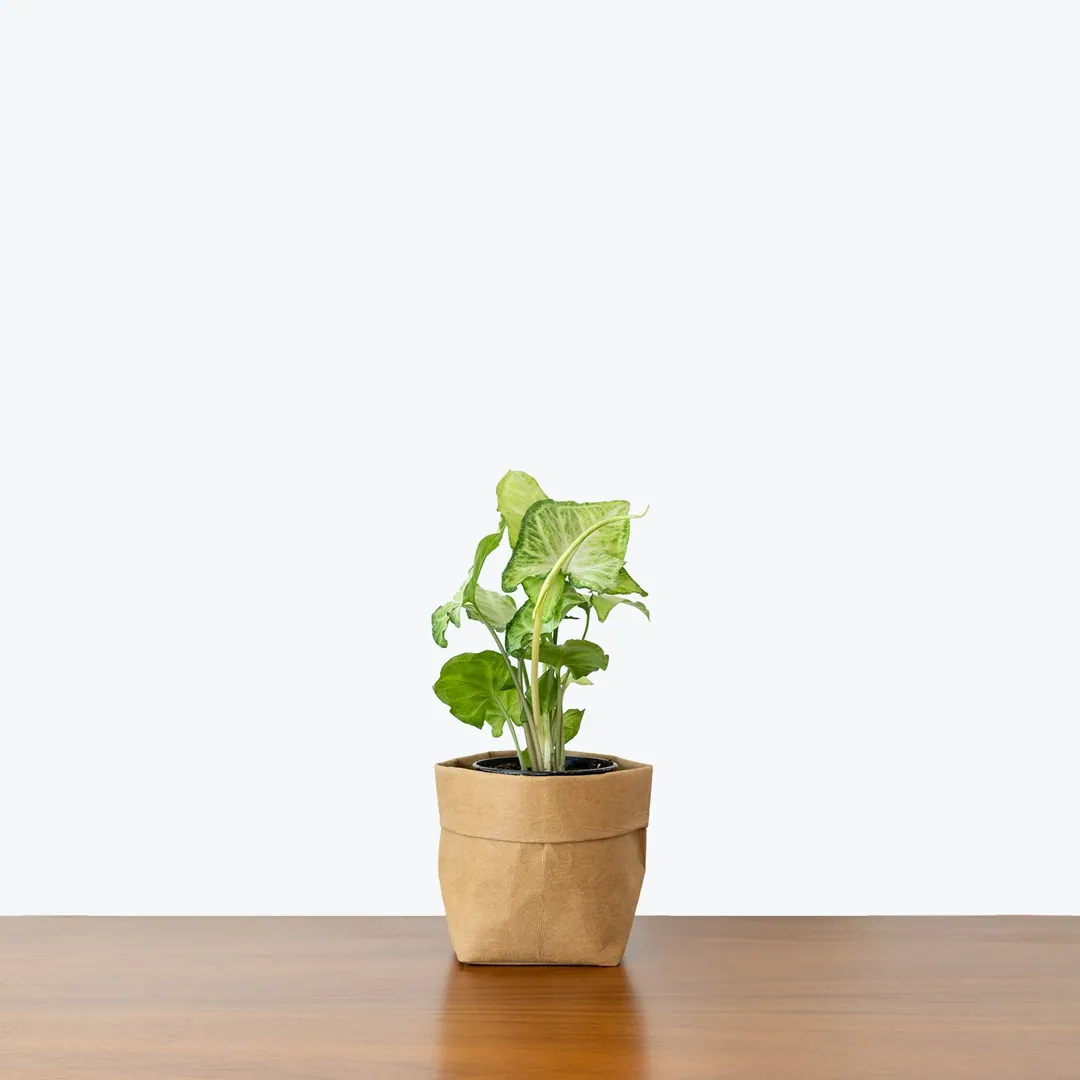
Young leaves have a pointed center and two basal lobes. As stems lengthen, guide them onto a support or cut them back to maintain a compact shape.
Hoops and trailing ledges
A narrow hoop gives a winding stem something to wrap around. Leave extra room at the end of the new growth so you can guide it later. Keep shoots away from window latches, heat vents, and walkways.
7. Wax plant
Hoya carnosa
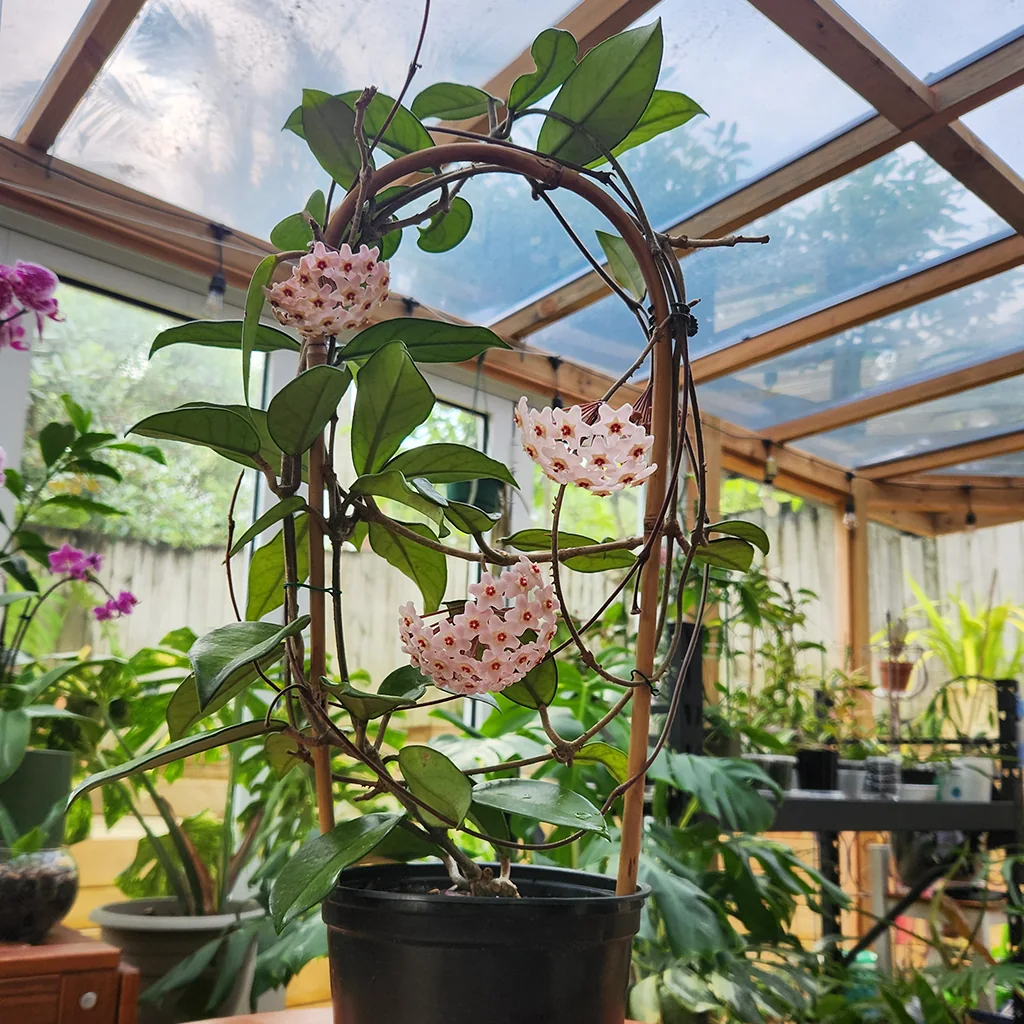
Thick, waxy leaves line wiry stems. Guide a young shoot loosely around a hoop. Keep old flower spurs if you want another round of blooms.
8. Grape ivy
Cissus alata
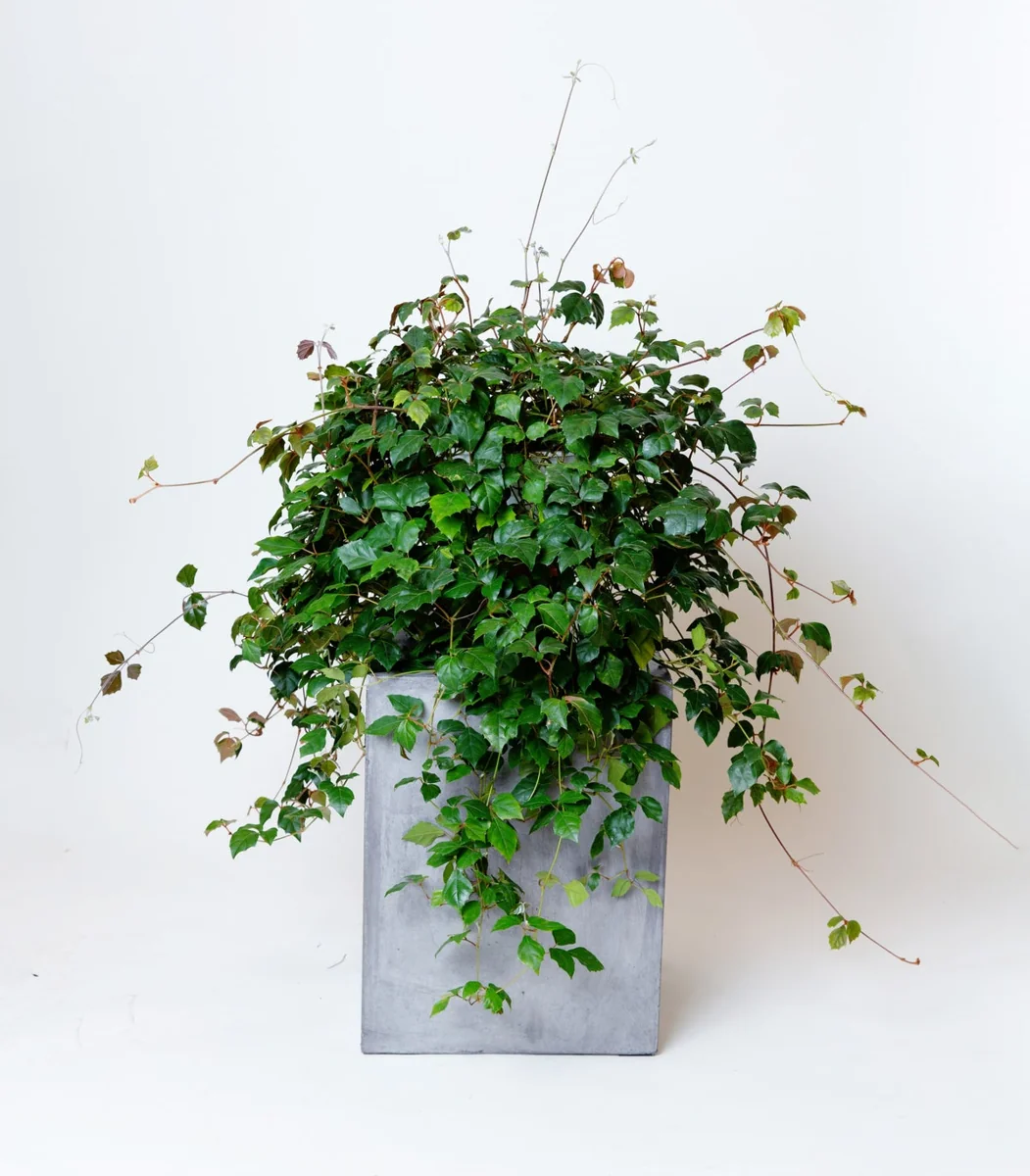
Look for clusters of three leaflets and tendrils that curl toward support. Give the tendrils a thin grid or wire they can coil around.
9. String of hearts
Ceropegia woodii
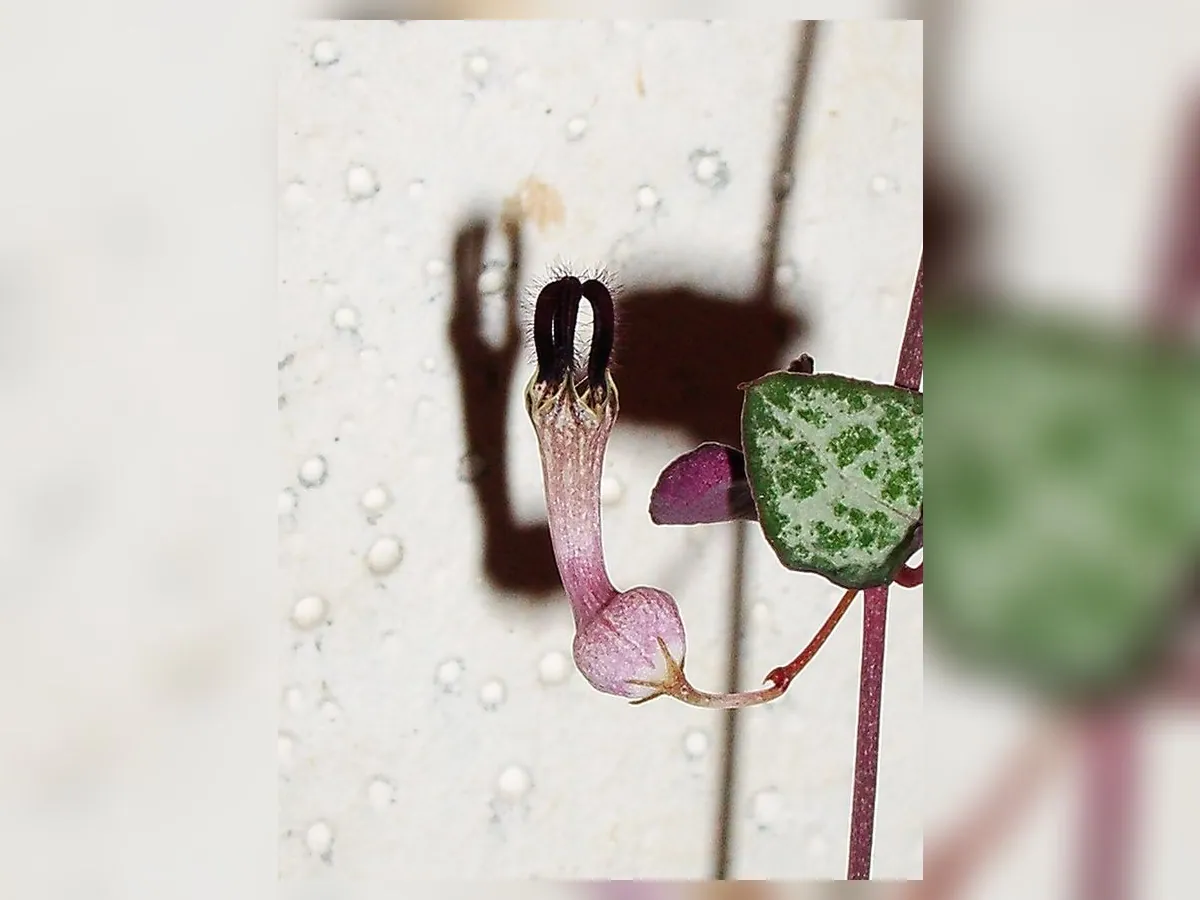
Fine stems carry pairs of small heart-shaped leaves. On a bright shelf, let the stems hang where you can lift the pot without snagging them.
10. Inch plant
Tradescantia zebrina
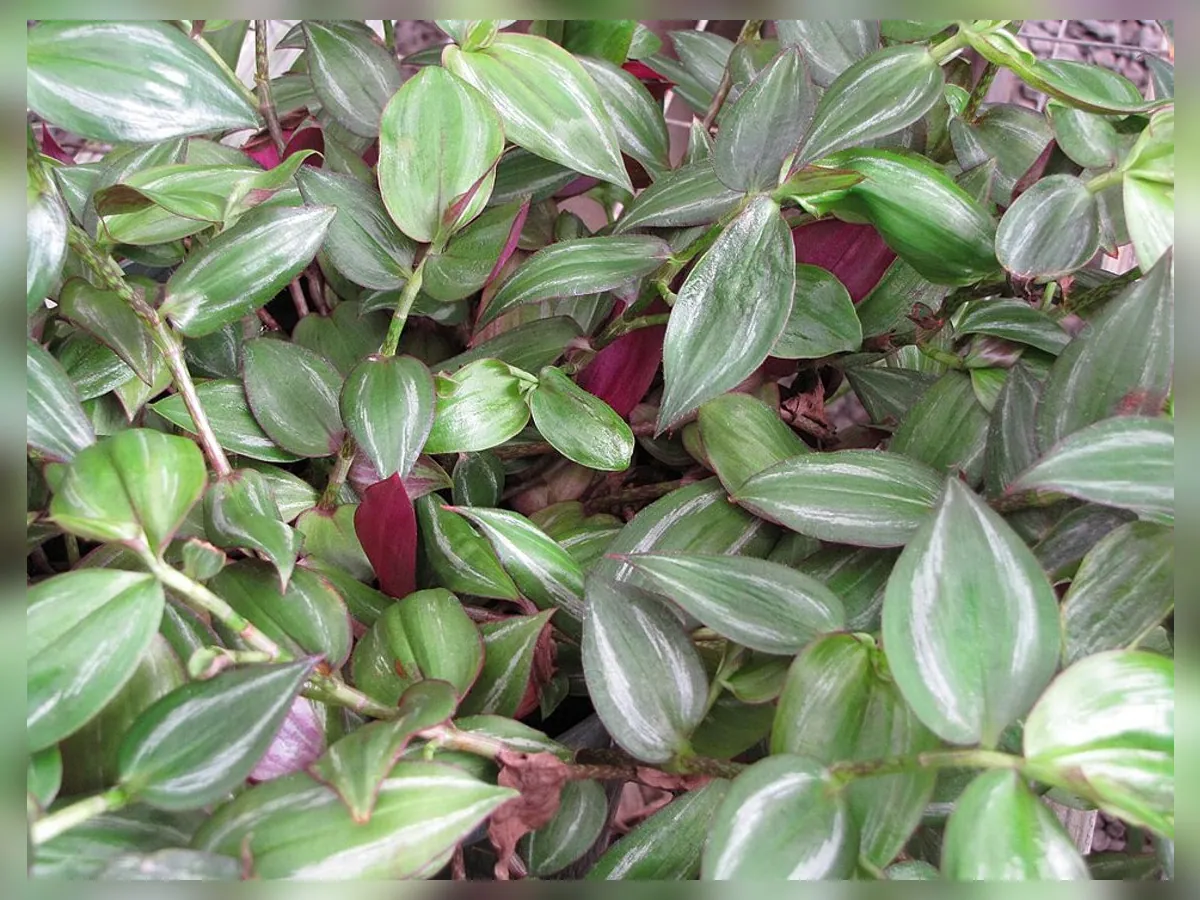
Purple and silver stripes run the length of the leaf. Pinch the vigorous tips above a node and root cuttings to fill gaps near the soil.
Train new growth without breaking it
Anchor the support before guiding the stems. Move flexible new shoots in small steps and leave rigid stems in place. Compare the newest leaf spacing after a few weeks. If the vine stretches toward a window with wide gaps between leaves, move it closer to the light or check our low-light houseplant guide. The NC State profile for Scindapsus also illustrates how one vine can trail or climb.
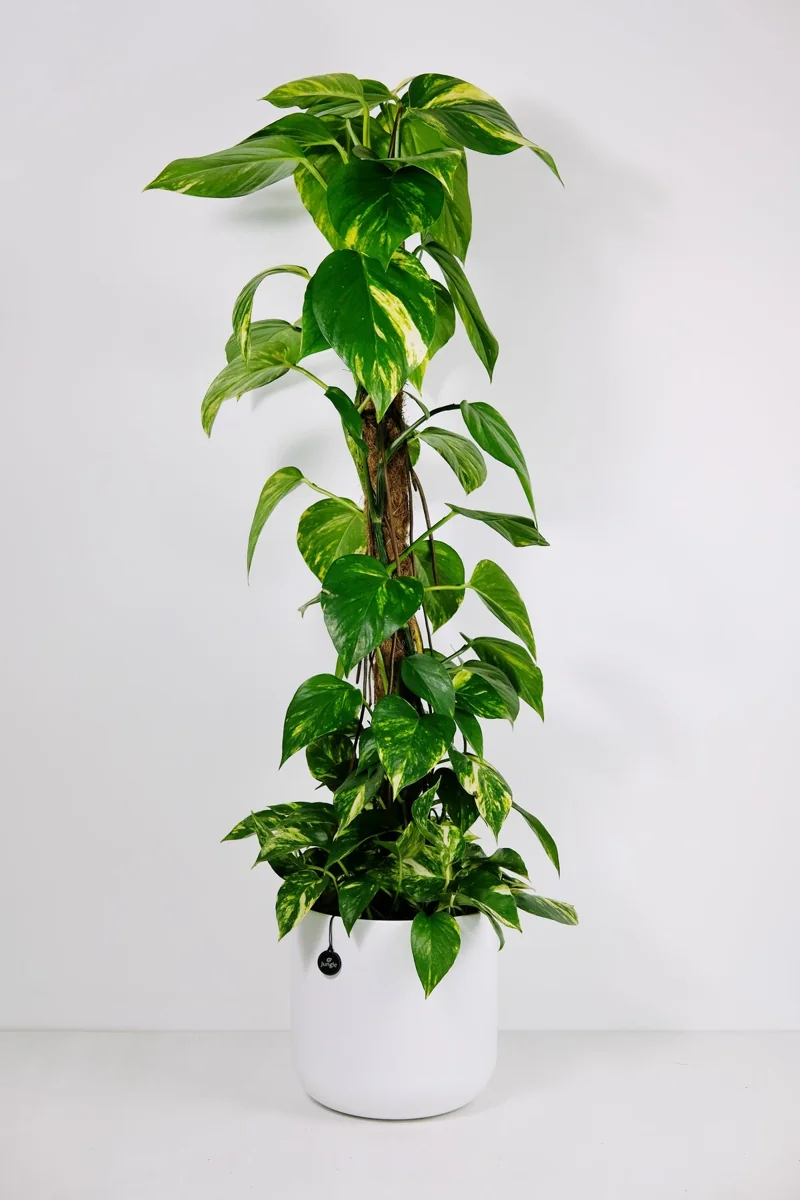


A moss pole and a hoop solve different problems. A textured or moss-covered pole gives an aerial-rooting vine a place to attach. A hoop takes up less height and suits a pliable twiner such as wax plant. When tying a monstera, secure the main stem between leaves so individual leaf stalks can still turn toward the light.
Set up a small trellis
Choose a frame the pot can support when the leaves are wet. Insert it where you can reach both sides without pushing the roots around more than necessary. Start with the longest flexible stem. Guide it against the frame and secure it loosely, then leave the newest tip free to grow. Check the ties as the vine lengthens. For broad leaves that need more room, compare the upright choices in our tropical houseplants guide.
Fill in a bare vine
If a plant has long bare sections, move it toward better light before judging the next round of growth. On a vine that roots readily from stem cuttings, such as pothos, trim below a healthy node on the section you want to root. Once the cutting has established roots, pot it with the parent plant to add a growing tip near the soil.
Choose a vine for the space you can give it
A narrow shelf. Pick a plant you can lift out to water without pulling it through the rest of the display. String of hearts works where fine stems can fall freely. A small wax plant on a hoop keeps growth close to the pot, provided you can turn the pot and tuck in new stems as they lengthen.
An upright display. Choose heartleaf philodendron or pothos if you want a leafy column without the spread of a mature Monstera deliciosa. If you choose Monstera, measure the space across the leaves as well as the height. A support may keep the stem upright while its leaf stalks still project into the room.
A vine that keeps slipping off its support. Look at where it naturally grips. Guide grape ivy toward wire thin enough for a tendril to wrap around. For pothos, bring a stem node into contact with a textured surface and keep the tie loose. If a plant already has a stiff bend, start training the newest flexible shoot and leave the older stem where it is.
Check the next few leaves before judging whether the spot works. Widening gaps and fewer or smaller leaves can indicate the tip has reached a dimmer area. Move the growing tip back toward light before pruning or adding more fertilizer.