



Quick Answer
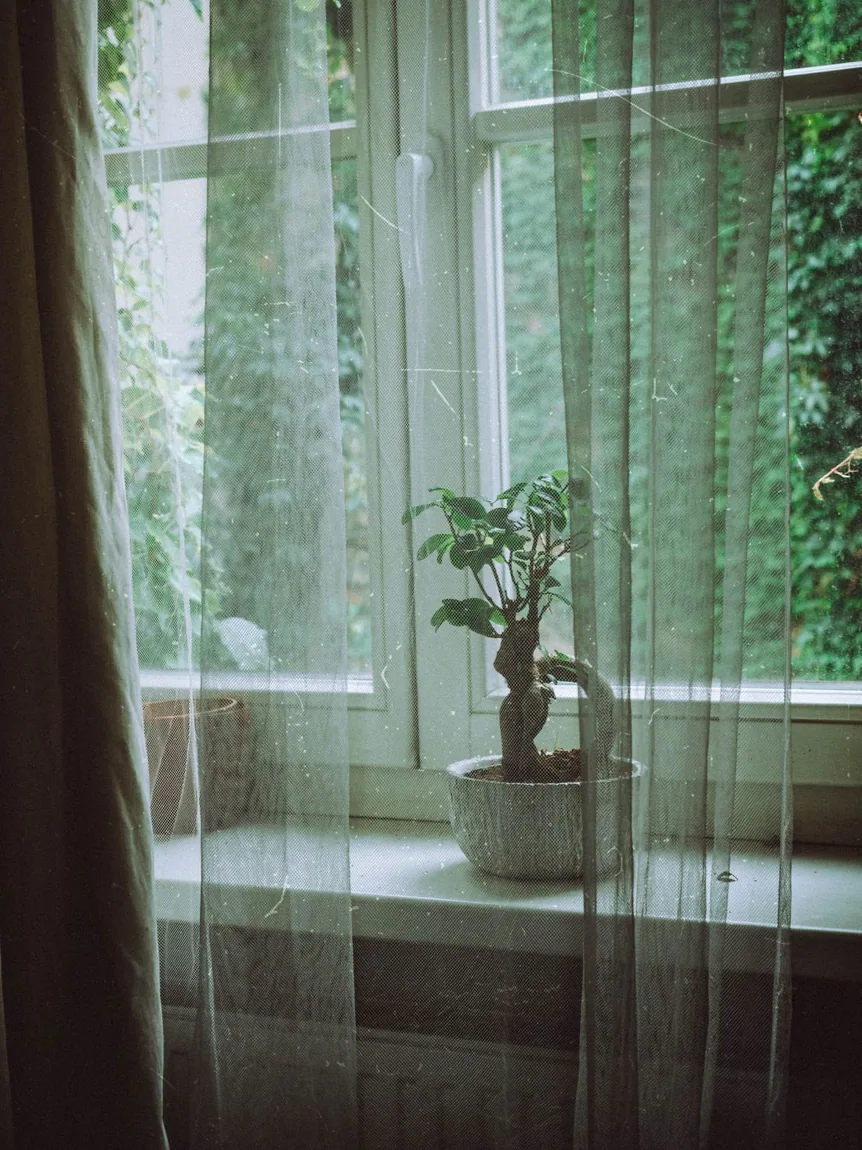
A ficus is a sensible first indoor bonsai for a bright window. Dwarf jade suits a setup with strong light and a mix that drains freely. If your only spot is a dim shelf, plan for a grow light before buying.
Compare four indoor bonsai by their growing needs
Compare four indoor bonsai by their growing needs
Scroll sideways to compare all columns.
| Tree | Where to start | What to watch |
|---|---|---|
| Ficus | Bright window with stable temperatures | Waterlogging and cold drafts |
| Dwarf jade | Strong light and a fast-draining mix | Soil staying wet between checks |
| Dwarf umbrella | Bright, filtered light | Weak growth in a dim spot |
| Fukien tea | Bright, warm spot with stable conditions | A shallow pot drying too far or staying saturated |
Match the tree to your light
Check the spot at the height of the canopy. A bright room can still have a dim shelf several feet from the glass. Leave room to lift the pot for watering, and choose a stable surface away from cold glass, heaters and vents. If you need a light, use an adjustable fixture and follow its coverage and distance guidance. The University of Michigan botanical gardens’ indoor bonsai guide explains why supplemental light is often needed.
Four bonsai to consider indoors
Buy a nursery-grown tree with a botanical label. Bonsai is a way of growing and shaping a plant. Its indoor suitability comes from the species and the conditions you can provide.
1. Ficus bonsai
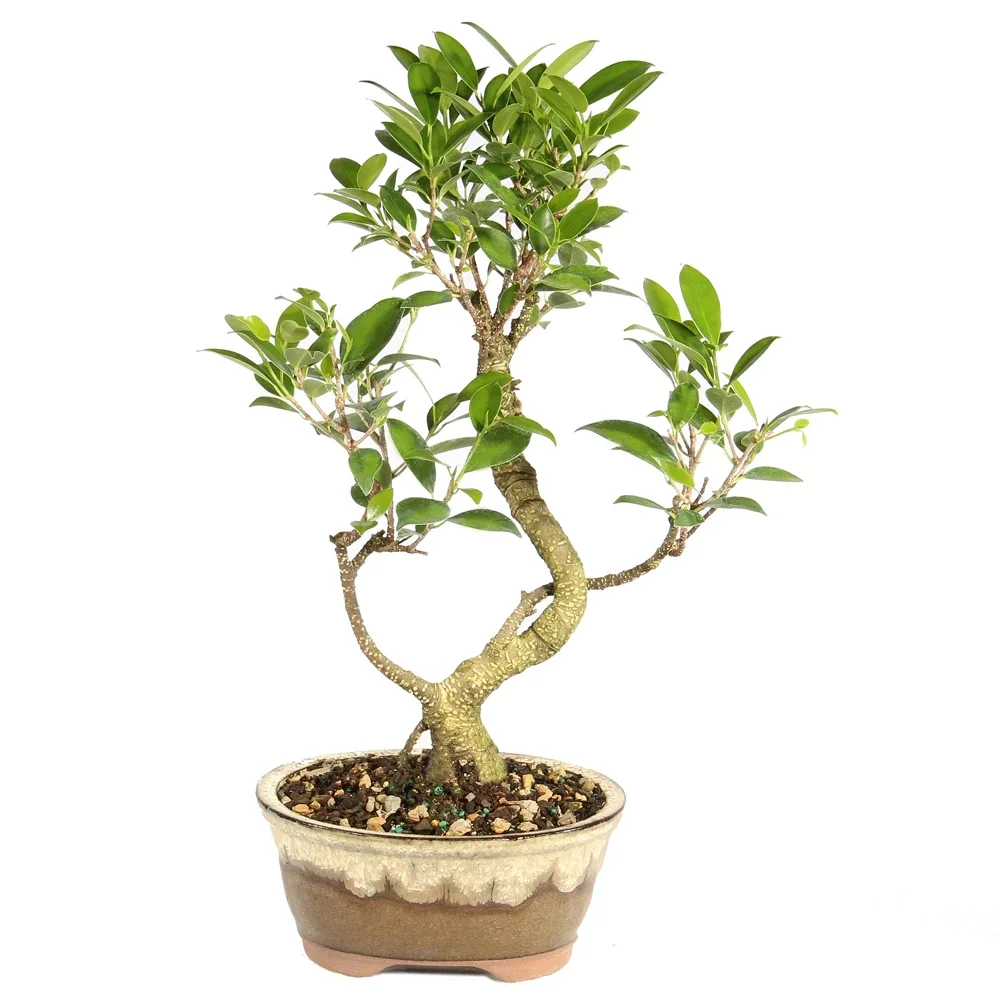
Look for a labeled Ficus microcarpa or Ficus benjamina. A ficus gives beginners a relatively forgiving starting point, especially with steady warmth and good light. The bulbous base on a ginseng ficus is a style cue. Ask for the botanical name on the tag before comparing care. Keep track of how the mix dries from the surface downward during the first week. That observation will tell you more about your own setup than advice to water on particular weekdays.
2. Dwarf jade bonsai
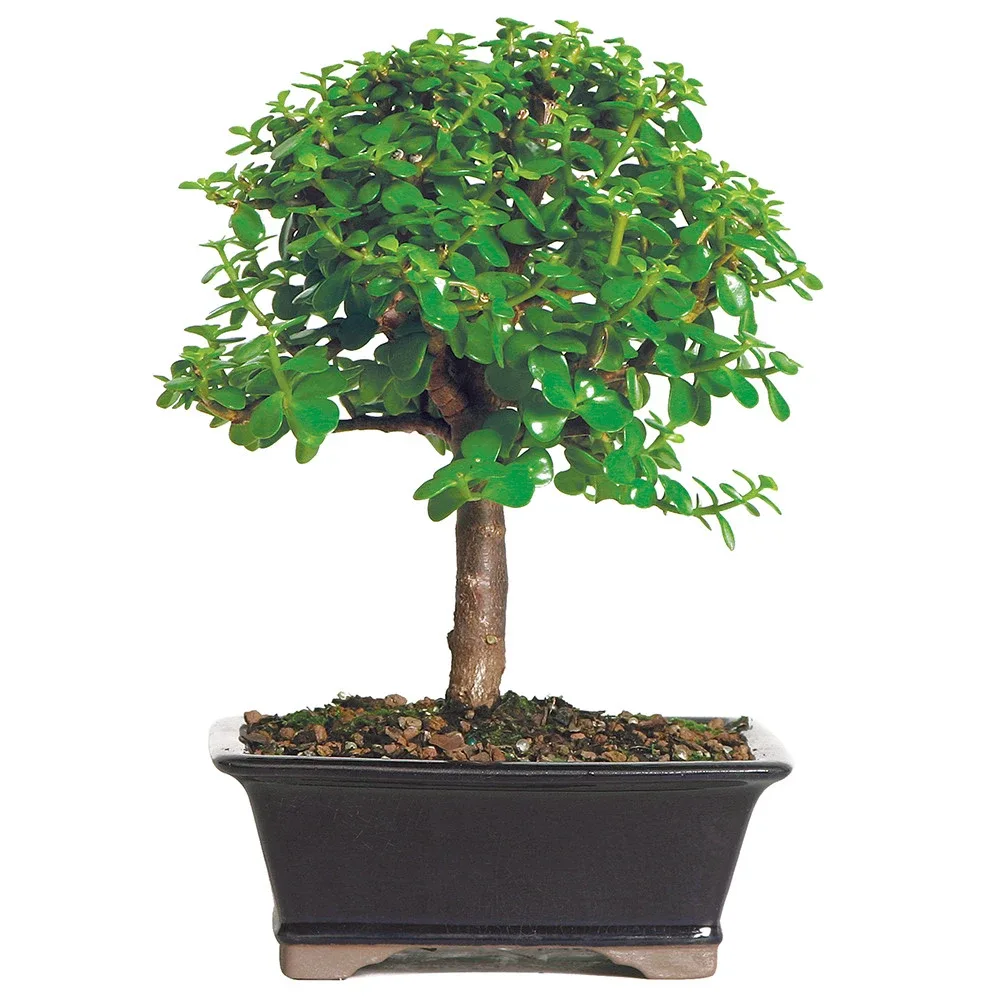
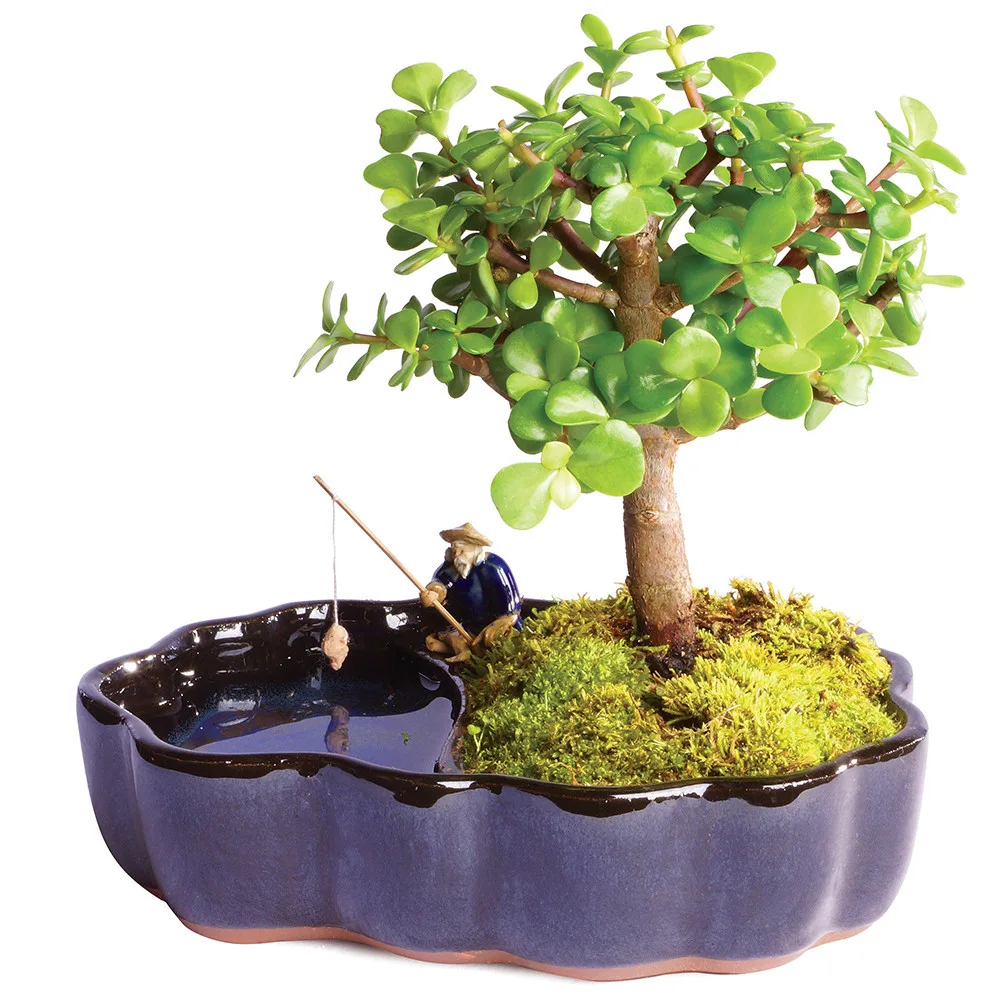
Portulacaria afra has small, fleshy leaves and branches that suit miniature styling. Give it a bright spot and let the mix dry between waterings. Its moisture needs differ from those of Fukien tea.
3. Dwarf umbrella bonsai
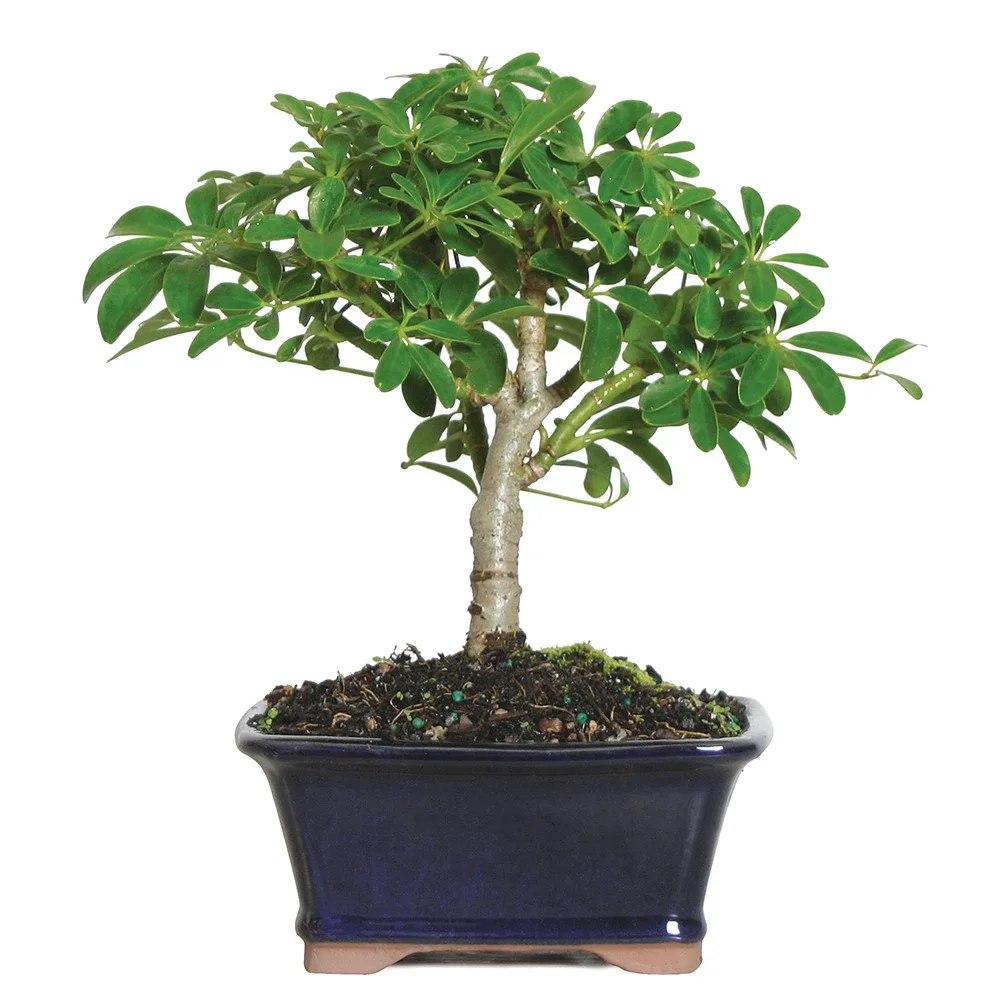
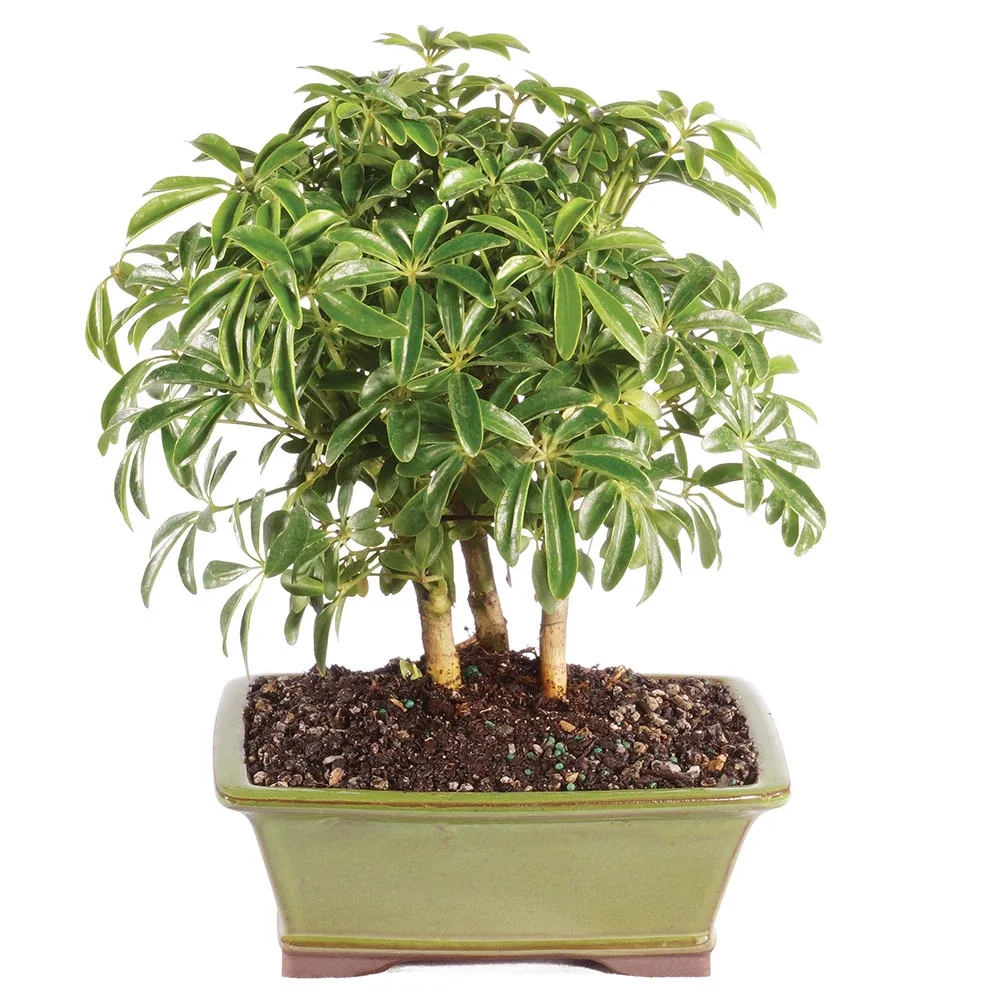
Heptapleurum arboricola, also sold as Schefflera arboricola, has leaflets arranged like small umbrellas. Use it where the leaflets have space to spread and the canopy gets steady light. Water when the surface mix begins to dry and allow the pot to drain.
4. Fukien tea bonsai
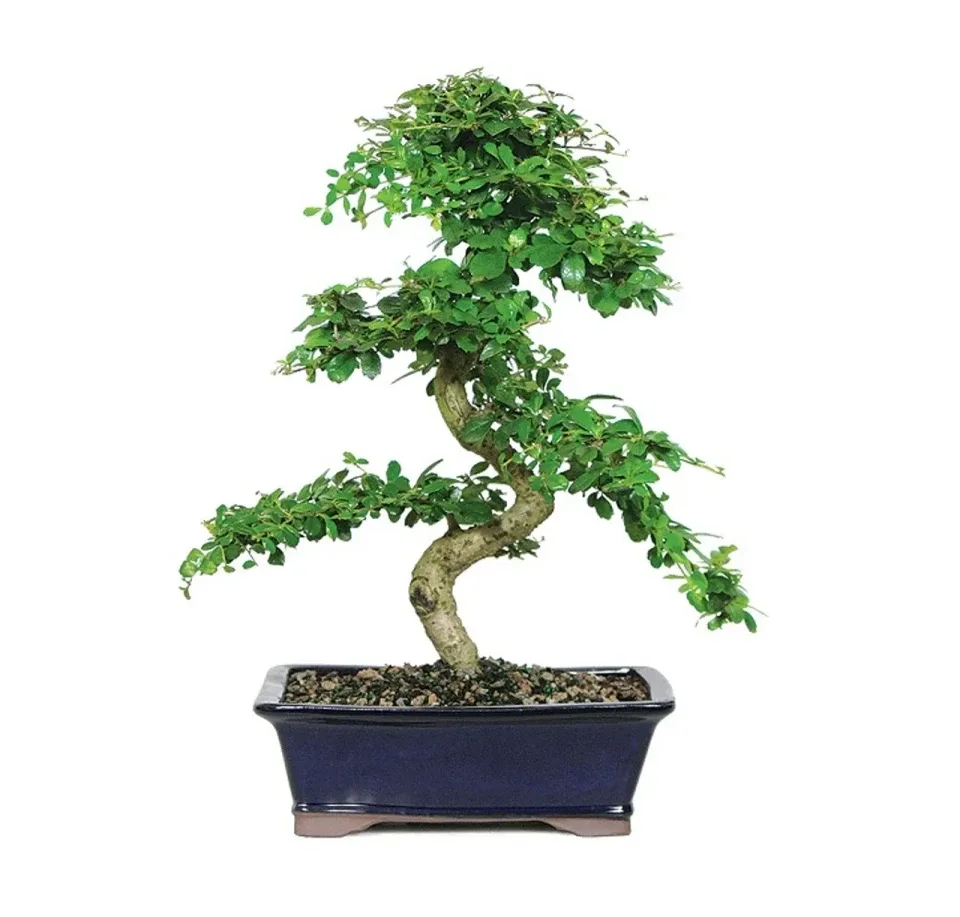
Often sold as Carmona, this tree has small glossy leaves and can produce tiny white flowers. Choose it if you can give it bright light, warmth and regular moisture checks. It needs a steadier routine than the first two options.
What to check before buying
If a retailer offers Chinese elm (Ulmus parvifolia), ask where that specimen has been grown and how it should spend winter. A tree raised outdoors may need a different winter setup from one raised indoors. Chinese sweet plum (Sageretia theezans) is another option for a bright indoor spot if you can check the shallow pot often enough to keep the mix from drying out completely.
Look under the leaves and along the branches for scale, webbing and sticky residue. Check that the tree sits firmly in its pot and that the pot drains. Ask the seller whether the tree was just repotted and what light it has been receiving. Start with a healthy nursery specimen you can keep in a consistent spot before adding pruning or wiring to your routine.
A juniper or Japanese maple belongs in an outdoor bonsai setup with seasonal conditions. The RHS bonsai guide separates outdoor trees from the kinds grown indoors. If you mainly want a floor-height trunk and canopy, browse our indoor tree guide.
Care for it in the first few weeks
Check the mix often while you learn how quickly the shallow pot dries. When the species needs watering, wet the mix evenly and let the pot drain. Recheck after changes in season or heating. If leaves drop, review light, temperature and moisture before moving the plant again or adding fertilizer. For a broader comparison of plants by room conditions, see our indoor plants guide. If you are setting up a light away from a window, our guide to plants in windowless rooms explains where to position the fixture and how to check the light coverage.