



Quick Answer
Use separate pots on a sunny sill, a tray with a grow light on a dim counter, or a freestanding shelf where you need to keep the worktop clear. Choose herbs for the available light and how often you harvest them.
Choose a herb garden layout by light and available space
Choose a herb garden layout by light and available space
Scroll sideways to compare all columns.
| Setup | Starter herbs | Space to reserve |
|---|---|---|
| Sunny narrow sill | Chives and flat-leaf parsley | Whole pot base and a drip tray |
| Counter with a grow light | Basil and parsley | Lamp clearance and a dry place for the cord |
| Freestanding shelf | Thyme, rosemary or mint in separate pots | Room to lift and water each pot |
| Countertop hydroponics | Basil or compact leafy herbs | Reservoir access and overhead growth |
Measure the space before buying pots
Measure sill depth with the window shut. A pot and saucer should sit fully on the ledge and leave the latch clear. At the counter, mark where you prep food and where the lamp and tray can stay. Think about access to the sink so draining the pots is easy enough to do regularly.
Watch how long direct sun actually reaches the pots. Iowa State University Extension says some herbs tolerate about six hours of direct light, while most grow best with eight or more. If the sill gets fewer than six hours, or winter shade cuts that down, plan for supplemental light. For a setup that relies on a grow light, Iowa State recommends starting with 12 to 16 hours a day on a timer. Follow the fixture’s guidance for height above the leaves.
Layouts for windowsills, counters and shelves
Use the footprint suggestions as starting layouts. Choose pots sized for the plants you buy and leave extra room as they grow. The Brooklyn Botanic Garden windowsill guide shows how a small container can hold a few usable plants.
1. A narrow windowsill with individual pots
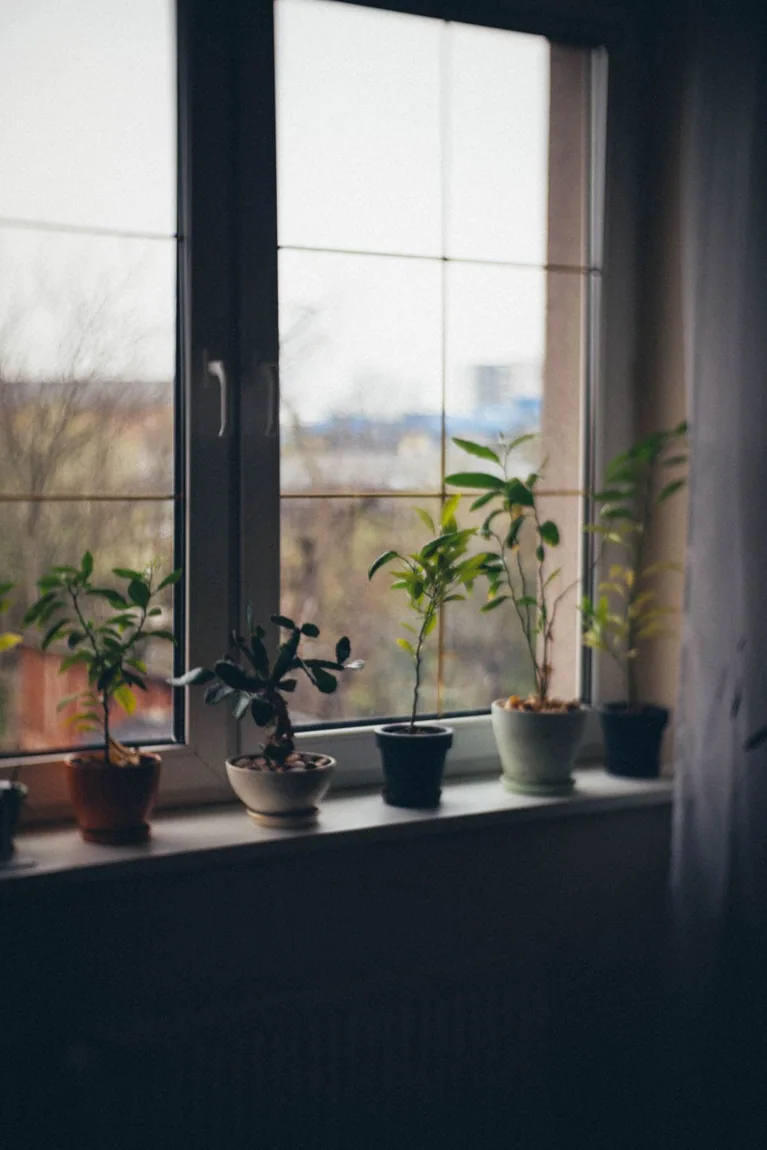
Start with two small pots and a shared waterproof tray. Chives and parsley give you two useful garnishes without committing the full ledge. Leave room to open the window, lift each pot and keep foliage off cold glass. For two pots with 4-inch bases, start by measuring for a tray around 10 to 12 inches long and at least as deep as the widest saucer.
2. A freestanding shelf next to the window
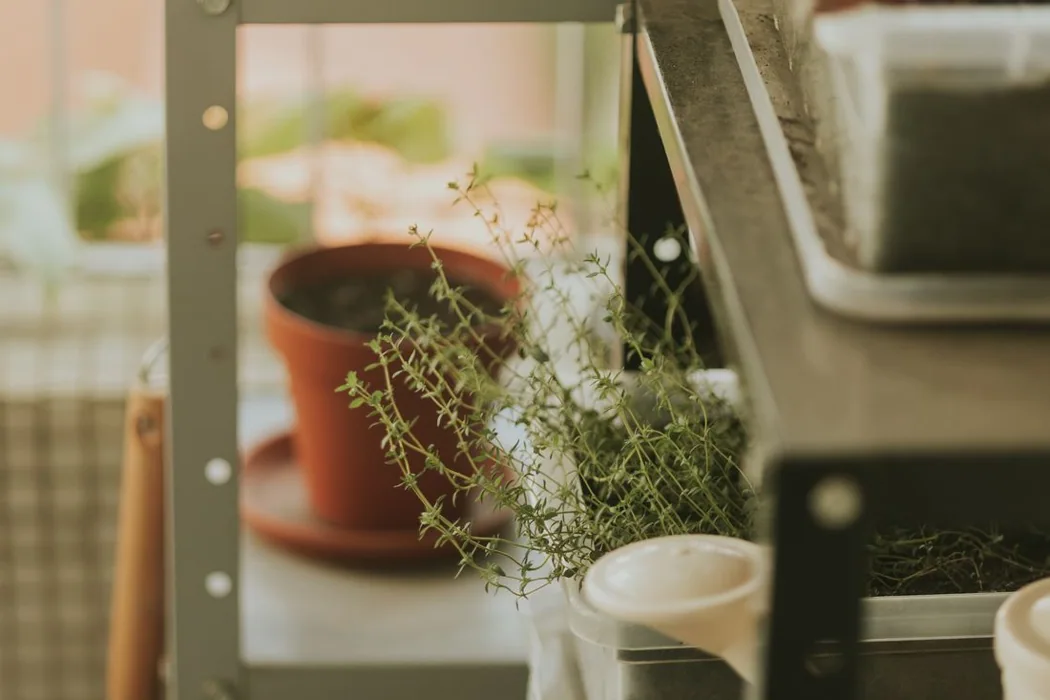
Place a small shelf close enough to receive light at leaf height and use waterproof trays on each occupied level. Keep taller herbs on the top tier. Check whether upper pots shade the lower shelf, and give that tier a separate light if needed. Sketch a 16-by-12-inch shelf as a starting footprint for three small pots in one row. Check the real tray dimensions and the shelf’s stability before setting it up.
3. A counter setup with supplemental light
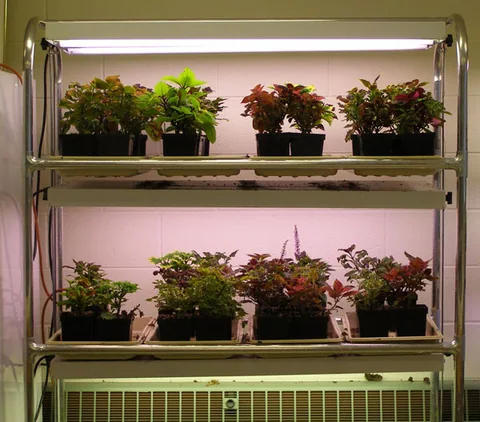
Allow room for the tray, the height of the mature herbs and the fixture. Start with a few pots across the lit area rather than crowding the edges. Set a timer and follow the fixture’s distance guidance. If plants lean or grow spindly, reassess light at the new leaves. A tray around 12 by 8 inches gives you a starting footprint for two small pots. Measure again after choosing the lamp, since its base and clearance can change the layout. The shelf example shows how to place lights just above each growing area. A single tray and fixture use the same arrangement on a counter.
4. Individual pots for herbs with different needs
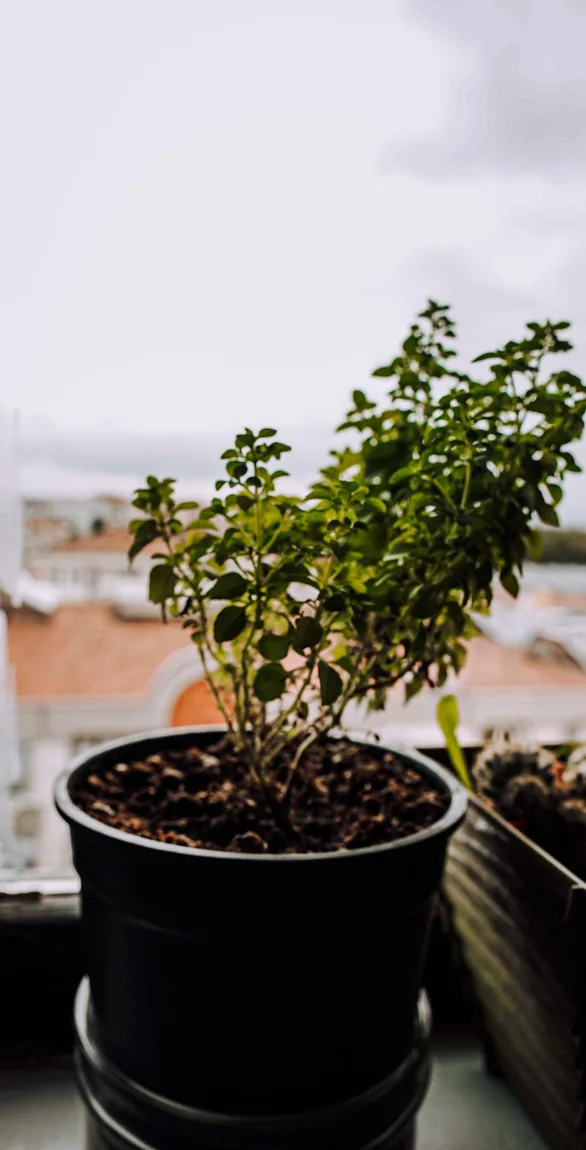
Use individual draining pots for rosemary and thyme where the light is strongest. That makes it easier to check each pot, replace a struggling plant and remove a saucer without disturbing the others. The same one-pot arrangement is useful for mint, which can spread quickly in a shared container.
5. A compact hydroponic garden
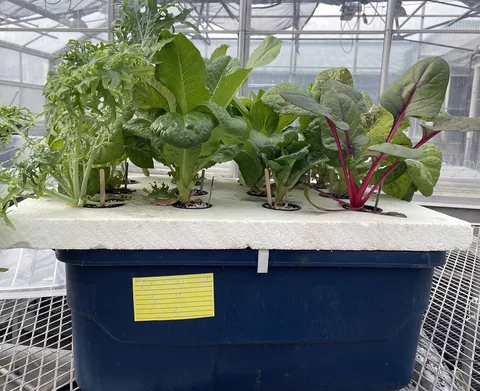
Use a small reservoir with net pots, nutrients intended for hydroponics and a light that reaches the whole canopy. Leave enough space to lift the lid and refill the reservoir. The University of Minnesota Extension guide explains how small systems are set up and maintained. The pictured lettuce and leafy greens demonstrate the reservoir layout. Start with basil in a smaller unit if you use it often in the kitchen.
Group herbs by how they use water
Keep mint in its own pot so its spreading stems and roots don’t crowd the others. Put rosemary and thyme in separate pots from basil or parsley if their watering needs differ in your kitchen. Use containers with drainage holes and empty saucers after watering. The University of Minnesota Extension herb guide covers growing requirements and harvesting.
For a shared trough, use one long container with drainage and choose herbs with similar moisture needs. Individual inner pots set on a long tray make it easier to remove a struggling plant without disturbing its neighbors.
Start with what you actually cook
Buy a small established plant for an herb you use every week. For cilantro, sow small batches at intervals so fresh leaves are coming along as older plants bolt. Snip modest amounts while the plants establish and check growth before harvesting heavily. For other ways to use a sunny spot, see our guide to small indoor plants. Our kitchen Feng Shui guide covers worktop flow, and the indoor plants guide covers room-by-room placement.