



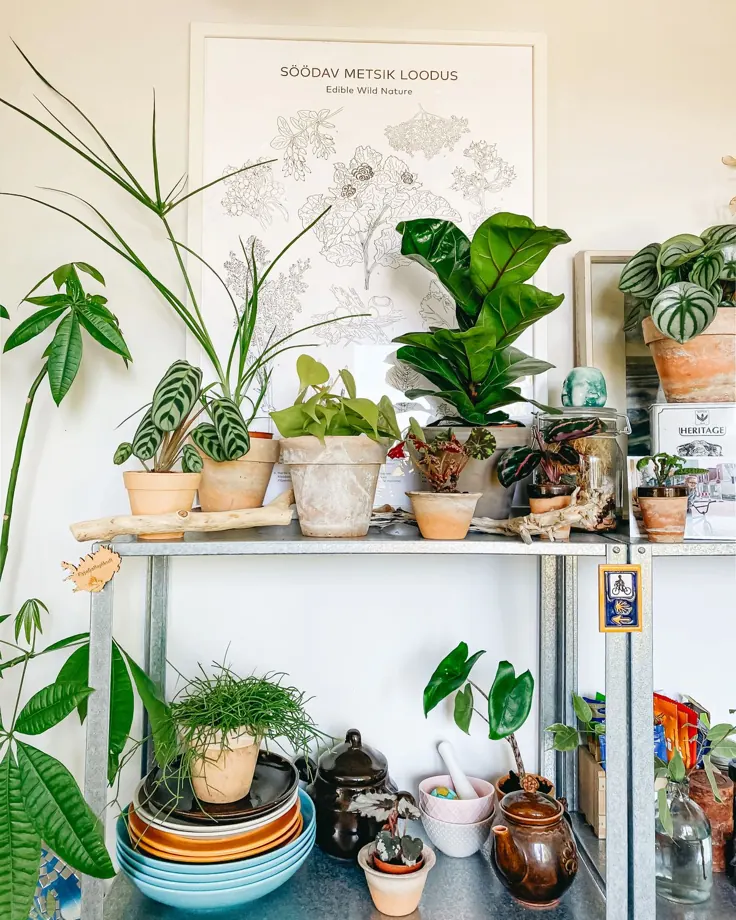
Quick Answer
A useful plant shelf has enough depth for the entire saucer, enough overhead room to lift the pot, and light at the height of the leaves. Start with two or three plants. Leave one gap where you can set a pot down while you move the others.
Choose a layout for the shelf you have
Choose a layout for the shelf you have
Scroll sideways to compare all columns.
| Shelf | What works here | What to check first |
|---|---|---|
| Window ledge | Small pots with a clear view of the window | Saucer depth and window latch clearance |
| Bookcase | One compact plant beside books | Light in the bay and room to lift the pot |
| Open rack | A collection that needs light on more than one level | Shade from the upper tiers and the shelf rating |
| Cabinet top | A low row seen from across the room | Reach and water protection |
| Freestanding window shelf | A row of pots when the sill is too shallow | Window access and curtain clearance |
| Grow-light shelf | One group of plants with similar light needs | Fixture coverage and room to remove pots |
1. Line up small pots on a bright windowsill
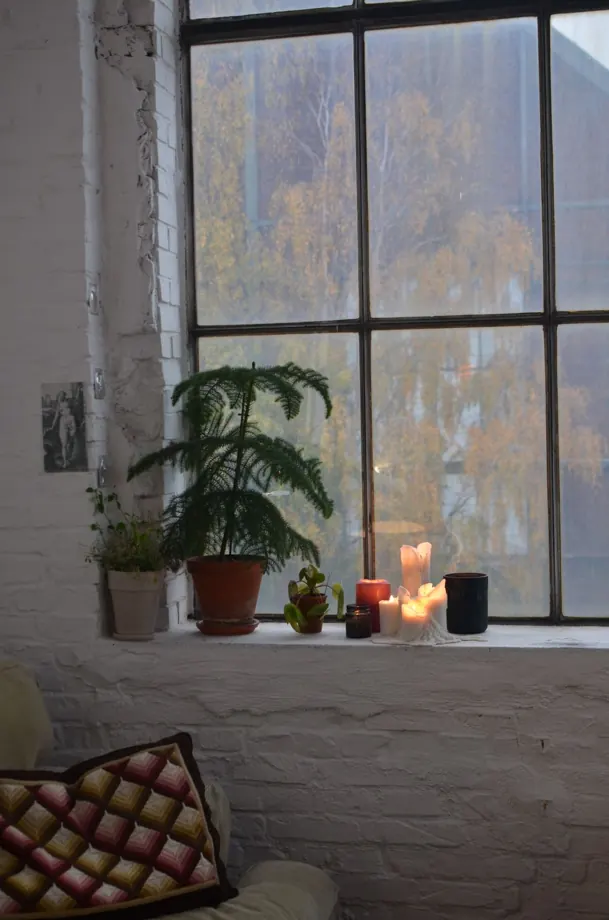
Set the widest saucer on the sill and close the window before committing to the layout. If the saucer hangs over the edge, use a smaller pot elsewhere or move the group to a deeper shelf. Leave a gap at the latch so you can open it without rearranging the plants.
Test fit with the actual tray. On a 6-inch-deep sill, a 5-inch saucer leaves only 1 inch to position it. That margin can disappear if the frame projects into the sill. Check cold drafts and hot afternoon sun at the plants before leaving them there permanently.
2. Give one bookcase bay a plant and breathing room
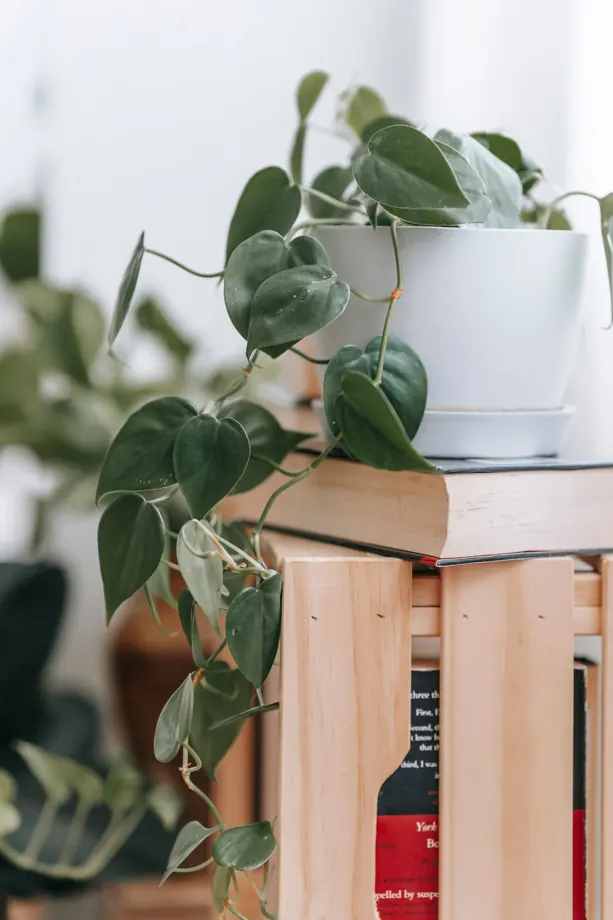
Set a compact plant toward the lit side of a bay and put a short stack of books opposite it. Try one plant per bay first. A broad leaf can fill the opening on its own, and a gap beside the planter gives you room for both hands.
A waterproof outer pot or tray protects the finish from stray drips. Water the inner pot at the sink and let it finish draining. Empty the outer pot before putting it back next to paper. If the back of the bay stays dim all day, bring the plant forward or try another shelf.
3. Stagger plants on a shelf lit from one side
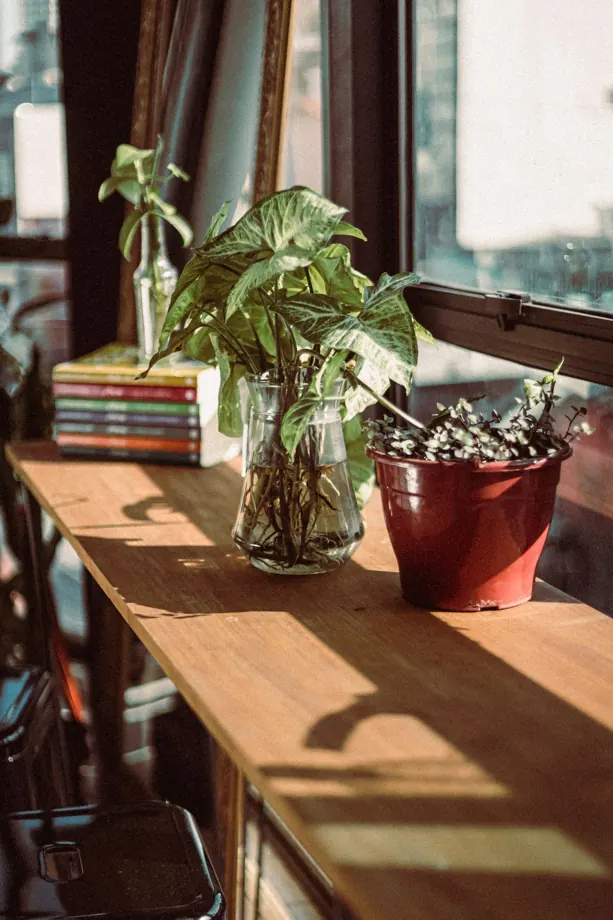
On a shelf next to a window, put the plant with the highest light needs where it has the clearest view of the glass. Set shorter pots where a taller plant’s leaves would otherwise block that view. Look along the shelf from the window side and notice which leaves disappear behind the others.
Keep the arrangement loose enough to move pots if they begin reaching toward the window. The University of Minnesota Extension guide to indoor lighting explains how light intensity and duration affect growth.
Credit: Vlada Karpovich.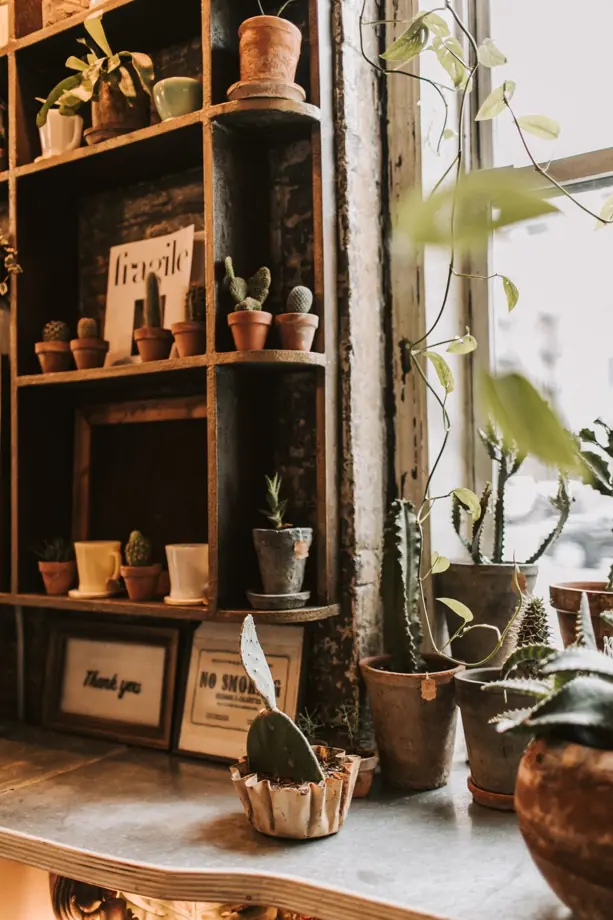
4. Give trailing stems a clear route
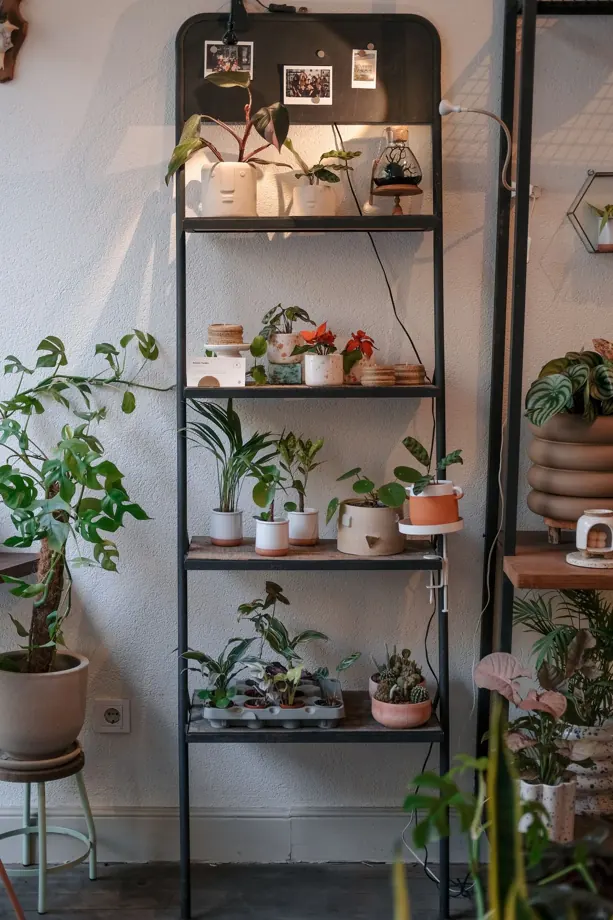
Put a trailing plant near an end where the stems can fall without brushing a lower pot, books or a walkway. A compact upright plant in the center keeps the composition from reading as one line of foliage. Try leaving the opposite end empty for a place to set a pot down.
Look at the plants from the side as well as the front. A vine that looks tidy from across the room can hang into a drawer or across the shelf below. The indoor vine guide explains which plants trail readily and which are better on supports.
Credit: Tiia Päkk.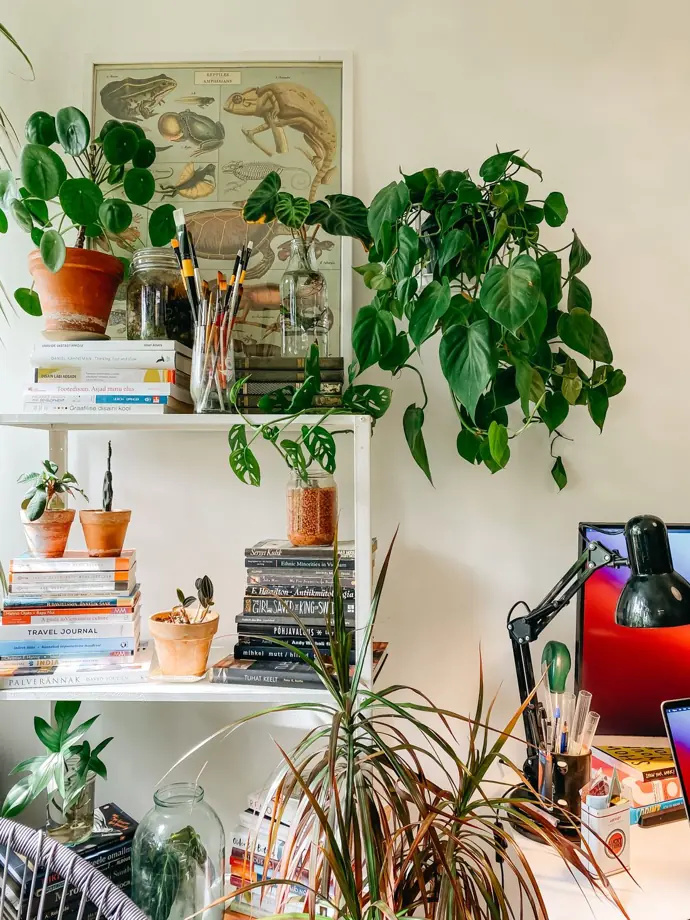
5. Use an open rack to give lower tiers a chance
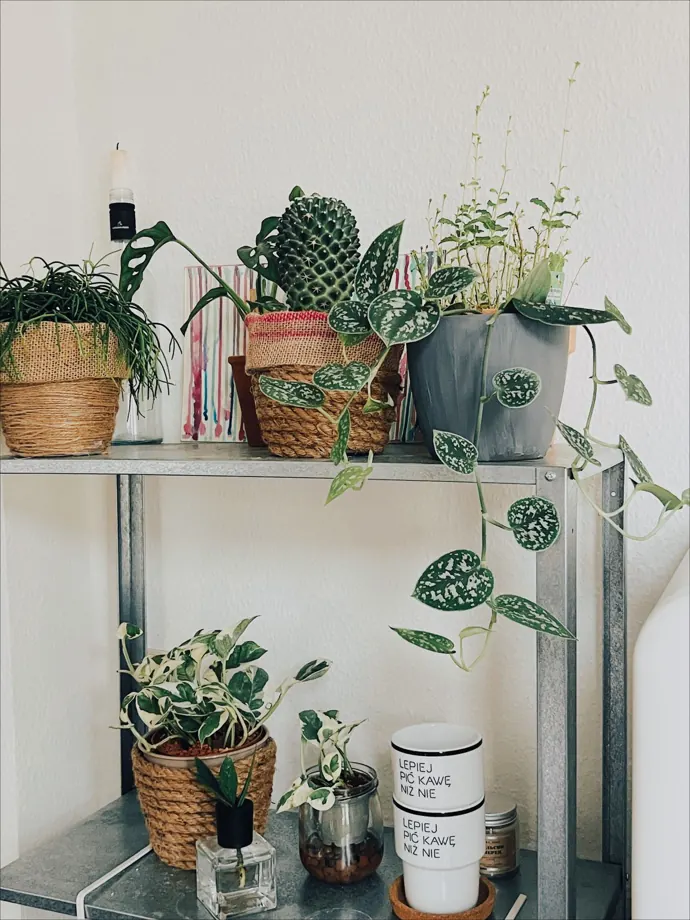
An open rack lets some light through where there are gaps between pots. Start with smaller plants on one tier and leave gaps directly above their leaves. Place heavier pots on a rated lower shelf and follow the unit’s anchoring and load instructions.
Use trays under the nursery pots to catch stray drips so they do not fall onto another plant. If you add a grow light under an upper tier, check the fixture guidance for coverage and spacing. Set it so you can lift the tallest pot out without bumping it and route cords away from runoff.
Credit: Mathias Reding.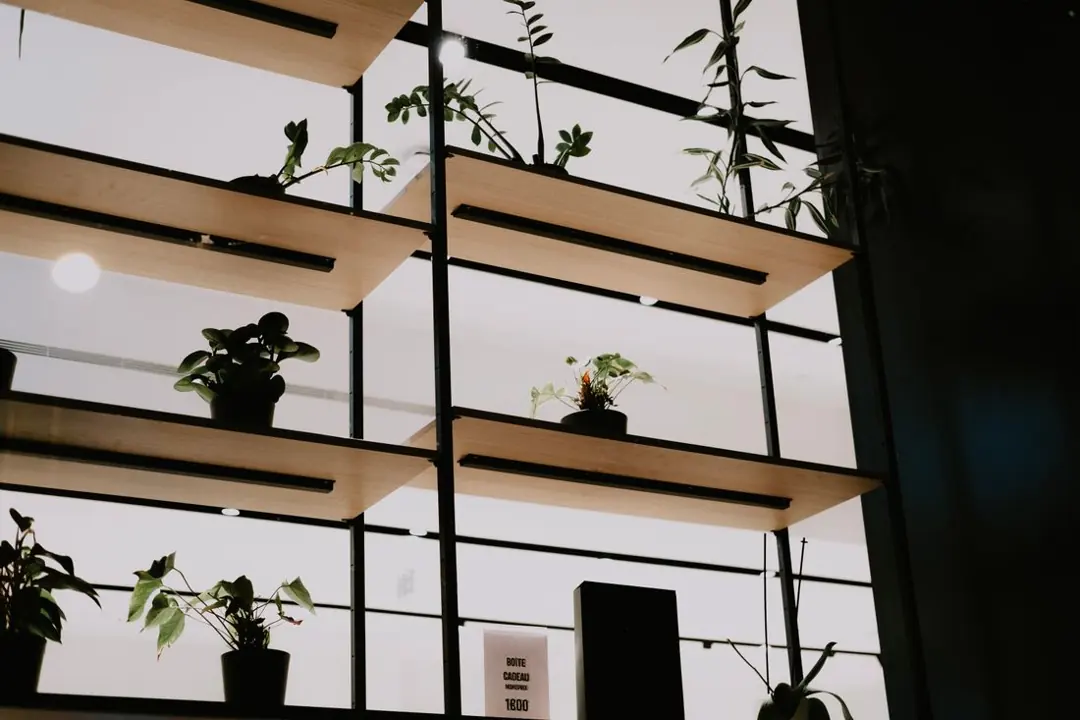
6. Raise the foliage while keeping the pot on the shelf
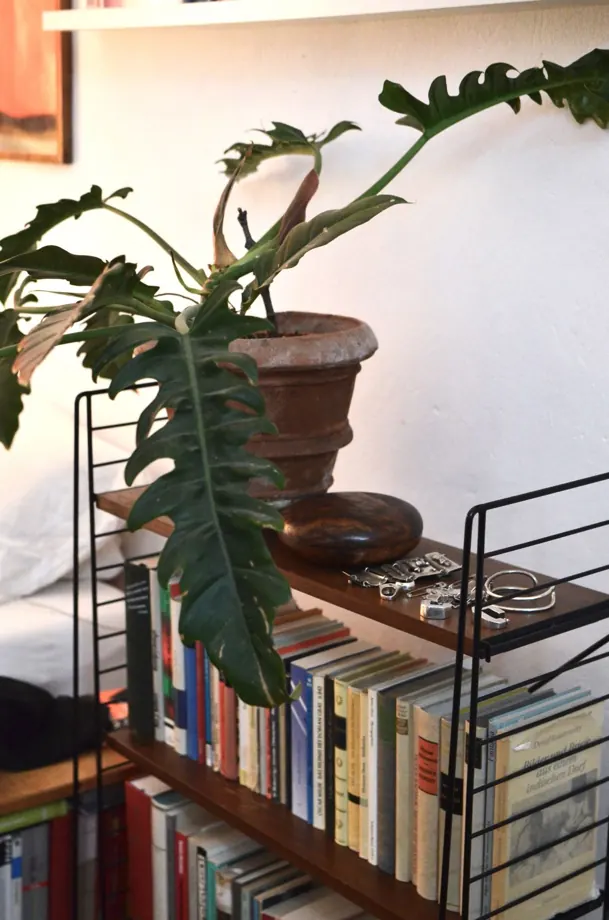
If a short plant disappears next to tall books, try a naturally upright specimen or a stable waterproof riser made for the load. Keep its base back from the shelf edge. The empty space behind a leaf makes its outline easier to see.
Check the plant’s spread at leaf height. You might have enough room for the pot but still knock the leaves every time you take out a book. Keep books and absorbent risers outside the drip zone. For options with a small footprint, start with our guide to small indoor plants.
7. Set a low plant row on a cabinet you can reach
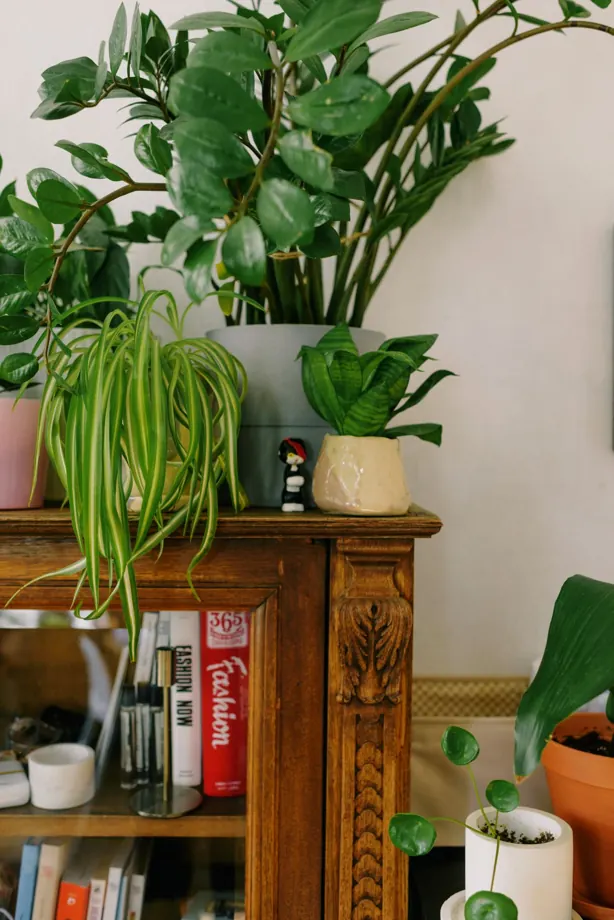
Use a cabinet top for a row of smaller pots when you can reach every one comfortably. Vary the leaf shapes, repeat a pot finish twice, and leave one clear stretch to keep the furniture usable.
Before placing anything high, pick up a watered pot of similar size and judge whether you can lower it comfortably. Keep large or awkward pots lower down. If you want a display that climbs the wall itself, see our indoor plant wall ideas.
8. Set a freestanding shelf in front of a window
Credit: Tara Winstead.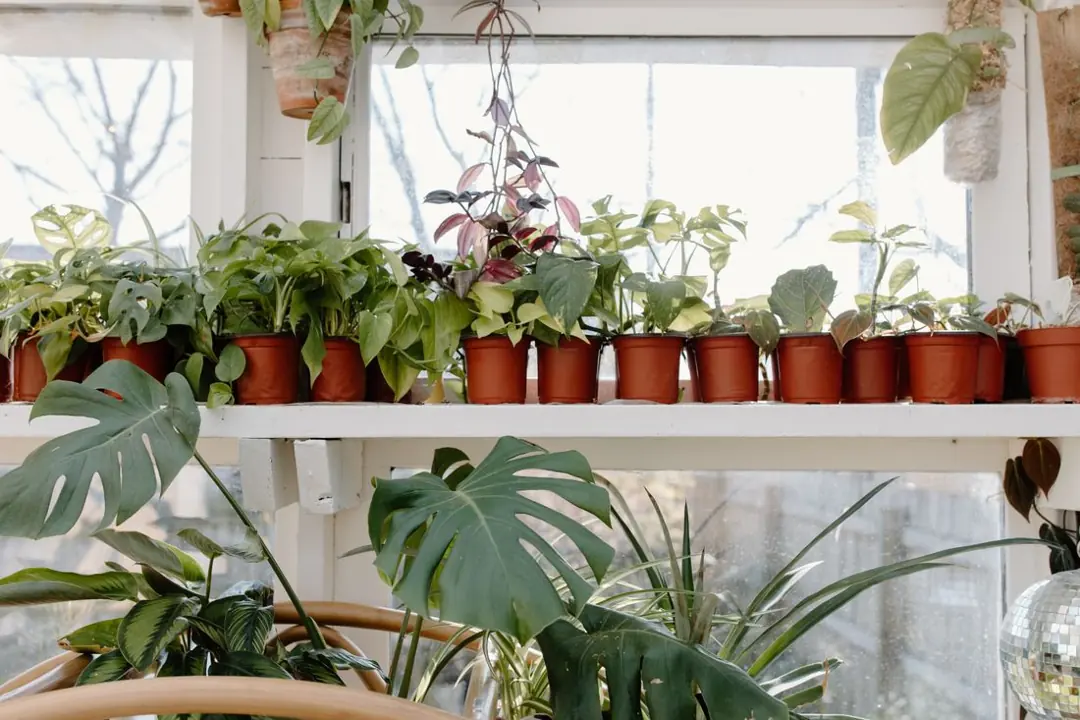
If the sill is too narrow for the saucers you own, set a freestanding shelf just inside the window. Choose a height that puts the leaves in front of the glass. Keep the larger pots at the ends so their leaves don’t shade the smallest plants in the middle.
Leave enough space behind the shelf to reach the latch and pull the curtain across. If the shelf blocks access to the window, shift it to the side or choose a shallower unit.
9. Use a floating ledge for light, compact pots
Credit: Andrea Davis.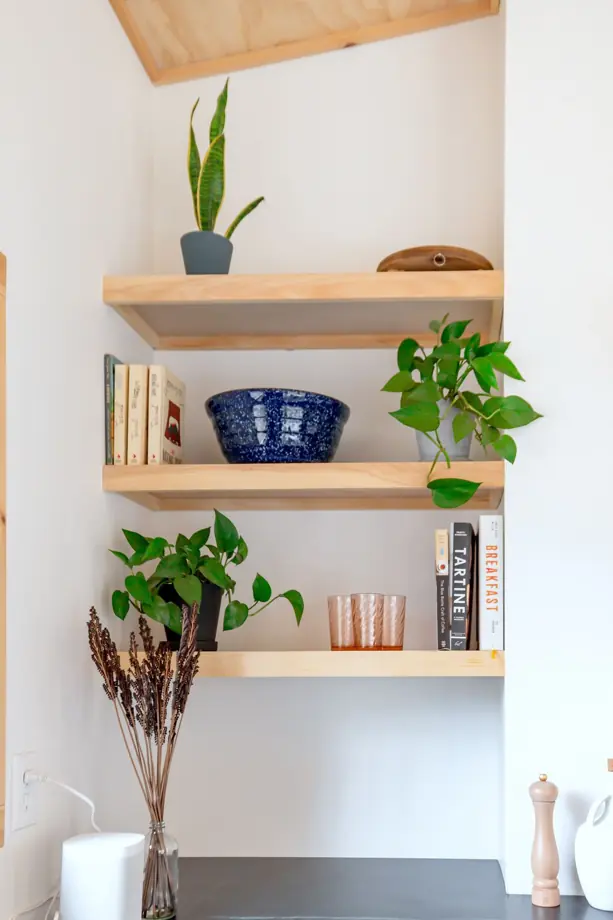
A shallow ledge can hold a few lightweight pots without using the floor below. Pick the pots and saucers first, then measure their full footprint against the ledge. A lip can keep a saucer from sliding forward, but the saucer still needs to sit flat.
Check the maker’s load rating and use the fixings specified for the wall and the shelf. Put the pots where you can take them down to water without lifting them over furniture.
10. Give a dim corner one shelf with a grow light
Credit: Anna Shvets.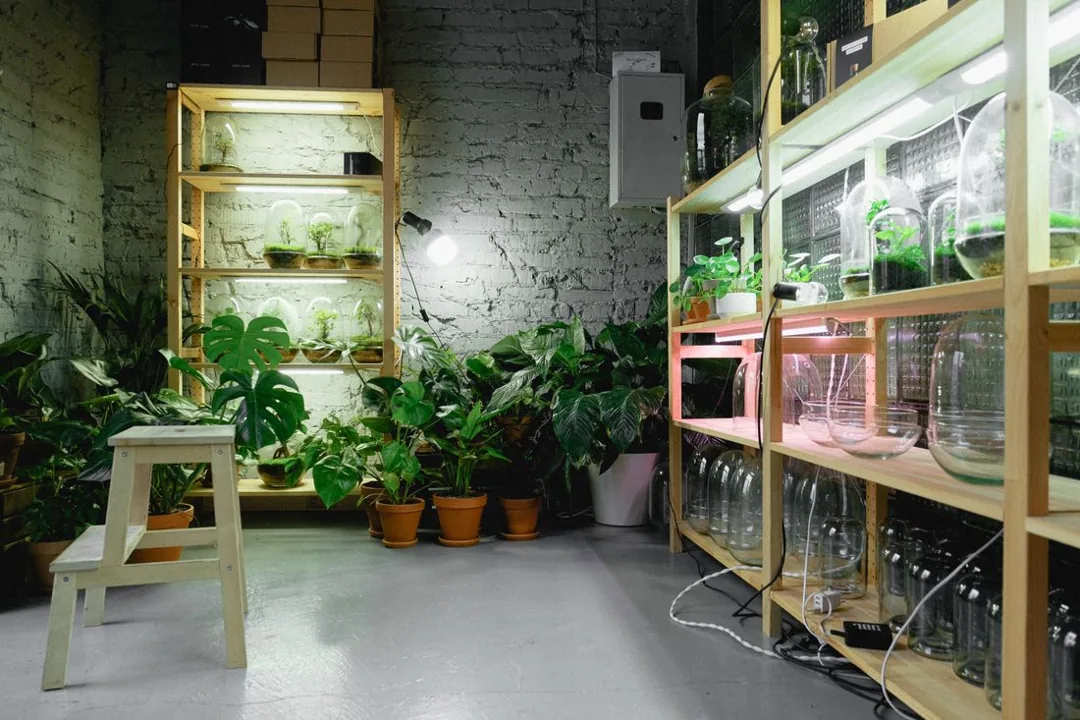
Light one tier first. Place pots with similar light needs under the fixture and look at the two ends of the shelf before adding more plants. If only the center gets strong light, move the outside pots inward and leave the ends clear.
Start with the manufacturer’s guidance on distance and run time. Use a timer for a consistent schedule, and leave enough room to lift pots out while the light stays in place.
11. Fill a narrow column of cubbies with one pot per level
Credit: Râmbeț Ioana.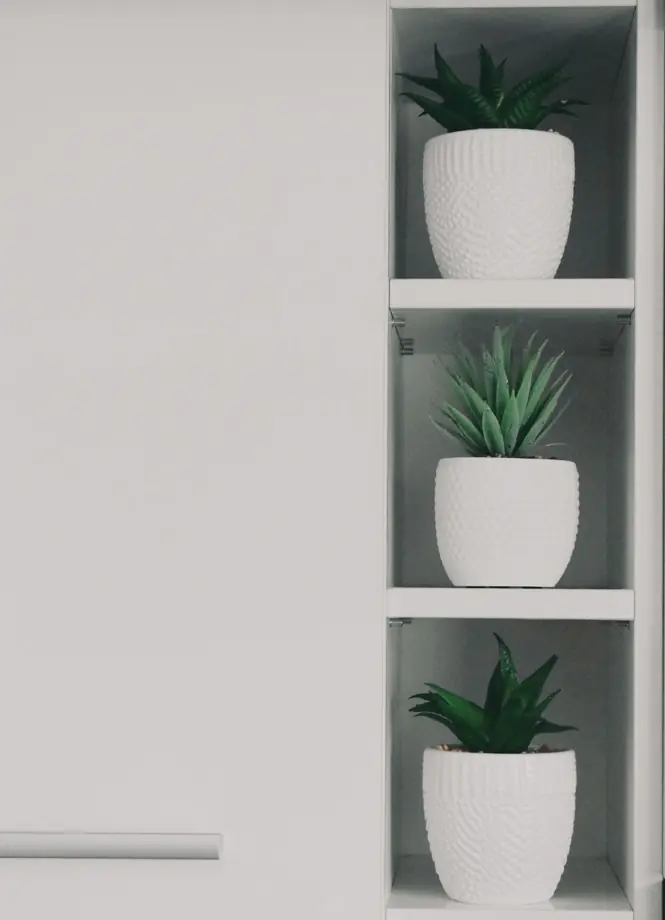
If you have a narrow alcove, a vertical column can fit where a wide bookcase won’t. Repeat a pot finish across two or three openings so the little shelves read as one display. A low mound of leaves leaves more headroom than an upright plant of the same pot size.
Check the deepest and lowest openings first. If they stay dim or you can’t remove a pot without tilting it, use those cubbies for trays or tools and put the plants in the brighter openings.
Bonus idea for a one-plant display
Credit: Ryutaro Tsukata.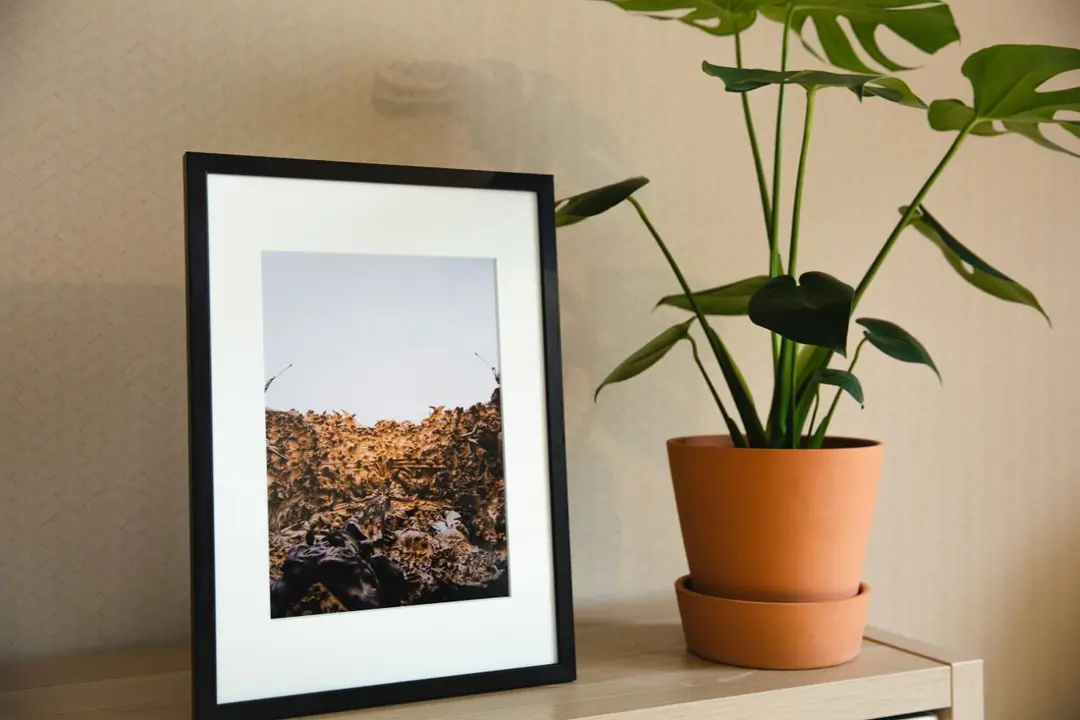
Set one plant beside a small framed print or bowl and leave the rest of the shelf free. Set the plant a little in front of the frame if their shapes start to merge when you look at them from across the room.
Choose a plant with enough room to spread as it grows. A single pot is also easy to move if the shelf looks fine from the doorway but the plant gets better light a few feet farther along.
Test the shelf before filling it
Measure the shelf’s usable depth, then measure the largest saucer across its widest point. Next, hold an empty pot up to the shelf and rehearse lifting it out. Leave room for new leaves and for the hand that supports the pot from beneath. Check the shelf rating and use the full weight of the pot, wet mix, tray and any stored water when comparing with that rating.
Look at the shelf in the morning and afternoon. A spot that looks bright from the sofa can still be dim at the back of a lower tier. If you need to water three plants on different schedules, keep them in separate inner pots. A pull-out tray works only if you have space to slide it forward. For more help choosing plants by light and reach, use the guide to indoor plants.
For a bright shelf, try a compact peperomia where its leaves have room to spread. For a brighter upper tier with empty space at the edge, a trailing vine can make use of the drop. Choose by the mature plant’s shape and the shelf’s light. If you have cats that reach shelves, use our cat-safe houseplant guide to check the exact species. For room-wide arrangements, see these indoor plant decor ideas.