



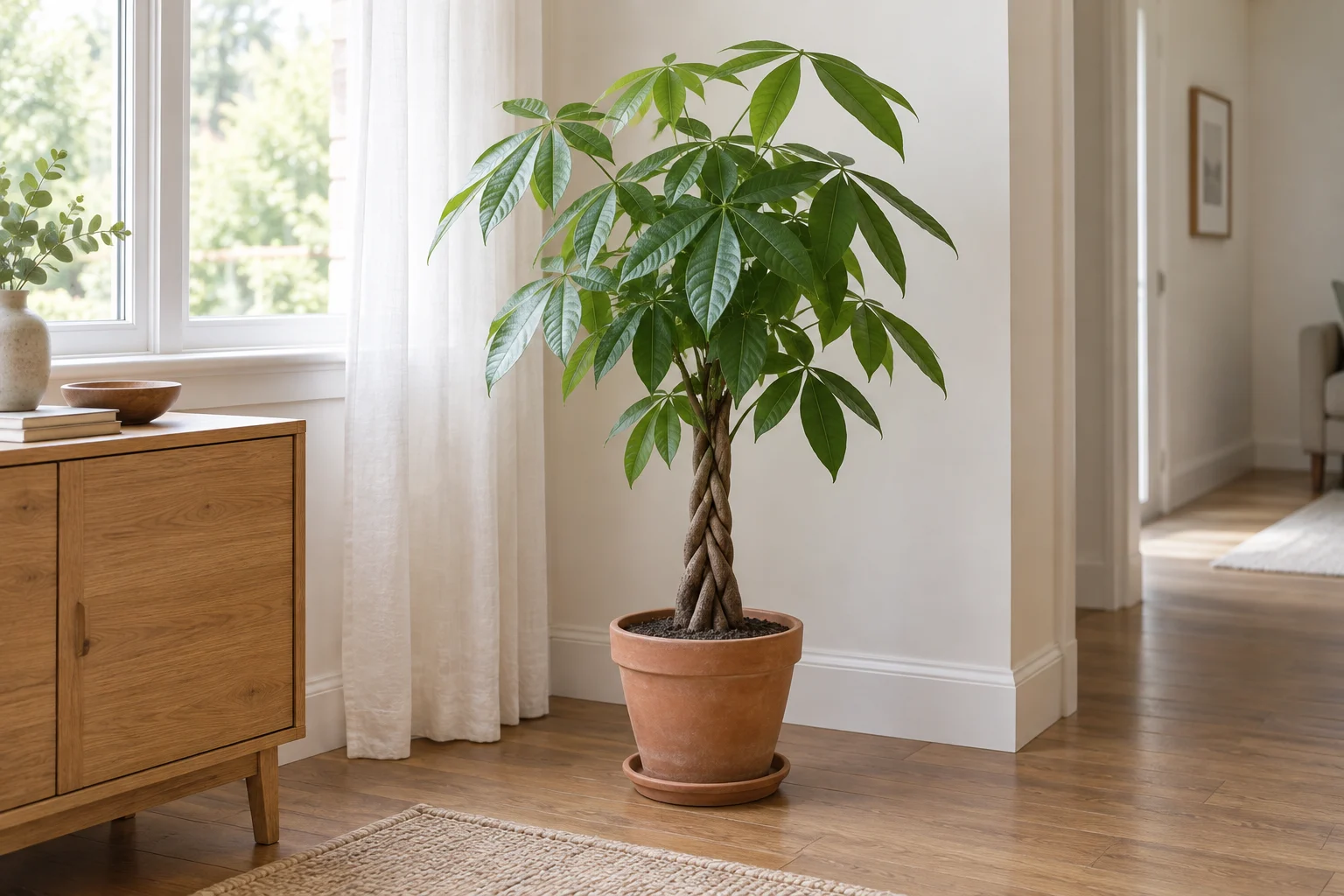
Quick Answer
Place a money tree where it receives suitable bright, filtered light and has room to grow without blocking a walking route. For wealth symbolism, use the far-left area in an entrance-aligned BTB map or the southeast association in a compass-based map, but choose one method. If that area is dark, keep the plant in a healthier spot instead. A money tree does not guarantee financial gain.
The money tree sold as a houseplant is usually labeled Pachira aquatica; similar Pachira glabra is also sold under the common name. It is not a jade plant, a Chinese money plant or a decorative crystal tree. Before choosing a place, check the botanical label and the size of the plant you actually have. A small tabletop specimen and a taller floor plant need different footprints.
This guide is about a living Pachira: its symbolism, placement and care. For other species and room conditions, start with our feng shui indoor plants guide. For the different care needs of jade, use the jade plant guide.
Identify the Plant Before Following Placement Advice
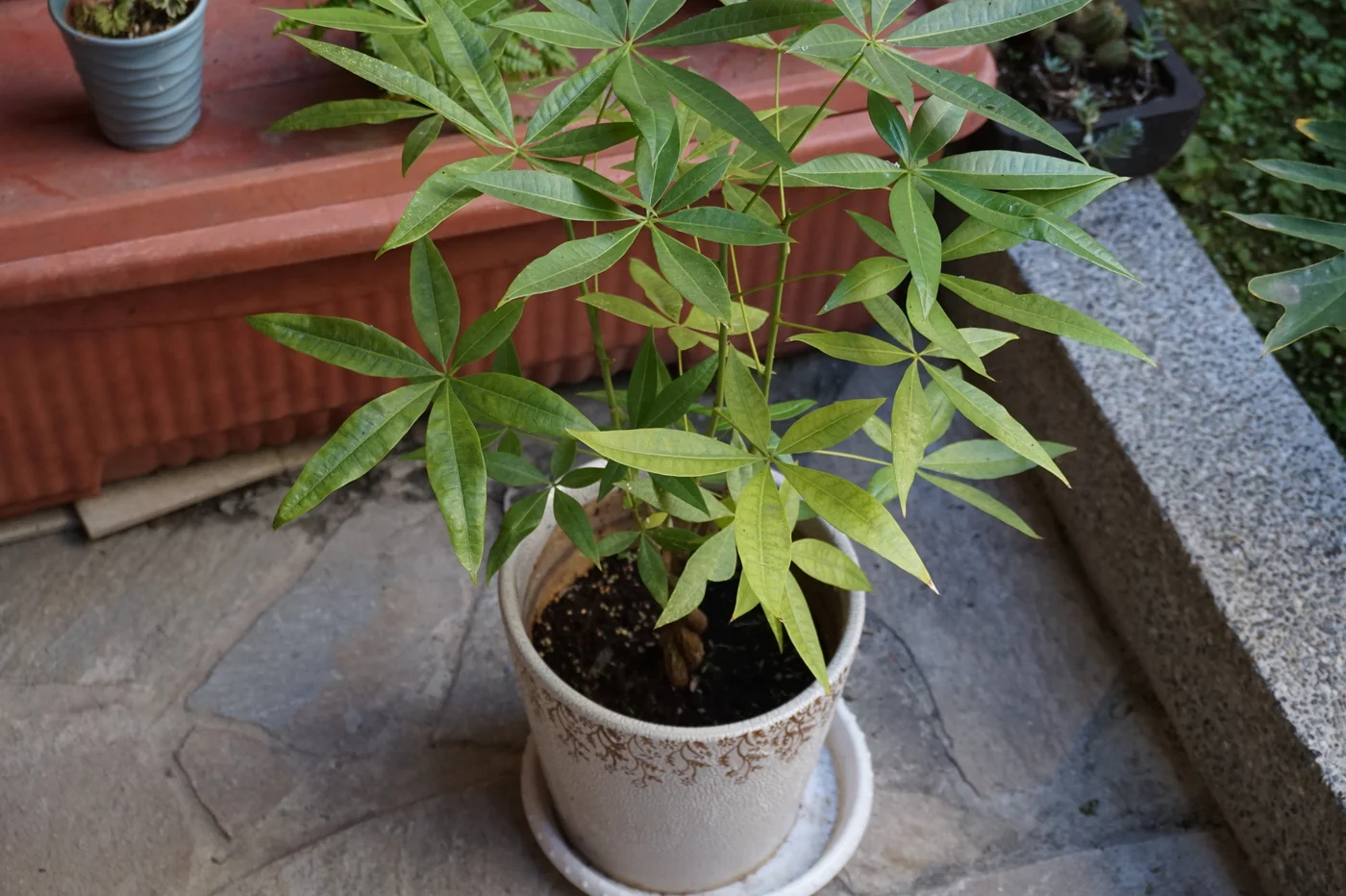
Photo: Tbatb, Wikimedia Commons, CC BY-SA 4.0. Resized and converted to WebP; this adapted image remains under the same license.
Plants and objects commonly called a money tree
Scroll sideways to compare all columns.
| Name | What it is | Why the distinction matters |
|---|---|---|
| Pachira money tree | A living tropical tree with hand-like compound leaves; trunks may be braided. | Needs real light, a suitable potting mix and careful watering. |
| Jade plant | Crassula ovata, a succulent with thick leaves. | Its light, watering and pet-safety advice is different. |
| Chinese money plant | Pilea peperomioides, with rounded leaves on separate stalks. | It is not a small version of a Pachira. |
| Crystal or coin tree | A decorative object, not a living plant. | It needs no plant care and does not share horticultural benefits. |
Where a Money Tree Usually Works Best
A bright living-room side position, a spacious office corner or a well-lit entry can work when the plant has filtered daylight and a stable container. Evaluate the leaves' position, not just the pot's position: a canopy pushed behind a cabinet may receive much less light than the window beside it.
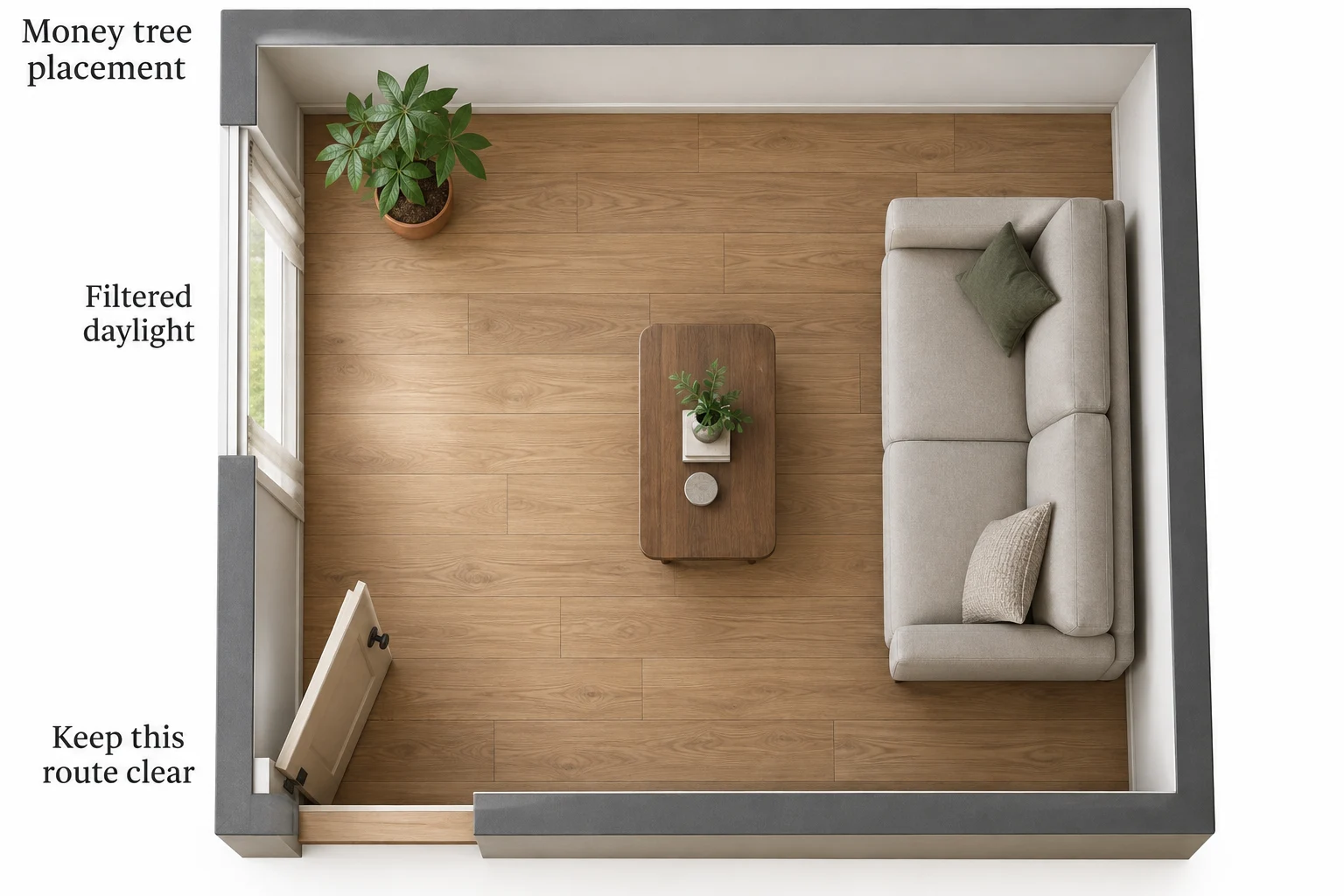
NC State Extension's Pachira profile describes indirect light and well-drained growing conditions, with direct sun potentially scorching leaves. A sheer curtain or a position outside a hot sunbeam may help. Observe your own window through the day rather than assuming that every east, south or west window behaves the same way.
Choose placement by the actual conditions
Scroll sideways to compare all columns.
| Location | When it makes sense | What to avoid |
|---|---|---|
| Living room | Filtered daylight with room around the mature canopy. | A narrow gap that pushes leaves into seating or traffic. |
| Office | A bright side position away from equipment and paperwork. | A pot that crowds the keyboard or spills water toward power connections. |
| Entryway | A well-lit entrance with enough usable width. | Door swings, bag-drop zones and cold drafts. |
| Bedroom | Suitable light and a stable position outside the bed's access route. | A dark corner chosen solely for wealth symbolism. |
| Bathroom | Useful light plus sufficient floor or counter space. | Assuming humidity compensates for no light. |
| Windowless room | An appropriate grow light and a realistic care routine. | Relying on ordinary room lighting to support long-term growth. |
In an Entry: Stay Outside the Door Swing
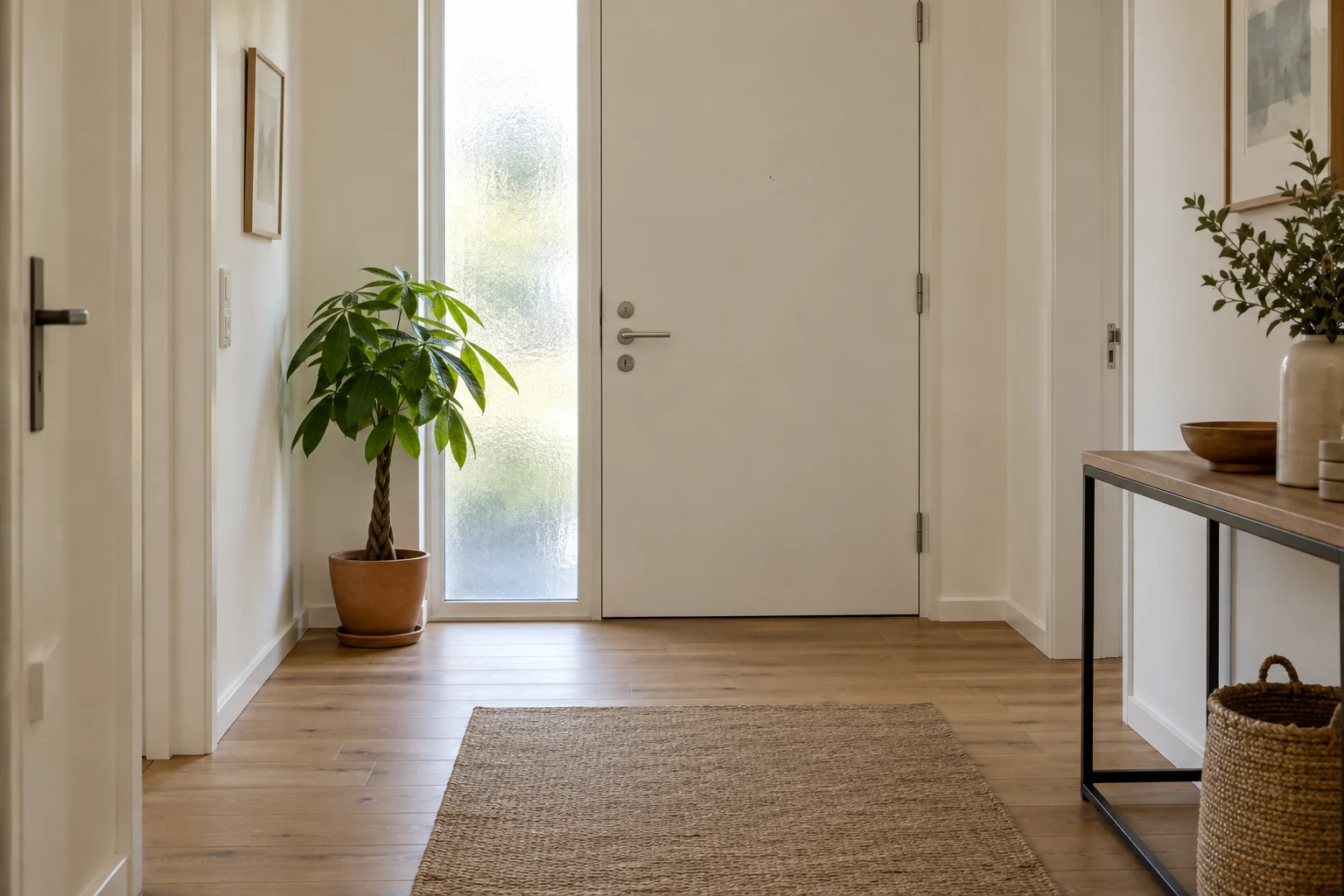
A sidelight can offer a better position than a dark corner behind the entrance, but its size, glazing and outdoor shade affect how much light reaches the leaves. Check the light over the day. Keep the pot outside the full door swing and allow for foliage spreading beyond the container. If the entrance is narrow or drafty, a bright living-room position may be easier to maintain.
Money Corner or Southeast: Which Should You Use?
In BTB or Western feng shui, the wealth area is commonly the far-left zone when the map is aligned with the entrance wall and you look into the space. In directional bagua associations, wealth is linked with southeast. These are different reference systems. Read the bagua map guide before trying to satisfy both at once.
If your chosen wealth area has suitable light and enough room, a money tree can be a personal symbol of growth there. If it is a closet, dim hallway or crowded bedside gap, do not sacrifice the plant to the location. Keep it elsewhere and support the symbolic area with good maintenance or an object you already value. Our money corner guide has more options without promising wealth.
Treat symbolism as optional
A braid, a leaf count, a red ribbon or coins in the pot do not guarantee income. Avoid ties that constrict stems and decorations that conceal wet soil or make care harder. Choose a healthy plant because you enjoy living with it, not because you feel obliged to buy a cure.
Desk Plant or Floor Plant?
A compact specimen can sit on a sturdy desk side surface if there is room for the foliage and a protected place to water it. Keep the working center free. A taller plant usually belongs on the floor in a stable pot, with space around its base for cleaning and inspection. Do not put a heavy container on a narrow shelf or a stand that can tip when someone brushes the leaves.
Consider the grown plant, not only the nursery photograph. NC State notes that indoor specimens can become substantial trees, although growth depends on conditions and pruning. You can keep a manageable size rather than trying to fill a room with a giant plant. For a desk with little usable daylight, compare the alternatives in our office plant guide.
In an Office: Give the Pot Its Own Surface
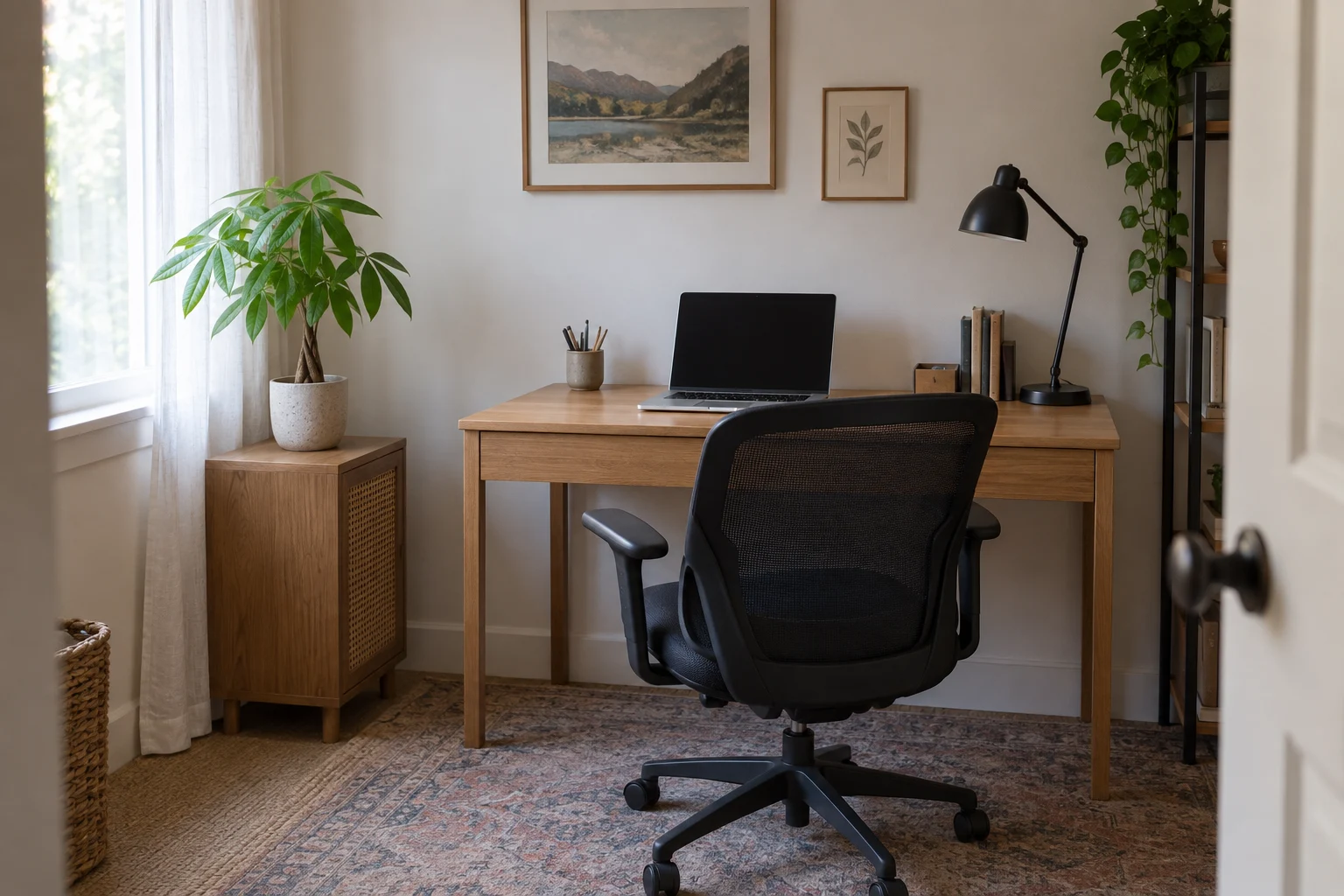
Use a stable surface that can support the wet pot and leave space for the canopy. Water away from electronics, let excess water drain and empty the cover pot before returning it. A convenient cabinet is not necessarily bright enough: compare the light at the leaves with the plant's needs, and move the plant rather than sacrificing the chair or working area to fit it.
Care That Keeps the Placement Working
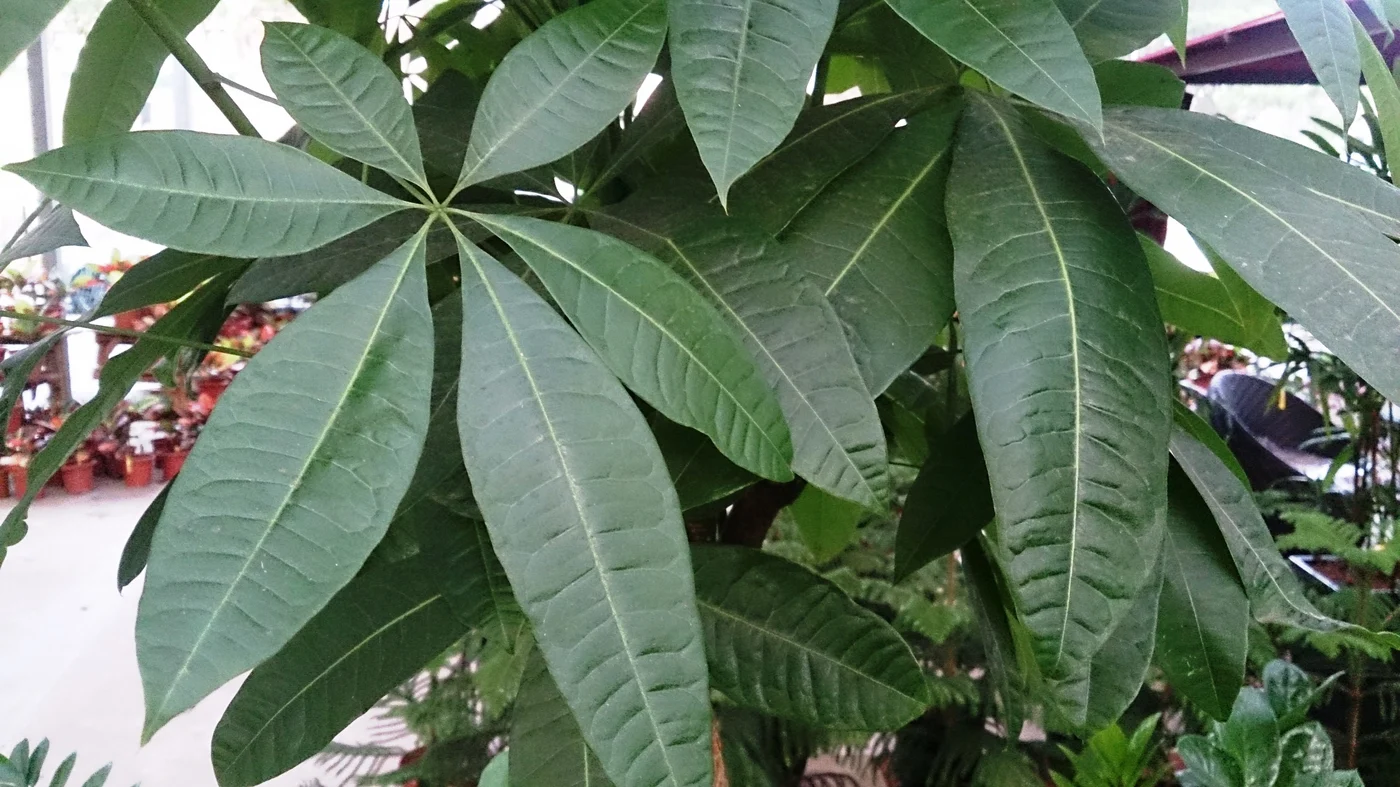

Photo: Mokkie, Wikimedia Commons, CC BY-SA 3.0. Resized and converted to WebP; this adapted image remains under the same license.
_1.jpg)
- Use a container with drainage and an open, freely draining potting mix. If it sits inside a decorative cover pot, remove collected water after watering.
- Check the mix before watering. Pot size, light, temperature and season change how quickly it dries, so avoid an automatic weekly schedule.
- Keep the plant away from drying vents and abrupt cold drafts. Do not move it to a hot window as a quick fix for every problem.
- Turn it gently as needed for balanced growth and wipe dusty leaves with a soft damp cloth.
- Inspect stems and leaf undersides for pests. Do not spray unverified homemade remedies near children, pets or surfaces.
The Royal Horticultural Society's plant profile describes cultivation in bright light or partial shade with freely draining compost, and notes pests including scale and spider mites. Pruning can help manage size; check the plant's condition before cutting extensively. A stable care routine is preferable to moving it every few days in search of luck.
Yellow leaves are not a single-cause diagnosis. Inspect soil moisture, drainage, light changes and pests before deciding what happened. Wet mix that remains soggy, a sour smell or declining stems needs attention rather than more water. Persistent problems are a reason to seek a nursery or extension service's advice with photographs and details of the conditions.
Pets, Children and Plant-Name Confusion
The ASPCA lists Pachira aquatica as non-toxic to cats and dogs, while noting that eating plant material may still cause gastrointestinal upset. This does not apply to every plant called a money plant. In particular, jade has a different safety profile. Verify the species before relying on a common name.
Non-toxic does not mean edible. Keep fertilizer, loose decorations and standing drainage water inaccessible, and make the pot stable around children and animals. If a pet eats an unidentified plant or becomes unwell, contact a veterinarian rather than assuming the money-tree label settles it.
Placements to Avoid and What to Do Instead
Avoid a dark symbolic corner, a doorway squeezed by foliage, a heating vent and an unprotected watering spot beside electronics. Improve light, move the plant sideways out of the route or choose a smaller specimen. For a room with no daylight, our windowless plant guide explains why a grow light matters.
Outside placement depends on climate and exposure. A photograph of a money tree on a doorstep is not proof that it can tolerate your winter or a full-sun patio. Keep it indoors unless you understand the local conditions and can protect it appropriately. Similarly, a bathroom with humidity but no usable light is not automatically a good home for it.