



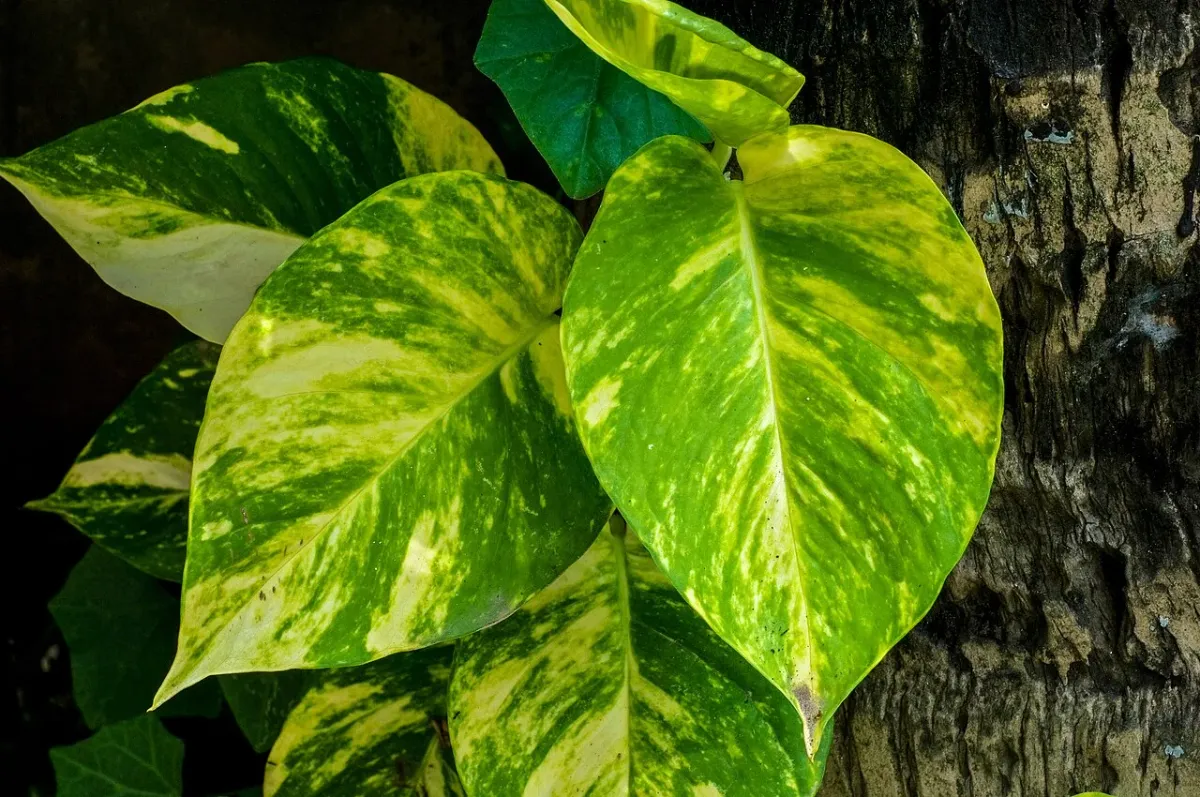
Quick Answer
For pothos, often called money plant, choose a bright position with filtered light, a stable pot that drains and room for the vines to grow without blocking access. A living-room shelf, office cabinet or well-lit foyer can work. Use a Feng Shui wealth area only if it also meets those needs. Pothos is harmful if eaten, so pets and young children must not be able to reach the leaves or cuttings.
Want a money plant that looks at home rather than squeezed into a lucky corner? Start with the way it grows. A small pothos can sit neatly on a cabinet, but the same plant may eventually send vines across books, doorways or the floor. Good placement leaves room for that change and makes watering easy.
This guide focuses on pothos (Epipremnum aureum). If yours has a braided trunk or thick succulent leaves, identify it below before using the care advice. For a wider choice of species, see our Feng Shui indoor-plant guide.
Identify Your Money Plant First
Common names are not reliable care instructions. Pothos, money tree, jade and Chinese money plant have different shapes and growing needs, even though all may be sold with a prosperity-related name.
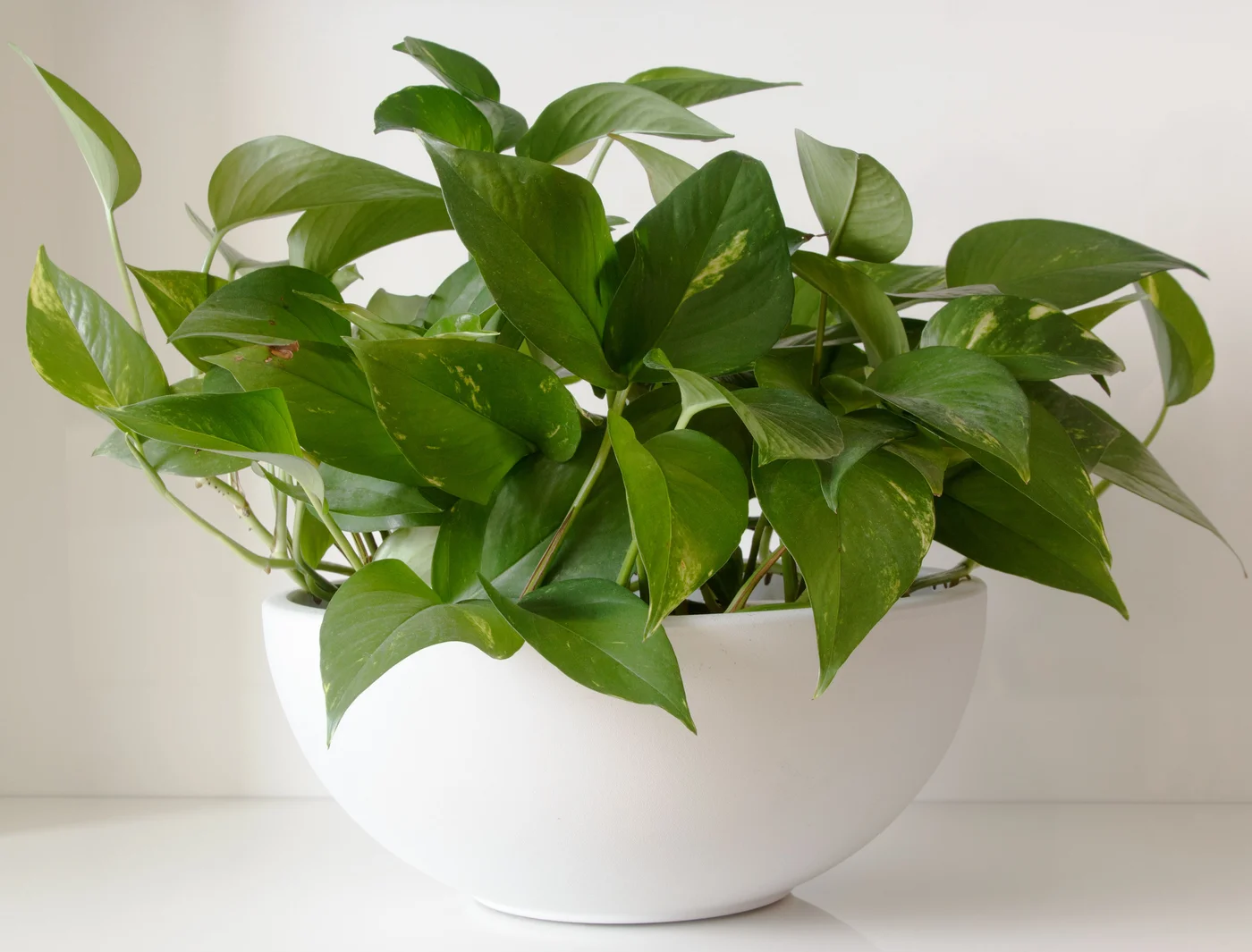
Match the plant before choosing its position
Scroll sideways to compare all columns.
| Plant | What to look for | Use this guidance |
|---|---|---|
| Pothos, Epipremnum aureum | Heart-shaped leaves along trailing or climbing vines | The placement examples on this page |
| Money tree, usually Pachira aquatica | A woody or braided trunk with hand-like groups of leaflets | Money-tree placement; check the label because related species are also sold |
| Chinese money plant, Pilea peperomioides | Round leaves on long stalks from a compact base | Species-specific care, not pothos watering advice |
| Jade plant, Crassula ovata | Thick succulent leaves and woody stems | Jade-plant placement and care |
Choose a Position With Useful Light
Start with a bright position where strong sun is filtered or avoided, then watch how the plant responds. Window direction alone is not enough: trees, neighboring buildings, curtains and distance from the glass all change the light that reaches the leaves. The RHS growing guidance for pothos recommends bright filtered light and well-drained compost for indoor cultivation.
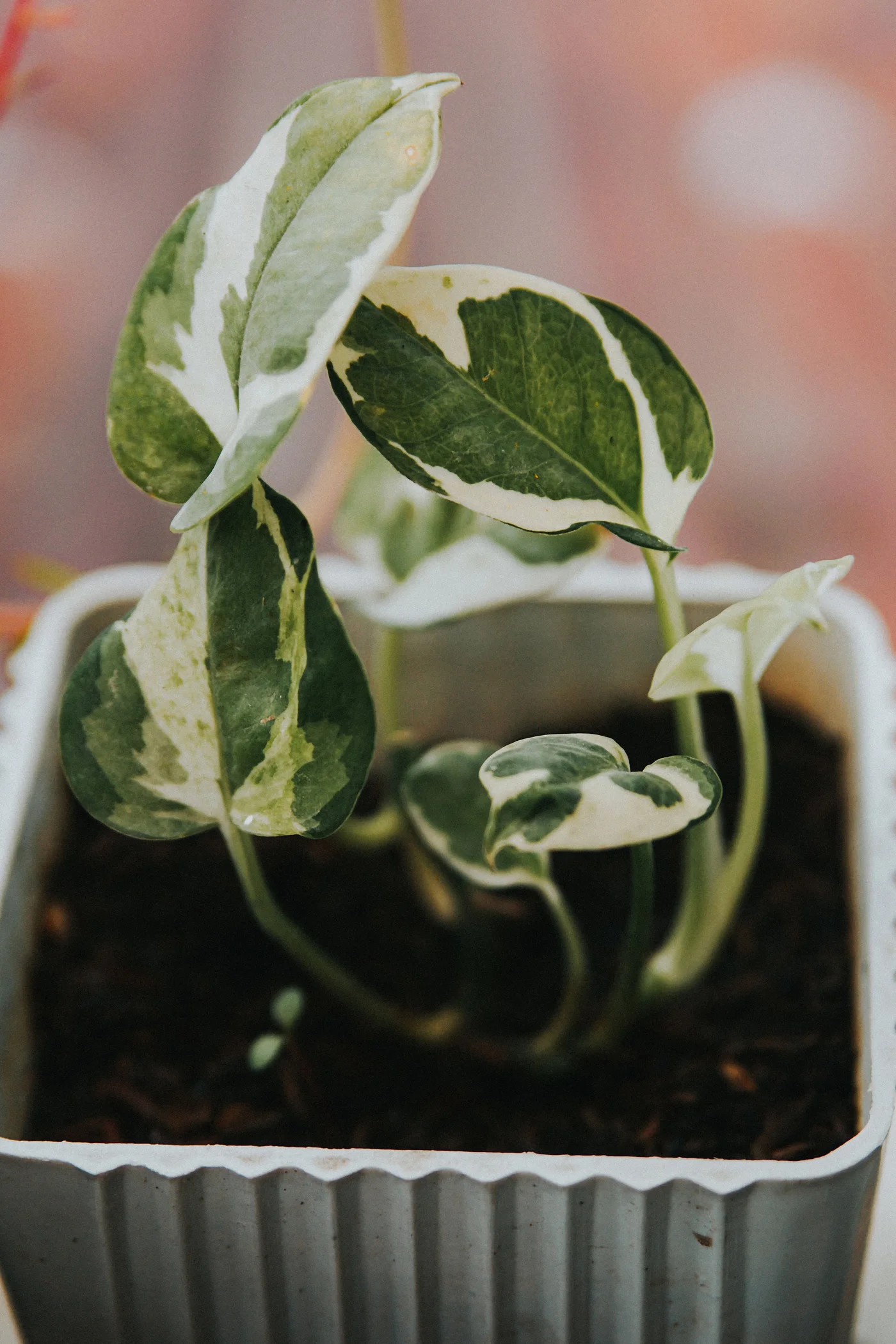
Do not use a photograph to estimate exact light levels. A well-lit image may have been taken with a long exposure. Look at the actual spot during the day, and reconsider it if growth becomes sparse or the plant declines. Light is only one possible cause; roots, pests and watering also matter.
A windowless room needs a deliberate light source
Low-light tolerance does not mean pothos can grow indefinitely in darkness. In a windowless bathroom or office, provide a suitable grow light with distance and timing set according to the manufacturer's instructions. If you cannot provide that, choose another display location rather than buying a plant for its lucky name. Our windowless-room plant guide explains the practical setup.
Let the Growth Shape Fit the Furniture
Trailing vines soften a shelf edge without taking floor space. Supported growth creates a more upright shape. Neither direction is universally lucky, so choose the form you can maintain comfortably.
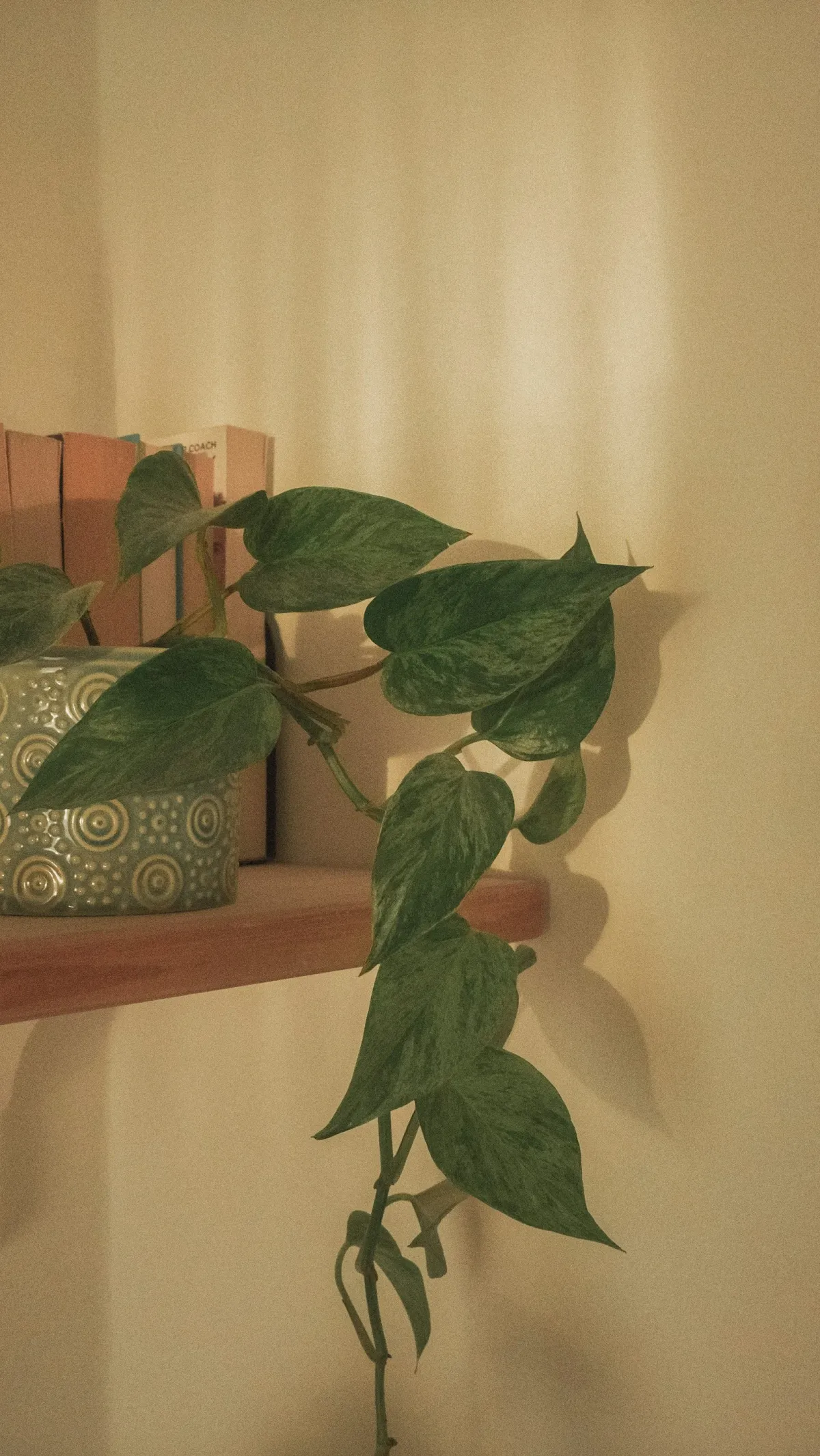
For a shelf, leave the pot fully supported and set back from the edge. Follow the shelf's load rating, allowing for wet compost rather than just an empty container. Keep the plant reachable without an awkward climb. A high shelf is not automatically safe if a cat can get onto it or vines hang into reach.
For climbing growth, use a stable support within the pot and leave enough space to reach the leaves and check the soil. Train the stems gently rather than stretching them across door frames or electrical fittings. Avoid attaching vines directly to a wall unless you are comfortable with possible surface damage and the extra maintenance.
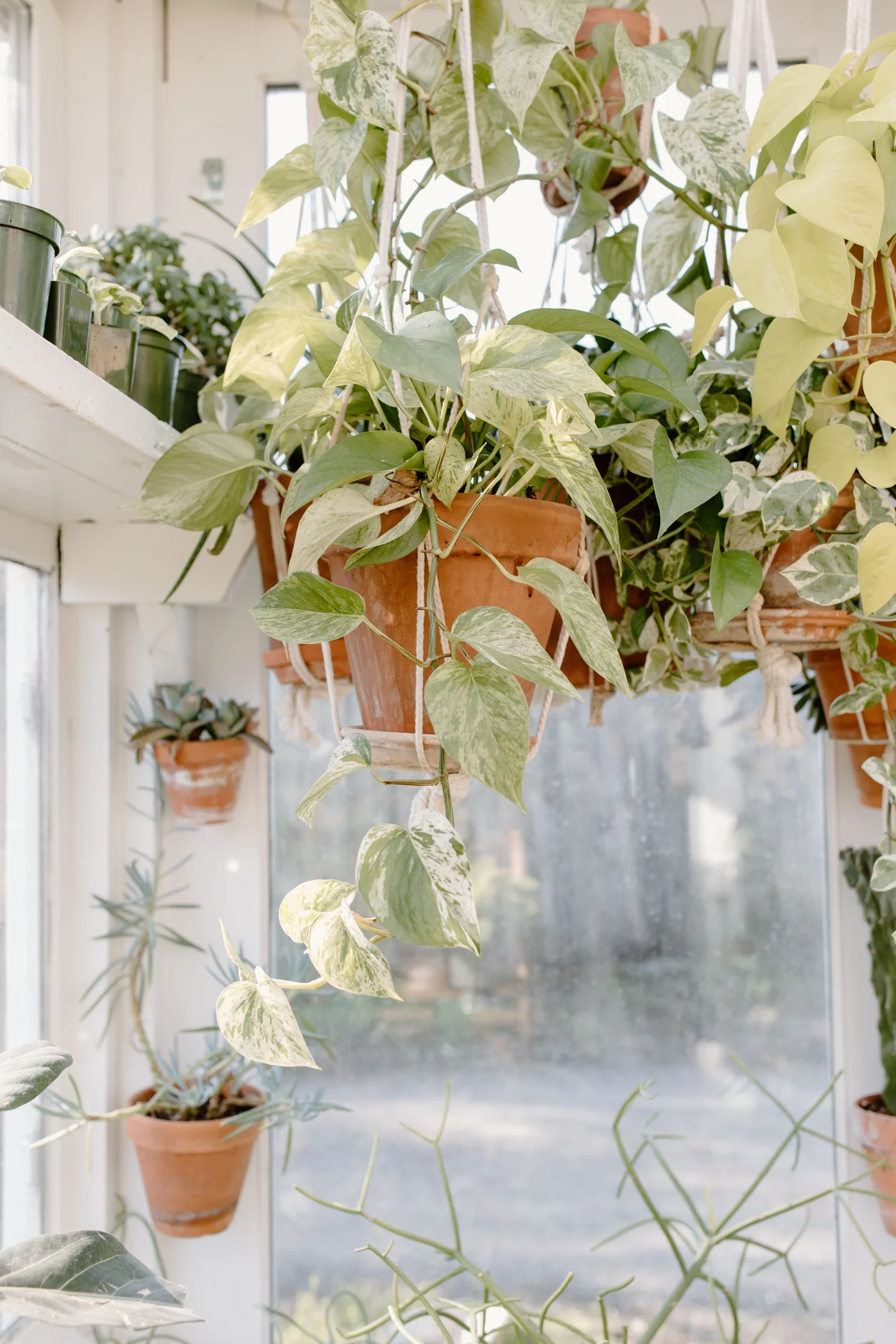
This full collection is not a requirement for your home. One hanging plant may be enough. Use fixings suitable for the structure and the wet weight of the pot, and do not suspend it over a bed, seat or valuable electronics merely to save space.
Find a Room That Supports the Plant
In a living room, try a bright shelf or console where leaves will not cover a screen, socket or everyday storage. A restful bedroom can use the same approach if the light is suitable and the plant stays clear of bedside essentials. There is no need to move a healthy plant solely because a general online rule says all bedroom plants are wrong.
In an office, a side cabinet usually leaves more working space than a crowded desk. Keep water away from electronics and check the vines as they grow. Our office-items guide covers the rest of the workspace without making every object a wealth symbol.
Use a foyer only when the light and clearance work
A bright entrance console can suit a compact pothos. Open the door fully before choosing the spot, then check where coats, bags and keys actually go. If a vine catches on door hardware or a pot narrows the arrival route, a different room is a better choice. Keep an indoor pothos protected from cold drafts and unsuitable outdoor temperatures.
A bathroom is another possibility, but steam is not a substitute for light. Keep the pot away from toiletries you need to reach, and use our bathroom-plant guide to assess the room rather than assuming every humid bathroom is suitable.
Use the Wealth Corner as a Tie-Breaker
Yes, a money plant can sit in a wealth area if it is also a workable growing position. In a compass-based bagua, wealth is associated with southeast. In an entrance-aligned BTB map, it is the far-left area when looking into the home from the entrance. Choose one framework rather than treating both as compulsory locations. See the bagua-map guide and money-corner guide for the distinction.
For example, suppose your far-left living-room corner is dark, while a cabinet nearer the window gives the plant useful light and keeps the walkway open. Put the pothos on the cabinet. You can make the darker corner feel cared for through tidier storage or suitable lighting without forcing a living plant into it.
What the plant represents
In contemporary Feng Shui decorating, green growth can symbolize vitality, renewal and abundance. It also relates to the Wood element. This is a symbolic interpretation, not evidence that a pothos produces income or guarantees luck. The value you can actually observe is a plant that fits the room and is pleasant to care for.
Choose the Pot for Watering, Then for Color
Use a container arrangement that lets excess water escape. A draining inner pot inside a decorative cover is practical if you remove it for watering, let it drain and empty any water collected in the cover. A saucer protects a surface only when it is sound and not allowed to overflow.
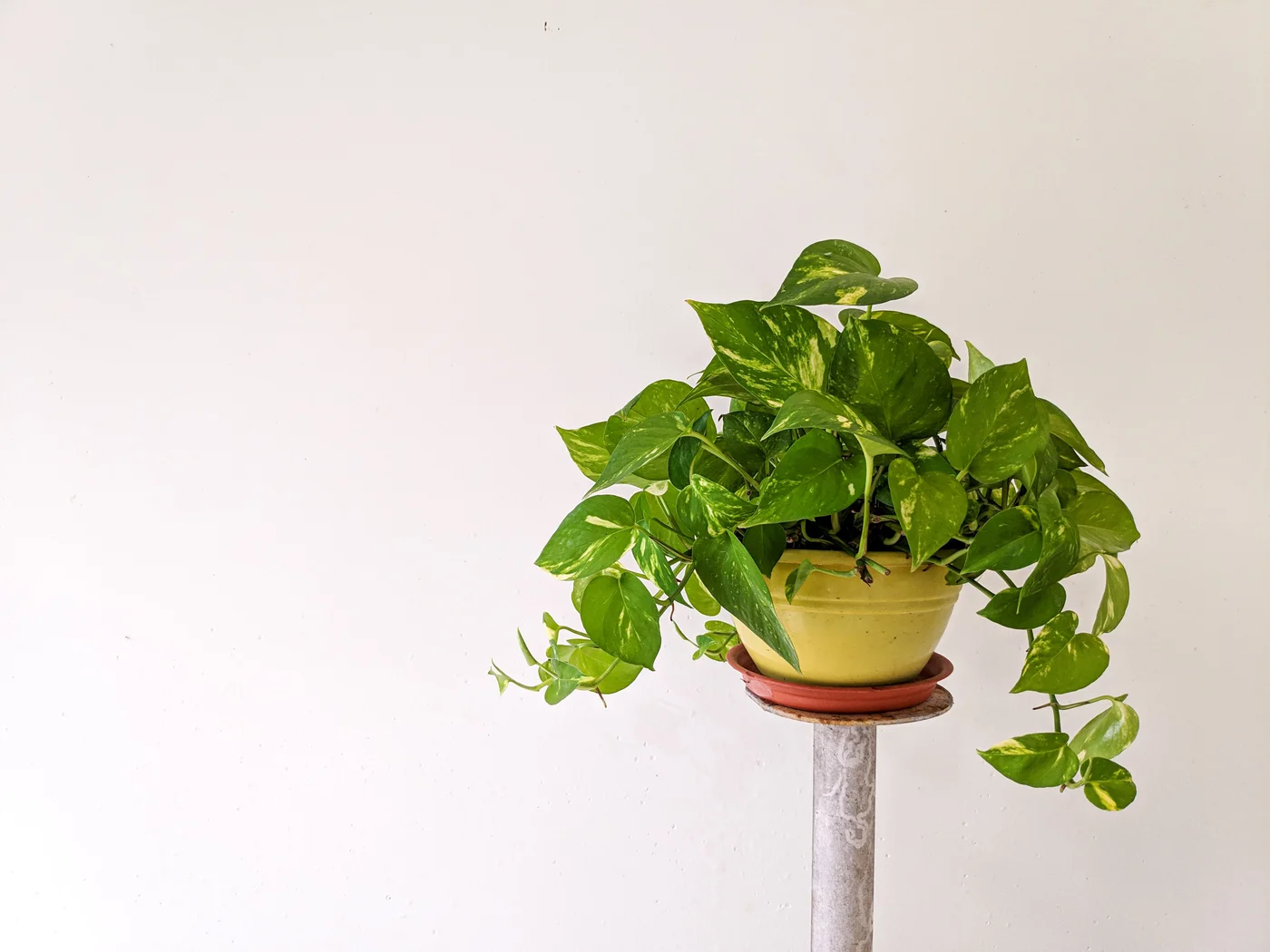

White can make a compact plant look quiet against pale furniture; charcoal emphasizes leaf color; warm ceramic adds contrast. None requires a lucky-color claim. Choose the finish you like after checking the pot's drainage and stability.
Water in response to the growing medium and conditions, not a fixed lucky-day schedule. If leaves yellow while the mix stays wet, check drainage and roots before adding more water. The photograph does not establish whether a planter has drainage holes, so check the actual container before buying.
Decide Whether Pothos Is Safe for Your Household
The ASPCA lists pothos as toxic to cats and dogs. Its insoluble calcium oxalates can cause mouth irritation, drooling, vomiting and difficulty swallowing when chewed. If pets can reach the pot or trailing growth, use a genuinely restricted room or choose a pet-safer plant instead. A high shelf alone is not a reliable barrier for a climbing cat.
The RHS also identifies pothos as harmful if eaten and a skin and eye irritant. Keep fallen leaves and cuttings away from young children and use protective gloves when handling sap. For suspected exposure, seek medical or poison-service advice; for a pet, contact a veterinarian or animal poison-control service promptly.
Try the Location Before Adding More Plants
Live with one plant in the proposed spot first. Can you water it without moving half the shelf? Do the vines stay clear of the route and household reach? Is new growth supported by the light? If the arrangement makes everyday use harder, adjust it. A healthy plant in a workable position is a better result than a collection bought to fill every symbolic corner.