



Quick Answer
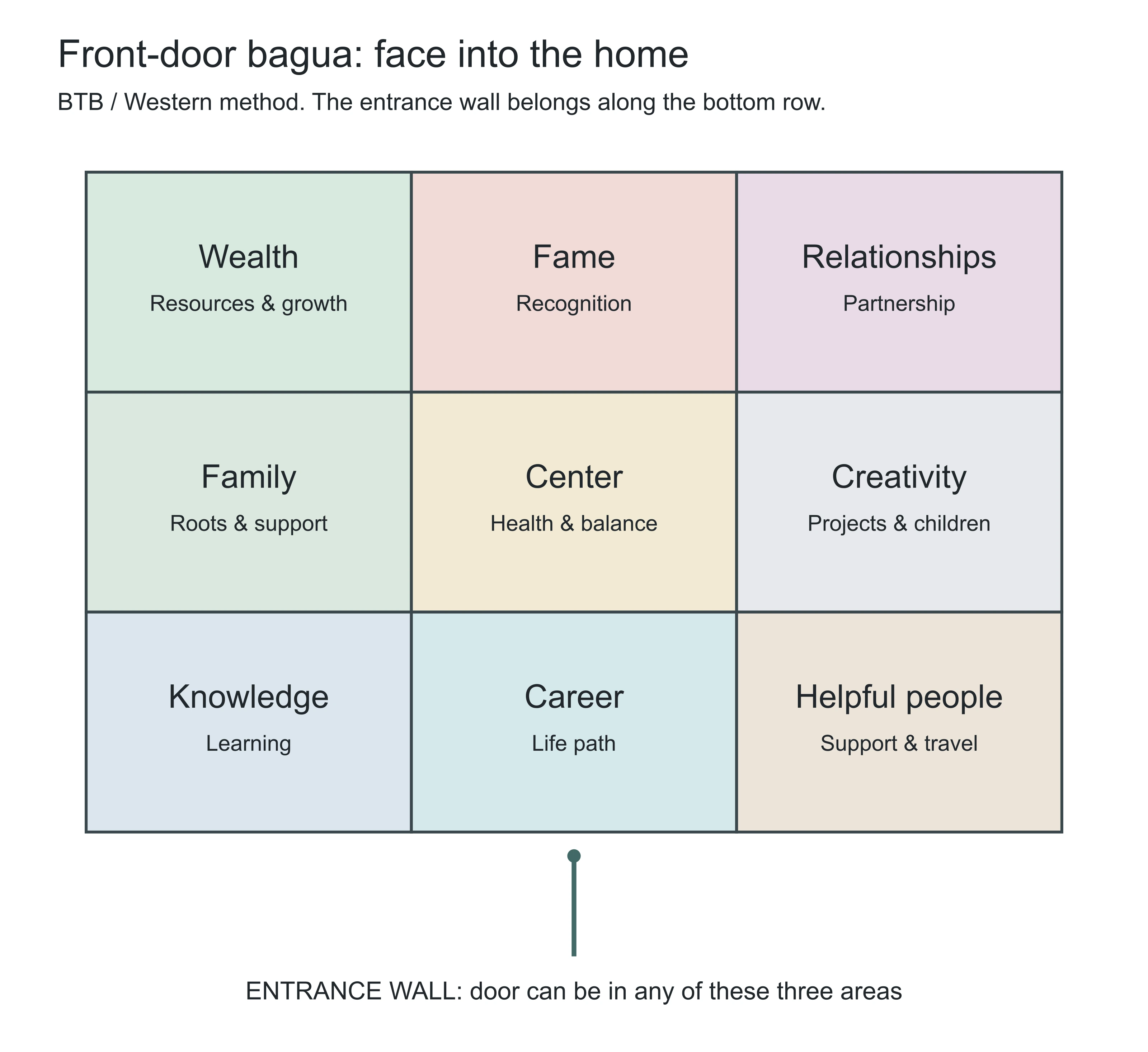
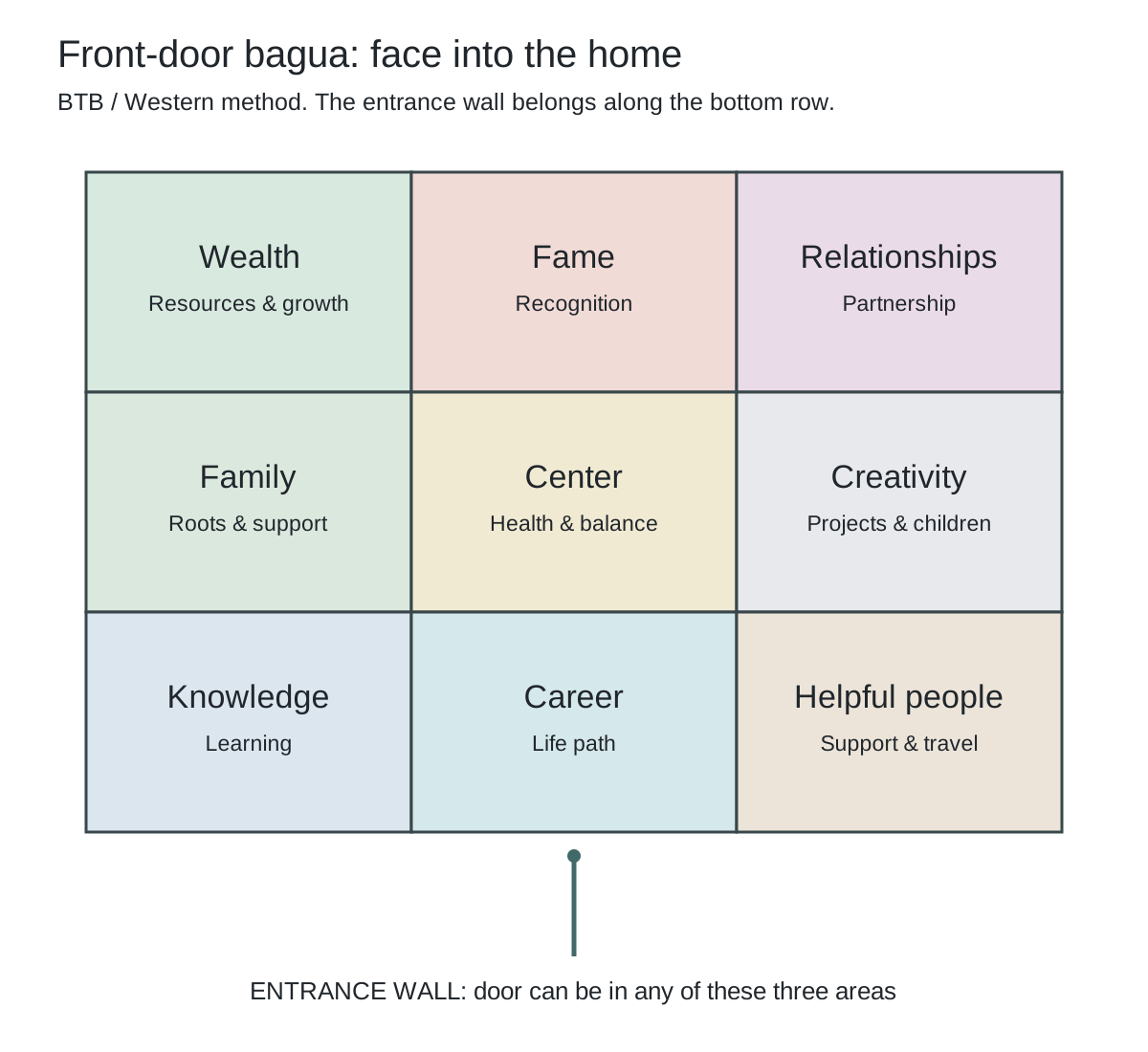
A feng shui bagua map connects areas of a space with themes such as career, relationships and wealth. Choose one method before placing it on your floor plan. In the BTB or Western method, align the bottom row with the entrance wall while looking into the home. In a compass-based approach, use measured directions instead. The far-left wealth area and the southeast wealth direction are not interchangeable instructions.
You do not need to redecorate nine corners at once. First work out which map you are using, where its reference entrance or directions come from, and what the rooms actually need. A tidy plan and a few purposeful changes are more useful than buying an object for every square.
The bagua is a traditional interpretive framework, not a scientific prediction of income, health or relationships. This guide explains how to read it without confusing different schools. For furniture, door swings and walking routes, pair it with our feng shui floor plan guide.
Choose the Bagua Method Before You Start
For smaller screens, open the entrance-based map at full size to zoom into its labels.
Two approaches that should not be mixed
Scroll sideways to compare all columns.
| Question | BTB / Western | Compass-based |
|---|---|---|
| What sets orientation? | The main entrance wall, viewed from outside looking into the space. | Measured compass directions and the particular school being followed. |
| Where is wealth? | The far-left area relative to that entrance alignment. | The southeast association in the directional bagua. |
| Does the door sit in Career? | Not necessarily. It can fall in Knowledge, Career or Helpful People along the entrance row. | The door direction does not automatically identify Career. |
| What do you need? | A reasonably accurate outline and a clear choice of entrance. | An accurate direction reading and clarity about the assessment method. |
Mindful Design School explains the entrance-based orientation used in BTB practice. Compass schools approach direction differently; some use sectors radiating from a center, and a full classical assessment can include factors beyond this introductory map. A nine-square graphic is therefore not a complete compass consultation.
When two charts seem to disagree
Check their orientation first. A traditional diagram may show south at the top, while a familiar navigation map shows north at the top. The compass reference below deliberately uses north at the top. Do not use its directions to rotate the entrance-based chart.
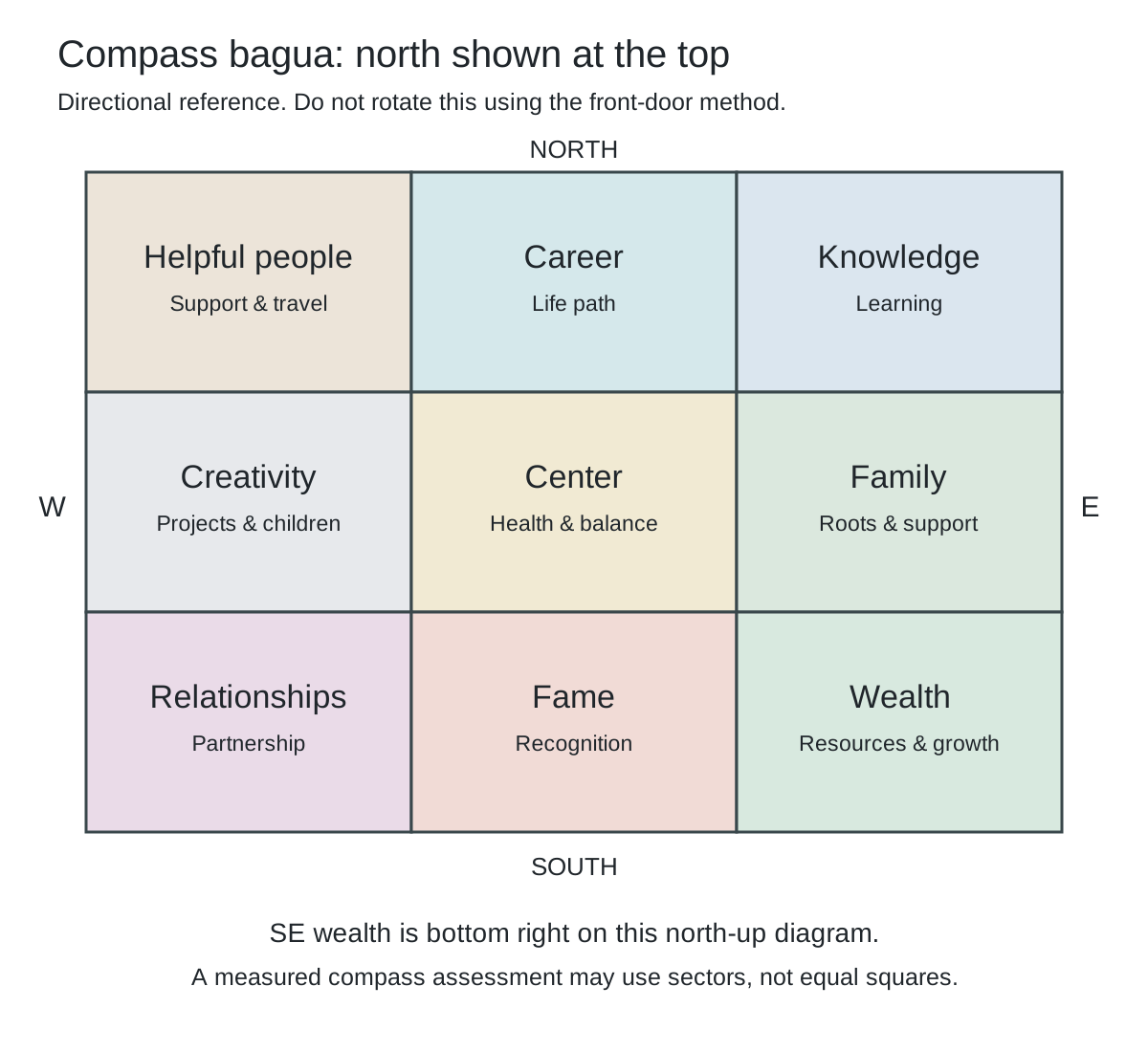
Open the compass map at full size to inspect the directions.
What the Nine Bagua Areas Mean
The eight surrounding areas and the center offer themes to reflect on. Names and color systems vary between teachers, so use the table as a plain-language starting point rather than a shopping list. An area's theme does not require the room in it to serve that exact activity.
Bagua themes and practical ways to support them
Scroll sideways to compare all columns.
| Area | Theme | A useful starting action |
|---|---|---|
| Wealth | Resources, growth and a sense of enough. | Repair something neglected or create a place to organize important financial paperwork. |
| Fame | Recognition and how you show up. | Make an existing display intentional rather than adding more decorative objects. |
| Relationships | Partnership and connection. | Make seating comfortable for the people who actually use it. |
| Family | Roots and support. | Choose a meaningful photograph or improve a shared daily routine. |
| Center | Health and balance. | Keep the central route safe and usable without treating it as a medical remedy. |
| Creativity | Projects and children. | Give an ongoing project contained, accessible storage. |
| Knowledge | Learning and reflection. | Make a reading spot or simplify a shelf you already use. |
| Career | Life path and work. | Remove a daily obstacle near the entrance or working zone. |
| Helpful People | Support and travel. | Keep contact details, keys or travel essentials easy to find. |
These actions connect the symbolism to lived experience. You can explore color meanings through the feng shui color chart, but do not paint every area a different color. A coherent room palette and suitable lighting still matter more than matching a chart literally.
How to Put a Bagua Map on Your Floor Plan
- Draw the home's outline, including doors and major internal walls. Start with the enclosed living space rather than casually adding gardens, shared corridors or detached buildings.
- Write the chosen method at the top of the drawing. This prevents switching between front-door and compass instructions halfway through.
- For a straightforward BTB example, turn the plan so the main entrance wall is along the bottom and you are looking into the home.
- Divide the enclosing rectangle into three equal columns and three equal rows. The door can be anywhere along the lower row.
- Label the areas and note which real rooms they cross. A zone can span more than one room; a room can cross more than one zone.
- Choose one area to work on. Fix access, lighting or maintenance before adding symbolic decoration.
The grid stretches to fit a rectangular plan, so a long home produces rectangular zones rather than nine perfect squares. Do not shift the map just to make your preferred room the wealth area. Our money corner guide explains how to work with that area once the method is clear.
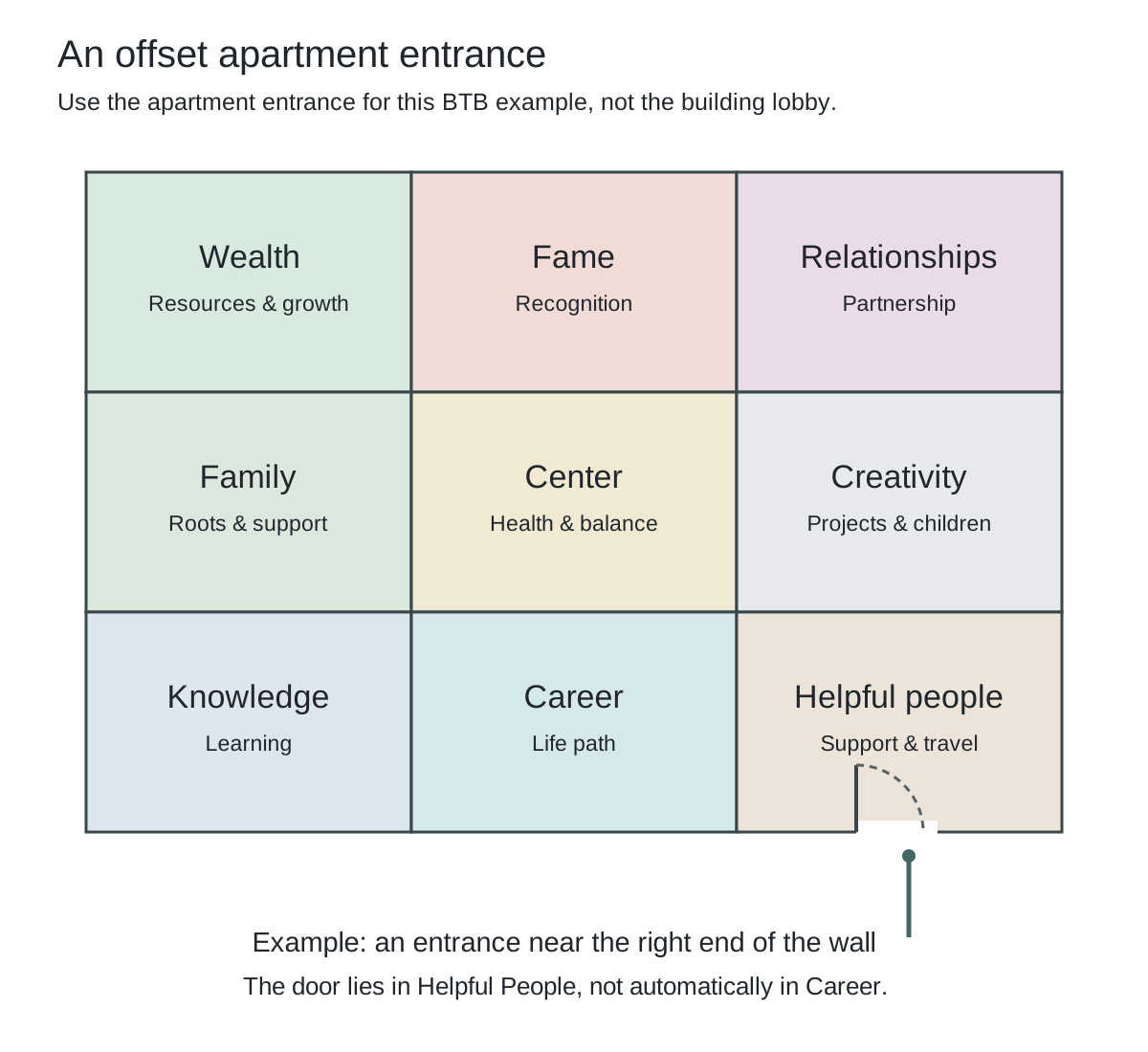
Open the apartment entrance example at full size.
Apartments, Individual Rooms and Multiple Floors
For the apartment example above, use the private apartment entrance, not the lobby entrance for the entire building. Building-level and dwelling-level readings answer different questions. If your own door opens into the middle of a complicated footprint, a simple edge-aligned grid may not be an adequate explanation; avoid inventing a new orientation from a screenshot alone.
You can also study an individual room using its own doorway in BTB practice. Label that drawing as a room map so you do not confuse it with the whole-home map. A plant might occupy a room's wealth area without occupying the home's wealth area, and that is not an error in the floor plan.
In a multi-floor home, keep plans separate and follow one school's approach to upper floors and stairs. Do not automatically rotate each upstairs room according to the landing or assume the stair opening is a new front door. For a simple planning exercise, trace the same outer orientation onto each floor and note where the shapes differ, then ask a practitioner if you want a formal reading.
L-Shaped Homes, Missing Areas and Difficult Rooms
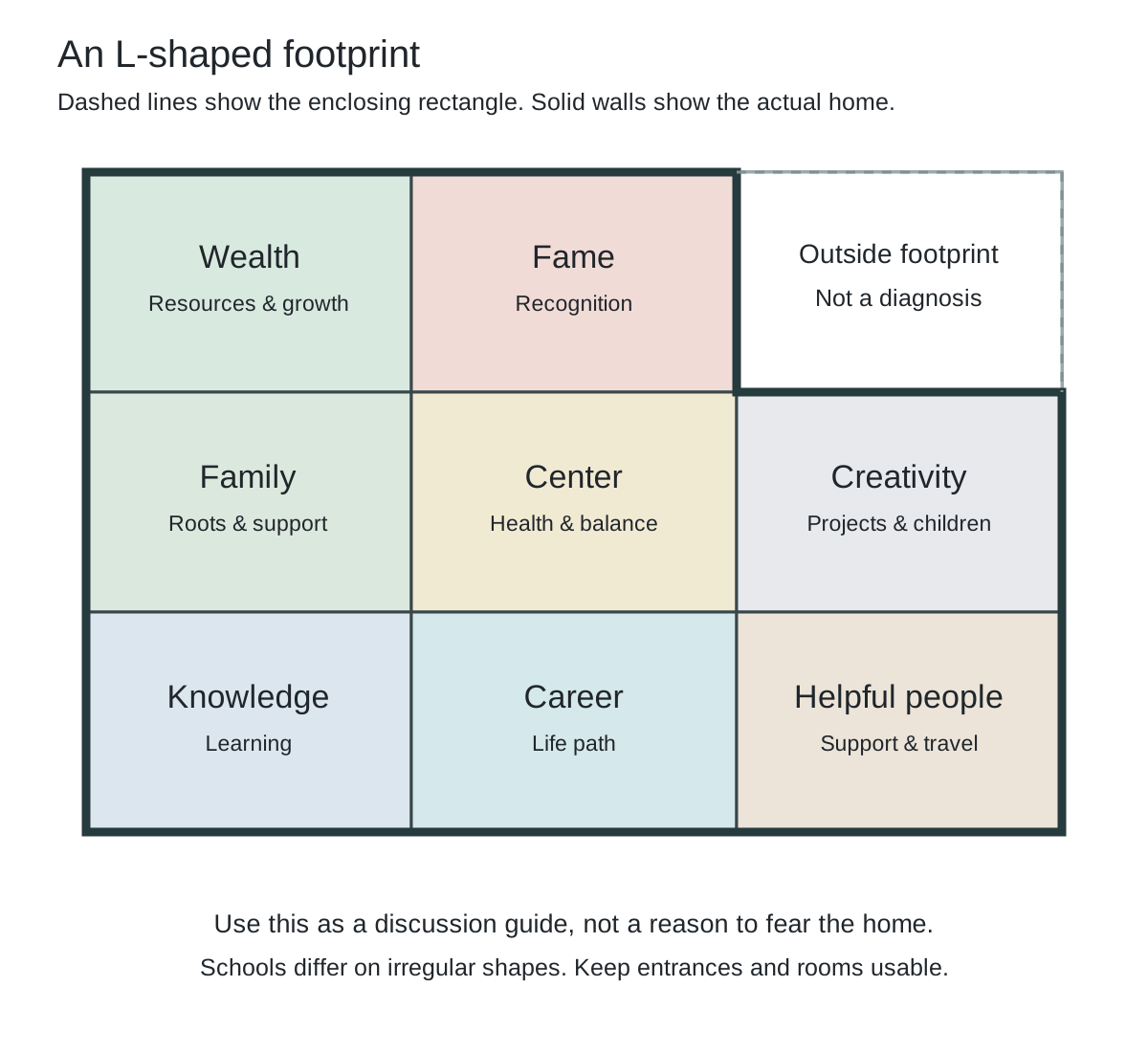
Open the L-shaped footprint at full size.
Teachers differ on recesses, extensions, garages and open courtyards. That is a reason to clarify the method, not to conclude that an L-shaped home causes bad relationships or financial loss. Mark the real walls accurately and resist buying a supposed cure before understanding the advice.
If the wealth area lands in a bathroom or closet, make that room work well: address leaks, improve lighting and keep storage manageable. Do not put a live plant into a dark cupboard. If the center is a hallway, keep it a hallway instead of placing a table where everyone needs to walk. If a bed crosses two areas, choose its position for sleep, access and safety first.
Make One Change You Can Actually Evaluate
Suppose the far-left area is a living-room corner with tangled lamp cables and unused boxes. A sensible first change is to clear the floor, contain the cables and give the lamp a useful position. A healthy plant is optional if the light supports it. You have improved the corner without claiming that the object will produce wealth or that an immediate life change proves the map works.
After a week, ask practical questions: is the room easier to use, does the new arrangement stay tidy, and do the people sharing it like the result? If yes, keep it. If not, revise it. For a broader starting sequence, read feng shui for beginners.
Bagua Map Questions
Should I use the front door or a compass for a bagua map?
Does the front door always belong in the Career area?
Which entrance should I use for an apartment?
Is an L-shaped home bad feng shui?
Can I put a bagua map on one room?
Further reading: Danelle Miller's bagua resources show entrance-based and directional approaches. Consult a practitioner from the school you choose if you need advice for an unusual footprint rather than a beginner reference.