



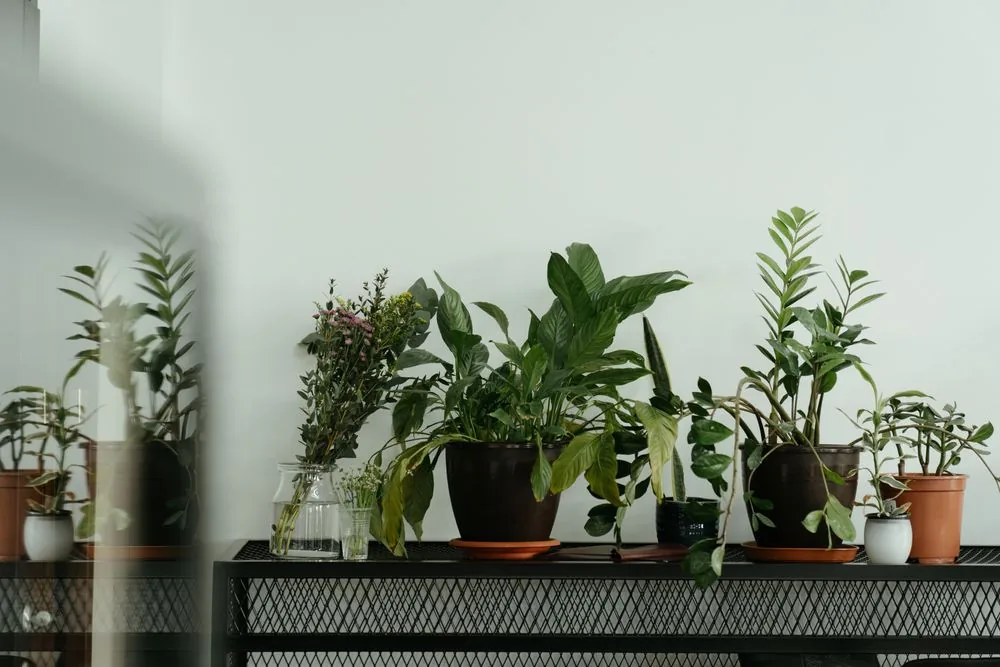
Quick Answer
Measure the widest part of the saucer and weigh the pot after watering. Choose a stand that supports both, then check how far the leaves spread and whether you can lift the pot out without moving the stand.
Compare stands by the space and the pot
Match a stand to the pot and the spot
Scroll sideways to compare all columns.
| What you have | Stand to try | Fit check |
|---|---|---|
| One top-heavy planter | Low platform with a broad base | Rated load and full saucer support |
| One small pot beside a chair | Single-pot pedestal or stool | Leaf clearance at shoulder height |
| Several pots in one bright corner | Tiered or stepped stand | Light and lifting room on the lowest tier |
| A wide window and shallow floor space | Low freestanding bench | Access to the latch, blind and curtain |
| A large planter you move often | Rated plant caddy with locking casters | Wheel clearance, firm floor and parked stability |
Measure the stand at its feet as well as at the top. A three-legged base may stick out farther than the pot, and an umbrella of leaves can take up more space still. Check the manufacturer's load rating for the whole stand and for each tier, if listed. The weight of a planted pot includes the container, mix, plant, saucer and retained water. Use the actual rating for the model you choose. IKEA's stand range shows how different the footprints can be even among stands for one pot.
Stands for a single plant
1. Lift a small plant on a wooden stand
A wooden stand gives a small pot some height without filling the corner with furniture. Set the pot in place before deciding on height. Beside a sofa, the leaves can sit just above the arm where they stay visible without brushing the person sitting there.
On a tripod, check the distance between all three feet. If you have to step around a leg to get past, back the stand into a wider pocket or use a lower platform.
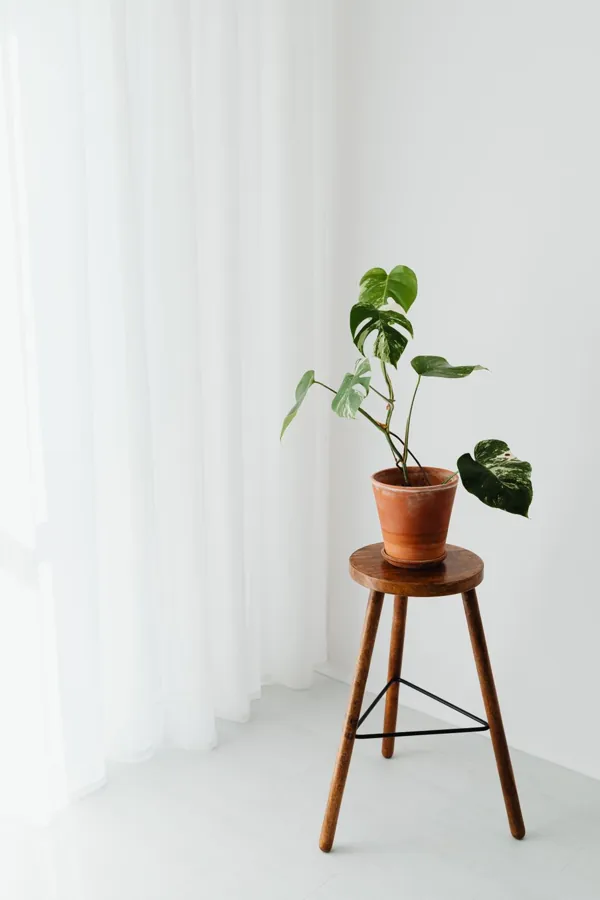
2. Give arching foliage room on a low wood stand
An open timber base can support a woven planter without hiding the plant’s trailing outline. Check that the basket has a rigid inner pot and a waterproof saucer. Let the longest leaves fall away from the walking side so the stand can stay close to a wall.
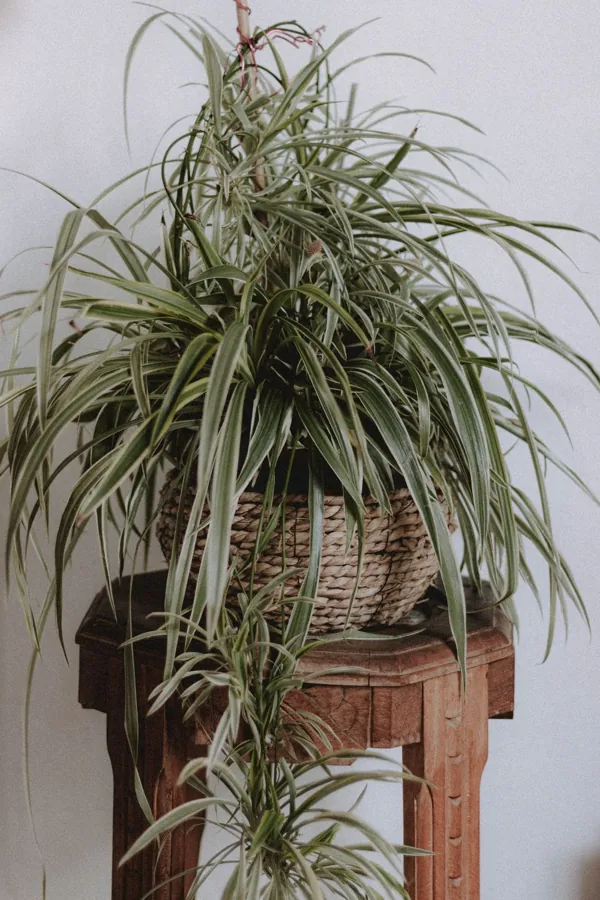
3. Give a medium plant its own low stool
A firm stool can lift a plant enough to show the underside of arching leaves and keep them off the floor. Start with a flat seat, a nonslip saucer and a stool rated for the load. An upholstered seat or a curved top gives the saucer a poor place to sit.
For a 9-inch saucer on an 11-inch round seat, you have an inch of margin around the edge when centered. Check the flat area rather than the advertised width if the seat has a bevel.
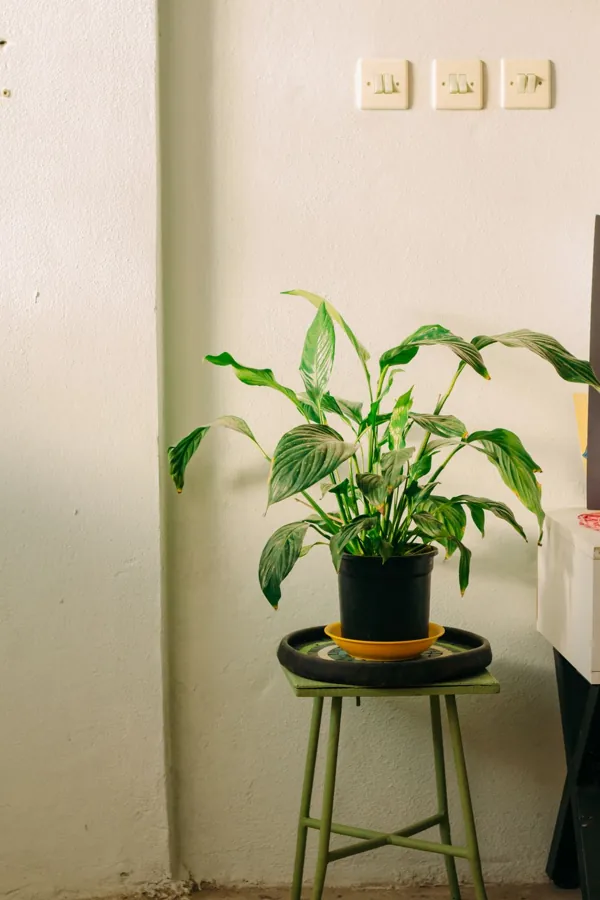
4. Fit a compact pot on a square-topped stool
A square top works well against a straight wall or cabinet. Turn the stool so its legs stay inside the space you measured, then center the saucer on the flat part of the seat. Leave enough room behind the pot to get your fingers around it.
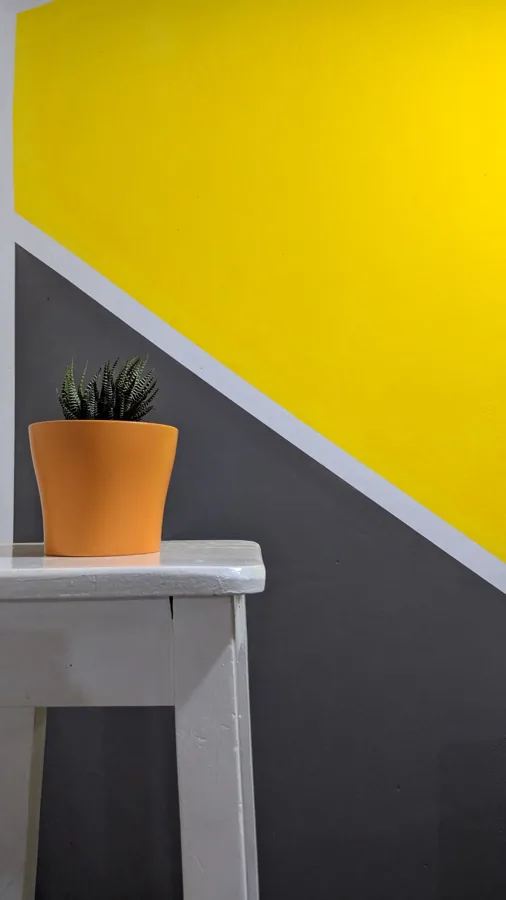
5. Use an open metal frame where the room feels crowded
An open frame leaves floor visible beneath the pot. That can make a narrow spot feel less filled, especially when the planter is already dark or bulky. Check how the feet meet the floor and whether the top ring or platform fits the entire container.
Dry spills promptly on painted metal and place a saucer beneath any pot that drains. A ring stand also needs a planter shape that sits securely in the ring.
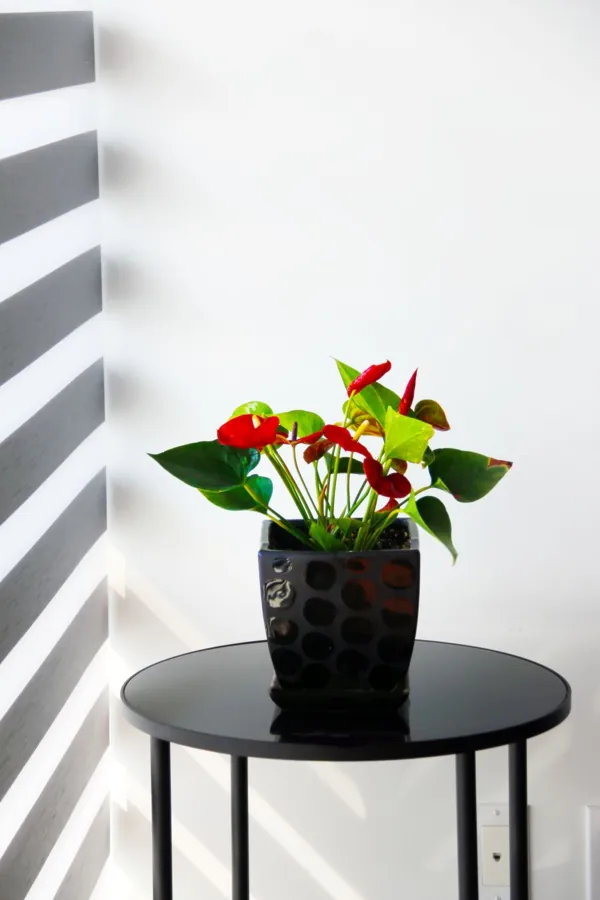
6. Put a compact pot on a hairpin-leg stand
Slender legs work best with a pot that sits entirely on the platform and has a modest canopy. Check that all the feet touch down on the same surface. If a leg lands on a rug edge, reposition the stand so it sits level.
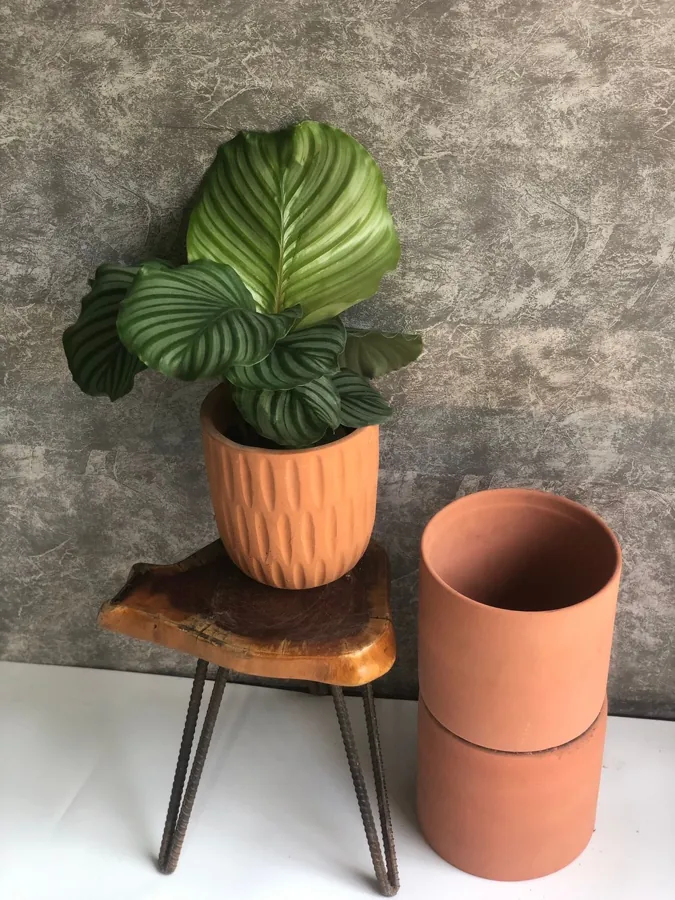
Stands beside windows and furniture
7. Tuck a slim stand beside the sofa arm
A slim stand can occupy the space between the sofa and the window without giving up an entire side table. Leave room to operate the shade and remove the pot without dragging it across the arm.
Check the plant from your usual seat. A pot that fits on the stand may still have stems that brush the upholstery. Leave room for how the plant will grow.
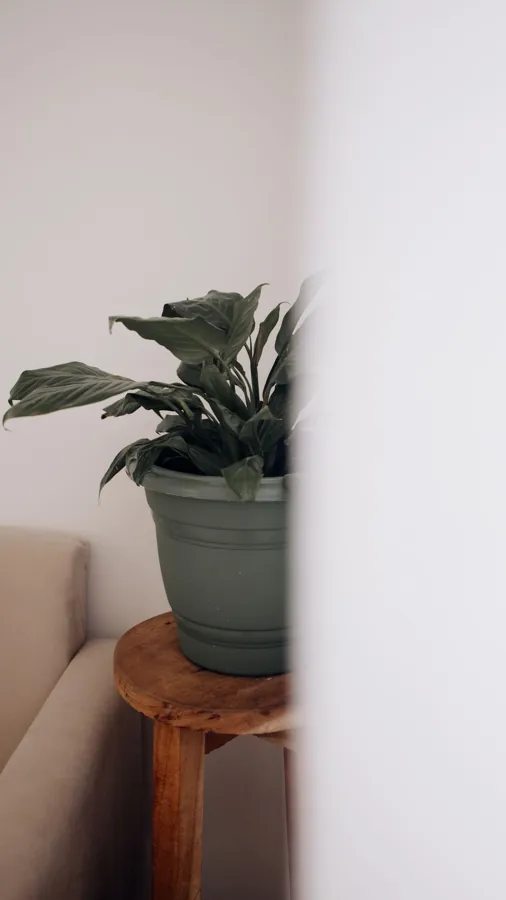
8. Use a small side table as a plant stand by a chair
Choose a narrow table with a smooth, level surface and keep the plant on the side away from the seat. If you want room for a book or cup, set those items down before choosing the pot size. A waterproof saucer helps keep that shared surface usable.
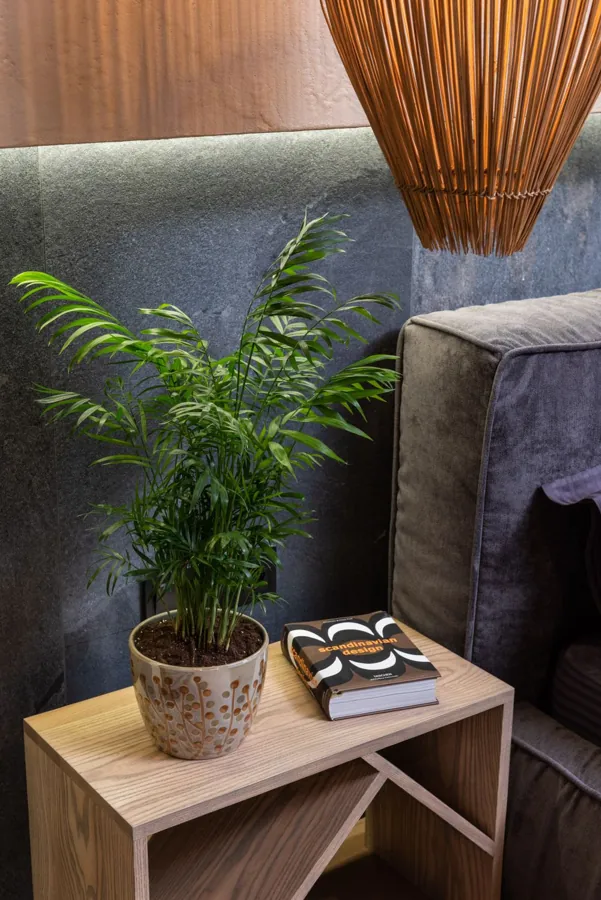
9. Place a stand alongside a bright window
Set a freestanding stand beside a bright window. A low stand works when the glass extends close to the floor. For a higher window, choose a stand that lifts the foliage into the light. Leave enough room to open the window and move the curtain or blind without catching the leaves.
Where a window gets strong afternoon sun, choose the plants for that exposure and introduce stronger light gradually. The University of Minnesota's indoor lighting guide explains why light varies with distance and direction.
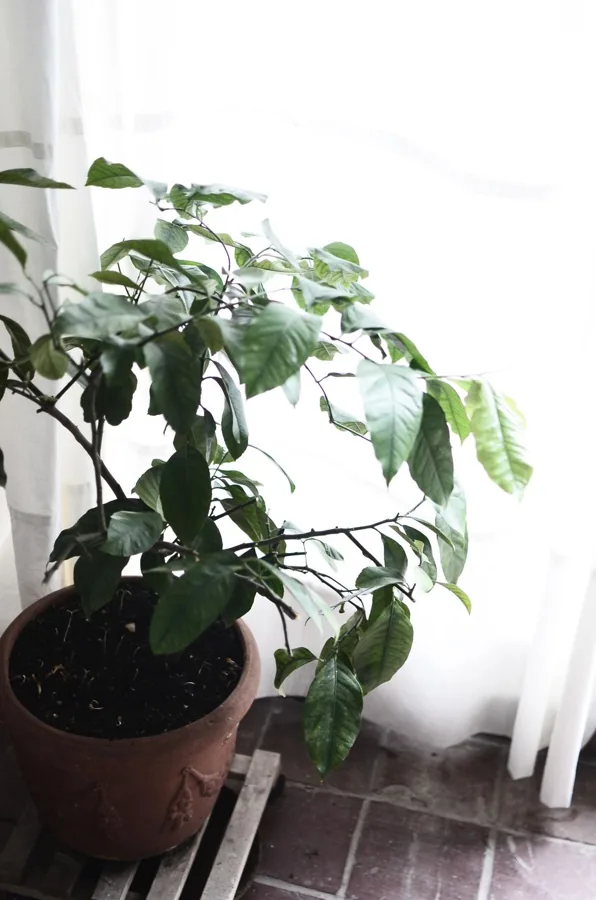
10. Use a woven or timber stand to soften a hard corner
Texture works best when the rest of the corner is simple. A woven stand can break up a painted wall, while unfinished-looking timber can sit naturally against a wood floor. Keep the whole saucer supported and separate any drainage from absorbent material.
If the stand doubles as a little side table, keep the surface dedicated to the plant or leave enough flat room for a cup or book. Our indoor plant decor ideas show more ways to place plants around furniture.
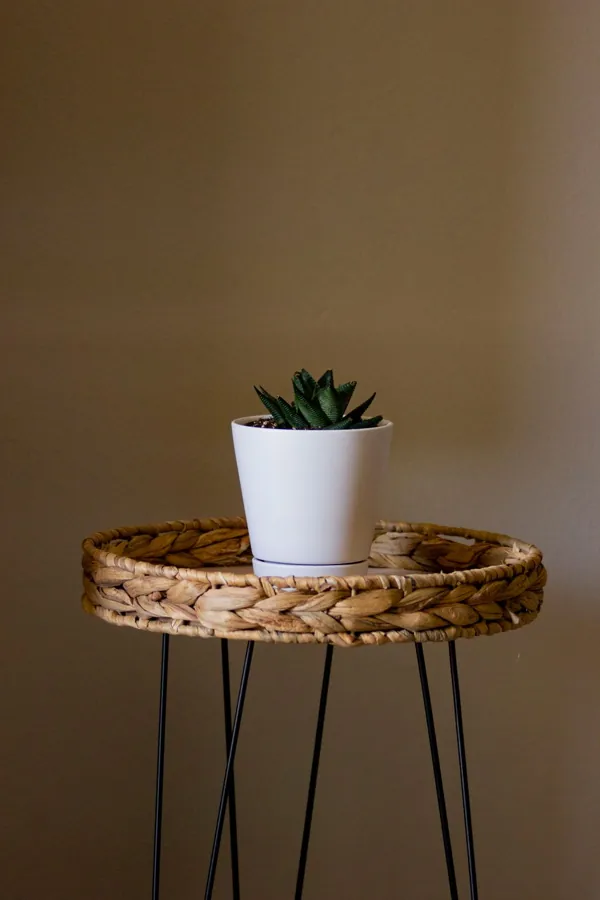
11. Repeat a woven finish beside rattan seating
A small plant stand near woven seating can pick up the room’s texture without taking over the corner. Keep the base inside the furniture grouping and check leaf clearance at seat height. Choose a removable saucer that catches spills before they reach a woven top or rug.
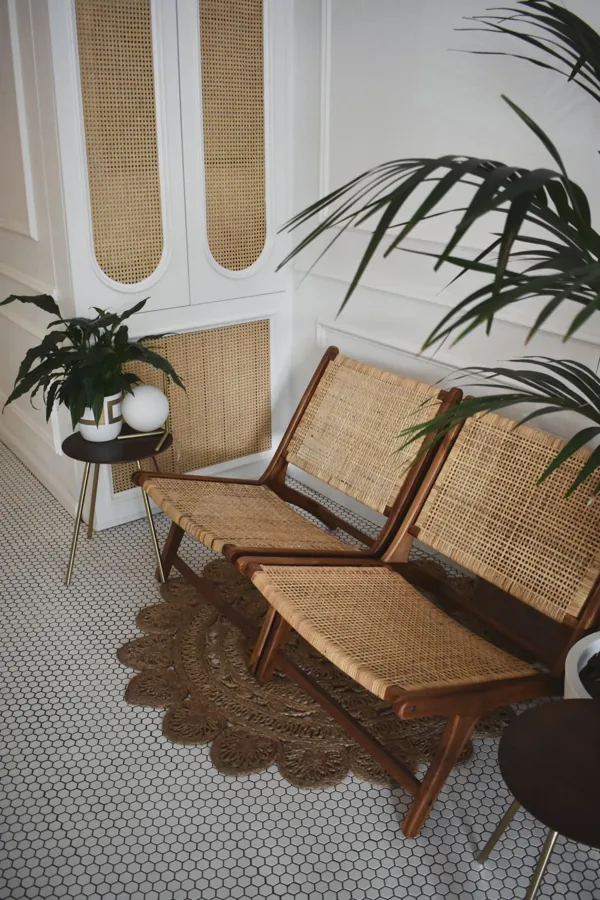
Stands for large plants and focal points
12. Keep a broad plant low on a sturdy platform
A low position suits a planter that already carries plenty of height or has a wide canopy. Set the pot in the center of a broad platform that fully supports its base. Look across the room to see whether the leaves still have room to spread.
If the container is too awkward to lift safely when wet, use a stable floor setup or follow the manufacturer's instructions for a rated plant caddy. Our large indoor plants guide helps you plan for mature spread.
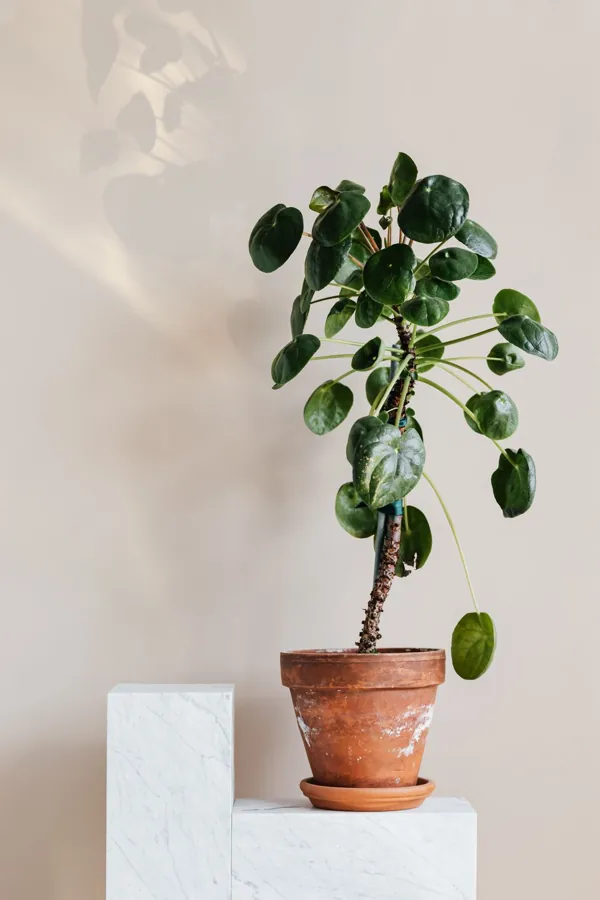
13. Choose a wider platform for a spreading plant
A rectangular top gives you options for orienting a plant with leaves that grow farther in one direction. Put the pot centrally and turn the fullest side toward open floor space. Confirm the surface is rated for the watered pot before treating a bench or side table as a stand.
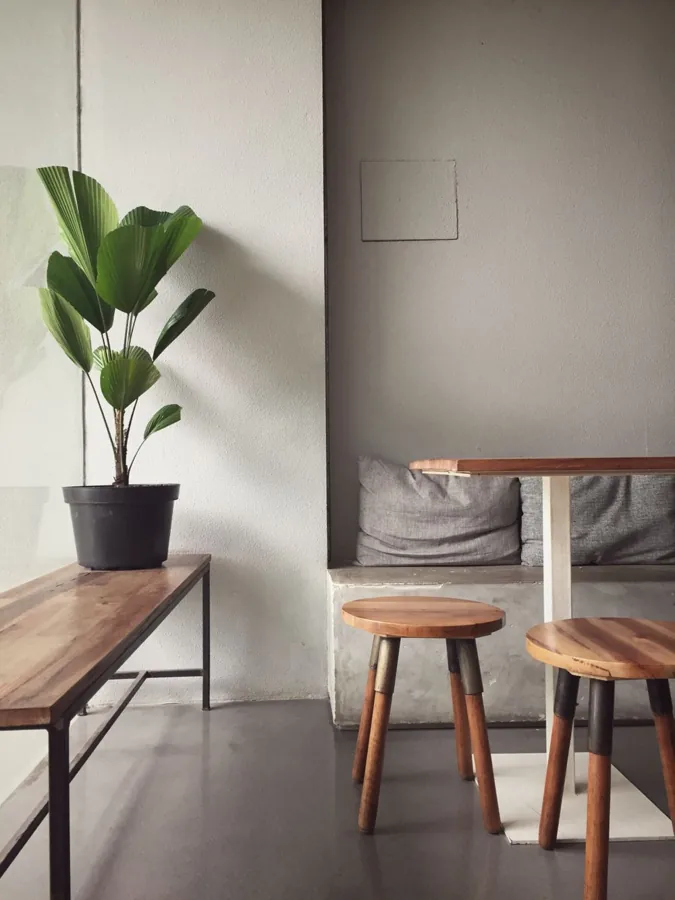
14. Make a pedestal carry one focal plant
A single pedestal works well against an open wall where the leaf shape can stand out. Repeat a nearby finish if you like, then let the stand and plant take up one small vertical area. Pick a pot that looks balanced on the top and sits entirely within it.
A taller pedestal increases the chance that a bump will topple the display. Choose a broad, stable base and test the placement on a firm, level floor before adding the plant.
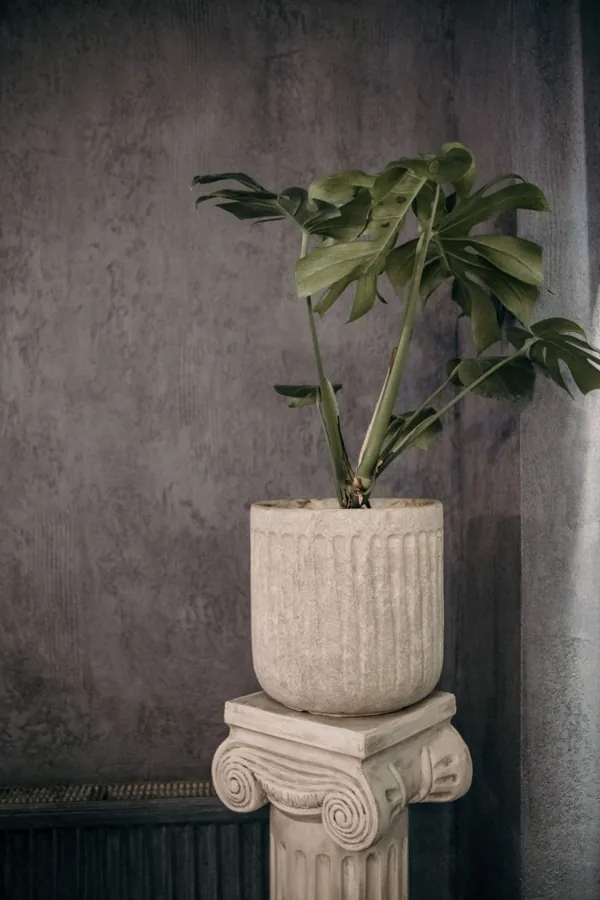
15. Use a dark pedestal to set off a light planter
A dark pedestal and pale pot give a small plant a clear outline against a plain wall. Choose the height based on the plant’s mature leaves, then check that the pot sits flat. Keep taller pedestals away from routes where a shoulder or bag could catch them.
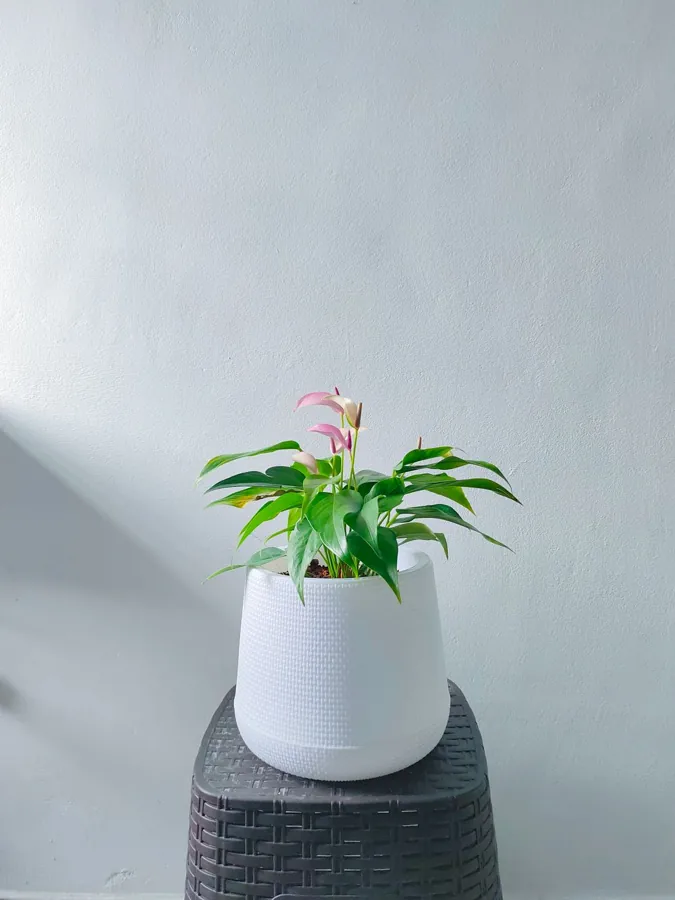
Stands for several plants
16. Line up pots on a freestanding plant bench
A low bench works when several plants need similar light and there is room beneath a broad window. Give each pot its own saucer and keep space around the biggest pot so it can come out without catching the others.
Set the heaviest planter where the bench supports it best, following the maker's guidance. Sit across the room to check whether taller leaves block light or views you use.
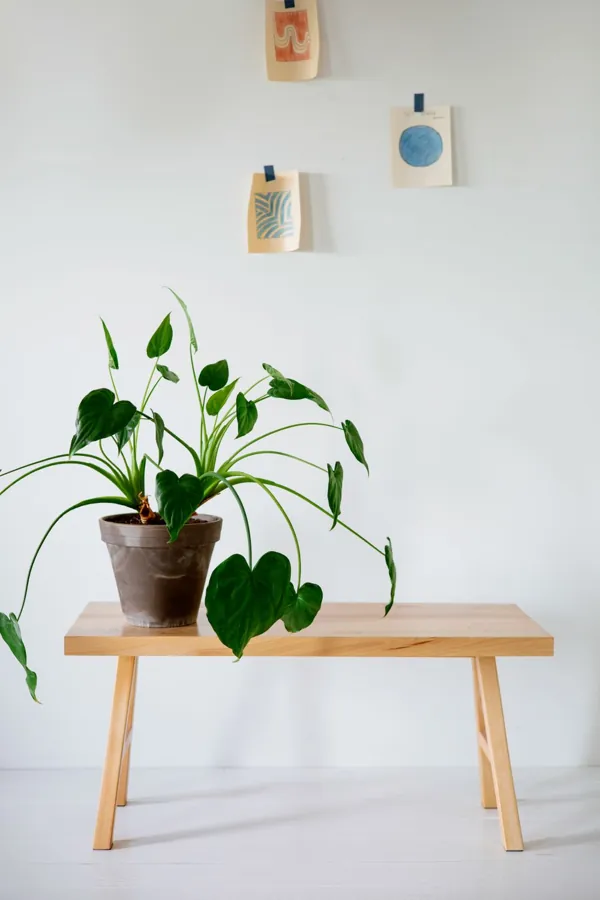
17. Leave one end of a bench empty
Gather two or three pots at the brighter end of a bench, leaving the other end free to set a pot down while you clean a saucer. Spread the containers out enough to lift each one straight up. A group of small pots works better here than a single pot that fills the whole bench.
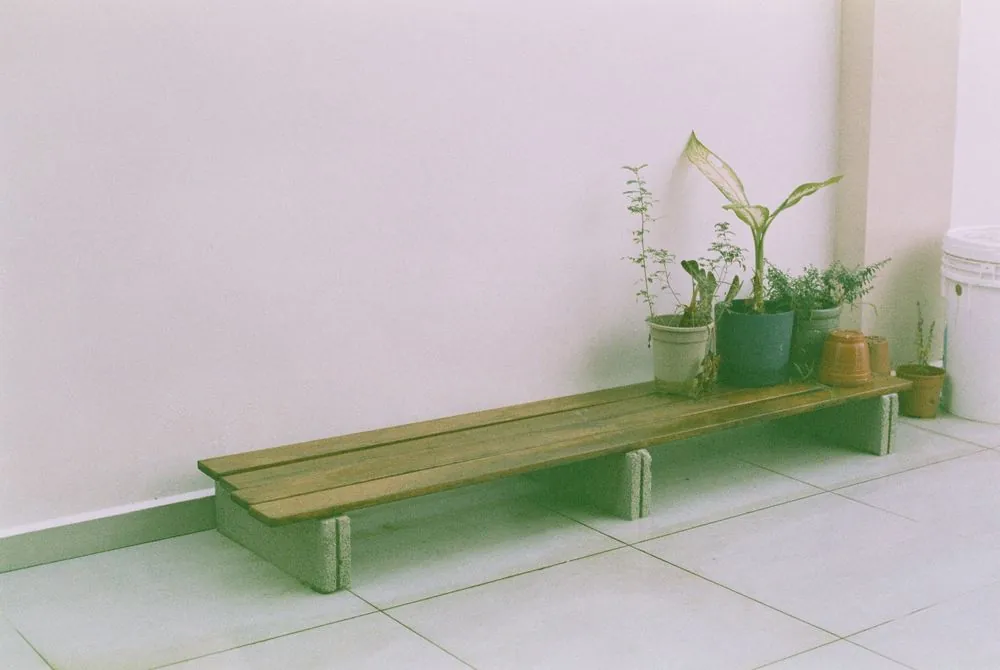
18. Stagger small pots on a ladder-style stand
Use a purpose-built ladder stand when several small pots need different heights within one footprint. Put the taller plant on the tier with the most headroom. Look from the side to find where upper shelves shade lower leaves.
Follow the instructions for assembly, anchoring and load limits. Keep a tray or book on a shaded lower tier if plants there would get too little light.
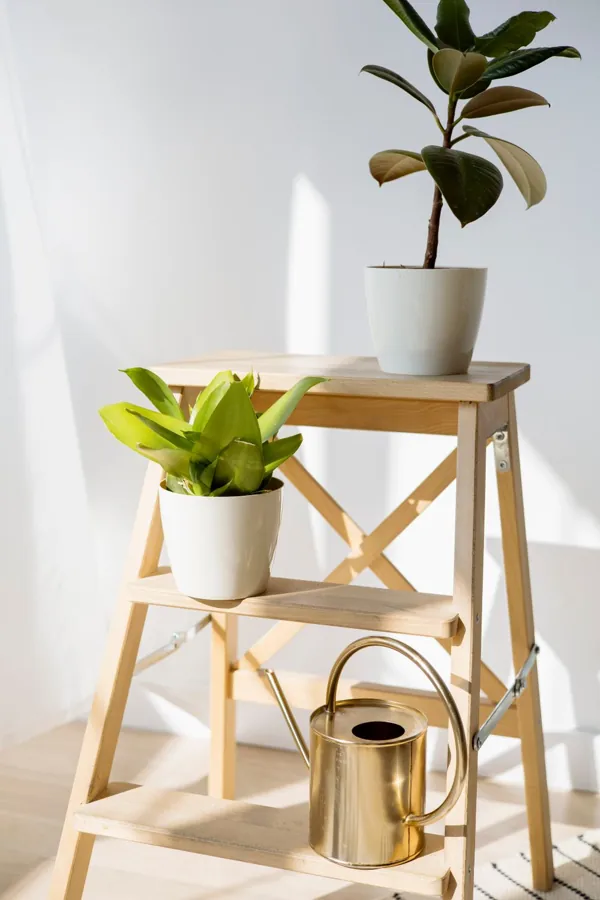
19. Use an open ladder stand near the window
Choose a frame with open sides when daylight enters from one side. On a sunny day, look for shelves casting a shadow onto the level below. Place the plants that need the most light where you can see the window from leaf height.
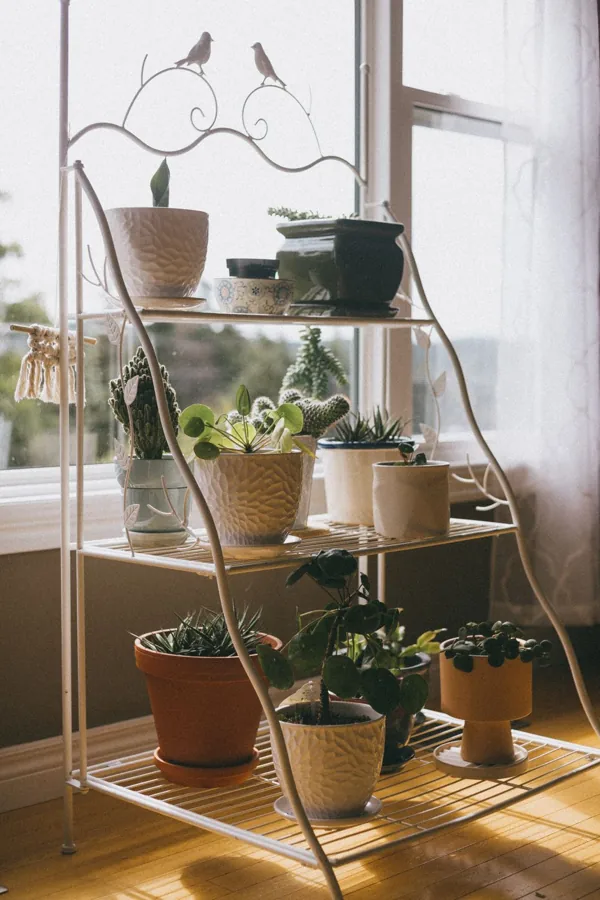
20. Make one tiered stand hold a mixed collection
Put heavier pots on the lowest suitable tier. Give the plant with trailing stems an outer edge, then keep its trail clear of the pots you lift most often. Stand beside the rack and try lifting each pot with both hands.
If a tier has two small pots and one is hard to remove, shift them rather than accepting a watering routine you will avoid. Our indoor plant shelf guide has more examples of reach and spacing between levels.
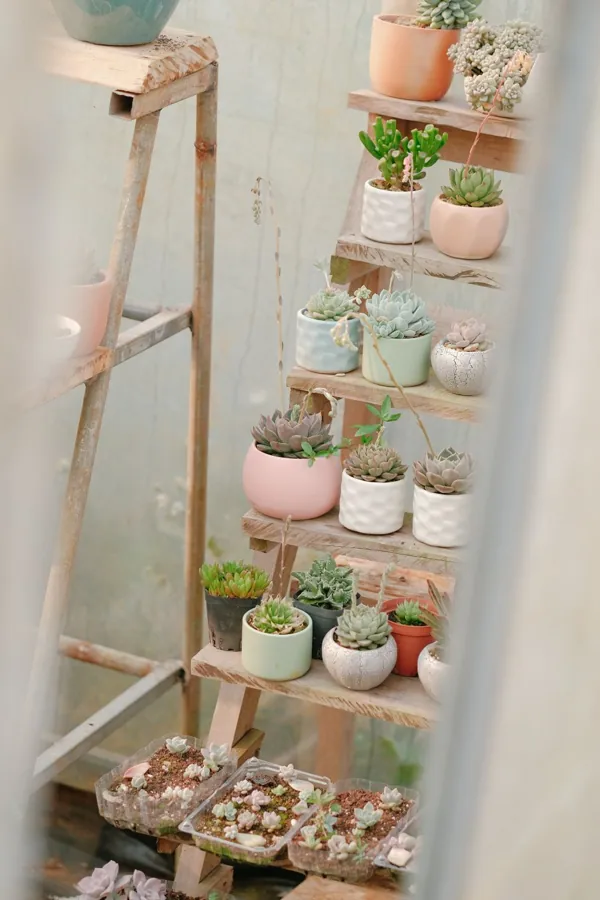
21. Line up matching stands behind a sofa
A row of matching stands behind a sofa can give you a long plant display without using a console table. Keep each saucer centered, leave a route to reach the pots, and vary plant height so the row still lets daylight through. Check that leaves won’t brush someone’s shoulders when they sit down.
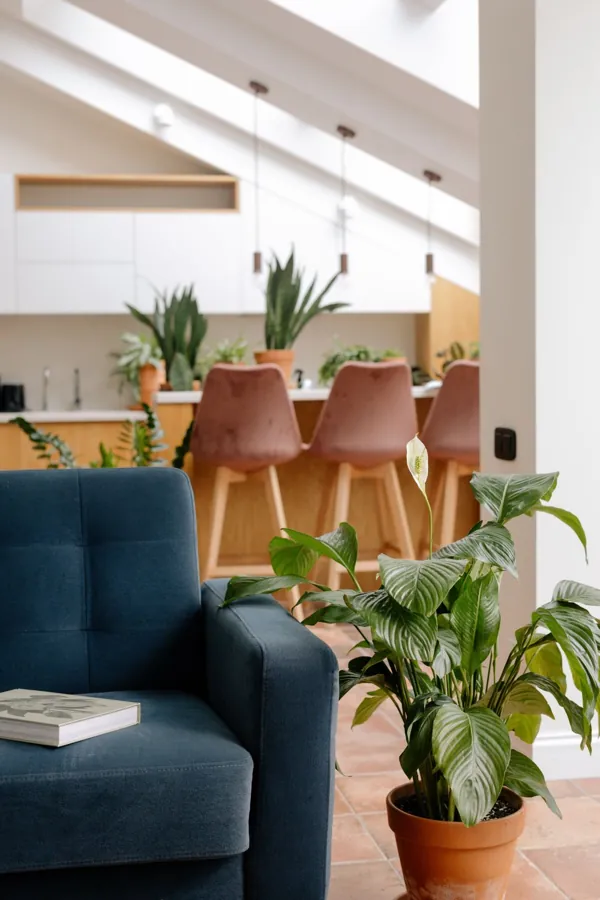
22. Group raised pots and floor pots at different heights
Use separate stands or pair one raised pot with floor planters. Set the broadest plant slightly behind the others and stagger their tops so you can see each silhouette. This works in a corner bright enough for every pot. If the tallest plant shades the smallest one, widen the group or move the little plant forward.
Make a gap wide enough to draw a pot out of the cluster. Keep the whole grouping on one side of a walking route rather than spilling across it.
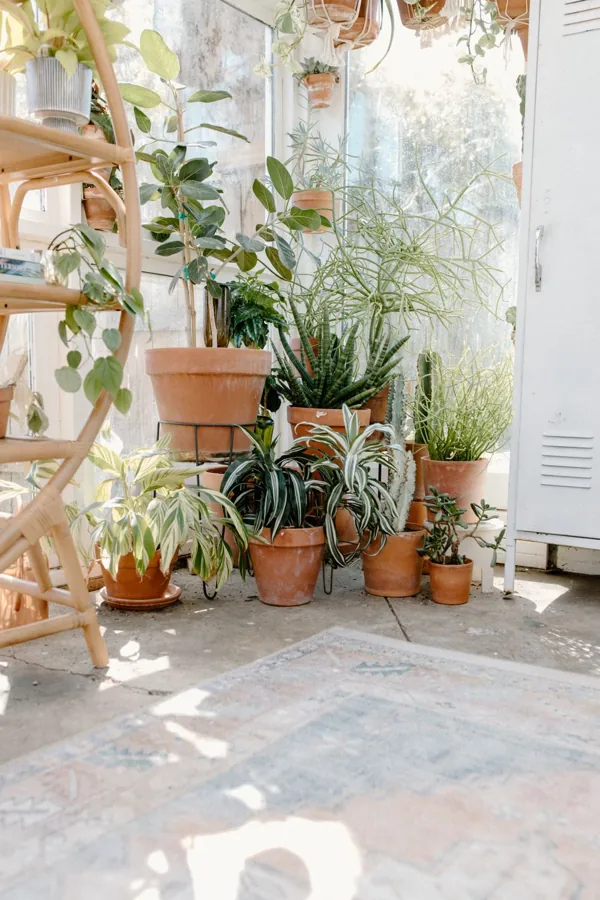
23. Raise the back row where short plants disappear
Use a low, stable stand behind floor pots to bring the smaller plants into view. Check from the doorway as well as where you normally sit. If the back plants are hard to reach once the front pots fill out, leave an open side or shorten the group.
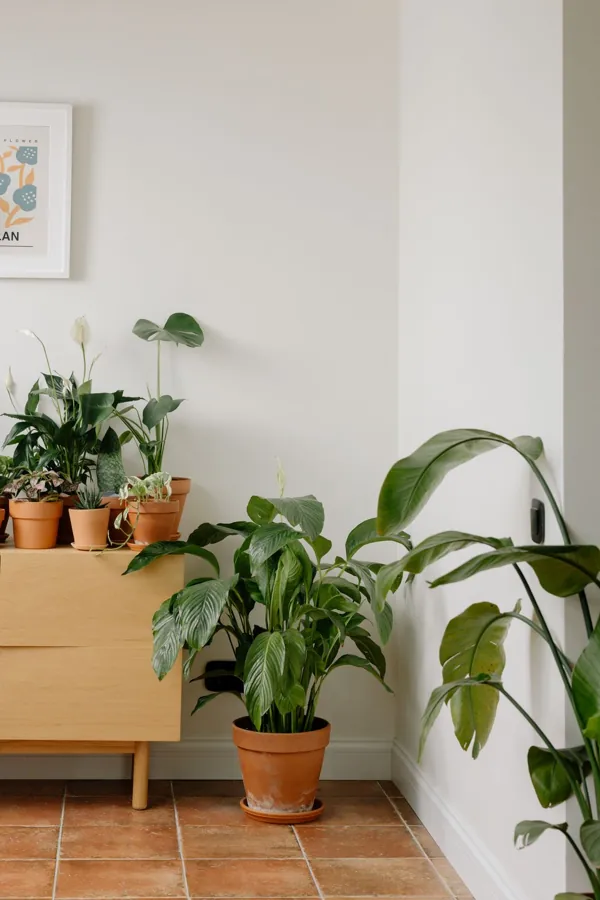
Stands and surfaces that make watering easier
24. Give your most frequently watered pots an easy lift
Set a thirsty plant close to where you water it, at a height you can reach with two hands. With a deep cachepot, check that you can grip the nursery pot without tilting it. A waterproof liner is helpful only if you can remove and empty it.
If you need to move a heavy floor planter repeatedly, compare a low caddy rated for the wet weight. Look for locking casters, keep the plant centered and check thresholds before rolling it.
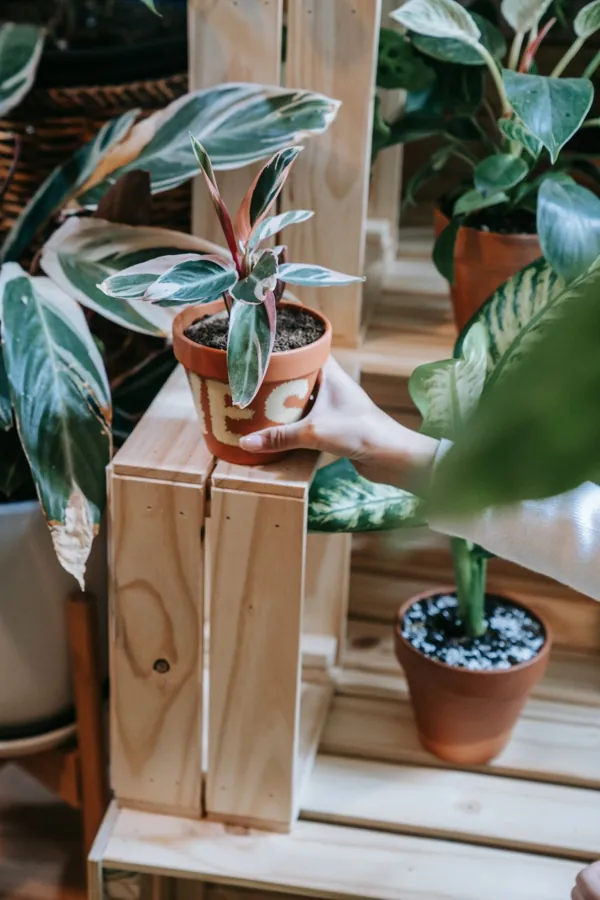
Bonus idea for a spot to set the pot down
Keep a clear landing surface near the stand or sink. Put the pot there temporarily when checking its weight, emptying its saucer or cleaning the stand. The surface should hold the whole watered container and be dry before you put it back.
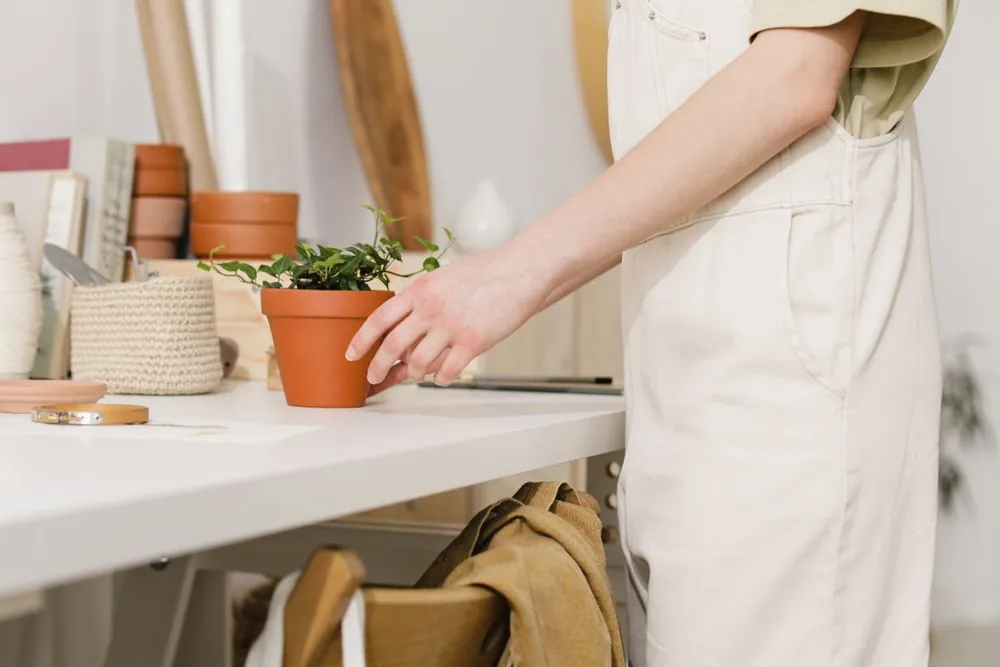
Test the setup with the actual pot
Put painter's tape on the floor to mark the footprint. Walk past it, open the adjacent drawer or door and pull any curtain through its range. Check that the mature leaves can fit within the space you have left.
Then weigh the watered planter and measure the full saucer across its widest point. Place the empty stand on the intended surface and check whether it rocks. Treat the maker's rating as a limit, and choose a different setup if the standing position, lifting route or pot fit remains awkward.