


Quick Answer
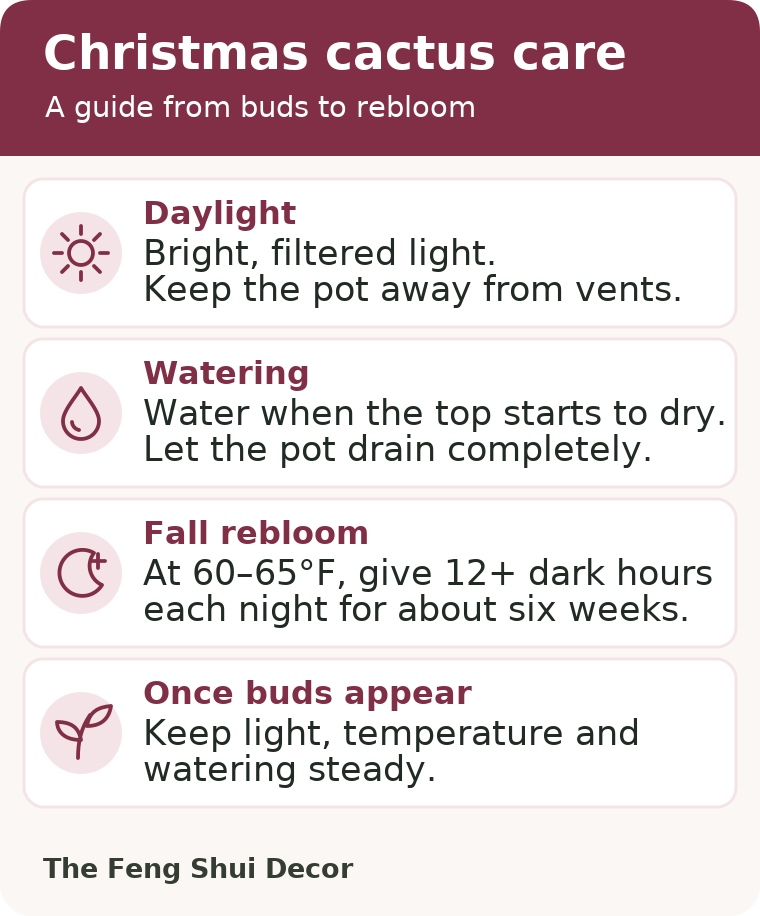
Give Christmas cactus bright, indirect light and a pot that drains. Water thoroughly when the top of the mix begins to dry, and empty the saucer or outer pot. To get flowers again, give a healthy plant several weeks of long, uninterrupted nights in fall. Once buds form, keep its light, temperature and watering steady.
Check the stem edges before you trust the label
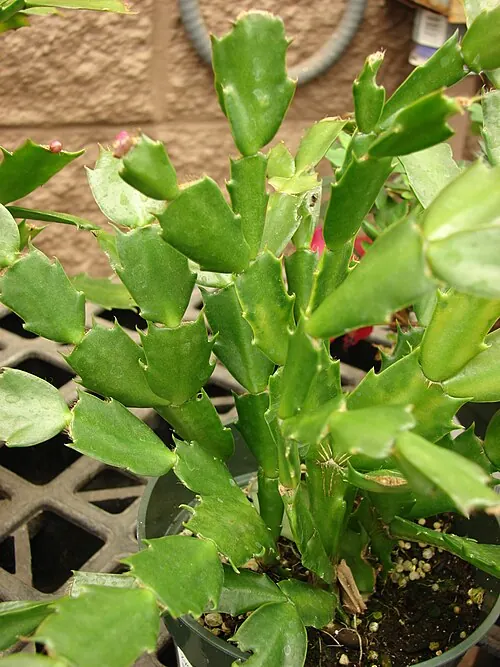
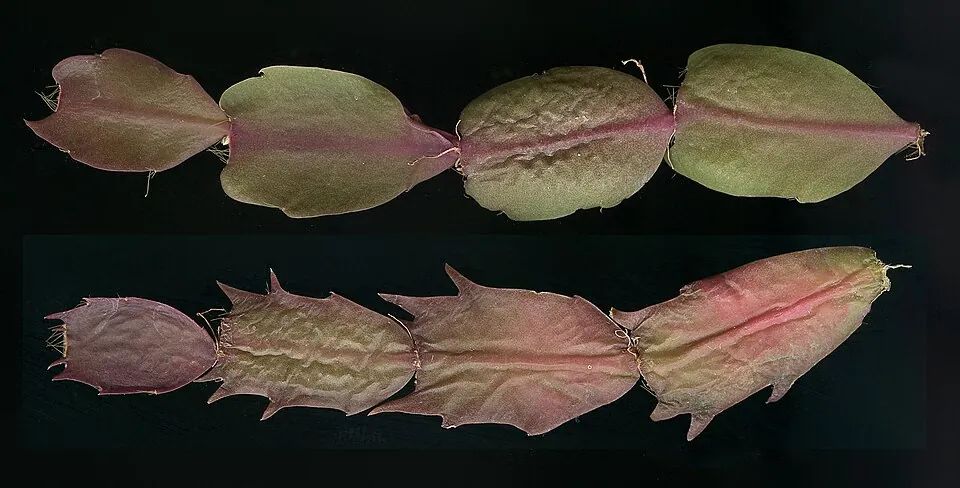
The flat green parts are stems. Look at several fully grown segments halfway down a few branches. Rounded scallops point toward Christmas cactus (Schlumbergera × buckleyi). Sharp, claw-like teeth point toward Thanksgiving cactus (Schlumbergera truncata). Shops sell both as “Christmas cactus.” Bloom dates can help, but hybrids and indoor conditions shift the timing. University of Wisconsin Extension shows how the stem shapes differ.
Identify a holiday cactus from its stems and typical flowering season
Scroll sideways to compare all columns.
| Plant | What to look for | Usual bloom period |
|---|---|---|
| Christmas cactus | Flattened segments with rounded scallops | Early winter |
| Thanksgiving cactus | Pointed teeth along the edges and at the segment ends | Late fall to early winter |
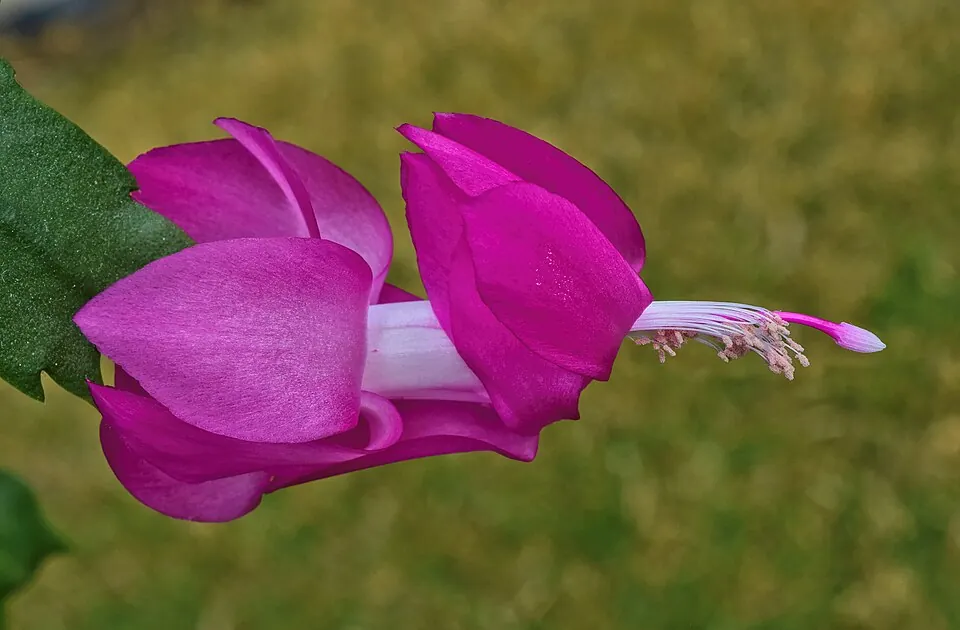
| Easter cactus | Rounded segments and more symmetrical, star-shaped flowers | Late winter to spring |
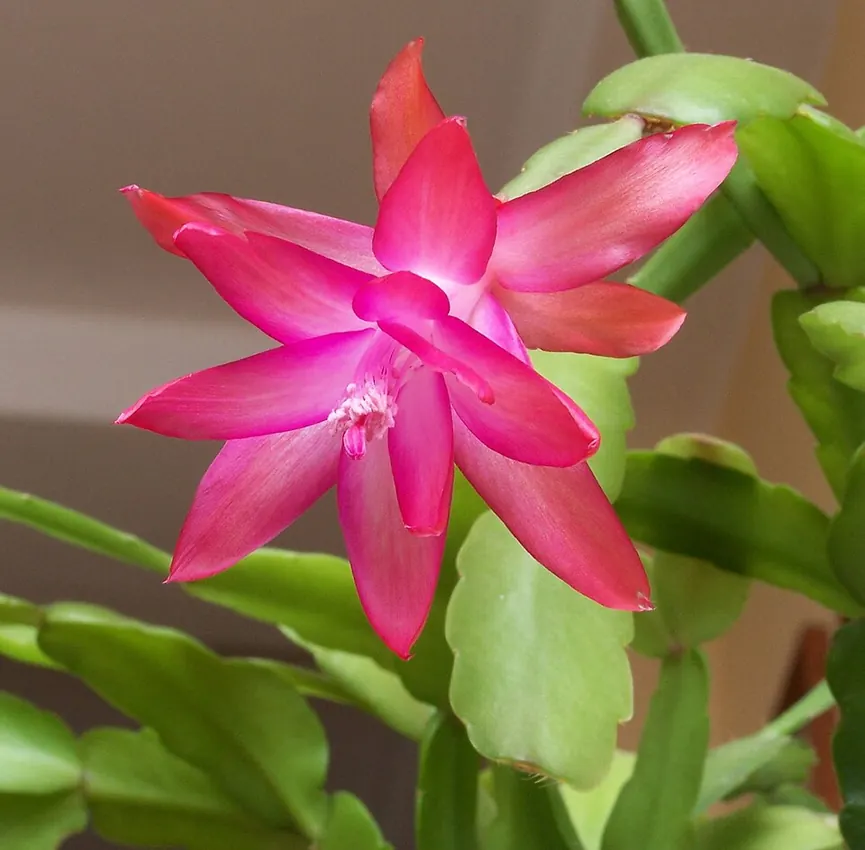
If the segments have clear pointed teeth like the lower sample below, use the same everyday care described here. Expect the plant to set its own flowering schedule. If the stems are rounded and the flowers are star-shaped, an Easter cactus is more likely. The University of Minnesota’s holiday cactus guide explains the differences in flowering response.
Choose a bright window with stable temperatures
Start at a bright window with filtered light or gentle morning sun. If strong afternoon sun hits the plant for hours, set it farther from the glass or draw a sheer curtain. Keep it clear of the radiator, heating vent and the draft from a frequently opened door. When you move it to a brighter spot, increase exposure gradually.
The ancestors of Christmas cactus grow on trees or rocks in Brazilian forests, where light is filtered and water drains quickly. Use our indoor cactus guide to compare its needs with desert cacti if you grow both on the same shelf.
Water by the mix, especially while it blooms
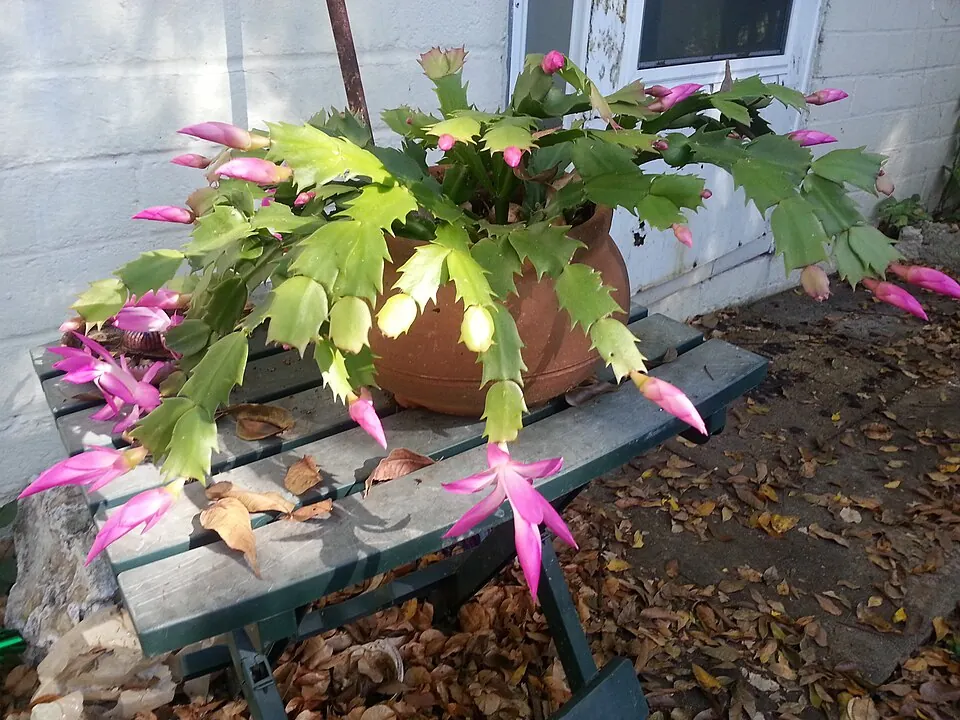
Press a finger into the upper mix. If it still feels moist, wait and check again. When the top begins to dry, water the whole root ball and let the pot drain fully. If the plant came in holiday foil or sits in a decorative pot, lift the nursery pot out before watering. Put it back only after it stops dripping.
Check more often once buds are swelling and flowers are open. A plant can drop buds if its root ball goes very dry, and roots can suffer if the mix never drains. After the flowers fade and growth slows, check the mix before watering and expect it to dry more slowly. The RHS Christmas cactus guide explains how watering changes through the year.
Give it long nights before you expect buds
If the plant is healthy but stays green each winter, look at the room after sunset. An evening lamp or bright room light can interrupt the long nights that help Christmas and Thanksgiving cacti initiate buds. Starting in fall, use a bright spot by day that stays dark at night for about six weeks. At night temperatures of 60 to 65°F, aim for at least 12 hours of uninterrupted darkness each night. Cooler nights near 55°F can also help. Keep the plant frost-free. If the only bright window is in a room you use at night, look for a spot with the same daytime light where you can leave the plant undisturbed after dark. University of Minnesota Extension explains how day length and temperature work together.
An unused room with a bright window and no lights on in the evening is easier to manage than moving the pot twice a day. Once you see small buds at the ends of the stems, keep the plant in steady conditions. A cold window, a dry root ball or a sudden change in its surroundings is worth checking if those buds drop. If flowers are your main goal, compare how other indoor flowering plants respond to light and season.
Wait until flowering is over to repot
Repot when roots are crowded enough that watering becomes difficult or the mix has broken down and stays wet. Spring, after flowering, is a good time. Choose a draining pot only one size larger and use an airy houseplant mix with added perlite or fine bark for drainage. Keep the stem bases at the same depth. Once the plant is making new growth, an ordinary houseplant fertilizer used as directed is enough. Avoid trying to force buds with extra feed.
If a branch has snapped, a healthy section with a few segments can become a cutting. Let the broken end dry briefly, then set the lower end into a lightly moist, airy mix. Save any shaping cuts for after flowering so you keep the stem tips that carry the buds.
Read what the stems and roots are telling you
Wrinkled stems and a light, dry pot. Water thoroughly at the sink and let the pot drain. If water runs straight past a hard, dry root ball, apply it slowly in two passes.
Wrinkled stems and a heavy, wet pot. Skip the watering can. Check whether there is water sitting in the outer pot. If the mix stays wet or smells sour, look for soft, dark roots and replace the waterlogged mix where needed.
Firm, older stems with a brown base. Older branches can become woody as the plant grows. A firm, dry base is different from soft tissue that gives under light pressure. Read the texture before deciding the plant is rotting.
The pointed green stems below give you a reference for the normal shape of healthy Thanksgiving cactus growth. Check whether the stems feel firm and whether the pot is wet before interpreting a change in shape.