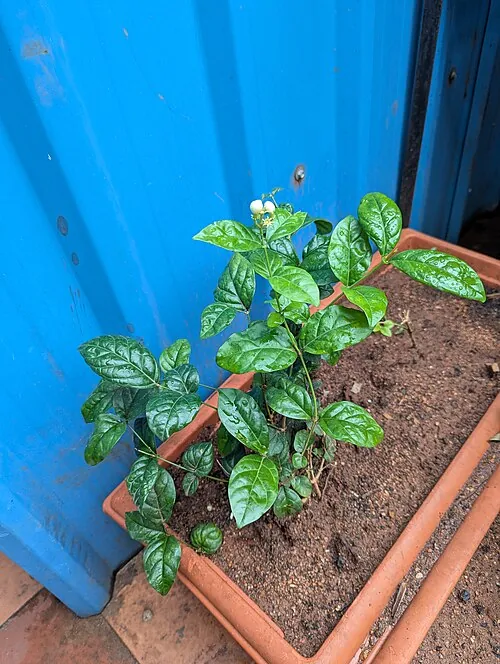



Quick Answer
Choose pink jasmine if you have a bright window and a cool, frost-free spot for bud formation. Choose Arabian jasmine for a bright room that stays warm at night. Both need enough light to flower, and both are easier to manage when you know their botanical name.
Choose the jasmine that fits your room
Pink jasmine and Arabian jasmine indoors
Scroll sideways to compare all columns.
| Plant | Best room fit | What to expect |
|---|---|---|
| Pink jasmine (Jasminum polyanthum) | Bright window and a cool, frost-free spell | Fast-growing vine with pink buds opening white |
| Arabian jasmine (Jasminum sambac) | Bright window and warmer nights | Shrubby or scrambling growth with fragrant white flowers |
Check the Latin name on the tag, especially if the label only says fragrant jasmine. Star jasmine is usually Trachelospermum jasminoides, a different plant. If you chiefly want indoor flowers and have little window light, compare other indoor flowering plants before buying jasmine.
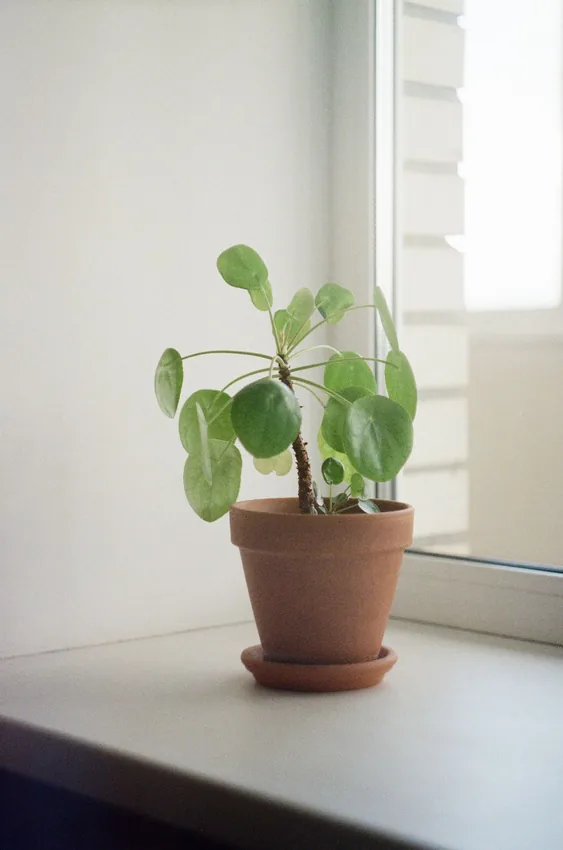
Use the windowsill below as a placement example. When measuring your own space, check where the leaves will sit and whether you can still open the window.
Pink jasmine for a bright, cooler spot
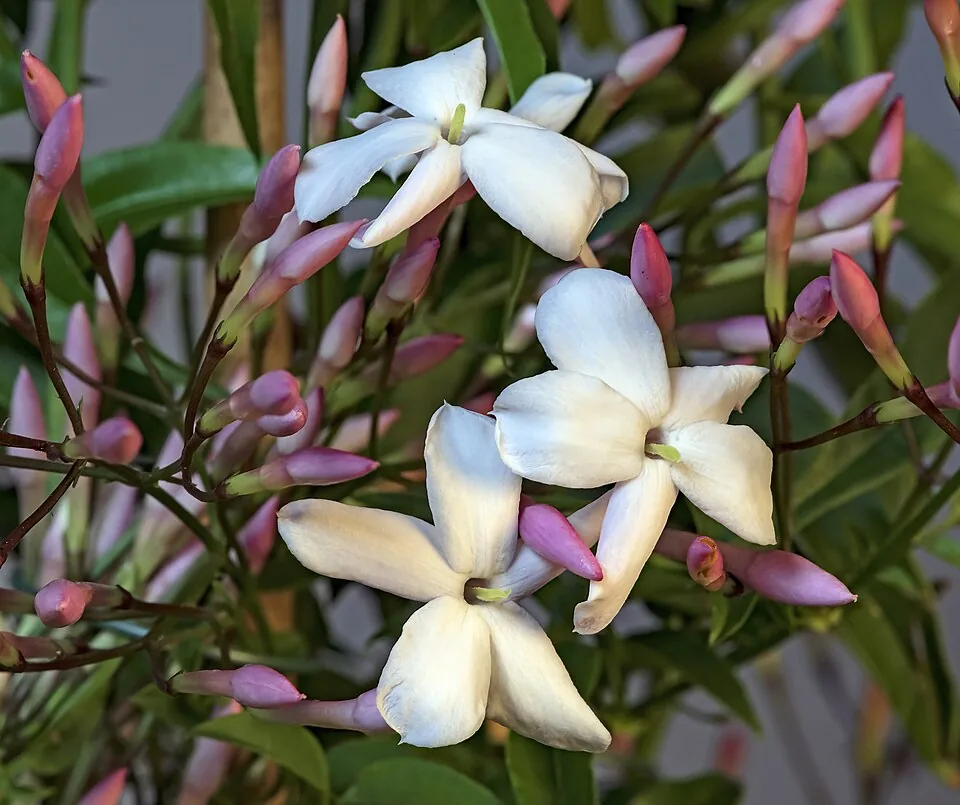
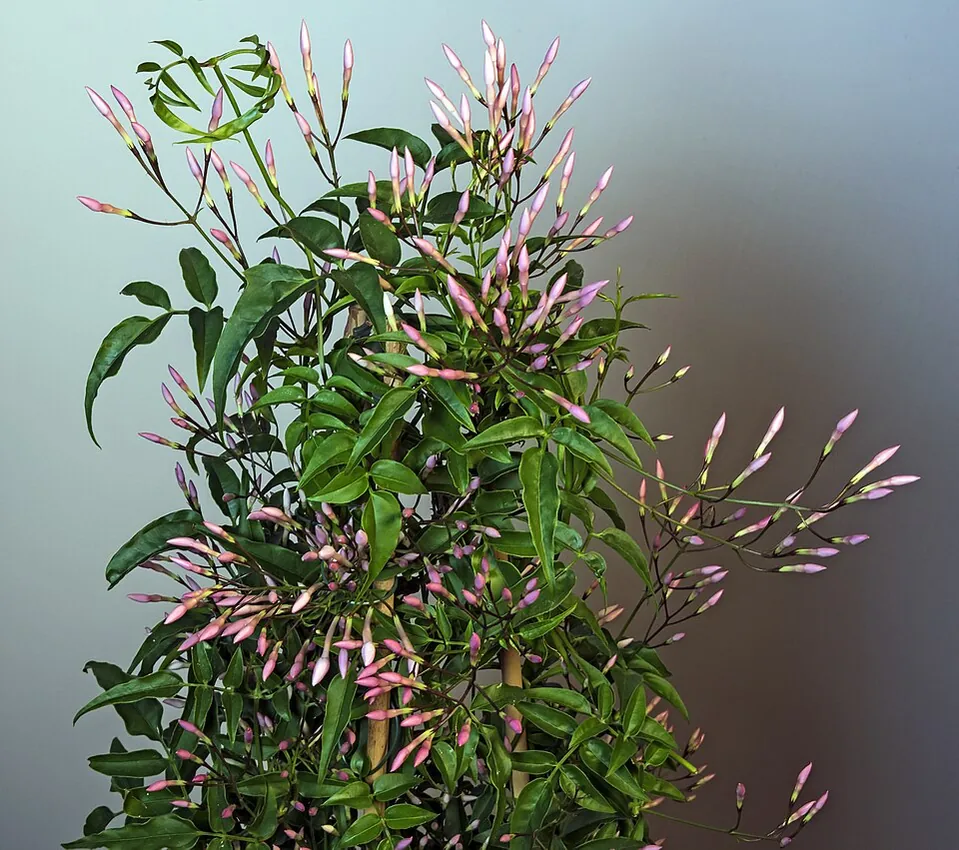
Jasminum polyanthum is a vigorous vine. The pink buds cluster at the tips of new shoots. Use a hoop or narrow trellis while the new shoots are flexible. Tie loosely and check the ties as stems thicken.
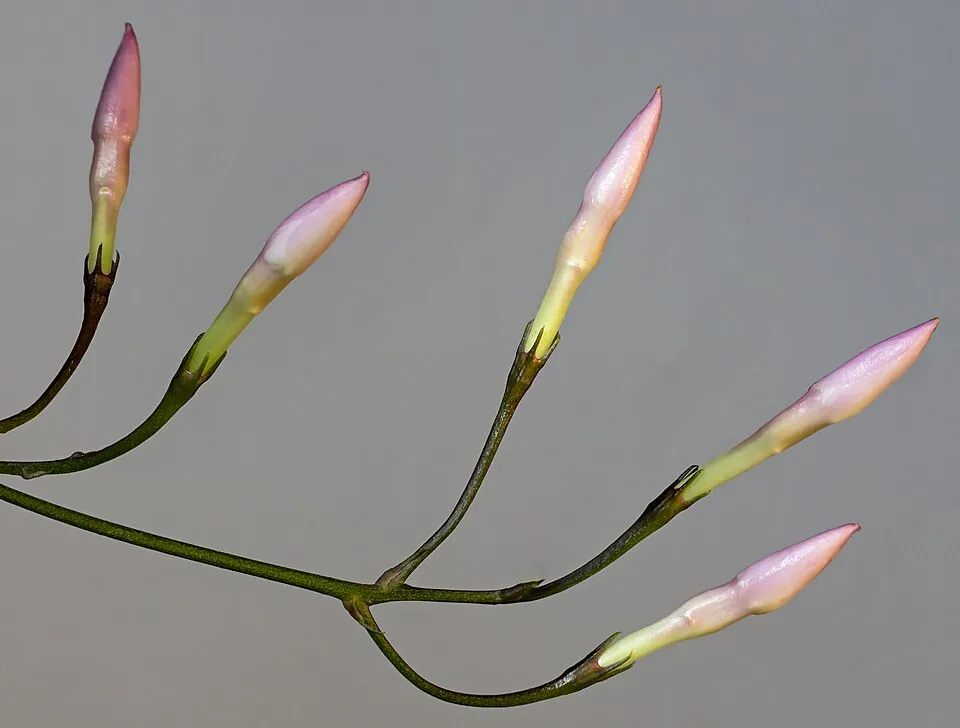
When the buds open, the narrow pink tubes give way to white, star-shaped flowers. This is the feature to look for if the nursery tag is unclear.
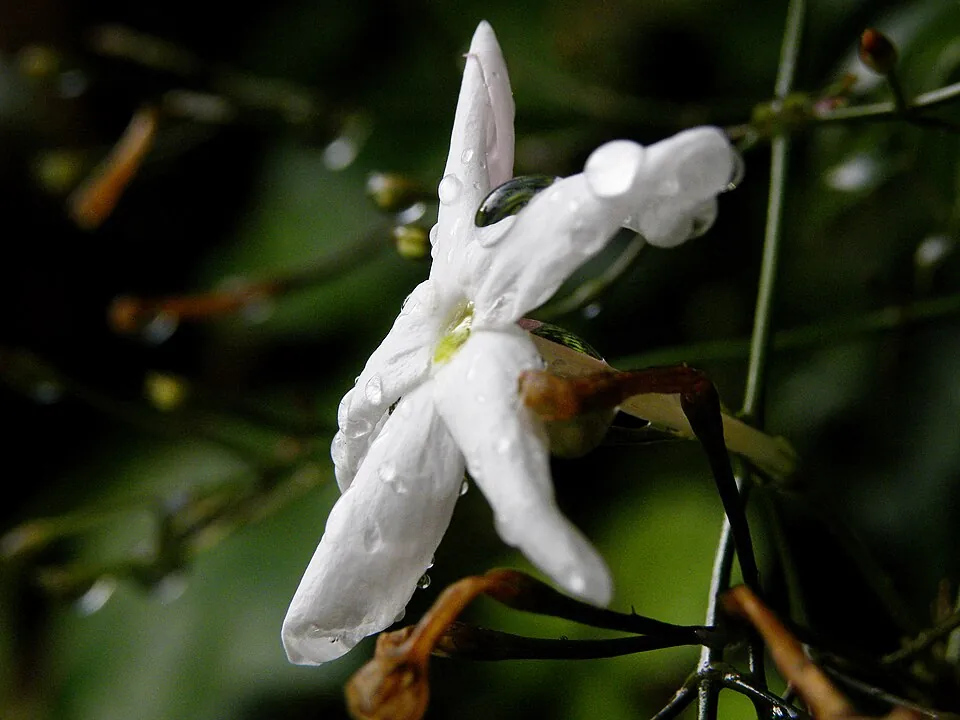
After flowering, give the vine time to make new growth in bright light. A reliably cool spell can help it set buds for the next display. Check cultivar and supplier guidance for temperature, and keep the plant frost-free. A bright enclosed porch that cools at night may work better than a shelf above a radiator. The RHS growing guide covers tender jasmines as container plants.
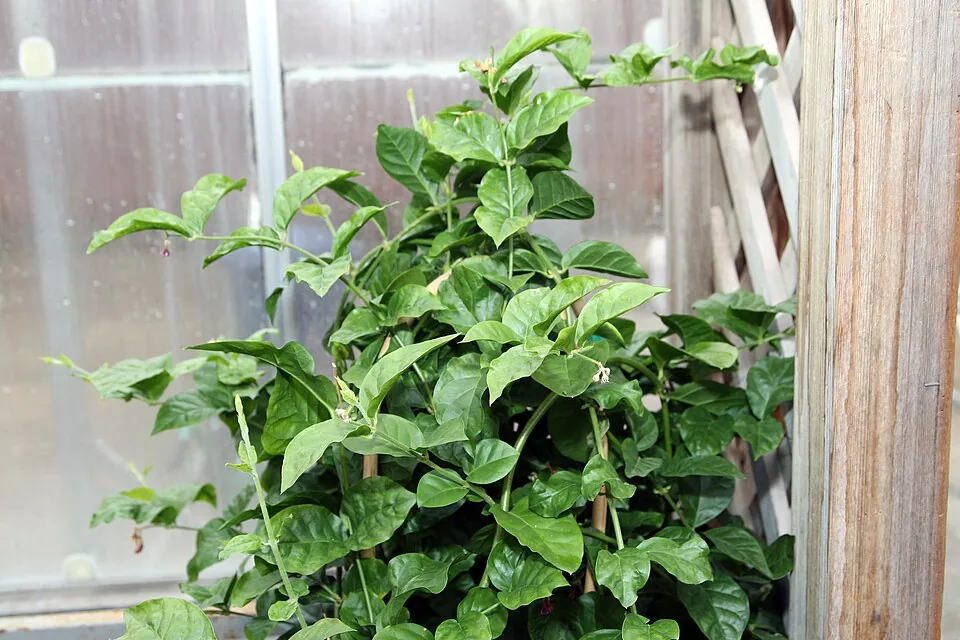
The whole plant shows where the buds sit. Look at the tips and upper sides of the shoots before you trim or tie them.
Arabian jasmine for a bright, warm room
Jasminum sambac is a better fit if you can provide warmth and strong light. It can grow as a bushy pot plant or lean into a small support. Select it for the space you have and inspect the cultivar label.
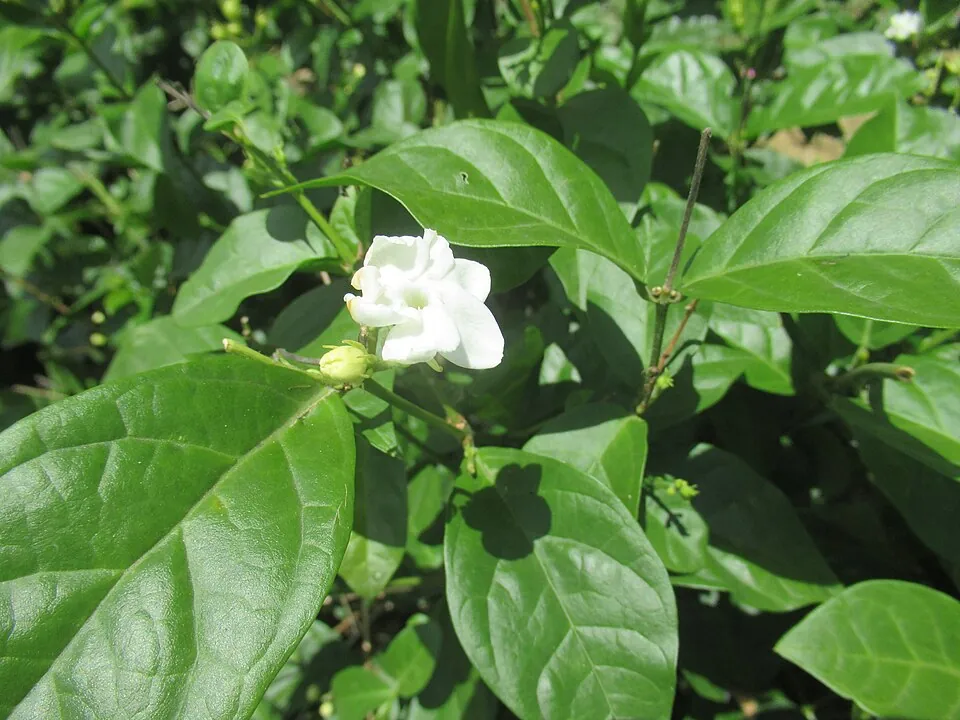
Single-flowered forms have fewer petals than double-flowered cultivars, whose blooms have several overlapping layers. If you’re choosing a cultivar for its flowers, look for an open bloom on the plant or a cultivar label with a photo.
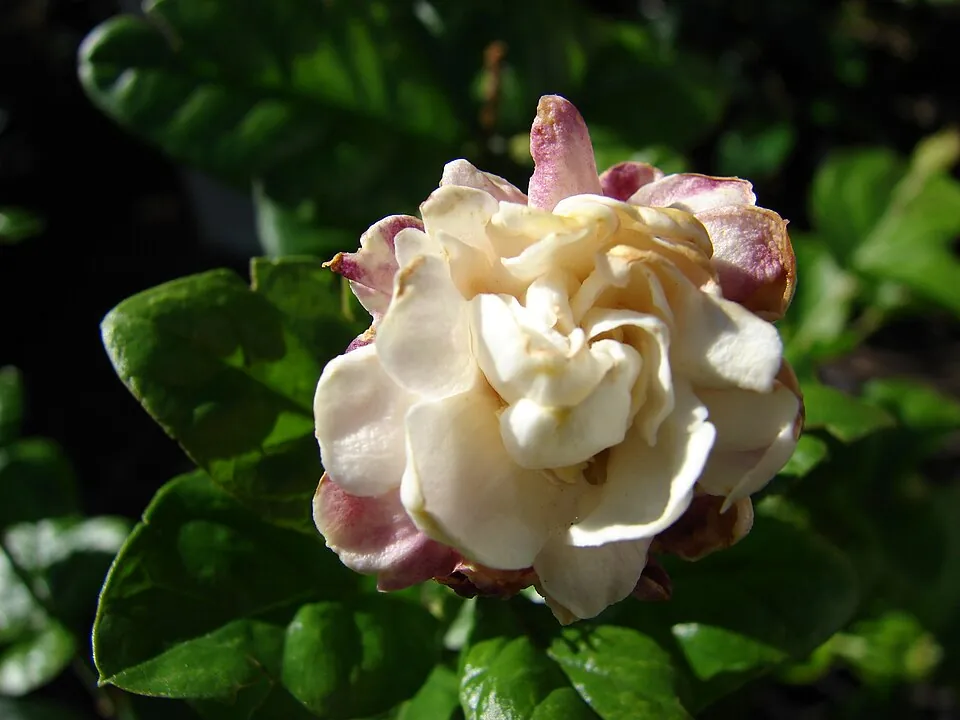
The New York Botanical Garden recommends night temperatures above 60°F for Arabian jasmine. If a cold window chills the plant at night, move the container back from the pane without taking it out of useful daylight. Treat the next flush of flowers as a consequence of good growing conditions and healthy new growth.
‘Maid of Orleans’ is one example of single-flowered Arabian jasmine. A photo of the whole plant helps you judge how much room its branches need.
Set up light, water and room to grow
Start with the brightest suitable window you have. Track the patch of daylight across a few days before choosing the permanent spot. A jasmine pushed to the far side of a room often receives less usable light than its leaves suggest. Introduce direct sun gradually when moving a plant from lower light.
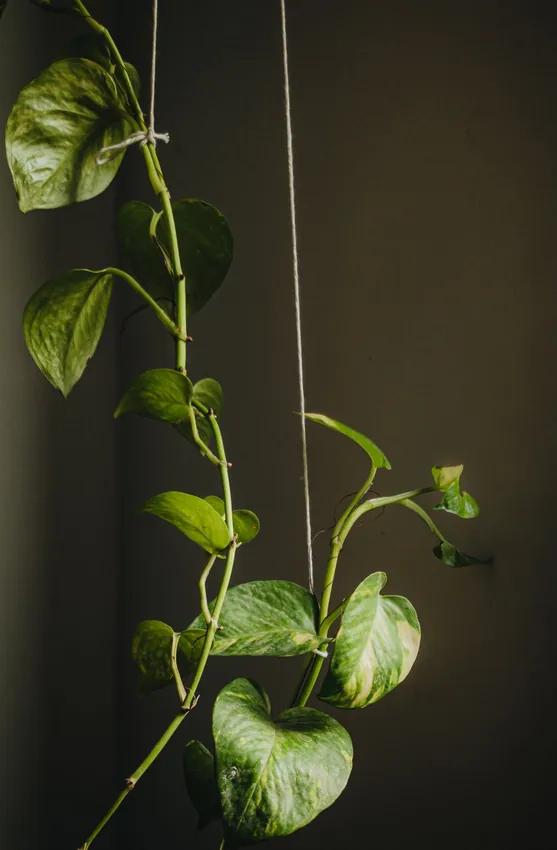
The strings below show one way to support a climbing plant. For indoor jasmine, a small hoop or trellis keeps the support and pot together when you move it.
Use a container that drains. Water the mix thoroughly when the upper layer begins to dry, then empty the saucer or outer pot. Check the mix rather than watering on the same calendar day all year. It usually dries more slowly when growth slows. Give long stems a small support and enough open space to tie them without pulling the root ball sideways.
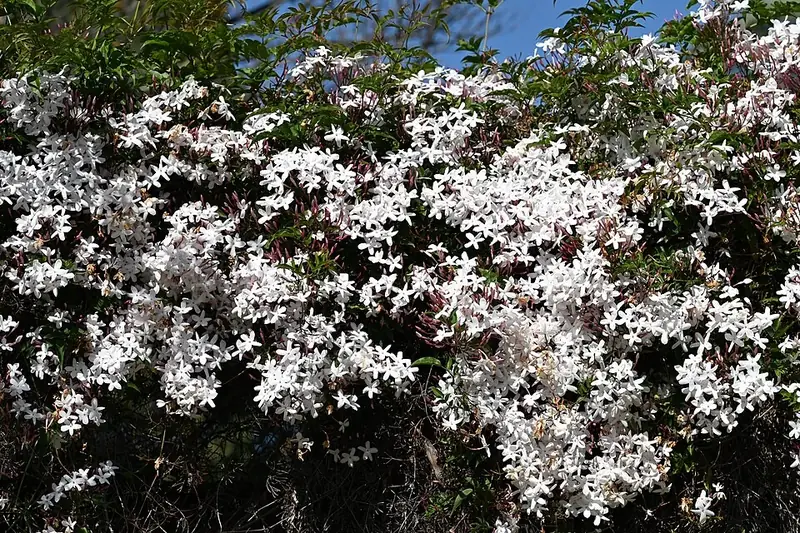
A mature pink jasmine can spread well beyond its pot. This outdoor specimen shows why it helps to give a young indoor vine a support early.
Work through the reasons jasmine stays leafy
If the plant looks healthy but has no buds, start with light. Try a brighter position and observe the next stretch of growth. If it is pink jasmine, check whether it gets a cooler, frost-free period. If it is Arabian jasmine, check for cold drafts or cool nights first.
If you pruned before flowering, wait for the next growth cycle. Shape pink jasmine after its display, and avoid cutting off visible bud clusters. Start Arabian jasmine with light shaping after a flush if it needs it. Fertilizer can support active growth when used as directed, but correct the light and temperature before adding more.
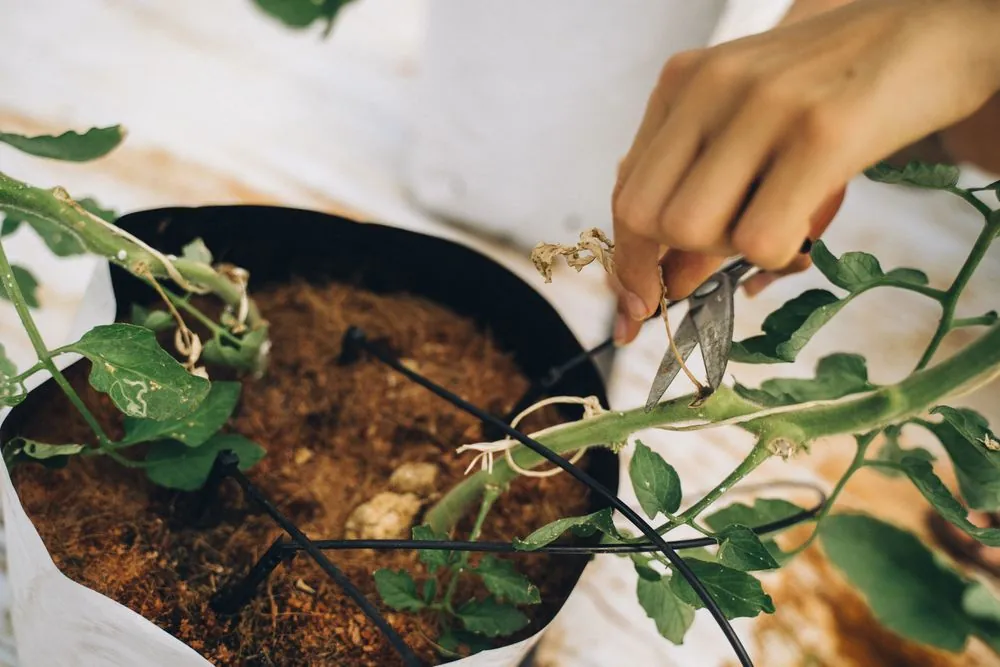
Use the pruning photo as a reference for holding the stem steady. On jasmine, check for buds before choosing where to cut.
If buds form and then drop, check for a recent move or a large swing in watering or temperature. Also look under the leaves for insects. Fix the most obvious change first and avoid moving the plant repeatedly while you assess the result.
Check the plant before you bring it home
Choose a labeled plant with firm leaves and healthy tips. Check both sides of the foliage and lift the nursery pot out of any decorative sleeve. Algae, an unpleasant smell or water sitting under the root ball are reasons to check its condition more closely.
Look at the whole plant as well as the flowers. On a shrubby Arabian jasmine, check the leafy tips and the stems near the center.
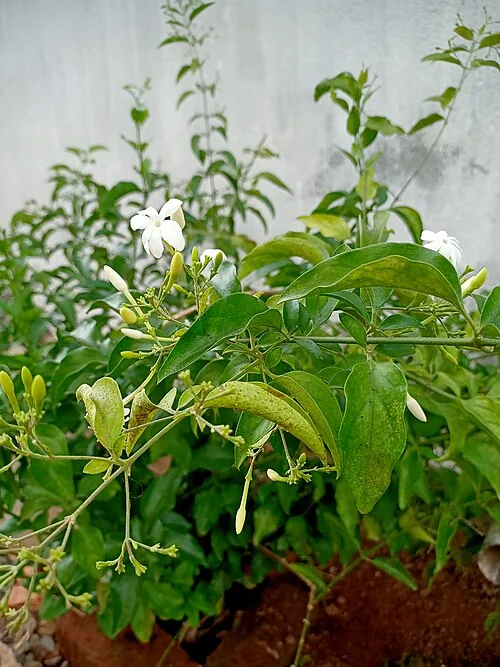
A plant with mostly closed buds will show you more of the flowering sequence at home. If you're sensitive to strong fragrance, smell an open flower before buying and choose a room you can ventilate.