


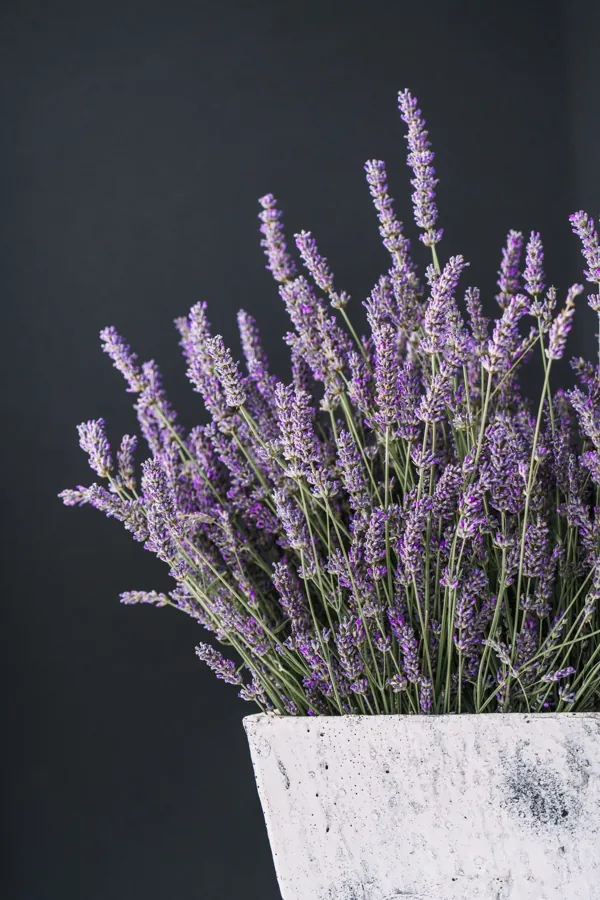
Quick Answer
Use your sunniest unobstructed window or a suitable grow light. Plant lavender in a pot with drainage holes and a free-draining mix. Water thoroughly when the upper mix has had time to dry, then empty the saucer. If the room offers only soft daylight and you cannot add a light, choose a different plant.
Can your room give lavender enough light?
Check what your growing spot can provide
Scroll sideways to compare all columns.
| Growing spot | What to check | What to do |
|---|---|---|
| Unobstructed sunny window | How long direct light actually hits the leaves | Use the brightest part of the window and watch for weak, leaning growth |
| Bright but shaded window | Whether you can add a grow light over the plant | Use a plant-rated light and follow the fixture's placement guidance |
| Dim room with no light fixture | Whether the pot can live in a brighter spot | Use the brighter spot or choose a plant suited to the room |
The University of California Master Gardeners give roughly five to six hours of bright window light, or 14 to 16 hours of supplemental fluorescent or LED light, as starting guidance for indoor lavender. A timer controls duration. The fixture's strength, distance and coverage still determine how much light reaches the leaves.
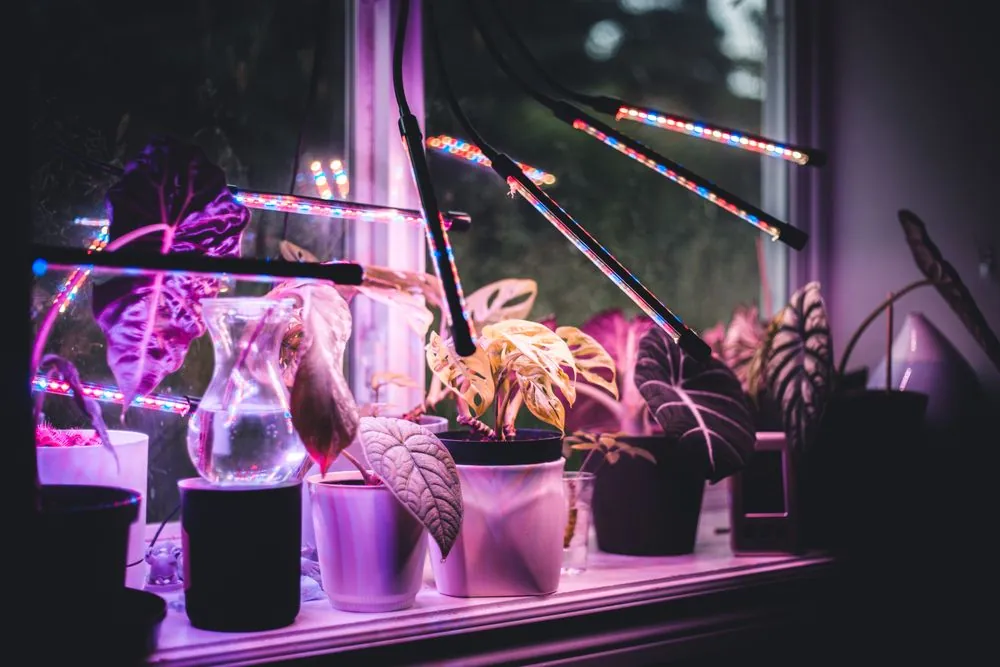
This houseplant setup shows how lamps can sit over the leaves. For lavender, check that the fixture covers the full canopy as the plant grows.
Watch the window on a clear day and note when the sun reaches the actual pot, especially in winter. Buildings, eaves and trees can cut the useful light. If the room is bright enough for reading but gets no direct sun, compare our low-light indoor plants before buying lavender.
Choose a labeled lavender that fits the space
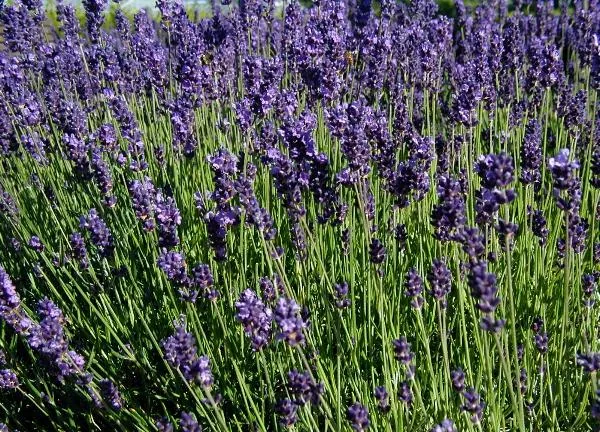
Check the botanical name on the plant label and compare the foliage. English lavender (Lavandula angustifolia) has narrow leaves and upright flower spikes.
Look closely at Lavandula dentata, often sold as French lavender. Its toothed foliage is a useful way to check whether the plant matches the label.
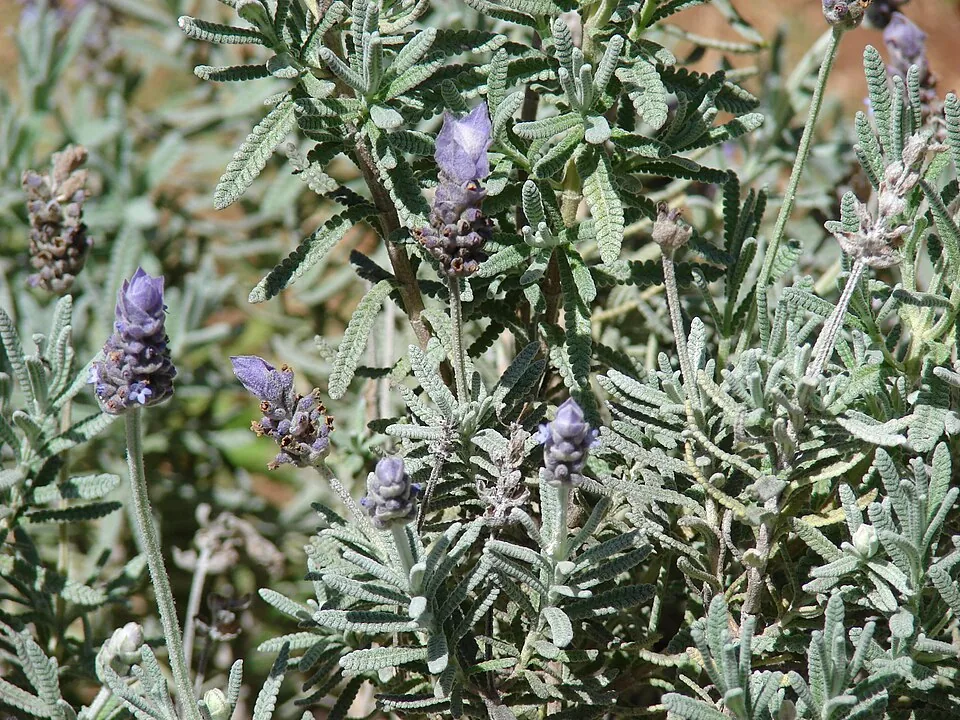
French and Spanish common names can vary in garden centers. Check the botanical name and the stated mature size. The RHS lavender guide compares forms and hardiness. A compact cultivar saves space, but it still needs strong light. If the nursery has a few small plants, choose one with firm growth near the base and a root ball that is damp rather than soggy.
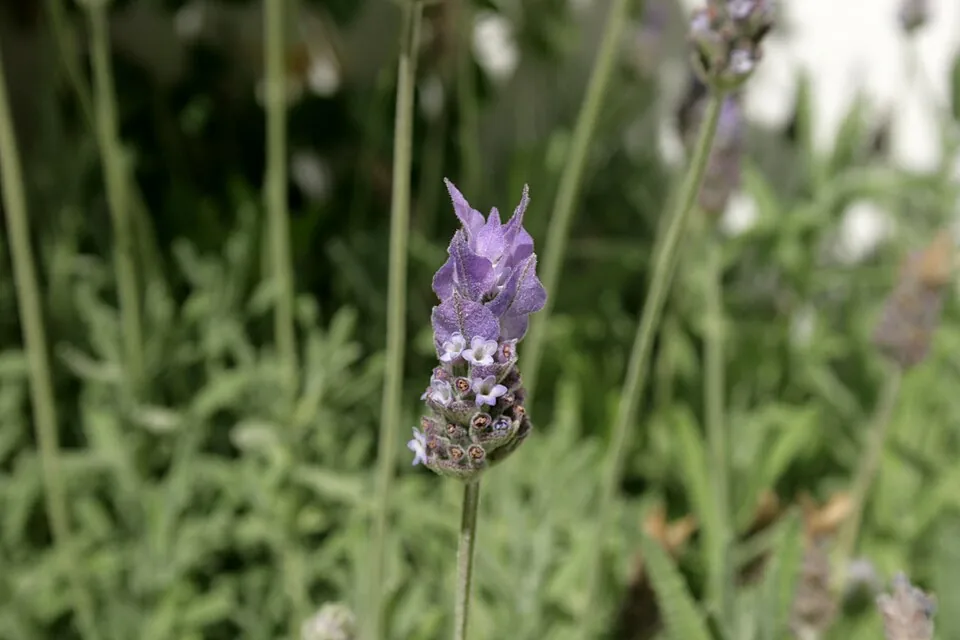
On Spanish lavender (Lavandula stoechas), look for the showy, petal-like bracts above each flower head. The outdoor plant below shows where they sit.
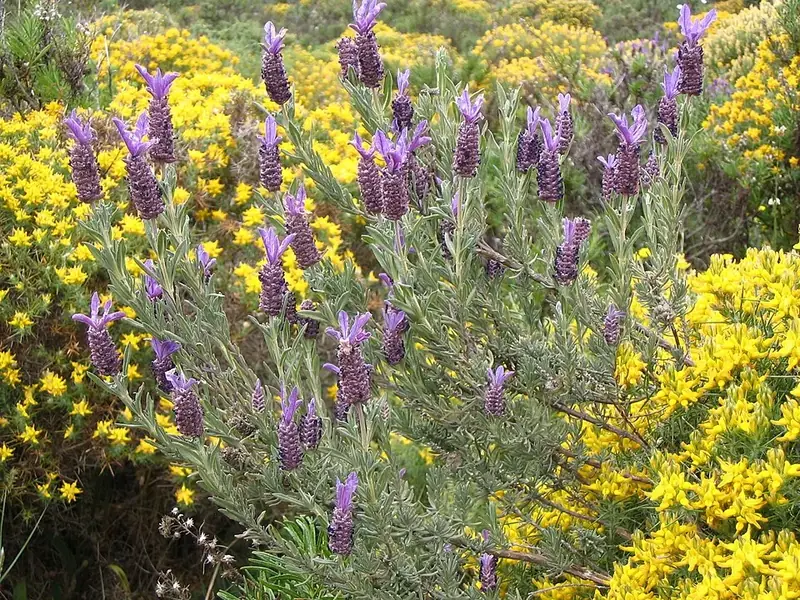
Use a pot that drains where you can reach it
Choose a pot with drainage holes and only a modest amount of fresh mix around the root ball. A large volume of damp mix around a small plant takes longer to dry. Unglazed terracotta is useful when pots in your room dry slowly, but an appropriate draining container matters more than the finish.
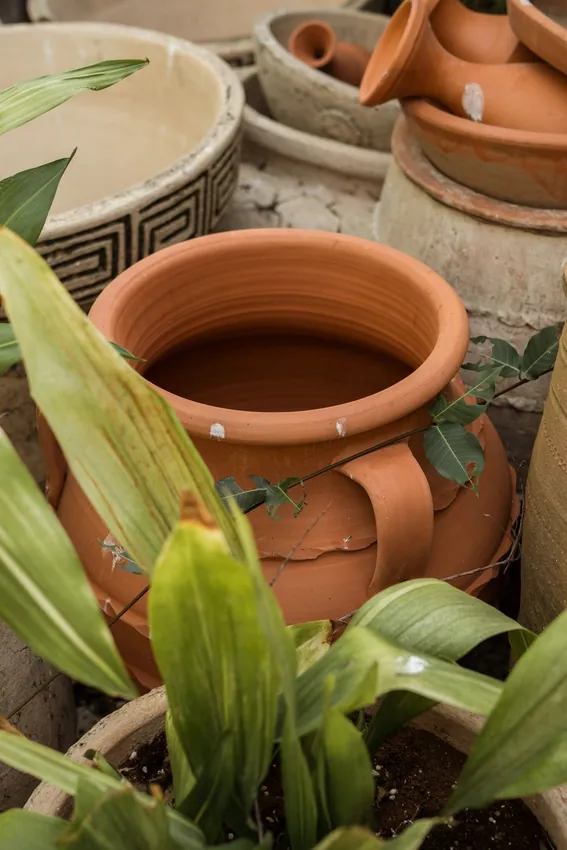
Use a free-draining container mix suited to Mediterranean herbs. Keep the crown above the mix and avoid a decorative cover pot that traps runoff. Water at the sink when practical, then set the drained pot back on a saucer. Leave open air around the foliage instead of crowding it between broad-leaf plants. Our indoor herb garden ideas can help you plan the rest of the window.
This nursery plant shows the amount of foliage a single lavender can carry. Leave room around the canopy and enough access to lift the pot to water it.
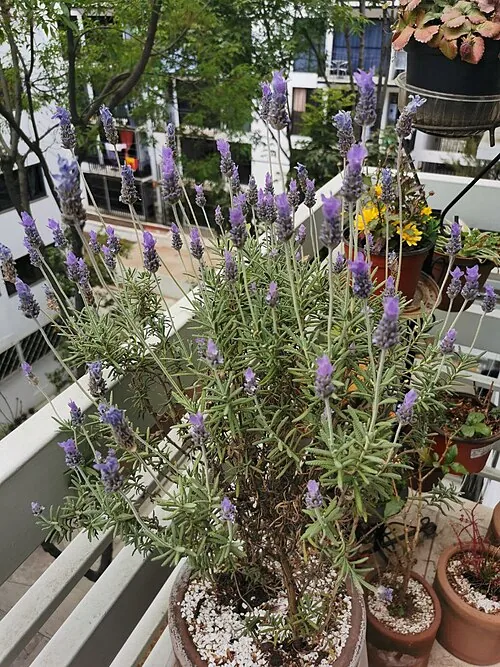
Water by the mix, then let the pot drain
Check the mix below the surface and lift the pot if it is light enough to handle. A pot that still feels heavy or cool and damp beneath the top needs more drying time. When the mix has dried sufficiently, water it thoroughly and let excess drain. Empty the saucer.
The photo shows how to direct water to the mix at the base of a potted plant. Let the pot finish draining before returning it to its saucer.
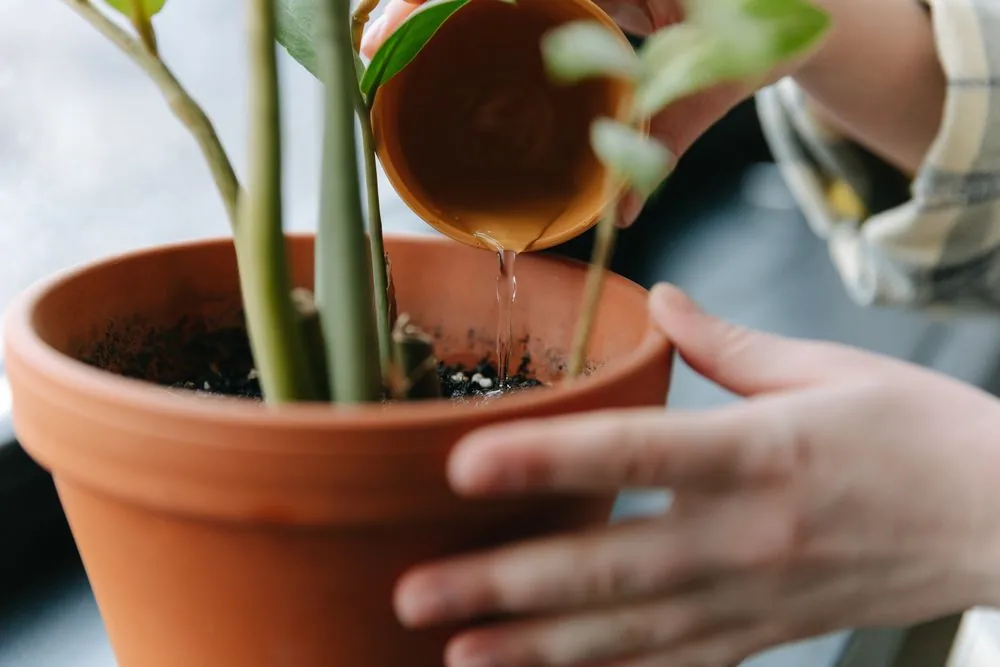
Expect the interval to change. A warm, sunny stretch may dry the pot sooner, while short winter days can slow drying and growth. A radiator can dry the surface before the deeper mix has dried, so check both before changing the routine. Avoid spraying the foliage as a substitute for watering the roots.
Read weak growth, wilt and missing flowers
Thin new growth or a plant leaning hard toward the glass points toward a light check. Move it closer to a suitable window or adjust the grow light according to the maker's instructions. If the plant looks wilted, check moisture first. A light pot with dry mix calls for water. A heavy pot with damp mix calls for a look at drainage and root condition before you water again.
A healthy indoor plant can produce much more foliage than flowers. Start with stronger light, then consider the cultivar and season. For a plant that is growing well indoors through winter, a gradual move into outdoor sun after the weather is suitable may give it a stronger growing season. If you plan to keep it inside year-round, choose the best light you have and judge the setup by healthy new growth first.
The ‘Hidcote’ photo gives you a reference for compact growth and typical gray-green foliage on one English lavender cultivar.
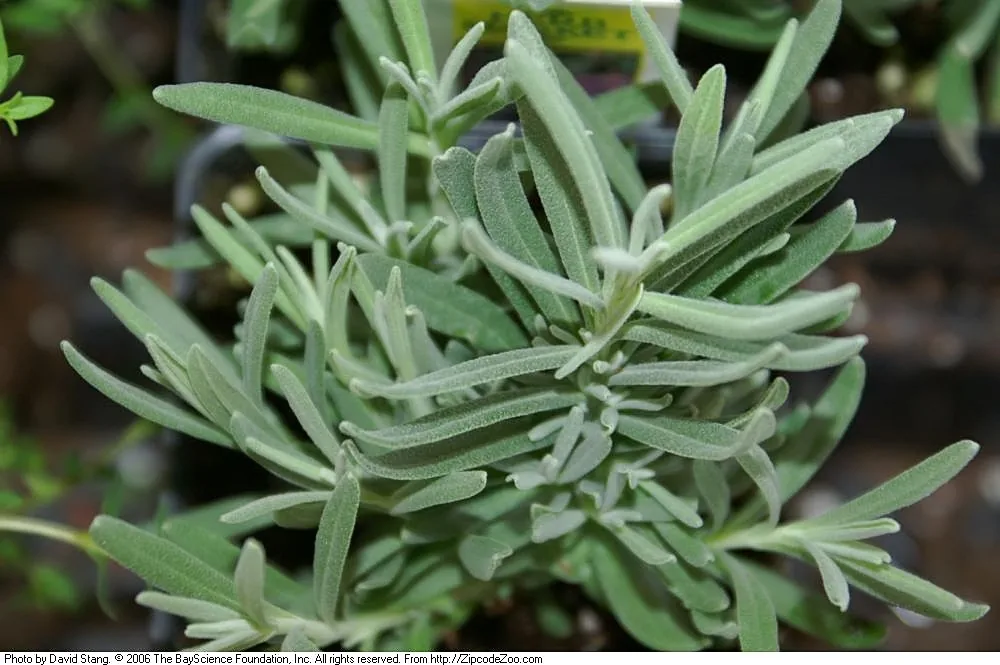
Trim spent blooms without cutting into bare wood
After a flush, remove spent flower stems back to leafy growth. Shape the plant lightly if it needs it. The RHS advises against cutting into old, bare wood where lavender can struggle to regrow. Look for leaves below each cut before taking off a stem.
The outdoor pruning photo shows how to hold the flower stems away from the plant as you work. On lavender, check for green leaves beneath the cut.
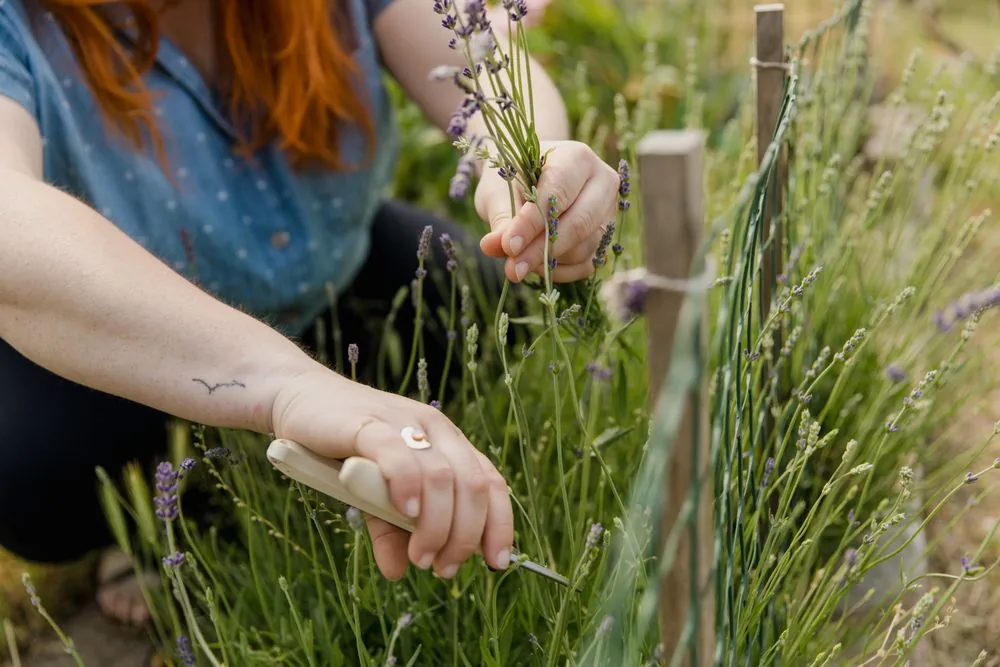
If your lavender is stretching indoors, correct the light before trimming again. For a houseplant selected primarily for regular indoor flowers, our flowering plants guide offers several choices suited to typical rooms.