



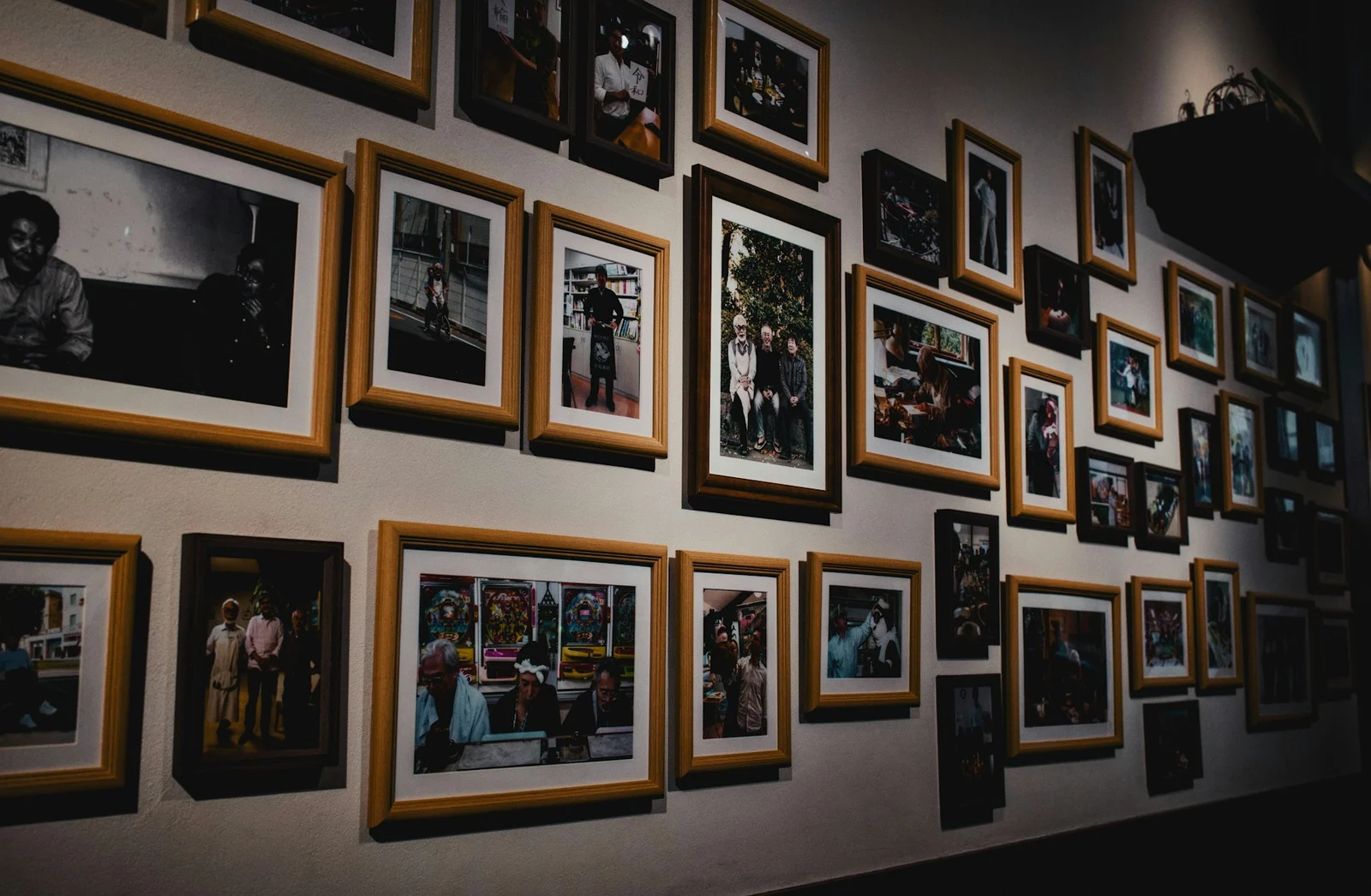
Quick Answer
Put family photographs where the people who share the room are comfortable seeing them and where the display suits the room's level of privacy. Living rooms, halls and entries can support broader family collections. Bedrooms can work for a smaller, more private grouping when the occupants want it. Test the actual frame sizes before mounting, avoid turning every surface into a photo display, and get agreement before displaying sensitive images in shared areas.
Family photographs are different from generic wall art because they contain real people, memories and relationships. That means the strongest Feng Shui advice is not a rigid rule about one compass sector. It is a question of who shares the room, what the image means to them and how public the display should be.
A photo wall is successful when it strengthens the room's purpose without making anyone who uses the room feel exposed, watched or crowded. For nonpersonal art, scale and subject selection, use our Feng Shui wall art guide.
Decide Whether the Room Is Public or Private
Think of the home as a privacy gradient. Entries, living rooms, dining areas and main halls are usually seen by guests. They can suit family milestones, travel memories, intergenerational photos or a curated gallery. Bedrooms, dressing areas and personal offices offer more privacy. A smaller grouping of couple photos or intimate family memories may feel more comfortable there.
There is no universal rule that a family photo becomes bad Feng Shui when it crosses a bedroom threshold. The occupants' comfort matters more.
Ask Who Gets a Say
Choose a shared display together, especially when a photo carries a sensitive memory for someone in the household. Before building a gallery, ask whether the people pictured are comfortable with guests seeing the photographs. A child or teenager may prefer an older image to stay private, even if a parent loves it. Keep sensitive memories in an album or private display when that better suits the household.
This is especially important with children's photos, health-related events, weddings after relationship changes or images involving deceased relatives. Feng Shui language about harmony is most useful here when it points back to real household agreement.
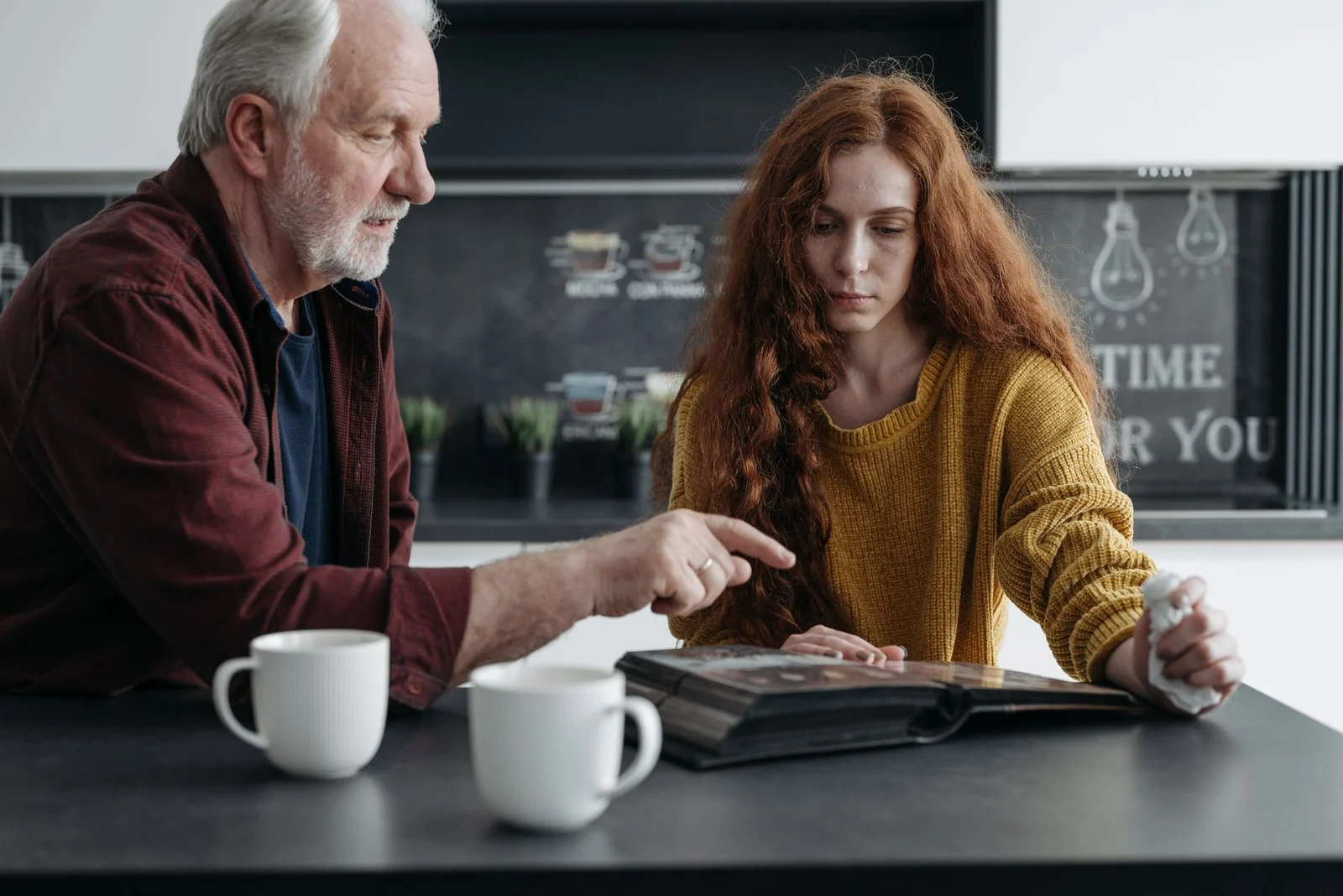
Compare an Entry Gallery With a Bedroom Grouping
An entry or hallway gallery can use a broader set of frames. A larger grouping can tell a family story because the viewer sees it while moving through the home. Use consistent spacing and one clear outer shape so the wall reads as a composition rather than random frames.
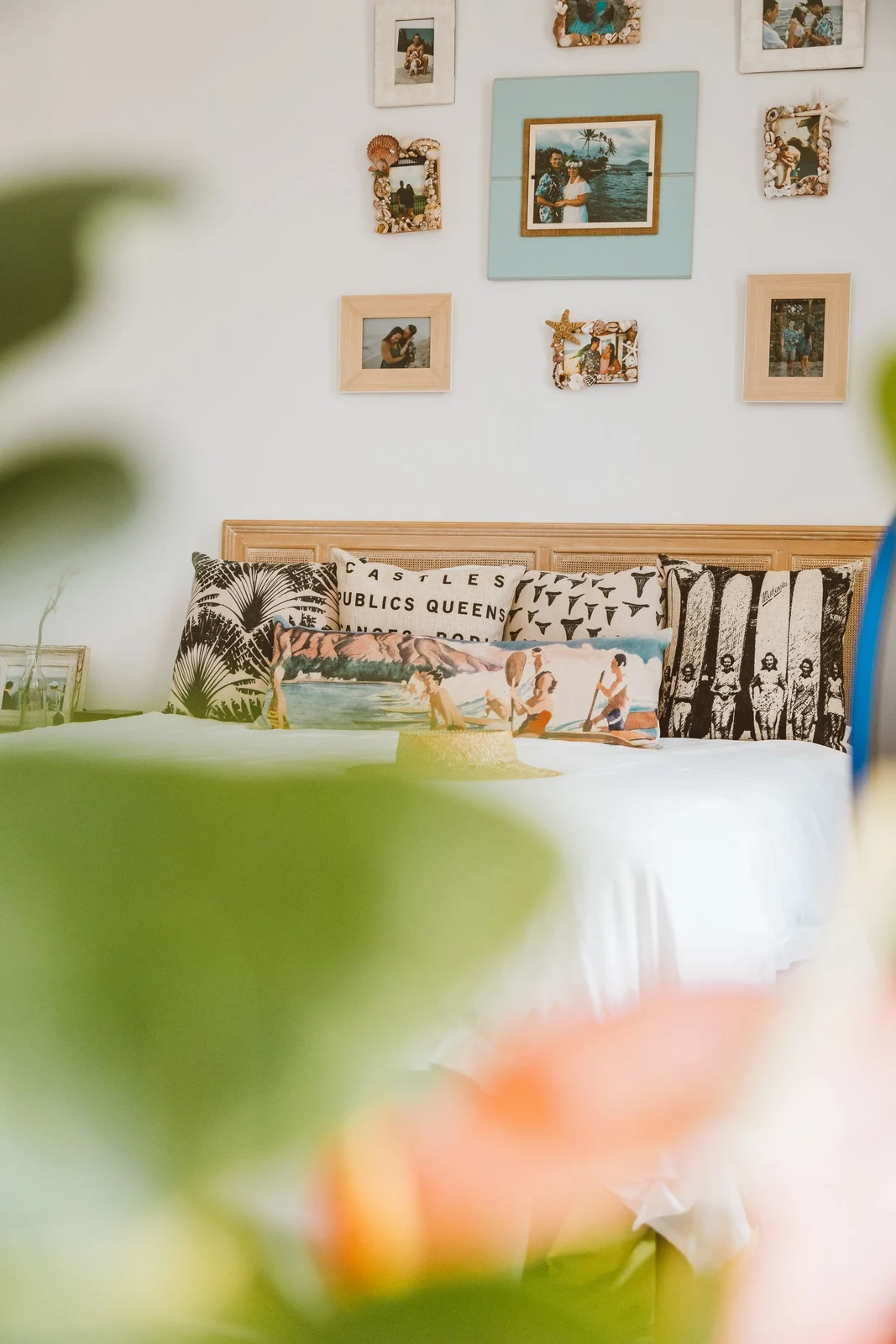
A bedroom grouping has a different job. The same ten frames may feel too public or visually active near a bed. Reduce the set to two or three images that the room's occupants actually want to see daily.
If the gallery is in the arrival zone, the Feng Shui entryway guide can help with the surrounding sightline.
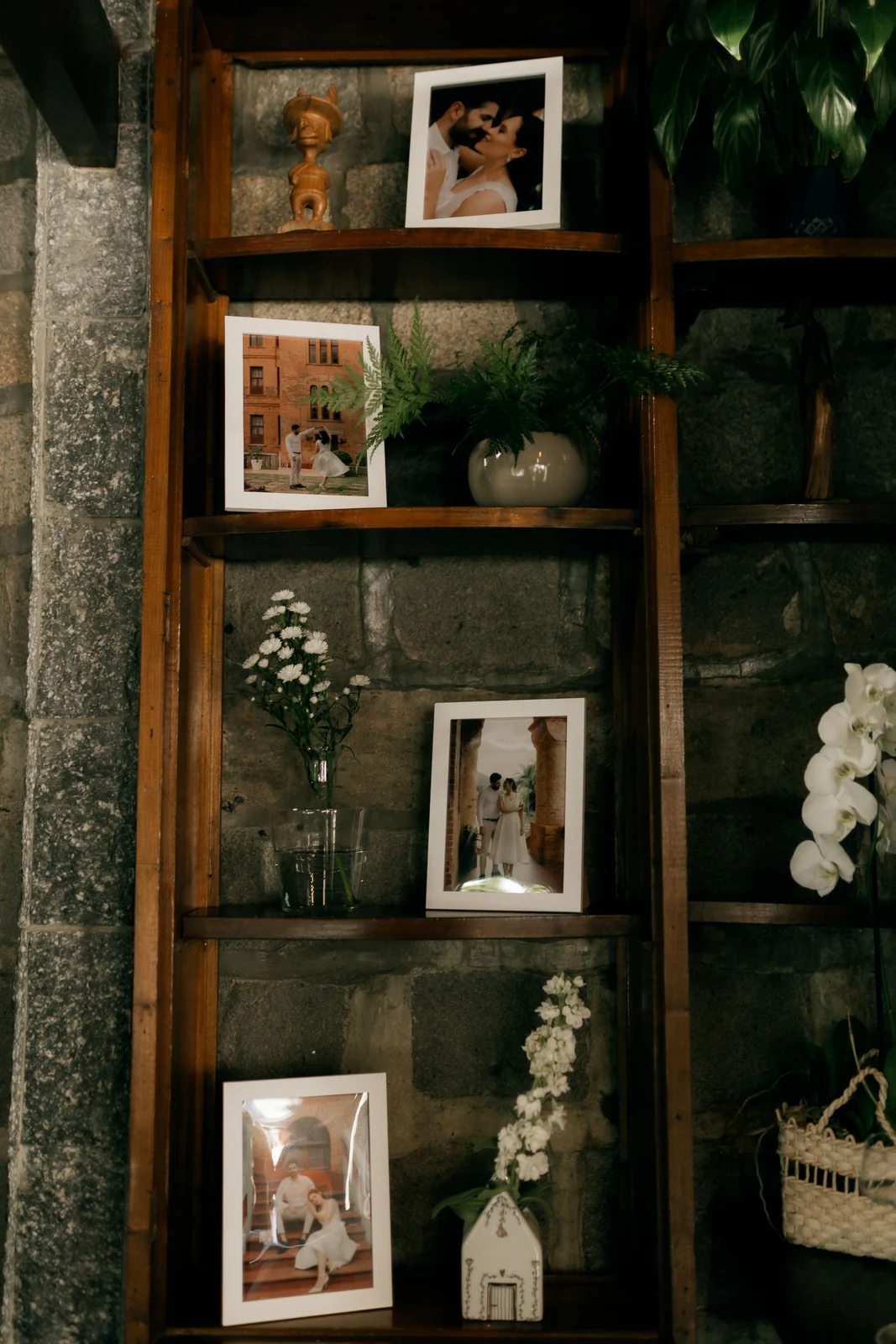
A shelf display is easier to change than a wall full of holes, but it still needs a stable position. Check the depth of each frame's stand and whether the shelf can carry the complete display. Place the photographs where you can see them from the normal approach, not only when standing directly in front of the shelf.
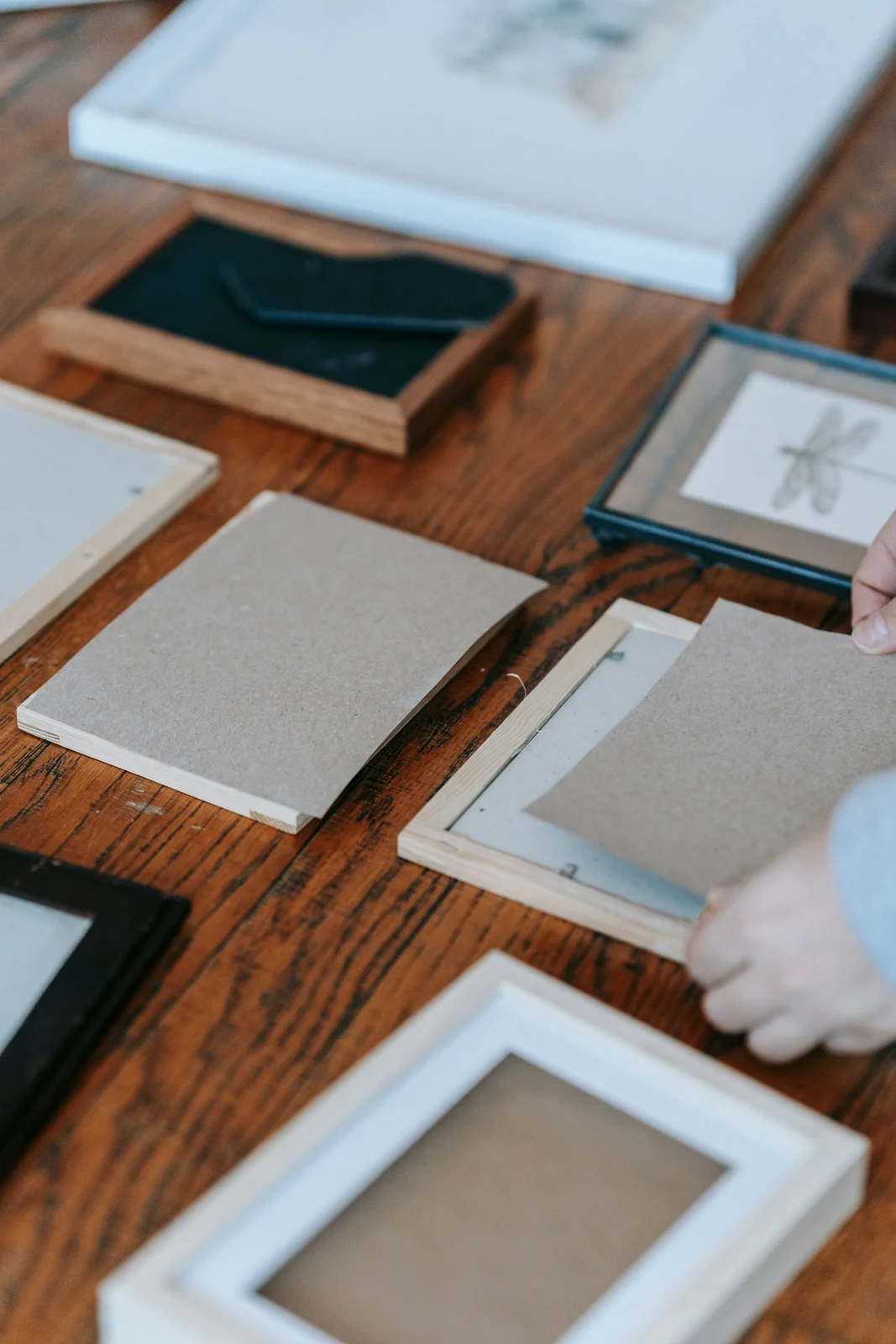
Test Frame Spacing Before Making Holes
Do not design a gallery wall only from memory. Use one of these methods:
- arrange the real frames on the floor,
- cut paper templates to the exact frame size,
- photograph the blank wall straight-on and mock up the arrangement,
- mark the outer boundary with removable tape.
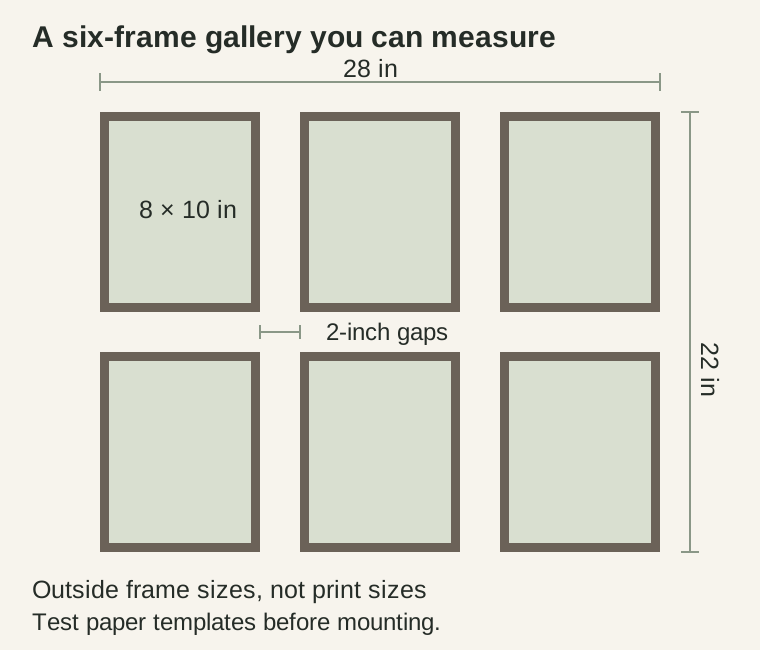
For a worked example, six frames with outside dimensions of 8 × 10 inches, arranged in three columns and two rows with 2-inch gaps, occupy 28 × 22 inches overall. That is 3 × 8 + 2 × 2 across, and 2 × 10 + 2 down. Print sizes are not frame sizes. This is one test arrangement, not a required Feng Shui spacing. Measure the actual frames and leave access to nearby switches and door trim.
Family Photos in the Bedroom
You will find strong online rules saying "never" and equally strong rules saying "only couple photos." Treat those as practitioner preferences, not objective laws. A more useful bedroom test is:
- Do the photographs feel warm and personal or socially crowded?
- Does the person sharing the bedroom agree with the display?
- Is the wall already visually busy?
- Are the frames secure, especially above the bed?
- Would the photos feel better on a dresser, small shelf or private album?
A couple may love a family photo from a meaningful trip. Another couple may prefer the bedroom to remain visually separate from extended family. Both can be reasonable. For the larger sleep-space context, see Feng Shui bedroom tips.
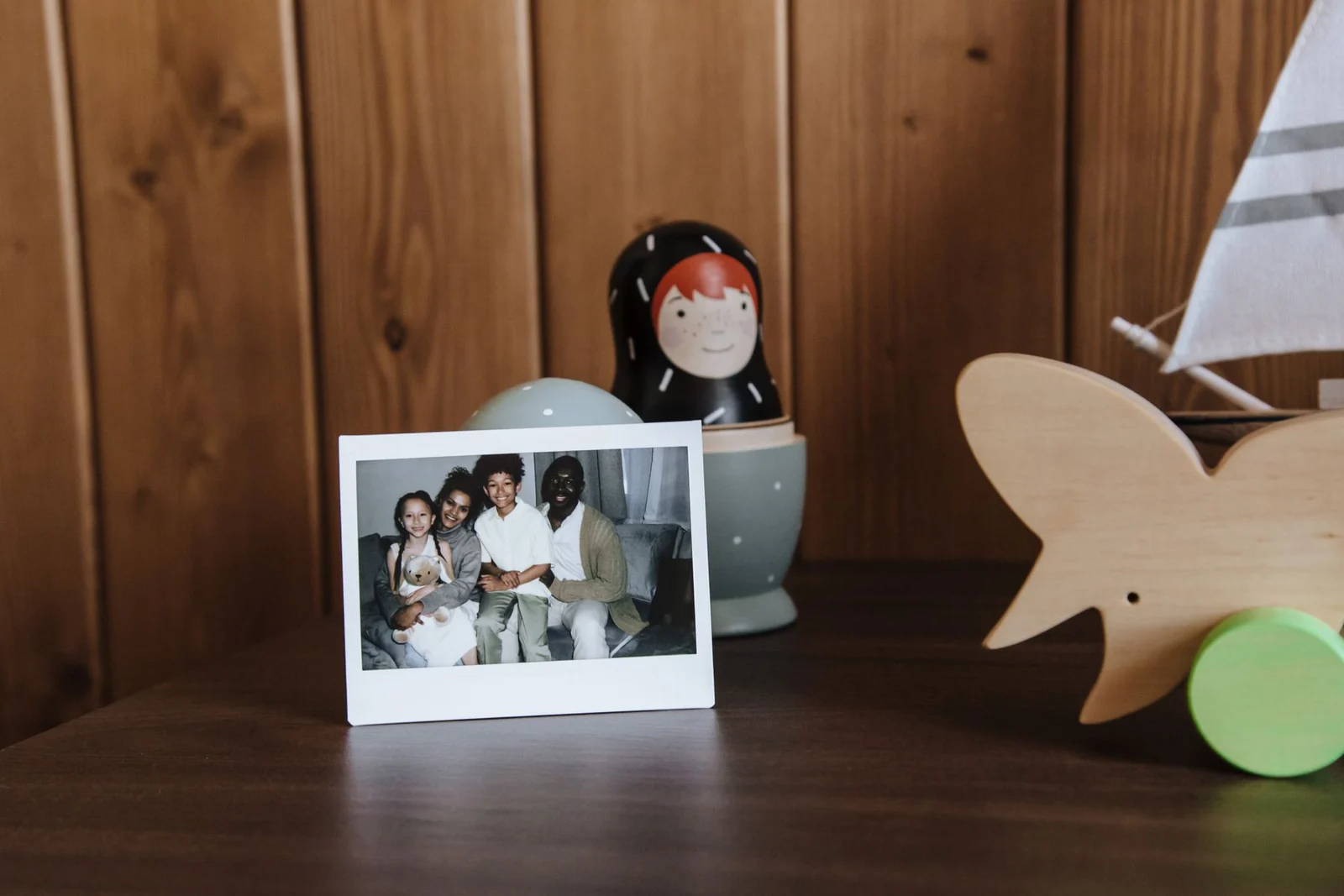
Try a single frame on the dresser before committing to a gallery above the bed. View it from the doorway and seated position, then check that drawers open without catching the frame. If the image feels too public from the hallway, choose a more private surface or keep it in an album. This tests privacy and daily use without making new holes.
Photos of Deceased Relatives
There is no need to treat a photograph of someone who died as inherently negative. What matters is the emotional effect on the people living with it. If the image feels comforting and connected to family history, a respectful display can make sense. If it keeps grief painfully activated in a room meant for rest, move it to a more reflective place or album.
Avoid universal claims that a deceased relative's photo "brings bad energy." That is not a helpful way to handle grief or family memory.
Use the Bagua Only as an Optional Layer
In compass-based bagua interpretation, the Family area is associated with east. In the entrance-aligned BTB map, it is the middle-left zone when looking in from the entrance. These are different mapping methods. Use one consistently if family symbolism matters to you, then check whether the resulting wall suits the photos.
But do not force a display into an awkward physical location just to satisfy the map. Use the Feng Shui Bagua map for the mapping method, then decide whether that wall actually works for photographs.
Mount Personal Photographs Safely
Frames above beds, sofas and stairs need reliable hardware appropriate to the frame weight and wall. Do not use an adhesive product outside its rated surface or load just because the frame looks light. For children's spaces, avoid heavy glass frames in positions where they can be pulled down.