



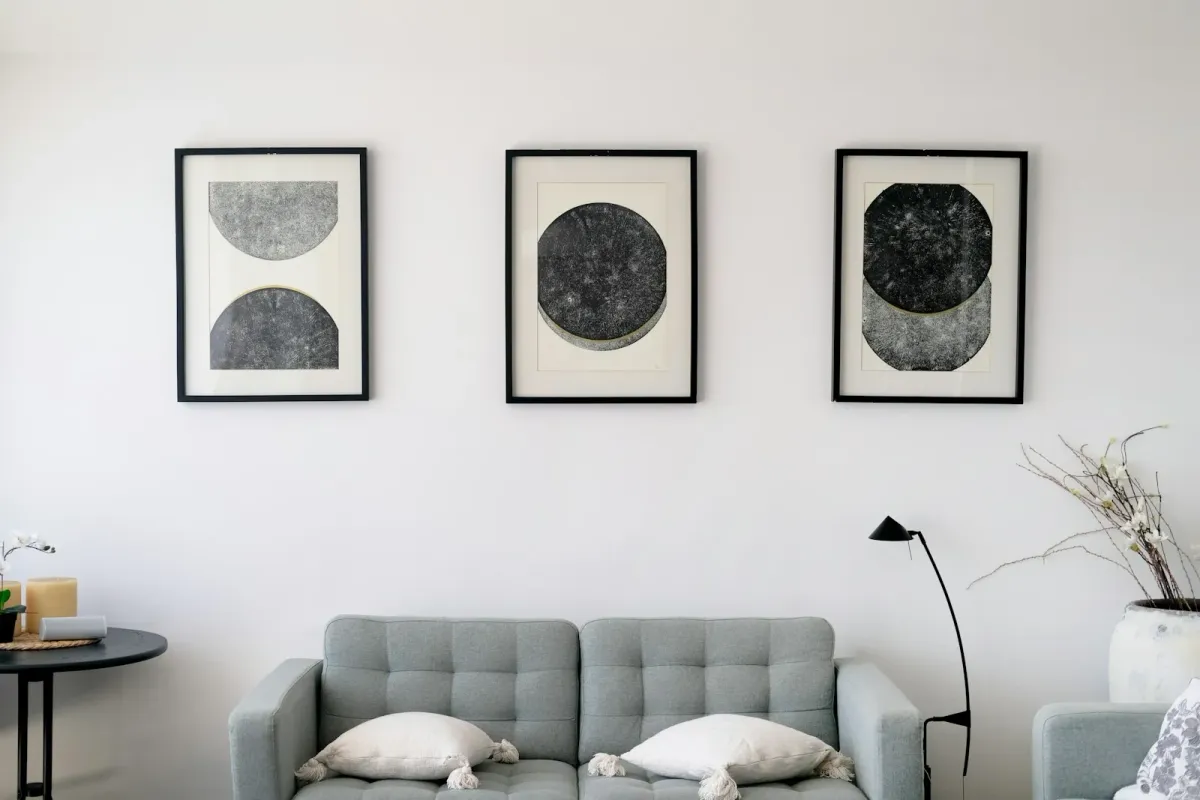
Quick Answer
Choose Feng Shui wall art in this order: decide what the room needs to feel like, choose a subject you genuinely want to see every day, size the artwork to the wall and nearby furniture, check glare and reflections from the main viewing positions, then mount it safely. Traditional symbolism can add meaning, but it should not override scale, safety, or your actual response to the image.
A wall can look wrong even when the artwork itself is beautiful. The piece may be too small for the sofa, the glass may reflect a bright window into the main seat, or the image may simply feel too intense for a bedroom.
That is why the most useful Feng Shui art question is not "Which painting is lucky?" It is "What should this wall do for the people using this room?"
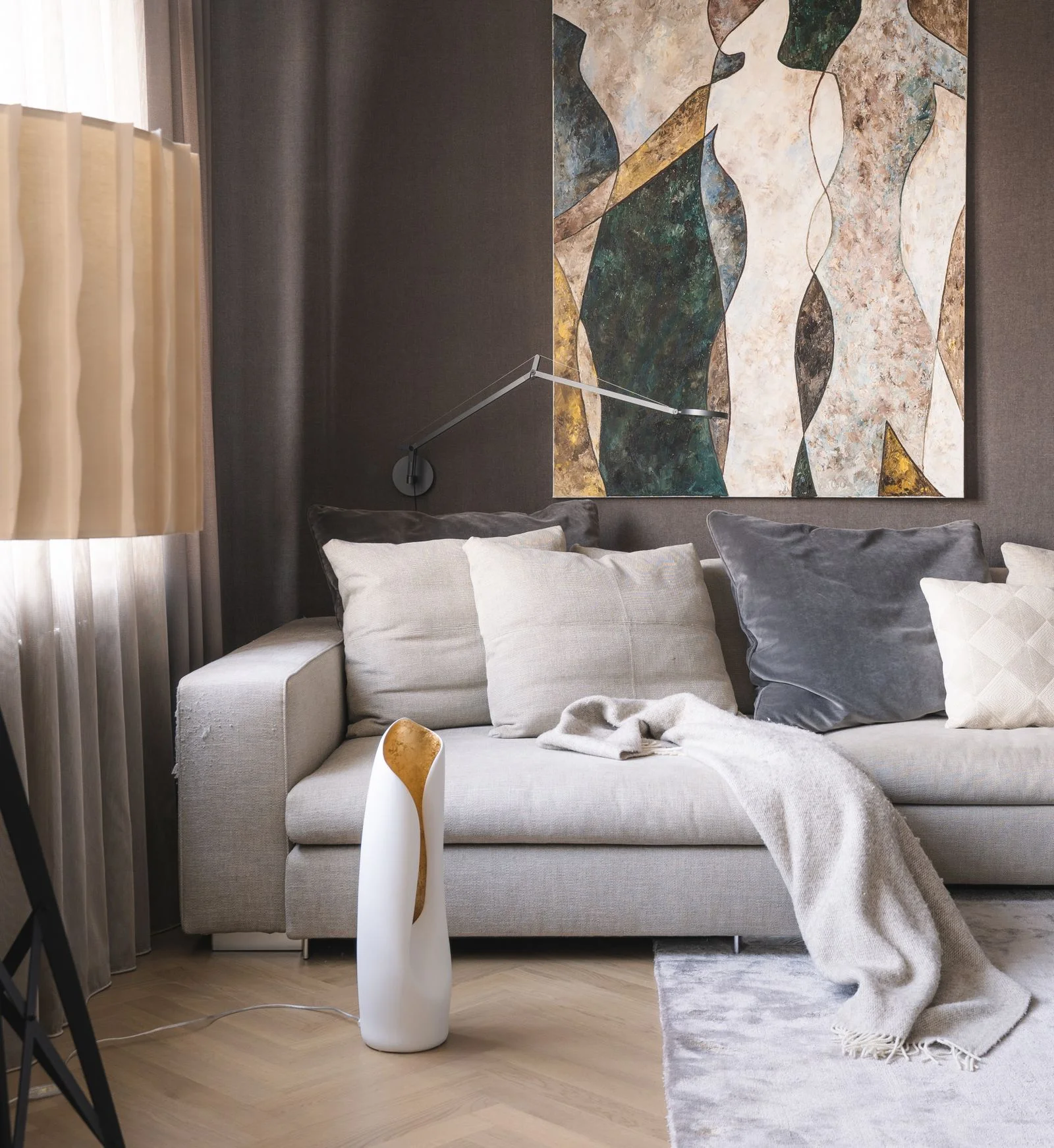
For a living room, the wall may need to anchor a seating area. In a bedroom, it may need to stay visually quiet. In a dining room, it may need enough presence to hold its own beside a large table. In an entryway, one clear image may be more useful than a busy gallery that competes with the door, mirror, coat hooks, and console.
If you want the broader decorating framework first, start with our Feng Shui home decorating guide. This page is narrower: it covers artwork subject, scale, sightlines, reflections, and mounting. It does not rank symbols by luck or replace the separate Feng Shui symbols guide.
Start With the Job of the Room
Before looking at subjects, colors, or Bagua associations, stand where people actually spend time and look at the empty wall.
Ask three questions:
- Who sees this wall most often?
- From where do they see it?
- What should the wall contribute: calm, orientation, conversation, energy, identity, or visual rest?
Start With the Job of the Room
Scroll sideways to compare all columns.
| Room | Useful wall-art role | What to check first |
|---|---|---|
| Living room | Anchor the seating zone and support a shared mood | Sofa scale, multiple viewing angles, TV and window reflections |
| Bedroom | Keep the sleep zone personal and relatively quiet | View from the bed, emotional tone, heavy frames above the headboard |
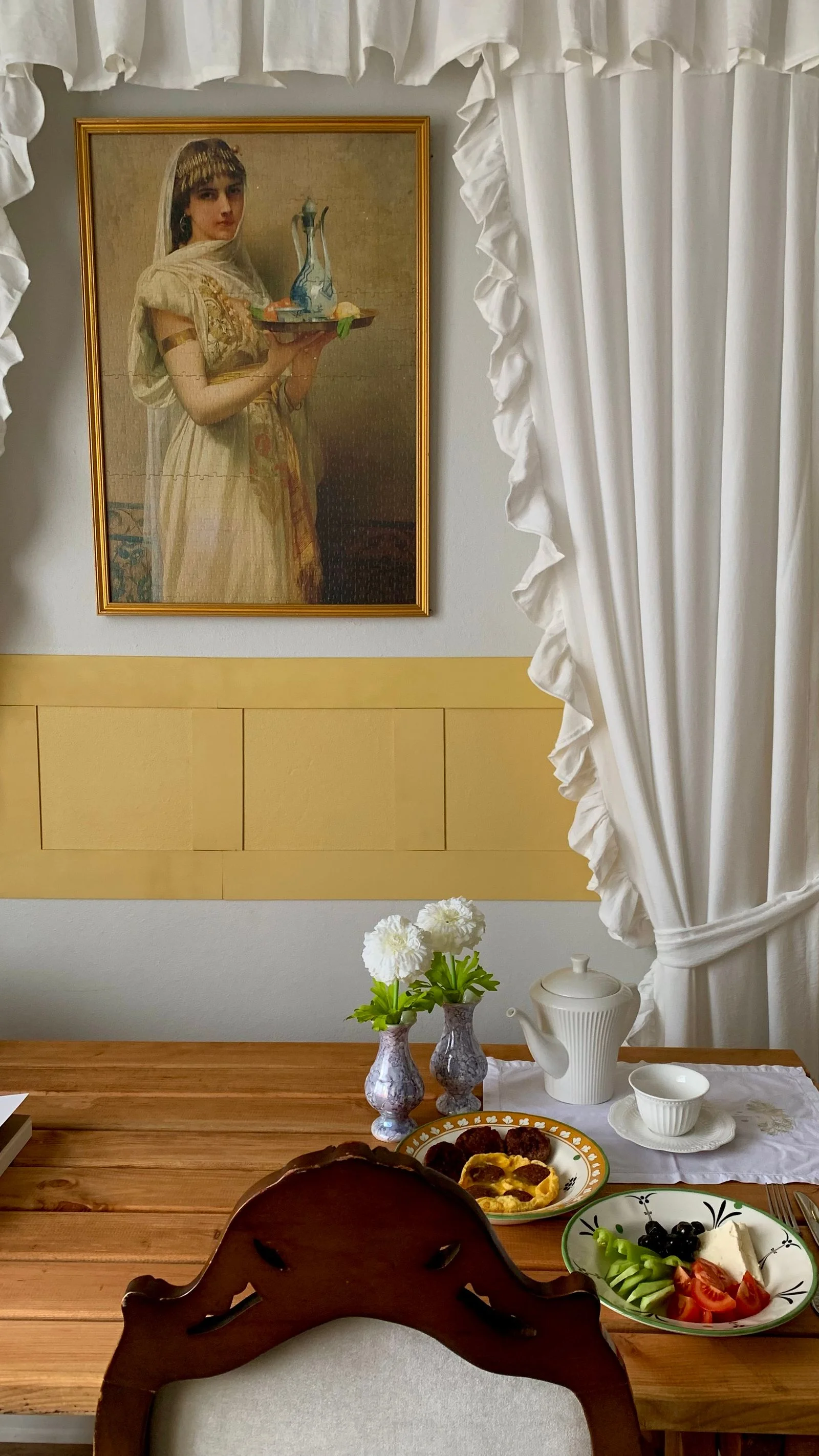
| Dining room | Give the table area a focal point | Scale from seated height, lighting glare, conversation value |
| Entryway | Help the entrance feel intentional and readable | Door swing, mirror reflections, narrow circulation, first sightline |
| Home office | Support focus or identity without competing with the work | Webcam background, screen glare, desk sightline |
If the sofa wall already has shelves, lamps, and a television nearby, start with one quieter piece rather than filling every gap.
A dining-room focal point
Choose a Subject You Actually Want to Live With
Traditional Feng Shui writing often assigns meanings to subjects such as mountains, water, flowers, horses, birds, or paired figures. Those associations can be useful when they add a story you enjoy, but they should be treated as interpretive symbolism, not as a guarantee of an outcome.
A better subject test is simple:
- Does the image create a feeling you want repeated in this room?
- Is the subject appropriate for everyone who shares the space?
- Does the image feel restorative, lively, focused, intimate, or dramatic in a way that suits the room?
- Would you still want the image if nobody told you it was "lucky"?
If the answer to the last question is no, keep looking.
Common Feng Shui art subjects and how to use them carefully
Choose a Subject You Actually Want to Live With
Scroll sideways to compare all columns.
| Subject | Common symbolic reading | Practical use |
|---|---|---|
| Mountains | Support, stability, backing | Strong behind a sofa, desk, or seating area if the image feels grounded rather than severe |
| Water | Flow, movement, opportunity | Useful where movement feels welcome, but check whether a highly active image is too stimulating for sleep |
| Flowers and botanicals | Growth, vitality, seasonality | Easy to use in shared rooms when colors and scale suit the decor |
| Paired figures | Partnership and companionship | Can support a relationship theme, but only if the image feels personal rather than formulaic |
| Horses | Movement, ambition, momentum | Better for active rooms or offices than for people seeking visual quiet |
| Family photographs | Connection and memory | Best where the household enjoys seeing them, rather than where they feel intrusive |
If you are specifically choosing a symbolic object or image, our Feng Shui symbols guide explains how to separate cultural meaning from promises about luck or money.
Quiet colors do not always mean quiet imagery
Size the Artwork to the Furniture and the Whole Wall
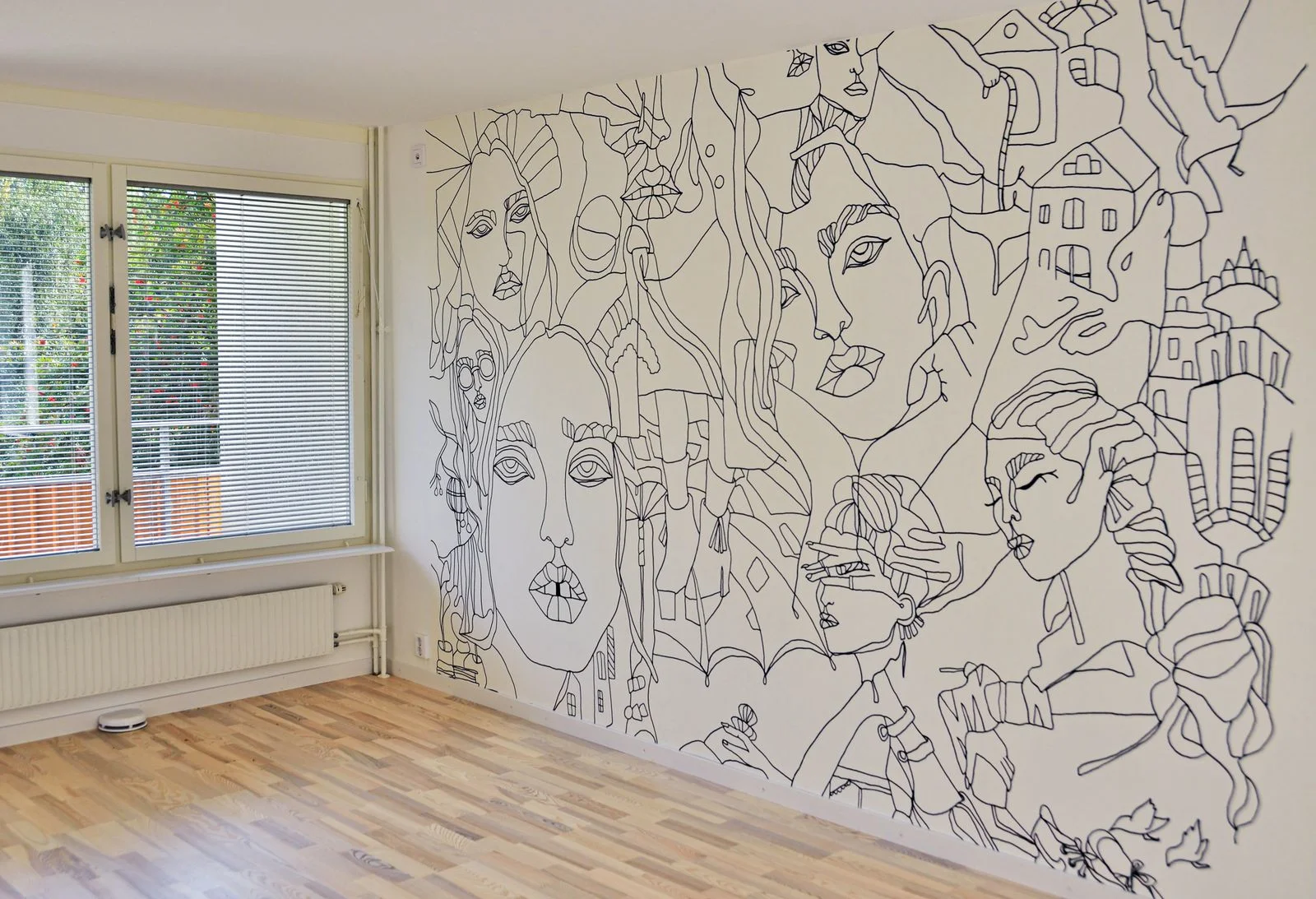
The most visible wall-art mistake is usually scale, not symbolism.
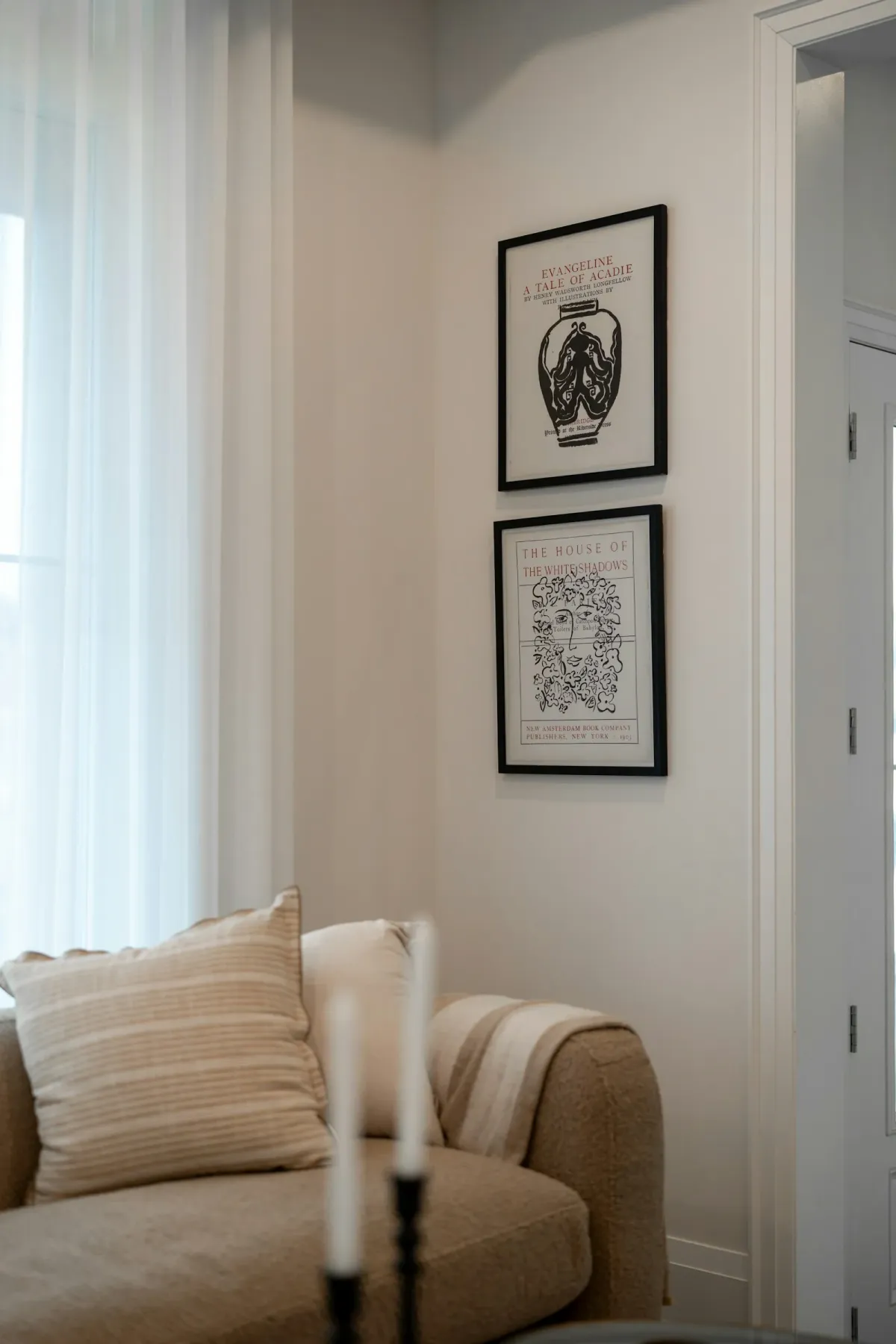
A small print floating high above a wide sofa can make both the art and furniture feel disconnected. An oversized grouping can crowd lamps, shelves, door trim, or the ceiling. The goal is to make the artwork read as part of the same visual zone as the furniture beneath or beside it.
Fixed percentages and hanging heights can be useful starting references, but they are not laws. Sofa height, ceiling height, frame shape, viewing distance, gallery-wall density, and whether people are sitting or standing all change the answer.
One statement piece or a grouped pair?
For a 72-inch sofa, you could test a single 48-inch-wide frame. Another option is two 22-inch-wide frames with a 3-inch gap: the complete group is 47 inches wide. These are trial arrangements, not required proportions. Tape both footprints on the wall, check the space beside lamps and curtains, and choose the one that feels connected to your sofa.
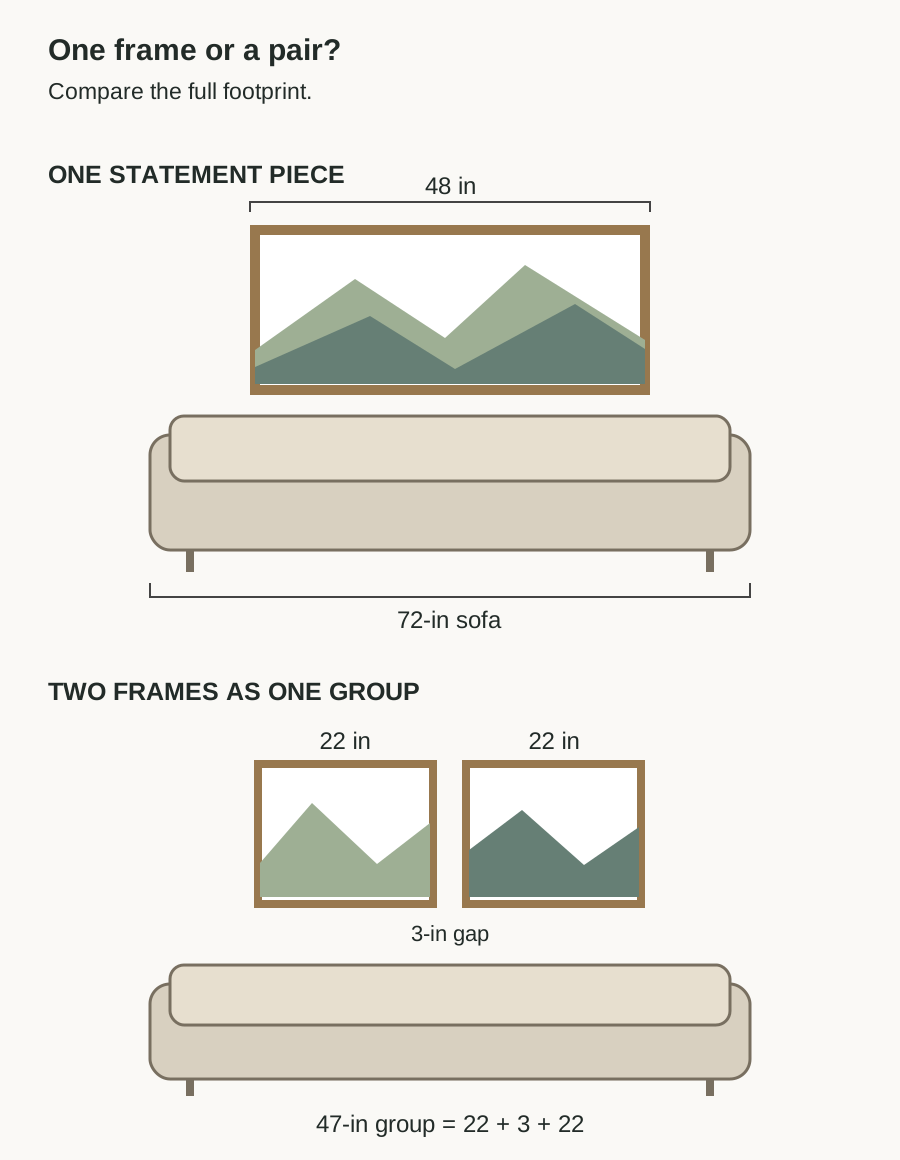
Start with the gap above the furniture rather than copying a fixed height from the floor. Art above a low sofa and art viewed standing in a hallway need different checks. Sit down, stand in the doorway, and adjust the paper template before drilling.
A practical way to test scale before making holes:
- Measure the furniture width.
- Measure the proposed frame or full gallery-wall footprint.
- Tape the outer dimensions on the wall with low-tack painter's tape.
- Sit in the main seat.
- Walk to the doorway and look again.
- Photograph the wall on your phone. A photo often makes scale problems easier to notice.
For a gallery wall, treat the whole grouping as one large shape. The visual footprint matters more than whether every individual frame is identical.
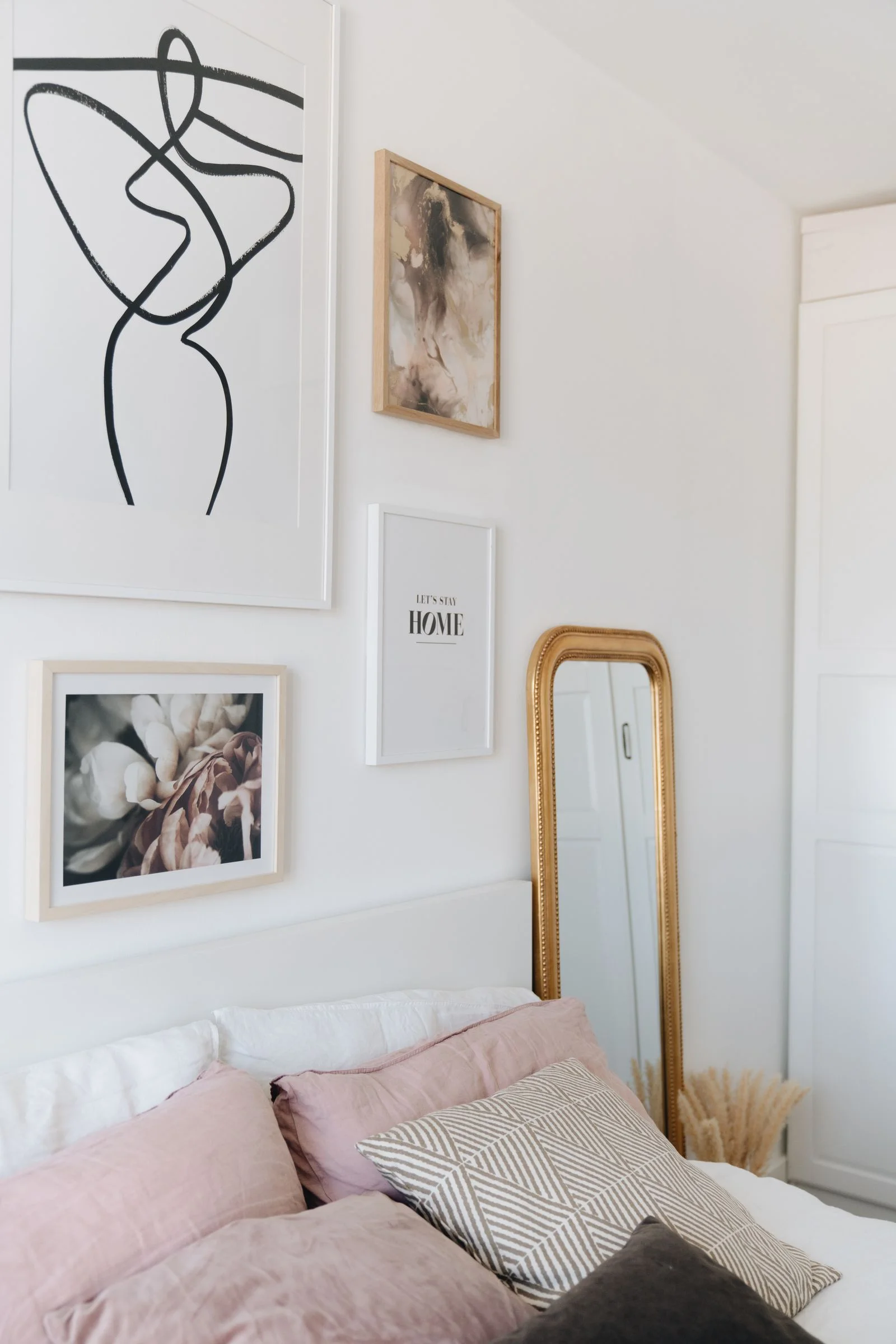
Above a bed: use a stricter safety test
Art above a headboard deserves more caution because a heavy object is directly over a sleeping position. If you cannot mount a heavy frame securely for the wall construction, choose a lighter piece or move the artwork to another wall. "Good Feng Shui" never requires ignoring basic physical safety.
Check Glare, Glass, Mirrors, and Screens
Framed art can behave like a mirror when the glazing is reflective. A placement that looks excellent in a daytime photograph may throw a bright window, lamp, or television reflection directly into the sofa after sunset.
Use this five-minute glare test:
- Sit in the main viewing position in daylight.
- Look at the artwork from the side seats too.
- Turn on the lamps you normally use after dark.
- Turn on nearby screens.
- Check any Feng Shui mirrors that might reflect the artwork or its frame.
If glare is the problem, you may not need different art. You may need a different angle, non-reflective glazing, a lamp moved out of the reflection path, or a new location on the wall.
This matters especially in a dining room, where pendant lights can appear in glazing, and in an office, where reflected task lights can compete with monitors.
Use Color as a Bridge Between the Art and the Room
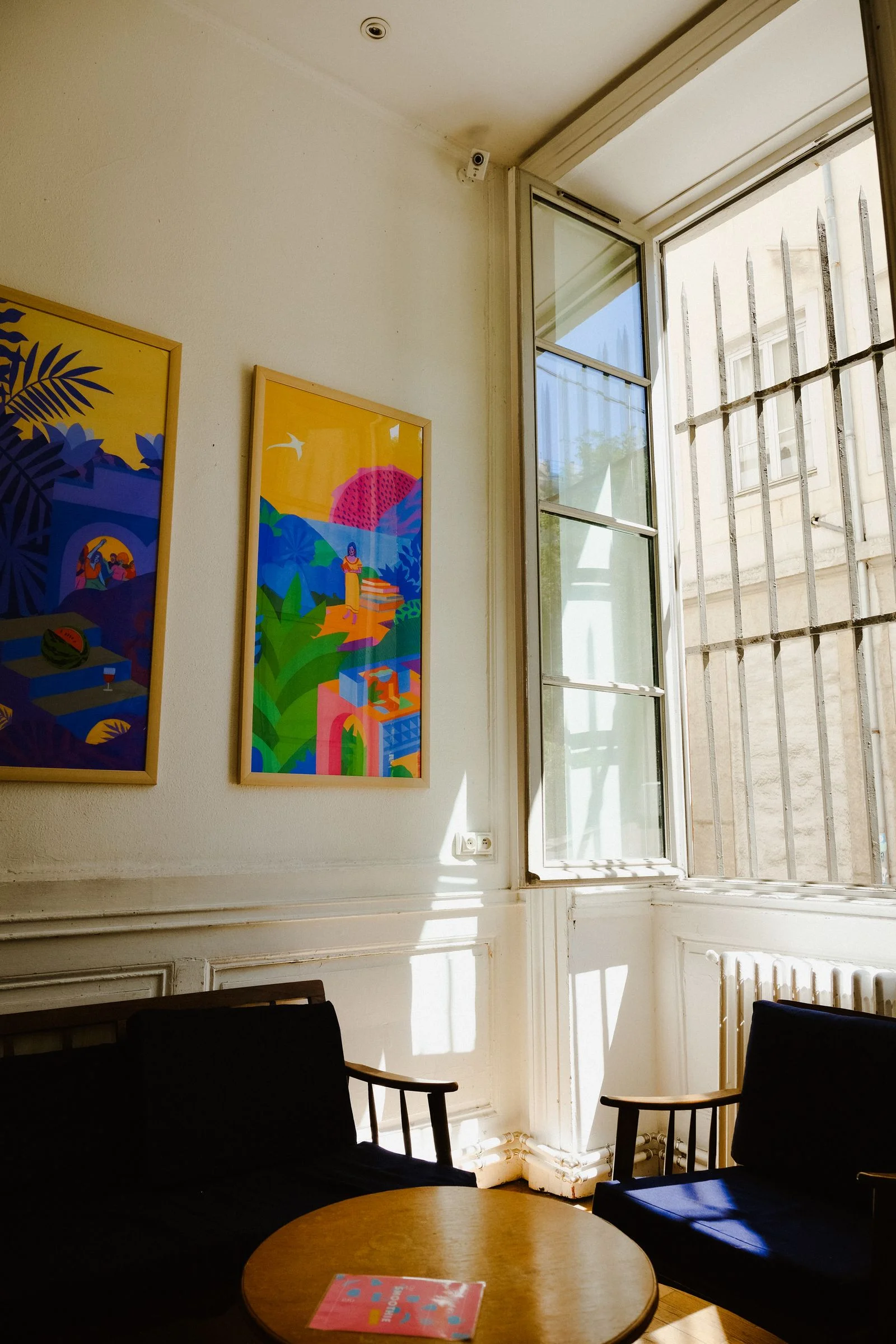
Artwork does not need to match the room exactly. It often looks better when it repeats one or two colors, temperatures, or materials and introduces a controlled contrast.
A simple approach:
- Base connection: repeat one existing wall, rug, wood, or upholstery tone.
- Secondary contrast: let the artwork introduce one stronger color or shape.
- Frame connection: use frame color or material to tie the piece to furniture or hardware.
If you use the Five Feng Shui Elements as a design framework, think in terms of material and visual quality rather than trying to force every wall into a directional color chart. Wood can appear through timber frames and botanical subjects. Metal can appear through cleaner geometry or metallic frame details. Water can appear through darker tones, reflective surfaces, or fluid imagery.
The element framework should help you edit the room, not make you replace art you love.
What About Mountain, Waterfall, Horse, Koi, and Wealth Paintings?
These common subject questions deserve direct answers because each involves a different visual and symbolic decision.
Mountain paintings
Mountain imagery is commonly read as support and stability. If that meaning matters to you, it is a natural fit behind a seating or work position. But the image still needs to feel pleasant from the actual seat. A dramatic dark mountain may feel powerful in an office and oppressive in a small bedroom.
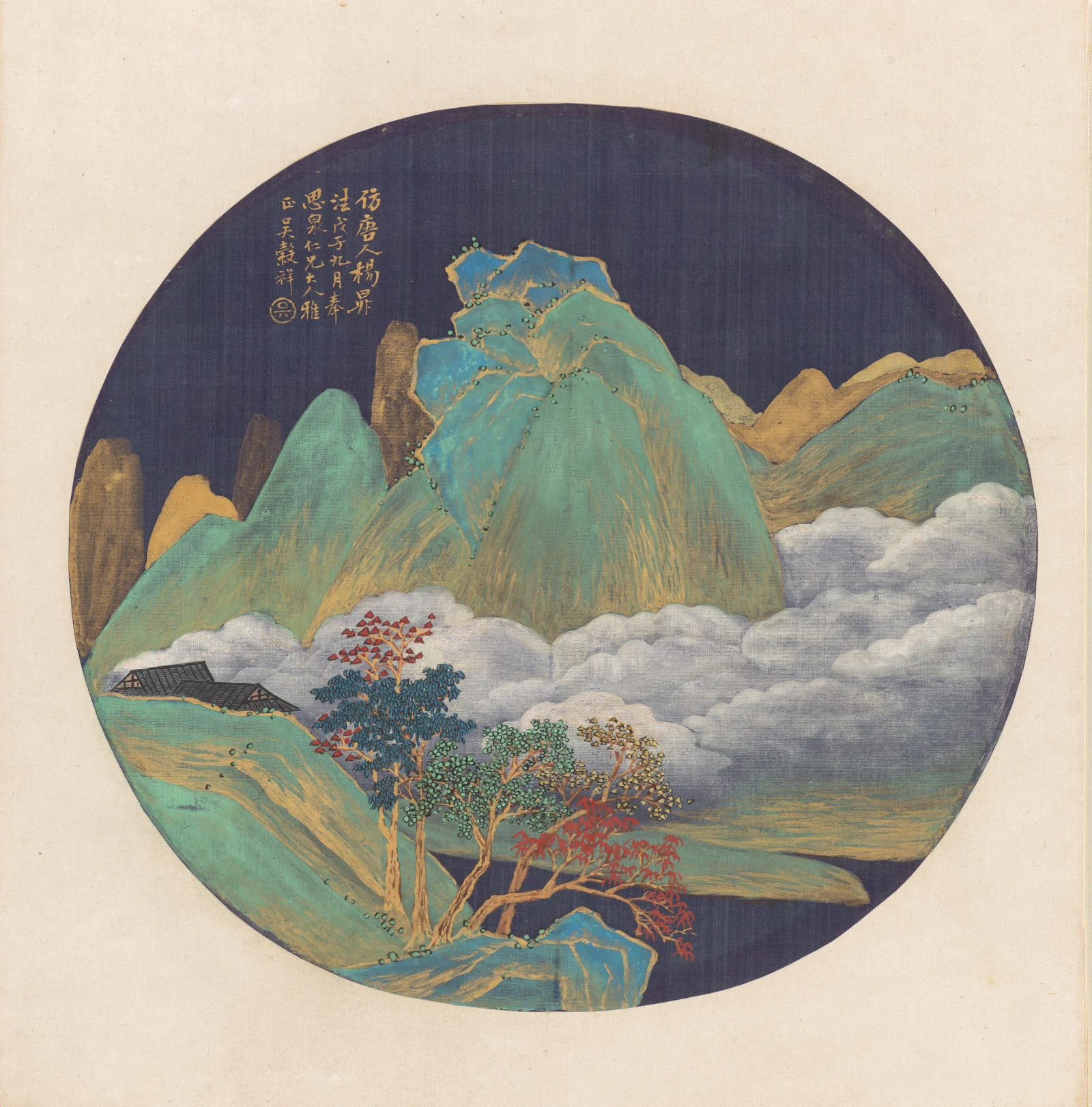
Wu Guxiang's Landscape in the style of Yang Sheng is a Chinese fan painting from 1888. It is shown here as a subject and palette example, not as a prescribed feng shui remedy.
Waterfall paintings
Water is commonly associated with movement and prosperity in Feng Shui traditions. Search results often turn that into rigid instructions about the direction painted water must flow. Treat those rules as school-specific symbolism. More practically, ask whether the image feels active, whether it pulls attention toward or away from the room, and whether that activity is welcome in the space.
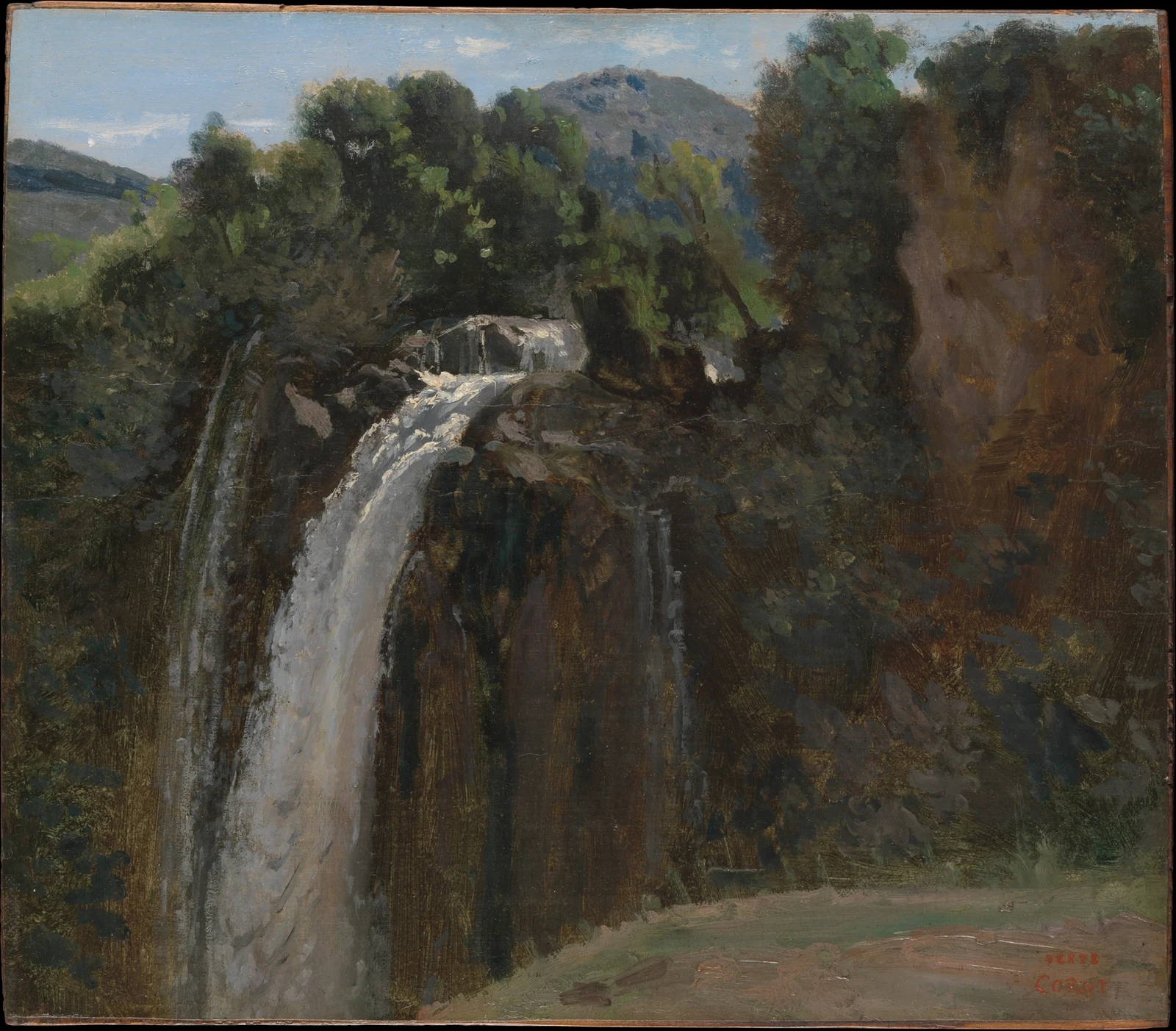
This example is Camille Corot's Waterfall at Terni, a French painting from 1826, not an example of a Chinese directional rule.
Horse paintings
Horse imagery is often linked with energy, progress, and success. That makes it easier to use in active spaces such as an office or living area. It can be too visually forceful for someone deliberately trying to reduce stimulation in a bedroom.
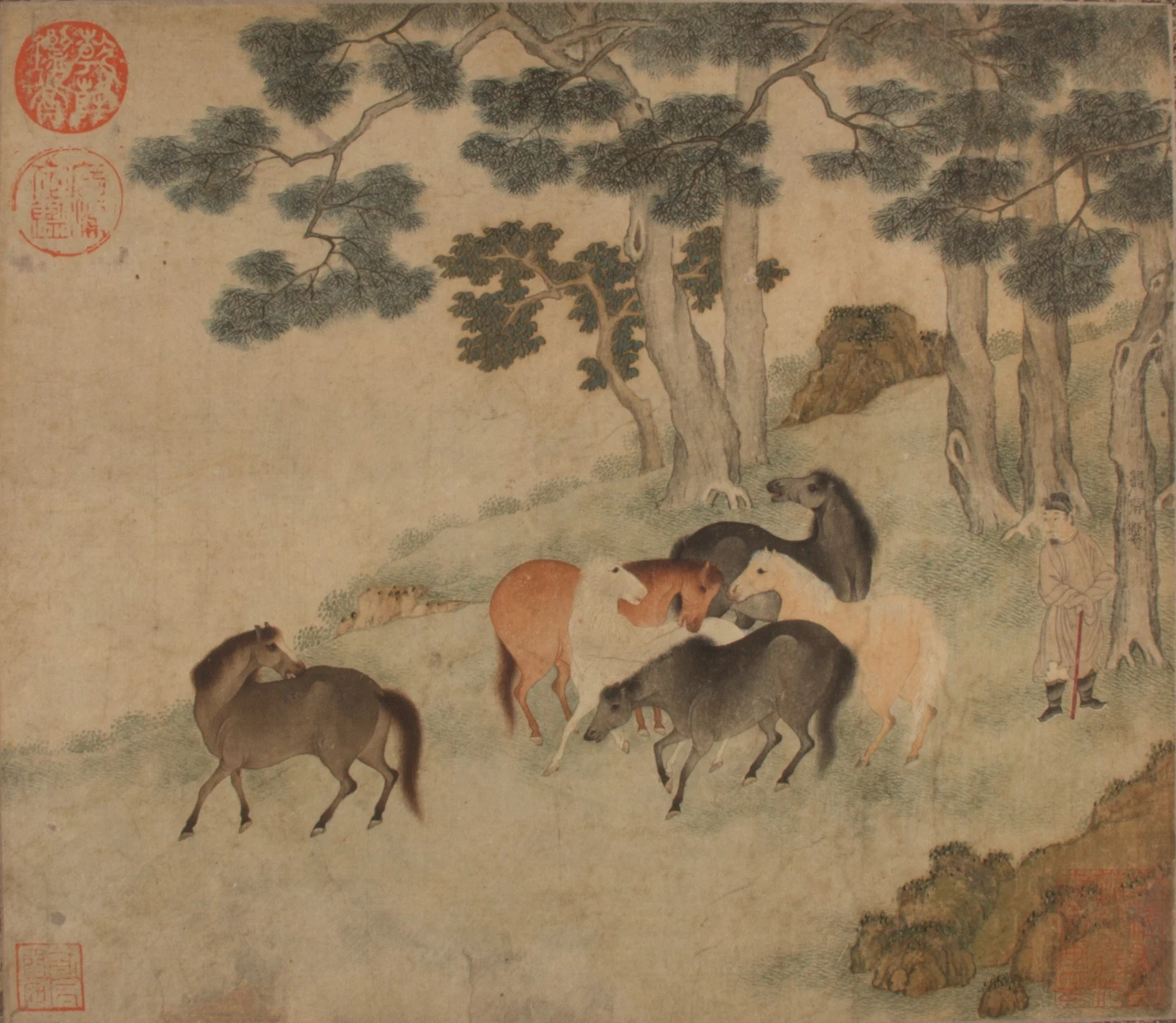
The Met identifies Horses in Landscape with Attendant as a Chinese Yuan-dynasty painting by an unidentified artist. Its historical context is separate from modern claims that a print can guarantee success.
Koi and fish paintings
Fish imagery is commonly linked with abundance and persistence. Use it if you like the image and it fits the room. Do not treat the number of fish in a painting as a substitute for financial planning or as a guaranteed luck mechanism.
"Wealth" paintings
A painting cannot produce wealth. What it can do is give a money corner, office, or entry a meaningful focal point. If your goal is specifically to style a wealth area, see our Feng Shui money corner guide and use the artwork as one part of the room rather than the entire strategy.
Family Photos, Portraits, and Personal Images
Personal photos create a different kind of wall energy from decorative prints because the people in them are emotionally specific.
A few practical guidelines:
- Put family photographs where the household enjoys seeing them.
- Avoid turning a bedroom into a gallery of extended family if that makes the room feel less private.
- Use consistent frames or spacing if many images compete visually.
- Keep irreplaceable originals away from humidity, direct sun, and other conditions that can damage them.
There is no universal Feng Shui rule that makes a beloved photograph "bad" because it contains a particular number of people or a certain pose. Personal meaning matters.
Gallery Wall or One Statement Piece?
Choose one statement piece when:
- the wall needs a clear focal point,
- the furniture already has many details,
- the room is small,
- or you want an easier, calmer installation.
Choose a gallery wall when:
- the household has multiple meaningful pieces,
- the wall can visually carry the grouping,
- you can control spacing and alignment,
- and the collection reads as one composition rather than leftover frames.
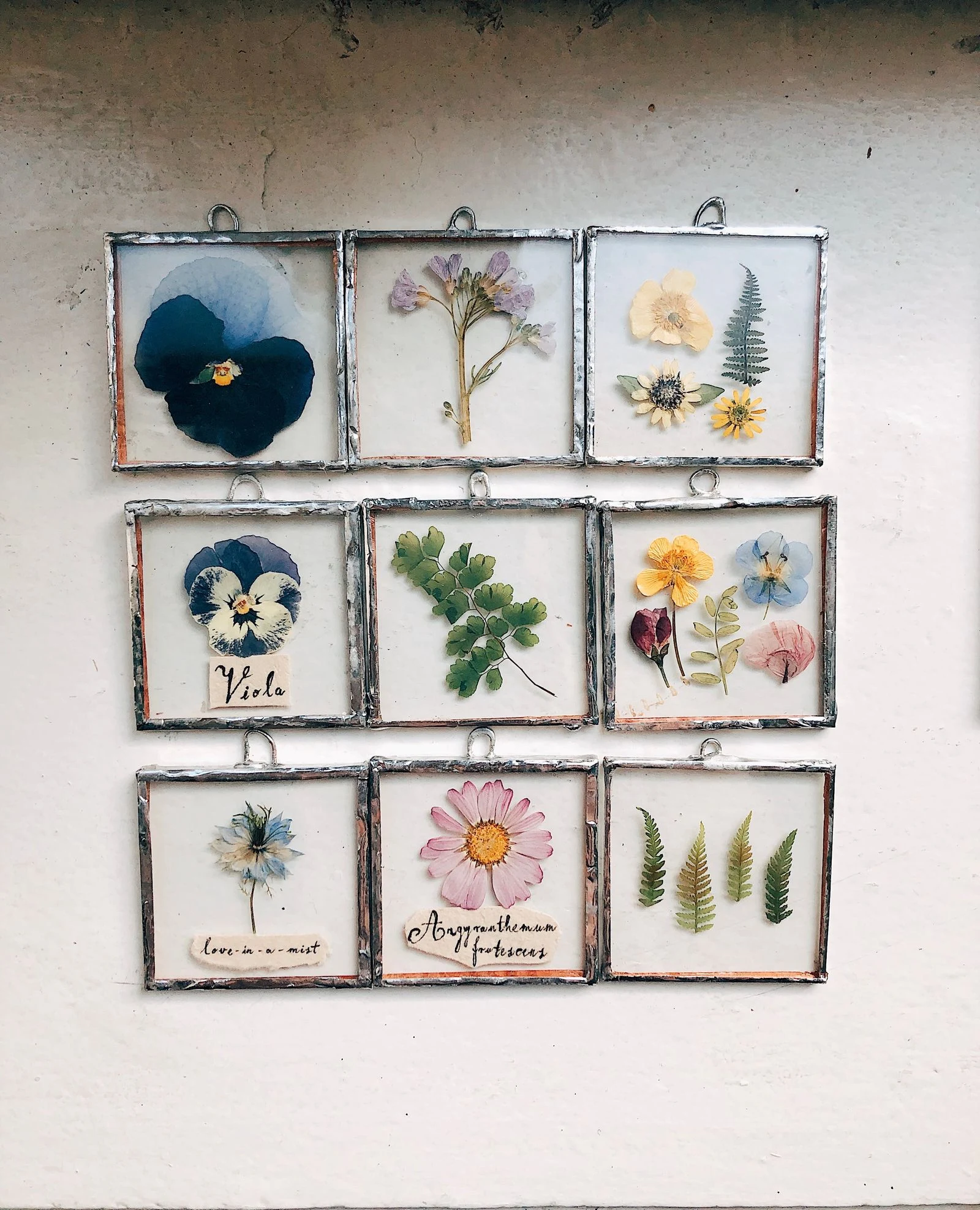
Before committing, make a paper template of the grouping on the floor or wall. This is more useful than following a generic gallery-wall diagram because it uses your actual frame sizes.
Mount Art Safely
The mounting method should match:
- the frame weight,
- the wall material,
- the hanging hardware on the frame,
- and the manufacturer's rated limits.
Do not assume an adhesive strip that works for a lightweight print is appropriate for a large framed piece. Follow the hardware manufacturer's installation instructions, especially over beds, sofas, stairs, or other places where people sit or pass below.
Renters can still make strong wall-art choices with lightweight work, ledges where permitted, or removable systems that are rated for the actual load and surface.
A Five-Minute Feng Shui Wall Art Checklist
Before you buy or hang the piece, check:
- I know what this wall needs to do for the room.
- I like the subject without needing a luck claim to justify it.
- I tested the artwork at the actual scale.
- I checked the view from seated and standing positions.
- I checked glare in daylight and after dark.
- Nearby mirrors do not create an awkward repeat or reflection.
- The art does not interfere with doors, curtains, screens, or lamps.
- The mounting method is rated for the wall and frame.
- Symbolic meaning, if I use it, supports rather than overrides the practical choice.