



Quick Answer
For feng shui door placement, keep every opening usable, check what is visible between rooms and arrange furniture around the full door swing. When two doors face each other, improve privacy inside the rooms rather than blocking the corridor. Treat symbolic concerns about alignment as traditional interpretations, not predictions of arguments, illness or financial loss.
A door is a moving part of a room. It needs space to open, a usable handle and a clear approach on both sides. Its position also decides whether a visitor sees a bed, a bathroom or the inside of a wardrobe. Those are useful things to assess before buying a screen, mirror or decorative cure.
This guide covers interior doors and the relationships between openings. For entrance appearance, hardware and arrival, use our front-door guide. For the furniture along a passage, see feng shui hallway ideas. Here, the question is what happens when the doors and the people using them meet.
Check Movement Before Symbolic Direction
Start with the current floor plan. Mark each opening, the hinge side, the handle and the direction the leaf travels. Add the things that move nearby: a wardrobe door, pull-out drawer, dining chair or laundry basket. A room photographed with every door closed can conceal its most awkward conflict.
In Mindful Design School's BTB explanation, an entrance that cannot open fully represents friction and obstacles. That is a named symbolic interpretation. The practical observation is simpler: furniture behind a door can make entering and carrying things difficult. You can improve that access without adopting a prediction about luck.
Do not confuse a door's position, its swing and its compass facing. These are different questions. A door may be well placed for circulation while pointing in a direction that a particular practitioner would discuss differently. The bagua guide explains why doorway-based and compass-based approaches should not be mixed into one compulsory rule.
Separate three door questions before choosing a change
Scroll sideways to compare all columns.
| Question | What to inspect | Useful first response |
|---|---|---|
| Can people use it? | Leaf travel, handle access and the approach on both sides | Remove the movable obstruction and test again |
| What does it reveal? | The view from the hall at ordinary standing and seated positions | Change the private-room layout or normal door routine |
| What does the tradition mean? | The named method and the specific alignment being discussed | Keep interpretation separate from claims about guaranteed outcomes |
When Two Doors Face Each Other
Two bedroom doors across a hall are not the same problem as two door leaves that collide. The first arrangement may expose personal space when both doors are open. The second creates an operating conflict, even if the rooms are otherwise private. Describe the actual problem instead of treating every facing pair as identical.
Feng shui discussions sometimes call opposing or conflicting openings “arguing doors.” Interpretations vary, and the name does not establish that the occupants will quarrel. A useful response is to check sightlines, noise, light and the habits of the people using the rooms. A door that is normally shut creates a different everyday experience from one left open throughout the day.
Stand at the opposite doorway and look into the bedroom with its occupant's permission. If the direct view lands on the pillow or dressing area, compare another bed or dressing position. Keeping the same doors and moving a personal activity outside the direct view can resolve the privacy issue without structural work.
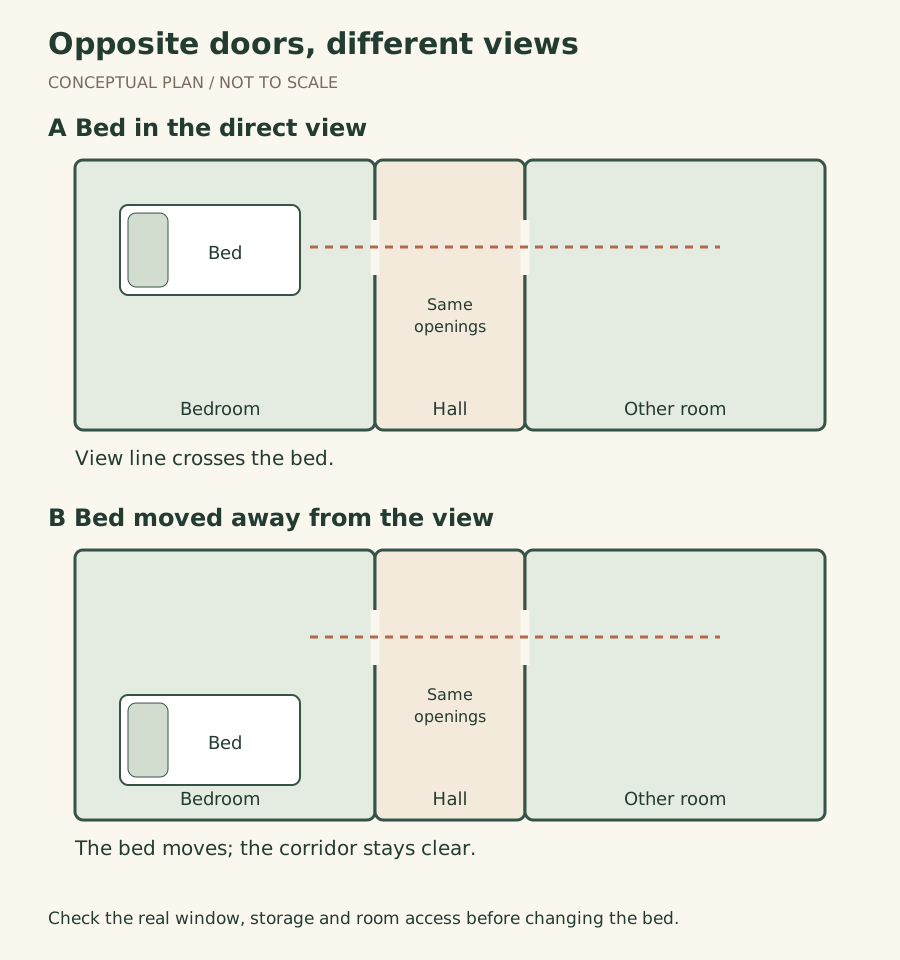
The drawing is a schematic, not a measured building plan. A different bed position still has to work with the real window, storage and access. Use our small-bedroom layouts to compare furniture footprints before deciding that turning the bed solves everything.
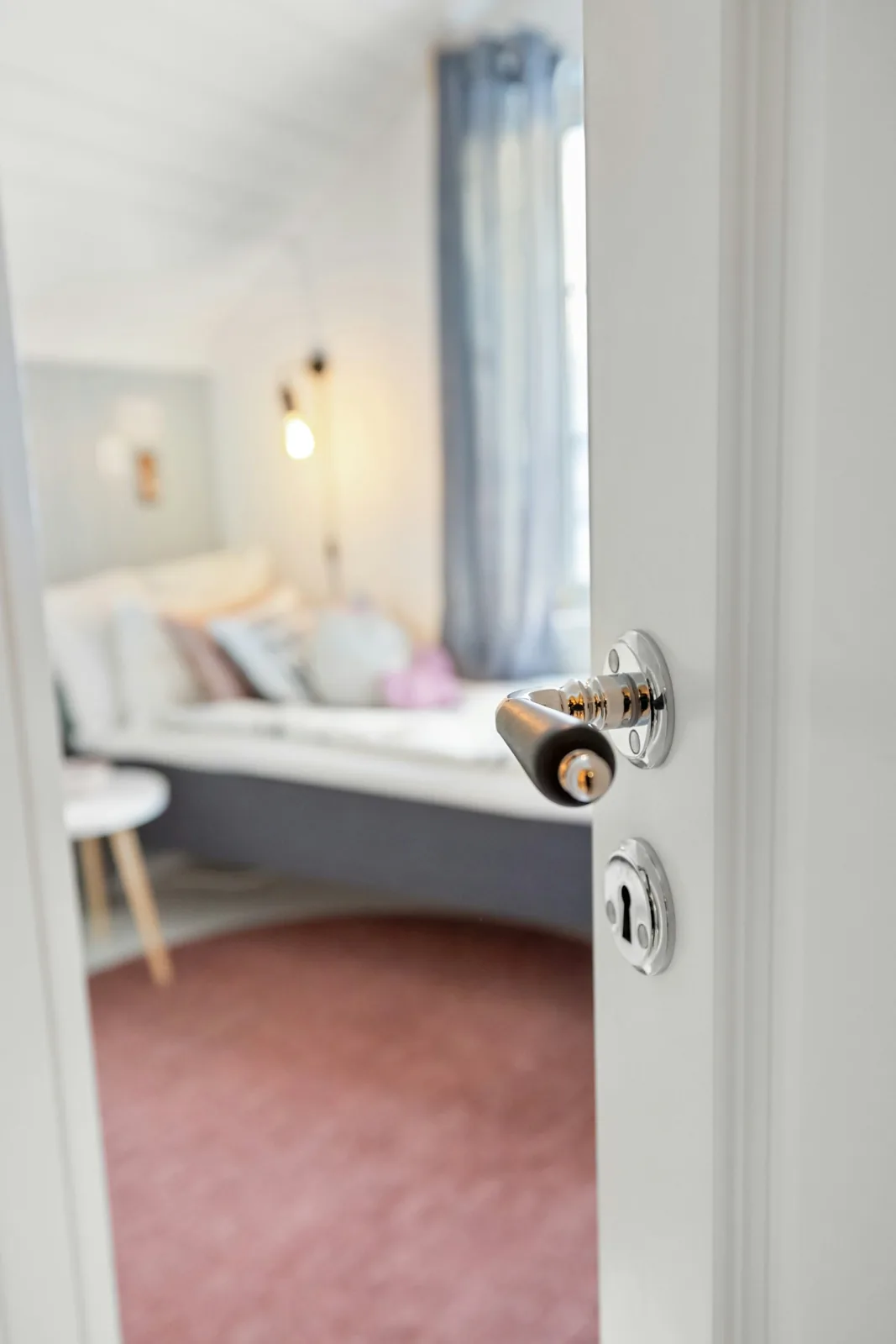
If the room cannot be rearranged, an agreed closed-door routine may be the simplest privacy measure. A suitable window covering on a glazed internal opening can change a view, but it does not provide the same acoustic separation as a different door assembly. Avoid promising that a curtain solves every sound or privacy problem.
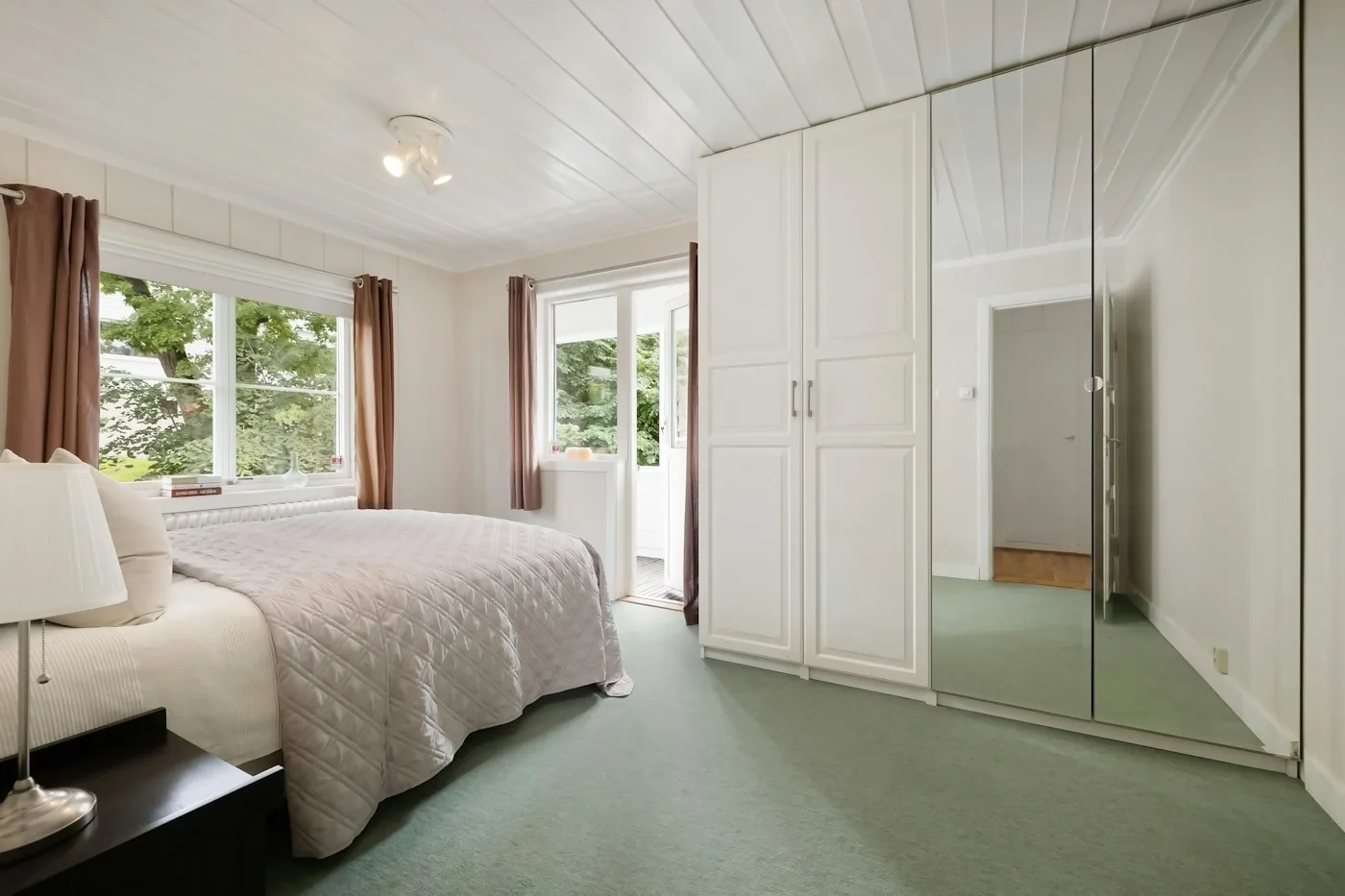
Map Door Swings and Storage Together
Open adjacent doors slowly and observe where they come closest. Include wardrobe handles and cabinet knobs. Do not force a leaf past an obstruction or assume that a stop, removed closer or altered hinge is an acceptable fix. A door may have a security, accessibility or fire-protection function that is not visible in a photograph.
A hypothetical passage illustrates the difference between fitting furniture and using it. Suppose the passage is 54 inches wide. A 14-inch-deep cabinet leaves 40 inches locally when the nearby door is shut. If an outward-opening 24-inch leaf projects into that same cross-section at 90 degrees, only 16 inches remain there between the leaf tip and cabinet face. That overlap makes the cabinet location worth rejecting before purchase.
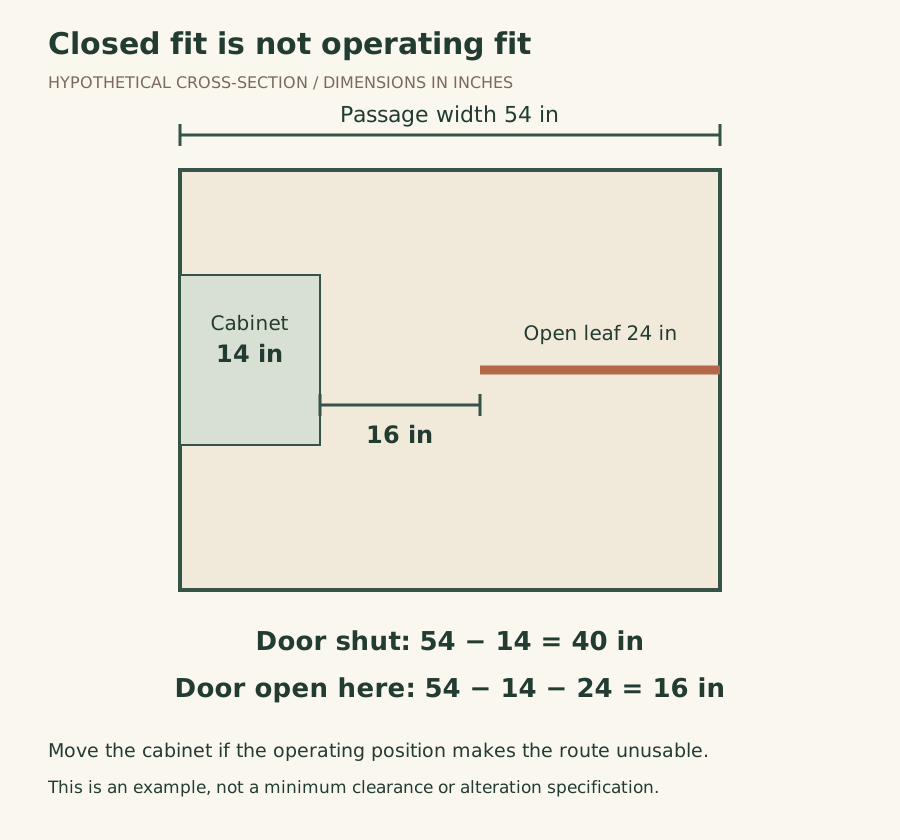
Actual usable space depends on the frame, hardware, opening angle, adjacent projections and the person using the route. The arithmetic does not establish accessibility or code compliance. Moving the cabinet into a suitable room may solve this example; rehanging the door is a property alteration requiring a separate assessment.
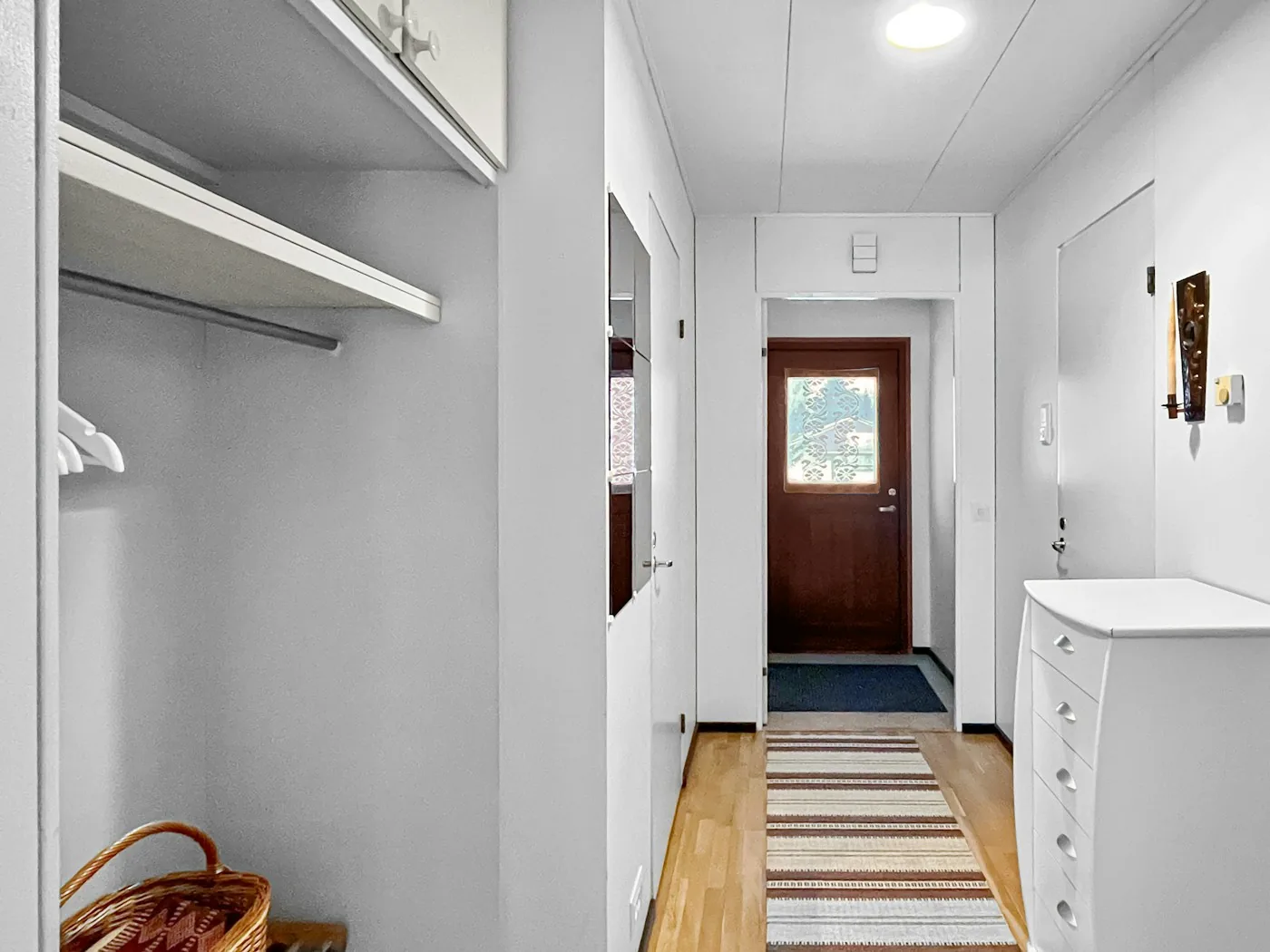
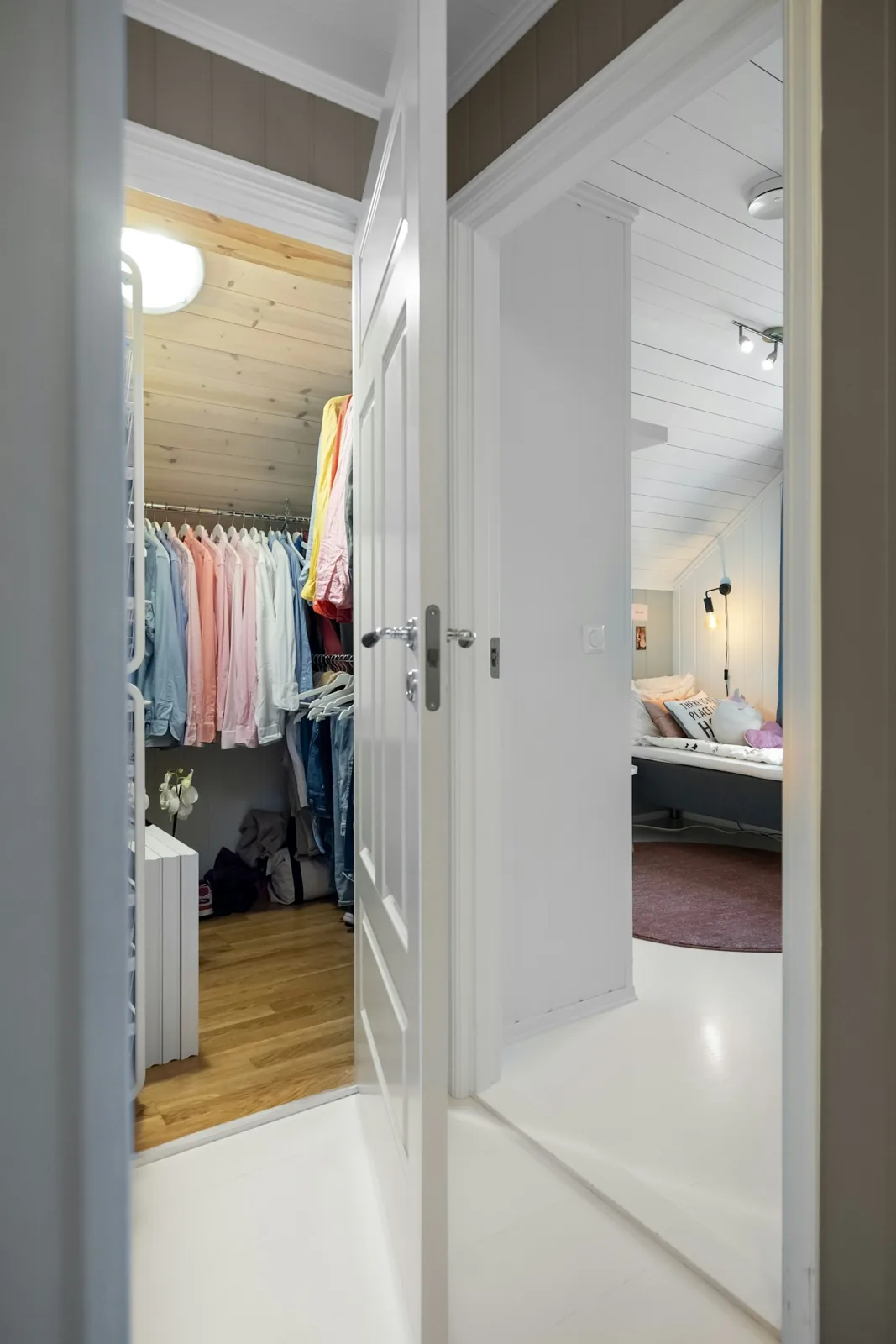
Sliding or pocket doors can reduce a swing conflict in some designs, but they are not a universal replacement. Wall cavities, services, privacy, accessible hardware and any required fire performance affect suitability. In a rental, begin with movable furniture and maintenance requests rather than selecting new door hardware yourself.
Handle Bedroom and Bathroom Views Practically
When a bathroom opens toward a bedroom, separate the view from the condition of the bathroom. A closed door can provide visual privacy. It does not repair a leak, remove excess moisture or fix an ineffective extractor. Do not substitute a plant, crystal or color change for maintenance.
Try the arrangement at the times it is used. Does someone turning on the bathroom light illuminate the other person's pillow? Can the person leaving the bathroom reach the hall without squeezing past a dresser? Is the handle reachable from both sides? These observations lead to more useful decisions than a blanket claim that the relationship between the two rooms is bad.
In an en-suite room, it may be possible to move the bed so the pillow is not directly visible from the bathroom opening. If that compromises the wardrobe or window, keep the better functioning bed position and manage privacy another way. Our bed-placement guide covers the sleeping position; the bathroom guide covers the wet-room setting.
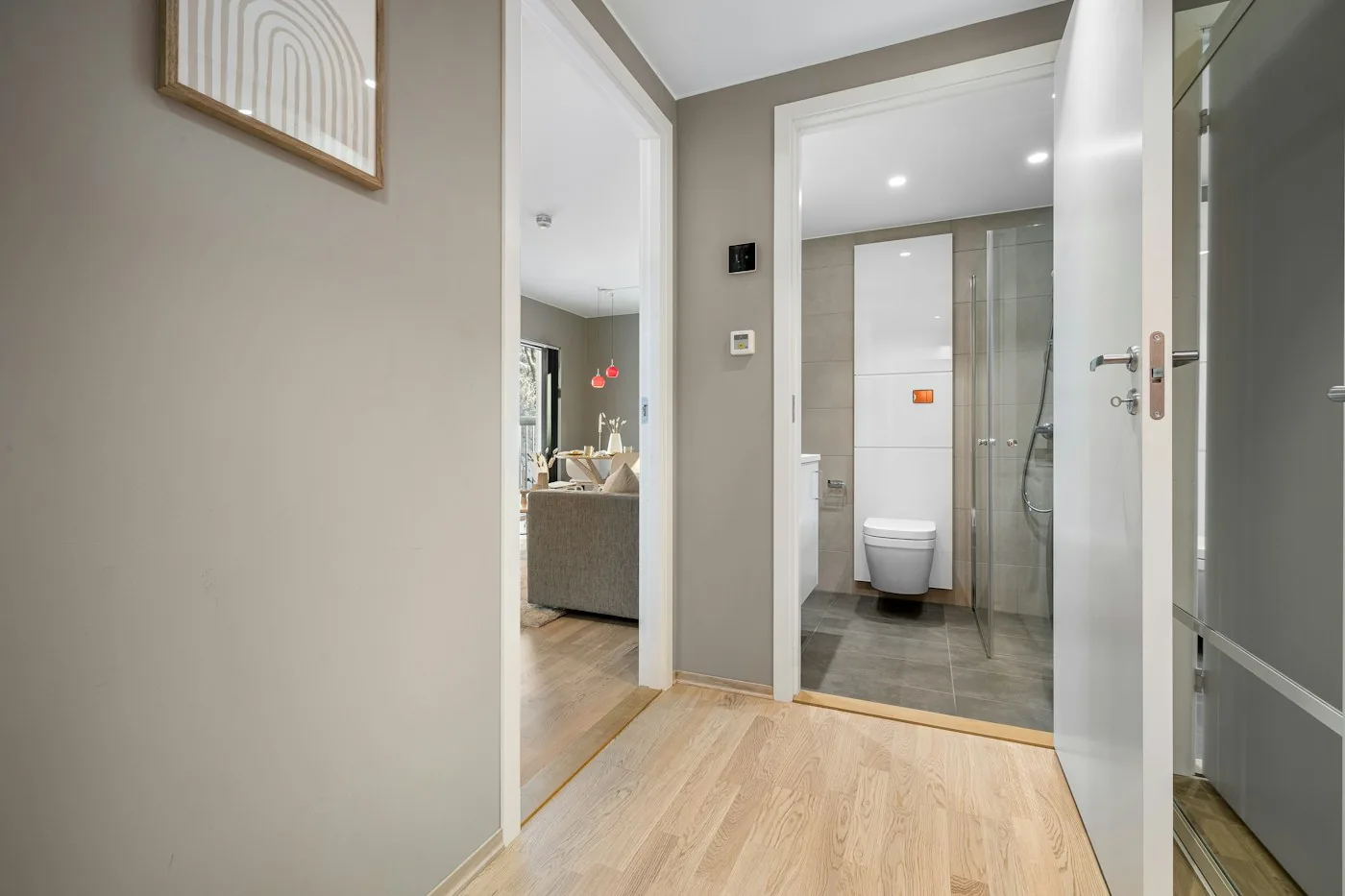
Avoid placing an unsecured screen where it narrows the bedroom-to-bathroom journey. A night-time route needs to work when people are tired, doors are open and the room is not arranged for a photograph.
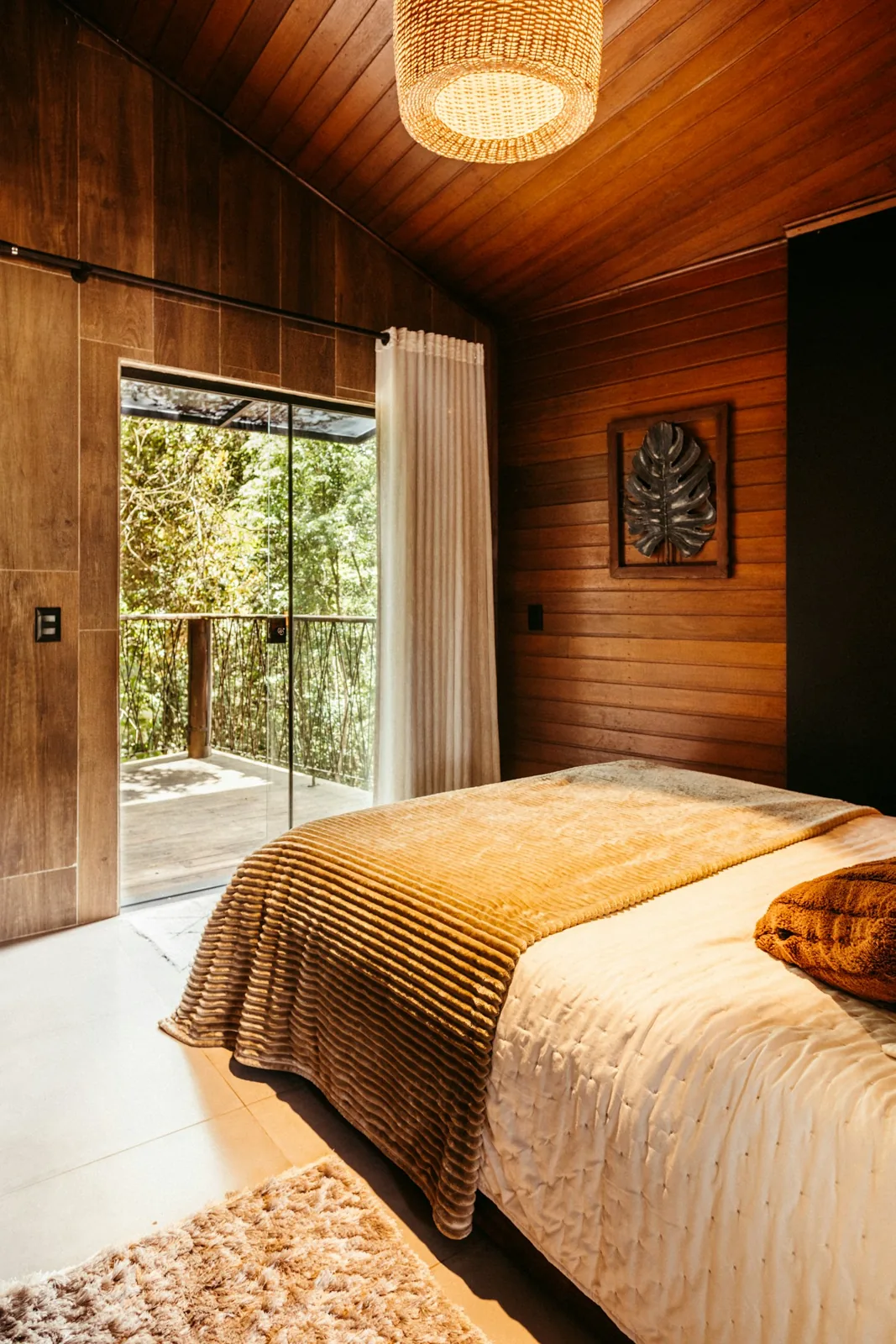
Keep Aligned Openings Usable
A front door, interior doorway and rear opening may form a long straight view. Feng shui explanations often describe a fast path for qi. For a practical assessment, ask whether the line causes an exposed seating position, glare, a draft or an inconvenient route. A view through the house is not itself proof that money or energy is being lost.
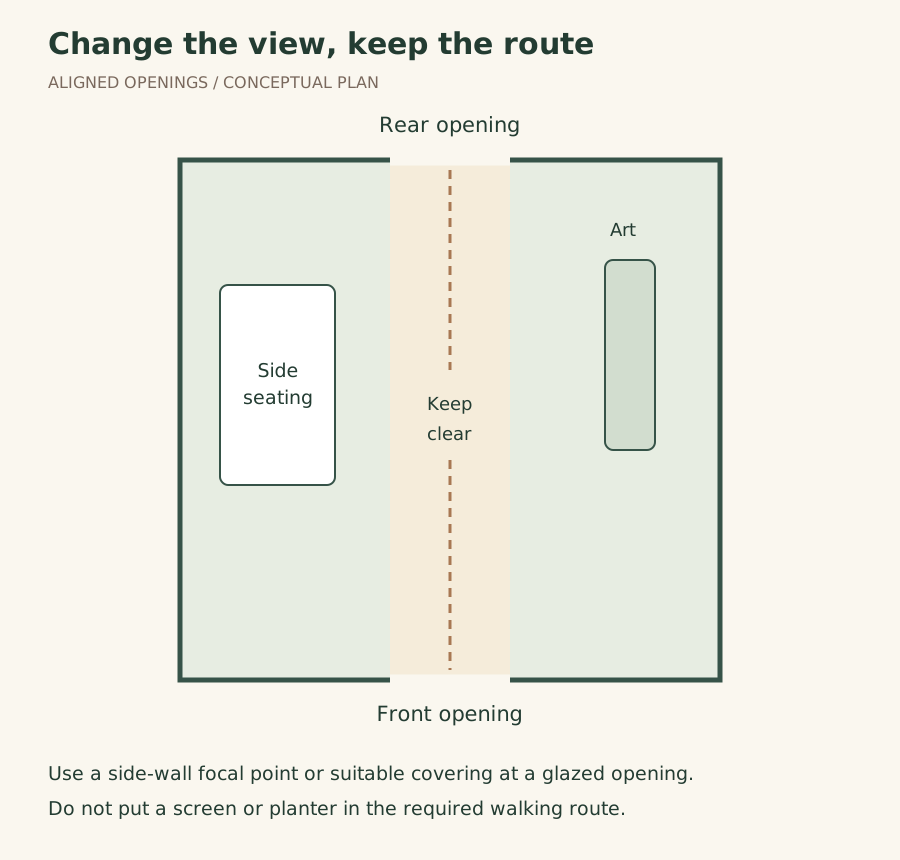
Turn a movable chair to form a conversation group, place artwork on a side wall or use suitable coverings at a glazed opening. These choices can give the eye something else to notice without forcing people around a floor obstacle. A mirror changes a reflection, not the width of the passage or the physical connection between doors.
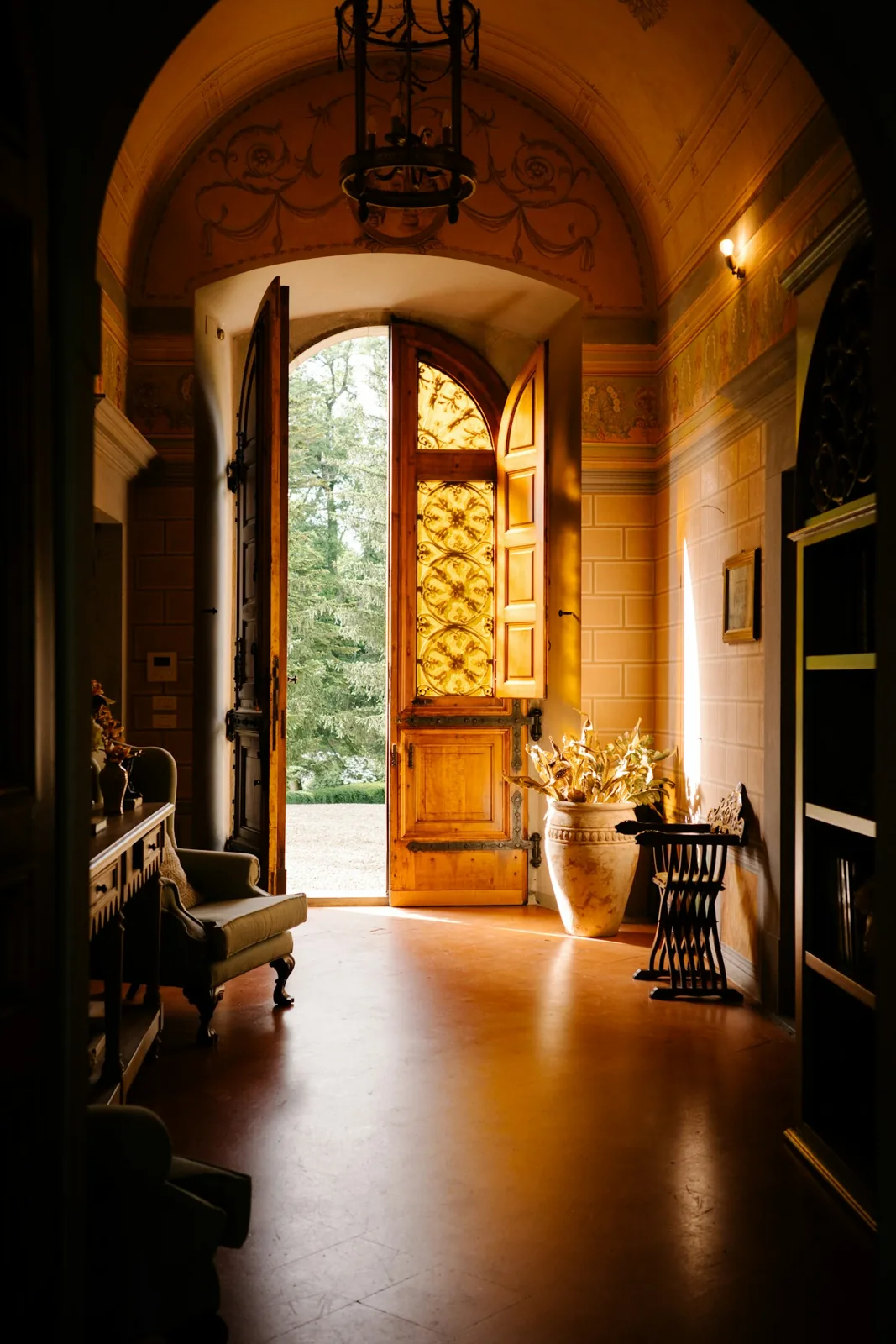
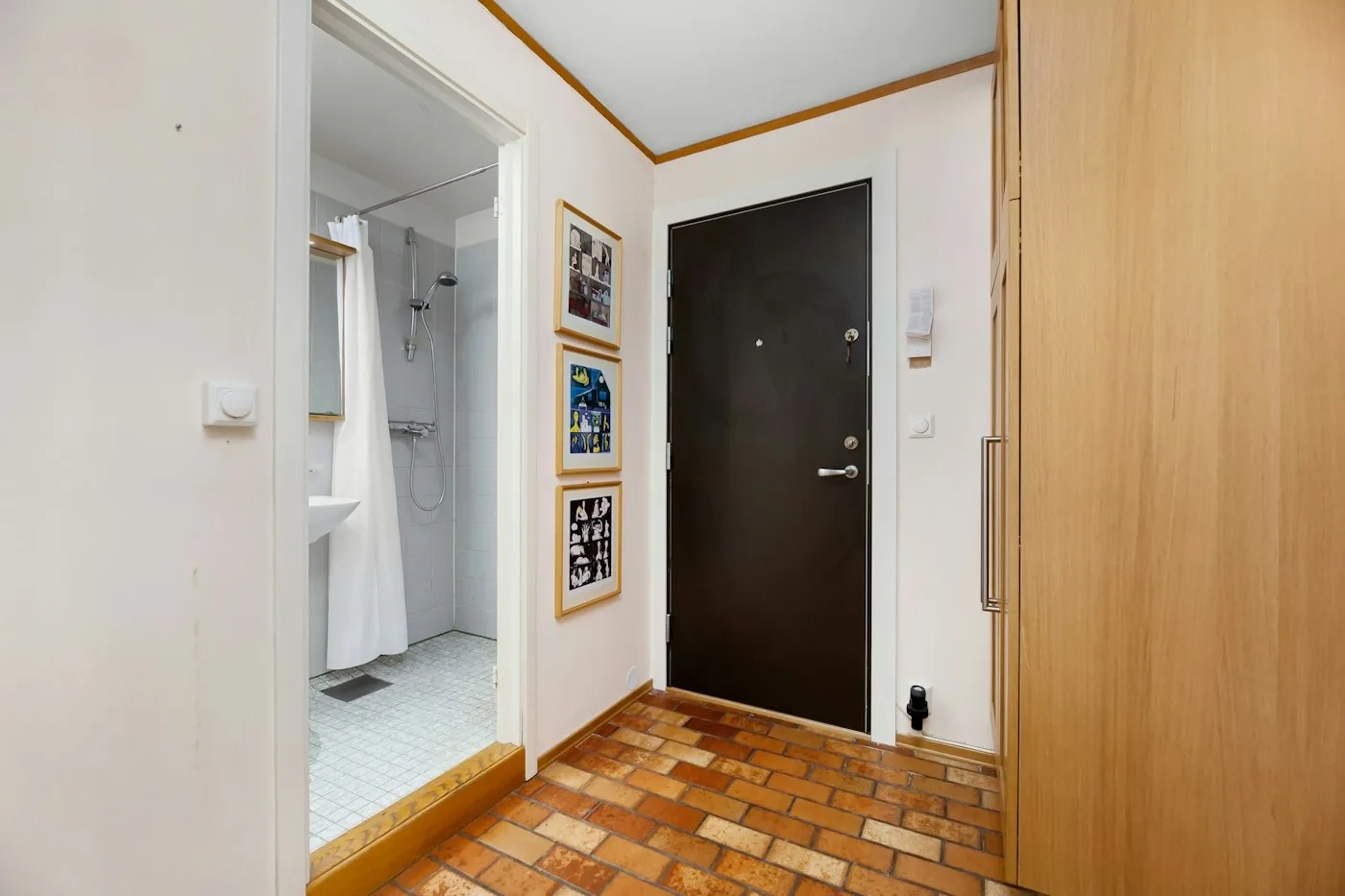
For the larger relationship between rooms, use the apartment walkthrough or floor-plan guide. This is where door placement joins furniture planning, rather than becoming a separate list of symbolic cures.
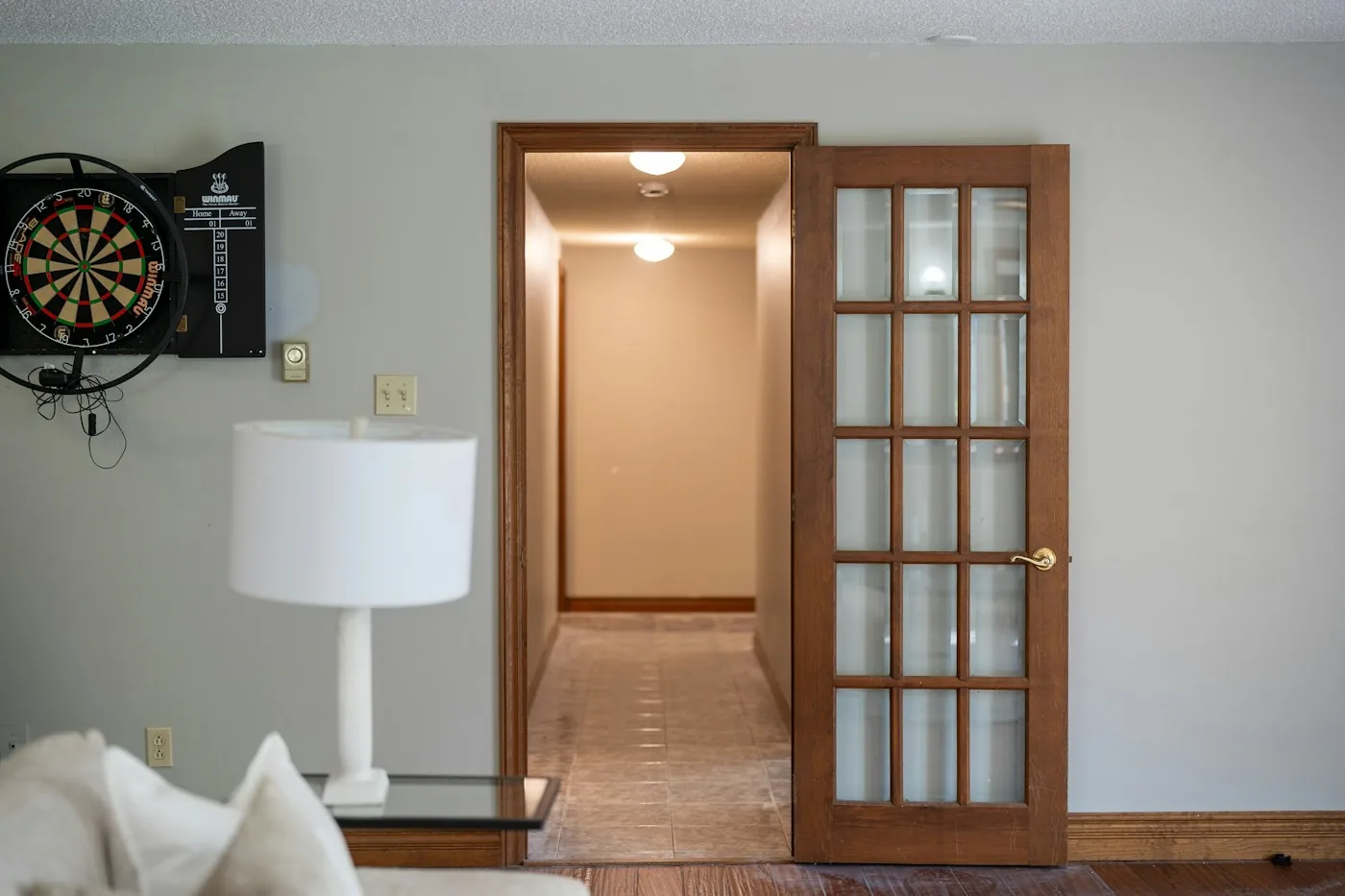
Work With Fixed Doors in Rentals
Change what is yours to change first. Move bags, rotate a small piece of furniture, edit the landing zone and agree how private doors are used. Record a sticking latch, damaged handle or malfunctioning closer for the owner or building manager. Do not plane, drill, wedge or modify a door merely because the plan would look neater.
Shared apartment corridors belong to a managed circulation system. Keep any screen, plant stand or shoe storage inside the area where it is permitted and usable. A neighboring unit directly opposite yours is not a reason to place an obstacle outside either entrance.
The U.S. Fire Administration's home-escape guidance emphasizes planning escape routes and keeping them usable. Follow the guidance for your own building. A feng shui sketch is not an evacuation plan, and a decorative remedy should not compromise a door's intended operation.
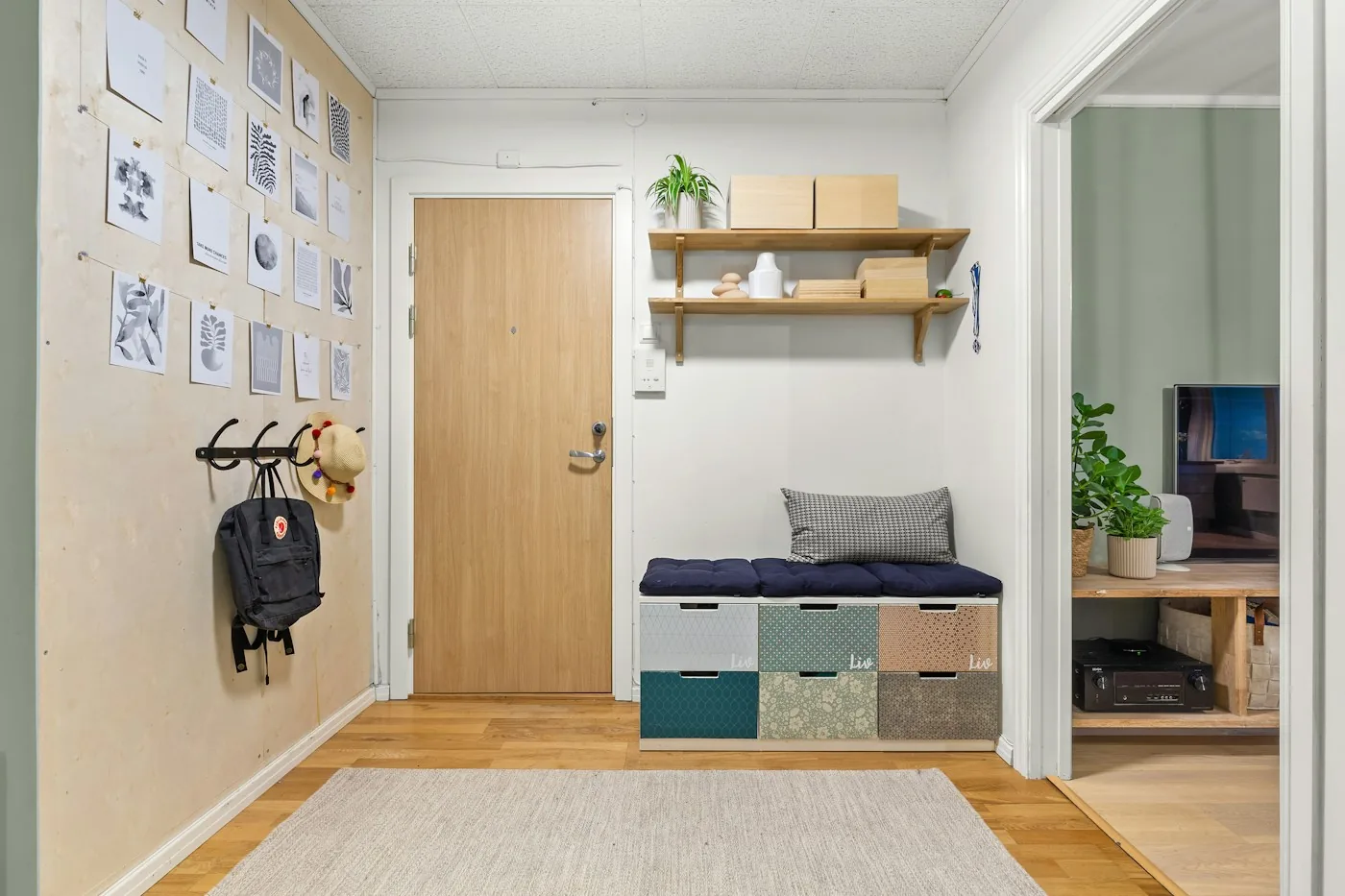
Test the Doors During an Ordinary Day
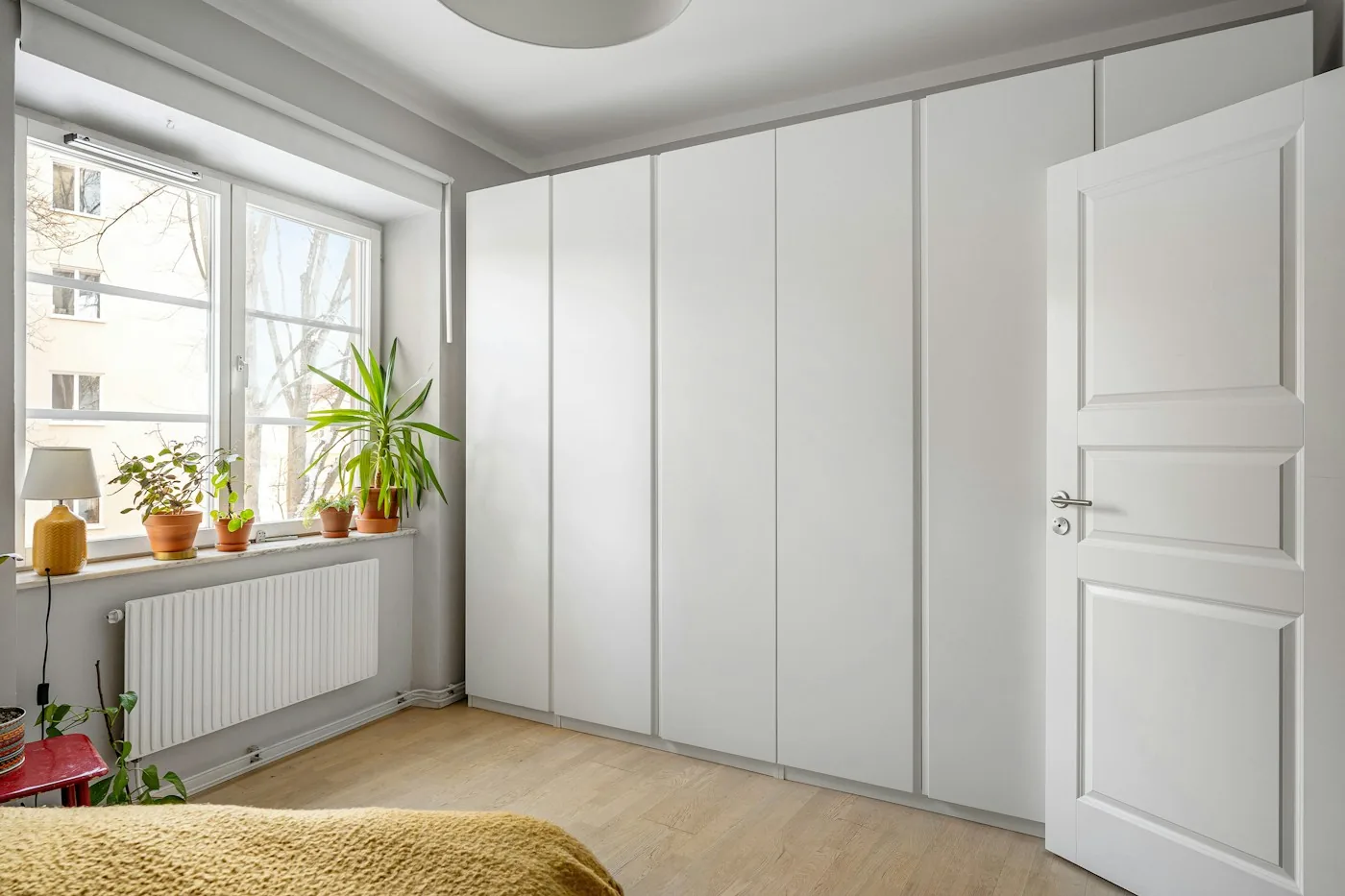
Check the plan in use, not just on paper. Enter with shopping, open the wardrobe, pass someone in the hallway and walk to the bathroom after dark. Ask the people who use each room which view or movement bothers them. Keep the change that improves that task without creating a different obstruction.
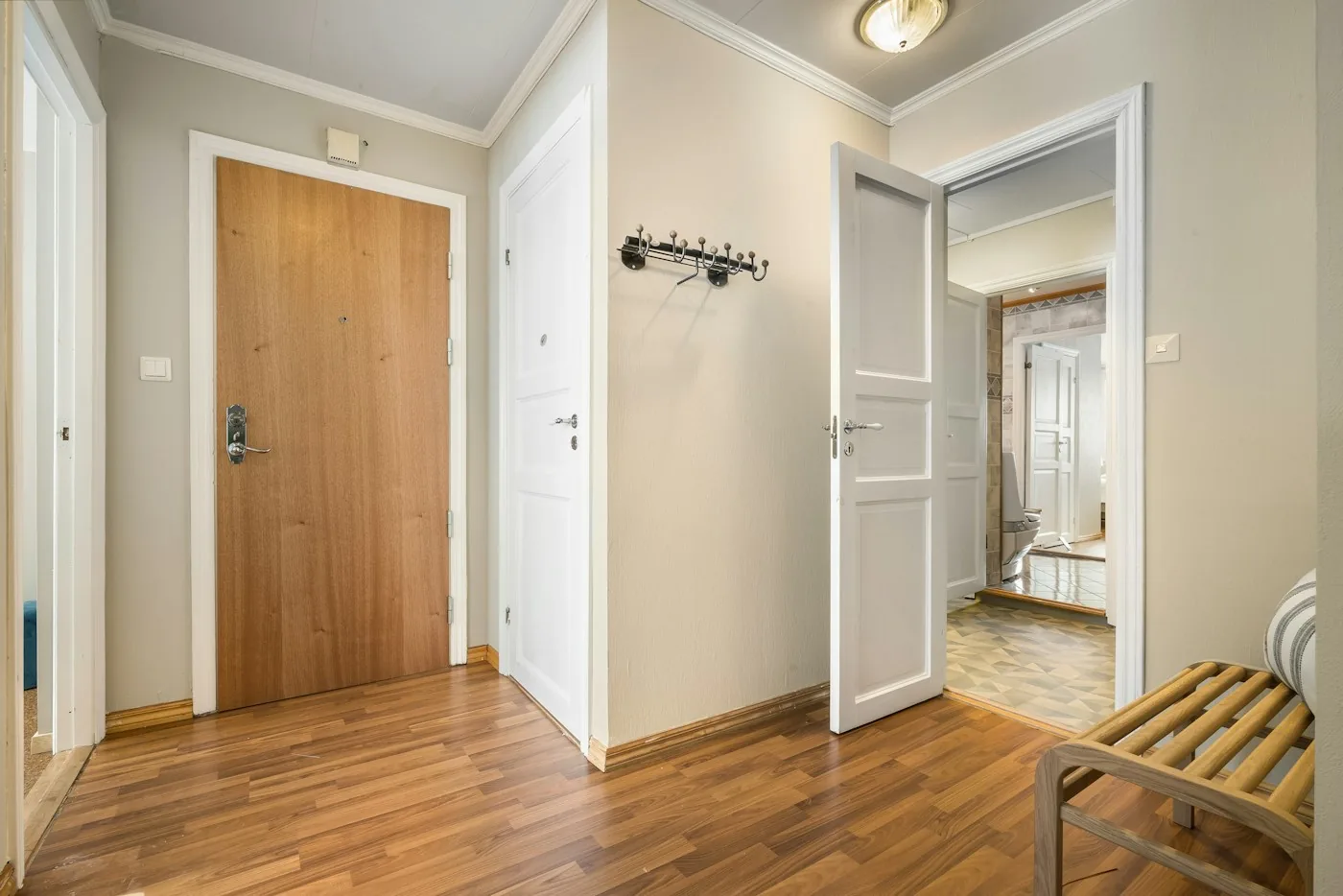
Use this short sequence before buying anything:
- Mark the doors and all moving furniture on a simple drawing.
- Check collisions and the narrowest operating position.
- Look from each doorway toward beds, seats and dressing areas.
- Try one movable change or agreed privacy routine.
- Retest with the real users and raise any hardware problem through maintenance.
A successful door arrangement lets people enter, close the room when needed and reach the next activity comfortably. Symbolic preferences can sit within those working conditions. They should not be the reason to remove a functioning door or force an obstructive piece into a passage.