



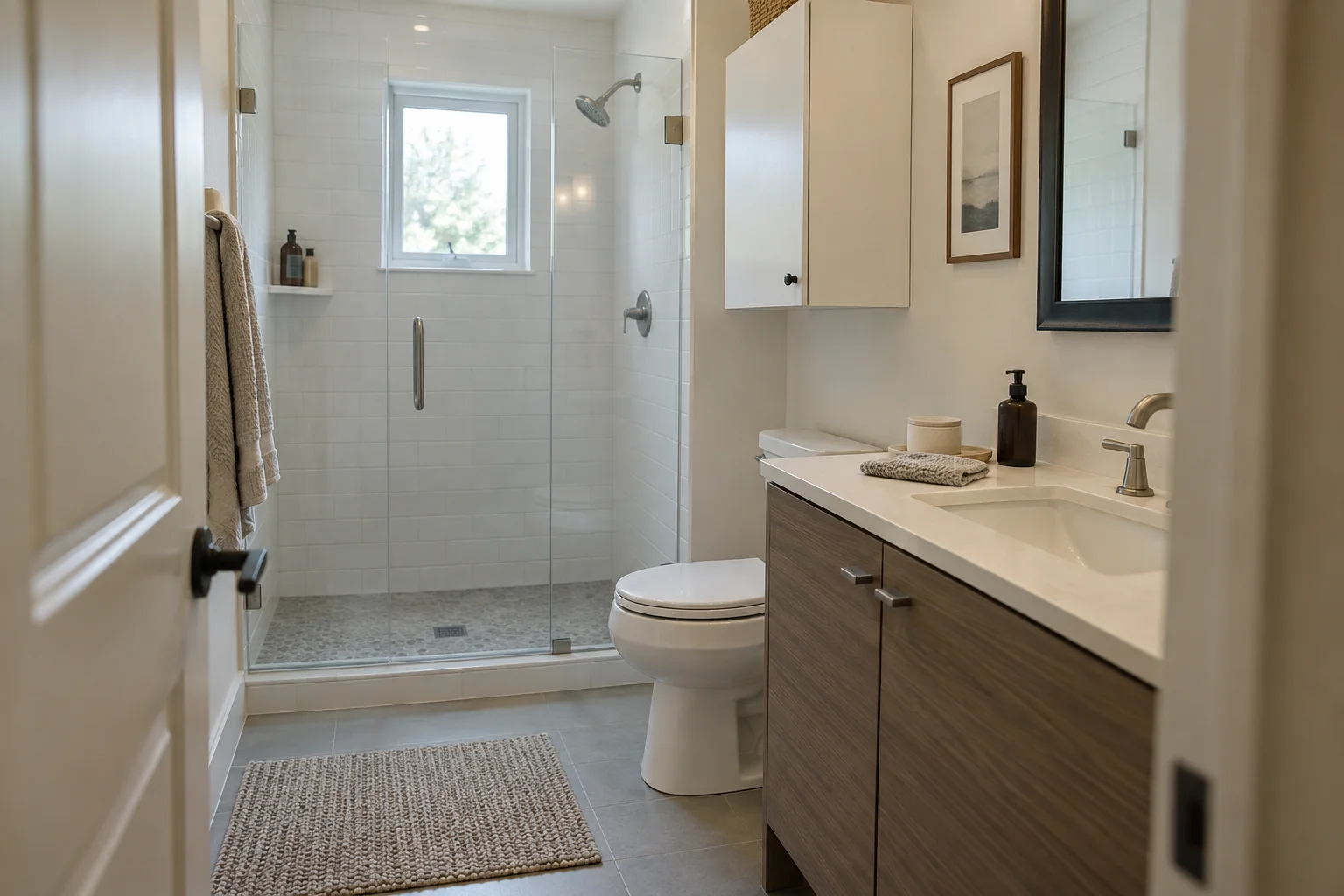
Quick Answer
A good feng shui bathroom starts with a dry, functional room: repair leaks, manage steam, keep the walking space clear and give daily items accessible storage. Privacy, comfortable light and a calm finish come next. You do not need to move plumbing or buy a symbolic cure because a bathroom falls in a particular part of a floor plan.
This guide is for a bathroom you already have, including a small rental, a windowless room or an awkward door. It focuses on what you can observe and change without making the room harder to use. For a wider view of how its doorway relates to the home, see our feng shui floor plan guide. Color choices and plant species have their own guides, so they do not take over this one.
Start With the Problem You Can Actually See
Choose the first bathroom change by the condition you notice
Scroll sideways to compare all columns.
| What you notice | First useful change | Do not mistake this for |
|---|---|---|
| Mirror stays fogged, walls stay damp | Check the fan or window ventilation and dry wet surfaces. | A problem solved by a scented candle or plant. |
| Water around a fixture or stained grout | Find and repair the source, then clean and dry affected materials. | A color or bagua adjustment. |
| Door hits storage or a hamper | Remove the obstruction and check the full door swing. | A need to relocate the toilet. |
| Sink is crowded every morning | Give daily items one reachable place and put backups away. | A need for more decorative trays. |
| Room feels exposed from a hall or bedroom | Improve privacy and the first sightline without blocking use. | Proof that the home's layout is unlucky. |
Walk through one ordinary morning: open the door fully, reach the sink, use the shower, dry off and leave. If a shelf, bin, stool or plant interrupts any step, move that object before adding anything new. This simple test is more useful than a universal list of forbidden directions.
Control Moisture Before Styling the Room
Bathrooms get wet. Persistent dampness is different from the brief steam of a shower. The US Environmental Protection Agency's bathroom guidance recommends improving ventilation and cleaning when mold repeatedly appears in a shower or bathroom. A fan that sounds busy but does not remove moisture deserves inspection. In a rental, report a failing fan or leak to the person responsible for repairs rather than trying to hide the evidence.
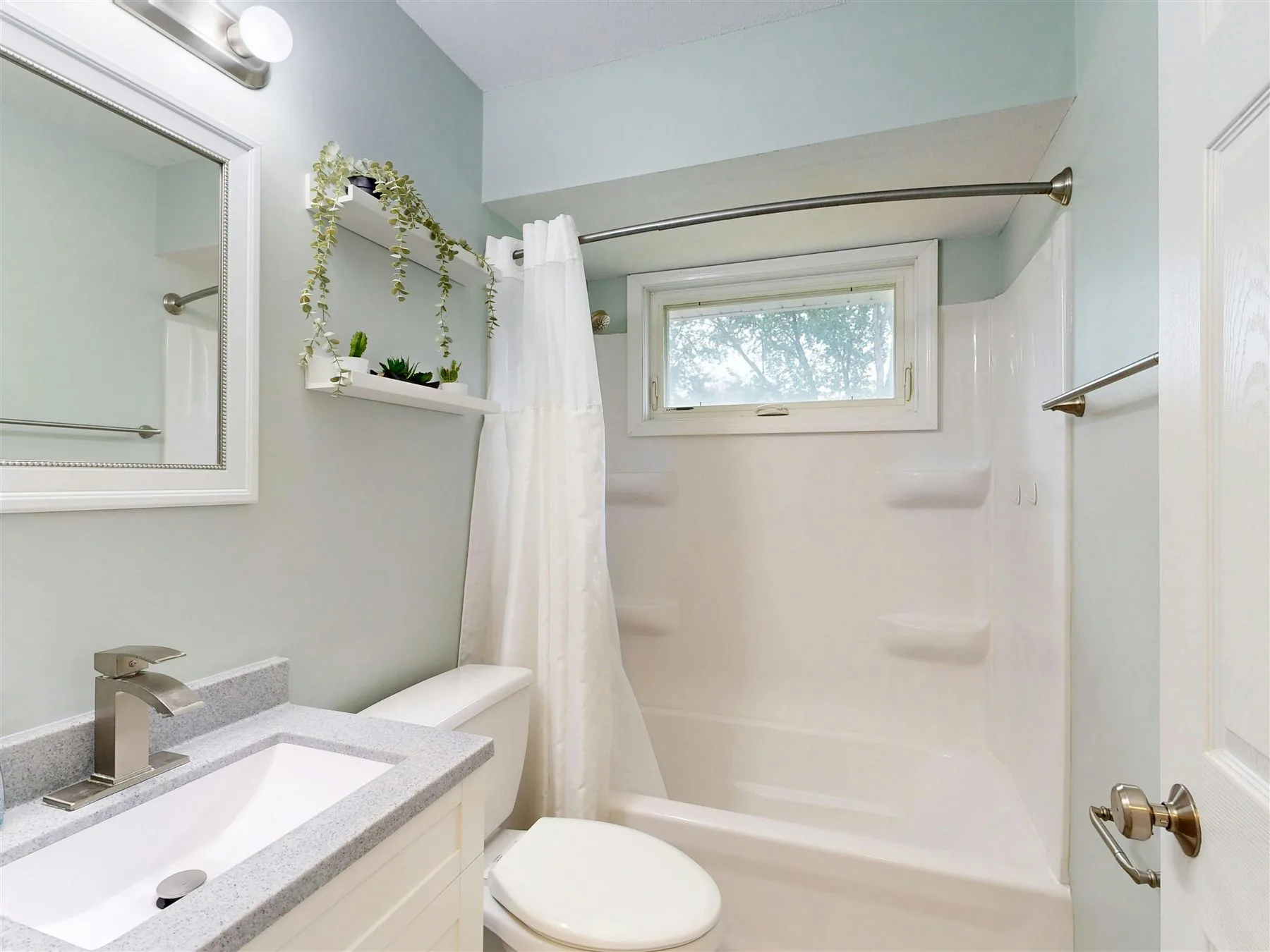
Check around the toilet base, under the basin, at shower seals and beside the tub for fresh moisture or discoloration. Repair the cause promptly. Dry a wet mat where air can reach it, and keep textiles away from a wall that repeatedly stays damp. If water has entered a wall or persistent mold keeps returning, a decorative refresh is not the fix. Seek appropriate maintenance help.
Do not seal the room so tightly for a symbolic "closed door" rule that it cannot dry. Close the door for privacy when needed, while following the ventilation arrangement that actually works in your home. A toilet lid can be closed as a normal household habit, but it does not replace cleaning, leak repair or airflow.
Work With an Awkward Door, Toilet or Shower
A bathroom facing the entrance or bedroom may feel too visible. Before considering construction, stand where you usually enter the home or lie in bed and note what is really in view. Sometimes closing the bathroom door when privacy matters is enough. In other homes, the first view can be softened with a tidy vanity, an ordinary door finish or a better-lit hall. Never add a screen where it blocks a fixture, ventilation path or accessible route.
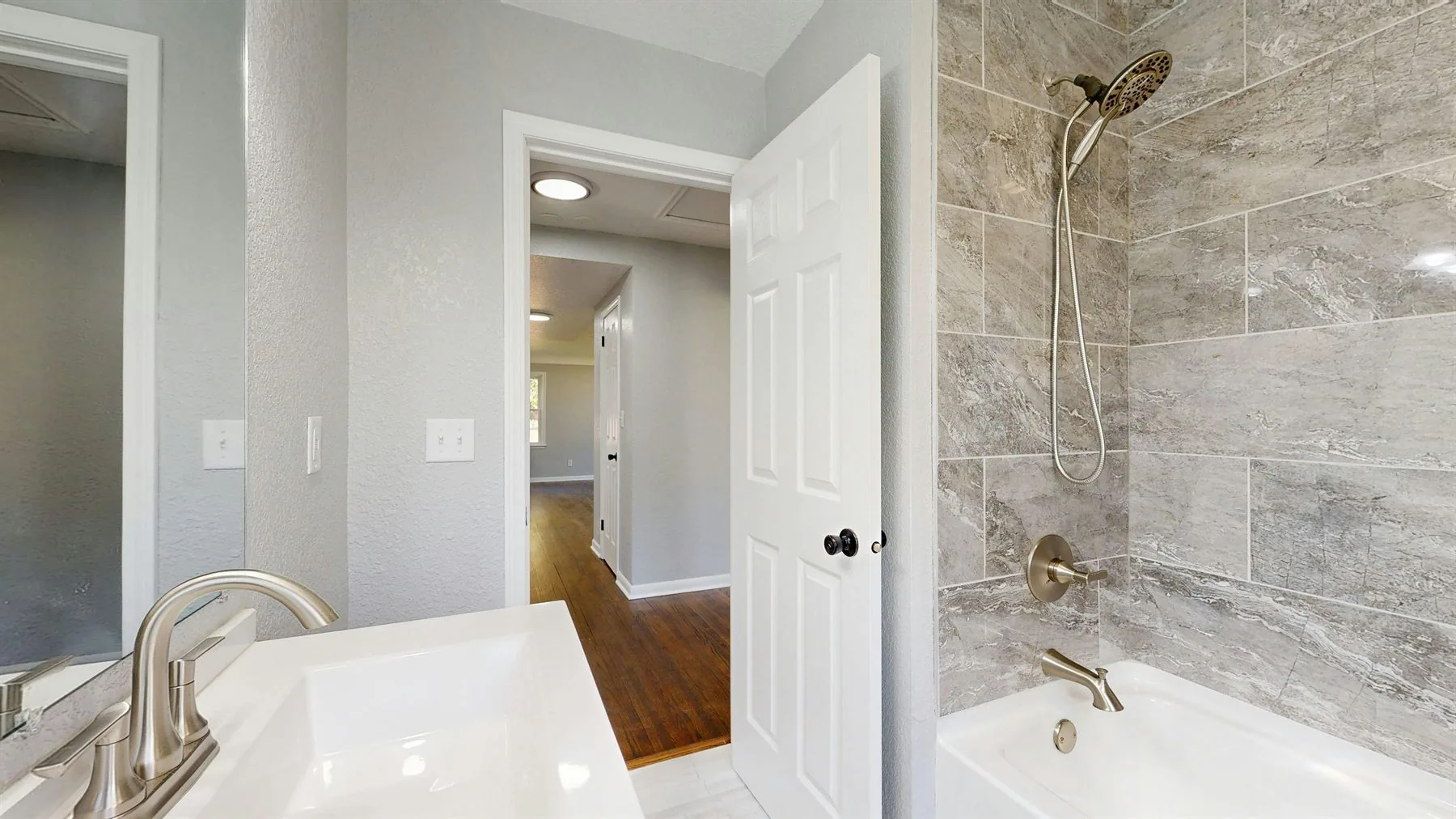
If the toilet is immediately beside the door, leave room for a person to turn and sit comfortably. If the shower door opens into a narrow path, keep the floor outside it clear and use a mat that does not catch the door. If a cabinet prevents either door from opening fully, choose slimmer storage rather than forcing the movement. The point is to make the room easier to enter and leave, not to achieve an abstract perfect floor plan.
Some feng shui traditions attach meaning to a bathroom in a wealth area or near the center of a home. The bagua map guide explains why different mapping methods can give different answers. Your fixed plumbing does not predict your finances. Start with the room's condition and the parts you can improve responsibly.
Give Each Surface a Job
Keep the sink edge available for washing and grooming. Store the items used every day within easy reach; put backups, extra towels and cleaning supplies in a closed cabinet or another appropriate place. A shower ledge needs enough open space to rinse and dry. That is usually calmer and more sanitary than covering every edge with matching jars.
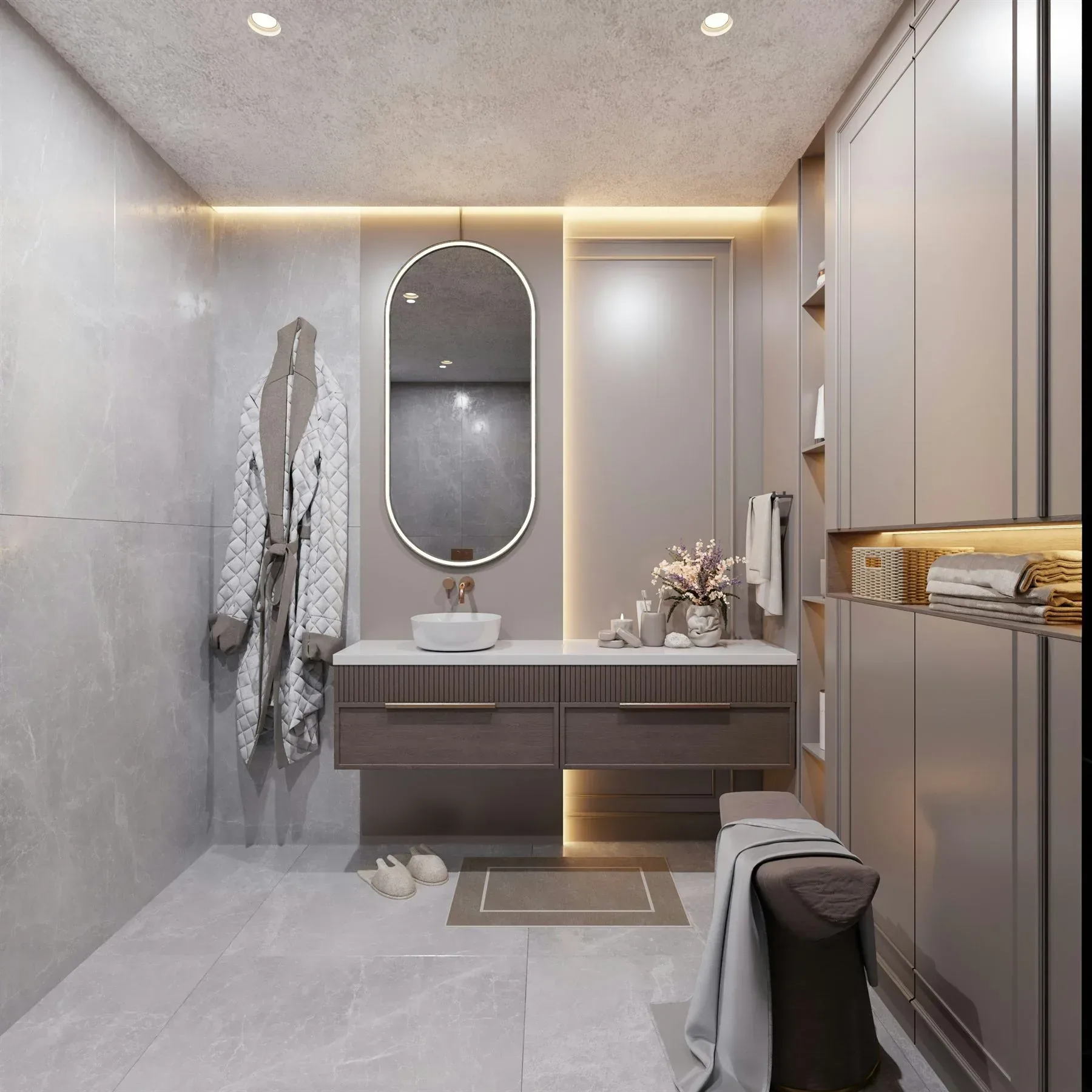
In a rental, start with a removable over-door organizer only if it does not interfere with closing, a narrow freestanding unit that cannot tip, or a cabinet insert. Follow the product's load limits. Keep medicines and cleaning products secure from children and pets, and do not put electrical devices where water can reach them. If storage takes away the space needed to use the room, own fewer exposed items instead of adding another shelf.
Make Light and Mirrors Useful
The best bathroom lighting lets you see the sink and floor clearly without harsh glare in the mirror. Clean the mirror and light cover before buying another lamp. If the room has no daylight, choose suitable fixed lighting and make sure any electrical change follows local rules. A dim decorative bulb cannot compensate for poor task lighting or an unsafe step out of the bath.
Place a mirror where a person can use it comfortably and where it reflects a reasonably tidy view. Avoid a mirror that is too narrow for the vanity or one that makes a cramped corner visually busier. Our mirror placement guide covers reflection choices across rooms; the bathroom's first requirement is a usable grooming mirror.
Choose Color and Plants Only After the Basics Work
Use existing tile, countertop and fixture undertones as your starting palette. A washable curtain, towels or a small painted area can add warmth without fighting permanent surfaces. The bathroom color guide compares specific palettes and lighting conditions. You do not need to repaint a serviceable bathroom because a compass chart recommends a different element.
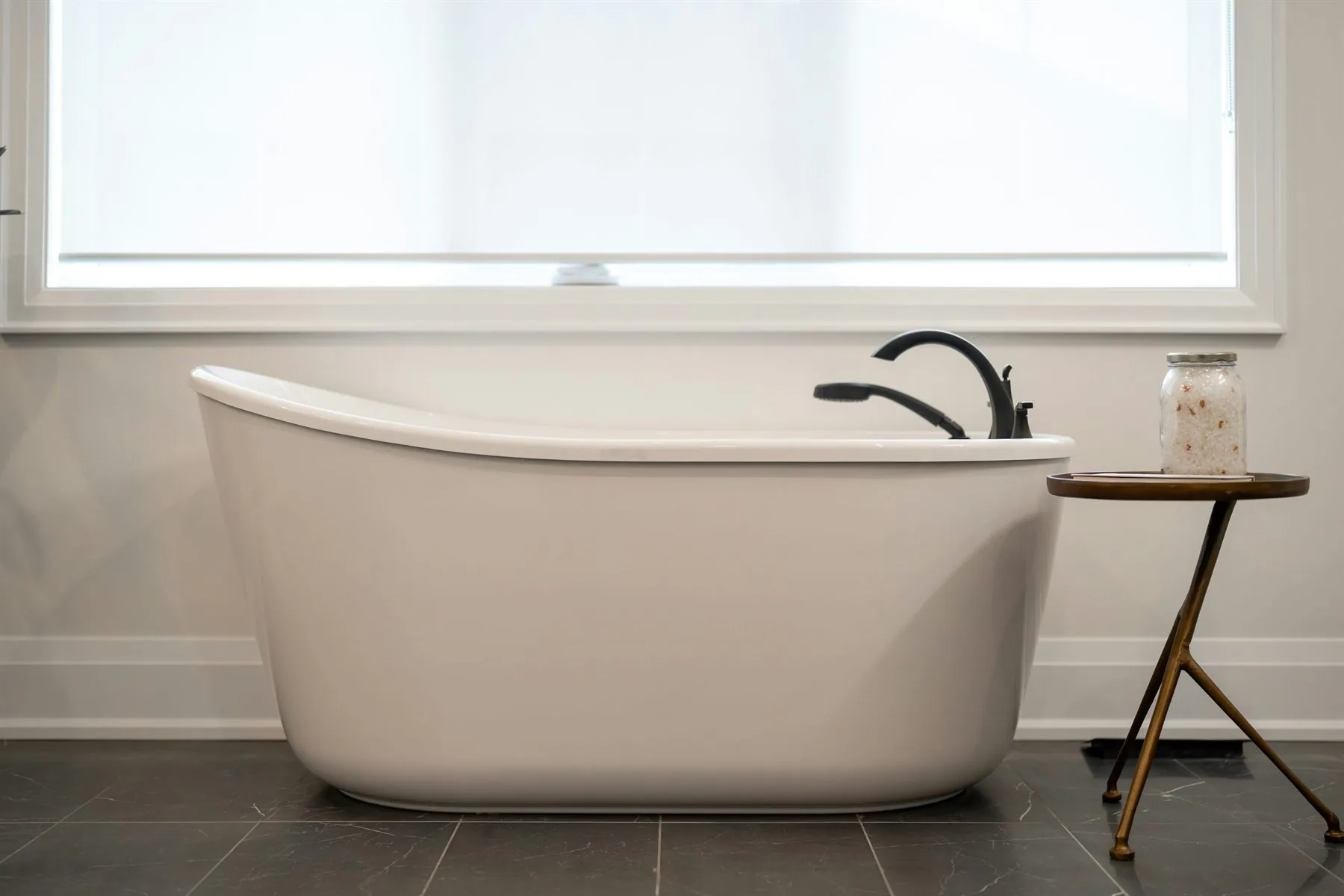
A live plant belongs here only if the available light can support it and the pot does not block the sink, window or cleaning route. Humidity is not a substitute for light. For species, pets and a windowless bathroom, use the bathroom plants guide or the broader windowless-room plant guide. It is fine to leave the room plant-free.
A Fifteen-Minute Reset for a Small Bathroom
- Remove products you do not use and clear the sink edge.
- Check under the basin and around fixtures for fresh moisture.
- Wash or dry the mat and leave the shower opening clear.
- Run the fan or use the available window ventilation after washing.
- Put only daily items back within reach, with the door still opening fully.
Try the room for a week before buying storage or decor. If the floor still gets wet or the mirror remains fogged for a long time, investigate that condition first. If the room works but feels visually sharp, then adjust light, towels or a small color accent. A useful bathroom improves through a sequence of observable changes, not one supposed cure.