



Quick Answer
Yes, feng shui can affect sleep because bedrooms affect the nervous system. A bed that feels exposed, harsh light at night, mirror activity, clutter near sleep, or a room trying to function as office and bedroom at the same time can all make rest feel harder.
Sleep is rarely disturbed by one symbolic mistake alone. It is the combined feeling of the room that matters.
This is why feng shui can be useful here. It gives a simple way to read what the bedroom is communicating: does the room feel protected, dim enough, quiet enough, and visually settled enough for sleep? Or does it still feel alert, bright, cluttered, and mixed-use? Feng shui bedroom tips and feng shui bedroom mistakes go broader if you want the full bedroom reset.
Why Feng Shui Can Affect Sleep
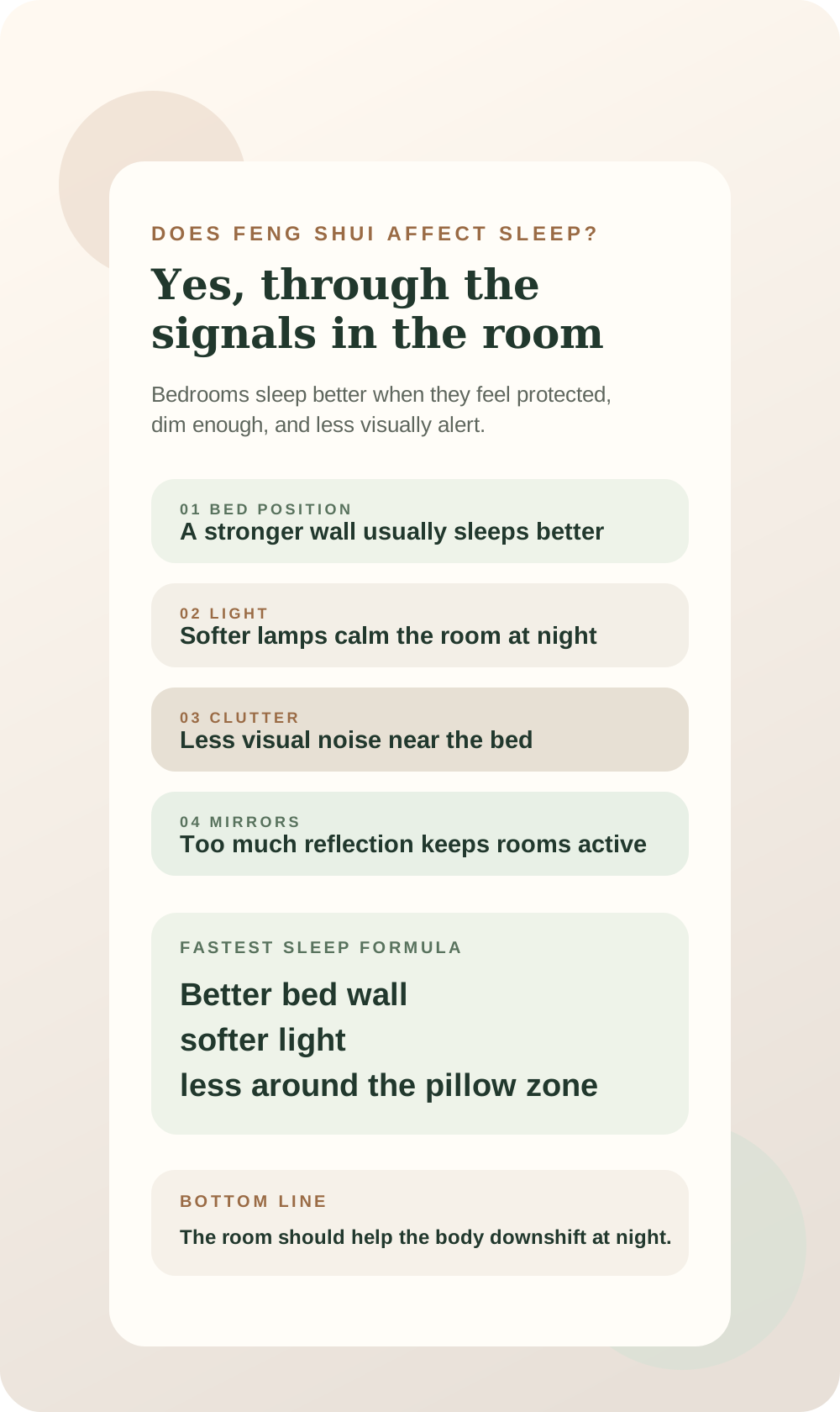
Bedrooms send constant signals. The bed position tells the body whether the room feels protected or exposed. Light tells the brain whether it is time to stay alert or slow down. Clutter near the bed keeps unfinished decisions and visual noise active. Mirrors can keep the room feeling more awake. Work zones, screens, or heavy storage can make the bedroom feel like it is still on duty instead of in recovery mode.
What Is Supported and What Is More Belief-Based
The honest answer is mixed. Feng shui ideas about qi, symbolism, and exact directional formulas are belief-based. But many bedroom recommendations overlap with ordinary sleep-environment logic: a darker room, calmer light, less visual stimulation, fewer screens, and a bed that does not feel exposed can all make the room easier to settle into.
| Bedroom factor | Why it can affect sleep | Feng shui translation |
|---|---|---|
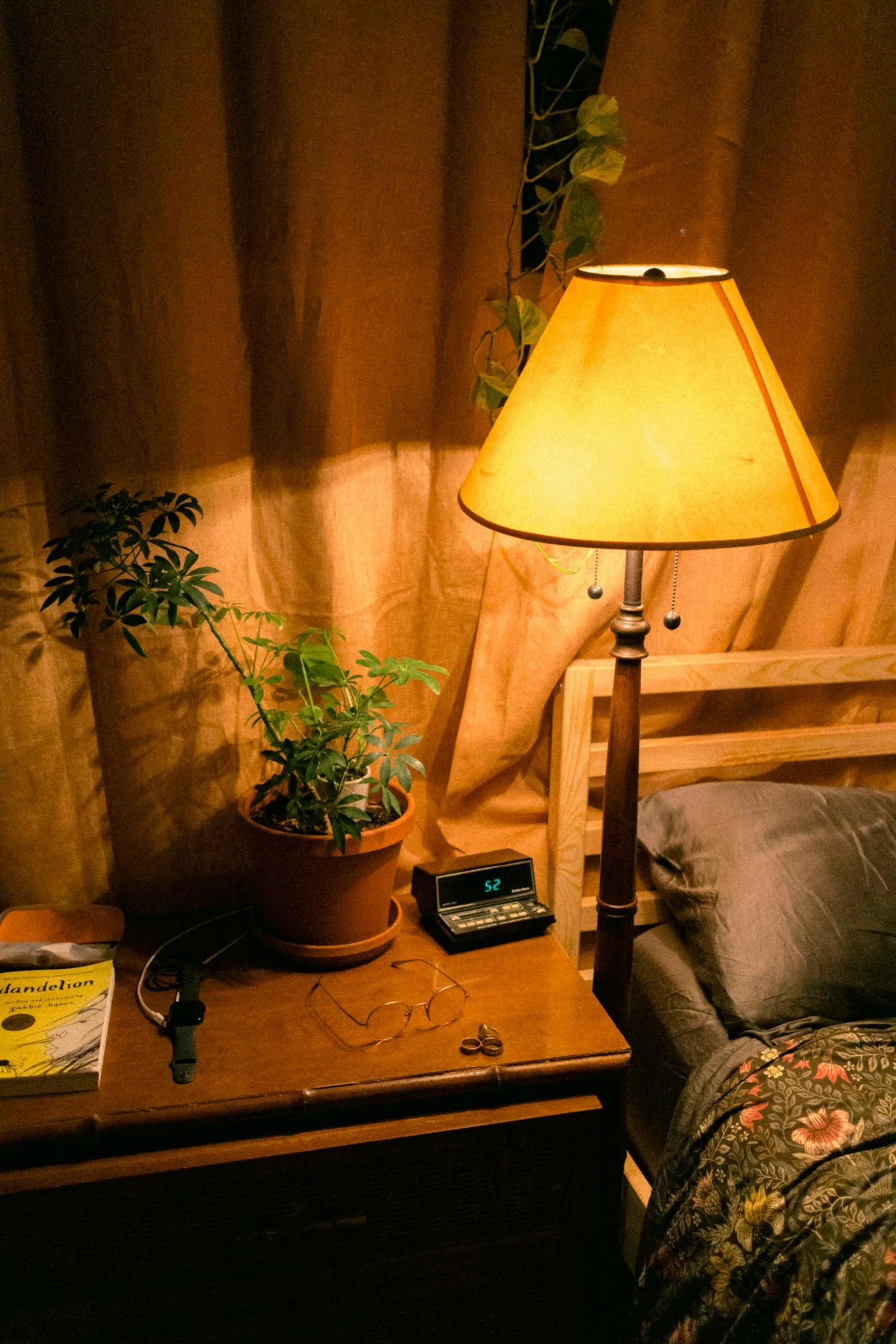
| Light | Bright or cool light keeps the room feeling alert at night. | Use warm lamps, dimmer lighting, and calmer evening cues. |
| Clutter | Visible mess keeps the room mentally busier than it needs to be. | Keep the bed area clear and avoid storage under the bed when possible. |
| Bed exposure | A bed in a harsh traffic line can make the room feel less protected. | Use the strongest available wall and keep the door visible without direct alignment. |
| Mirrors and screens | Reflections and screens add visual activity when the room should quiet down. | Move mirrors away from direct bed reflection and keep screens visually secondary. |
The Bedroom Changes That Affect Sleep Most
These are the moves that matter more than any single lucky object.
A stronger bed position
Lower visual noise near sleep
Softer nighttime light
Less mirror activity
Clearer room purpose
This does not mean feng shui replaces sleep hygiene or medical care. It means the bedroom can either support those efforts or work against them. The room should help the body downshift. If it still feels bright, exposed, cluttered, or multifunctional, sleep often reflects that environment.
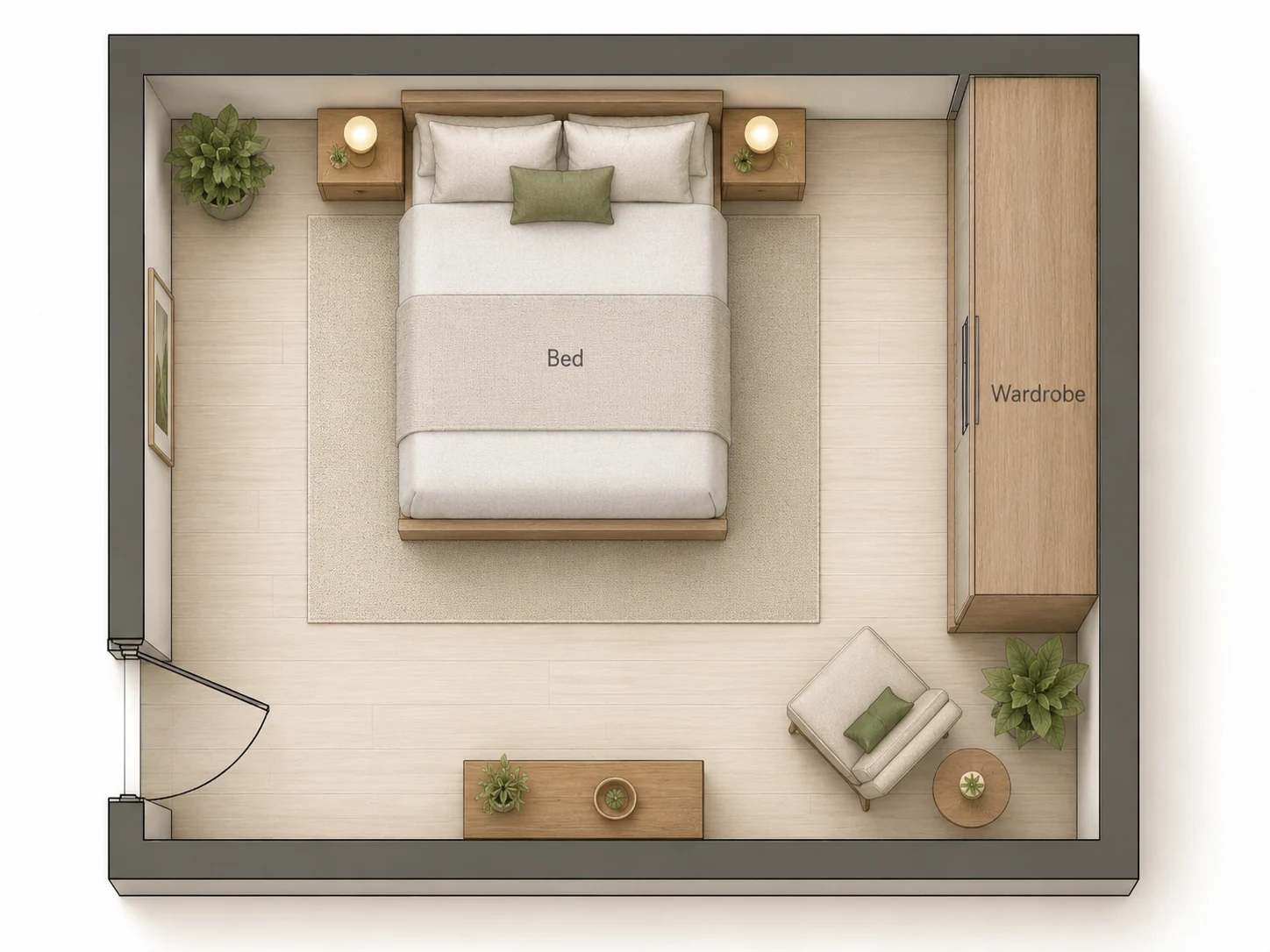
What Hurts Sleep in Bedroom Feng Shui
What helps
- +Give the bed the strongest available position in the room.
- +Use softer evening light and calmer color around the bed.
- +Keep surfaces near sleep edited and easy to reset.
- +Let the bedroom read as rest first and everything else second.
What weakens sleep
- -Placing the bed where it feels exposed to too much direct movement.
- -Using large mirrors that keep the bed visually active at night.
- -Mixing a strong work zone into the sleep area if it can be avoided.
- -Keeping clutter, laundry, and unresolved visual noise around the bed.
The fastest sleep test
If the room feels easier to exhale in after the change, sleep feng shui is probably moving in the right direction.
A Simple Feng Shui Sleep Reset for Tonight
If you want to test the idea without redesigning the whole bedroom, start with one evening reset. The point is to make the room feel less like a task zone and more like a place that is allowed to shut down.
| Reset step | What to do | Why it helps |
|---|---|---|
| Clear the bedside edge | Remove cups, receipts, chargers, laundry, and random objects near the pillow. | The first and last view of the day becomes calmer. |
| Soften the light | Use one warm lamp instead of overhead glare for the last part of the evening. | The room shifts out of daytime mode. |
| Quiet the mirror or screen | Close the laptop, cover the TV glow, or move a mirror that reflects the bed. | The sleep zone feels less visually active. |
| Check the bed feeling | Notice whether the bed feels supported, exposed, cramped, or in the room's traffic line. | It gives you the next layout fix if the room still feels unsettled. |
Frequently Asked Questions
Does feng shui really affect sleep?
What feng shui changes help sleep fastest?
Can a bad bedroom layout disturb sleep?
Do mirrors affect sleep in feng shui?
The Bottom Line
Yes, feng shui can affect sleep because bedrooms affect how safe, calm, and downregulated the body feels. The strongest effects come from layout, light, clutter, and reducing bedroom overstimulation.
If the room feels softer, quieter, and more protected after a change, that is the result to trust.