



Quick Answer
The most common feng shui bedroom mistakes are bed-related first and clutter-related second. If the bed feels exposed, the mirror reflects too much activity, or the room is trying to operate as an office, storage room, and bedroom at the same time, rest gets weaker fast.
Bedroom feng shui tends to get overcomplicated online, but most of the important guidance points in one direction. The room should help your nervous system settle. It should not feel watchful, crowded, or overly active. That is why bed placement matters so much, and why visual noise around the bed matters almost as much.
If your bedroom feels harder to sleep in than it should, the fix is rarely one lucky object. It is more often a layout improvement, a simplification, or a better sense of what belongs in the room and what does not.
The Bedroom Mistakes That Make Rest Harder
What to watch for first
These are the patterns that weaken the room most often.
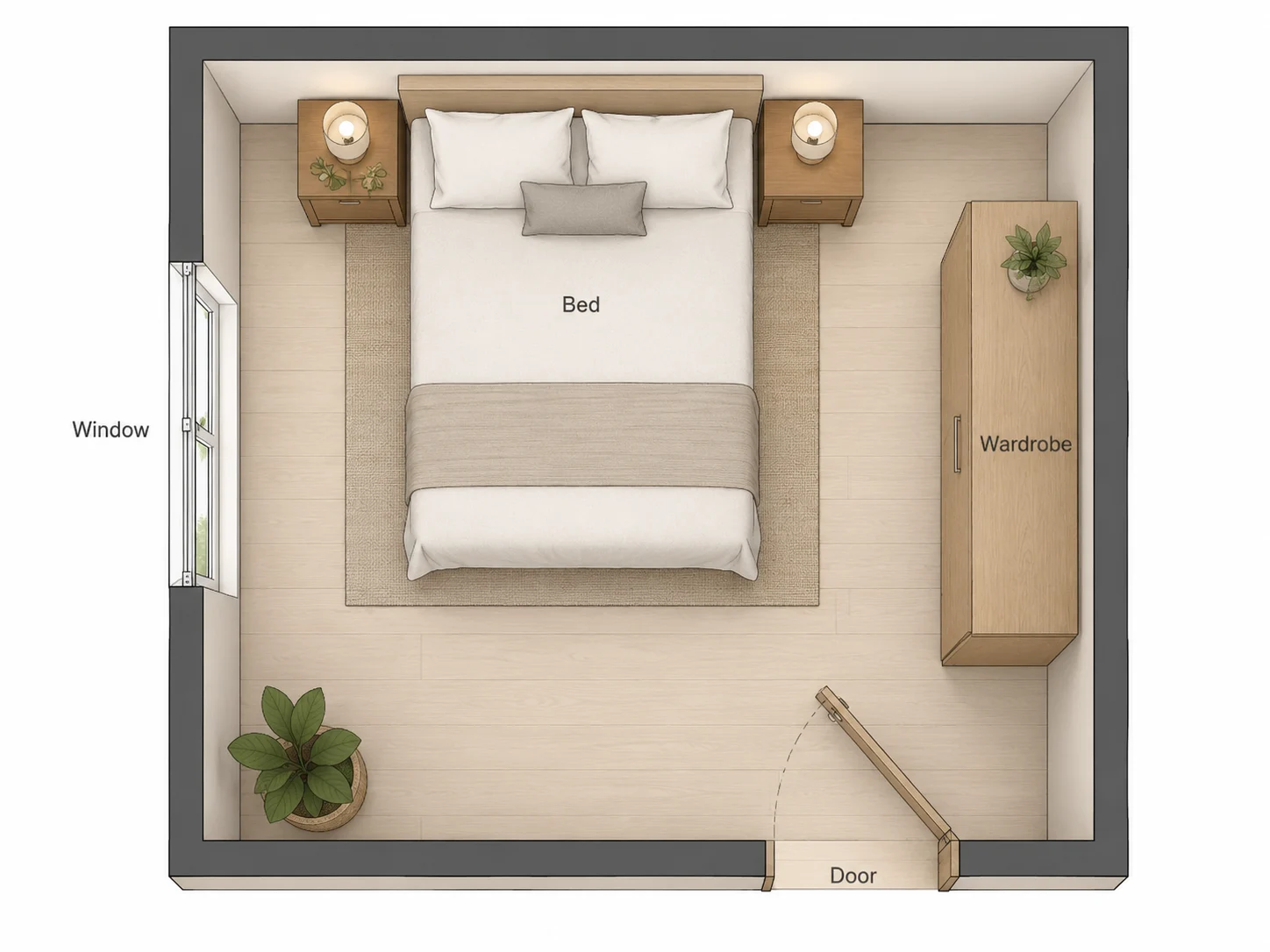
A bed placed too directly in line with the door
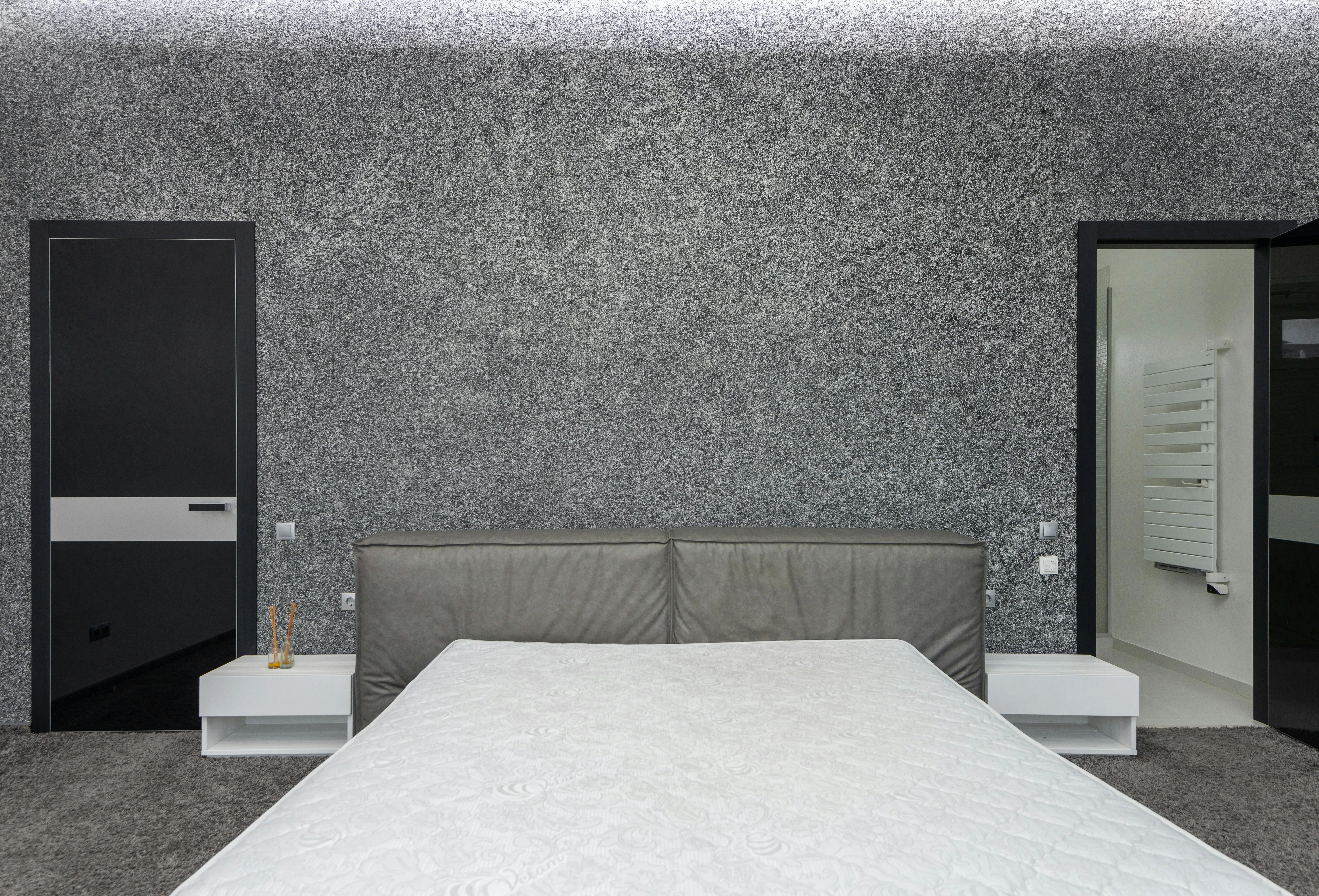
A weak bed wall or unsupported head area
Mirrors reflecting the bed
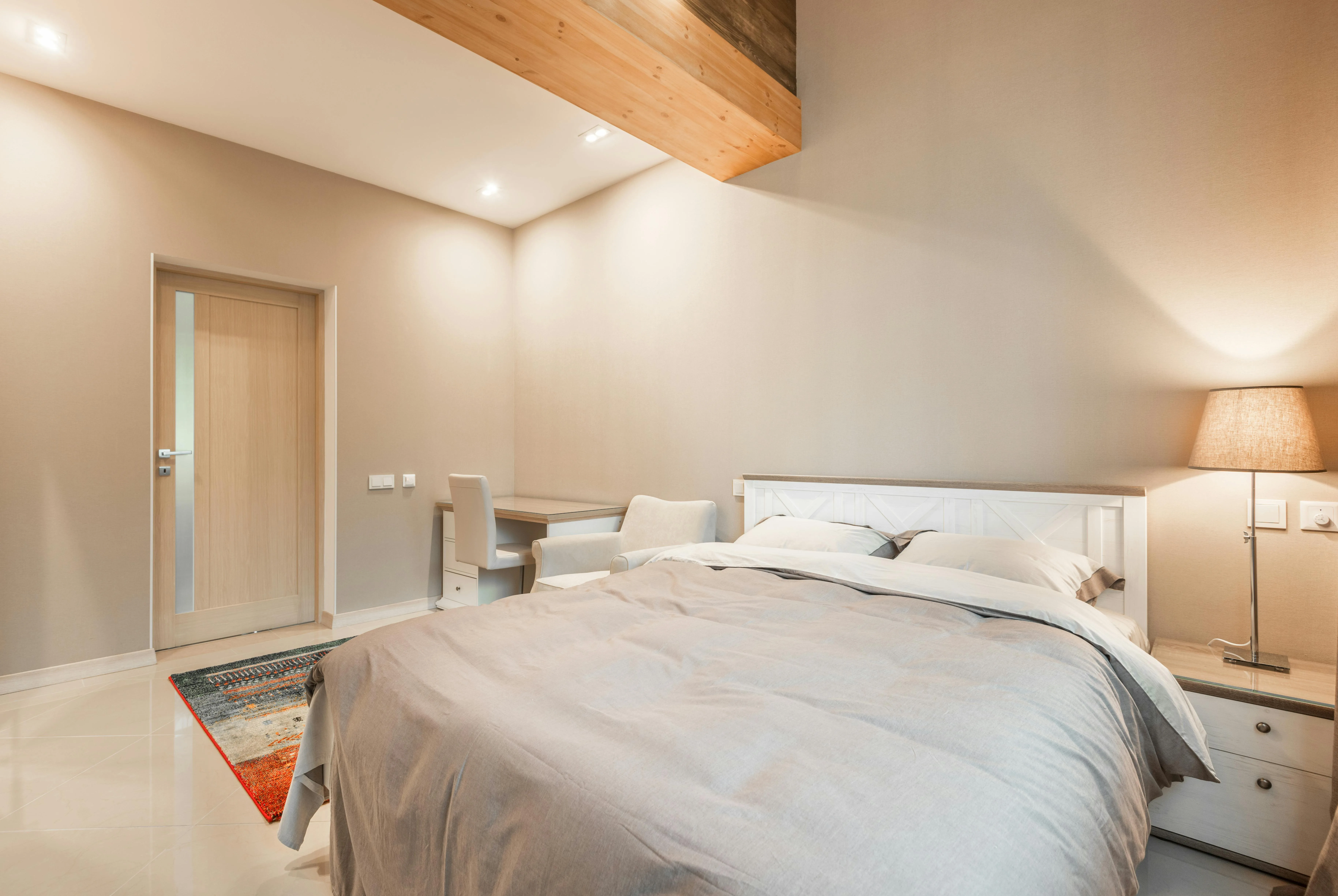
Too many active functions inside one room
Clutter around and under the bed
Scroll sideways to compare all columns.
| Mistake | Why it feels wrong | Better fix |
|---|---|---|
| Bed directly in the door line | The bed feels exposed to the room's main movement path. | Shift the bed off the direct line, or soften the path with a rug, bench, or calmer visual break. |
| Mirror facing the bed | The reflection can make the sleep zone feel more active at night. | Move the mirror to a side wall, inside a wardrobe door, or angle it away from the bed. |
| Desk or screen dominating the room | The room starts to read as work first and rest second. | Keep the desk visually secondary, close the laptop, and clear papers before sleep. |
| Storage under the bed | The bed feels mentally heavier when it holds unfinished clutter. | Keep it clear, or use it only for soft seasonal bedding in closed storage. |
| Too many plants or sharp leaves | The room can feel busy, damp, or visually prickly near the bed. | Use one healthy, soft-looking plant away from the pillow area. |

The Easiest Bedroom Feng Shui Fixes
Start with the bed and then simplify everything competing with it. If the room is small, that does not mean it has bad feng shui by default. It just means the bed needs to stay as strong as possible while the rest of the room becomes quieter and more supportive.
Better bedroom moves
- +Give the bed the strongest wall and clearest visual support the room can offer.
- +Edit mirrors so they do not dominate the sleep zone.
- +Reduce active storage and visible work items near the bed.
- +Keep at least one or two surfaces around the bed visually quiet.
What to stop normalizing
- -Treating the bedroom as overflow storage for the rest of the house.
- -Letting a mirror reflect the bed if it already makes the room feel busy.
- -Stacking bins, paperwork, or random objects around the headboard area.
- -Focusing on decor before the bed position is settled.

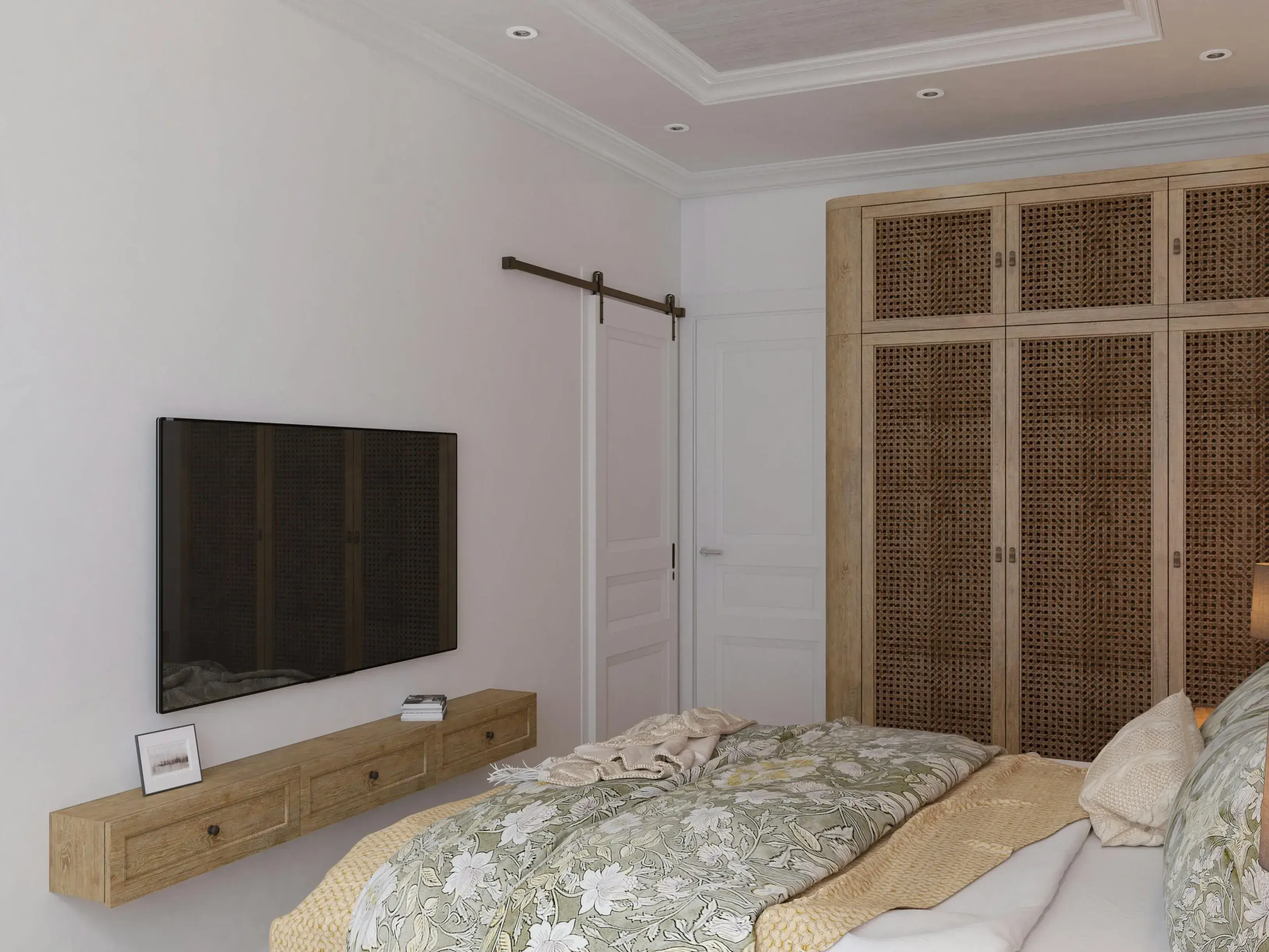
What Not To Put In A Feng Shui Bedroom
This is where a lot of bedroom advice gets too literal. The better question is not simply whether an object is allowed. The better question is whether that object makes the room feel more restful or more activated. That is why mirrors, workout gear, office storage, extra screens, and piles of laundry often become problems. They add unfinished energy to a room that is supposed to quiet down.



If you need the bed placement version of this topic, go next to feng shui bedroom layout. If mirrors are the main issue, the better follow-up is feng shui mirrors and feng shui mirror placement for good luck. For a broader whole-house checklist, read common feng shui mistakes.
Frequently Asked Questions
What should I avoid in a feng shui bedroom?
What not to put in a bedroom in feng shui?
Should I put a mirror in my feng shui bedroom?
What is the most important bedroom feng shui fix?
The Bottom Line
Most feng shui bedroom mistakes come down to one issue: the room is not fully supporting rest. Weak bed placement, overstimulating mirrors, and active clutter all push the room in the wrong direction.
When the bed feels supported and the rest of the room quiets down around it, bedroom feng shui becomes much easier to get right.