



Quick Answer
The best Feng Shui flooring is a surface that supports the room's everyday use. Compare moisture, grip, warmth, sound, cleaning and the transitions between rooms before choosing a material or color. Natural wood can suggest growth in traditional Five Element symbolism; stone and ceramic can suggest steadiness. Neither association overrides safe installation or how comfortable the floor feels in your home.
Flooring covers more visible space than most furniture, so a finish can change how bright, continuous or busy a home feels. Unlike a rug or chair, however, a new floor can be expensive and disruptive to replace. That makes flooring a useful place to combine Feng Shui's language of balance with decisions you can test.
This guide focuses on permanent floor finishes, floor colors, board direction and thresholds. If you are deciding how to place an area rug under furniture, use our Feng Shui rug placement guide. For changing walls, furniture and other colors together, see the Feng Shui color chart. And if the real issue is which room connects to which, start with the Feng Shui floor-plan guide.
Start With the Floor You Have
Before shopping, walk from the entry to the living room and then into the bedrooms. Notice where finishes change, whether the surfaces are slippery when wet, where a hard threshold interrupts the route and how the floor looks in daylight versus evening lighting. A dark floor in a sunlit living room can feel quite different from the same finish in a narrow hall.
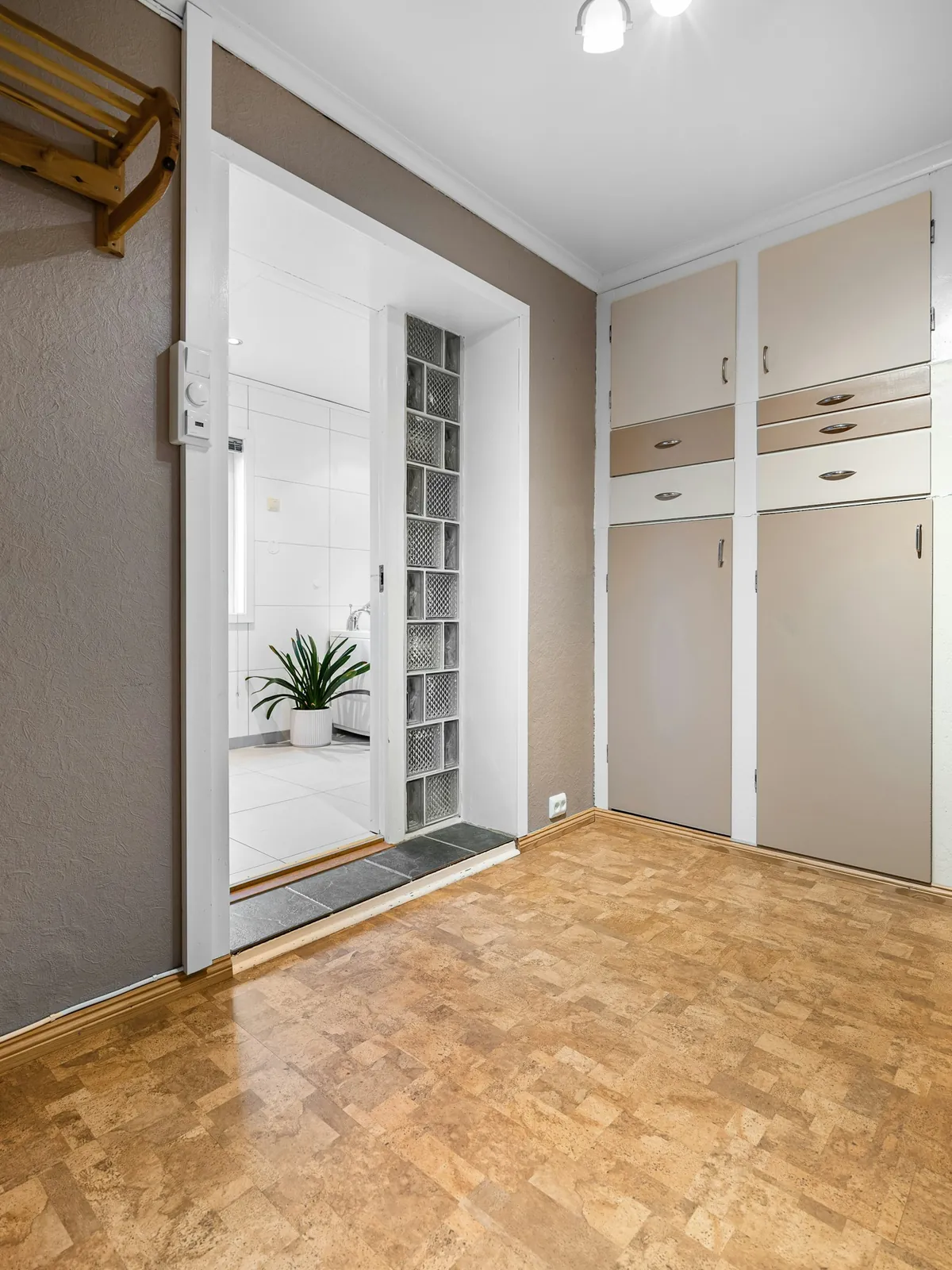
In traditional Feng Shui, qi is often described as flowing through the home. On a practical level, consistent finishes and clearly expressed transitions can make routes easier to read. These are design observations, not evidence that a specific plank pattern changes health, relationships or finances.
Think in three layers:
- Function: Is the surface suitable for water, cleaning, pets, children and mobility needs?
- Visual continuity: Do adjoining floors feel intentional, and are the transitions easy to see and cross?
- Symbolism: Do the colors and materials convey the atmosphere you want, using Feng Shui's Five Elements as an optional framework?
If the floor is already sound and suitable, changing lighting or furniture may deliver more value than replacing it.
Compare Flooring Materials Without a Universal Winner
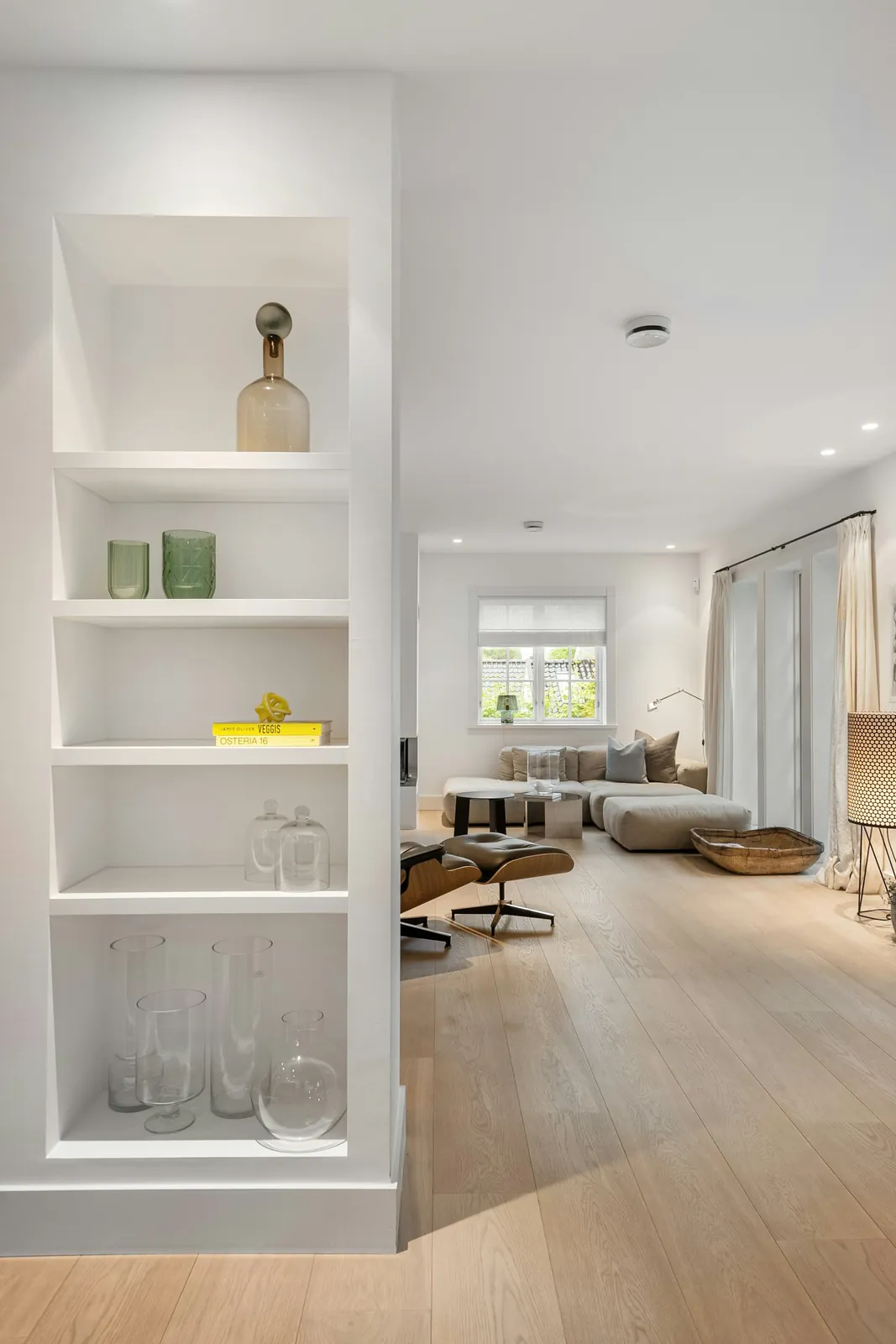
Wood is frequently presented as the Feng Shui favorite. In Livingetc's interviews with Feng Shui practitioners, natural timber is described as an expression of the Wood element, with elongated boards reinforcing its visual character. That is one traditional interpretation. It does not make timber the right choice in every wet or heavily trafficked room.
Flooring choices and the checks that matter most
Scroll sideways to compare all columns.
| Material | Feng Shui association | Useful qualities | What to check |
|---|---|---|---|
| Solid or engineered wood | Wood, growth and warmth | Natural grain, visual continuity, warmer feel than many hard tiles | Moisture tolerance, scratches, maintenance and the specific product's installation instructions |
| Bamboo flooring | Often discussed with Wood | Linear texture, contemporary natural appearance | Construction, adhesives, finish, quality variation and moisture limits |
| Ceramic or porcelain tile | Often associated with Earth | Useful in many wet and high-cleaning areas | Slip suitability, grout upkeep, sound and cold underfoot |
| Natural stone | Earth or sometimes Metal, depending on tradition | Distinct texture and long-term character | Sealing, porosity, grip, weight and maintenance |
| Cork | Natural material, often read through Wood | Softer-feeling and acoustically gentler surface | Water exposure, indentation, finish and compatibility with the room |
| Laminate or resilient vinyl | No automatic traditional element based on marketing labels | Broad visual choices and potentially practical upkeep | Actual product specifications, substrate, water exposure and indoor-air certifications |
Do not assume that all bamboo floors are equally durable, that all tiles provide good wet grip, or that anything described as “natural” is automatically lower maintenance. Documented product performance and suitable installation matter more than the material's symbolic label. When comparing products, request actual slip, moisture and emissions documentation rather than relying on a generic eco-friendly claim.
The Floor Gallery's flooring discussion similarly groups material, color and direction as separate decisions. This article keeps those three decisions separate so you can tell what is an installation question and what is a decorating preference.
Choose Flooring Colors in the Real Room
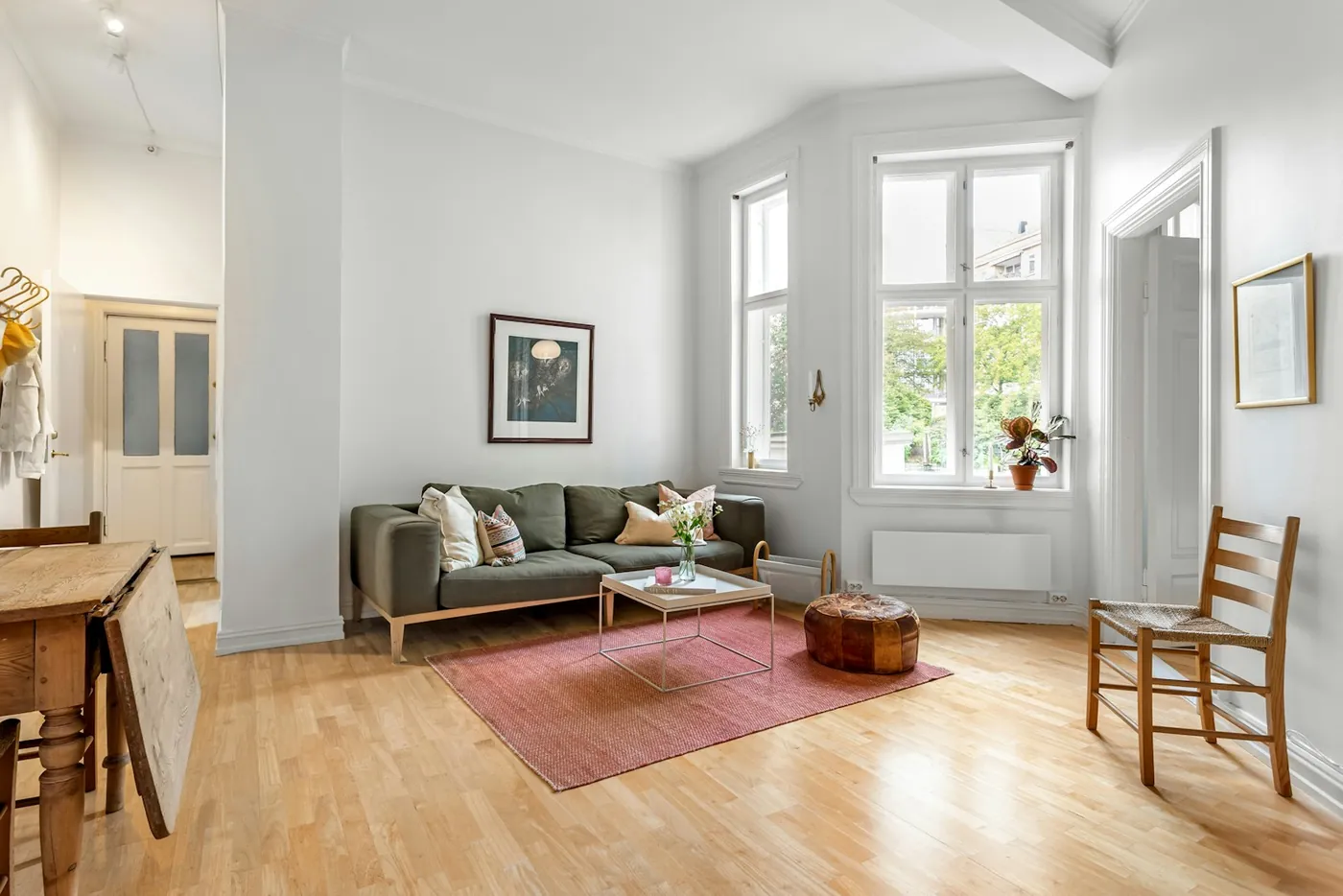
A flooring color behaves differently from a paint swatch: it spans a large plane, reflects light upward and meets baseboards, doors and furniture from multiple angles. Warm mid-tone wood can conceal some everyday visual variation, while very pale and very dark finishes may highlight certain marks or contrasts depending on the surface and lighting.
Feng Shui's Five Elements framework often links green and brown with Wood, warm reds with Fire, earthy yellows and beiges with Earth, white or gray with Metal, and deep blue or black with Water. Those are traditional associations, not a requirement that every east-facing room receive a green floor. Methods vary, and a single color cannot guarantee a particular result.
For a practical selection, compare two or three physical samples against the fixed items you cannot easily change. See them in the darkest corner and near a window, both with daylight and your actual lamps turned on. Check how they look beside doors, furniture legs and the adjoining floor. For color combinations across walls and furniture, use the Feng Shui color chart. Here, the focus is how a color works across a large, walkable surface.
Plan Floorboard Direction and Pattern
Should Feng Shui flooring run toward the front door or along the corridor? There is no universal board orientation that fits every floor plan. Different online guides recommend following the longest wall, the arrival line or particular compass directions. For example, Floor City's overview acknowledges different approaches to board orientation. Treat those as design interpretations rather than installation specifications.
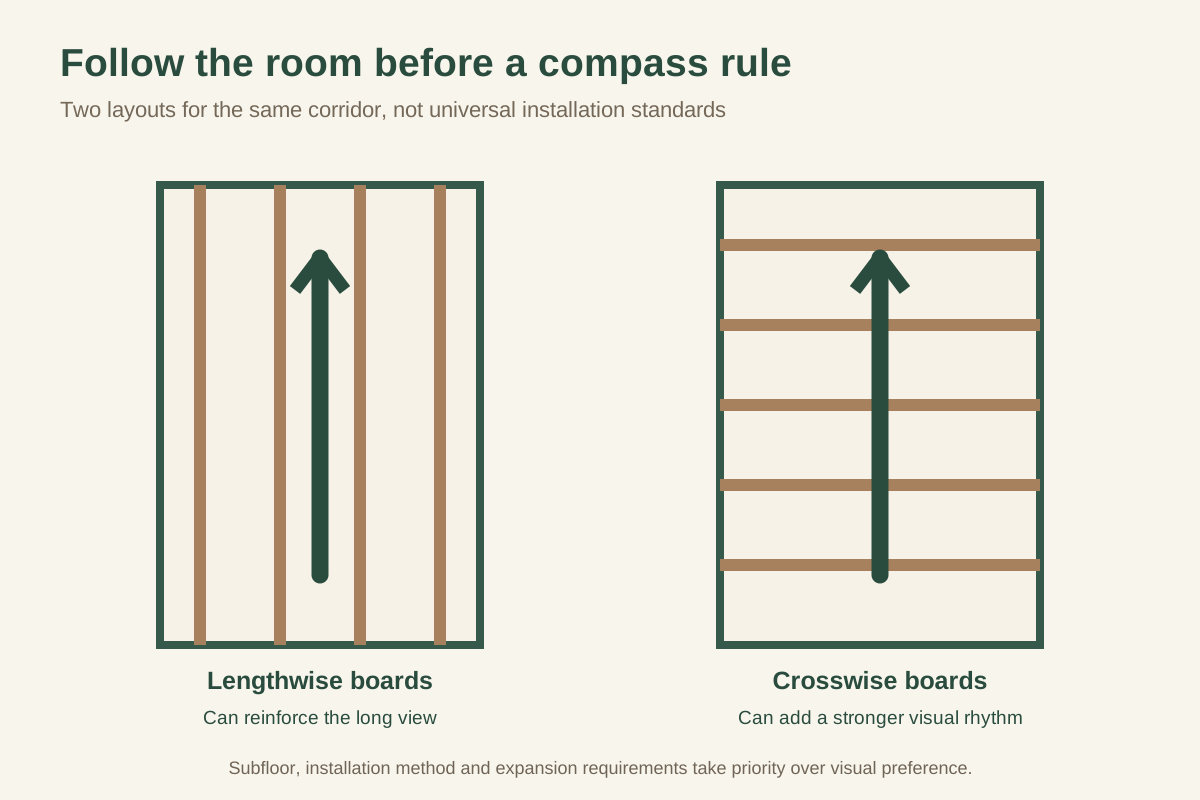
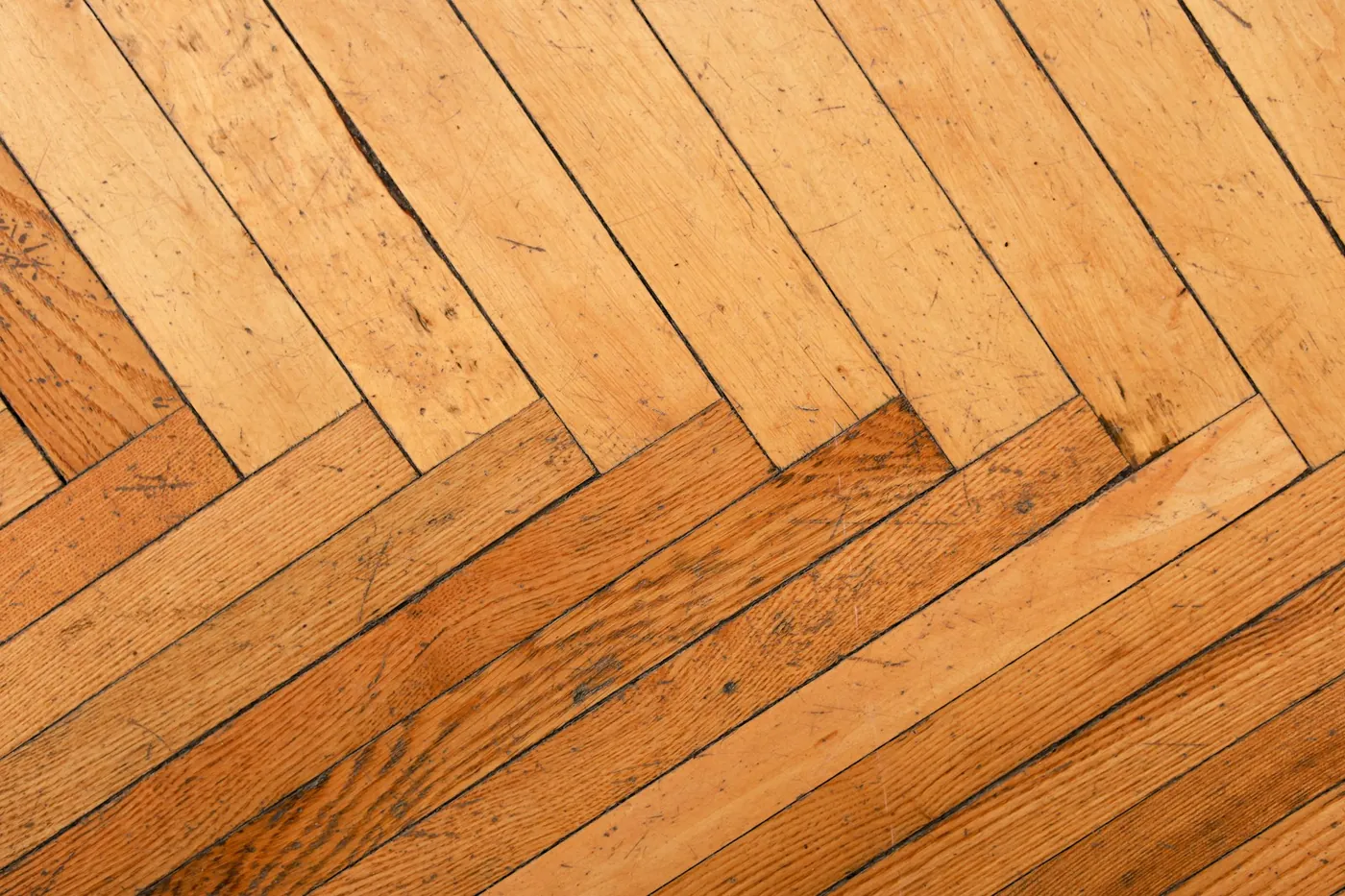
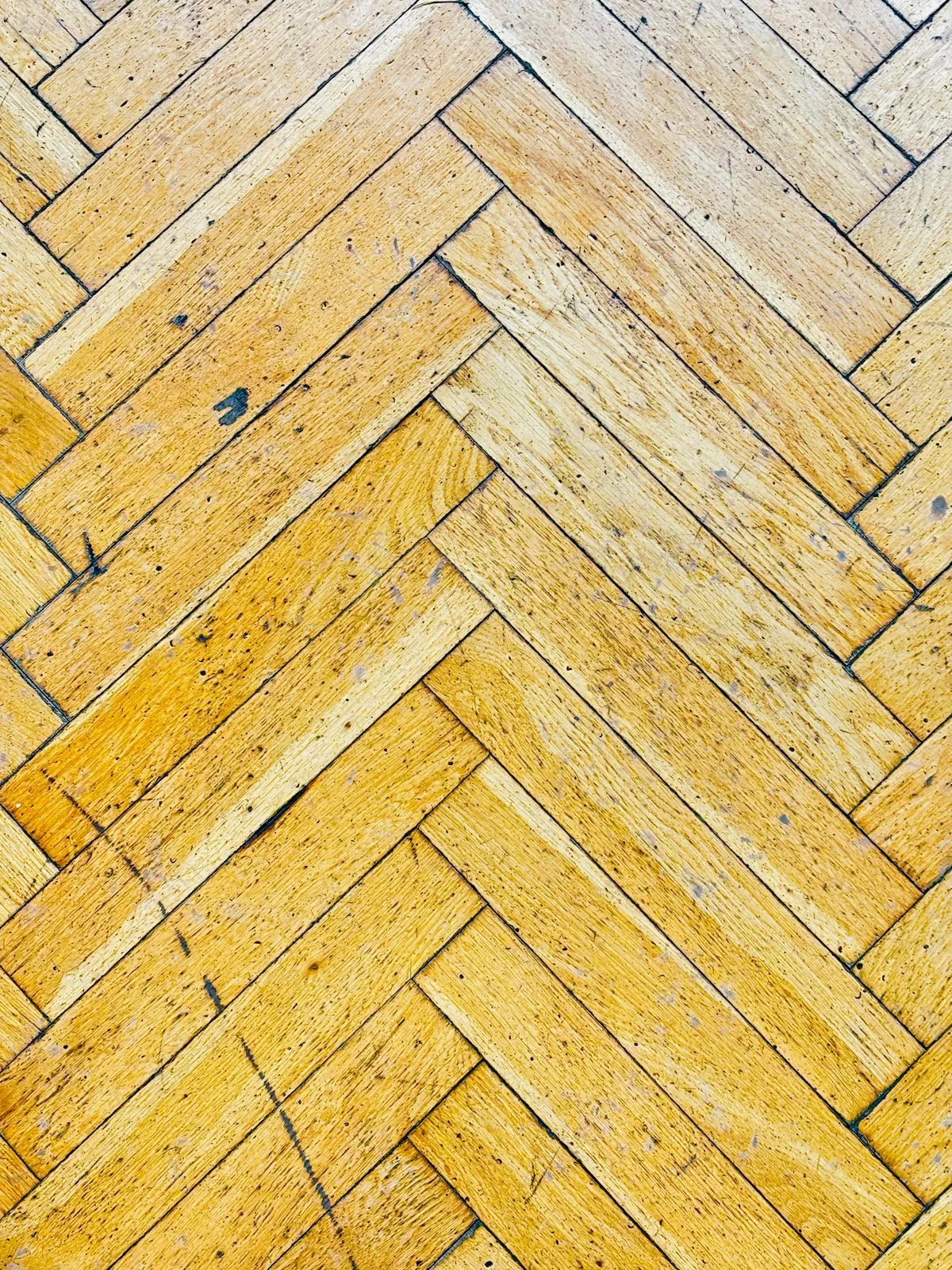
Lengthwise planks can emphasize a long view. Crosswise boards can introduce more frequent horizontal lines. Herringbone and chevron bring their own strong geometric movement and may work best when the room's other large surfaces are comparatively quiet.
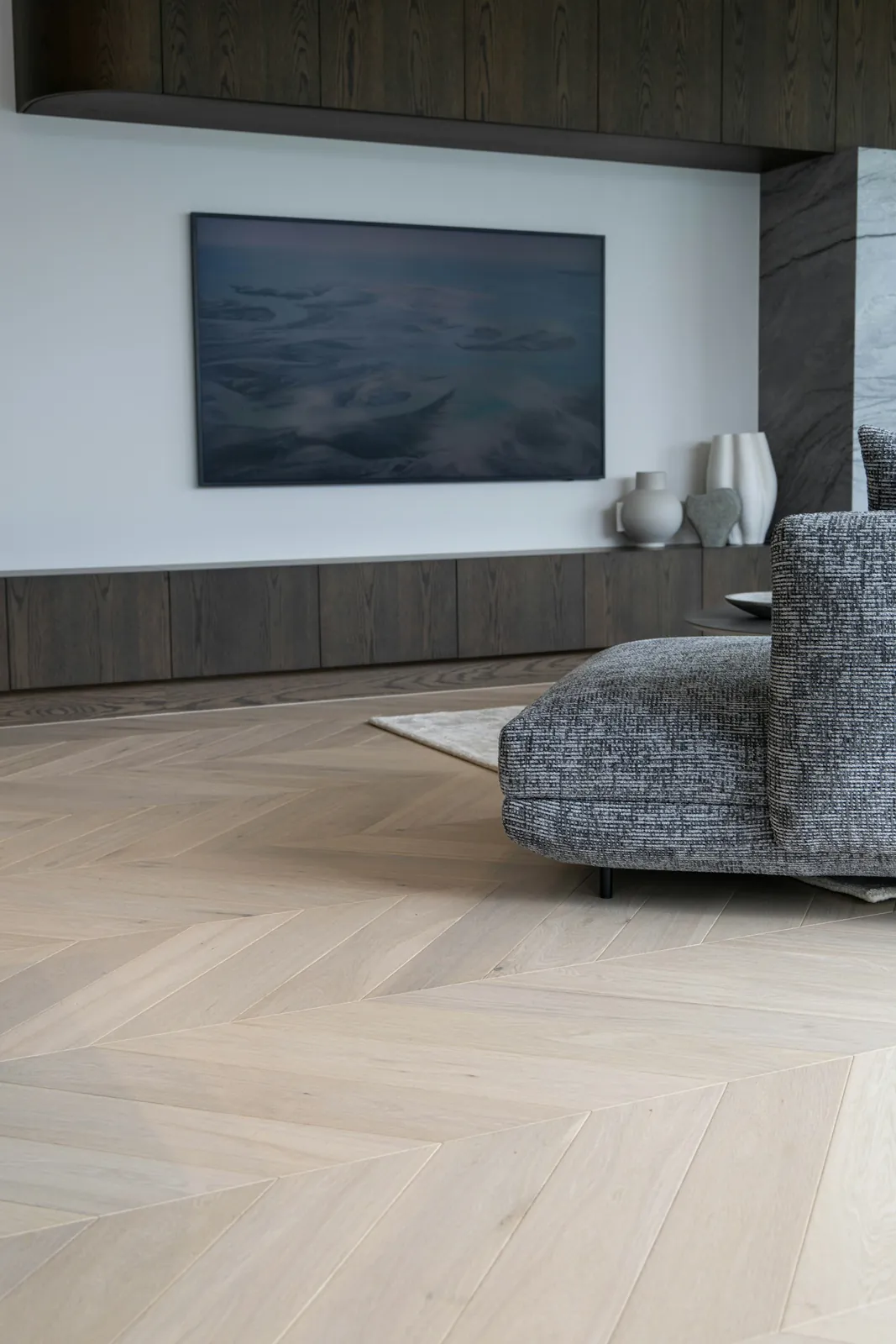
Before choosing any pattern, ask which direction the manufacturer permits for the product and subfloor. Structural support, expansion gaps, uneven substrates, and installation systems can constrain the design. The National Wood Flooring Association's installation guidelines place manufacturer instructions, subfloor conditions and moisture assessment ahead of a preferred visual direction. A professional installer should confirm the technical solution. Never reverse a required installation direction solely because an article associates a compass point with good qi.
In a long corridor, check the view from both ends and the junction with adjacent rooms. In an open-plan space, a consistent orientation may make adjoining zones feel connected, but a deliberately changing pattern can work when its edge is composed cleanly.
Keep Flooring Transitions Deliberate
One flooring material throughout the house is not automatically a better Feng Shui decision. Bathrooms, kitchens, bedrooms and entrances face different conditions. A material that works beautifully in a dry sitting room may be a poor fit around frequent splashes or exterior moisture.
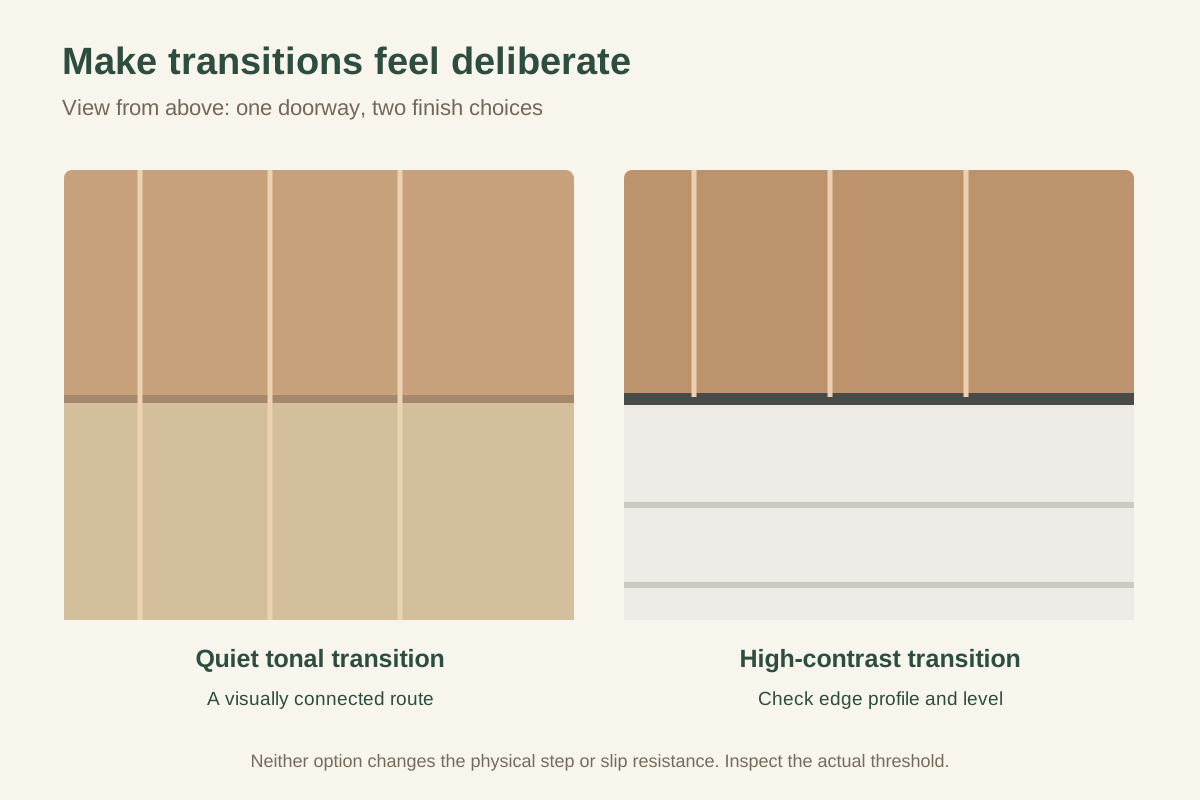
Pay particular attention to three conditions: a sudden height change, a damaged or loose threshold strip, and visually confusing edges in a dim doorway. The surface must remain safe to cross even when people carry laundry or groceries. Repair a loose transition rather than covering it with a decorative mat.
To create continuity between different materials, repeat a warm or cool undertone, keep the junction aligned with a logical doorway, or use a neat threshold selected for the actual products. There is no Feng Shui need to conceal a legitimate material change. If the junction has a step or accessibility issue, ask a qualified installer about the correct detail.
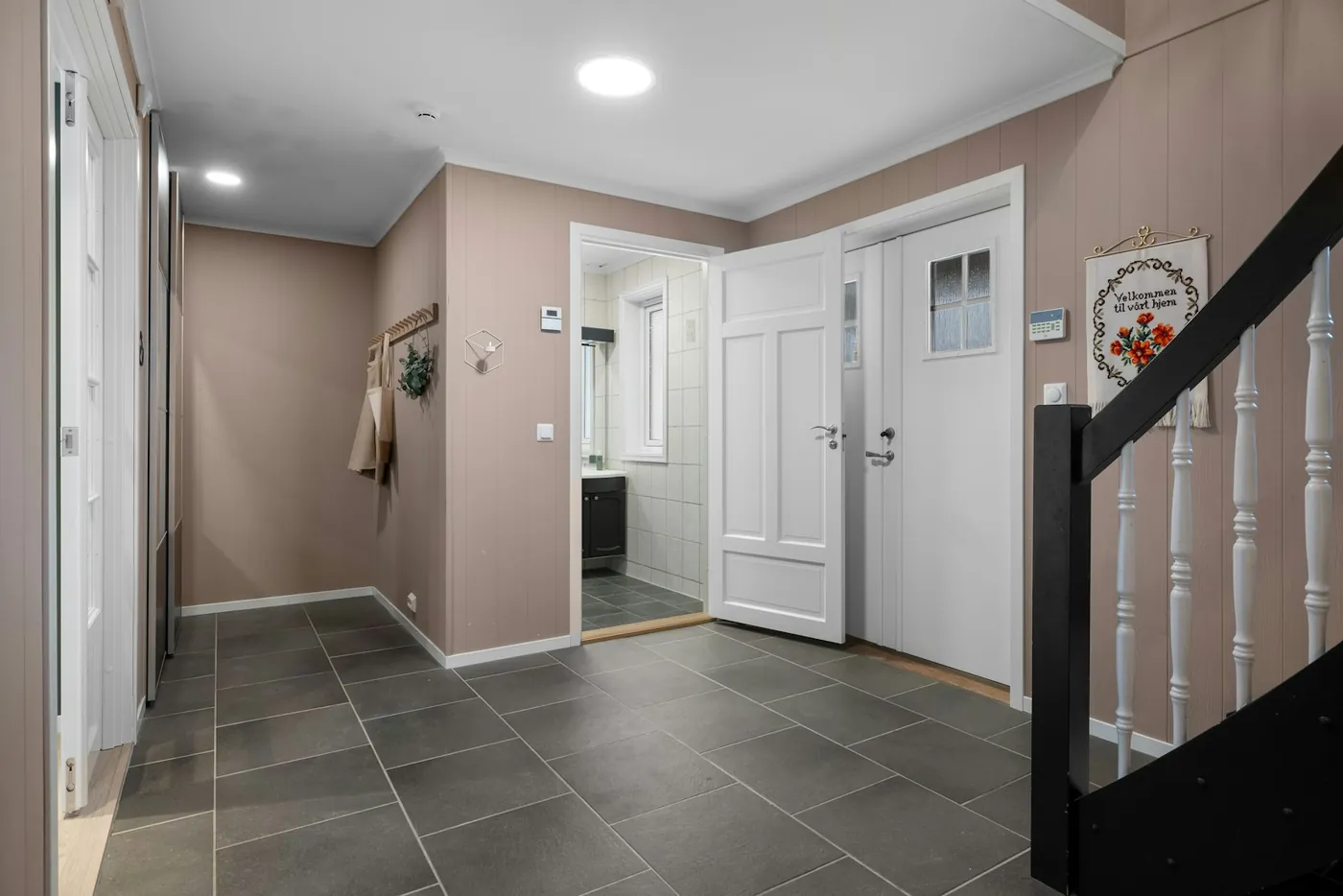
For full-room circulation and door swings, use the door placement guide to assess the wider layout. Flooring decisions should support those routes rather than dictate furniture placement.
Choose Floors Room by Room
Living room. A durable wood or wood-look floor can give furniture a warm visual base. Tile or stone can also work, especially in a warm climate. Compare glare, cleaning, noise and seating comfort before selecting a finish. For the arrangement of sofas and chairs, use our living-room furniture guide.
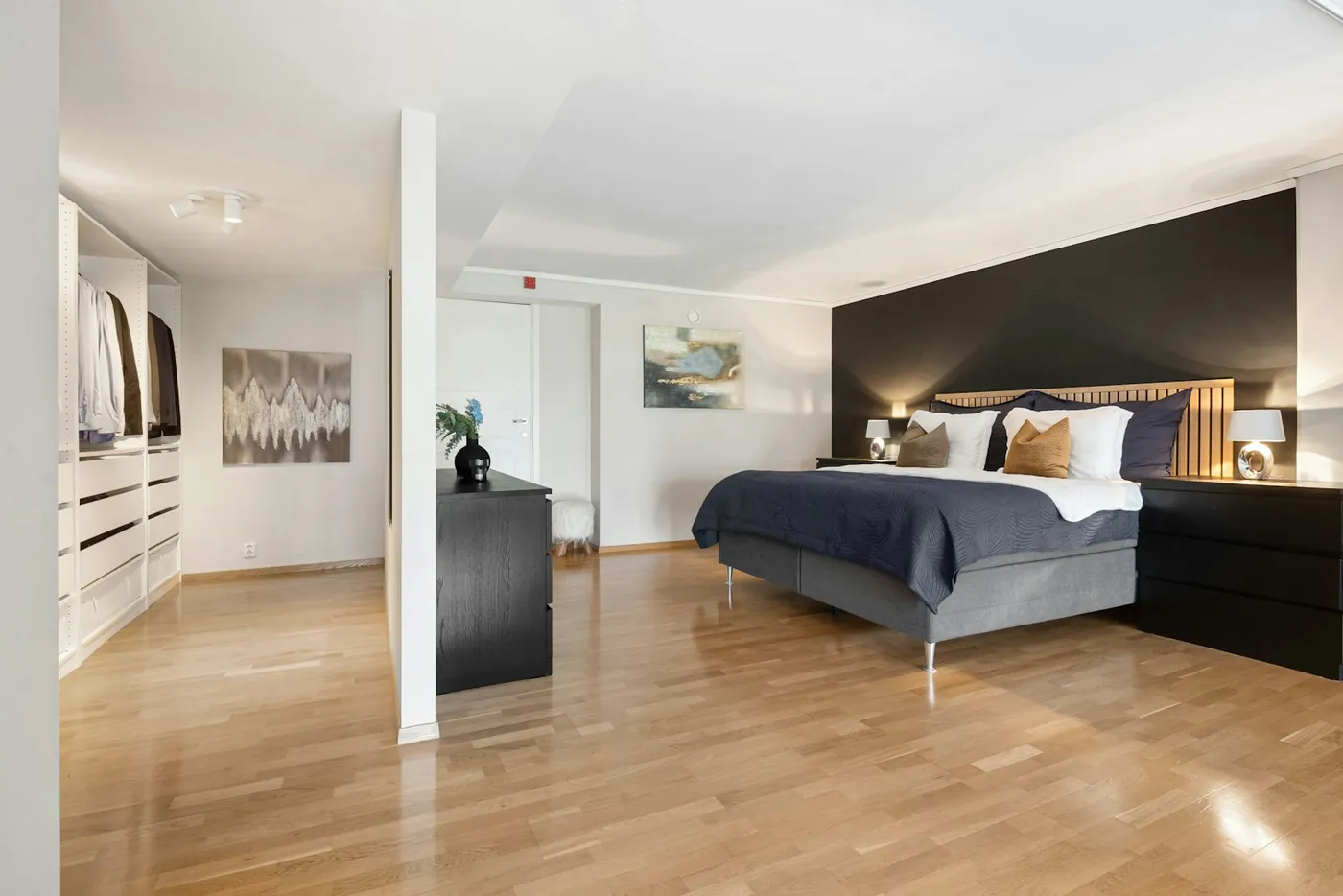
Bedroom. Think about the first steps out of bed, cold underfoot, sound and the level of visual detail. A quieter grain can support a restful look. Tile is not inherently bad Feng Shui, but it may be cooler and harder underfoot than some other options. The bed placement guide addresses the sleeping position, not the flooring specification.
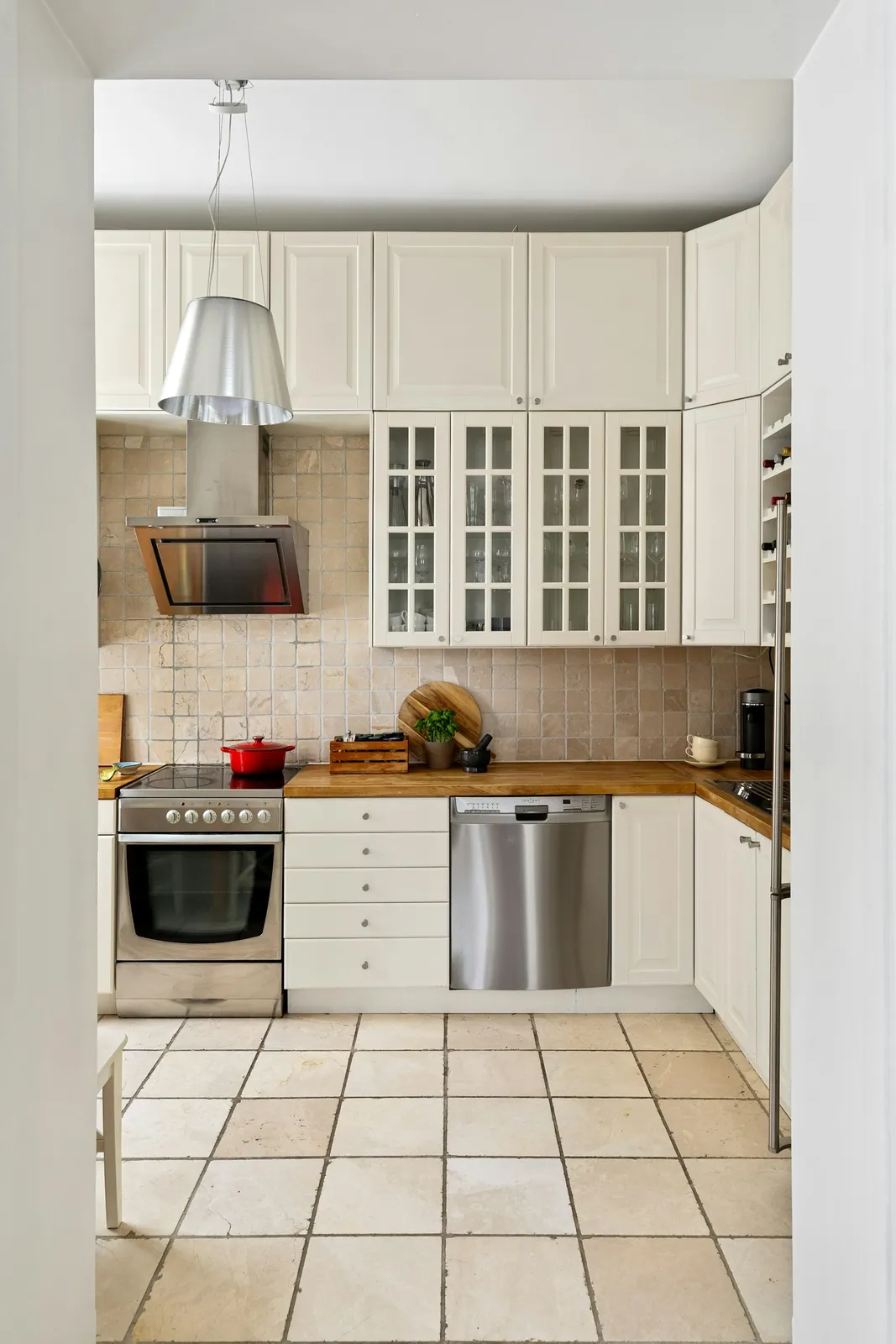
Kitchen. Spills and cleaning requirements are primary. Choose an appropriate surface with documented wet-use suitability and consider how easily seams and grout can be maintained. A symbolic preference for timber should not override a product's moisture limitations. The Feng Shui kitchen guide addresses layout and room styling.
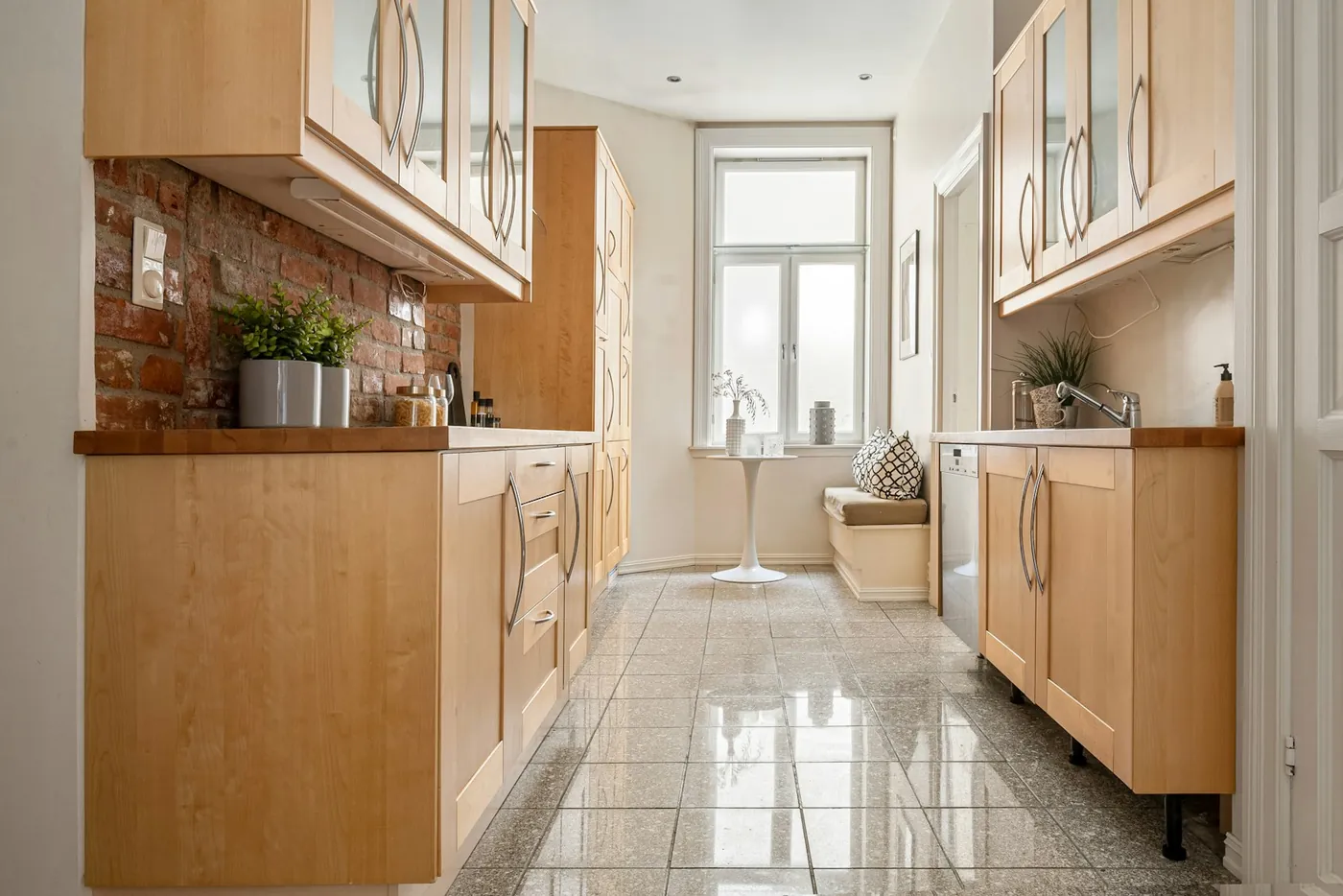
Bathroom. Use products specified for a wet area, with a suitably considered slip rating, waterproofing design and maintenance plan. A pale finish can feel open but will not fix ventilation or leaks. The Tile Council of North America explains why a friction measurement alone does not determine slip risk; contaminants, maintenance and the intended use matter too. For the rest of the room, see Feng Shui bathroom ideas.
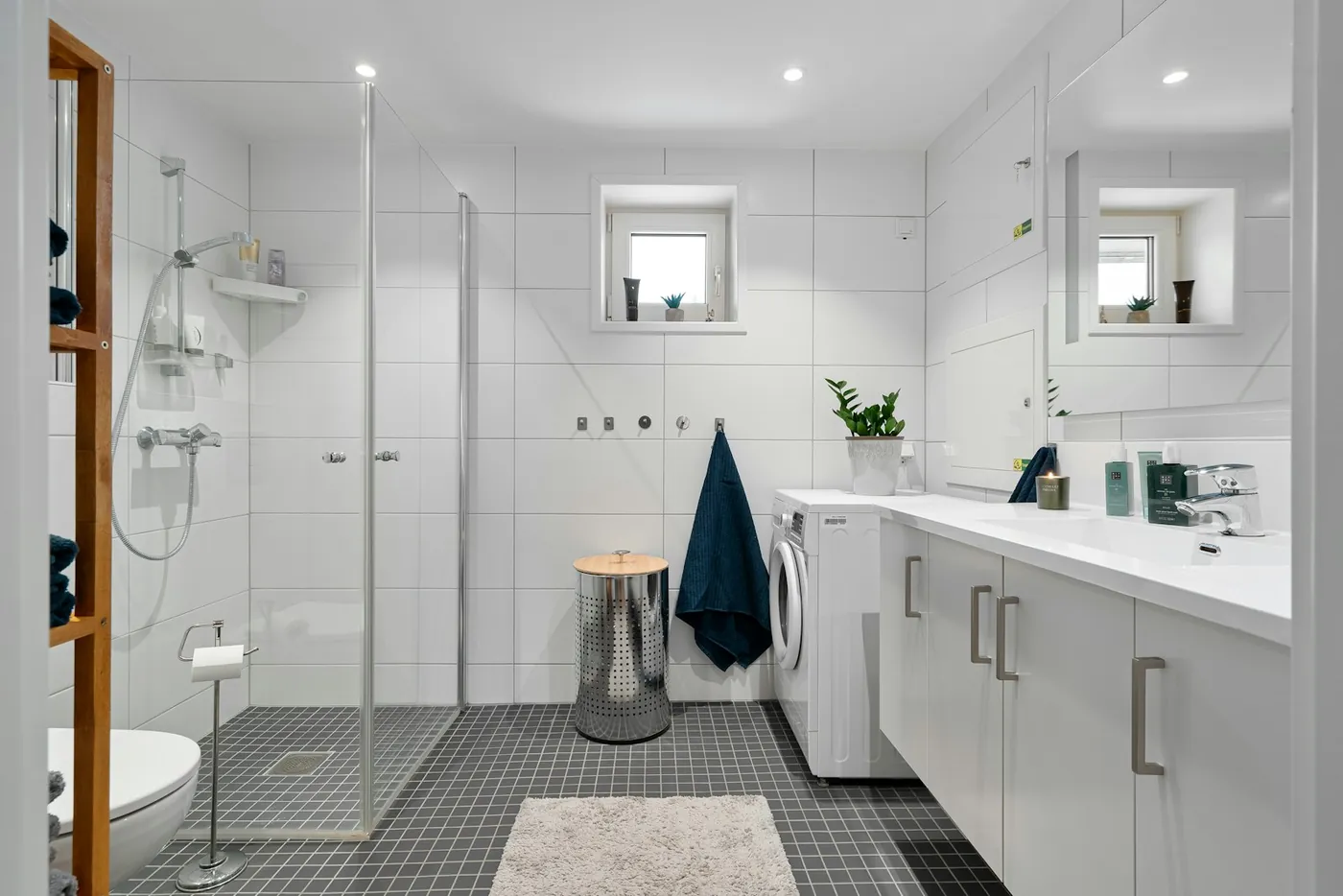
Entry and hallway. Focus on tracked-in moisture, shoe wear, clear transitions and enough lighting to identify changes in level. Dark finishes can be attractive but may make a dim corridor harder to read. The hallway guide covers storage, door arcs and runners.
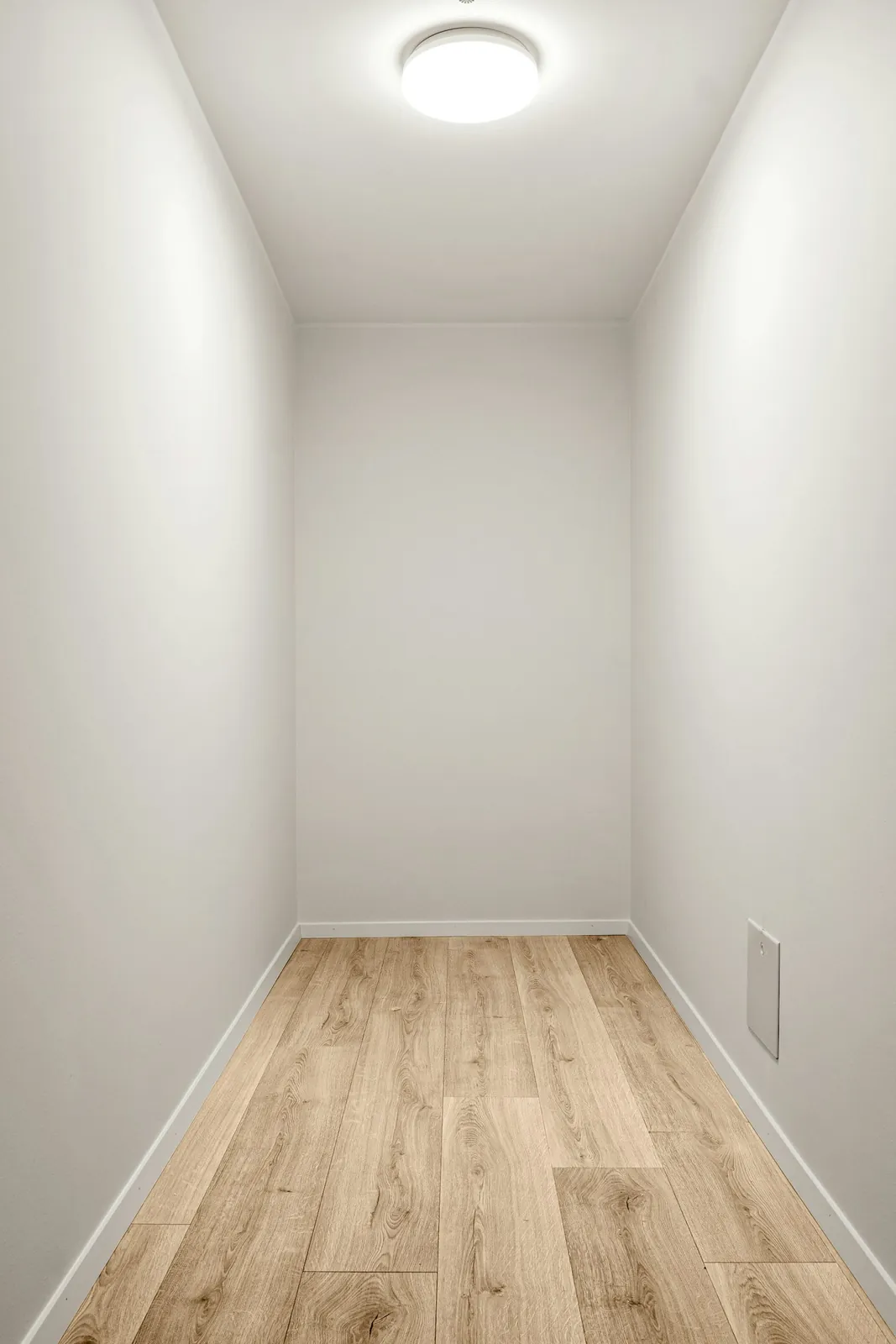
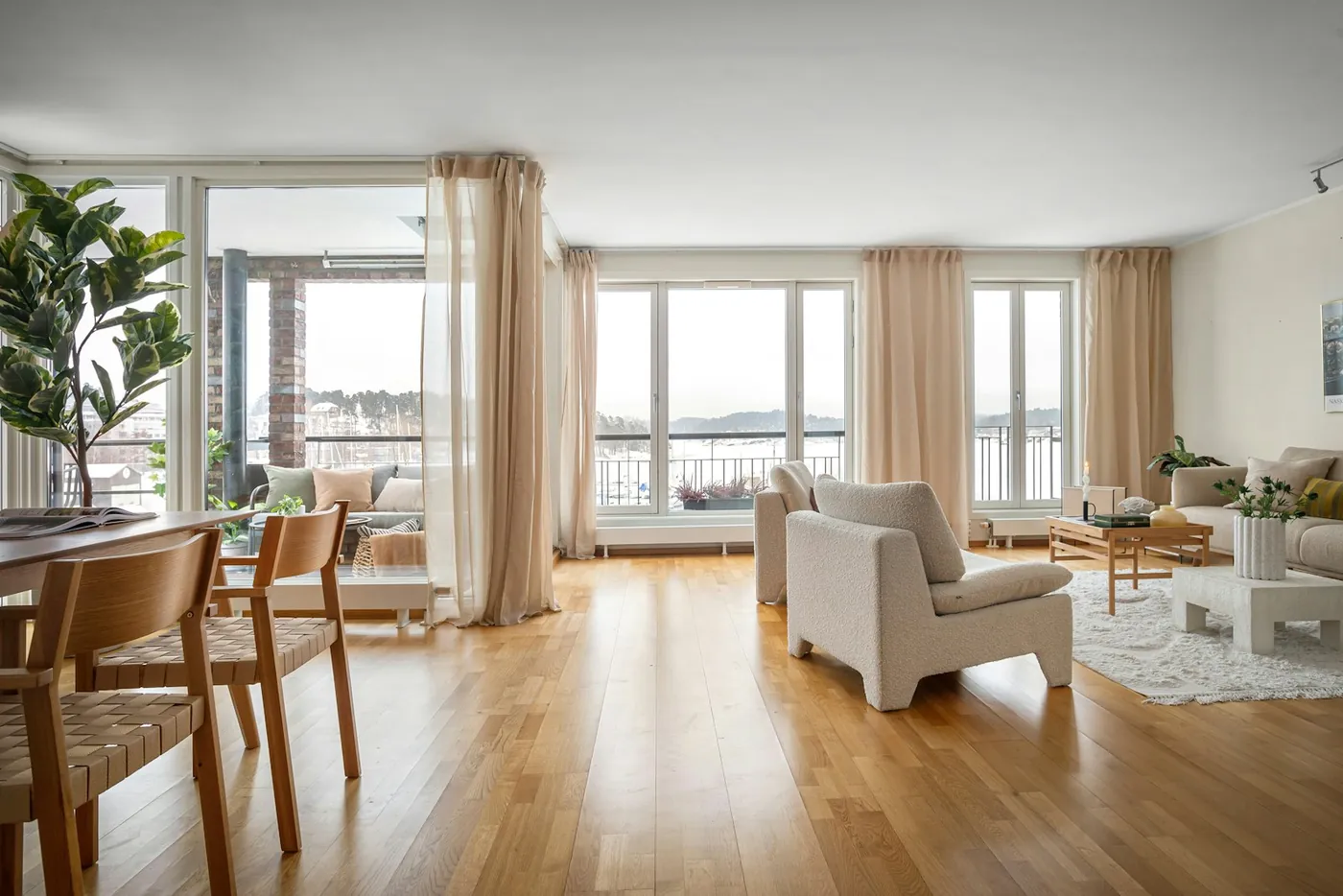
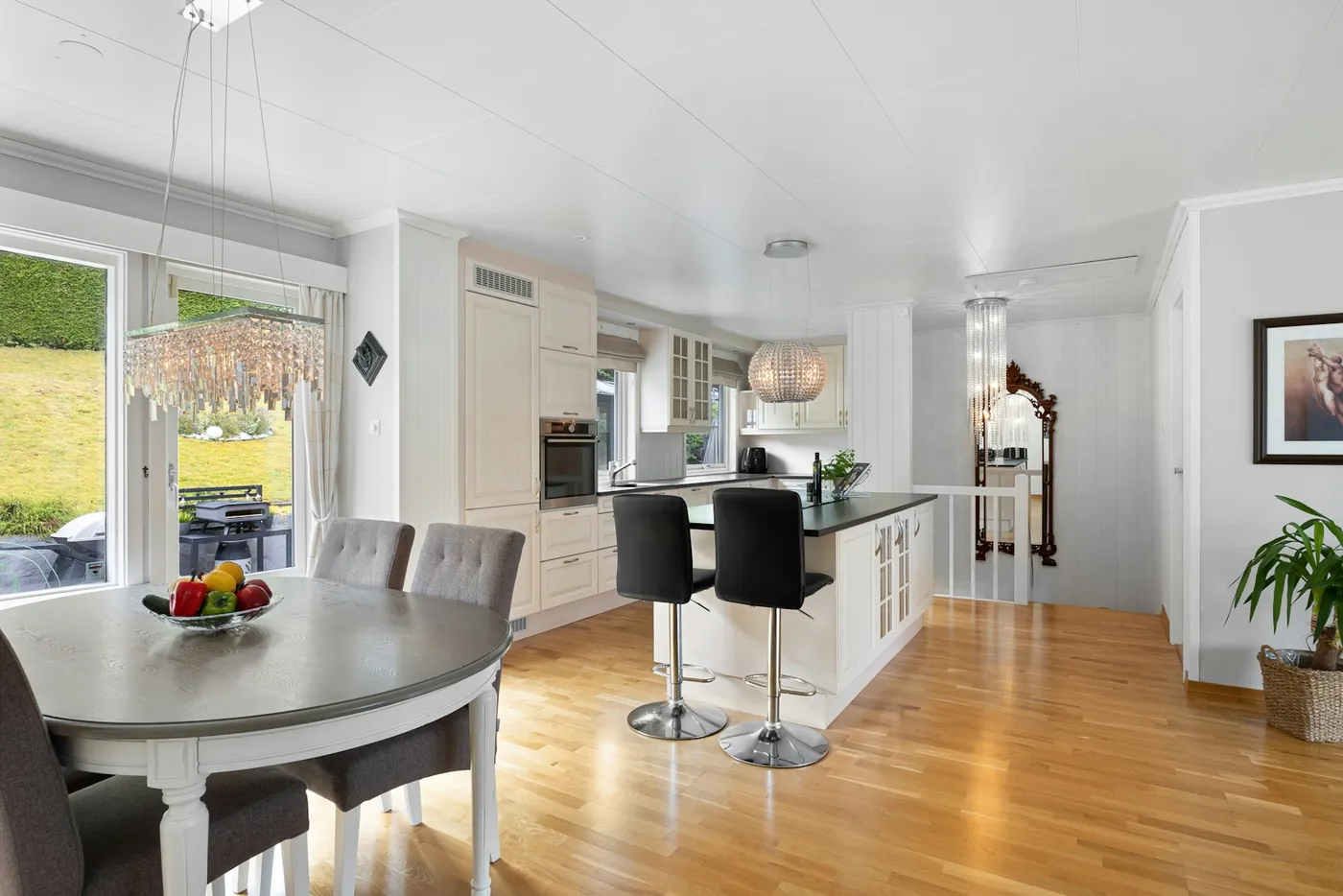
Open-plan rooms. Look at the floor from the entrance, seating group and dining area. A consistent surface often reads calmly, while a material change can emphasize a wet kitchen area or different zone. The best choice follows actual cleaning, sightlines and daily movement, not a single rule about keeping qi from escaping.
Improve Existing Floors Without Renovating
You do not need to replace a sound floor to apply a more intentional decorating approach. First clean it using the correct method for that surface, make sure the lighting exposes any change of level, and adjust the pieces resting on it. Chair feet or casters may need suitable protectors. A small lighting change can alter the look of a large dark surface far more than one decorative object.
A properly selected rug can soften sound or define a seating zone, but it needs to stay stable and clear nearby doors. See our dedicated Feng Shui rugs guide for sizing, backing and movement tests. Do not lay loose mats over a broken tile, warped board or damp patch and call the issue solved. Those conditions need maintenance.
For renters, confirm what removable coverings and adhesives are permitted. Avoid peel-and-stick changes that could damage the underlying finish or conceal moisture. Photograph any existing defects and report them before layering decor over the surface.
A Practical Flooring Decision Checklist
Before paying for samples or a full installation, use this sequence:
- Inspect the current surface. Note defects, wet areas, doors, thresholds, glare and high-traffic routes.
- Shortlist by room use. Remove any option that lacks suitable product documentation for the intended environment.
- Check physical samples. Compare color, finish and texture under the room's real light and beside fixed cabinetry.
- Walk the transitions. Verify proposed changes in level and how the design meets adjacent rooms.
- Choose a board direction or pattern. Ask the installer to confirm it is compatible with the actual subfloor and system.
- Consider Feng Shui symbolism last. Use the Five Elements to express mood where it aligns with the functional choice, without turning it into a prediction.
A balanced home does not require matching flooring everywhere, perfect compass alignment or costly renovation. It needs surfaces that work for the people using them, with materials and visual transitions chosen deliberately.