



Quick Answer
Choose curtains for the job the window must do. Sheers soften daylight but may leave the room visible after dark. Lined or blackout panels add privacy and light control, while two independently operated layers offer flexibility. Measure the curtain stack, keep fabric clear of furniture and heating equipment, and choose colors after the practical fit works. Feng Shui color associations are optional, not guarantees of luck.
Curtains change how a room feels because they change the light, view, privacy and amount of visible fabric. In Feng Shui decorating, that makes them more useful than a color selected solely for a compass direction. A bedroom that cannot become private or a living room with uncomfortable glare needs a workable window treatment before it needs symbolic adjustment.
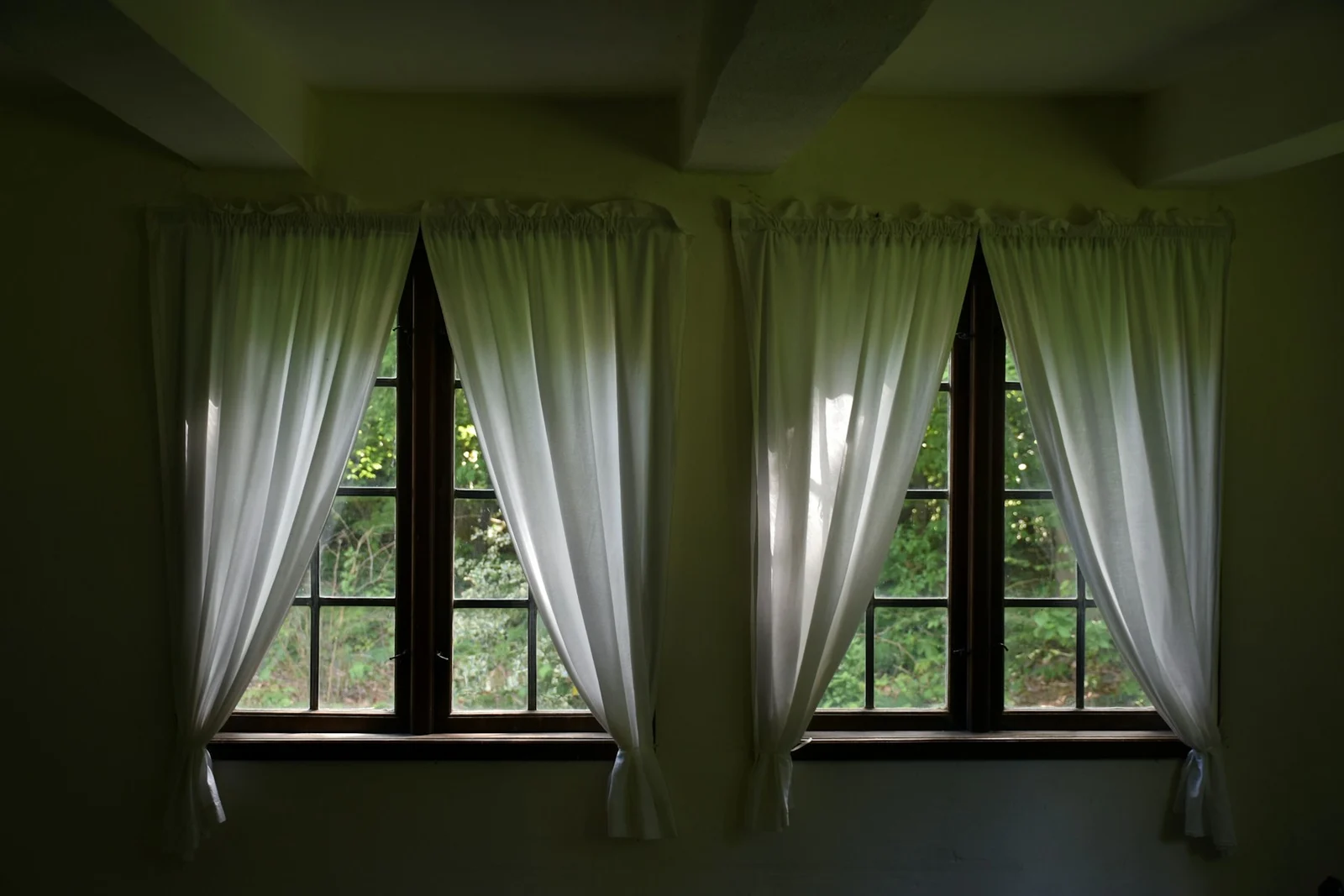
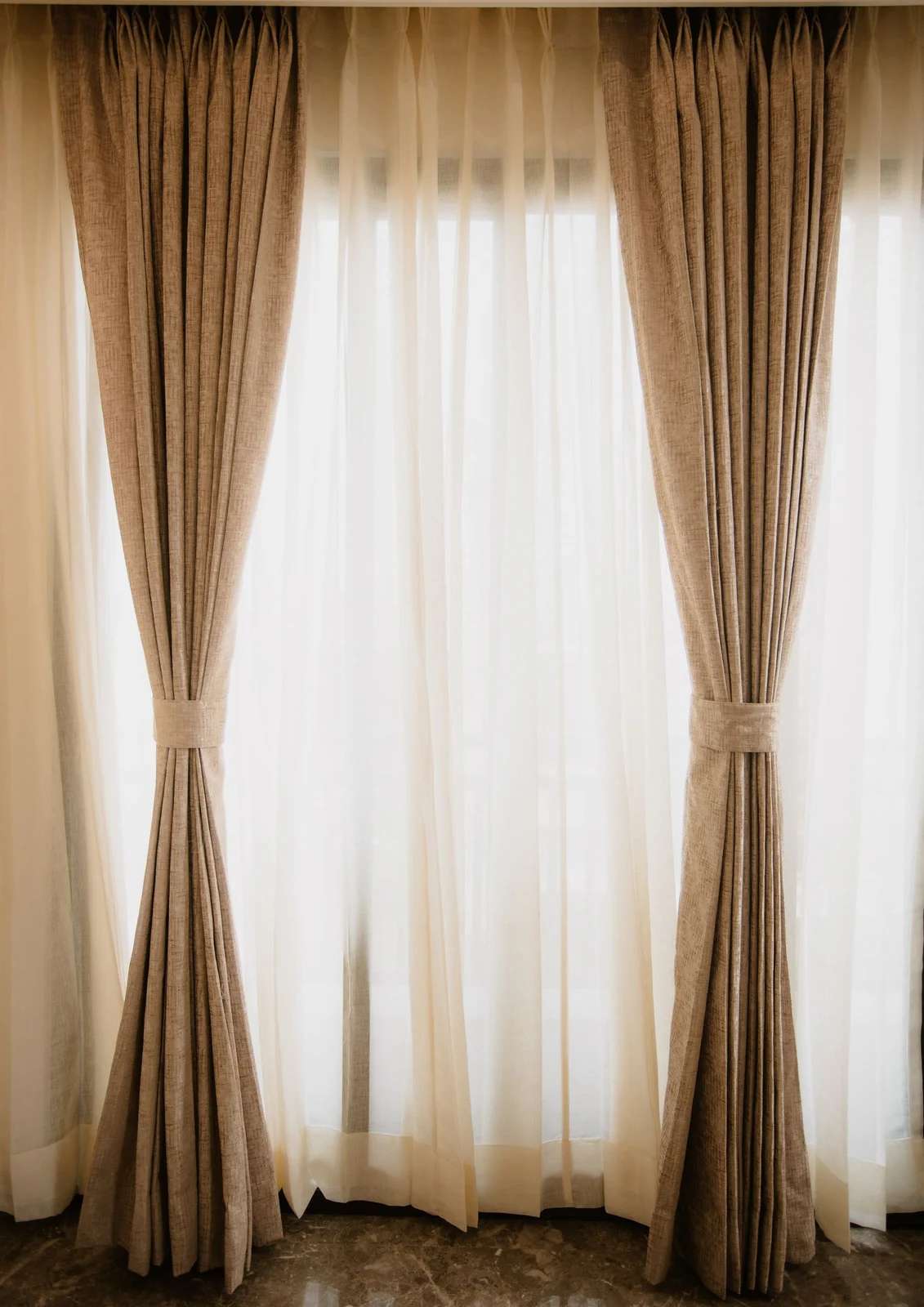
Start with the room you actually use, not a styled photograph. Watch the window at the troublesome time of day, then decide how much light you want to keep and how much you need to control. The examples below show different fabrics and arrangements; a photograph cannot establish a product's blackout or insulation performance.
Name the Window Problem Before Choosing Fabric
Privacy and glare are different problems. If people can see into the living room from the street, test the proposed fabric from that sightline with the room lights on after dark. A sheer that softens a daytime view may still reveal people and furnishings at night. If the problem is a bright patch across a television or desk instead, sit in that position when the glare occurs and identify which part of the window needs covering.
Sleep darkness calls for a different test. Close the covering and check the room from the pillow at the time exterior light bothers you. Light at the top, sides or meeting point of two panels can remain noticeable even when the fabric itself blocks light. If you need to keep daylight for daytime use, an independently operated sheer and opaque layer can be more flexible than leaving one heavy curtain closed all day.
Heat and comfort depend on the whole installation. A cold window beside a chair or strong solar heat may call for a tested window attachment or exterior shading, not simply a darker fabric. Identify whether the problem is incoming sun, cold glass, an air leak or a blocked heater before choosing a product. Curtains should not conceal leaks, condensation or equipment that needs repair.
Compare Sheer, Lined and Blackout Coverings
Choose the covering for the window's actual job
Scroll sideways to compare all columns.
| Covering | Best use | What to check before buying |
|---|---|---|
| Sheer curtain | Soft daylight and a less exposed daytime view | Night privacy with interior lights on. A sheer alone may not provide it. |
| Lined curtain | More body, privacy and adjustable light control | Fabric opacity and lining. Lined does not automatically mean blackout. |
| Blackout product | Strong light control where darkening is important | Coverage at the top, sides and panel join, plus access to open it during the day. |
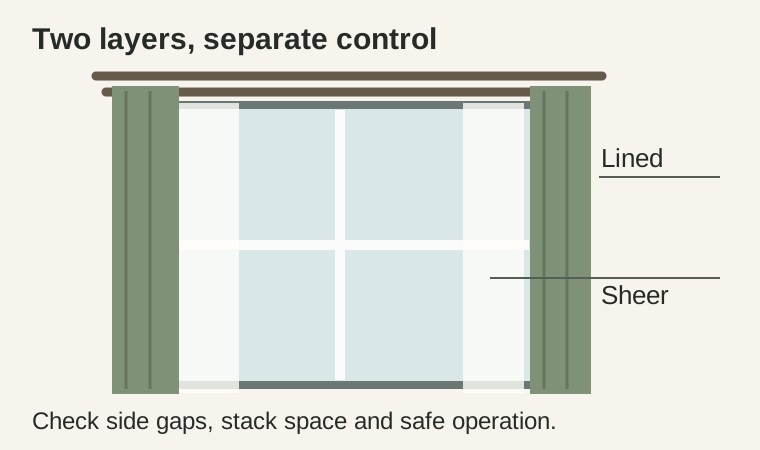
| Sheer plus heavier panel | Separate daylight and privacy settings | Independent operation, track depth and space for both layers to stack. |
Blackout and room-darkening are not interchangeable labels. Room-darkening reduces light but may not block it fully, while blackout fabric can still leave bright gaps around an installation. Check the supplier's description and the finished fit rather than assuming an opaque-looking photo demonstrates darkness. Thermal performance is another specification altogether.
Bedroom Curtains for Sleep and Privacy
A bedroom may need daylight for dressing and a different setting for sleep. A sheer can preserve a softer daytime view, with an opaque curtain or shade closed when privacy or darkness is needed. Choose hardware you can operate without climbing across the bed. If a headboard blocks the window, check the bedroom layout guide before squeezing another layer behind it.
Keep beds, cribs and climbable furniture away from accessible window-covering cords. The U.S. Consumer Product Safety Commission recommends cordless coverings as the safest choice where young children live or visit. Tying a cord up does not make a corded product equivalent to a cordless one.
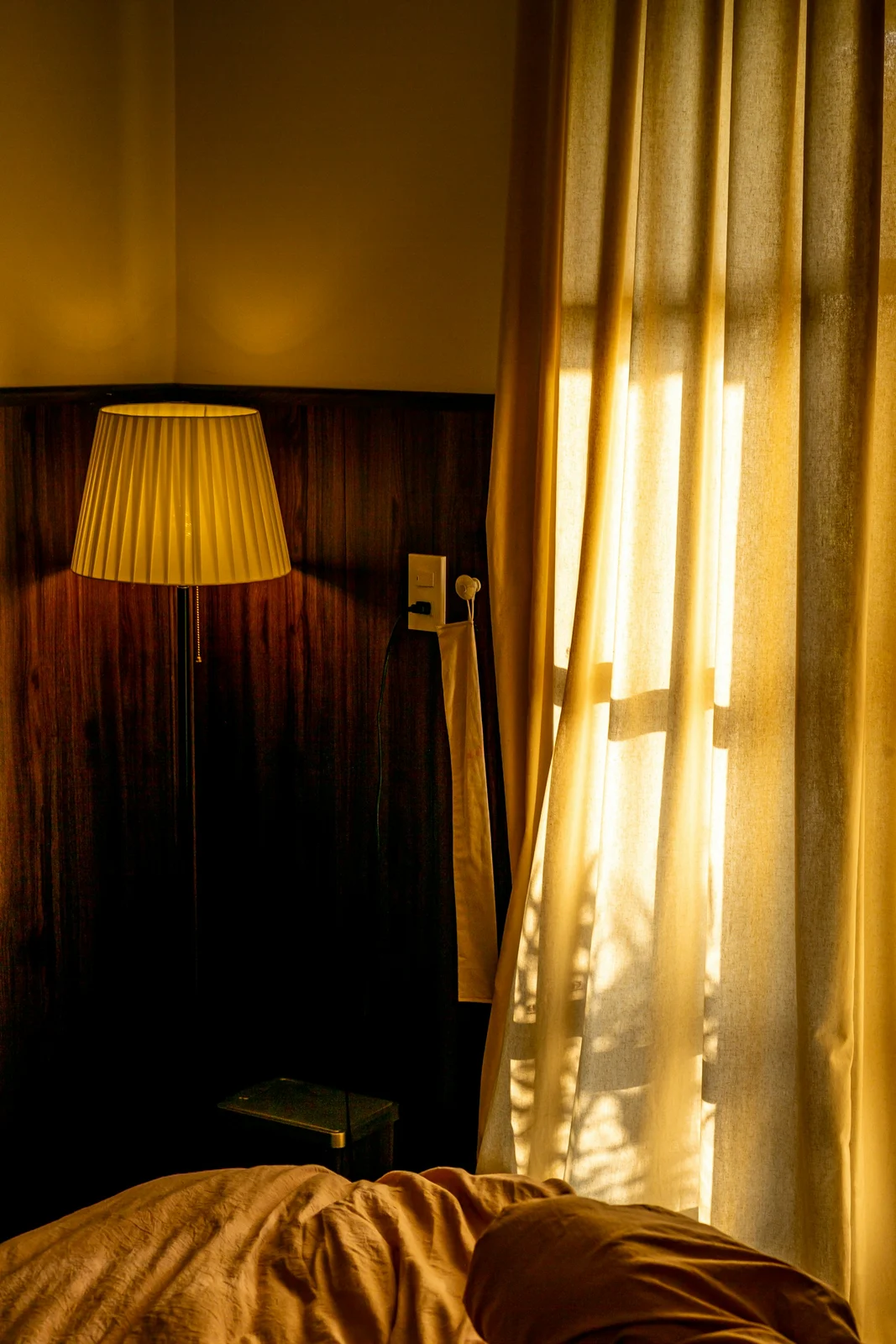
For the room's wider palette, see Feng Shui bedroom colors. A curtain that works well with the bedding still needs to meet the sleeper's privacy and light requirements.
Living-Room Curtains Without Losing the View
Imagine a living room that feels comfortable until afternoon sun reaches the sofa and television. Leaving a heavy curtain closed from breakfast onward sacrifices useful daylight before the problem begins. A sheer for softer daytime light, with a separately operated panel or shade for the troublesome period, gives the room more settings. It may also help to rotate the television away from the reflection path, as explained in our TV placement guide.
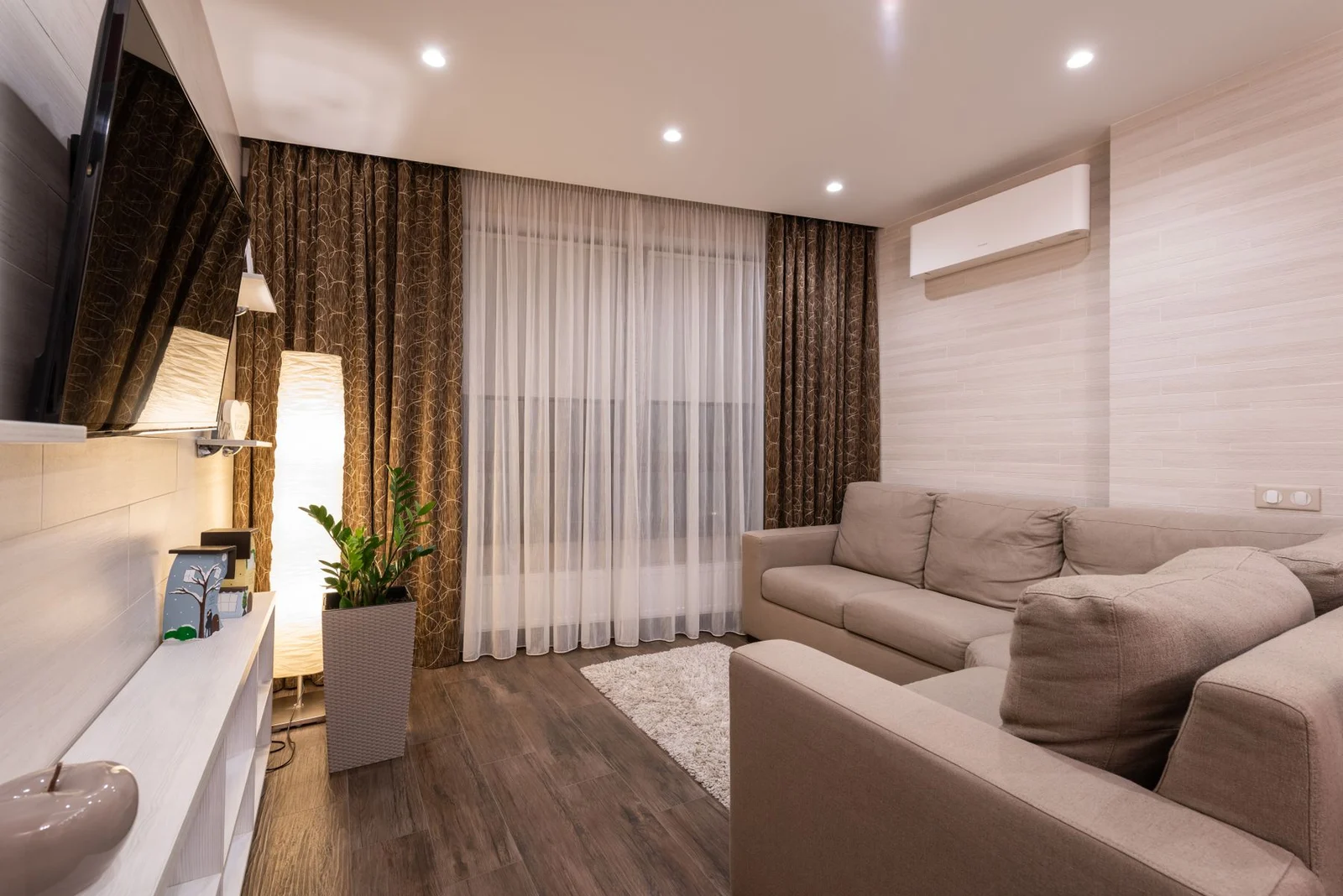
In the entrance-to-sofa route, leave room to reach the window and operate the panels without moving furniture. The worked example in the main photograph pairs a sheer with darker patterned panels beside a sectional sofa. The useful idea is independent layers, not copying the plant, lamp and sofa positions exactly. Check the fabric's full sweep and equipment clearances in your own room. For stronger afternoon heat, compare exterior options in our west-facing house guide.
Measure the Rod, Stack and Finished Drop
Measure the window width, the wall available at both sides and the height from the intended hanging point to the desired hem. The curtain stack is the space taken up by open fabric. Ask the supplier how much stack the chosen header and material need, since thick lined panels occupy more room than a light sheer. A rod extending beyond the frame can help uncover the glass, but only where wall space and bracket support allow it.
For example, a 120 cm window with 20 cm of usable wall at each side allows a 160 cm span before you account for end fittings. If each open panel needs 25 cm of stack, some glass remains covered. That is a reason to compare a different header, track or fabric, not to assume a wider rod fits every window. This is a measurement example, not a universal mounting allowance.
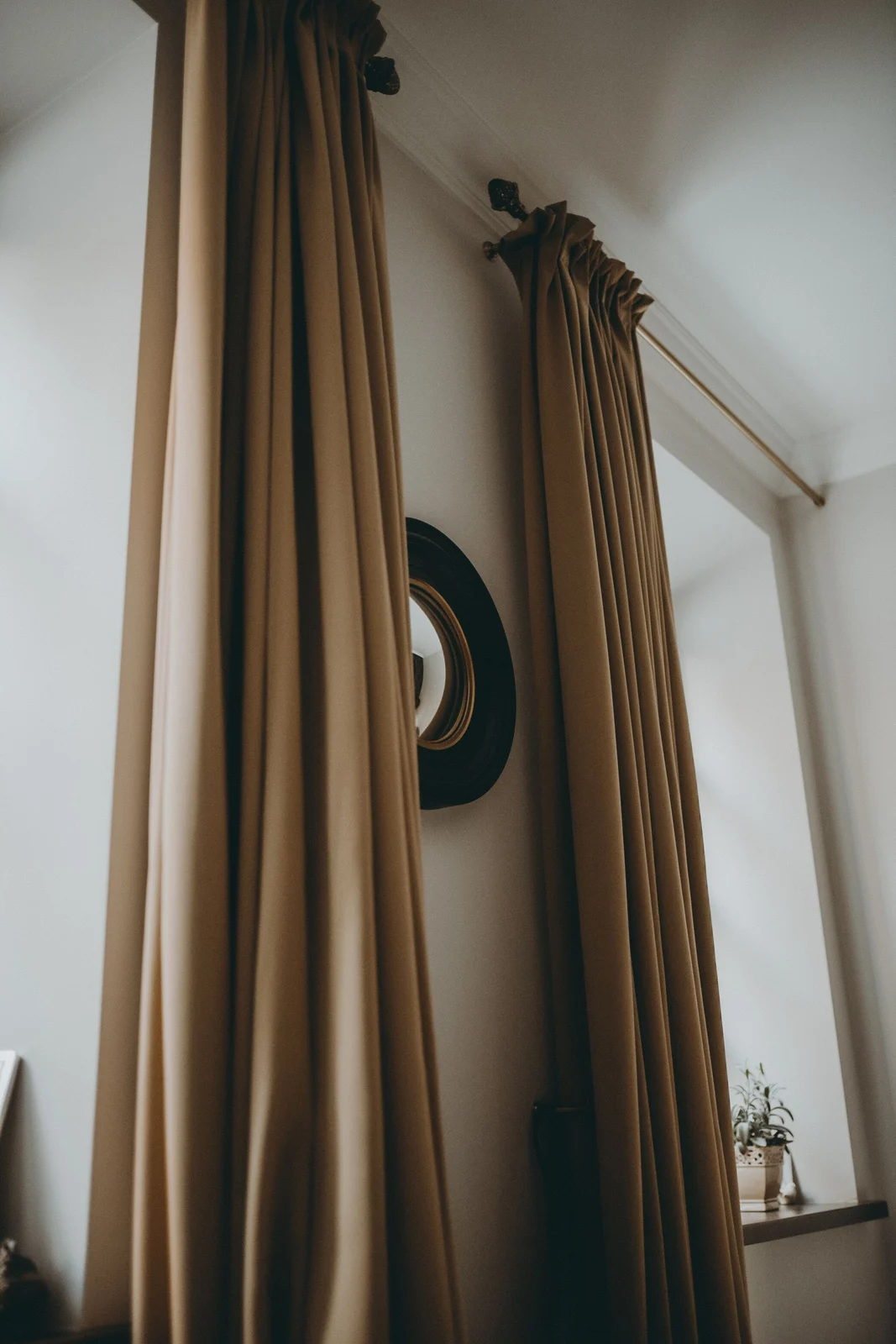
Order panel width from the maker's fullness guidance. A flat panel width is not the same as its finished coverage when pleated or gathered. Measure the drop from the attachment point specified for that header, such as the ring hook or track carrier, rather than automatically measuring from the top of the rod. Recheck the floor at both sides if it is uneven.
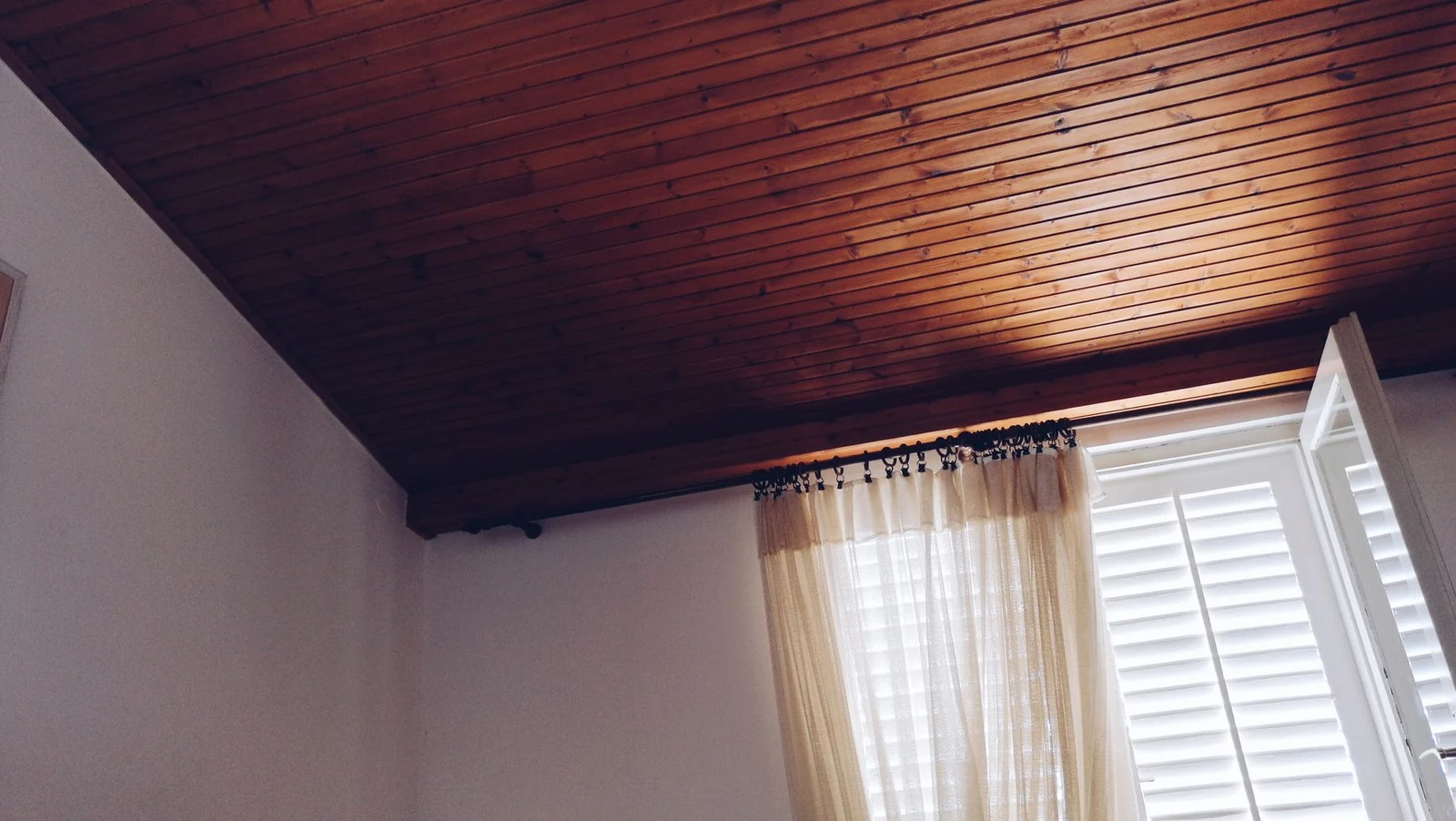
Before buying, open the window and operate its handles. Pull nearby chairs out and check the sofa back, door swing, vents and heating equipment. Do not place fabric within a clearance that the equipment manufacturer requires to stay open. Where a radiator or heater conflicts with full-length curtains, consider a different drop or a suitable window-mounted covering instead of draping fabric over it.
Kitchen Windows and Easy-Care Fabric
In a kitchen, the curtain must coexist with washing, cooking and ventilation. Choose a washable material appropriate to the location and keep fabric away from cooking flames, hot surfaces and splashes. A short curtain or suitable shade may work better than a floor-length panel in the working zone. Follow the appliance manufacturer's clearance requirements rather than judging the gap from an inspiration photograph.
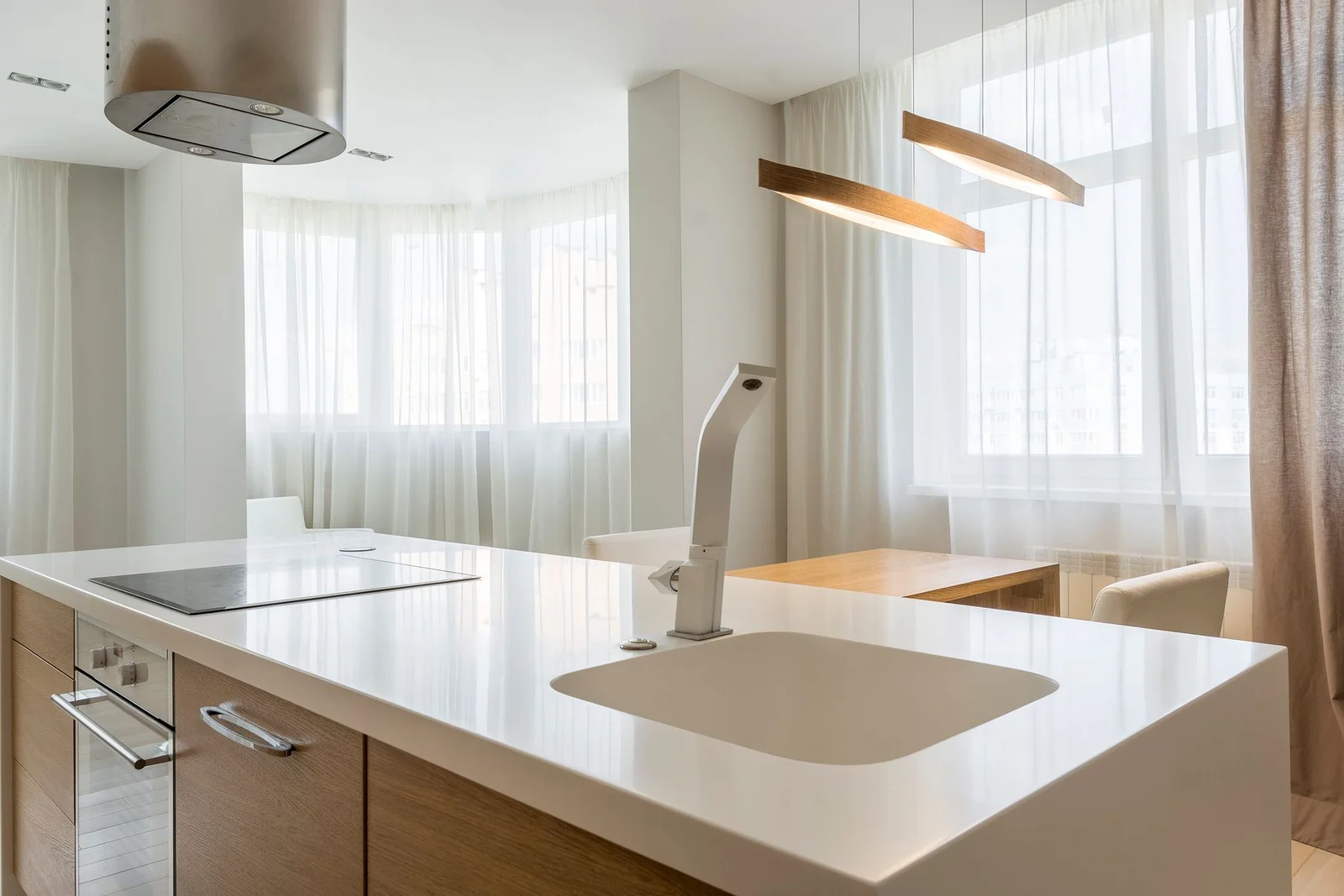
Check the care label before assuming linen, velvet or a lined panel can go in a washing machine. A curtain that needs difficult cleaning may be a poor fit beside everyday cooking. Avoid floor puddling where fabric collects dirt, obstructs a route or stays damp; a clean, operable window treatment supports the room better than an elaborate hem you cannot maintain.
Compare Thermal Performance by Product
Window coverings can influence comfort, but construction, fit, glazing and daily operation all matter. The Department of Energy's window-covering guidance, listed by Pacific Northwest National Laboratory, covers different window attachments. Compare the tested performance of the product you plan to buy rather than assuming that velvet, a dark color or a Feng Shui element makes it thermally superior.
If heat is the main issue, ask what the covering is tested to do and whether the benefit depends on keeping it closed. Consider whether exterior shading, an air-leak repair or a different seating position addresses the actual problem more directly. Do not let curtains hide persistent condensation or dampness without investigating the cause.
Choose Curtain Color in the Actual Room
Start with the walls, flooring and largest furniture, then decide whether the curtain should blend in or create contrast. Warm white beside oak can keep a window visually quiet. A subdued blue-green beside off-white walls can make the window a stronger color feature. Darker brown panels can relate to timber furniture, but a large expanse of dark fabric is more visually dominant than a small cushion in the same color.

Five Elements and Bagua associations can be an optional layer after the curtain functions well. There is no universally lucky curtain color, and neutral fabric is not automatically better Feng Shui. If you use element symbolism, our Five Elements guide explains the relationships without making a purchase promise.
View the sample beside the window in daylight and under the lamps you use at night. Backlighting can make fabric look lighter and more translucent than it does in a shop. Finish by opening and closing the treatment, checking the view from outside and confirming that its hem, stack and operating controls suit everyday life.