



Quick Answer
First distinguish a hanging faceted glass Feng Shui ball from a natural mineral specimen. Hang the former securely above head clearance, away from direct sunlight; display the latter on a stable surface suited to its weight, fragility and care. Put heavy clusters on stable furniture, protect surfaces from rough bases, and do not assume every mineral can be soaked, steamed or left in strong sun. Use Feng Shui meanings such as wealth, love or protection as symbolic traditions, not medical or financial claims.
"Crystal" is a broad retail word. A polished rose quartz heart, an amethyst geode and a metallic pyrite cluster are physically different objects even when a Feng Shui list places all three under the same heading.
That matters because display and care depend on the material. Do not choose a permanent crystal placement until you know what the object is and whether the surface can safely support it.
Hanging glass balls are not natural mineral crystals
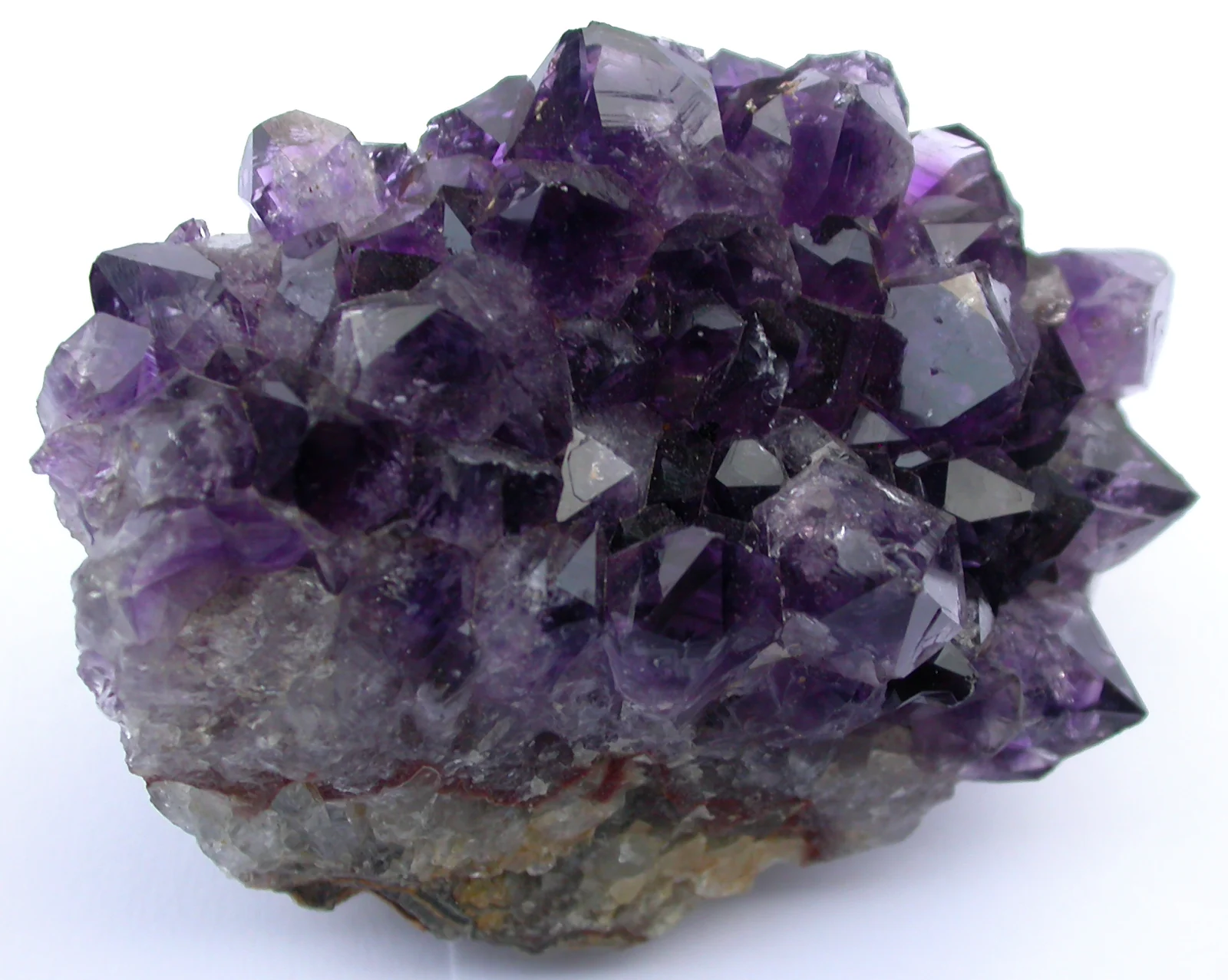
A Feng Shui crystal ball is usually a faceted glass sphere with a suspension hole. A piece of amethyst or rose quartz is a natural mineral specimen. Mindful Design School makes this distinction when describing its BTB-style hanging-ball practice. In that tradition, a ball may be hung in a hall or between a door and a bed as a symbolic adjustment; it does not replace a clear route, working light or a better furniture arrangement.
Use a ceiling fixing and suspension suited to the object and ceiling. Keep it above head clearance, outside door swings, and away from ceiling fans or climbable furniture. The appropriate suspension length and hardware depend on your ceiling and object. If the ceiling is too low for safe clearance, use another decorative approach.
Direct-sun window placement needs care. Essex County Fire and Rescue Service's glass-globe incident report describes sunlight concentrated by a glass object setting curtains alight. Keep hanging balls out of direct sunlight rather than choosing a sunlit window for rainbow effects.
Start With Mineral Identity
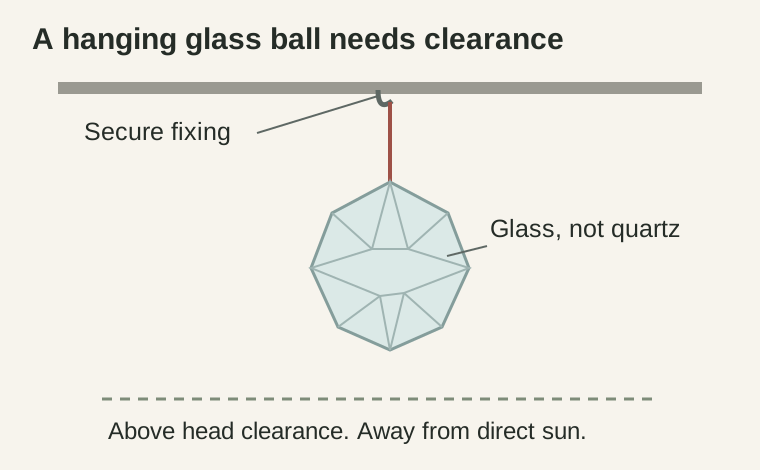
Clear quartz, rose quartz and amethyst are varieties of the same mineral species, quartz. Their different colors do not make their care identical in every finished object: a specimen may include other minerals, glued attachments or treatments. GIA's amethyst care guide describes Mohs hardness 7 and warm soapy water as a safe cleaning method for amethyst, while advising against steam cleaning. Prolonged intense light can fade some amethyst color.
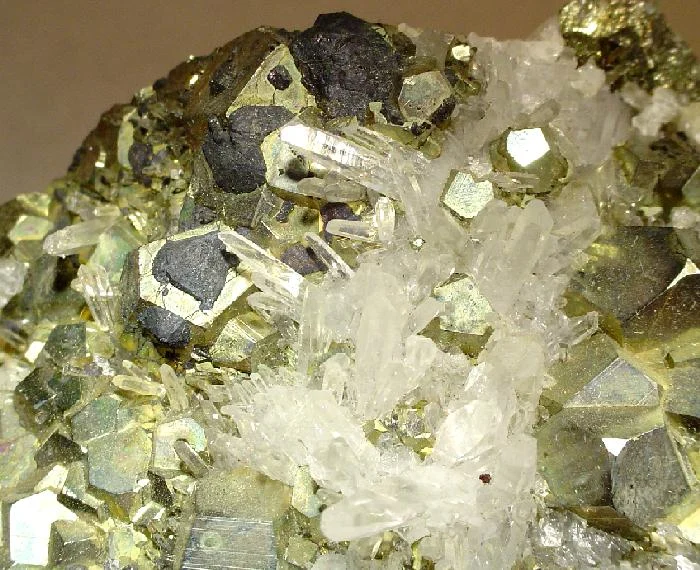
Pyrite is iron sulfide, not quartz. Its brassy metallic cubes and clusters can look robust, but moisture is a different concern. The American Museum of Natural History's collections guidance explains that high humidity can promote oxidation of iron pyrite. Identify the material before applying a general crystal-care routine, especially if it is valuable or attached to another specimen.
Compare Quartz, Amethyst and Pyrite
Mineral appearance, display and care are different questions
Scroll sideways to compare all columns.
| Material | Visual clue | Display concern | Care note |
|---|---|---|---|
| Clear quartz | Transparent to translucent, glassy | Clusters can have sharp points and heavy bases. | Check treatments, attachments and any other minerals before cleaning. |
| Amethyst | Purple quartz | Prolonged intense light may affect color. | GIA says warm soapy water is safe; avoid steam. |
| Pyrite | Brassy-gold metallic appearance | Weight and humidity can affect display decisions. | Avoid generic soaking advice for unknown specimens. |
If the specimen is valuable, treated, attached to another mineral, or poorly identified, use specialist guidance rather than a general decor cleaning routine.
Put Weight and Stability Before the Bagua
A large geode can weigh far more than it appears to in a styled photograph. Weigh the object, check the shelf and bracket rating, and confirm that the wall fixing supports the complete load. Set the specimen down gently and check whether its base rocks or its center of gravity makes it easy to tip. A stable shelf is not sufficient if a projecting point sits where someone can bump it.
Use a protective pad or properly sized stand where the rough base could scratch the surface. Keep heavy pieces on suitable low furniture rather than above a bed or an occupied chair. A small desk crystal and a 15 kg geode are different placement tasks, even when both are assigned the same symbolic meaning.
Build a Stable Shelf Arrangement
A small group can work when each piece has a stable base and the furniture remains usable. For example:
- one medium amethyst specimen as the focal object,
- one small quartz piece grouped nearby,
- one pyrite specimen kept dry on a separate protective base.
Leave enough room to dust around the objects and lift each specimen safely. Avoid stacking minerals unless the display system is designed for it.
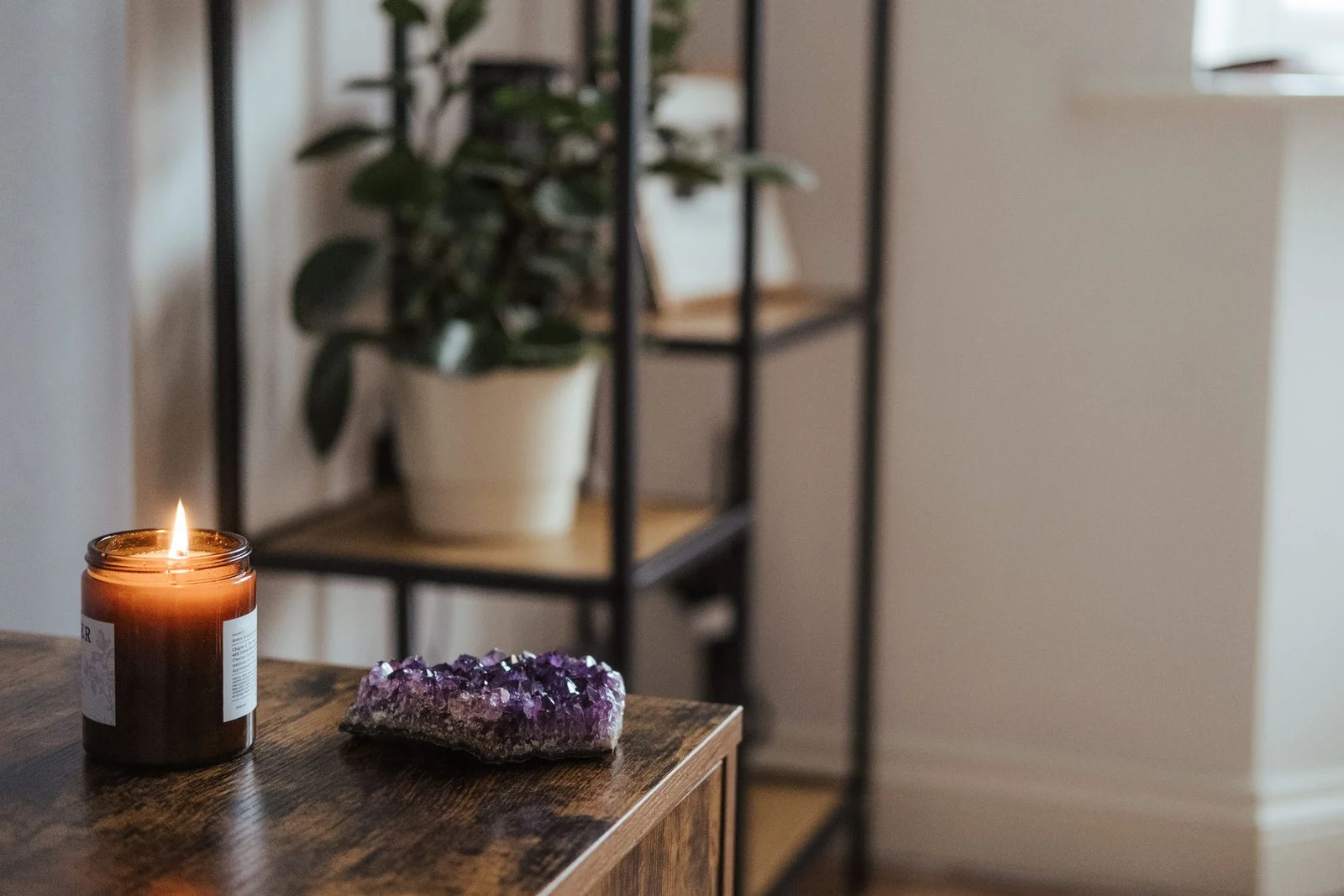
On a small bedside table, begin with the lamp, phone and water-glass positions, then see whether one specimen still fits. For example, a piece with a 15 cm base may fit the tabletop but project into the area where your hand reaches for the lamp switch. Try the arrangement with your normal evening routine before leaving it there. If it crowds that routine, move it to a separate stable surface rather than reducing access to essentials.
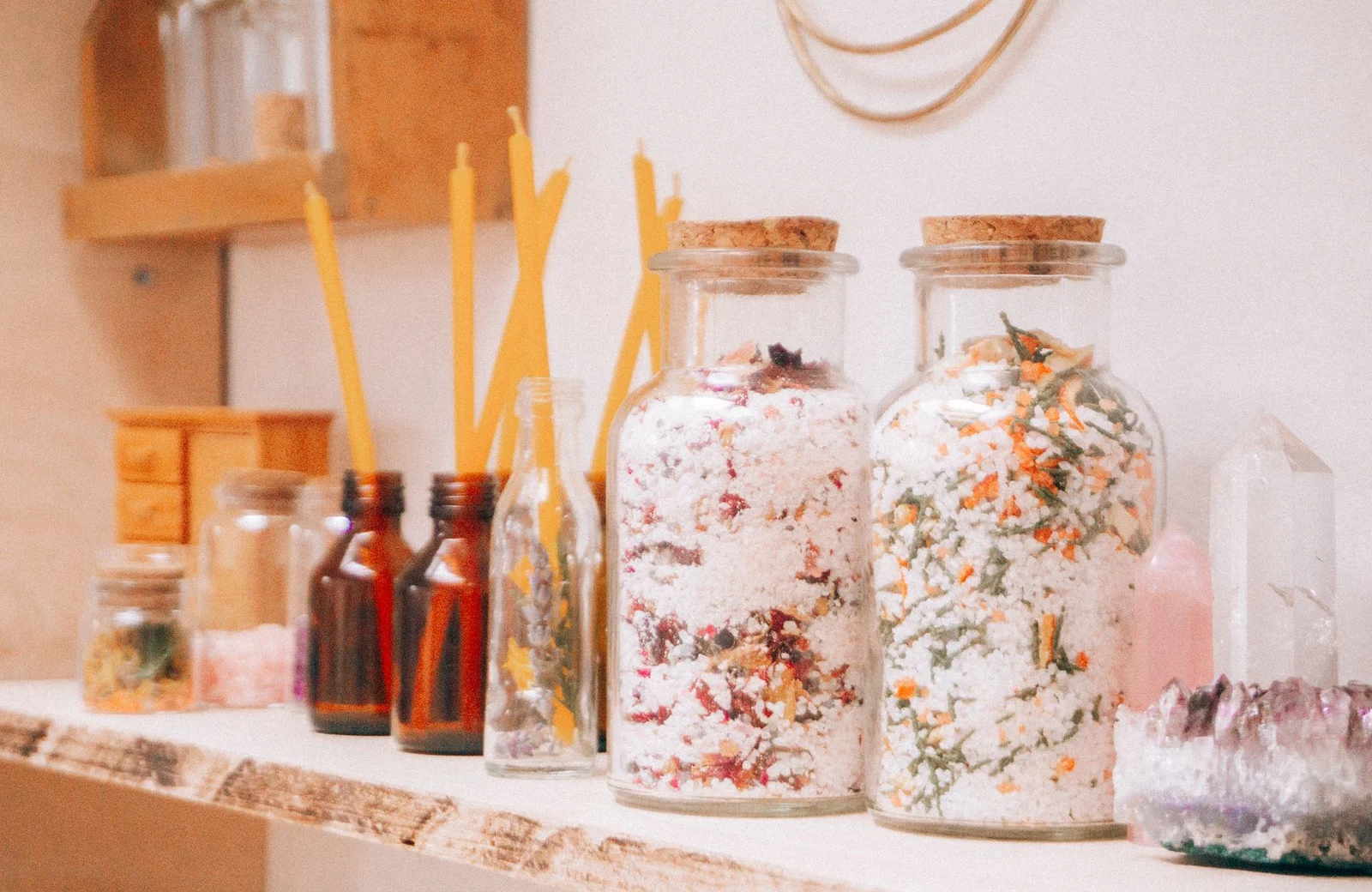
Feng Shui Meanings Without Guaranteeing Outcomes
Mineral meanings in modern crystal decor are not one standard classical Feng Shui system. For example, the contemporary retailer Energy Muse's crystal collection markets amethyst with peace, rose quartz with love, citrine with positivity and abundance, and pyrite with wealth. Its black tourmaline bracelet description uses protection symbolism. These examples document that retailer's associations, not physical powers of the stones.
Choose an intention that means something to you, then match the object to a usable surface. A rose quartz piece can serve as a personal relationship reminder on a shared shelf; a small pyrite specimen can mark a savings goal beside a planner. Neither example requires buying a complete set, and material care still comes before symbolism.
These are contemporary cultural and practitioner associations, not evidence that a mineral treats anxiety, improves fertility, prevents illness or produces money. Use a crystal as a meaningful visual reminder if the symbolism matters to you. Do not substitute it for medical, mental-health, safety or financial decisions.
For other objects that can share a room with a small crystal display, see Feng Shui positive energy items. Leave space around each object rather than filling the surface.
Crystals in the Bedroom
A bedroom display usually benefits from less weight and less visual noise. Choose a location where:
- the object cannot fall onto the bed,
- sharp points are not at face level beside the pillow,
- the surface can support the weight,
- and the display does not turn the bedside table into an unusable collection shelf.
If you use rose quartz or amethyst for symbolic reasons, one intentional piece can be enough.
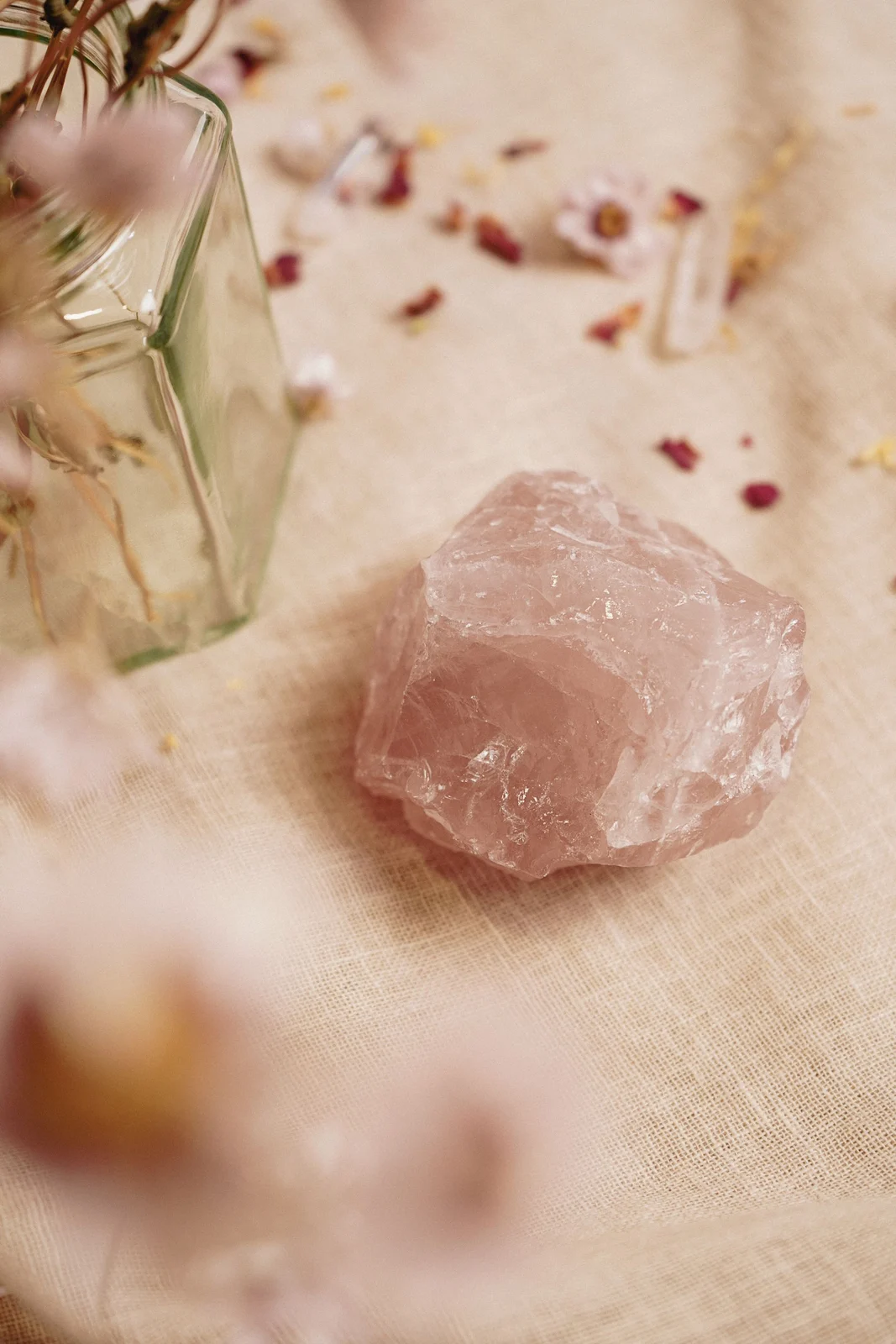


Crystals in an Office or Wealth Area
A desk crystal can function as a personal symbol without occupying the working surface. Keep it out of keyboard, paper and cable routes. If you use Bagua associations, map the space first rather than calling every southeast tabletop a wealth corner.
For a broader Feng Shui map, use the Bagua guide. A small pyrite or citrine display can express prosperity in the wealth area if that symbolism matters to you; rose quartz may express relationships in a relationship-area display. Compass-based southeast and southwest zones are not the same positions as the far-left and far-right zones of the entrance-aligned map. Choose one mapping method, then use a stable surface that is actually available there. Do not force a heavy specimen onto an unsuitable shelf.
Cleaning and "Cleansing" Are Different Questions
Physical cleaning removes dust, skin oils or dirt. Spiritual cleansing is a ritual practice. Do not confuse the two. For physical cleaning:
- identify the material,
- check treatments, attachments and matrix material,
- follow mineral or gemstone care guidance,
- avoid strong chemicals unless specifically appropriate.
For spiritual cleansing, practices vary widely. If you choose a quiet intention-setting ritual, treat it as a personal or cultural practice rather than a requirement for the mineral to be physically safe. Salt baths, soaking, heat and strong chemicals can damage some objects, regardless of the ritual name.