


Quick Answer
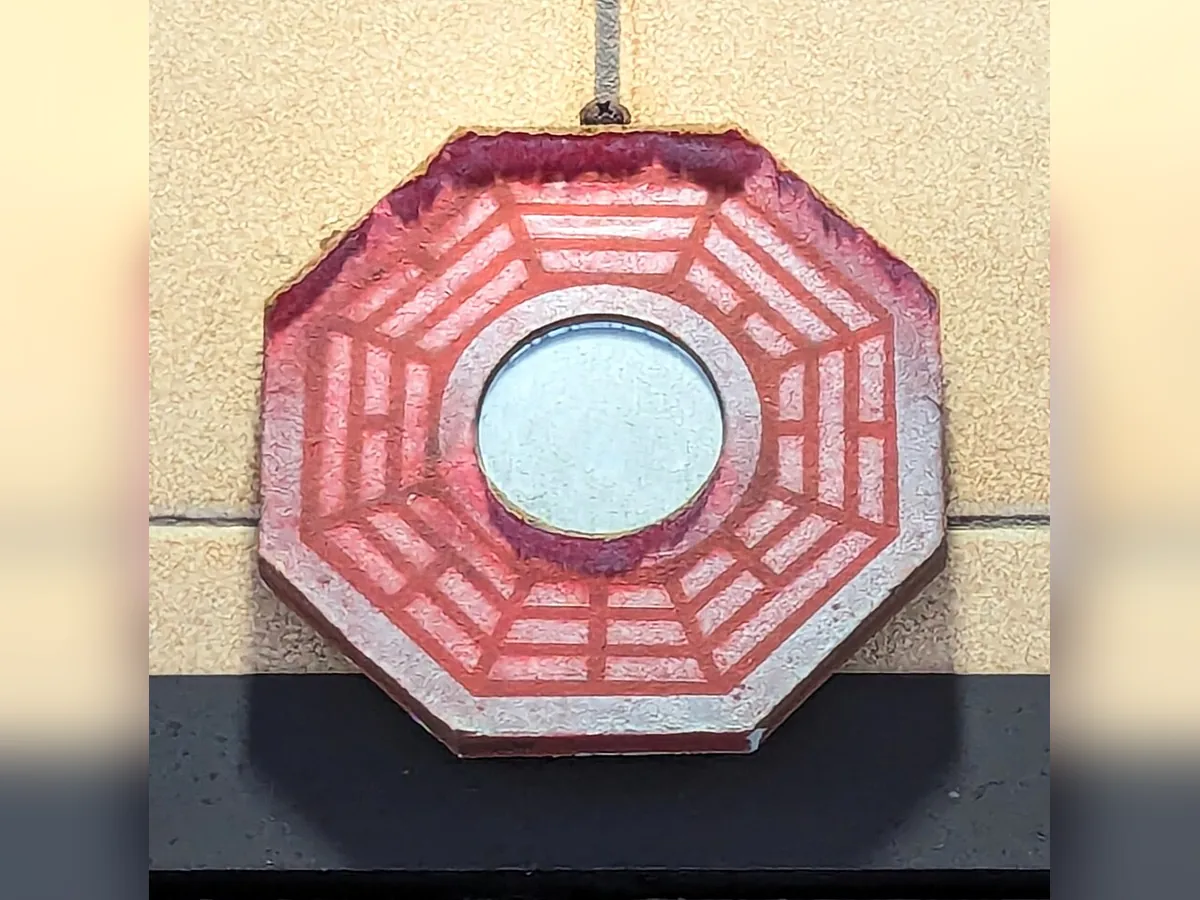
A bagua mirror is a Feng Shui talisman, not a normal decorative mirror. Identify the trigram frame and whether the reflective surface is flat, convex or concave before following placement advice. Many traditions reserve it for exterior use, but schools disagree on details, so do not treat one online rule as universal. In shared buildings, safe mounting and neighbor impact matter more than symbolism.
Flat, Convex or Concave? Compare the Three Centers
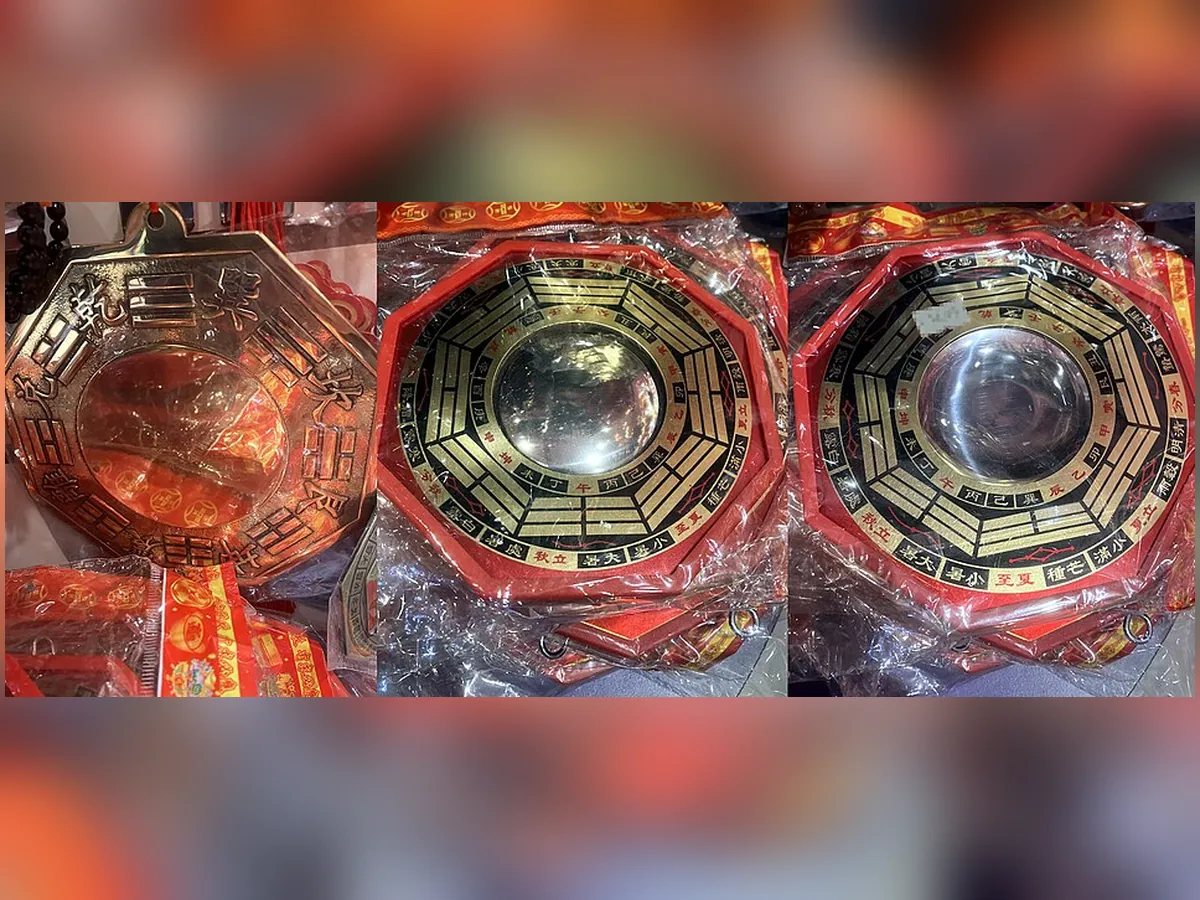
A flat center reflects in the familiar way. A convex center curves outward, offering a broader reflected field with smaller images. A concave center curves inward and changes magnification according to the subject's distance; in strong sunlight a concave reflecting surface can concentrate light. Those are optical observations, not proof that a mirror redirects spiritual forces.
Traditionally, practitioners may describe flat versions as returning or reflecting an external influence, convex versions as dispersing it, and concave versions as drawing or collecting. The explanation and advice are school-dependent, so avoid treating an online chart as a universal prescription. Our ordinary mirror-placement guide is for indoor decorative mirrors, not outdoor talismans.
Three bagua mirror styles and what to check
Scroll sideways to compare all columns.
| Type | Shape | Common symbolic reading | Practical caution |
|---|---|---|---|
| Flat | Level reflective surface | Reflection or return | Reflected view and glare toward people |
| Convex | Bulges outward | Dispersion | Distorted view; secure outdoor mounting |
| Concave | Curves inward | Gathering or absorption in some schools | Potential concentrated sunlight; avoid casual placement |
Should a Bagua Mirror Go Inside or Outside?
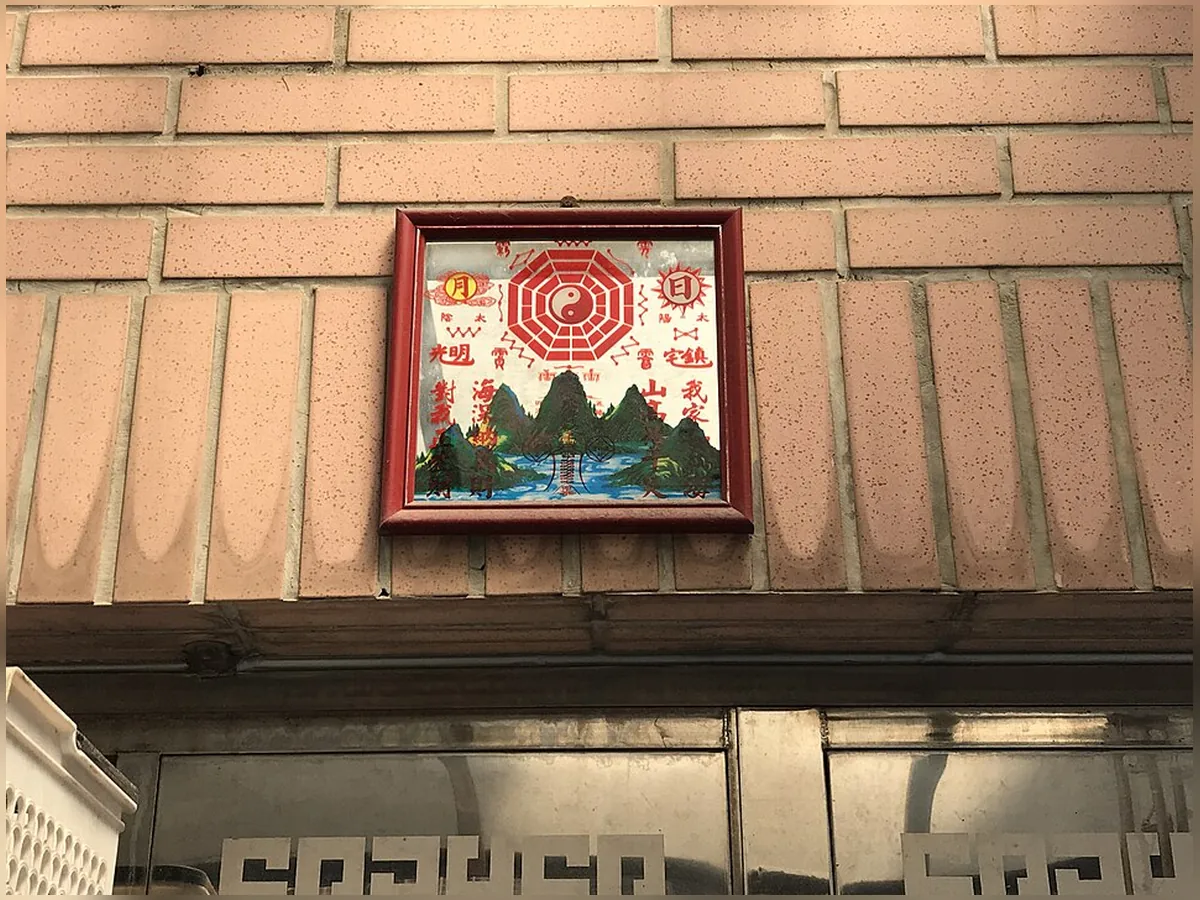
In many traditional and contemporary practices the bagua mirror is used outside, often above an entry or window in response to a particular exterior feature. It is not a default solution for bedroom reflections, clutter, a dark hallway or a narrow passage. There is no need to purchase one because a generic article describes the house as unlucky.
What If It Faces a Neighbor's Door?
A visible protective device pointed at another household can be read as hostile even when no harm is intended. In an apartment building, a shared corridor or a row of attached homes, ask whether the object adds conflict rather than solving a problem. A nonreflective decorative entry sign, improved lighting or an adjustment to your own view may be more considerate.
Outdoor Installation Checklist
Check landlord or homeowners' association permission, outdoor exposure, fixing hardware, wind load and surface integrity. Never drill through weatherproofing or mount a heavy or brittle object above a public doorway without appropriate expertise. Test reflections at morning and afternoon sun angles and look at any nearby windows. The safest response to uncertainty is often not to install.
A Bagua Frame Is Not the Same as the Bagua Map
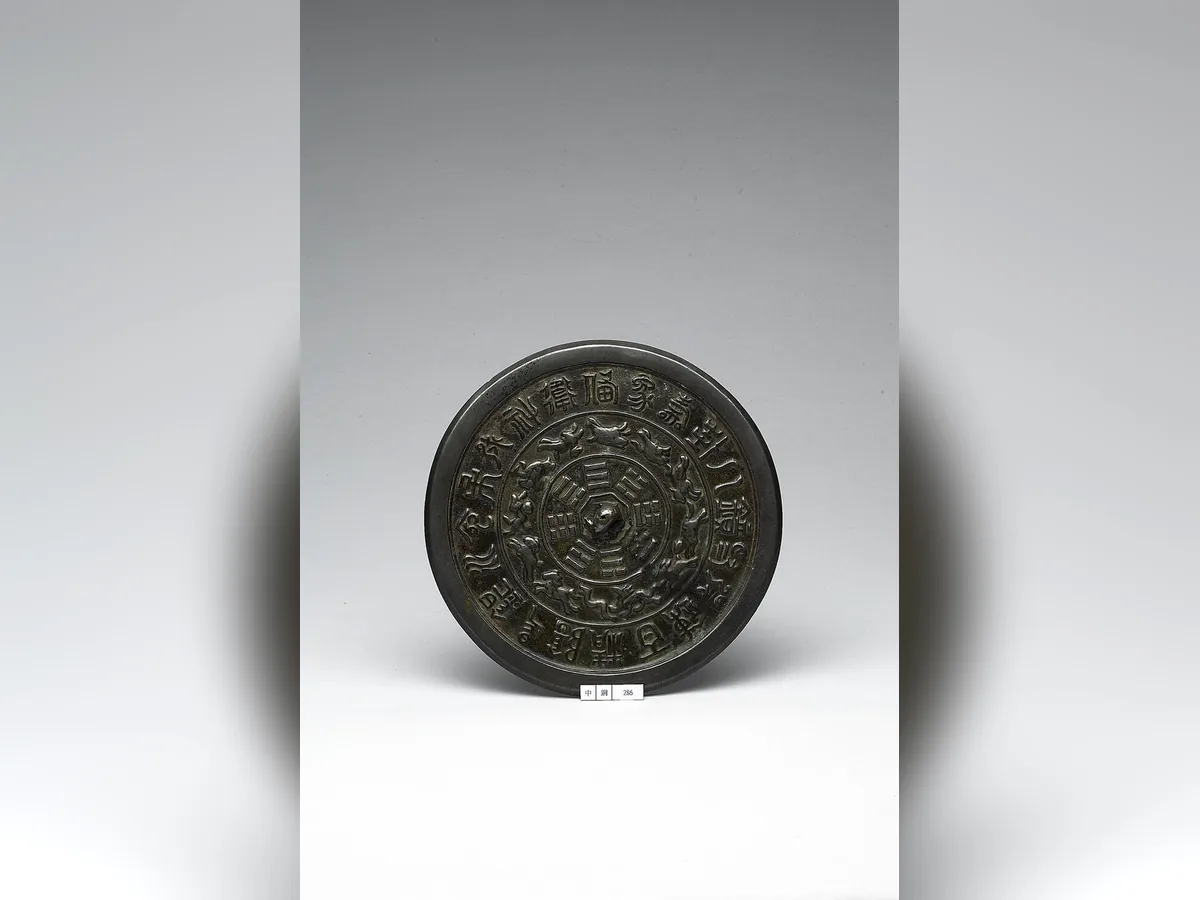
The eight trigrams belong to an older Chinese symbolic system associated with the Yijing (I Ching). Their use on a modern octagonal mirror is distinct from applying a bagua map to the rooms of a home. Historical bronze mirrors with trigram decoration provide valuable material context, but a museum object is not an installation instruction for a contemporary apartment.
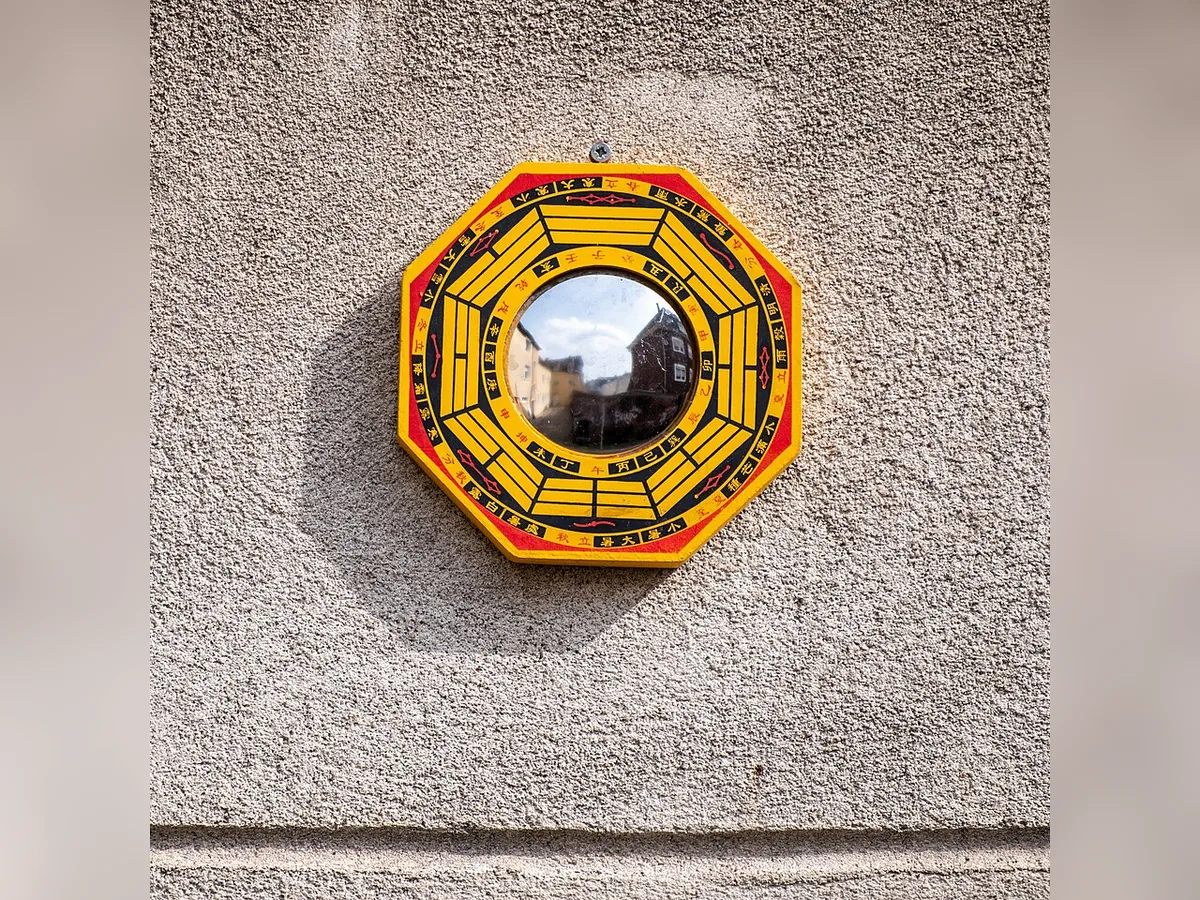
Identify trigrams and mirror type
A bagua mirror combines an eight-sided trigram frame with a reflective center. That makes it different from the ordinary mirrors covered in our Feng Shui mirror guide.
Before asking where to hang one, confirm what you actually own. Modern products are often sold as flat, convex or concave versions. A useful Wikimedia Commons reference shows all three side by side and is especially helpful because product listings sometimes use the terms loosely.
Do not infer a mirror type from frame color alone. Red, green, yellow and wood-tone frames appear in many commercial versions, and color does not reliably tell you whether the center is flat, bulging outward or curving inward.
If the trigrams are decorative or reversed, do not invent a traditional meaning for them. Treat the object as a modern talisman unless you have a source for its specific design.
Distinguish flat, convex and concave surfaces
The three mirror shapes behave differently as optical surfaces.
A flat mirror produces the familiar reflection of an ordinary mirror. A convex mirror curves outward and shows a wider field with smaller reflected objects. A concave mirror curves inward and can magnify or invert reflections depending on distance.
Those physical effects are real optics. Claims that one shape "sends bad energy back" or another "pulls good energy in" belong to practitioner traditions, not physics. Keep those categories separate.
This distinction also changes the practical risk. A curved mirror may catch sunlight or neighboring sightlines differently from a flat surface. Test the real location before mounting anything outdoors.
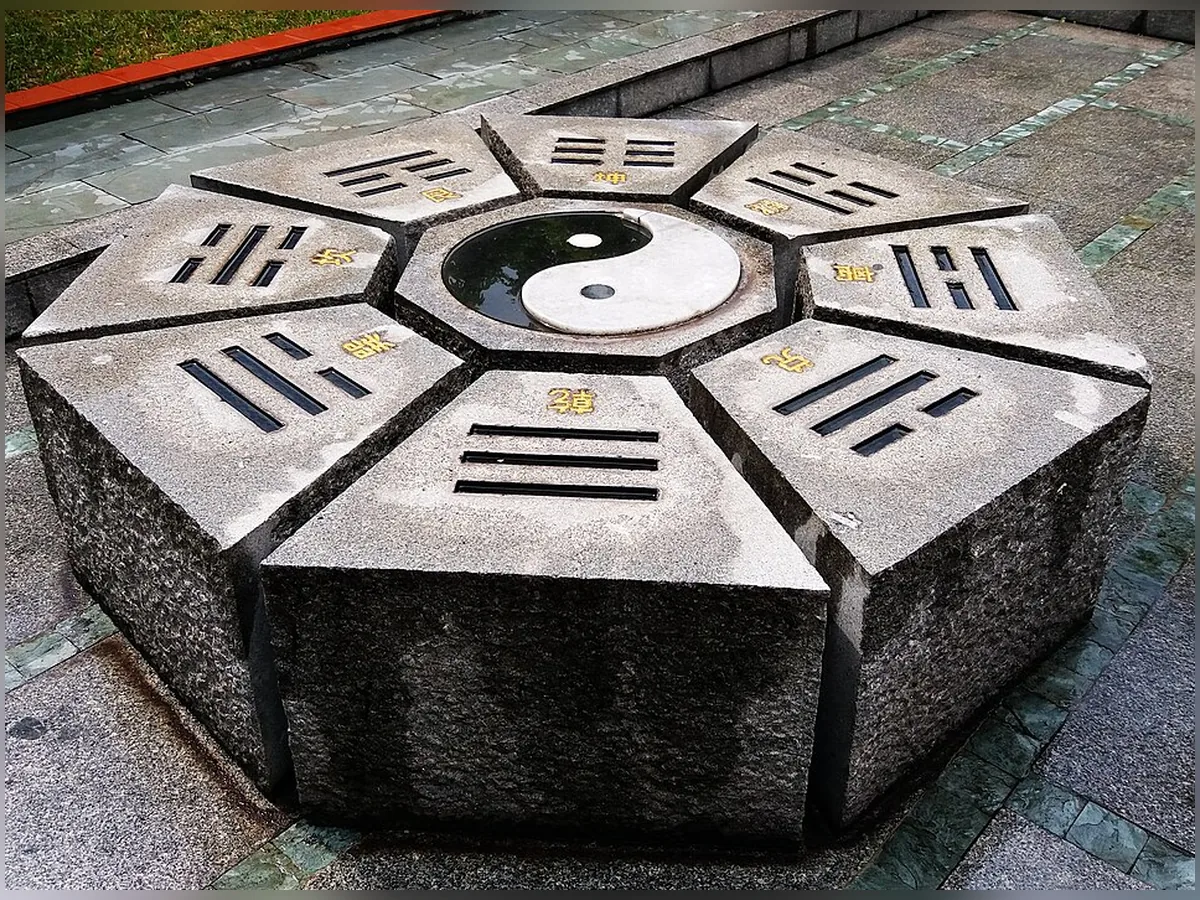
Compare school-specific intended uses
Many contemporary Feng Shui sources reserve bagua mirrors for external conditions such as a sharp building corner, long straight approach or visually aggressive structure. Some distinguish convex and concave versions differently. The details are not consistent enough to present one universal chart as fact.
A better approach is to record the school or practitioner source you are following and ask what problem the object is supposed to address. If the issue is actually an indoor mirror reflecting a bed, hallway or front door, a bagua mirror is the wrong tool. Use the normal mirror placement guide instead.
Likewise, do not confuse the bagua mirror with the Bagua map. They share the eight-trigram concept, but one is an object and the other is a mapping framework.
Assess glare and shared entrances
Exterior placement can affect other people. In an apartment corridor, townhouse row or narrow lane, a reflective object may face a neighbor's door or window. Even if a practitioner recommends that direction, the social result may be unnecessary conflict.
Look at the proposed location in direct sun and at night under exterior lighting. Check whether the mirror produces a distracting flash or becomes a conspicuous object in a shared entrance.
If you rent or live in a managed building, confirm the rules before drilling or attaching anything to the façade. A symbolic remedy is optional. Building permissions are not.
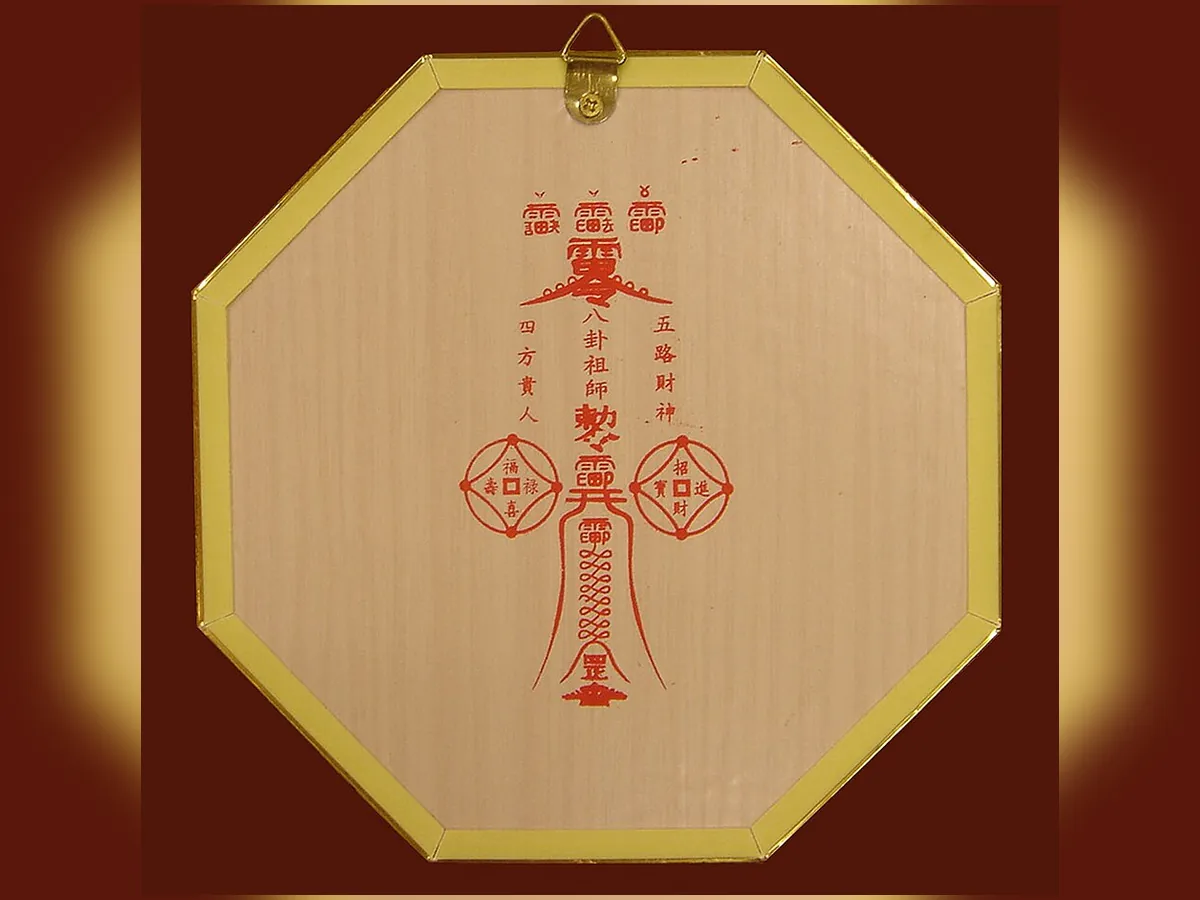
Select safe fixing
Use a fixing method designed for the wall material, object weight and outdoor exposure. Weather, wind and repeated door vibration matter. Do not rely on adhesive intended only for indoor decor if the object is above an entrance.
If you cannot verify a secure installation, do not mount the mirror overhead. A small talisman is not worth creating a falling-object hazard.
The same principle applies to decorative items around the front door: attachment, access and maintenance come before symbolic placement.


Decide when an ordinary mirror or no mirror is preferable
A bagua mirror is not a default purchase for every awkward entrance. If the actual problem is a dark entry, poor wayfinding, clutter, a door that hits furniture or an unattractive view, solve that problem directly.
An ordinary mirror may be useful when you need reflection inside the home. No mirror may be better when the only reason to install one is fear created by a generic online warning.
This is a good place to use the broader Feng Shui Symbols guide: understand the object's tradition, decide whether it is meaningful to your household, and skip it when it does not improve the space.