



Quick Answer
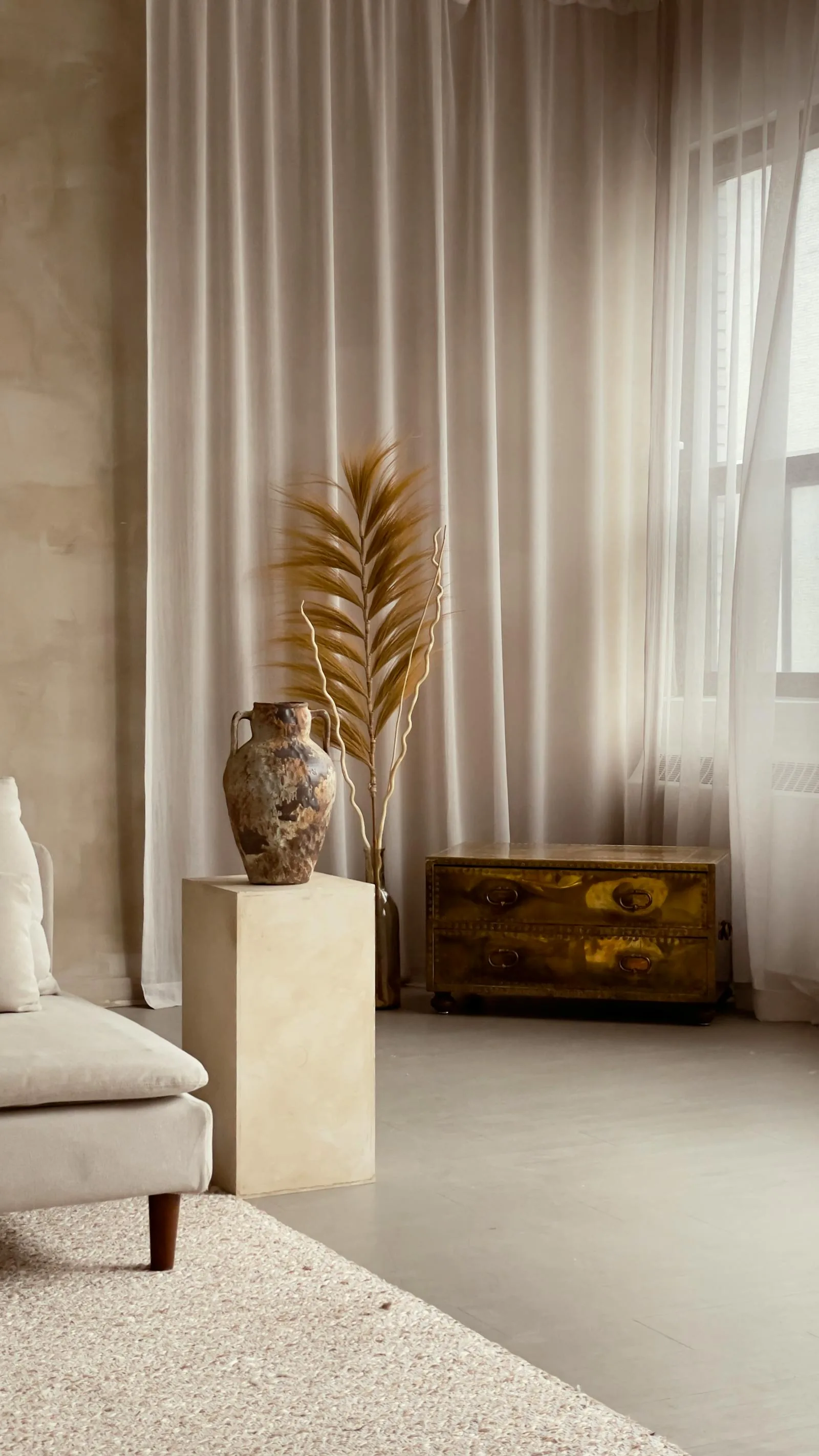
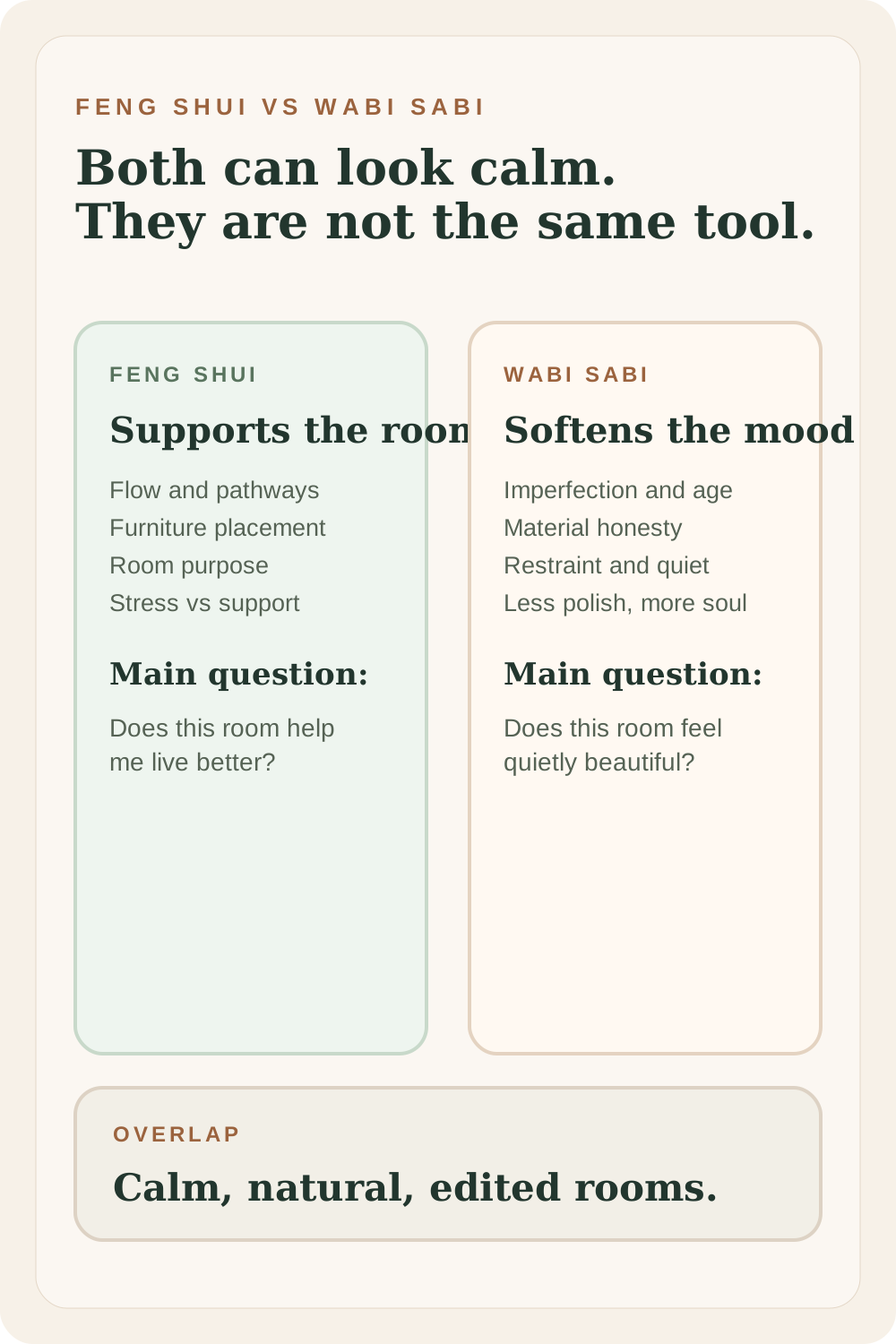
Feng shui and wabi sabi can look similar on the surface because both often favor calmer, quieter rooms. The difference is that feng shui is mainly about flow, placement, and how the room supports life, while wabi sabi is more about beauty through restraint, imperfection, and natural age.
If feng shui asks, "Does this room support me well?", wabi sabi asks, "Does this room feel honest, quiet, and naturally beautiful?"
That is why the two often work well together but still should not be treated as identical. Feng shui aesthetic already shows the softer design language that many readers are looking for. Here, the clearer question is what each framework is trying to solve inside a real home.
Where Feng Shui and Wabi Sabi Overlap
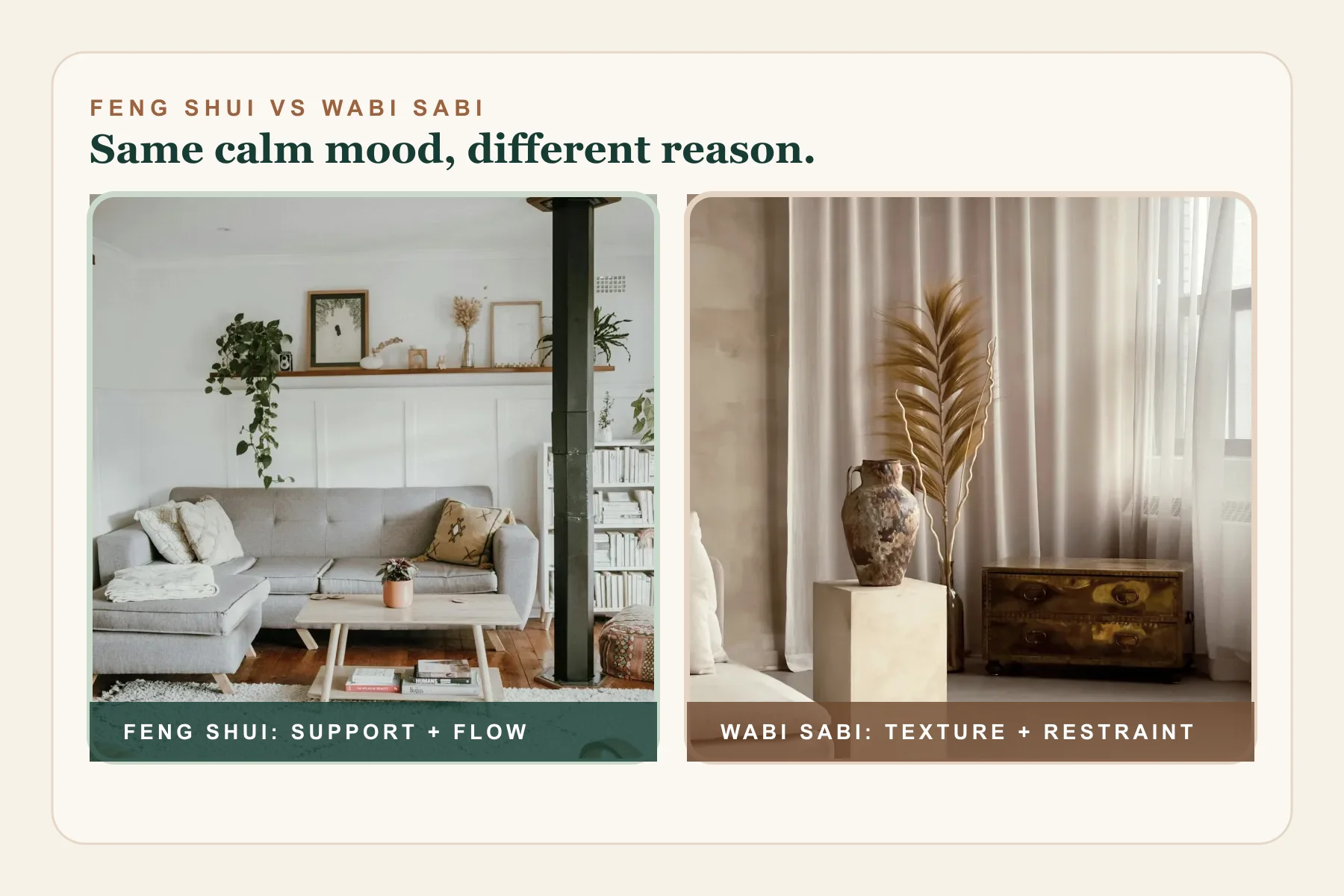
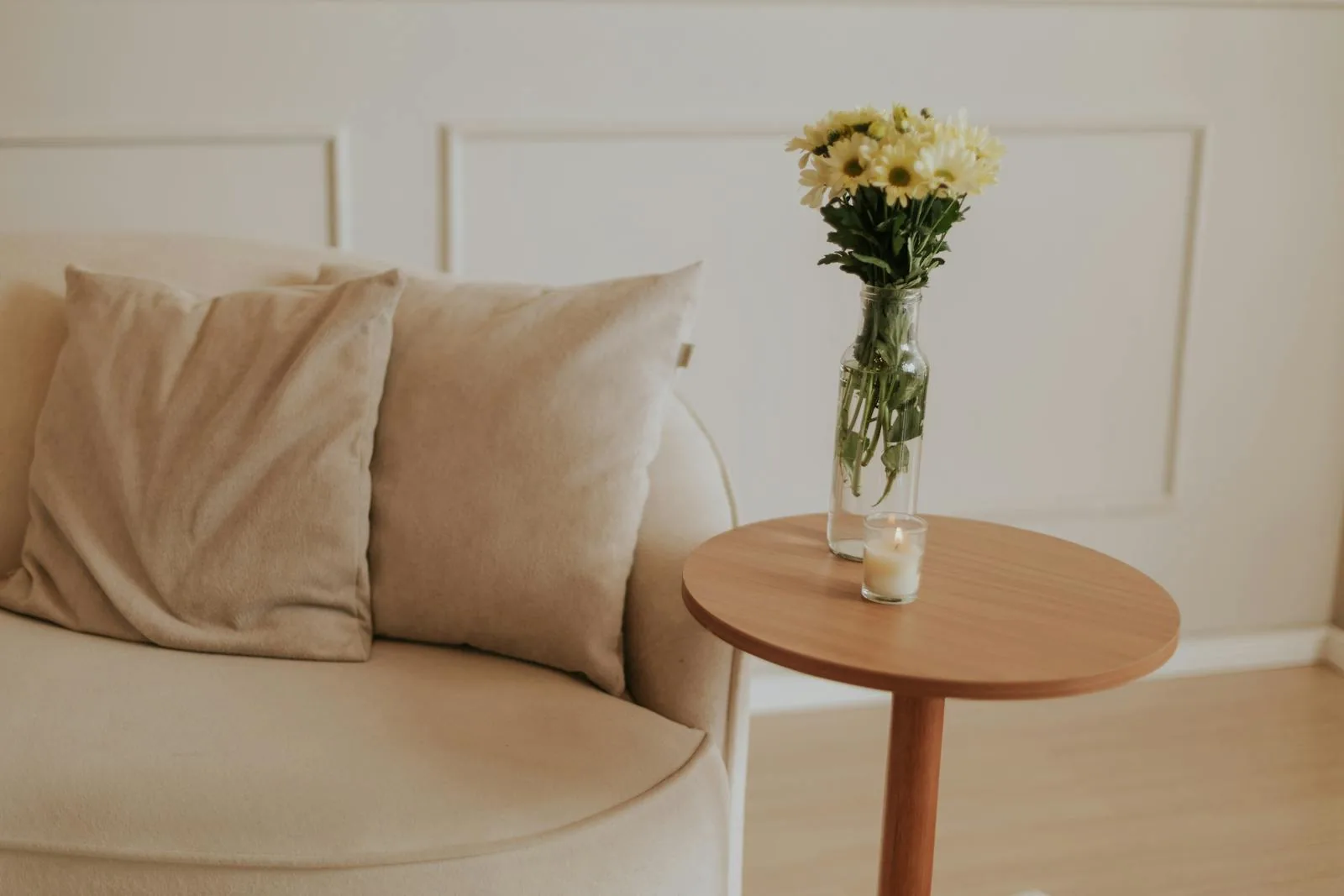
Both tend to dislike visual noise. Both work better with natural materials than shiny, overworked surfaces. Both often favor softer color, calmer objects, and rooms that leave enough space for the eye and body to settle. That is why a room can look very wabi sabi and still feel feng shui-friendly.
Less clutter
Both feel better when shelves, surfaces, and pathways are not shouting for attention.
Natural materials
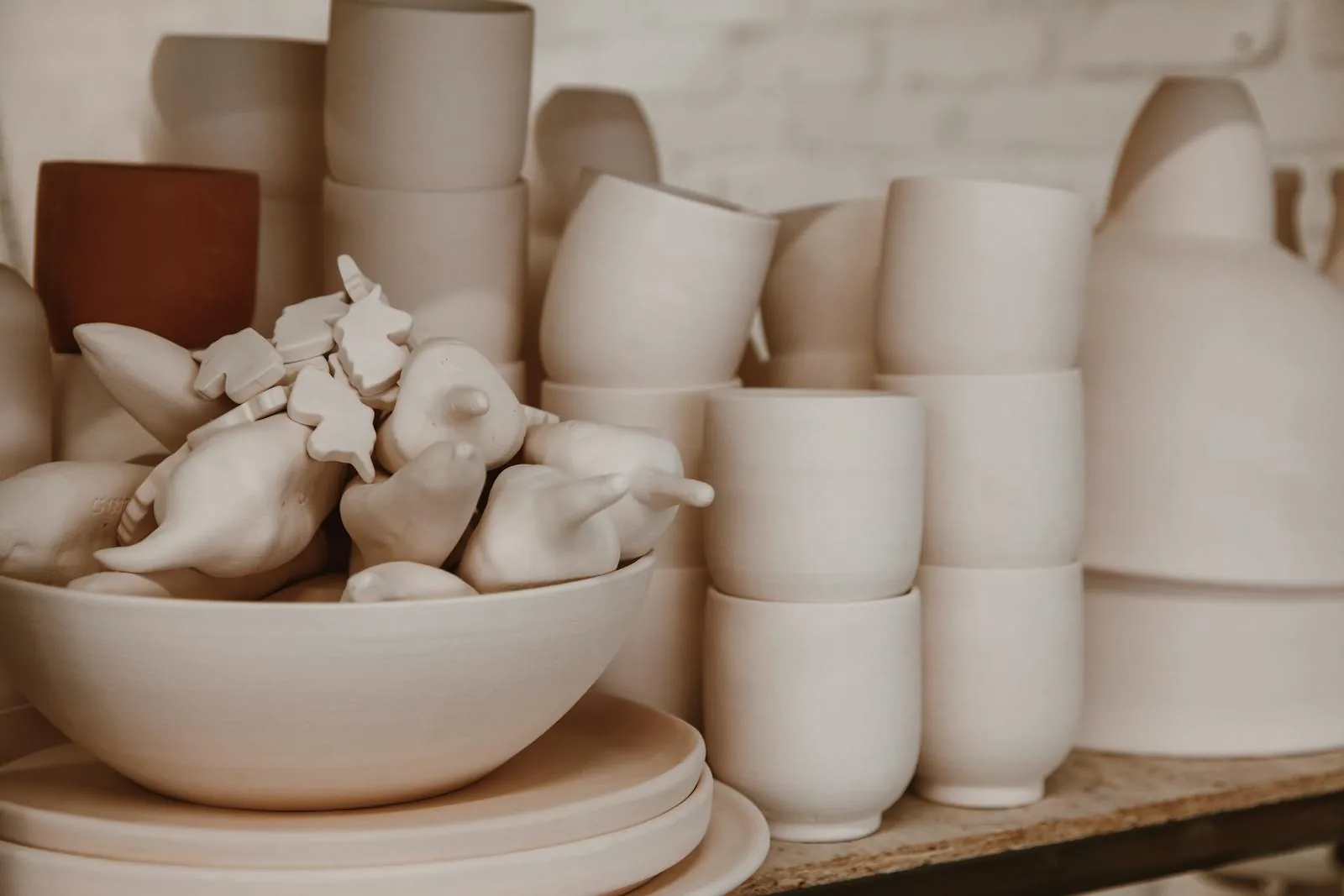
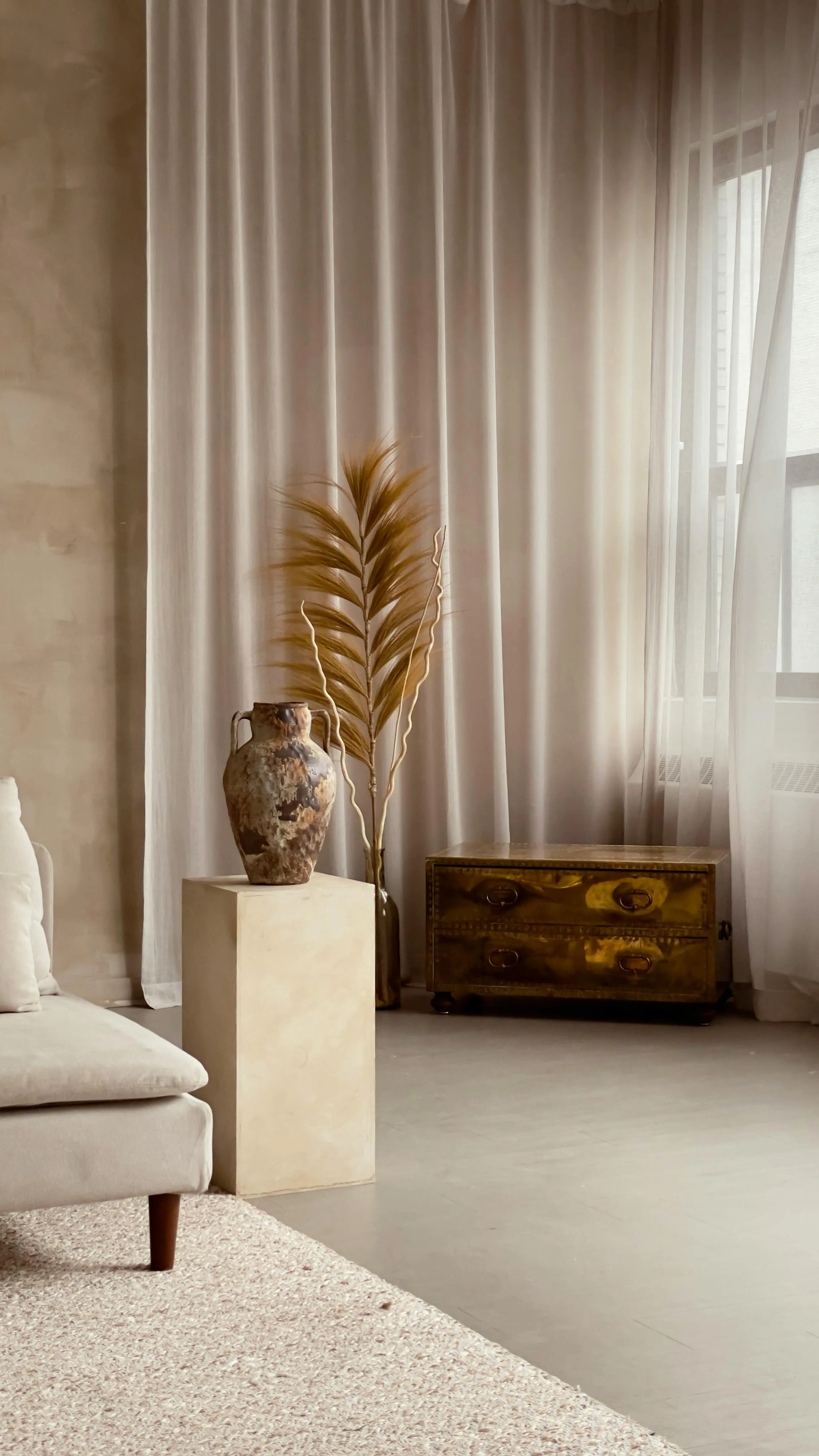
Wood, linen, clay, stone, woven fibers, and handmade objects help both approaches feel grounded.
Softer atmosphere
Muted color, warm light, lower contrast, and quieter surfaces make the overlap easy to see.
How Feng Shui and Wabi Sabi Actually Differ
Feng shui focuses on
- +Furniture placement and room flow.
- +How supported, calm, or snagged the room feels to live in.
- +Readable room purpose, easier movement, and lower visual drag.
- +The relationship between entry, bed, desk, stove, light, and daily behavior.
Wabi sabi focuses on
- -Imperfection, patina, asymmetry, and restraint.
- -Beauty that feels quieter, older, and less polished.
- -Material honesty more than symbolic placement rules.
- -A home that feels soulful without feeling overdesigned.
In plain language, feng shui gives you a room-behavior framework. Wabi sabi gives you more of a visual and material sensibility. Feng shui can tell you why the bed, desk, or entry still feels wrong. Wabi sabi can tell you why the same room still feels too slick, too perfect, or too loud even after the layout improves.
Quick Comparison
Choose feng shui when
the room is hard to use, the furniture feels awkward, the entry feels blocked, the bed or desk feels exposed, or the space lacks a clear job.
Choose wabi sabi when
the room technically works, but it feels too new, too glossy, too perfect, or emotionally flat.
Which One Fits You Better?
A practical way to choose
You do not have to choose only one. The useful move is knowing which one should lead.
Lead with feng shui if the room feels stressful to use
Lead with wabi sabi if the room feels too polished or emotionally flat
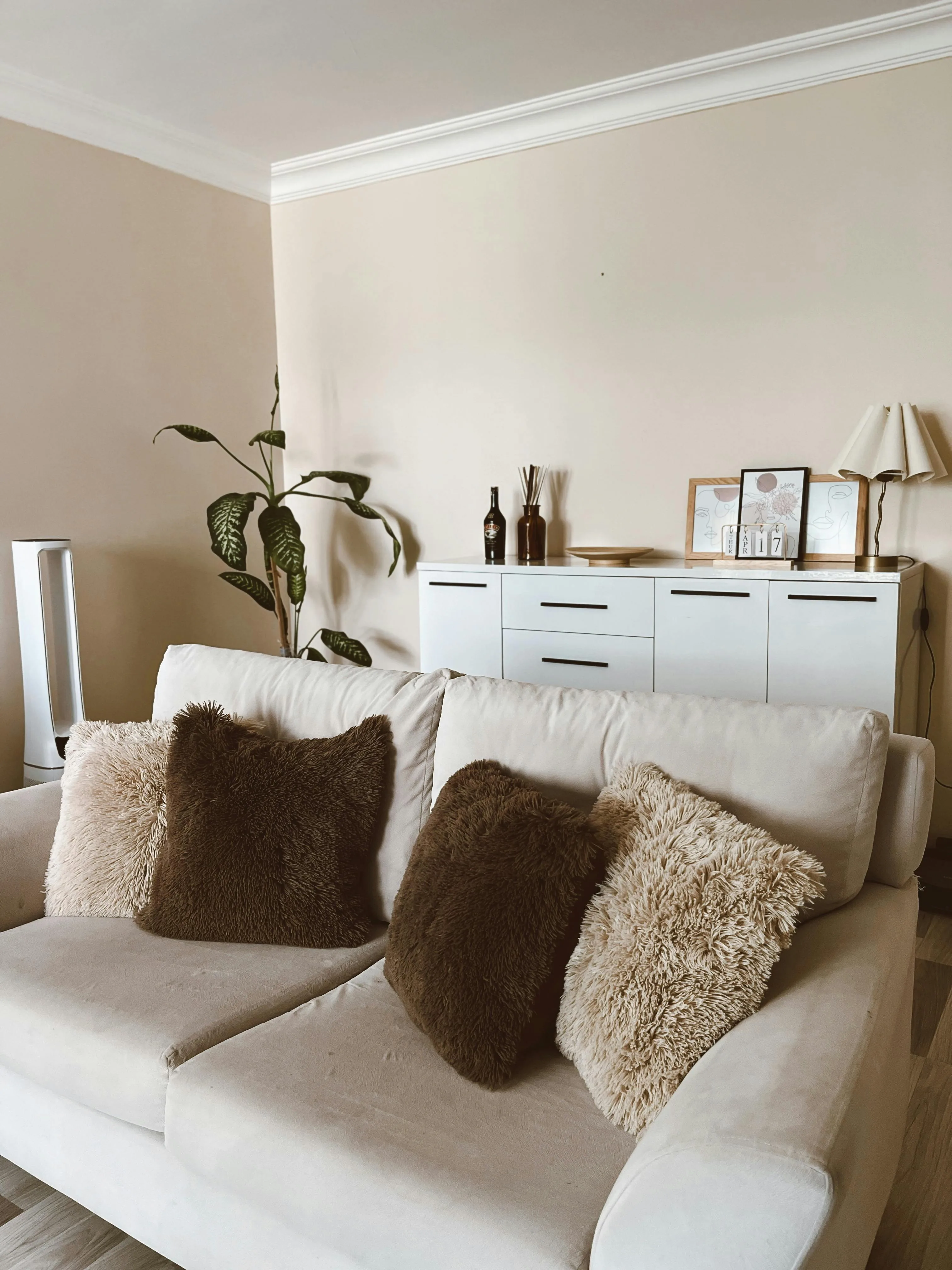
Combine them if you want calm that still feels human
If you want to combine them well, the best companion articles are feng shui home decorating, feng shui declutter ideas, and feng shui inspiration. Together they help bridge the placement side and the aesthetic side.
Frequently Asked Questions
Is feng shui the same as wabi sabi?
Can a room be both feng shui and wabi sabi?
Which is more practical for interior design?
Does wabi sabi mean minimalist?
The Bottom Line
Feng shui and wabi sabi overlap in calm, natural, edited rooms, but they are not interchangeable. Feng shui is more about how the room supports life. Wabi sabi is more about how the room holds beauty, restraint, and imperfection.
If you want the strongest result, let feng shui solve the room and let wabi sabi soften the atmosphere.