

Quick Answer
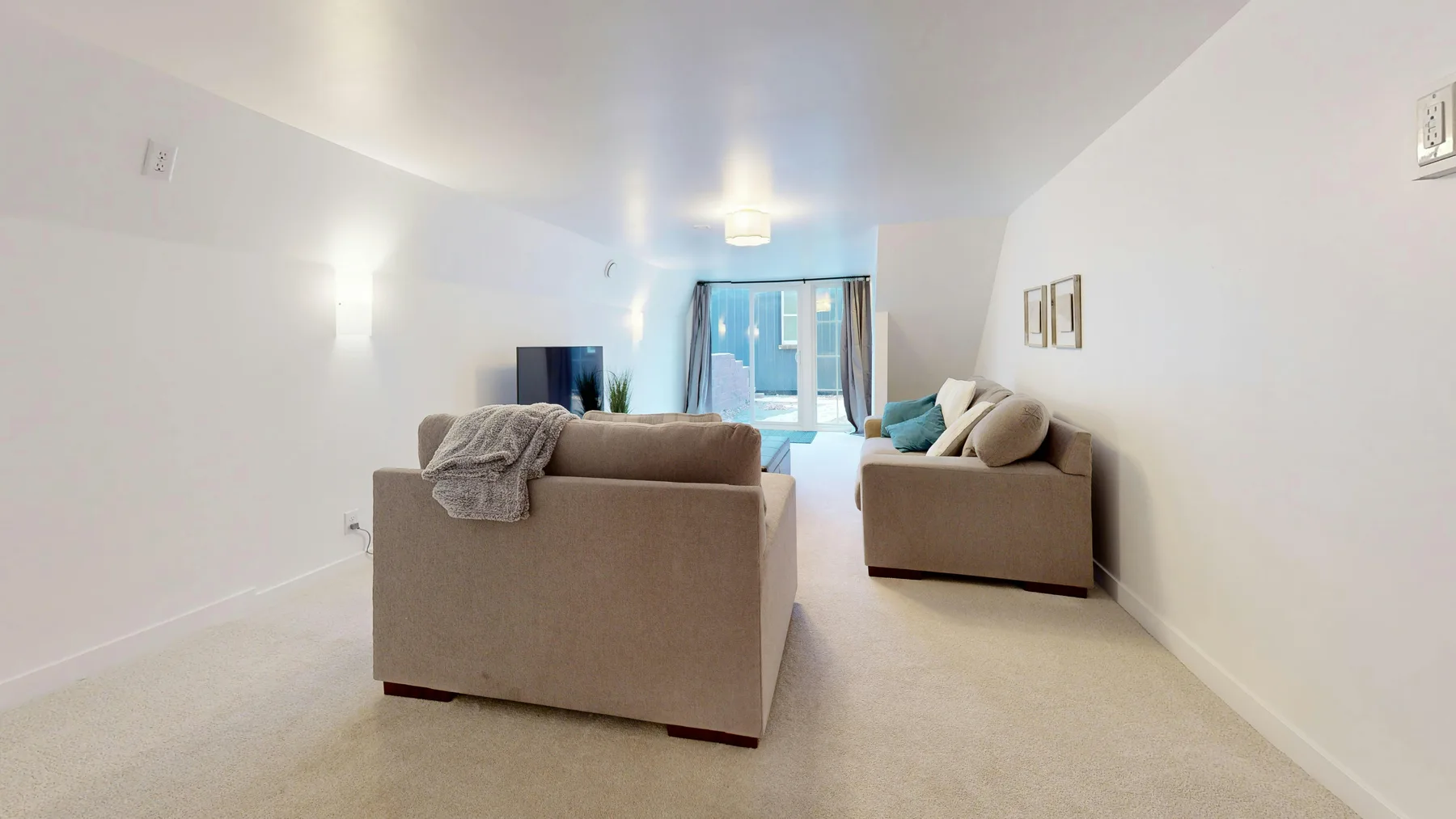
Bad feng shui in a living room usually comes from crowding, awkward furniture placement, too many competing surfaces, and clutter that interrupts how the room is meant to feel. A stronger room is grounded, easy to move through, and arranged around one clear conversation zone or focal point.
The living room is one of the easiest places to feel when something is off. You may not name it as feng shui right away, but you notice the symptoms quickly. The room feels harder to enter, harder to clean, less restful to sit in, or visually louder than it should.
That is why living room feng shui works best when it is treated as layout and mood control. The room should feel open enough for movement, grounded enough for conversation, and edited enough that the eye can settle. When those basics are missing, the room often feels tiring no matter how many decorative pieces you add.
The Biggest Feng Shui Living Room Mistakes
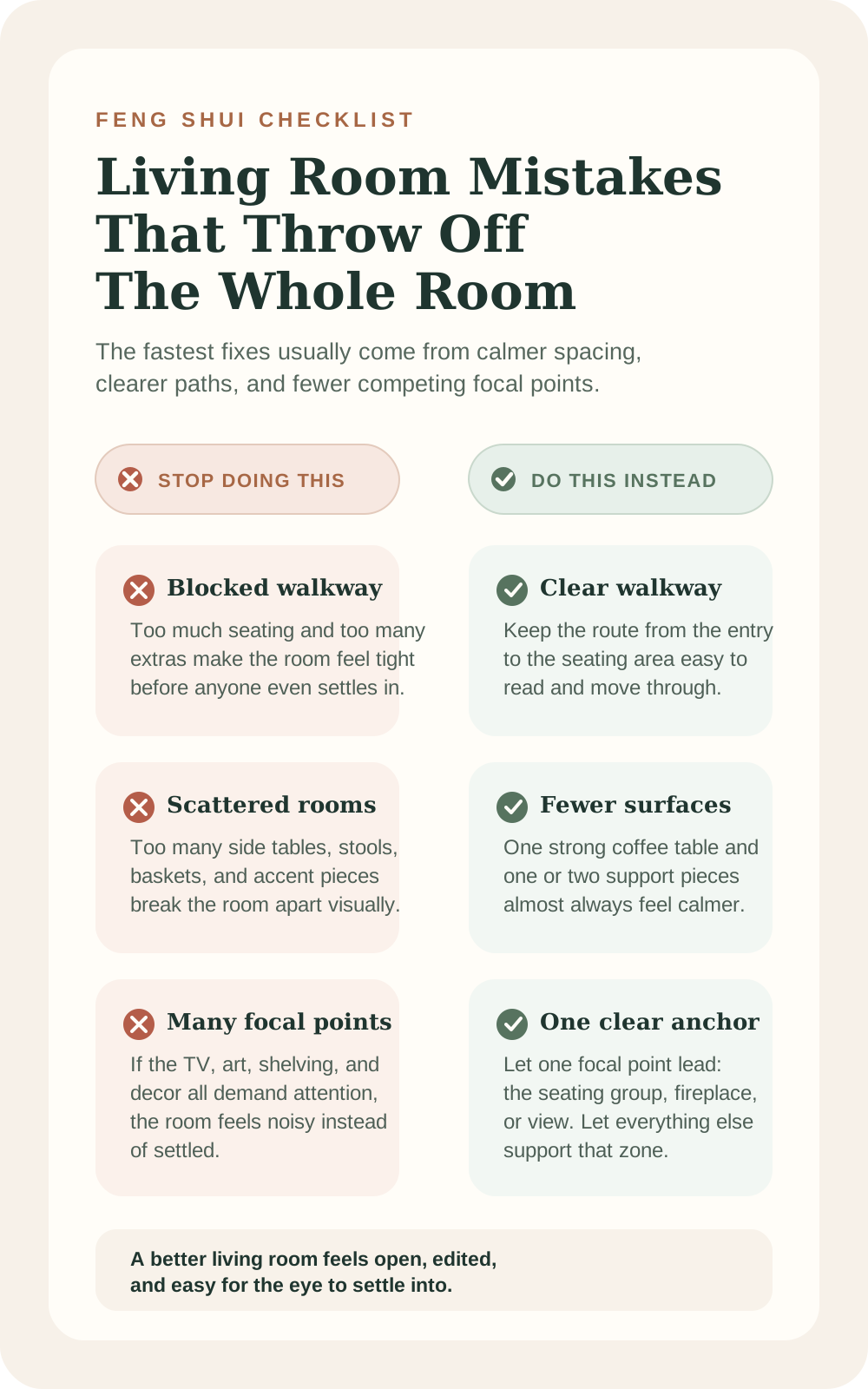
What weakens the room fastest
These problems show up again and again.
Oversized furniture that narrows the path
A sofa that is too deep, too many chairs, or a bulky table mix can make the room feel blocked before anyone even sits down. Flow almost always matters more than squeezing in one extra piece.
Seating that does not feel anchored
When the main sofa floats awkwardly or faces an uncomfortable direction, the whole room can feel less secure. The main seat usually needs a stronger sense of support and a clearer relation to the room.
Too many little surfaces everywhere
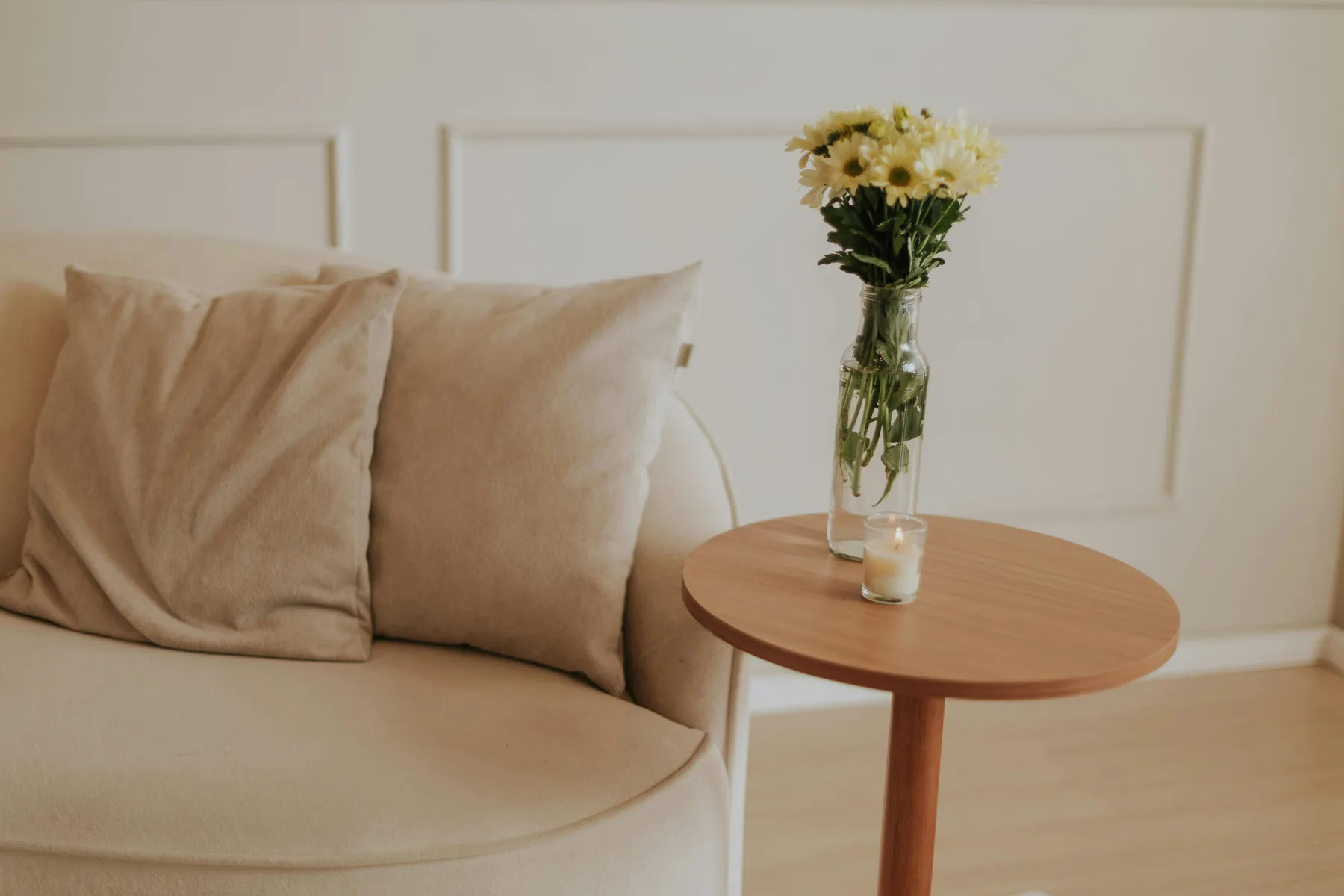
Extra side tables, stools, baskets, and decor stands can create visual fragmentation. One stronger coffee table and one or two supporting surfaces often feel better than many small pieces.
Clutter collecting in the room's first sightline
If the first thing you see when entering the room is cables, piled objects, or a crowded shelf wall, the room starts feeling stressed before you notice anything else.
No clear focal hierarchy
A room feels noisier when the TV, art, fireplace, open shelving, and accent furniture all demand the same amount of attention. Let one zone lead and the others support it.
One of the most common living room problems
A room can look styled online but still feel wrong in real life if every walkway is tight. In feng shui, comfortable circulation is usually a better upgrade than adding one more decorative piece.
Layout Fixes That Usually Work Better
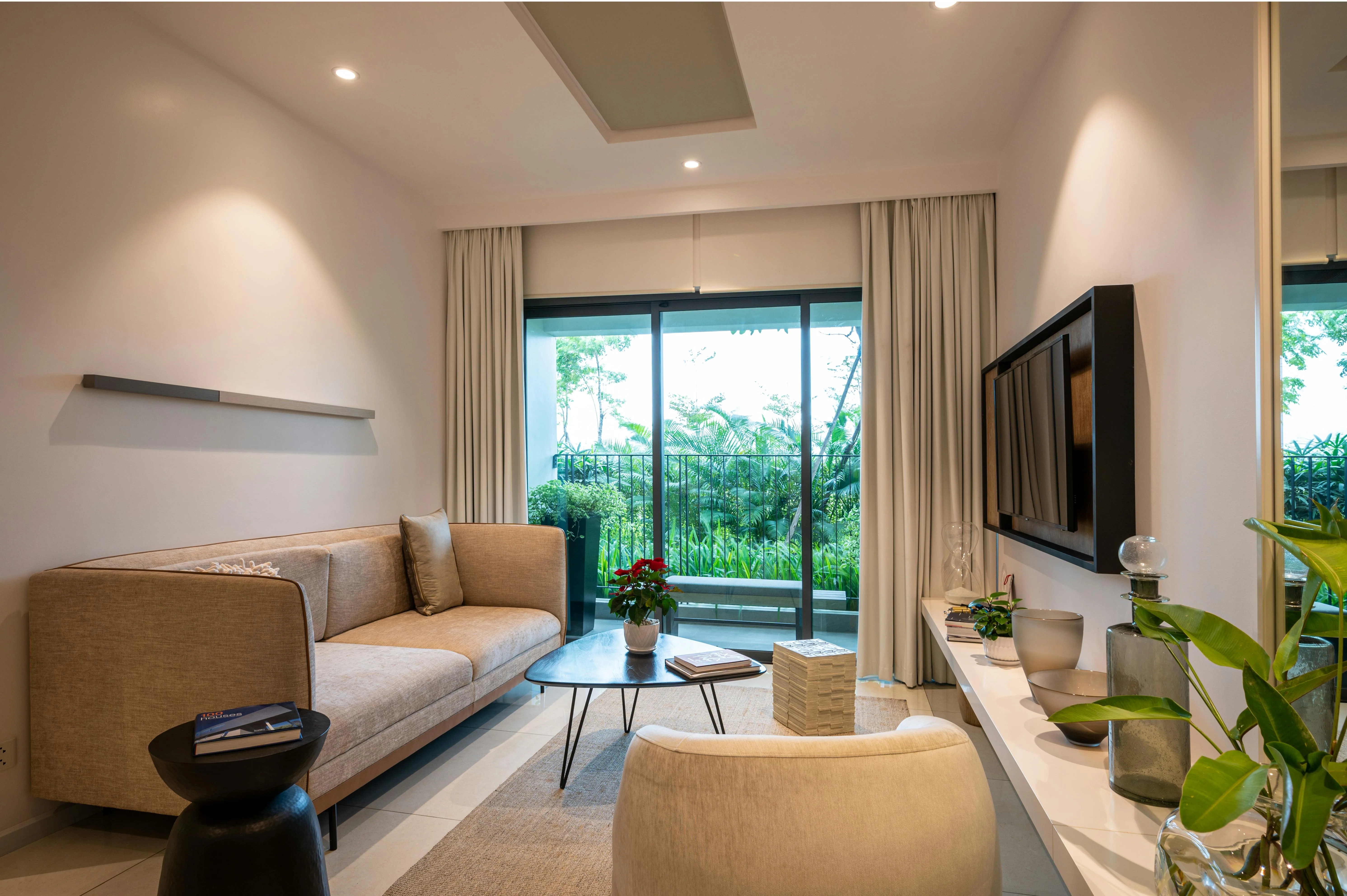
The easiest fix is usually subtraction. Remove one unnecessary chair, one small accent table, or one basket pile and see what happens to the room. If the walkway opens up and the seating group starts reading more clearly, you are moving in the right direction.
Then look at the sofa. It is normally the anchor of the room, so it should feel intentional, not squeezed in by default. A sofa against a supportive wall, with reasonable sightlines and one clear table relationship, often gives the whole room more steadiness.
What to do instead
- +Let one main seating group define the room before adding extras.
- +Protect the walkway from the entry into the seating area.
- +Use fewer, larger pieces when the room already feels fragmented.
- +Choose one focal point and let the rest of the decor support it.
What to stop doing
- -Pushing in more furniture just because the room technically fits it.
- -Lining every wall with competing storage and accent objects.
- -Leaving cables, broken lamps, or stacked items in the first sightline.
- -Using too many tiny tables that break up the room visually.
Decor Mistakes That Make The Room Feel Restless
Decor mistakes are usually about overstimulation. Too many harsh contrasts, reflective surfaces, loud accessory clusters, or open storage zones can make a room feel emotionally busier than it needs to be. The living room does not have to be minimal, but it should feel readable.
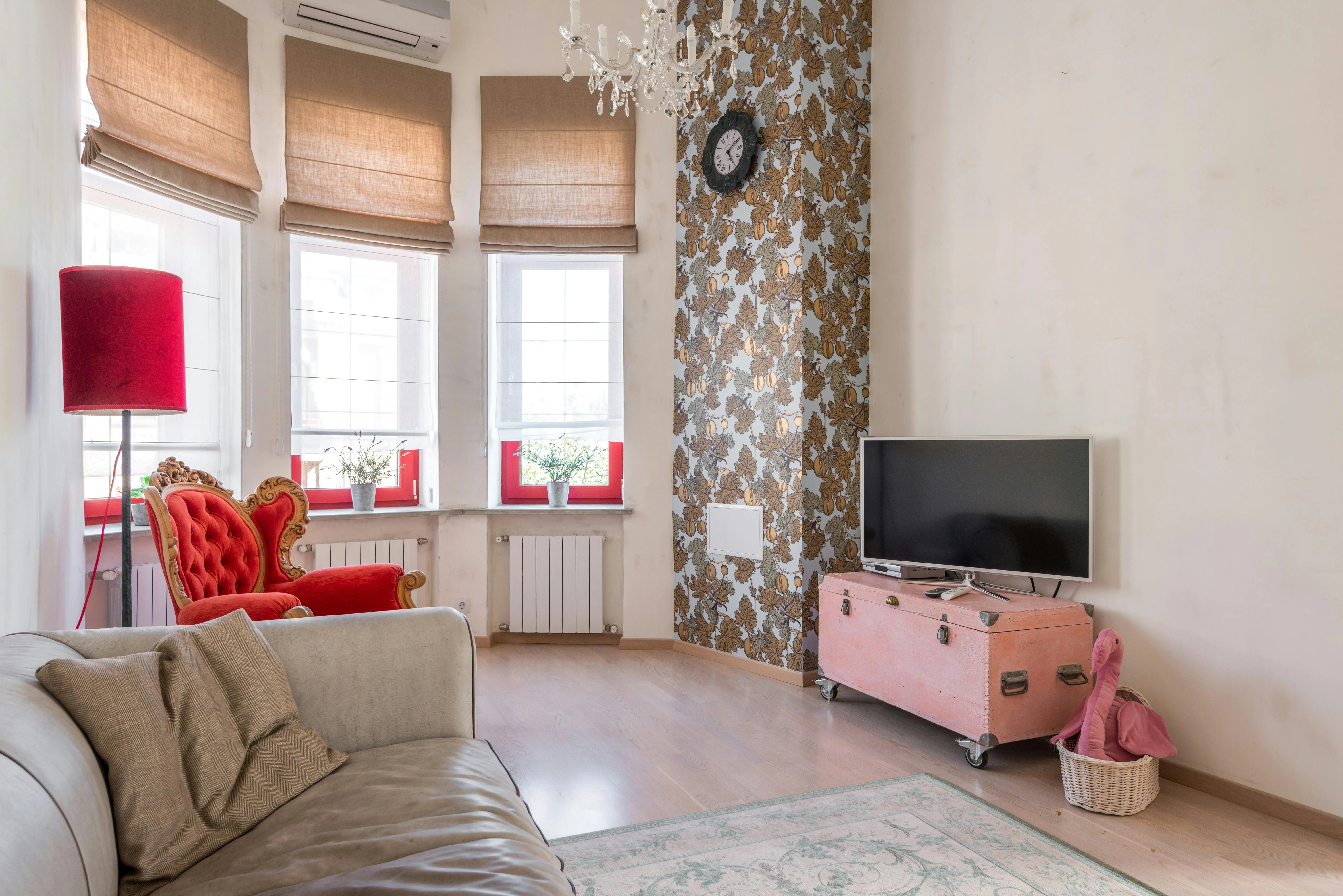
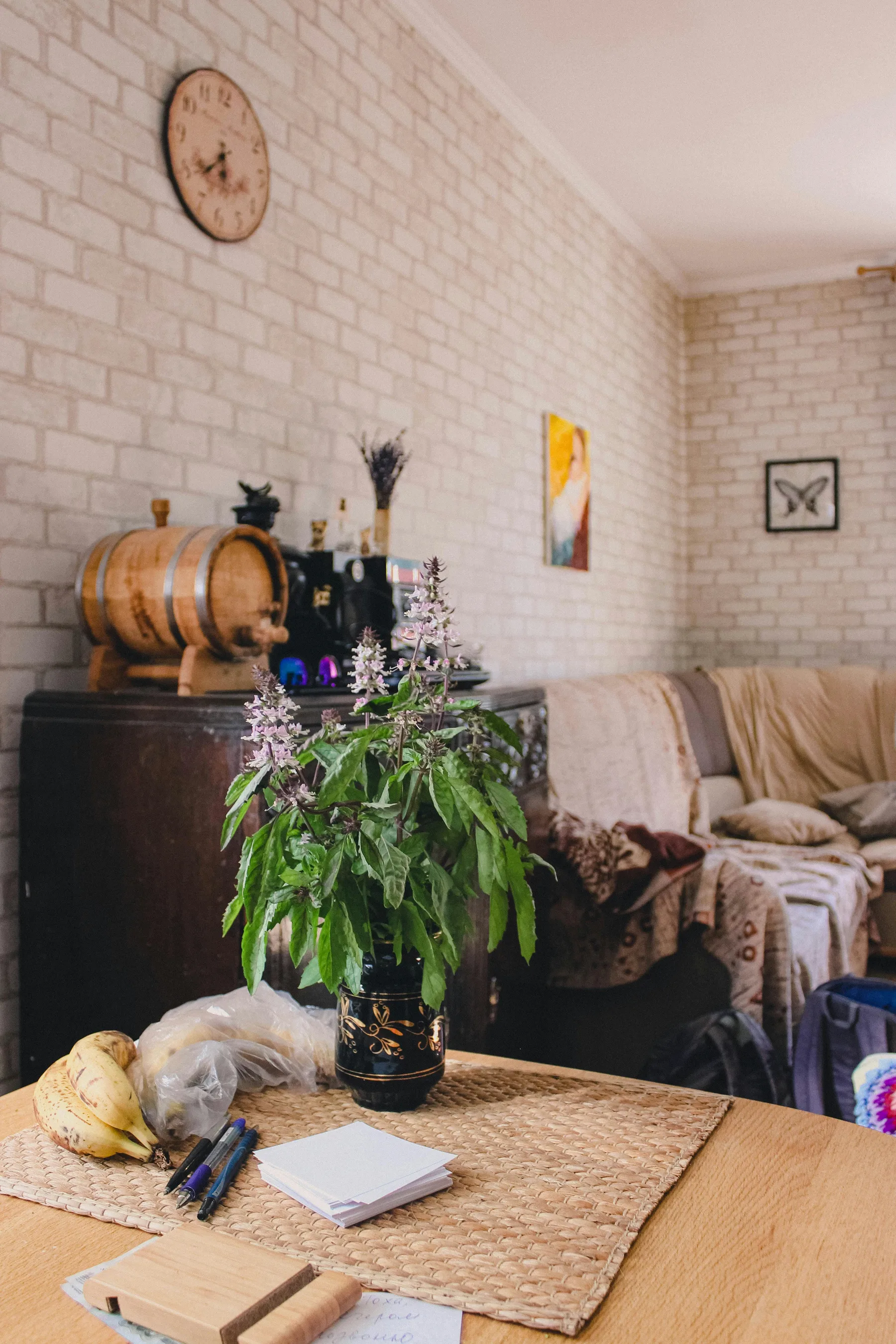
If you are trying to improve the room without starting over, begin with the highest-impact edits: simplify the coffee table, reduce what is stored in the open, soften the lighting, and remove anything broken or leftover from another room. For a deeper furniture-focused version of this, read feng shui living room furniture. If the whole house feels crowded, common feng shui mistakes is the better next step.
Frequently Asked Questions
What is bad feng shui for a living room?
What should you not put in a living room in feng shui?
How do I fix bad feng shui in my living room?
Does a living room need a focal point in feng shui?
The Bottom Line
The biggest feng shui living room mistakes are usually simple: too much furniture, too much visual noise, and too little respect for the room's pathways and anchor pieces.
When the room feels easier to move through, easier to sit in, and easier for the eye to read, the feng shui is almost always improving.