



Quick Answer
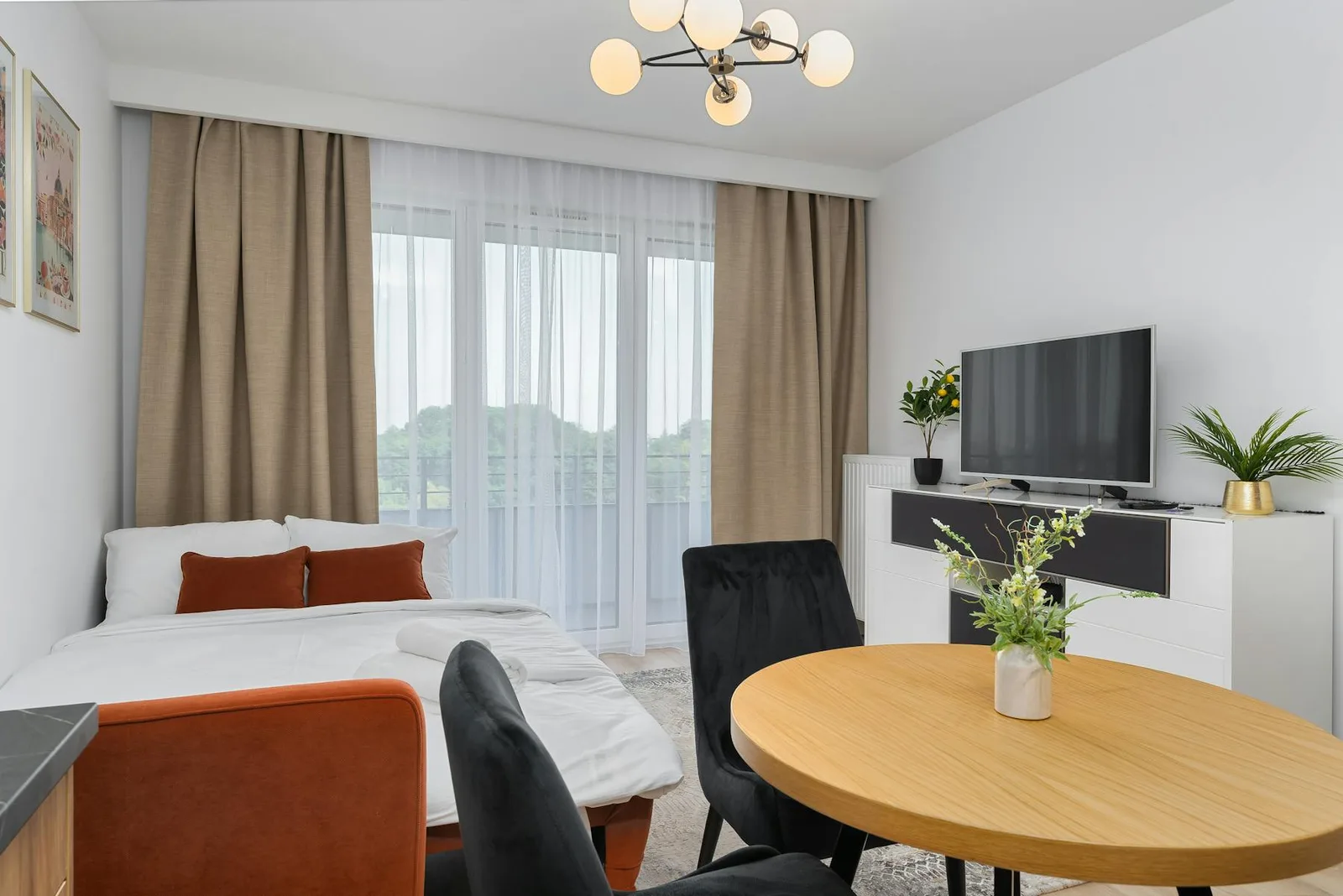
The best feng shui one room apartment setup creates enough visual separation that the bed, seating area, work corner, and storage each feel like they have a job. A studio feels calmer when there is one clear path through the room and the bed is not competing with everything else.
One room apartments rarely need more stuff. They need better hierarchy. When the room stops asking the bed, desk, sofa, and storage to all shout at once, it gets easier to live in.
That is the core feng shui move in a studio. Separate the functions enough that the room can relax, then keep the path and visual pressure under control. You are not trying to fake a bigger apartment. You are helping one room behave with more clarity.
What a One Room Apartment Needs Most
These five fixes improve the room fastest.
A stronger bed zone
The bed should still feel like the most protected part of the room, even if the studio is small.
One obvious circulation path
The room feels calmer when you can move from the entry to the main zones without weaving around clutter.
Visual separation between bed and work
A rug, shelving line, curtain, or different wall emphasis often helps more than buying more furniture.
Less duplicate furniture
Studios often feel heavier because there are too many tiny tables, stools, racks, and storage units doing overlapping jobs.
A calmer palette
One room apartments respond well to fewer accent colors so the eye can stop bouncing from zone to zone.
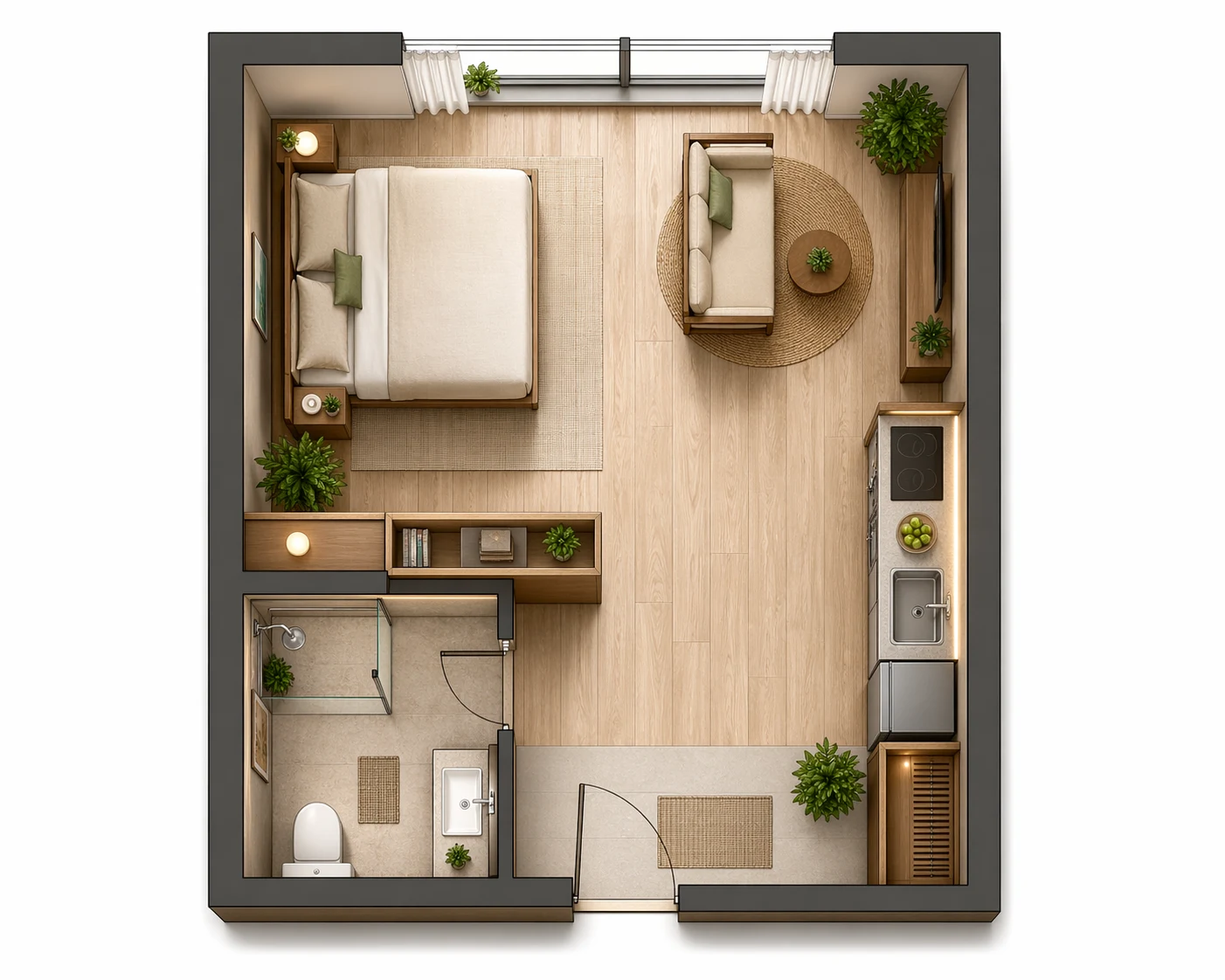
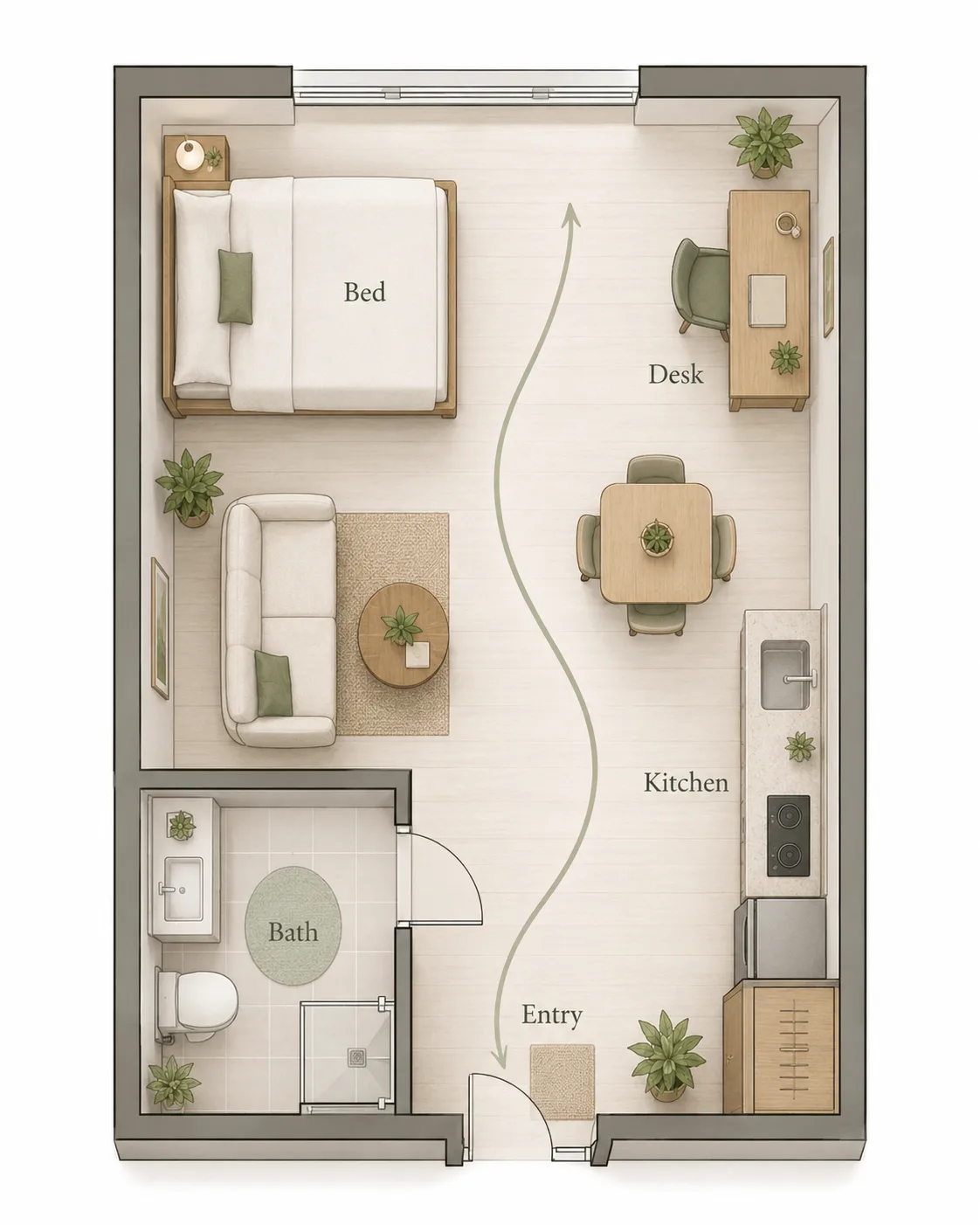
If you want to understand the room at a layout level before styling it, start with the zones. In a studio, the bed should feel protected, the living area should receive daily movement, and the kitchen or entry should not slice straight through the sleep zone.
Studio Layout Priorities That Matter Most
A studio does not need hard walls to feel organized. It needs a few clear decisions about what gets protected, what stays active, and what should disappear into storage.
| Studio problem | Best feng shui move | Why it helps |
|---|---|---|
| The bed is visible from every angle | Put the headboard on the strongest available wall and add a soft divider if needed | Sleep starts to feel like a protected zone, not part of the hallway |
| The entry opens straight into everything | Use a rug, console, plant, or low storage piece to mark the arrival zone | The room gets a calmer first impression before the eye reaches the bed |
| The desk pulls attention after work | Keep the work surface compact, closed, or angled away from the bed view | The apartment can shift from work mode back into rest mode |
| Storage is visible everywhere | Choose fewer storage pieces with closed fronts instead of many open bins | The room shows fewer loose categories at once |
How to Zone a Studio Without Making It Feel Smaller
What helps
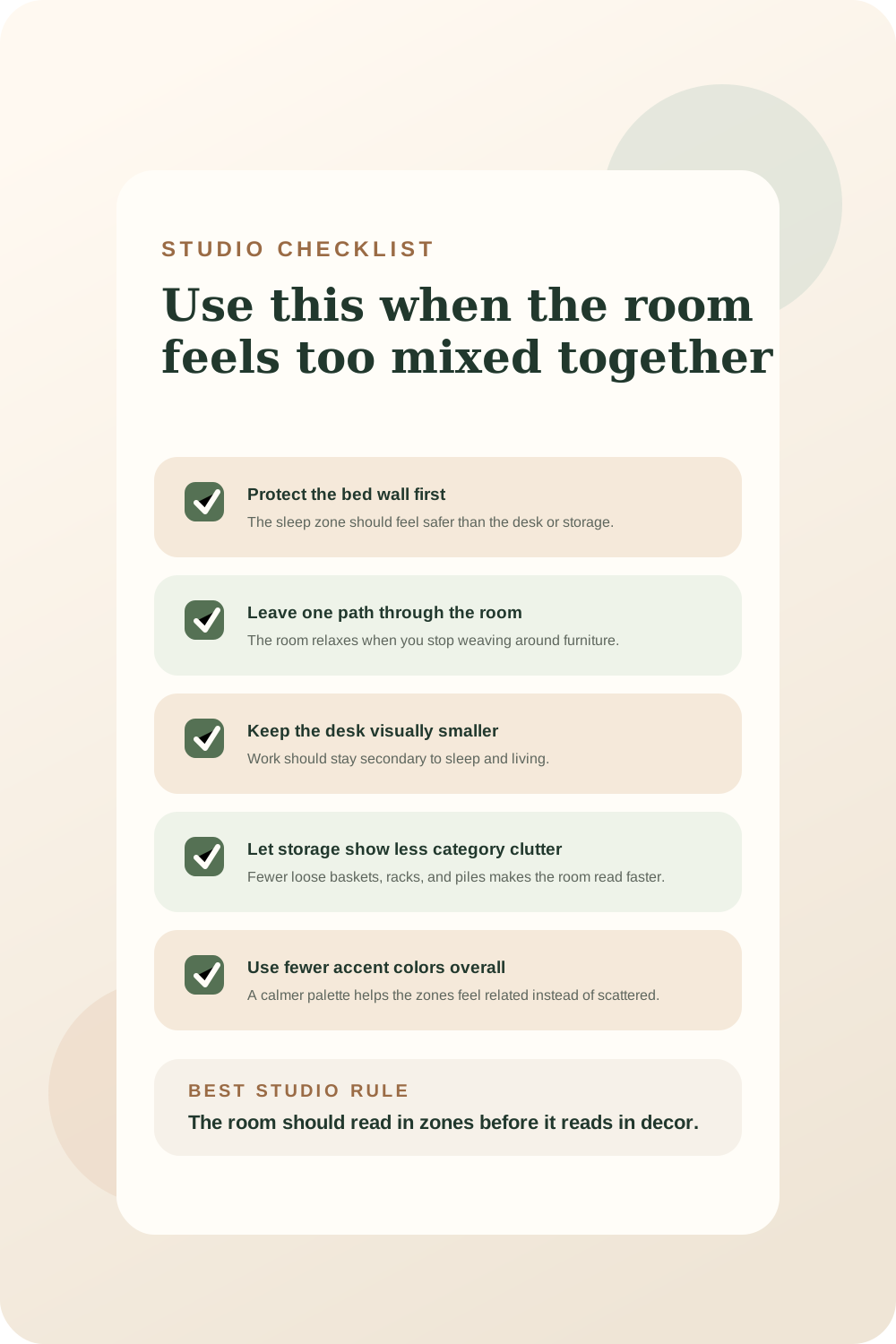
- +Use one rug, shelving line, or furniture edge to separate living from sleeping.
- +Keep the desk compact and let it stay visually secondary to the bed and seating.
- +Use hidden or calmer storage so the room shows fewer loose categories.
- +Let the bed wall look quieter than the work or storage wall.
What weakens the room
- -Splitting the room into many tiny furniture islands.
- -Using the bed as both storage platform and visible clutter pile.
- -Leaving no visual break between desk, dresser, sofa, and bed.
- -Using too many accent colors that make each zone feel unrelated.
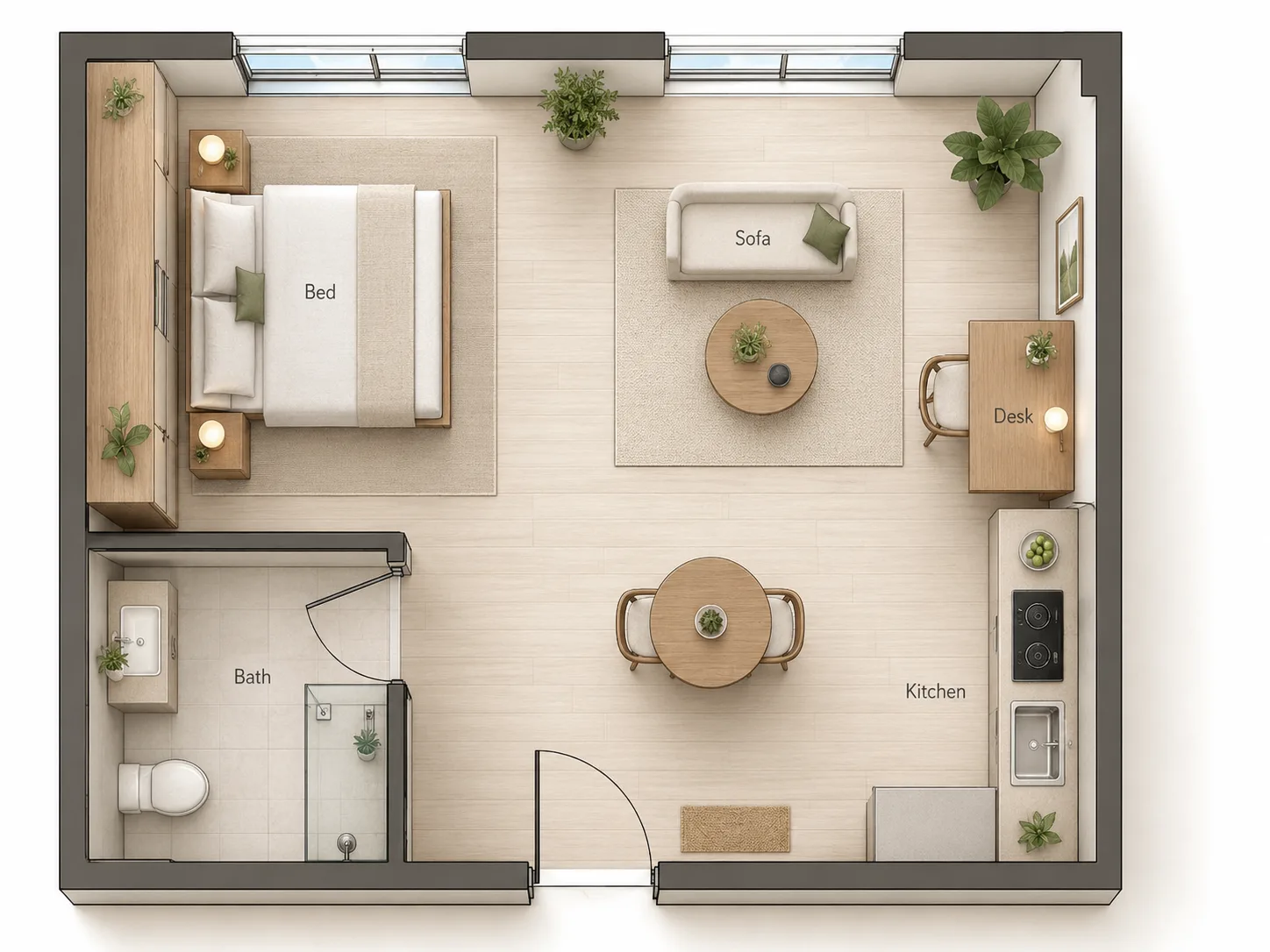
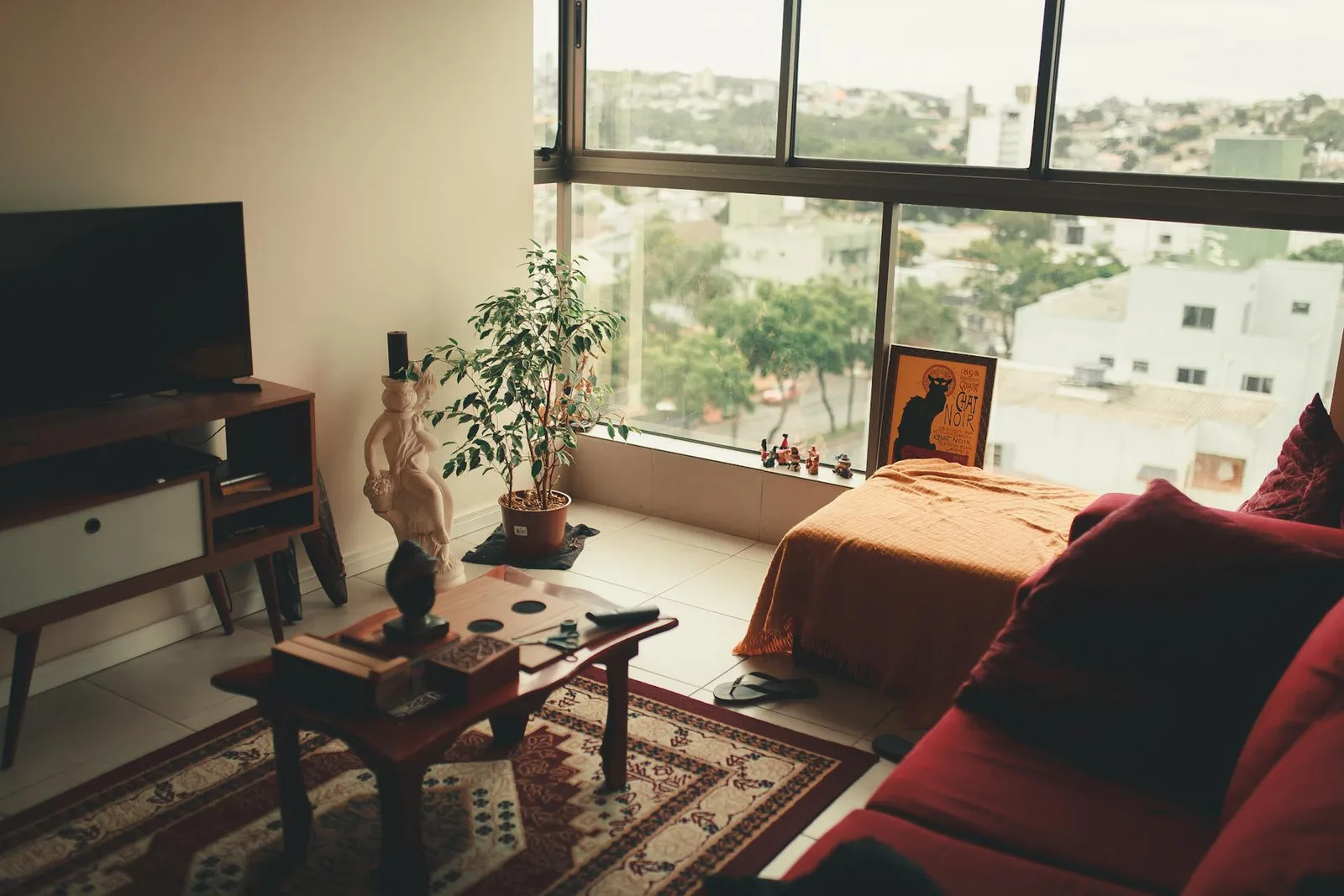
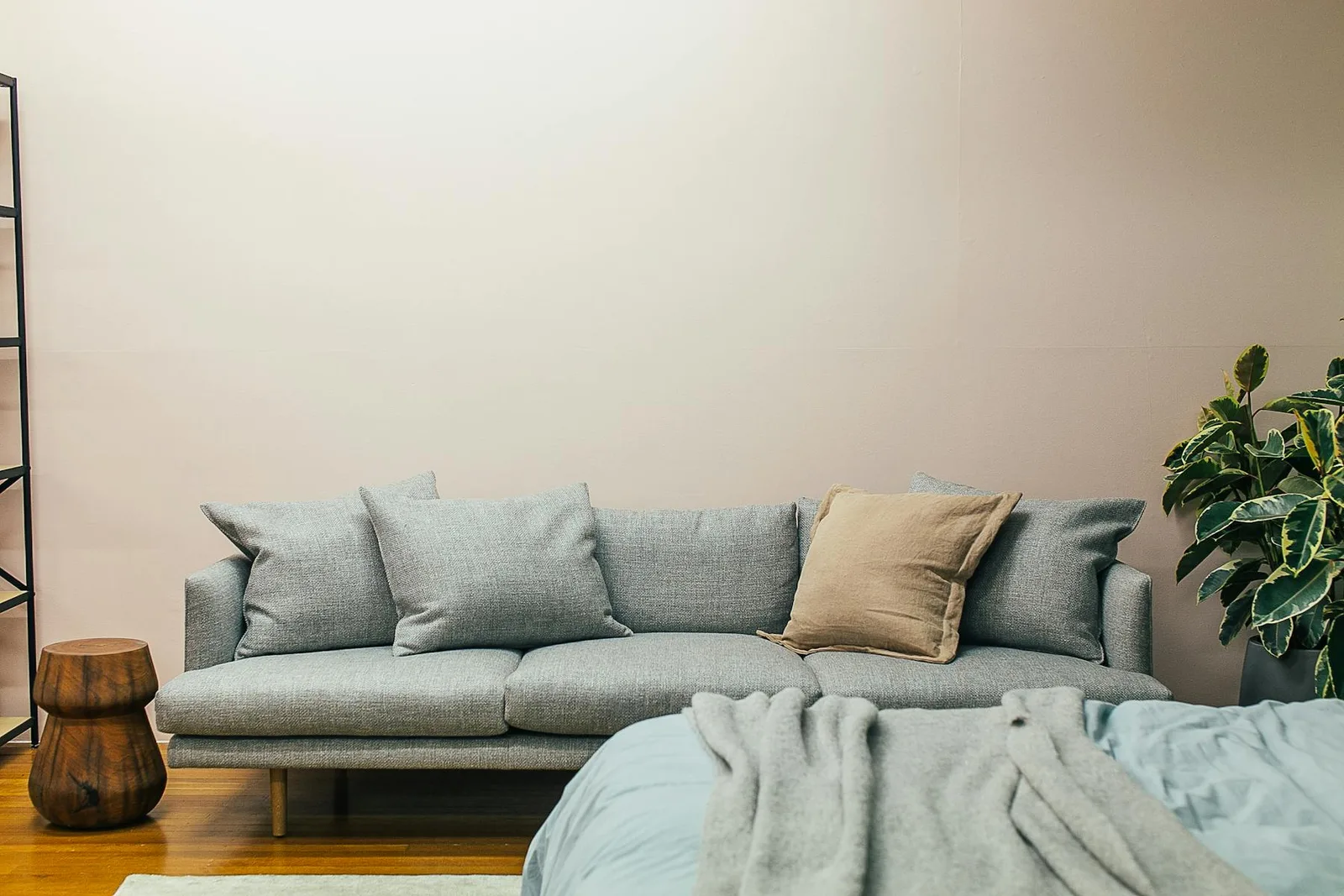
If bed position is the main problem, feng shui bed placement ideas and feng shui bedroom layout go deeper. If the room still feels noisy after zoning, feng shui declutter ideas and feng shui home interior colors are the best follow-ups.
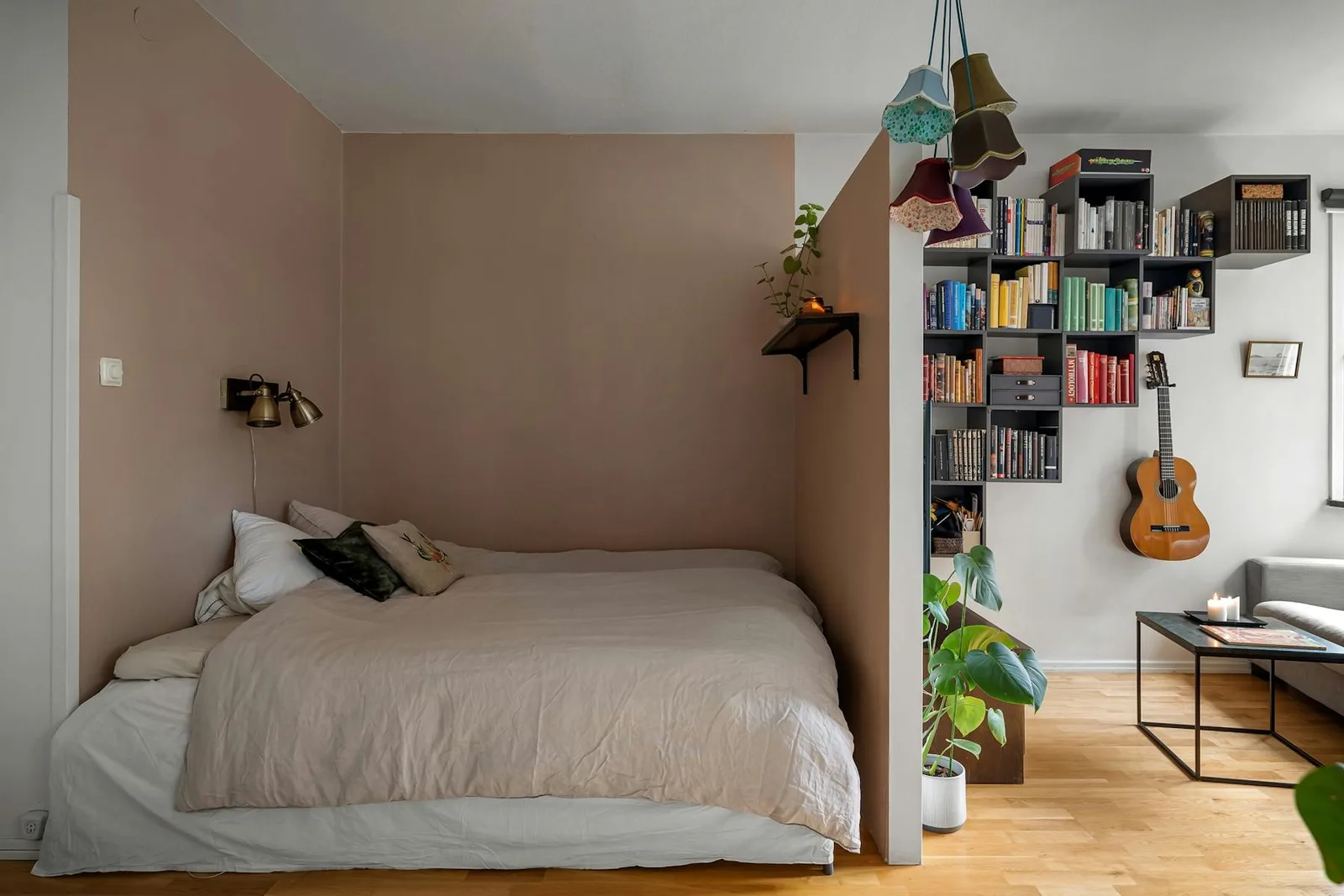
How to Handle the Bed, Desk, and Storage
The hardest part of a one-room apartment is that sleep, work, dressing, eating, and relaxing all happen in view of each other. The room becomes calmer when each category has a boundary, even if that boundary is only a rug, curtain, cabinet, or consistent wall.
| Area | Best setup | Use carefully |
|---|---|---|
| Bed | Headboard on a solid wall, with a view of the room but not directly in the entry path | Under-bed storage; keep it light, seasonal, and contained if you need it |
| Desk | Compact surface, good light, and a way to visually close work at night | Desk facing the bed if it keeps pulling your attention after work |
| Mirror | Place it where it helps light or dressing without reflecting the bed all night | Large mirror facing the bed or doubling visual clutter |
| Storage | Closed fronts, vertical storage, and one clear landing spot near the entry | Open racks, stacked baskets, and visible overflow around the bed |
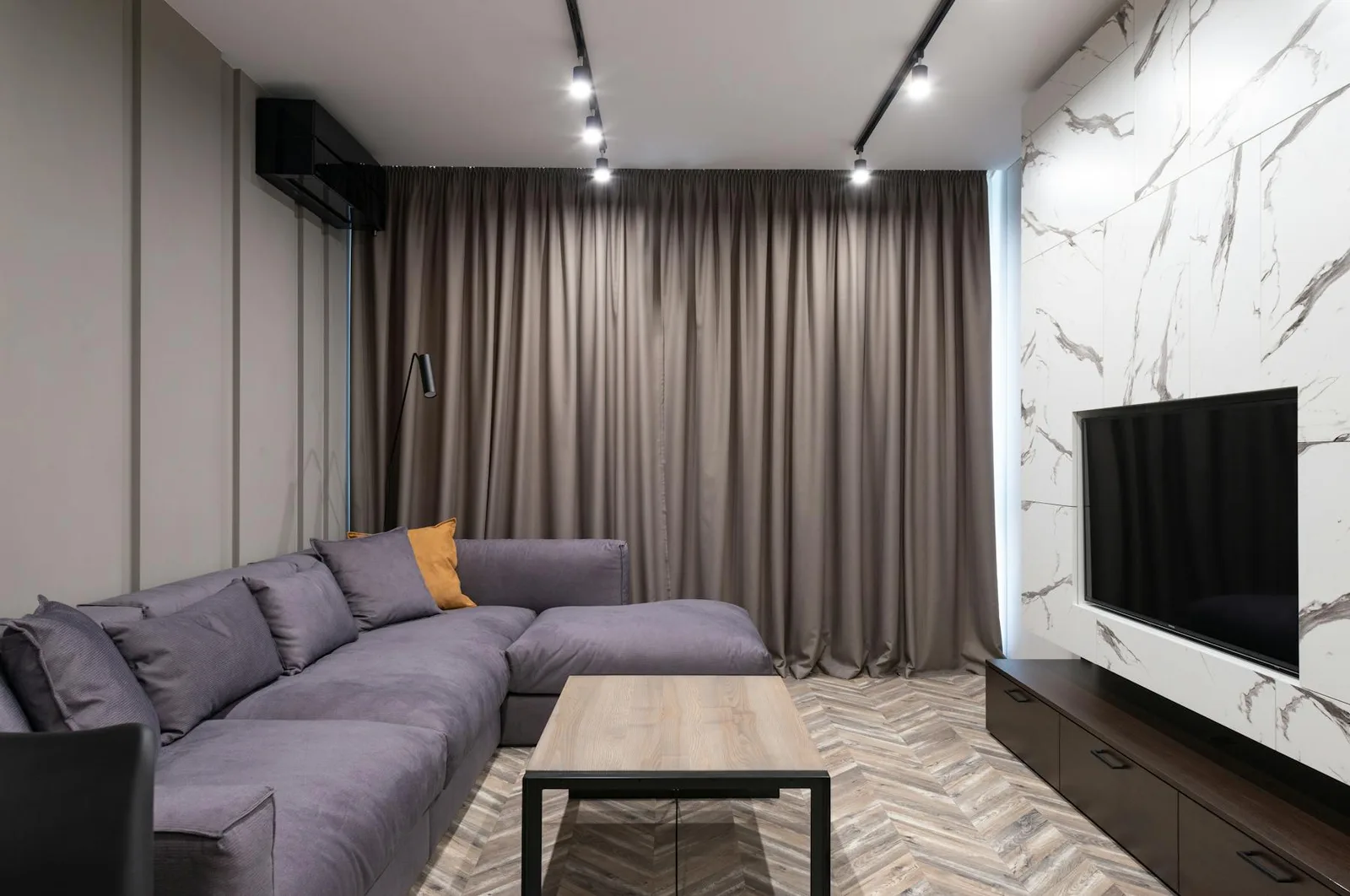
When the Studio Layout Is Not Ideal
Most one-room apartments involve compromise. The door may face the bed, the desk may need to sit near the sleep zone, or the only good storage wall may also be the first thing you see when you enter. In those cases, the goal is not a perfect diagram. It is a calmer correction.
| If this is happening | Try this first | Why it works |
|---|---|---|
| The bed is in the entry line | Add a rug, low console, curtain, or plant line between entry and bed | The room gets a pause before the eye lands on the sleep zone |
| The desk faces the bed | Keep the desk smaller, close the laptop, and use a lamp or tray as the work boundary | Work stops visually spreading into rest time |
| Storage is always visible | Use closed fronts for the busiest categories and leave open shelving for a few calm objects | The room looks less like every task is happening at once |
| A mirror reflects the bed | Move it, angle it, or soften it at night if it makes the room feel too active | The bed view becomes quieter when you are trying to sleep |
What to Avoid in a One Room Apartment
The biggest studio problem is letting every category stay visible all the time. When the bed, desk, laundry, storage, dining, and living pieces all read at once, the room starts to feel more stressful than supportive.
Protect the sleep zone first
If the bed feels like the least protected part of the room, the apartment will feel more restless no matter how nicely everything else is styled.
Frequently Asked Questions
How do you feng shui a one room apartment?
Where should the bed go in a studio apartment?
How do I make a studio apartment feel less chaotic?
What weakens feng shui in a one room apartment?
Should I use a divider in a studio apartment?
The Bottom Line
A one room apartment feels better when the room starts to read as zones instead of one big mixed-use spill. A stronger bed wall, one open path, calmer storage, and less duplicated furniture do the most work.
The studio does not need to be perfect. It just needs a clearer hierarchy so sleep, work, and living stop competing every minute.