



Quick Answer
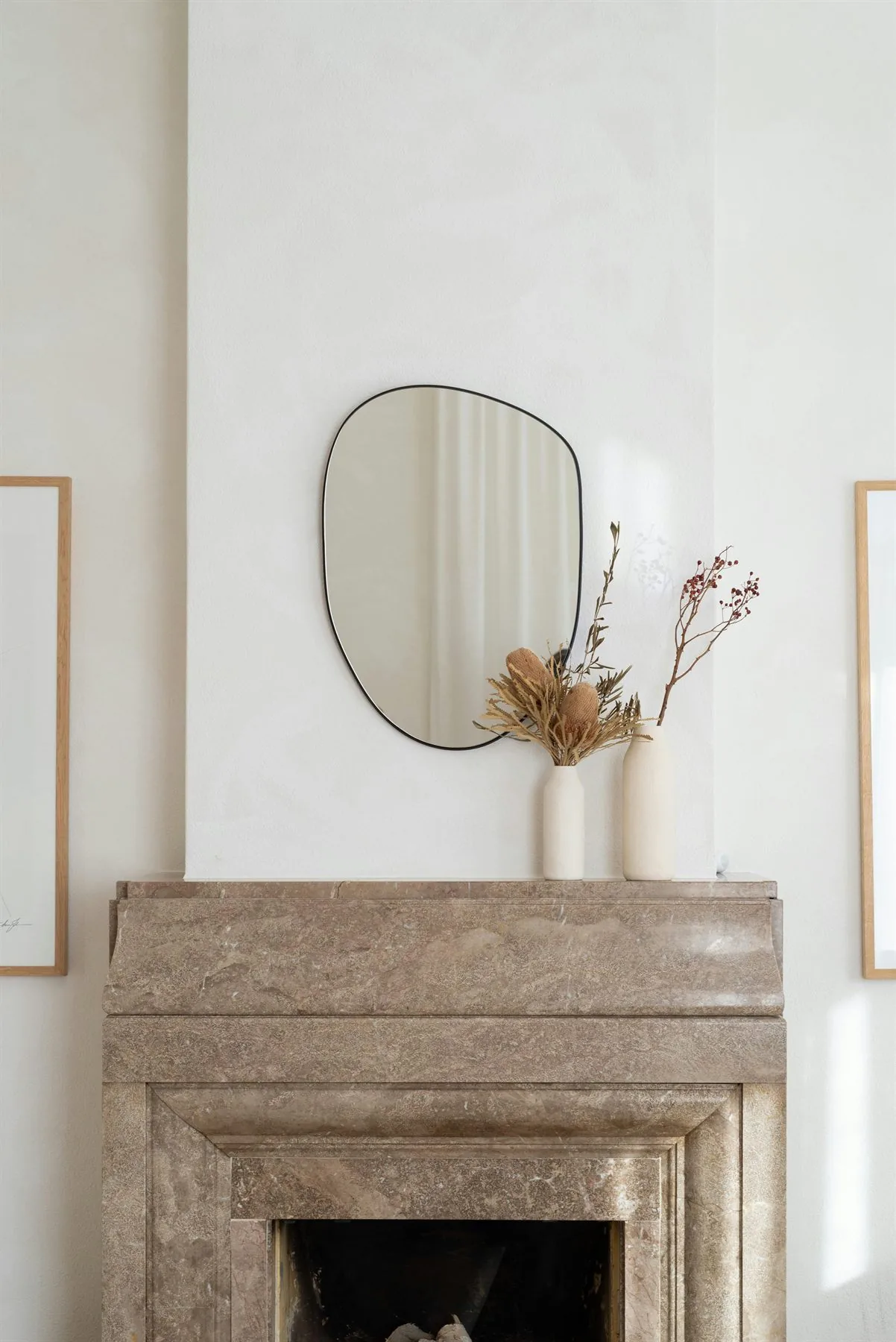
In feng shui, mirrors are best placed where they bounce light, widen the feeling of a room, or reflect something genuinely beautiful. They are less helpful when they reflect clutter, face the front door directly, or create too much activity around the bed.
Disclosure: This article includes affiliate links. If you buy through them, we may earn a small commission at no extra cost to you.
Practical mirror rules are easiest to use when you focus on the reflection itself. A mirror doubles the effect of whatever it reflects, so it should bounce light, calm, and spaciousness rather than visual stress.
That is why mirrors can be excellent in feng shui or feel completely wrong in a space. They are not good or bad by default. They are amplifiers. If they amplify light and calm, they help. If they amplify stress and visual noise, they do not.
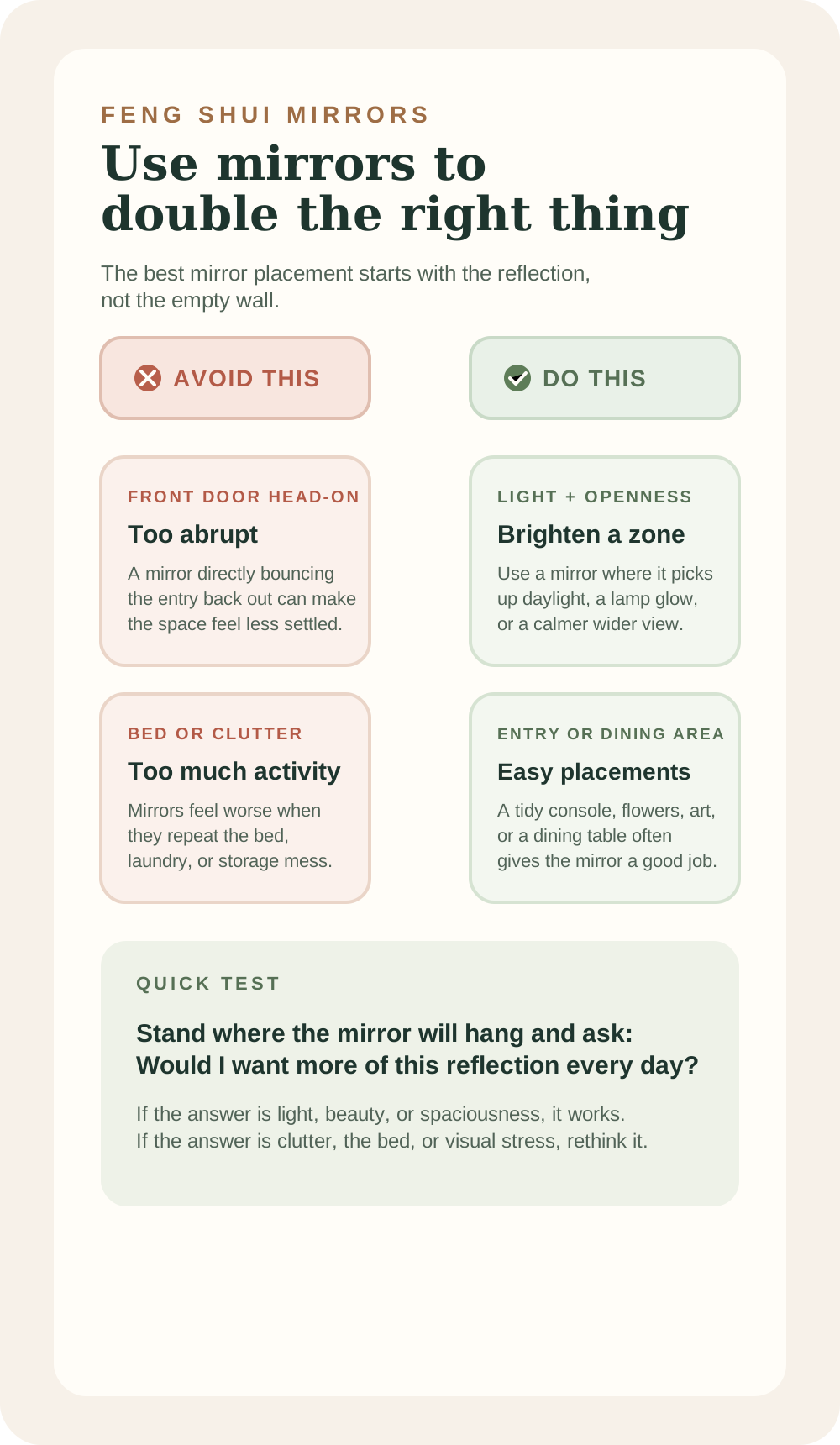
Quick Mirror Picks by Room
If you are choosing a mirror now, start with the room and the reflection you want to repeat. The safest mirror is not always the largest one. It is the one that gives a clear wall, console, or dining zone a useful job without reflecting clutter or the bed.
| Room | Best mirror type | Why it helps | Shop |
|---|---|---|---|
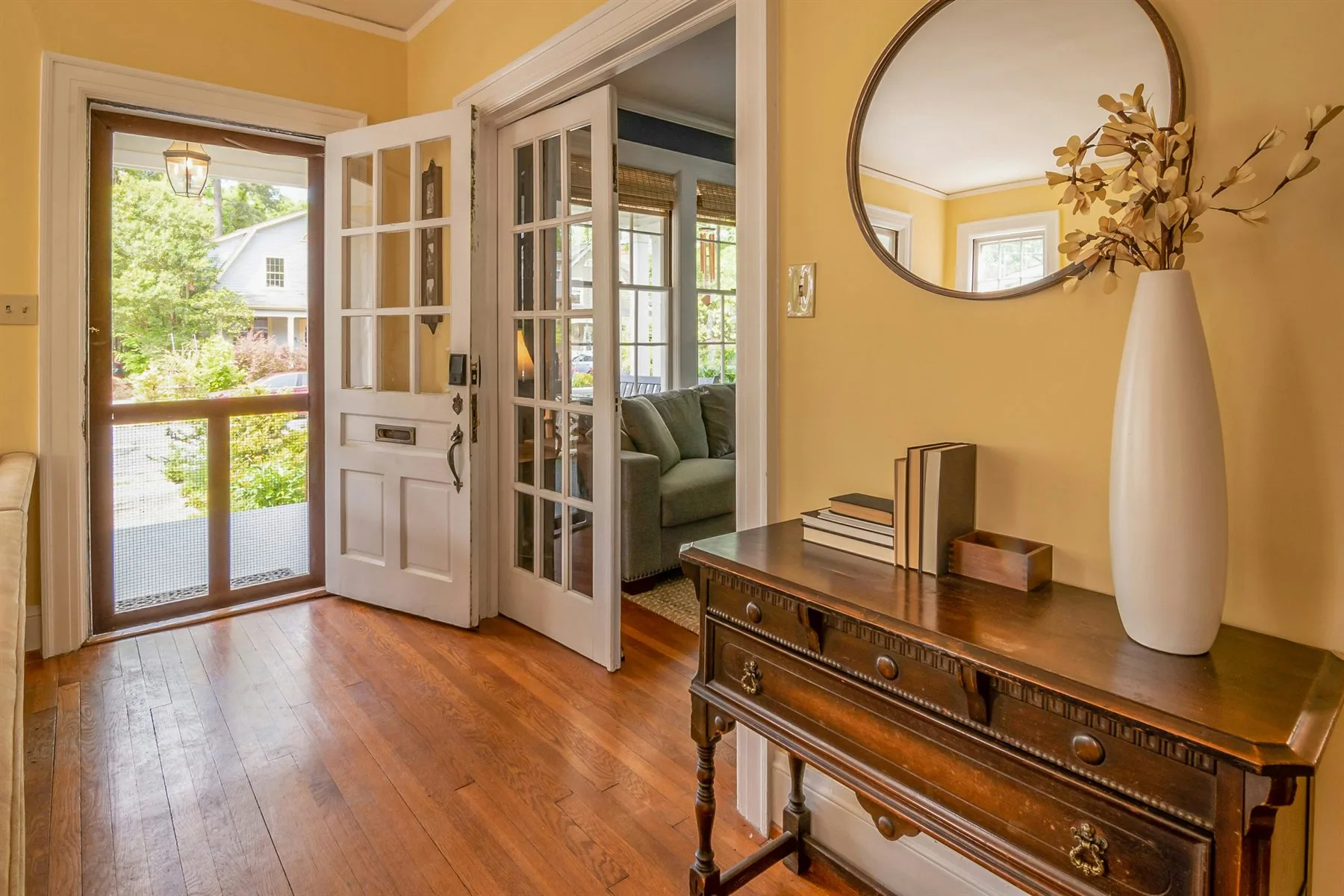
| Entry | Round or oval mirror | Softens the threshold and works well above a console. | Shop |
| Hallway | Slim rectangular mirror | Adds structure and brightness without crowding the passage. | Shop |
| Dining room | Wood-framed wall mirror | Can reflect the table, light, and a more abundant gathering feel. | Shop |
| Living room | Large soft-edged mirror | Helps a darker wall feel lighter when it reflects plants or daylight. | Shop |
Where Mirrors Work Best
Mirror placement gets easier when you stop thinking about the empty wall and start thinking about the reflection. The best placements are the ones that make a room feel brighter, wider, or more complete without adding visual tension.
| Room or zone | What the mirror should reflect | Why it helps |
|---|---|---|
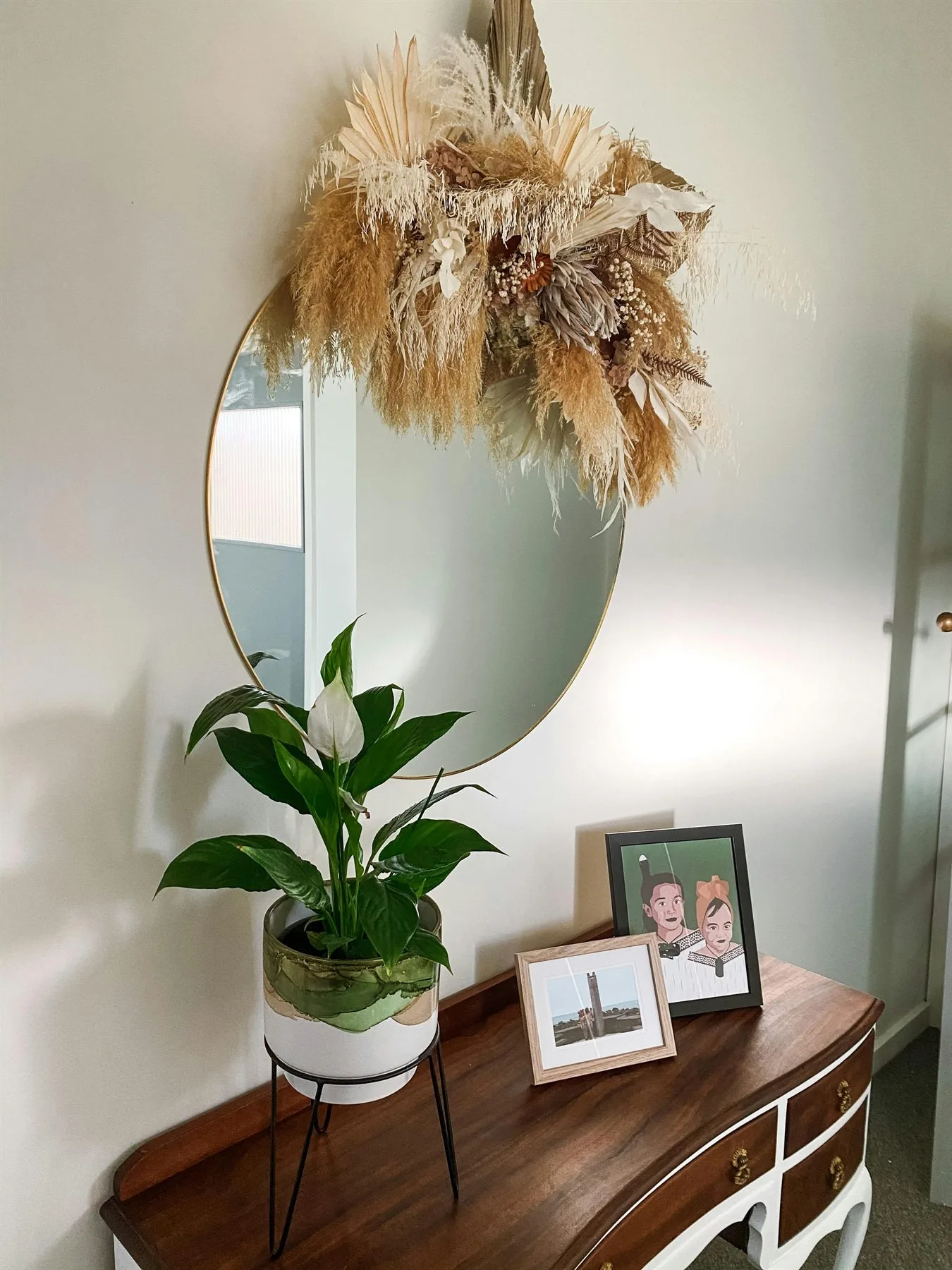
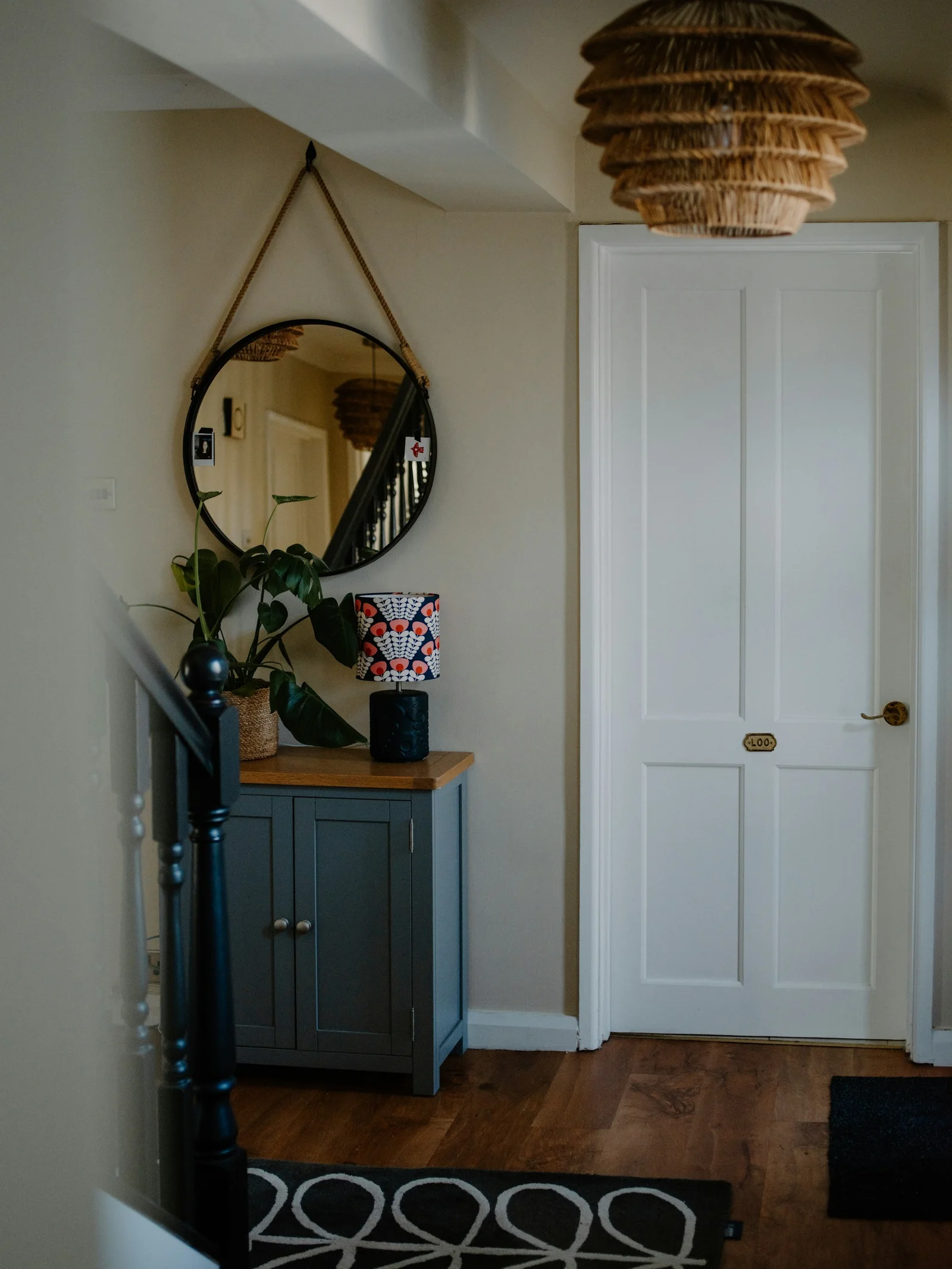
| Entry console | A tidy landing spot, flowers, art, or a softly lit wall | It makes the entry feel brighter and more finished without bouncing the front door itself back at you. |
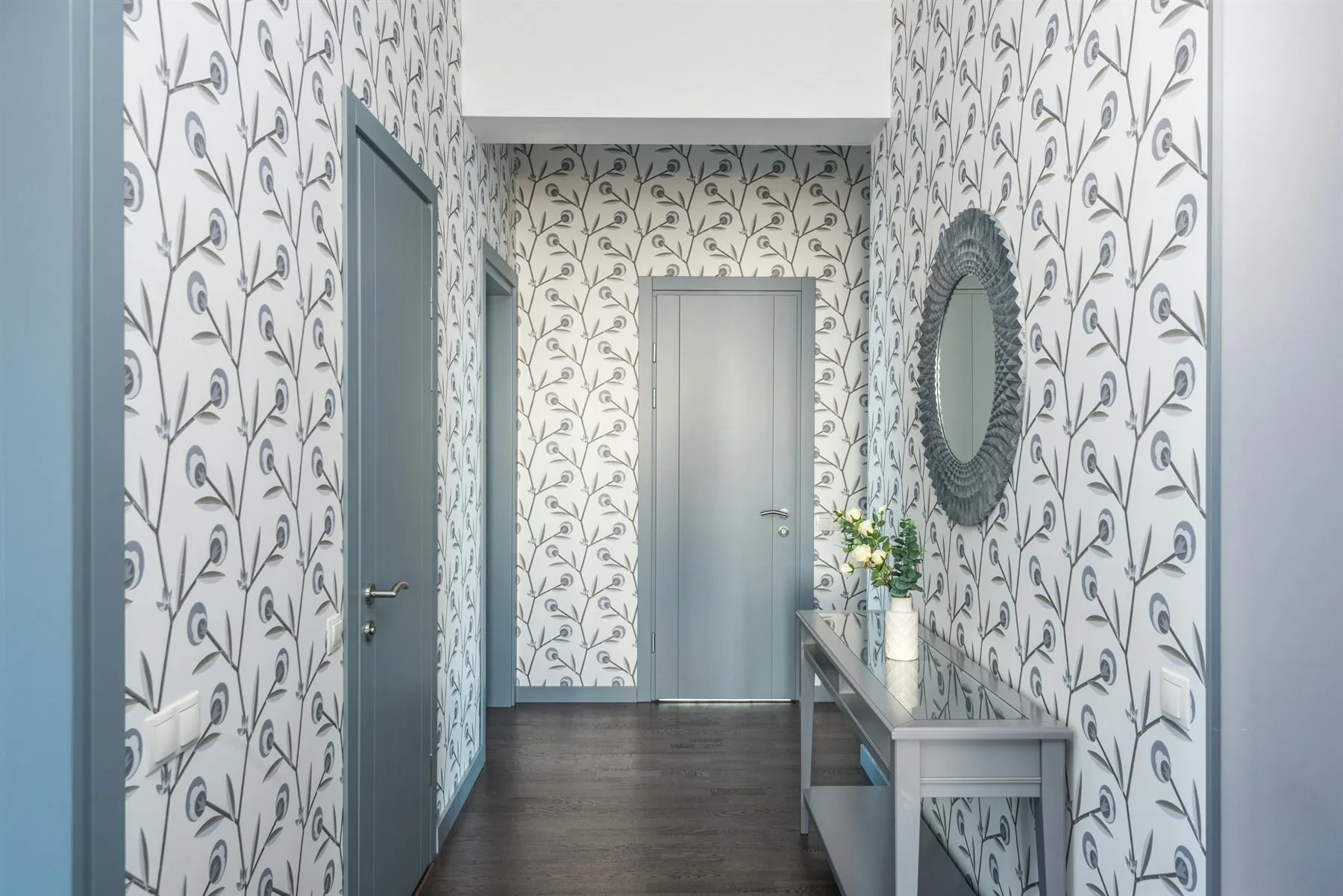
| Hallway | Light from a nearby room or window | Useful when the passage feels narrow or dim and needs more openness. |
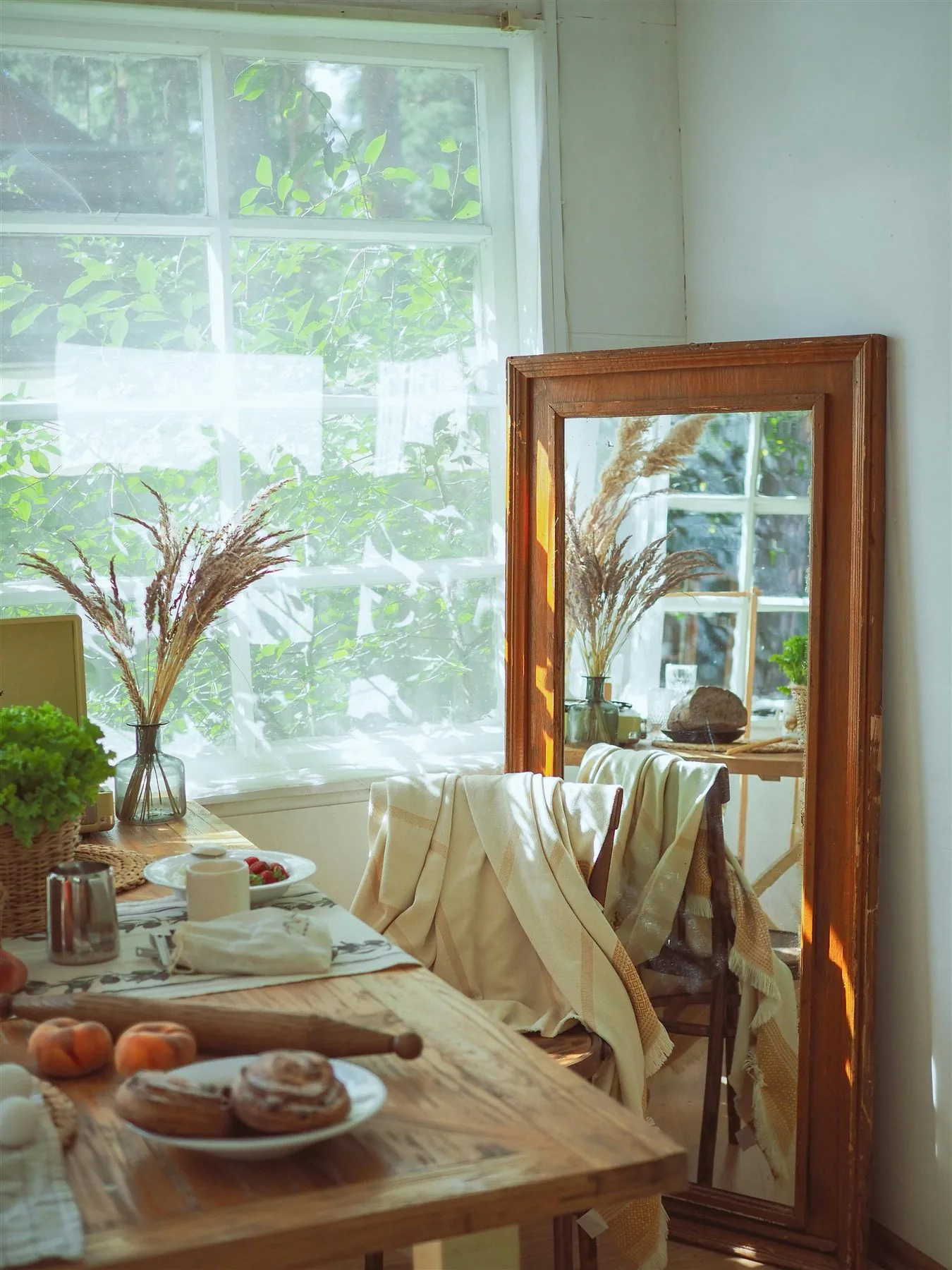
| Dining area | The table, warm light, or a sense of abundance | Dining spaces often benefit from mirrors because they already hold nourishment and gathering energy. |
| Dark living room corner | A lamp glow, plant, or window light | The mirror helps a heavy corner feel more alive rather than visually dead. |
Where Mirrors Cause Problems
Mirror mistakes happen when the reflection itself is ignored. People focus on where the mirror will hang, but not on what will appear inside it all day and night. That matters even more near the entrance, because the reflection can interfere with the calm, legible feeling you want from a feng shui front door.
Mirrors tend to help when they reflect
- +Natural light from a nearby window.
- +A clean entry table, art, or a peaceful decorative arrangement.
- +A dining area or part of a room that benefits from more spaciousness.
- +A wall that needs softness or visual expansion.
Mirrors tend to create friction when they reflect
- -The front door directly across from it.
- -Clutter piles, laundry, open storage, or stressful visual mess.
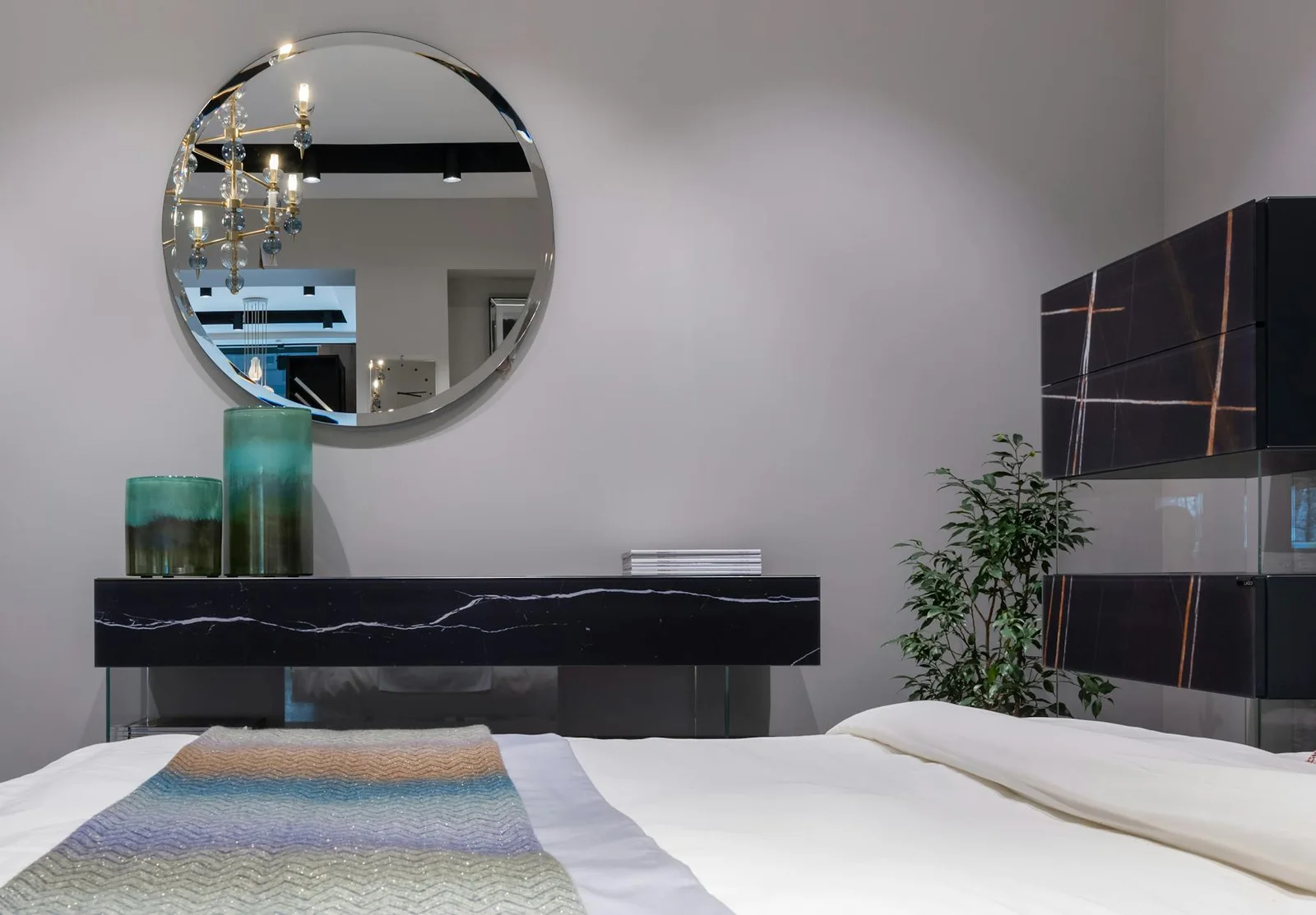
- -The bed itself, especially if the bedroom already feels busy.
- -A tight passage where the mirror creates glare or visual confusion.
Bathroom, Kitchen, and Bagua Mirror Notes
A bathroom mirror is practical, but it still needs a clean reflection. Keep it clear, well lit, and away from doubling laundry, open storage, or a toilet view when possible. In kitchens, avoid placing a mirror where it makes the stove area feel visually chaotic. If it reflects a dining table, fruit bowl, window, or calm prep area, it has a better job.
A Bagua mirror is different from a normal decor mirror. It is a traditional exterior protective cure, not something to hang casually inside a living room or bedroom. For most homes, a normal interior mirror should be judged by reflection, proportion, height, and whether the room feels calmer after it is placed.
How to Choose the Right Mirror Shape and Style
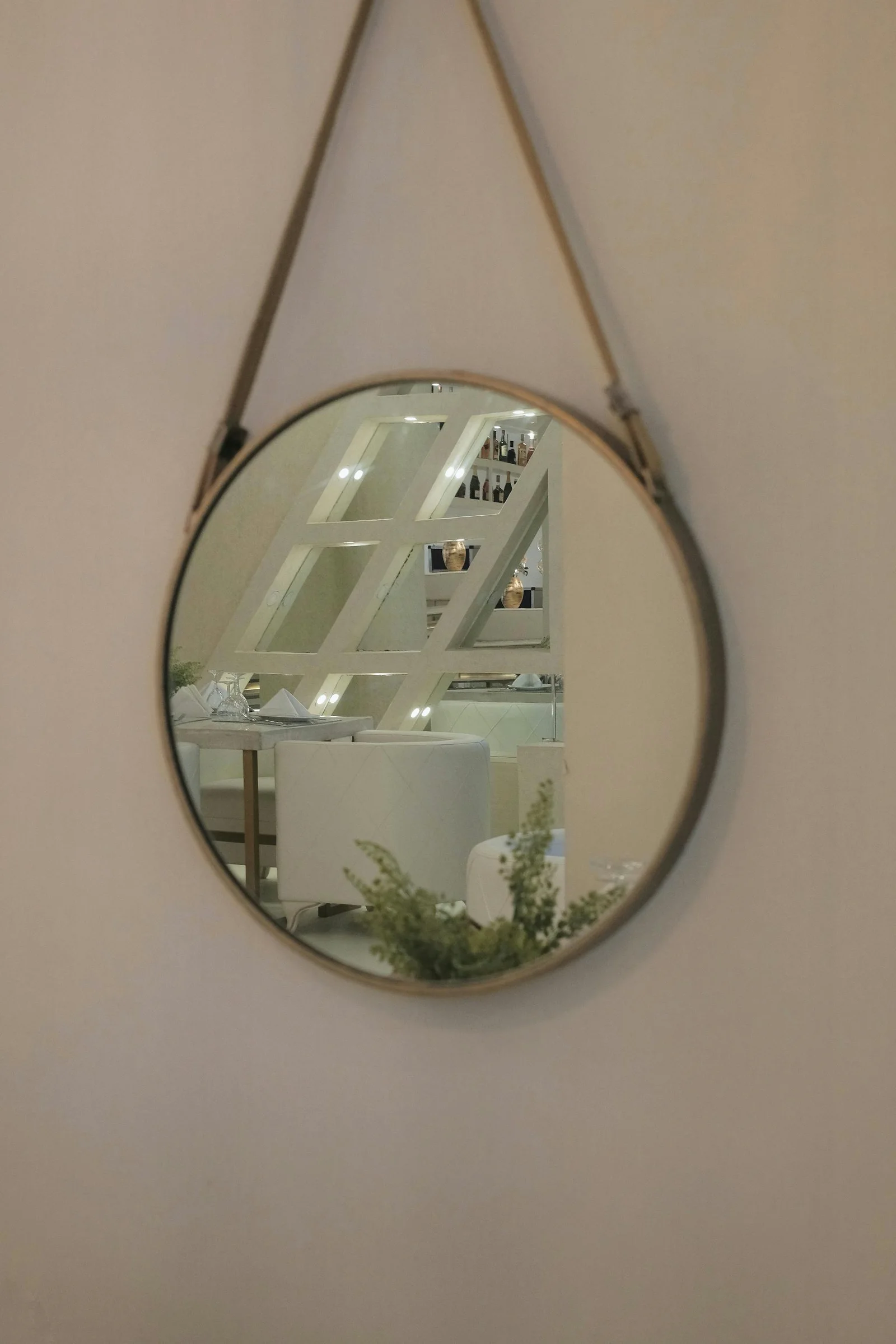
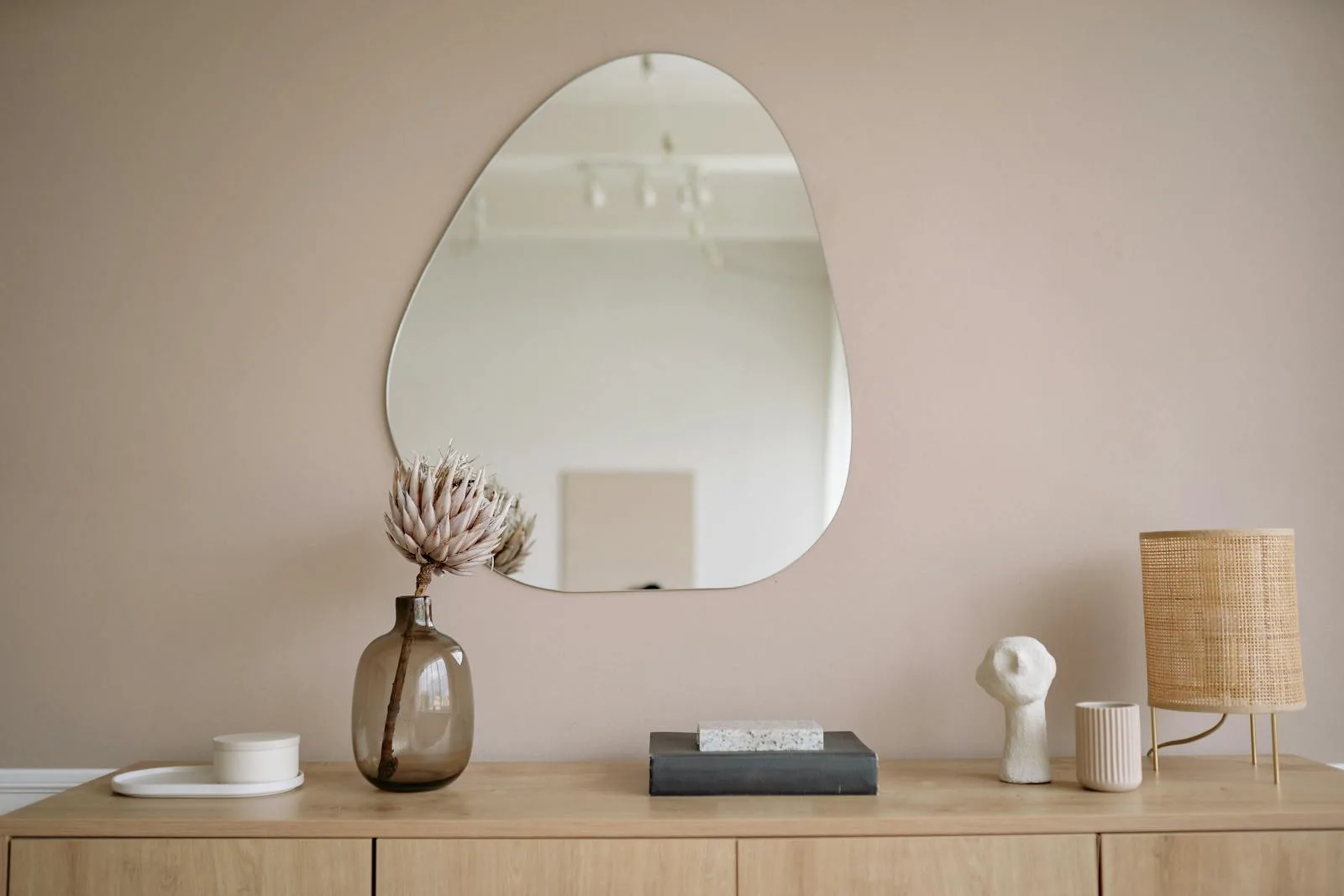
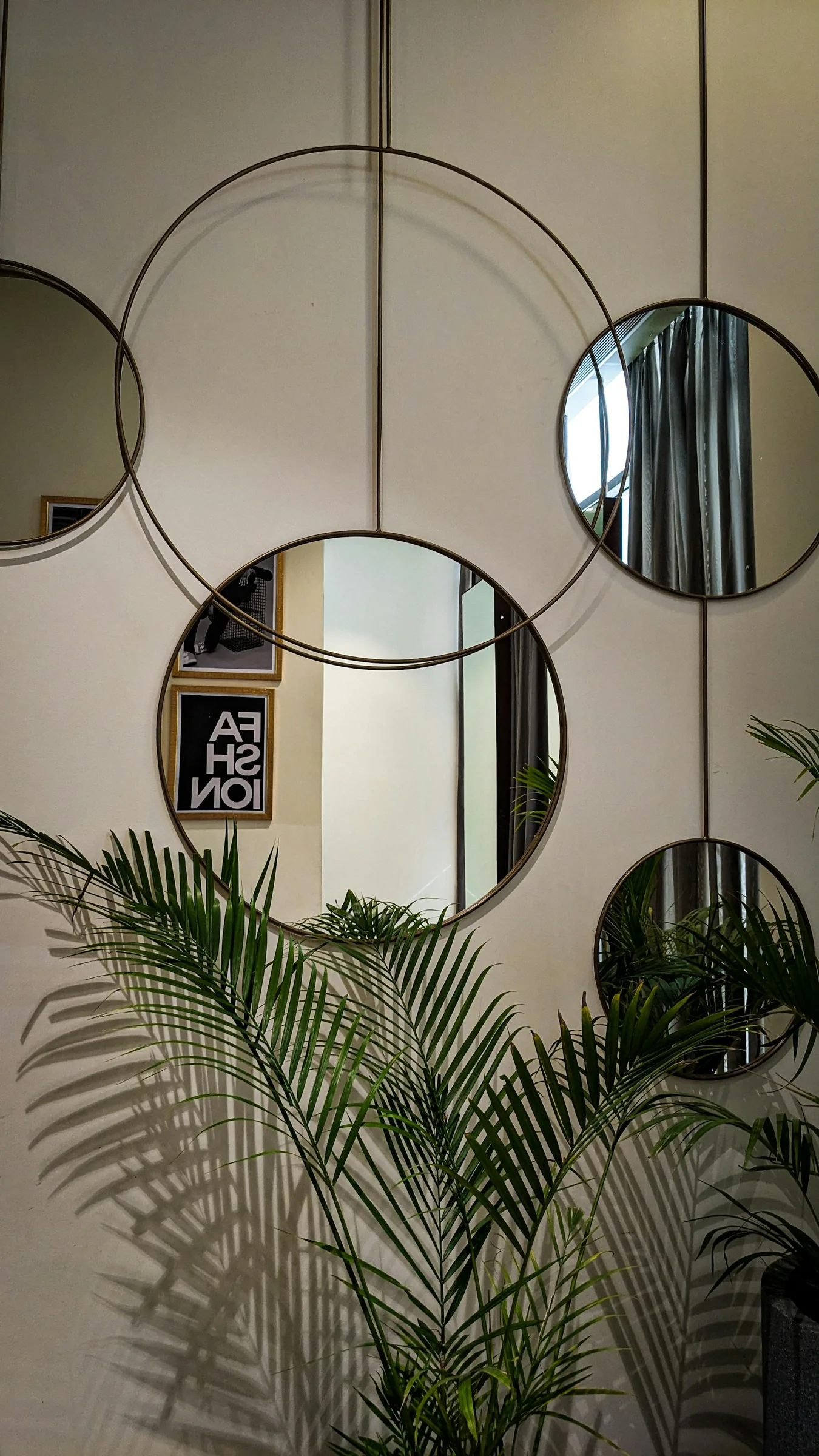
Shape and frame style matter less than placement, but they still influence the feeling of the room. Curved forms read as softer and calmer, while harsher lines can feel more active and architectural.
| Mirror type | Best for | Overall feeling |
|---|---|---|
| Round or oval mirror | Entryways, living rooms, softer interiors | Gentle, calming, balanced |
| Rectangular mirror with slim frame | Dining areas, hallways, modern spaces | Clean, structured, practical |
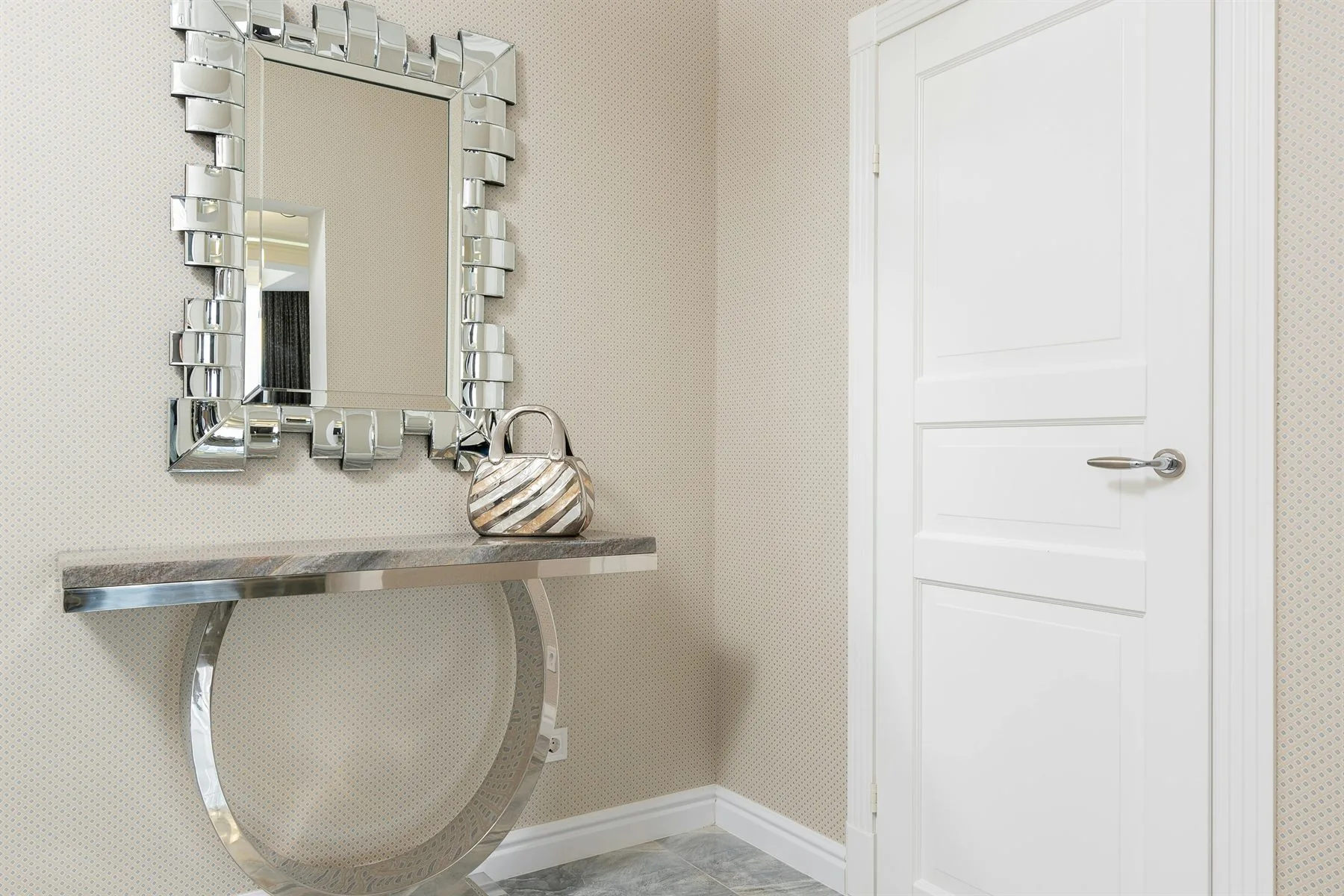
| Decorative metallic frame | Layered interiors in small doses | Bright, polished, more energetic |
| Oversized mirror | Rooms that truly need more light or spaciousness | Expansive, dramatic, high impact |
Height, Scale, and Reflection Check
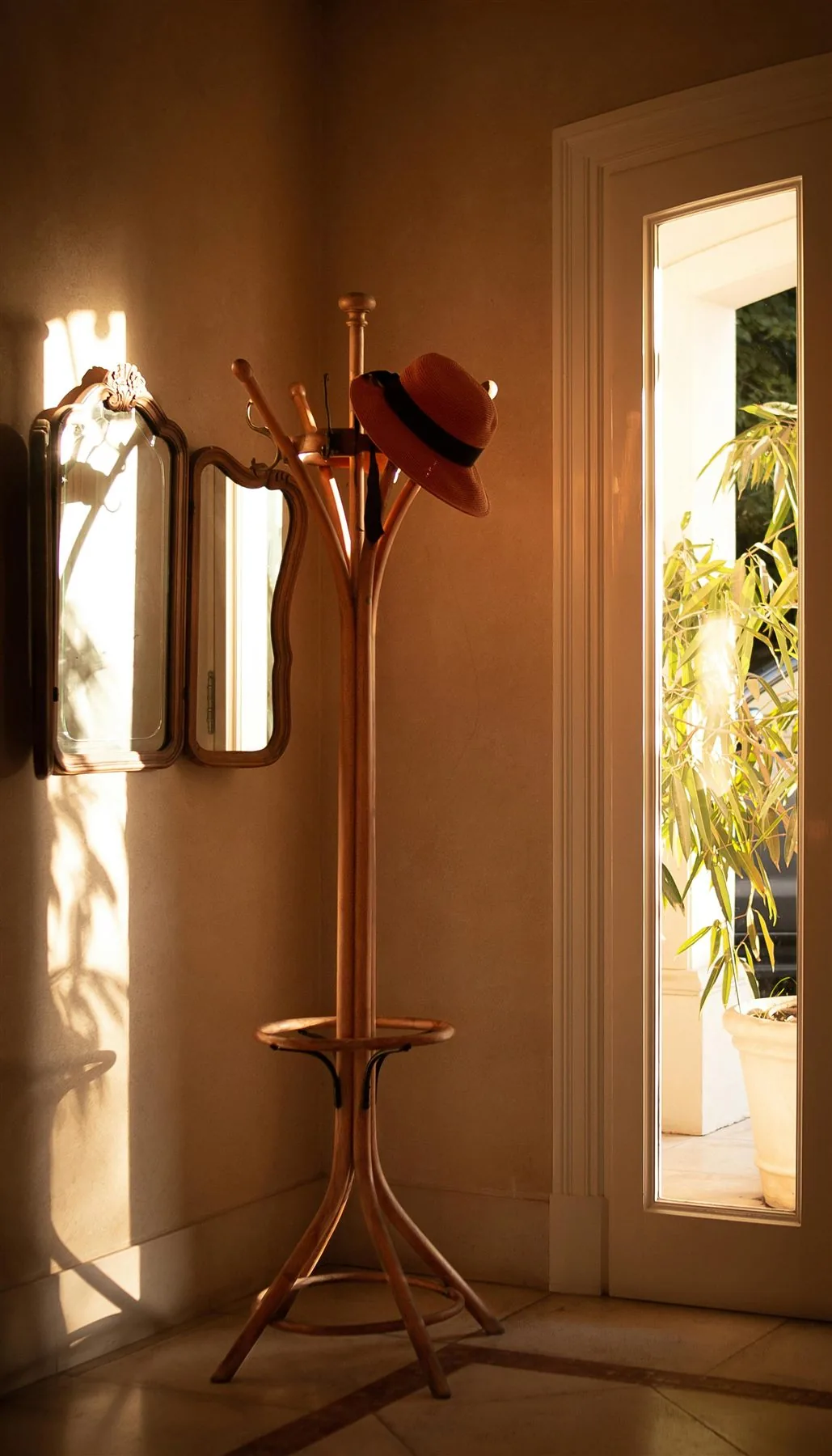
Hang the mirror where it reflects the room at a natural eye level, not so high that it only catches ceiling or so low that it cuts people awkwardly. Above a console, leave enough breathing room so the mirror feels connected to the surface. In a hallway, keep the frame slim enough that the passage still feels easy to move through.
Two mirrors facing each other can feel visually restless because the reflection repeats without a clear stopping point. If a room already feels busy, choose one strong mirror and give it a calm reflection instead of creating a visual loop.
Mirror shopping directions that make sense
Choose the mirror by room, reflection, and scale first. These are starting categories, not one perfect product.
Entry
Round entry mirror
Best when you want a softer threshold above a console, bench, or tidy landing surface.
ShopHallway
Slim hallway mirror
Best when a narrow passage needs more brightness without a bulky frame.
ShopDining
Wood-framed dining mirror
Best when the mirror can reflect table light, flowers, fruit, or a calmer gathering area.
ShopLiving
Soft-edged living room mirror
Best when a darker wall needs more light and the reflection can catch plants or daylight.
ShopA simple test
Before hanging a mirror, stand where it will go and look at what it will reflect at eye level. If that reflection feels calming and intentional, the mirror is probably helping rather than hurting.
Frequently Asked Questions
Where should mirrors go in feng shui?
Should a mirror face the front door in feng shui?
Is a mirror facing the bed bad feng shui?
What mirror shape is best for feng shui?
The Bottom Line
The best feng shui mirror is not just a pretty mirror. It is a mirror placed where it reflects something you actually want more of: light, beauty, spaciousness, or calm.
If a mirror reflects the front door, the bed, or visual chaos, rethink it. If it brightens a dark corner or completes a tidy entry, it is probably doing exactly what you want.